Public Art, Architecture, and Civic Identity
About this lesson: This is a C1 (Advanced) ESL lesson in the General English category. It takes about 60 minutes. It includes 5 vocabulary words, 4 idioms and phrasal verbs, a reading text, comprehension questions, discussion questions and speaking patterns. Suits one-to-one or small-group online classes. Free to open and teach with no login, and it prints as a PDF.
Print just the discussion questions
How this lesson is built
This is a complete conversation lesson built on a scientific pedagogical formula, not a generic worksheet: recall prior topic vocabulary, pre-teach the new words in depth, read in context, practise active recall with flashcards and synonyms/antonyms, build accuracy with exercises, and finish with deep discussion.
- Warm-up: Discussion questions that connect the topic to the student’s own life and recall vocabulary they already know about the subject.
- Reading: A text written for this CEFR level that uses each new word two or three times in context, giving the student something meaningful to react to.
- Key vocabulary: 5 new words, pre-taught before the reading with a definition, pronunciation guide, example sentences and a picture, plus word families, usage notes, recall flashcards and synonyms/antonyms, giving a solid grounding before reading.
- Comprehension: 5 questions that check the new words: retrieval practice, not rereading.
- Idioms and phrasal verbs: Expressions taken from the reading, each with its meaning, an example and a speaking question.
- Sentence frames: 3 speaking patterns, each at three levels of support (emerging, developing, expanding) with model answers—especially helpful scaffolding for beginners and less confident speakers.
- Gap-fill: The new words again, in a shuffled order, so the student recalls them by meaning in context.
- Sentence unscramble: Natural sentences with the new words to put back in order, reinforcing grammar and collocation.
- Discussion: 5 open questions designed to talk deeply about the subject while actively using the lesson’s target vocabulary: the heart of a conversation lesson.
- Quiz: A short retrieval check that brings every new word back once more.
Unlike a generic worksheet, the new words are taught before the reading and met again in the activities, the speaking is supported at three levels and most of the time goes on the student talking. Teachers who use PlanWise ESL also get per-student vocabulary tracking (recycling earlier words into future readings and questions), a private learner dashboard with flashcards and custom lesson creation, and a downloadable study PDF.
Warm-up: Buildings That Say Something
Look at the questions and talk about the buildings and public art around you. There are no wrong answers here — we're just warming up your ideas and opinions.
- Is there a building in your city that you'd show to a visitor first? Why that one?
- Do you have a piece of public art nearby that people either love or hate?
- Have you ever walked past a statue or mural so many times you stopped seeing it?
- Do you think a city's buildings can change how the people living there feel about themselves?
- If you could knock down one building in your town and replace it, what would you put there?
Reading Text: The Statue Nobody Wanted
A short article about a city's fight over a piece of public art — and what it reveals about who a city belongs to.
When the city of Bilbao unveiled its gleaming titanium museum in 1997, critics called it a gamble that could easily become an expensive eyesore. Instead, the building put a fading industrial port back on the map almost overnight. Tourists flew in just to stand in front of it, and locals started describing their own city with a new confidence. Architecture, it turned out, could do something no advertising campaign had managed.
Not every city gets that lucky. In many towns, the debate over public art is far messier. A proposed sculpture in one British city was voted the ugliest piece of public art in the country before it was even finished — and residents still argue about it decades later. The artist called it monumental; the locals called it a waste of money. Both were describing the same lump of steel.
What's really at stake in these arguments is rarely the object itself. When a neighbourhood is being gentrified, a shiny new mural or a renovated plaza can feel like a warning sign: the rents are about to rise, and the people who gave the area its character may not be able to stay. The artwork is just the messenger, but it takes the blame.
There's also a stark difference between art that celebrates a city's past and art that imagines its future. Older statues tend to honour generals and industrialists — figures many residents feel no connection to. Newer commissions often try to resonate with ordinary people: a memorial to market traders, a mural of local footballers, a bench shaped like a fishing boat.
Perhaps the healthiest sign of civic identity is that cities keep arguing about art at all. A town where nobody cares what goes up in the main square has a bigger problem than bad taste. Indifference, not ugliness, is the real threat to a city's soul.
Key Vocabulary
eyesore
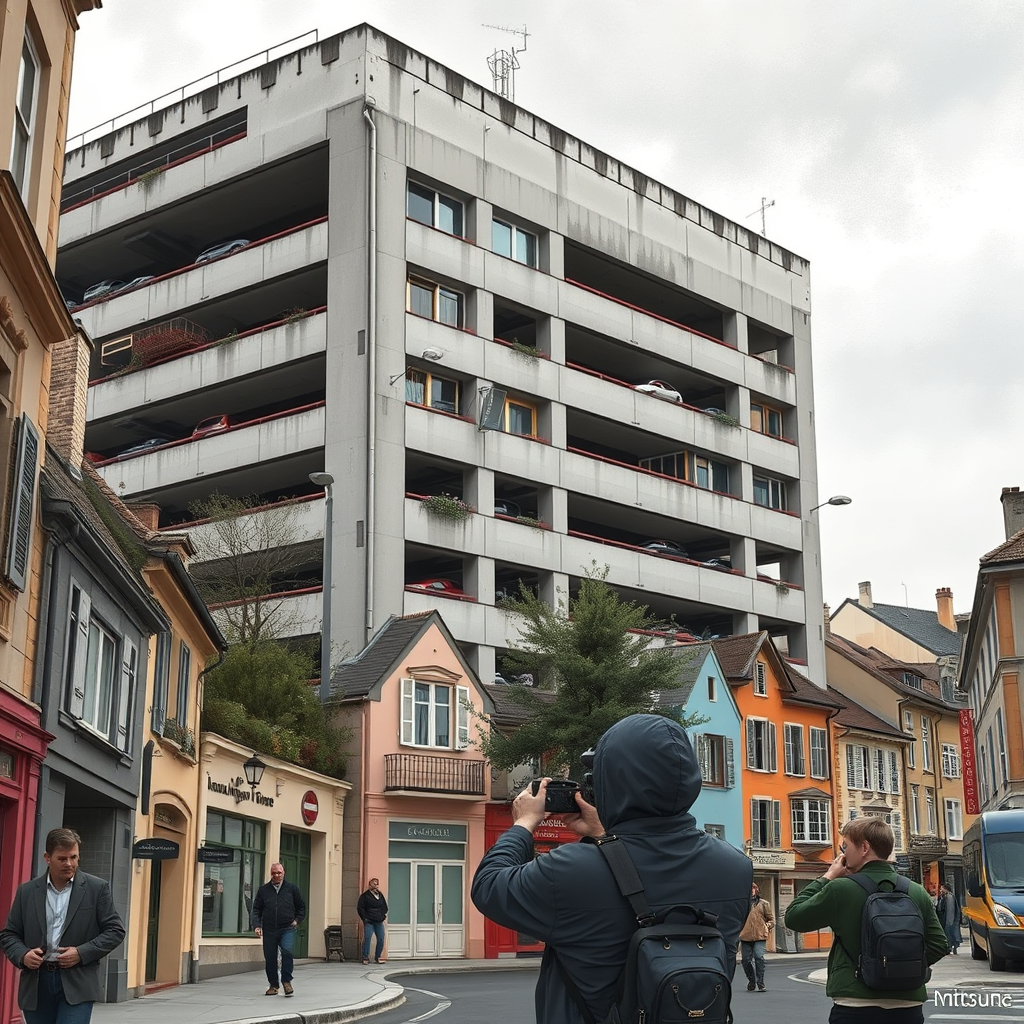
Something very ugly to look at, especially a building or structure
Locals say the new car park is an absolute eyesore.
More examples: The old factory was an eyesore for years before they finally demolished it. • Honestly, that plastic fountain in the square is a bit of an eyesore, isn't it? • My neighbour's garden is such an eyesore that I've thought about planting a hedge.
Common collocations: an absolute eyesore, a real eyesore, turn into an eyesore
Word family: eye-catching (adj), sore point (idiom)
Synonyms: blot on the landscape, monstrosity, blight
Antonyms: gem, showpiece, eye-catching sight
Related concepts: urban planning, bad architecture, public opinion
Contexts: city planning debates, neighbourhood complaints, property reviews
Usage note: Informal but very common. Usually about buildings, structures or things in public view. Often softened with 'a bit of an eyesore' to sound less harsh.
monumental
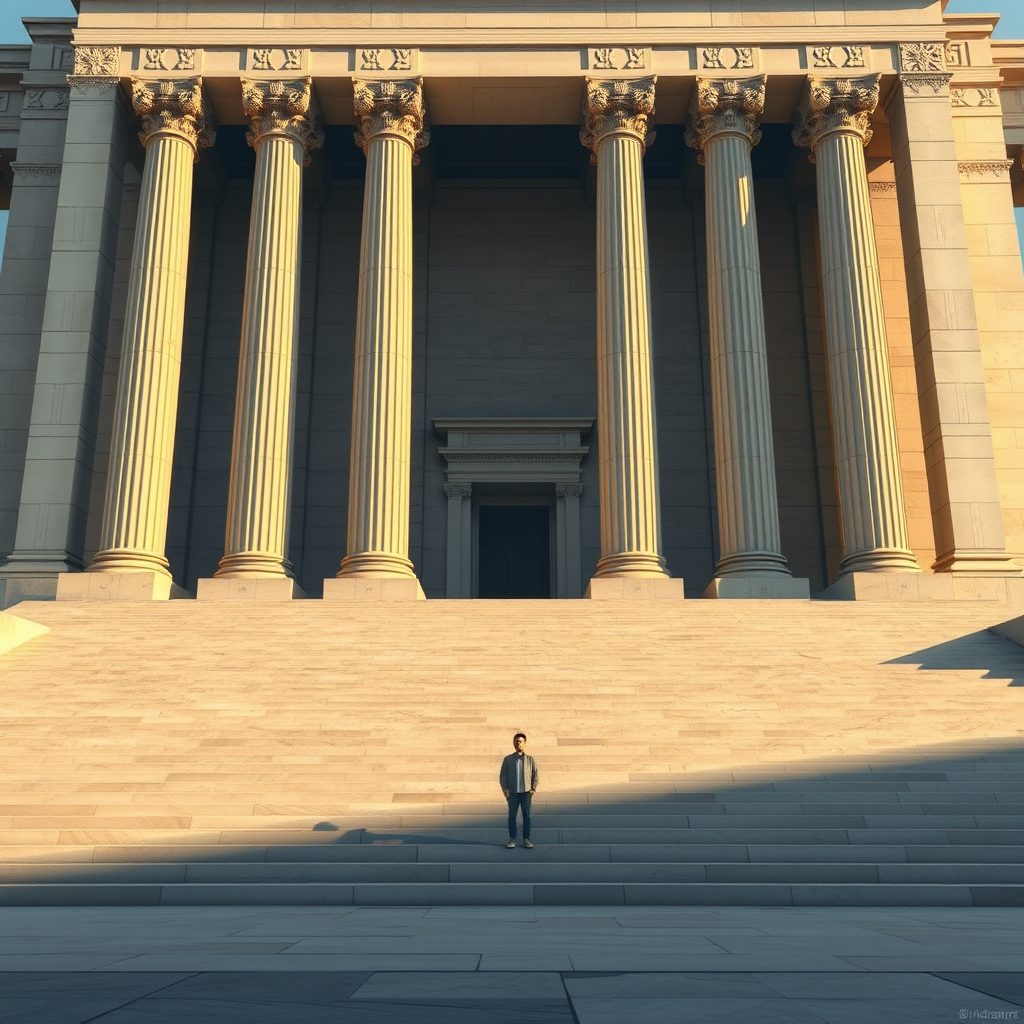
Very large or impressive, like a monument; also used for great effort or importance
The cathedral's monumental dome dominates the whole skyline.
More examples: Getting the whole city council to agree was a monumental task. • The bridge is a monumental piece of engineering for its era. • She made a monumental effort to learn the language in six months.
Common collocations: a monumental task, monumental proportions, a monumental mistake
Word family: monument (noun), monumentally (adverb)
Synonyms: massive, colossal, grand
Antonyms: modest, tiny, insignificant
Related concepts: monuments, civic pride, ambition
Contexts: architecture criticism, describing effort, history and heritage
Usage note: Can be positive (impressive scale) or ironic (a monumental mistake = a huge one). In architecture, it suggests buildings that feel heavy, grand and permanent.
gentrify
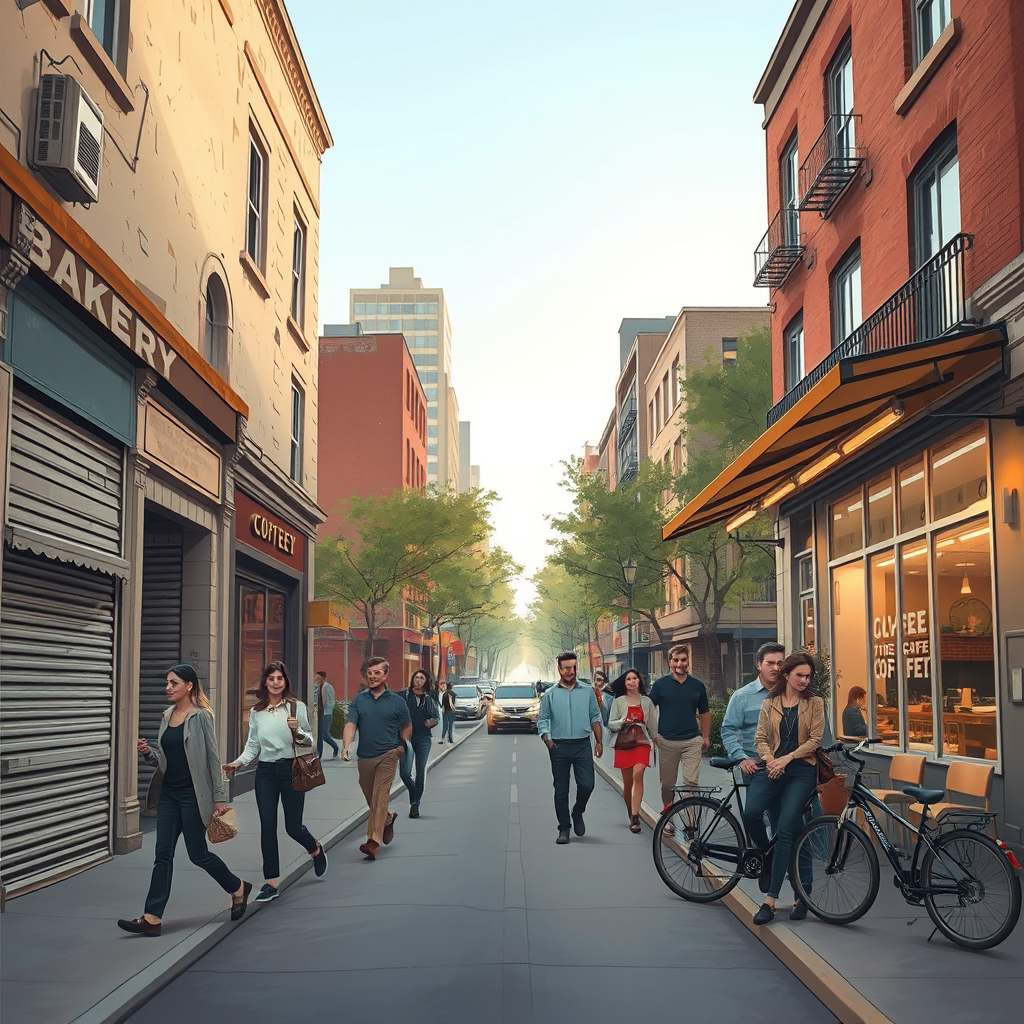
To improve a poor neighbourhood so much that wealthier people move in and prices rise
Rising rents have gentrified the whole district near the old docks.
More examples: Artists moved in first, then cafés, and within a decade the area was completely gentrified. • Critics say the new galleries will gentrify a neighbourhood that can't afford them. • Once a street gets gentrified, the original shops rarely survive.
Common collocations: gentrified neighbourhood, rapid gentrification, signs of gentrification
Word family: gentrification (noun), gentrified (adjective)
Synonyms: regenerate, revamp, smarten up
Antonyms: decline, deteriorate, run down
Related concepts: rising rents, displacement, urban renewal
Contexts: housing debates, city journalism, community activism
Usage note: Almost always carries a critical or worried tone — it implies displacement of original residents. Very common in discussions of cities, rent and culture.
resonate

To have special meaning or emotional effect for someone; to strike a chord
The memorial resonates with anyone who lost family in the war.
More examples: Her story about starting over abroad really resonated with me. • The film's message resonates more strongly today than when it was made. • Public art works best when it resonates with the people who walk past it daily.
Common collocations: resonate with someone, resonate deeply, continue to resonate
Word family: resonance (noun), resonant (adjective)
Synonyms: strike a chord, speak to, move
Antonyms: leave cold, fall flat, mean nothing to
Related concepts: emotional impact, shared memory, art appreciation
Contexts: art criticism, personal reflection, public speaking
Usage note: Almost always used with 'with'. Figurative in most contexts — originally about sound echoing. Perfect for discussing art, speeches and stories.
stark
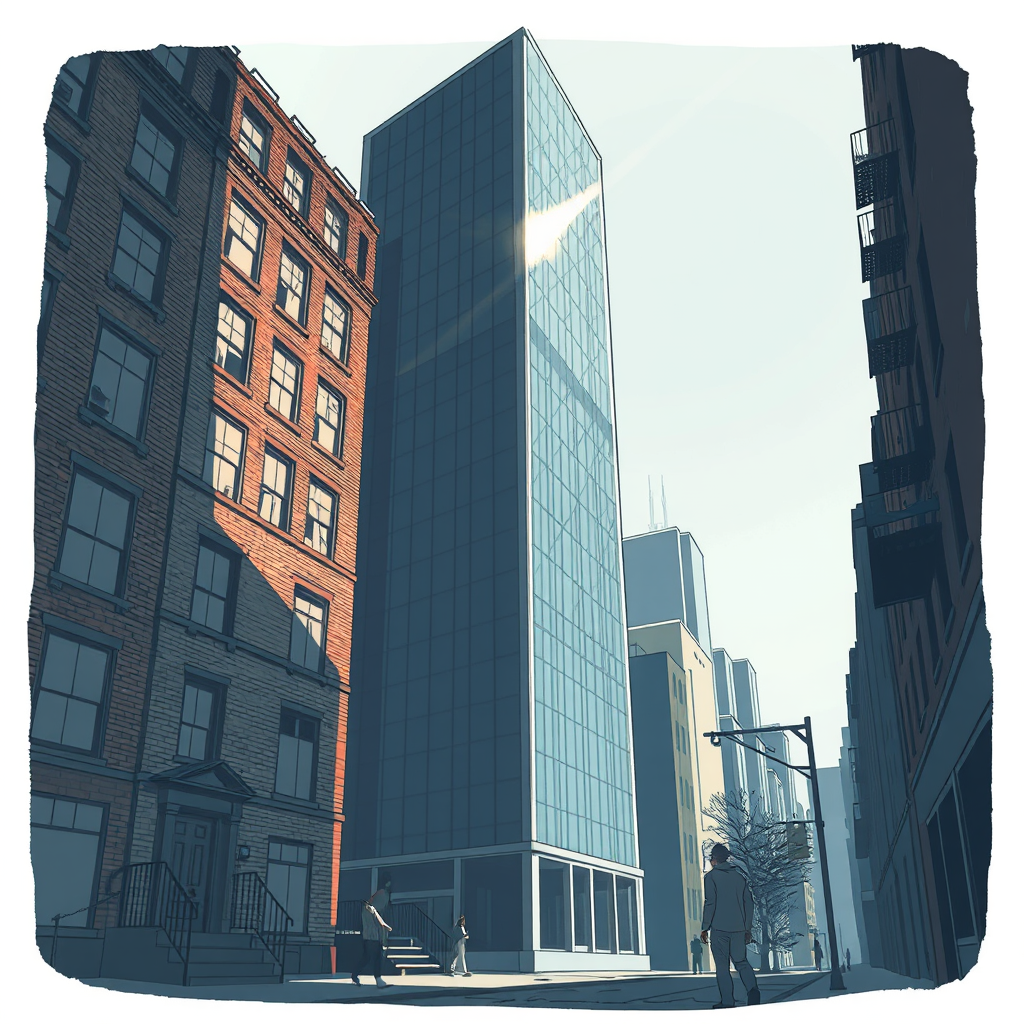
Very plain, or extremely obvious and often unpleasant in its contrast
There's a stark contrast between the old quarter and the glass towers nearby.
More examples: The stark reality is that the project ran out of money. • Inside, the church is stark and bare — no paintings, no decoration. • The report draws a stark picture of the city's housing crisis.
Common collocations: a stark contrast, a stark choice, stark reality
Word family: starkly (adverb), starkness (noun, rare)
Synonyms: bleak, severe, glaring
Antonyms: subtle, decorated, soft
Related concepts: inequality, contrast, plainness
Contexts: urban inequality, news reporting, design criticism
Usage note: Two main uses: describing bare, plain appearance, and intensifying contrasts or unpleasant truths. 'A stark choice' means a choice between two very different, difficult options.
Vocabulary Check
- What does 'eyesore' mean?
- Something very ugly to look at
- Something that hurts your eyes in bright light
- A very small detail
- A protected historic building
- Which sentence uses 'monumental' correctly?
- She gave me a monumental smile and left.
- Organising the festival was a monumental task, but we did it.
- The soup tasted monumental tonight.
- He wore a monumental jacket to the party.
- In which situation would you use 'gentrify'?
- A family repaints their own living room
- A city demolishes a bridge after a flood
- Wealthy newcomers move into a working-class area and rents climb
- A farmer plants new crops in a field
- What does 'resonate' mean?
- To make a loud noise
- To have special meaning or emotional effect for someone
- To repeat something exactly
- To shake with fear
- Which situation best shows a 'stark' contrast?
- Two shades of blue that are hard to tell apart
- A luxury tower next to a derelict, boarded-up building
- Two restaurants with slightly different menus
- A painting with soft, blended colours
Idioms & Phrasal Verbs
put something back on the map
make a place famous or important again
That little bakery really put the neighbourhood back on the map — people come from across the city now.
Usage note: The picture is of a map: the place becomes worth marking on it. Often used for towns, restaurants, or brands.
Usage note: Informal and very common in travel and business talk.
fly in
arrive somewhere by plane
My cousin flew in on Friday morning and left again on Sunday — a whirlwind visit.
Usage note: Cannot be split: you say 'flew in', not 'flew the city in'. The 'in' suggests arriving, often from far away.
Usage note: Also used for people arriving for a meeting or event: 'They flew in an expert for the project.'
take the blame
be criticised for something, often unfairly
The new tram line got all the attention, but the mayor took the blame for the cost.
Usage note: Common pattern: 'take the blame for something'. The opposite is 'pin the blame on someone' — making someone else responsible.
Usage note: Neutral tone; works in both casual and professional conversation.
at stake
what could be won or lost in a situation
With the deadline tomorrow, there's a lot at stake — the whole contract could fall through.
Usage note: The picture is from gambling: your money is 'staked' on the table, so you could lose it.
Usage note: Usually used with 'what's' or 'a lot': 'What's at stake here is trust.'
Language Practice: Talking About Cities and Taste
Practice expressing nuanced opinions about public art and urban change.
- Conceding a point before disagreeing
- Emerging: I see the point about ___, but ___. — I see the point about cost, but art makes a city worth visiting.
- Developing: It's true that ___, but that doesn't change the fact that ___. — It's true that the sculpture cost a fortune, but that doesn't change the fact that people actually meet there now.
- Expanding: While I'd be the first to admit that ___, I still think ___, if only because ___. — While I'd be the first to admit that the design is divisive, I still think it belongs there, if only because it gets people talking.
- Describing contrast and change in a city
- Emerging: There's a stark contrast between ___ and ___. — There's a stark contrast between the old town and the business district.
- Developing: Over the past few years, ___ has been gentrified, and now ___. — Over the past few years, the harbour area has been gentrified, and now the rents are impossible for locals.
- Expanding: What strikes me most is the stark difference between ___, whereas ___. — What strikes me most is the stark difference between the monumental government buildings and the cramped housing most people actually live in, whereas tourists only ever photograph the former.
- Explaining why something moves or matters to people
- Emerging: ___ resonates with me because ___. — That mural resonates with me because I grew up near one like it.
- Developing: I think ___ resonates with people because it taps into ___. — I think war memorials resonate with people because they tap into family stories.
- Expanding: What makes ___ resonate isn't so much ___ as ___, which is why ___. — What makes the statue resonate isn't so much the figure itself as the empty chair beside it, which is why people keep leaving flowers there.
Fill in the Blanks
Our city council has just approved a _____ new sculpture for the main square, and the arguments have already started. Half the town thinks it will be an _____; the other half says anything is better than the empty car park that's been sitting there for a decade. Meanwhile, the streets around the square have quietly begun to _____ — rents are up, and two family-run shops have closed. The sculptor insists the piece will _____ with ordinary residents, not just art critics, though the design's _____ simplicity has divided opinion even within her own studio. One thing is certain: nobody in this town is indifferent about it.
Word bank: eyesore, monumental, gentrify, resonate, stark
Sentence Unscramble
- the / new / car / park / is / an / absolute / eyesore / at / night
- rising / rents / have / quietly / gentrified / the / old / harbour / district
- there's / a / stark / contrast / between / the / monumental / cathedral / and / the / cramped / housing / nearby
Discussion Questions
Cities around the world have spent enormous sums on signature buildings and sculptures, hoping to attract tourists and investment — Bilbao's museum is the famous success story, but for every success there are expensive failures. Some economists argue the money would do more good spent on schools and housing.
Do you think cities should spend big money on iconic architecture, or is that money better spent elsewhere? What would you choose for your own city?
In many cities, once-tough neighbourhoods have become fashionable: artists move in for cheap rent, then cafés and galleries follow, and within a decade the original residents can't afford to stay. Some call this progress; others call it a quiet form of eviction.
Has anywhere near you been gentrified? How did it change the area — and did anyone you know get pushed out?
Old statues of generals and industrialists still stand in many city squares, even when most people walk past without a glance. Some cities have removed controversial statues; others argue that removing them erases history rather than confronting it.
If a statue in your city honoured someone most people now disapprove of, what should happen to it — remove it, add a plaque explaining, or leave it alone?
Some public art is loved instantly; other pieces take decades to grow on people — the Eiffel Tower was once called a monstrous eyesore by Parisian artists. Time changes taste, and today's hated building sometimes becomes tomorrow's beloved landmark.
Can you think of something in your city that people hated at first but accept now — or the reverse? Why do you think taste changes?
The most powerful memorials are often the simplest: an empty chair, a pair of shoes, names carved into stone. They work because they resonate personally rather than impress visually — and because they belong to everyone who passes.
What kind of memorial or public artwork would genuinely resonate with people in your community? What story should it tell?
Knowledge Check
- Which word describes a building that people find very ugly?
- monumental
- stark
- eyesore
- resonate
- 'Gentrify' usually carries a positive tone in English.
- True
- False
- Which is a natural collocation with 'stark'?
- a stark decoration
- a stark contrast
- a stark celebration
- a stark flavour
- If a memorial 'resonates with' local people, it means...
- it makes a loud echoing sound
- it strikes an emotional chord with them
- it was paid for by residents
- it vibrates when touched
- 'Monumental' can describe both a huge building and a huge mistake.
- True
- False
- If a new museum 'put the city back on the map', what happened?
- The city became famous and attracted visitors again.
- The city was redrawn on official maps.
- The city lost its place among major tourist destinations.
- The city moved its centre to a new location.
Free to use with your students: Free to teach, screen-share, print and share with your students, with a credit to PlanWise ESL. Please do not sell it or republish it as your own. What you can do with free lessons.