IELTS Speaking: Preserving Minority Languages in a Globalised World
About this lesson: This is a C1 (Advanced) ESL lesson in the General English category. It takes about 60 minutes. It includes 5 vocabulary words, 4 idioms and phrasal verbs, a reading text, comprehension questions, discussion questions and speaking patterns. Suits one-to-one or small-group online classes. Free to open and teach with no login, and it prints as a PDF.
Print just the discussion questions
How this lesson is built
This is a complete conversation lesson built on a scientific pedagogical formula, not a generic worksheet: recall prior topic vocabulary, pre-teach the new words in depth, read in context, practise active recall with flashcards and synonyms/antonyms, build accuracy with exercises, and finish with deep discussion.
- Warm-up: Discussion questions that connect the topic to the student’s own life and recall vocabulary they already know about the subject.
- Reading: A text written for this CEFR level that uses each new word two or three times in context, giving the student something meaningful to react to.
- Key vocabulary: 5 new words, pre-taught before the reading with a definition, pronunciation guide, example sentences and a picture, plus word families, usage notes, recall flashcards and synonyms/antonyms, giving a solid grounding before reading.
- Comprehension: 5 questions that check the new words: retrieval practice, not rereading.
- Idioms and phrasal verbs: Expressions taken from the reading, each with its meaning, an example and a speaking question.
- Sentence frames: 3 speaking patterns, each at three levels of support (emerging, developing, expanding) with model answers—especially helpful scaffolding for beginners and less confident speakers.
- Gap-fill: The new words again, in a shuffled order, so the student recalls them by meaning in context.
- Sentence unscramble: Natural sentences with the new words to put back in order, reinforcing grammar and collocation.
- Discussion: 5 open questions designed to talk deeply about the subject while actively using the lesson’s target vocabulary: the heart of a conversation lesson.
- Quiz: A short retrieval check that brings every new word back once more.
Unlike a generic worksheet, the new words are taught before the reading and met again in the activities, the speaking is supported at three levels and most of the time goes on the student talking. Teachers who use PlanWise ESL also get per-student vocabulary tracking (recycling earlier words into future readings and questions), a private learner dashboard with flashcards and custom lesson creation, and a downloadable study PDF.
Warm-up: Languages Around You
Think about the languages you hear in daily life — at home, online, in the street — and how many are quietly disappearing.
- What languages do you hear in an ordinary day, just going about your life?
- Do you know anyone who speaks a language most people around them don't?
- Have you ever seen a language disappear from a place — a shop sign, a dialect your grandparents used?
- If you could keep one language alive forever, which would you pick and why?
- Do you think English on the internet is helping or hurting other languages?
Reading Text: The Last Speakers
A magazine-style article about what happens when a language loses its speakers — and the people fighting to bring it back.
When the last fluent speaker of a language dies, an entire way of seeing the world goes with them. Linguists estimate that roughly half of the world's seven thousand languages could vanish within this century. It rarely happens dramatically; instead, it falters — a few fewer children learning it each generation, grandparents switching to the dominant language for convenience, until one day nobody is left who can hold a real conversation.
The process usually begins with pressure to assimilate. Migrants and minority communities are often told, subtly or not so subtly, that their language marks them as outsiders. Parents, wanting their children to get ahead, stop speaking the home language. Within two generations, the children may feel more comfortable in the dominant tongue — and the old language becomes something spoken only at funerals and festivals.
Marginalised languages also lose ground in practical life. They're absent from schools, courts, job interviews and the internet, so speakers are effectively locked out of opportunity unless they switch. It's a rational choice, made one family at a time, that adds up to a quiet catastrophe. Nobody decides to kill a language; it simply starves of speakers.
Yet the story isn't only one of loss. Around the world, communities are working to revive languages that were once written off as doomed. Welsh, once in steep decline, now has hundreds of thousands of speakers and its own thriving media scene. In New Zealand, Māori immersion schools have produced a generation of young fluent speakers. Hebrew, famously, was brought back from the dead and now runs an entire country.
Sceptics ask whether these efforts are worth the money, or whether they're just preserving a vestige of the past — a museum piece rather than a living tool. Supporters answer that a language carries jokes, songs, ways of arguing and ways of comforting that no translation can fully capture. Lose it, they say, and humanity is not just poorer in vocabulary; it's poorer in imagination.
Key Vocabulary
revive

to bring something back to life or popularity after it has almost disappeared
The town managed to revive its old festival after thirty years.
More examples: The government launched a plan to revive the regional language in schools. • There's been a real effort to revive interest in traditional crafts lately. • I'd love to revive the habit of writing letters by hand.
Common collocations: revive a tradition, revive interest in, efforts to revive
Word family: revival (noun), revivalist (noun), revivable (adjective)
Synonyms: resurrect, rekindle, bring back
Antonyms: extinguish, kill off
Related concepts: renaissance, comeback, restoration
Contexts: language policy, cultural heritage, local economies
Usage note: Use for things that were alive or popular before and are being brought back — languages, customs, economies, careers. Stronger and more specific than 'restart'.
marginalise

to push a person or group to the edge of society, making them feel unimportant
Rural communities often feel marginalised by decisions made in the capital.
More examples: Older workers can feel marginalised in offices obsessed with new technology. • The dialect was marginalised for decades before schools started teaching it. • She wrote about growing up marginalised in a city that ignored her neighbourhood.
Common collocations: marginalised groups, feel marginalised, systematically marginalise
Word family: marginalised (adjective), marginalisation (noun), margins (noun)
Synonyms: sideline, exclude, ostracise
Antonyms: embrace, empower
Related concepts: discrimination, exclusion, inequality
Contexts: minority rights, workplace politics, urban planning
Usage note: Usually passive or reflexive in feel — groups are marginalised by someone or something. Common in social and political discussion; very useful for IELTS topics on society.
assimilate
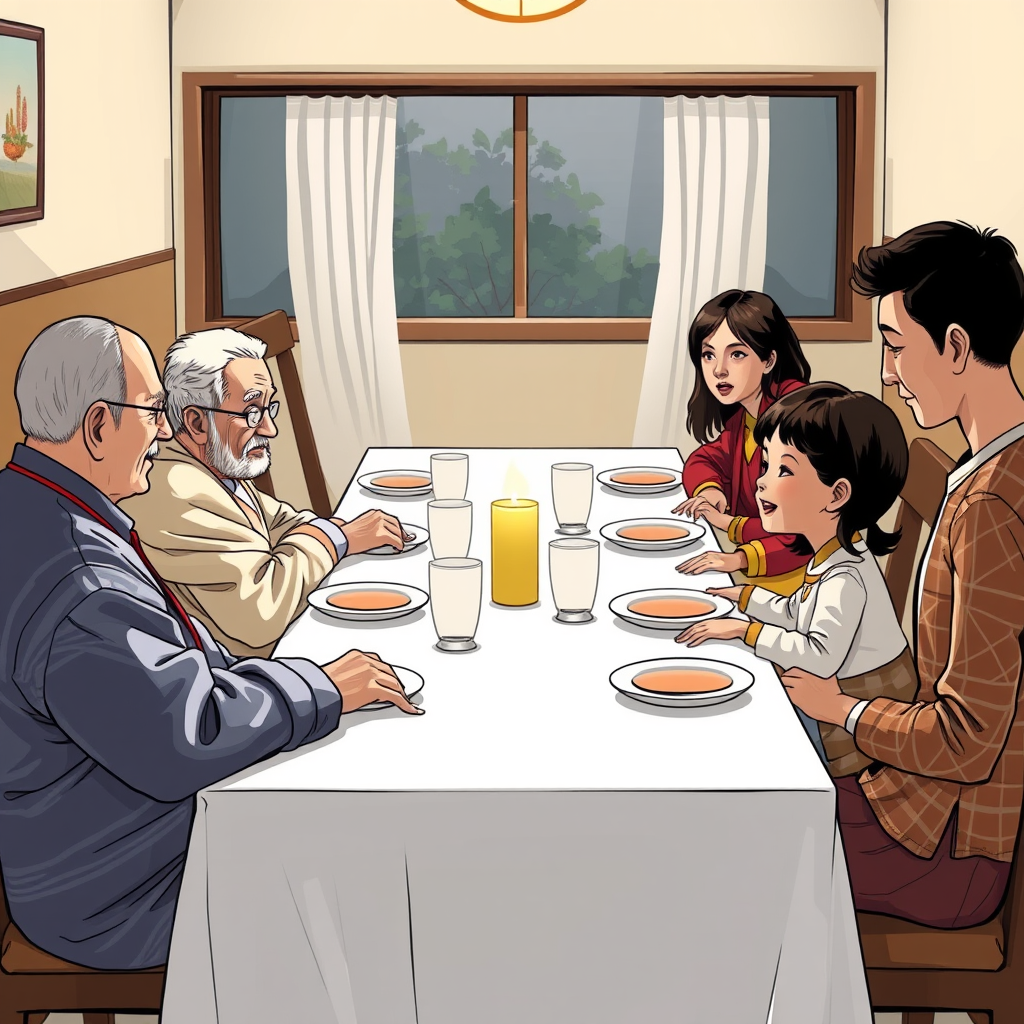
to become part of a larger group and gradually lose your separate identity
Her grandparents assimilated quickly and rarely spoke their mother tongue at home.
More examples: It took a generation for the family to assimilate into the big city. • Some immigrants resist pressure to assimilate and keep their own traditions. • New ideas can take years to assimilate into mainstream thinking.
Common collocations: assimilate into, pressure to assimilate, cultural assimilation
Word family: assimilation (noun), assimilated (adjective), assimilable (adjective)
Synonyms: blend in, conform, absorb
Antonyms: stand apart, retain identity
Related concepts: integration, identity, multiculturalism
Contexts: migration, language shift, national identity
Usage note: Can describe people adopting a culture, or ideas/information being absorbed. In migration debates it often carries tension: assimilation vs. integration vs. multiculturalism.
vestige
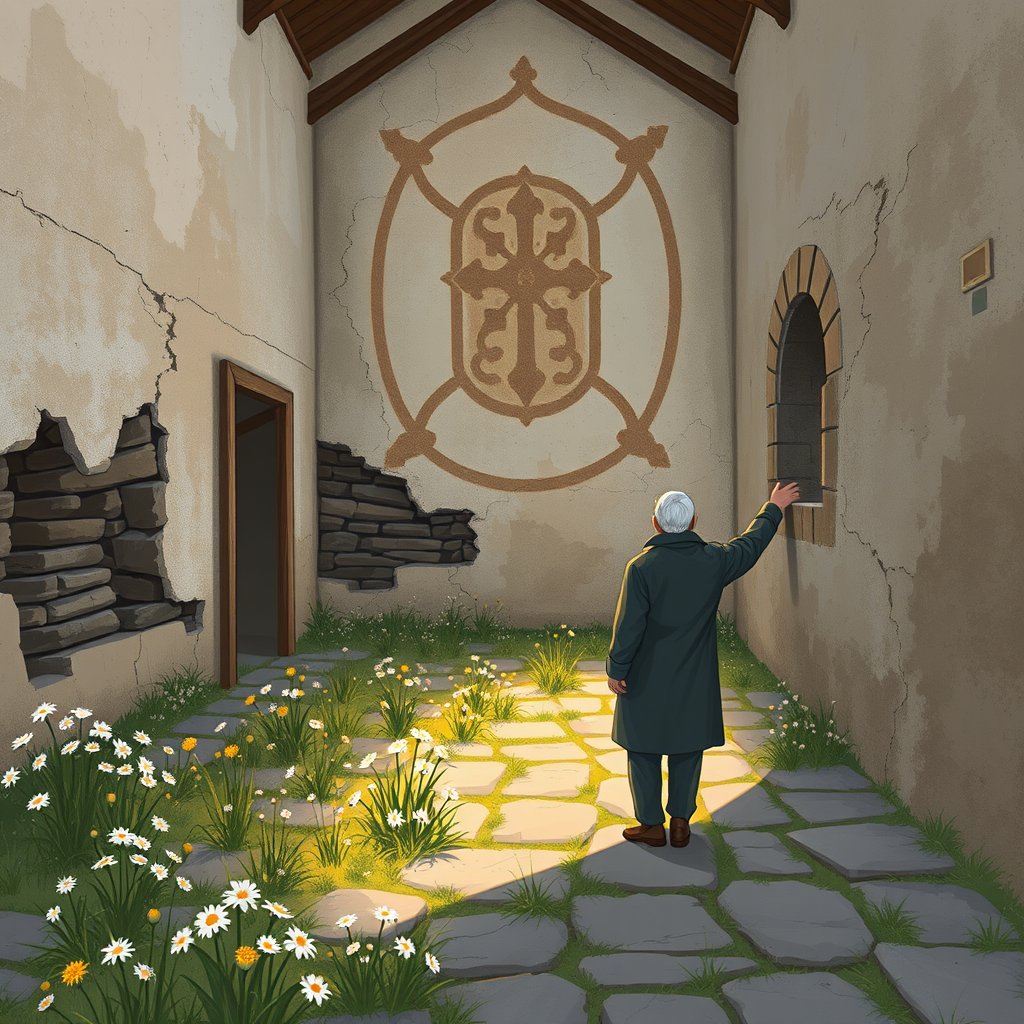
a small remaining part of something that has mostly disappeared
The old dialect survives only as a vestige in a few place names.
More examples: The ceremony is a vestige of an ancient harvest ritual. • There's barely a vestige of the old railway left in the valley. • He clung to the last vestiges of hope that the project would survive.
Common collocations: a vestige of the past, the last vestige, vestiges of an era
Word family: vestigial (adjective), vestiges (plural noun)
Synonyms: remnant, trace, relic
Antonyms: whole, full form
Related concepts: heritage, ruins, memory
Contexts: history, architecture, cultural memory
Usage note: Formal and literary, but perfect for IELTS essays and Speaking Part 3. Often used with 'last' or 'final' — 'the last vestige of...'. Slightly melancholy tone.
falter

to become weaker or less steady, and risk failing
Support for the language programme faltered when funding was cut.
More examples: Her confidence faltered just before the interview. • The peace talks faltered after months of progress. • He faltered halfway through his speech and had to start the sentence again.
Common collocations: faltering steps, confidence falters, begin to falter
Word family: faltering (adjective), faltered (past form)
Synonyms: waver, stumble, weaken
Antonyms: thrive, steadily advance
Related concepts: hesitation, decline, setback
Contexts: economics, public speaking, long-term projects
Usage note: Describes both physical stumbling and metaphorical weakening — economies, courage, plans, voices. Implies something was going well and then wobbled, not that it failed outright.
Vocabulary Check
- What does 'revive' mean?
- To bring something back after it has almost disappeared
- To copy something exactly
- To keep something unchanged
- To study something historically
- In which situation would you use 'marginalise'?
- A team wins a championship
- A group is pushed to the edge of society and ignored
- Two friends make up after an argument
- A company opens a new office
- What does 'assimilate' mean?
- To refuse to change
- To become part of a larger group and lose your separate identity
- To translate a text
- To move to a new country
- Which sentence uses 'vestige' correctly?
- She spoke three languages with great vestige.
- The ruined tower is the last vestige of the old castle.
- He vestiged his opinion during the meeting.
- They vestige the language every summer.
- What does 'falter' mean?
- To start very strongly
- To become weaker or less steady and risk failing
- To finish successfully
- To change direction completely
Idioms & Phrasal Verbs
get ahead
to be more successful than others, especially in work or money
She took an evening course in coding because she wanted to get ahead at work.
Usage note: Never split it: say 'get ahead', not 'get ahead of it' unless you mean 'get ahead of someone' (= move in front of them). · Right: He worked hard to get ahead. · Avoid: He worked hard to get it ahead.
Usage note: Very common in talk about careers and ambition. Slightly informal but fine in IELTS.
lose ground
to become weaker or less popular compared with something else
Print newspapers have been losing ground to online news for years.
Usage note: The picture is from a battle or a race: you fall back and give up territory. The opposite is 'gain ground'.
Usage note: Often used with 'to': 'Vinyl is gaining ground to... ' — actually the correct pattern is 'lose ground to something'. · Right: Local shops are losing ground to big chains. · Avoid: Local shops are losing ground from big chains.
write off
to decide something or someone is a failure and not worth attention
Don't write off your cousin just because he failed one exam — he's full of surprises.
Usage note: Separable: 'write it off', 'write them off'. The stress is on 'off': write OFF.
Usage note: Also used for money: a bank can 'write off a debt' (= cancel it). Different meaning, same idea of giving up on it.
bring back from the dead
to make something succeed again after it seemed completely finished
That old cinema was brought back from the dead by a group of volunteers — now it's packed every weekend.
Usage note: Dramatic and a bit playful — use it for things that were truly finished or 'dead', not just struggling. Don't use it for people literally.
Usage note: Separable: 'bring it back from the dead'. A lighter version is 'bring back' on its own (= make popular again).
Language Practice: Talking About Language Loss
Practice expressing and qualifying opinions about minority languages and cultural change.
- Conceding a point before disagreeing
- Emerging: I see the point about ___, but ___. — I see the point about saving money, but languages are worth more than that.
- Developing: It's true that ___, yet I'd argue that ___. — It's true that English opens doors, yet I'd argue that knowing your grandmother's language opens others.
- Expanding: While there's no denying ___, that doesn't necessarily mean ___, because ___. — While there's no denying that global languages dominate business, that doesn't necessarily mean smaller ones are doomed, because communities with real support have brought theirs back.
- Expressing regret or loss about change
- Emerging: It's a shame that ___. — It's a shame that so many dialects are disappearing.
- Developing: What worries me most is that ___. — What worries me most is that once the last speaker dies, there's no going back.
- Expanding: If only ___ had ___, then perhaps ___. — If only schools had taught the local language a generation earlier, then perhaps my cousins would speak it today.
- Speculating about hypothetical futures
- Emerging: If ___ disappeared, ___. — If my local dialect disappeared, the village would feel emptier.
- Developing: If ___ were to vanish, I suspect ___. — If regional languages were to vanish, I suspect we'd lose more humour than we realise.
- Expanding: Had ___ not ___, ___ might well ___ by now. — Had Welsh revival efforts not started decades ago, the language might well have faded into a vestige by now.
Fill in the Blanks
When a community starts to _____ into a dominant culture, its language often begins to _____ — fewer children speak it, and each generation knows a little less. Speakers may feel _____d at school or work, where only the majority language counts. Eventually the old tongue survives as little more than a _____ in songs and place names. But it doesn't have to end that way: with immersion schools and community pride, people can _____ a language that seemed beyond saving.
Word bank: revive, marginalise, assimilate, vestige, falter
Sentence Unscramble
- the / community / worked / for / years / to / revive / its / nearly / lost / language
- many / immigrants / felt / pressure / to / assimilate / and / abandon / their / mother / tongue
- support / for / the / project / began / to / falter / when / funding / was / cut
Discussion Questions
Imagine your grandmother speaks a dialect that none of the children in the family understand. She's the last one who tells the old stories in it. Your parents say learning it is a waste of time compared to English or Mandarin.
Would you make the effort to learn it? What would you actually lose if you didn't?
Some governments spend millions on language revival — immersion schools, TV channels, official status. Critics say this money should go to hospitals and jobs instead, and that languages die naturally anyway.
Is saving a language worth serious public money? Where would you draw the line?
When people move to a new country, they face a choice: hold tightly to their home language, or blend in completely so their kids fit in. Some families manage both; many don't.
How much should newcomers assimilate? Is there a difference between fitting in and disappearing into the crowd?
A hundred years from now, translation software might be so good that speaking any language you like becomes irrelevant — you talk, your device handles the rest. Some people welcome this; others find it chilling.
If perfect instant translation existed, would it matter whether minority languages survived? Why or why not?
Think about your own country or region. Maybe a local dialect is fading, or maybe it's being proudly revived — in schools, music, advertising. Sometimes revival feels genuine; sometimes it feels like a marketing trick.
What's happening with local languages where you live? Do you think the efforts are genuine, or just for show?
Knowledge Check
- Which word means 'to bring something back after it nearly disappeared'?
- falter
- revive
- vestige
- marginalise
- True or false: 'assimilate' means keeping your own culture completely separate from the dominant one.
- True
- False
- Which sentence uses 'vestige' correctly?
- The old mill is a vestige of the town's industrial past.
- She vestiges her language at home.
- They felt very vestige at the party.
- He speaks with great vestige.
- If a plan 'falters', what is happening to it?
- It is growing rapidly
- It is becoming weaker and may fail
- It has been completed
- It has been banned
- True or false: a 'marginalised' group is one that sits at the centre of power and influence.
- True
- False
- If a small language is 'losing ground', what is happening to it?
- It is becoming more popular than before
- It is slowly becoming weaker and less used
- It is being taught in more schools
- It is moving to a different country
Free to use with your students: Free to teach, screen-share, print and share with your students, with a credit to PlanWise ESL. Please do not sell it or republish it as your own. What you can do with free lessons.