Navigating Multi-Cultural Workplaces During December and Holiday Seasons
About this lesson: This is a C1 (Advanced) ESL lesson in the Workplace Communication category. It takes about 60 minutes. It includes 5 vocabulary words, 4 idioms and phrasal verbs, a reading text, comprehension questions, discussion questions and speaking patterns. Suits one-to-one or small-group online classes. Free to open and teach with no login, and it prints as a PDF.
Print just the discussion questions
How this lesson is built
This is a complete conversation lesson built on a scientific pedagogical formula, not a generic worksheet: recall prior topic vocabulary, pre-teach the new words in depth, read in context, practise active recall with flashcards and synonyms/antonyms, build accuracy with exercises, and finish with deep discussion.
- Warm-up: Discussion questions that connect the topic to the student’s own life and recall vocabulary they already know about the subject.
- Reading: A text written for this CEFR level that uses each new word two or three times in context, giving the student something meaningful to react to.
- Key vocabulary: 5 new words, pre-taught before the reading with a definition, pronunciation guide, example sentences and a picture, plus word families, usage notes, recall flashcards and synonyms/antonyms, giving a solid grounding before reading.
- Comprehension: 5 questions that check the new words: retrieval practice, not rereading.
- Idioms and phrasal verbs: Expressions taken from the reading, each with its meaning, an example and a speaking question.
- Sentence frames: 3 speaking patterns, each at three levels of support (emerging, developing, expanding) with model answers—especially helpful scaffolding for beginners and less confident speakers.
- Gap-fill: The new words again, in a shuffled order, so the student recalls them by meaning in context.
- Sentence unscramble: Natural sentences with the new words to put back in order, reinforcing grammar and collocation.
- Discussion: 5 open questions designed to talk deeply about the subject while actively using the lesson’s target vocabulary: the heart of a conversation lesson.
- Quiz: A short retrieval check that brings every new word back once more.
Unlike a generic worksheet, the new words are taught before the reading and met again in the activities, the speaking is supported at three levels and most of the time goes on the student talking. Teachers who use PlanWise ESL also get per-student vocabulary tracking (recycling earlier words into future readings and questions), a private learner dashboard with flashcards and custom lesson creation, and a downloadable study PDF.
Warm-up Activity
Look at the questions and talk about how December feels where you work or study. There are no wrong answers here — just get talking.
- Does December feel like a special month in your workplace, or is it just another month?
- What holidays happen around you in December — and which ones matter most to you personally?
- Have you ever worked with someone who celebrates something completely different in December? What was that like?
- Do you think offices should decorate and celebrate, or keep things neutral? Why?
- If a colleague invited you to a celebration you knew nothing about, would you go? What would worry you?
Reading Text: The Office Party Nobody Agreed On
A short magazine-style piece about what happens when one workplace, many cultures and one festive season collide. Read it, then tell me what you think.
When Maya joined a design studio in Toronto, she assumed December would be simple: a tree in the lobby, a party on the Friday before the break, everyone merry by six. Instead, she walked into a low-grade tension she hadn't expected. The studio employed people from a dozen backgrounds, and the question of what, exactly, to celebrate had become a quiet source of friction.
Her manager, a pragmatist named Dev, had tried to accommodate everyone at once. There was a 'winter celebration' with no religious symbols, generic music, and food labelled with obsessive care. The result, ironically, pleased almost nobody. 'It felt like a party designed by a lawyer,' one designer muttered. The team had sanded off every sharp edge and, in doing so, sanded off the joy.
The turning point came from an unlikely place: the office etiquette guide Dev had drafted and everyone had ignored. A junior colleague, Amara, pointed out that the real problem wasn't the party — it was that nobody actually knew what their colleagues believed or cared about. So instead of another neutral event, the studio tried something riskier: people were invited to share their own December traditions, on their own terms, in a five-minute slot at the Monday meeting.
The first session was awkward. Someone committed a small faux pas by asking a Muslim colleague, with genuine curiosity but clumsy wording, whether she 'was allowed' to join the party. She laughed it off, then gently explained what she actually did in December: family dinners, gifts for the children, a long video call with grandparents overseas. The room relaxed. Curiosity, it turned out, was forgivable; pretending differences didn't exist was not.
By the second week, the studio felt more inclusive than it had under any official policy. The party still happened — but so did a quiet Hanukkah candle-lighting, a shared plate of sweets for someone's saint's day, and a very competitive game of cards. Maya's conclusion was refreshingly unsentimental: you can't script respect. You can only make room for it, then let people fill the space themselves.
Key Vocabulary
etiquette

The polite rules of behaviour accepted in a particular social or professional situation
Office etiquette varies a lot between countries — in some places, refusing coffee is almost rude.
More examples: Email etiquette is something companies actually train people in now. • He has impeccable dinner-party etiquette; he never dominates the conversation. • I had no idea what the etiquette was for a funeral in her culture, so I just followed her lead.
Common collocations: office etiquette, break the rules of etiquette, a matter of etiquette
Word family: etiquettes (rare, usually uncountable), etiquette-based (adjective)
Synonyms: manners, protocol, decorum
Antonyms: rudeness, discourtesy
Related concepts: social norms, professionalism, customs
Contexts: workplaces, formal dinners, international business
Usage note: Use it for unwritten social rules, especially in professional or formal settings. It's uncountable: 'good etiquette', not 'a good etiquette'. Slightly formal but very common in workplace talk.
accommodate
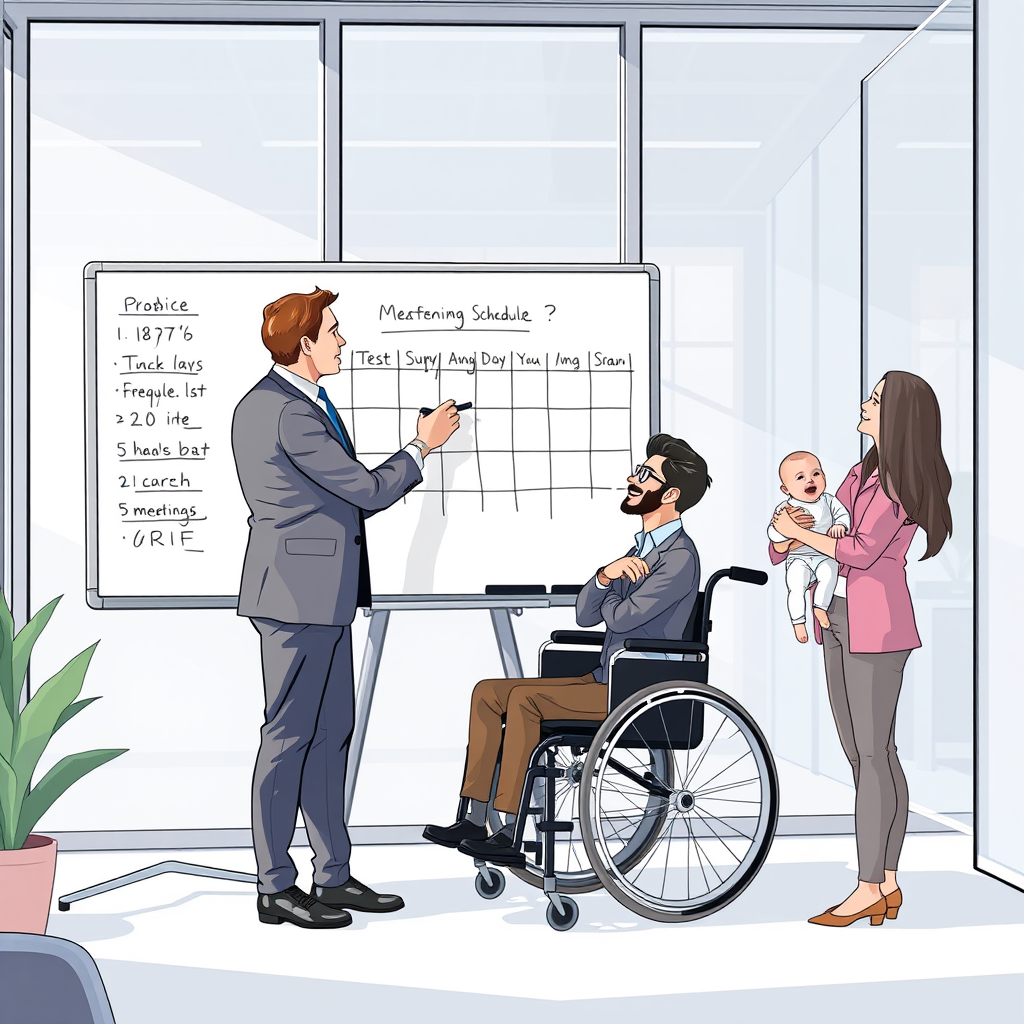
To change your plans or behaviour so you can include or suit other people's needs
The canteen accommodates vegetarians, but vegans still struggle to find anything.
More examples: We rescheduled the meeting to accommodate the team in Singapore. • The hotel can accommodate thirty guests, but not thirty-five. • She's brilliant at accommodating different working styles without lowering her standards.
Common collocations: accommodate someone's needs, accommodate a request, an accommodating attitude
Word family: accommodation (noun), accommodating (adjective), accommodatingly (adverb, rare)
Synonyms: adapt to, cater for, make room for
Antonyms: ignore, refuse, inconvenience
Related concepts: flexibility, compromise, accessibility
Contexts: workplace policies, hospitality, scheduling
Usage note: Two c's, two m's — a classic spelling trap. Use it when someone adjusts to fit others. Note the second meaning: a space can 'accommodate' a number of people.
friction

Tension or disagreement between people; irritation caused by clashing views or habits
There's been some friction between sales and engineering since the reorganisation.
More examples: A little friction is healthy on a team; constant friction is exhausting. • The new open-plan office caused friction over noise almost immediately. • Their working styles created friction, but never open conflict.
Common collocations: cause friction, smooth over friction, friction between departments
Word family: frictionless (adjective), frictional (adjective, technical)
Synonyms: tension, strife, discord
Antonyms: harmony, rapport
Related concepts: conflict, misunderstanding, clash
Contexts: teams, families, politics
Usage note: Uncountable. Softer and more everyday than 'conflict' — friction is the rubbing, not the explosion. Often used with 'some' or 'a bit of' to downplay it.
faux pas

An embarrassing social mistake, often made without realising it
Calling the boss by her first name on day one was his first faux pas of many.
More examples: Wearing white to the wedding was a genuine faux pas — that's reserved for the bride. • She committed a faux pas by asking about his salary; it's just not done here. • It was a minor faux pas, and honestly, nobody remembered it by Friday.
Common collocations: commit a faux pas, a major faux pas, an embarrassing faux pas
Word family: faux pas (plural, same spelling), faux (adjective, as in faux fur)
Synonyms: blunder, gaffe, slip-up
Antonyms: diplomacy, tact
Related concepts: embarrassment, cultural difference, taboo
Contexts: dinner parties, international meetings, weddings
Usage note: Pronounce it 'foh PAH'. Usually singular with 'a' or 'commit/make'. Implies the mistake was unintentional and social, not professional incompetence.
inclusive

Designed or organised so that everyone feels welcome, whatever their background
A truly inclusive party asks people what they'd enjoy, rather than guessing.
More examples: The company claims to be inclusive, but the leadership team tells a different story. • Try to keep the invitation inclusive — partners and kids are welcome too. • Inclusive language isn't about walking on eggshells; it's about precision.
Common collocations: an inclusive workplace, inclusive language, inclusive of everyone
Word family: include (verb), inclusion (noun), inclusivity (noun), exclusively (adverb, opposite sense)
Synonyms: welcoming, open, accommodating
Antonyms: exclusive, elitist, closed
Related concepts: diversity, belonging, equity
Contexts: workplaces, schools, event planning
Usage note: Very common in workplace and policy language. Can describe events, language, attitudes or spaces. Watch the contrast with 'exclusive' — they look similar but are near-opposites.
Vocabulary Check
- What does 'etiquette' mean?
- The polite rules of behaviour in a particular situation
- A formal written policy at work
- A type of celebration held in December
- A legal requirement for companies
- Which sentence uses 'accommodate' correctly?
- She accommodated to the party with enthusiasm.
- The schedule was changed to accommodate colleagues in another time zone.
- He accommodated a faux pas at the dinner table.
- We accommodated the meeting until Friday.
- In which situation would you use 'friction'?
- Two colleagues keep irritating each other over small differences
- A team celebrates a big success together
- Someone makes an embarrassing mistake at dinner
- A company hires more staff for December
- What is a 'faux pas'?
- A deliberate insult to a colleague
- An embarrassing social mistake made without realising
- A formal apology after an argument
- A traditional dish served at parties
- Which workplace would you describe as 'inclusive'?
- One where only senior staff attend events
- One where everyone, whatever their background, feels welcome
- One with strict rules about who can join the party
- One that celebrates only one tradition in December
Idioms & Phrasal Verbs
laugh something off
to react to something embarrassing by making it seem funny and unimportant
He made a silly joke about my accent, so I just laughed it off and carried on.
Usage note: The object can go in the middle or after: 'laughed it off' or 'laughed off the comment'. · Right: laughed it off · Avoid: laughed off it
Usage note: 'Off' suggests pushing the awkward moment away from you, like shaking something off your shoulder.
sand off the rough edges
to remove the difficult or awkward parts until something feels bland
The film sanded off the rough edges of her life story and turned it into something safe and boring.
Usage note: The picture is sanding wood: you rub away the sharp bits, but if you keep going, there's nothing left but a flat surface.
Usage note: Often used critically — it implies something interesting got removed along with the problems.
on your own terms
in the way that you choose, not the way others decide
She agreed to join the family business, but strictly on her own terms.
Usage note: Always plural: 'terms'. It suggests you set the conditions before you agree to something.
Usage note: Slightly formal but very common in conversation about work and relationships.
walk on eggshells
to be extremely careful not to upset someone or cause offence
Ever since the argument, everyone in the office has been walking on eggshells around the boss.
Usage note: The picture: stepping so gently that you don't crack the shells. It's always about people, not situations.
Usage note: Informal and very current. Often used with 'around someone'.
Language Practice: Talking About Cultural Differences
Practice expressing ideas about cultural differences and workplace celebrations. These frames help you qualify, concede and challenge ideas naturally.
- Qualifying an opinion about workplace celebrations
- Emerging: I think it's not really about ___, it's more about ___. — I think it's not really about the decorations, it's more about feeling respected.
- Developing: It's not so much ___ as ___, at least in my experience. — It's not so much the party itself as the message behind it, at least in my experience.
- Expanding: It's not so much that ___ as that ___, which is why I'd argue ___. — It's not so much that people object to celebrating as that they object to being an afterthought, which is why I'd argue consultation matters more than decoration.
- Conceding a point before disagreeing
- Emerging: I see the point about ___, but ___. — I see the point about respect, but you can't please everyone.
- Developing: Granted, ___, but that doesn't mean ___. — Granted, a neutral party avoids offence, but that doesn't mean anyone actually enjoys it.
- Expanding: Granted, ___ — and I wouldn't dismiss that lightly — but the risk is that ___. — Granted, a fully neutral celebration keeps things simple — and I wouldn't dismiss that lightly — but the risk is that everyone feels like a guest at someone else's event.
- Describing social mistakes and their aftermath tactfully
- Emerging: Someone ___ , which was a bit of a faux pas. — Someone asked about her weight, which was a bit of a faux pas.
- Developing: Looking back, they probably shouldn't have ___ , but honestly, it wasn't a big deal. — Looking back, they probably shouldn't have asked if she was 'allowed' to come, but honestly, it wasn't a big deal.
- Expanding: In hindsight, they could easily have avoided ___ , though to be fair, ___ . — In hindsight, they could easily have avoided the whole awkwardness by asking around first, though to be fair, nobody had told them the custom.
Fill in the Blanks
When our company opened an office in three countries at once, December became surprisingly complicated. The first year, we ignored local customs entirely and caused real _____ — people felt their traditions had been erased. The second year, we overcorrected: HR tried to _____ every possible belief, and the 'holiday event' ended up so generic that nobody could tell what we were celebrating. Then a new colleague from Warsaw committed a memorable _____ at the shared lunch, and instead of embarrassment turning into resentment, it sparked an honest conversation. That conversation led to a simple _____ guide — not a rulebook, just a few pages of 'here's what matters to me' written by volunteers. Three years on, our December feels genuinely _____, not because a policy demanded it, but because people finally knew each other well enough to make room.
Word bank: etiquette, accommodate, friction, faux pas, inclusive
Sentence Unscramble
- there's / been / some / friction / between / the / two / teams / since / the / reorganisation
- she / committed / a / minor / faux / pas / by / asking / about / his / salary
- a / truly / inclusive / workplace / asks / people / what / they'd / actually / enjoy
Discussion Questions
In many workplaces, December brings a dilemma: celebrate one big tradition, or dilute everything into a neutral 'holiday event'. The reading suggested that over-neutralising can drain the joy out of the season, while favouring one tradition can leave others feeling like outsiders. Managers often have to choose between these imperfect options.
If you had to choose for your workplace — one big traditional celebration or a deliberately neutral one — which would you pick, and what would you lose either way?
The reading described a colleague who made a clumsy but well-meaning faux pas, and how a light response turned it into a moment of connection. Cultural misunderstandings at work are almost inevitable — the question is what happens next. Some people laugh it off; others carry the sting for years.
Have you ever witnessed or made a cultural faux pas at work or among friends? What happened, and did it get resolved or just quietly buried?
Some companies now pay attention to everything: halal and kosher catering, prayer rooms, floating holidays instead of fixed ones, inclusive language guidelines. Critics say this turns workplaces into minefields where people are afraid to speak; supporters say it simply reflects respect that should have existed all along.
Where would you draw the line between genuine respect for differences and over-sensitivity that makes everyone walk on eggshells? What's an example of going too far?
Imagine a workplace where nobody ever mentions what they celebrate, believe or eat — total neutrality, zero friction, zero curiosity. Some would call that professional; others would call it lonely. The reading argued that pretending differences don't exist is worse than clumsily acknowledging them.
What do you think would actually happen in a workplace like that over a few years — would people be happier, or would something important quietly disappear?
The reading ended with the idea that you can't script respect — you can only make room for it. That puts a lot of weight on everyday behaviour rather than official policy: who asks questions, who shares food, who makes the first move. It suggests culture-building is everyone's job, not HR's.
Do you agree that respect between cultures can't be organised from above? What's one small thing an individual colleague could do that would matter more than any company policy?
Knowledge Check
- Which word describes the unwritten rules of polite behaviour in a professional setting?
- Friction
- Etiquette
- Inclusion
- Accommodation
- True or false: 'friction' usually describes a serious, open conflict between people.
- True
- False
- If a hotel room can 'accommodate' four guests, what does that mean?
- It can fit four guests
- It costs four times more
- It is decorated for four guests
- It refuses four guests
- Which phrase correctly completes the sentence: 'Asking a stranger their salary is a real ___.'
- faux pas
- etiquette
- inclusion
- accommodation
- True or false: 'inclusive' and 'exclusive' mean roughly the same thing.
- True
- False
- If a team is 'walking on eggshells' around their manager, what are they doing?
- They are being very careful not to upset him.
- They are copying everything he does.
- They are arguing with him openly.
- They are ignoring his instructions.
Free to use with your students: Free to teach, screen-share, print and share with your students, with a credit to PlanWise ESL. Please do not sell it or republish it as your own. What you can do with free lessons.