Between Two Worlds: Identity and Feeling at Home
About this lesson: This is a C1 (Advanced) ESL lesson in the Business English category. It takes about 60 minutes. It includes 5 vocabulary words, 4 idioms and phrasal verbs, a reading text, comprehension questions, discussion questions and speaking patterns. Suits one-to-one or small-group online classes. Free to open and teach with no login, and it prints as a PDF.
Print just the discussion questions
How this lesson is built
This is a complete conversation lesson built on a scientific pedagogical formula, not a generic worksheet: recall prior topic vocabulary, pre-teach the new words in depth, read in context, practise active recall with flashcards and synonyms/antonyms, build accuracy with exercises, and finish with deep discussion.
- Warm-up: Discussion questions that connect the topic to the student’s own life and recall vocabulary they already know about the subject.
- Reading: A text written for this CEFR level that uses each new word two or three times in context, giving the student something meaningful to react to.
- Key vocabulary: 5 new words, pre-taught before the reading with a definition, pronunciation guide, example sentences and a picture, plus word families, usage notes, recall flashcards and synonyms/antonyms, giving a solid grounding before reading.
- Comprehension: 5 questions that check the new words: retrieval practice, not rereading.
- Idioms and phrasal verbs: Expressions taken from the reading, each with its meaning, an example and a speaking question.
- Sentence frames: 3 speaking patterns, each at three levels of support (emerging, developing, expanding) with model answers—especially helpful scaffolding for beginners and less confident speakers.
- Gap-fill: The new words again, in a shuffled order, so the student recalls them by meaning in context.
- Sentence unscramble: Natural sentences with the new words to put back in order, reinforcing grammar and collocation.
- Discussion: 5 open questions designed to talk deeply about the subject while actively using the lesson’s target vocabulary: the heart of a conversation lesson.
- Quiz: A short retrieval check that brings every new word back once more.
Unlike a generic worksheet, the new words are taught before the reading and met again in the activities, the speaking is supported at three levels and most of the time goes on the student talking. Teachers who use PlanWise ESL also get per-student vocabulary tracking (recycling earlier words into future readings and questions), a private learner dashboard with flashcards and custom lesson creation, and a downloadable study PDF.
Warm-up: Where Do You Feel At Home?
A quick chat to get you thinking about identity, belonging and the places that shape us.
- When someone asks 'Where are you from?', how do you usually answer — and is it a simple question for you?
- Is there a place that feels like home even though you don't live there?
- Have you ever changed the way you speak or behave to fit in somewhere new?
- Do you think you can belong to two cultures at once, or do you have to choose?
- What's the first thing you notice when you return to a place you used to live?
Reading Text: The Translator at the Dinner Table
A short magazine-style piece about a woman who grew up between two cultures — read it and see how much of her story echoes your own.
Mina was born in Toronto to parents who had left Lahore a decade earlier. At school she was determined to assimilate: she anglicised her nickname, dropped her mother tongue at the gate, and learned to laugh at jokes she only half understood. It worked, in the way that things can work and still cost you something.
At home, the current ran the other way. Her parents wanted a slice of Lahore preserved under the Canadian snow — the food, the language, the expectations. Mina found herself straddling two worlds, fluent in both but fully at home in neither. At family dinners she was the unofficial translator, not just of words but of intentions.
When she moved to Berlin at twenty-eight for work, she assumed she'd feel uprooted all over again. Instead, something surprising happened. Strangers asked where she was from, and for the first time the question felt like an invitation rather than an accusation. Being an outsider, she realised, was a country she already held citizenship in.
Still, the yearning never quite left her — a low, persistent ache for a place that existed mostly in her imagination, stitched together from her parents' stories and her own half-memories. She stopped trying to cure it. 'It's not homesickness,' she says. 'It's more like missing a version of myself.'
Today Mina describes her identity as a work in progress rather than a puzzle to solve. She no longer waits to feel like she fully belongs somewhere. Between cultures, she says, you learn to build a home out of habits, people and language — and to accept that some part of you will always live in limbo, and that this, too, is a kind of freedom.
Key Vocabulary
assimilate
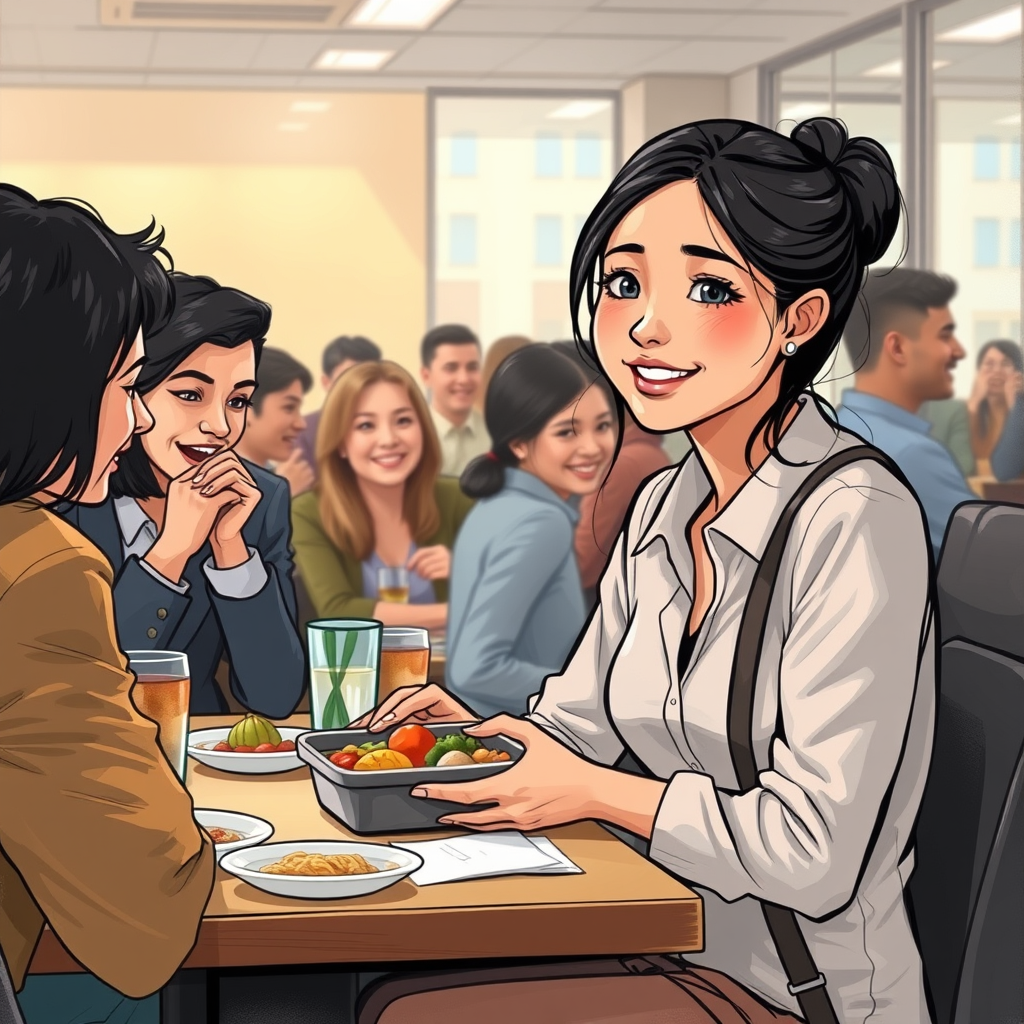
To become part of a different culture or group and gradually blend in.
It took her years to assimilate after moving to a new country.
More examples: The government expected immigrants to assimilate quickly, but integration takes generations. • I never really assimilated at that school — I just kept my head down. • Some people assimilate without losing themselves; others feel they have to.
Common collocations: assimilate into a culture, pressure to assimilate, fully assimilated
Word family: assimilation (noun), assimilated (adjective)
Synonyms: blend in, conform, integrate
Antonyms: stand out, resist, keep apart
Related concepts: integration, cultural identity, conformity
Contexts: immigration, school life, workplace culture
Usage note: Often used about immigrants and minorities. It can carry a slightly negative shade — losing part of your identity — so 'integrate' is the softer alternative.
uprooted
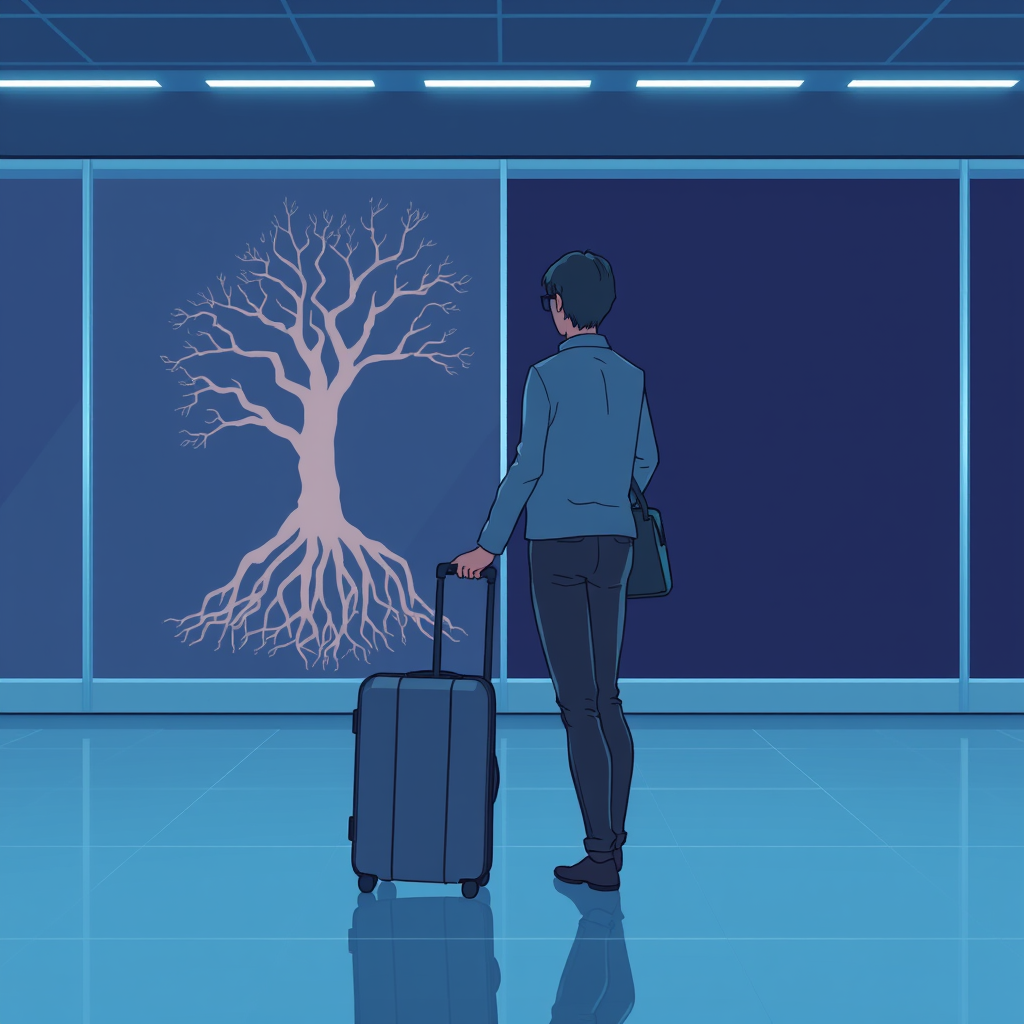
Forced or moved away from your home, feeling unsettled and without roots.
Leaving her hometown at sixteen left her feeling uprooted for years.
More examples: Refugee families often feel uprooted long after they find safety. • I felt uprooted when we moved, like a plant pulled out of its soil. • It took a decade before the new city stopped feeling uprooted and started feeling like mine.
Common collocations: feel uprooted, uprooted from their home, deeply uprooted
Word family: uproot (verb), roots (noun)
Synonyms: displaced, dislocated, unsettled
Antonyms: settled, rooted, grounded
Related concepts: displacement, homesickness, migration
Contexts: moving abroad, refugees, childhood moves
Usage note: Metaphorical, from gardening: a plant torn from soil. Strong emotional word — use for real displacement, not small inconveniences.
straddle

To be part of two different worlds, groups or situations at the same time.
She grew up straddling two cultures, never quite belonging to either.
More examples: The city straddles the border, so everyone there speaks both languages. • As a manager who started on the shop floor, he straddles two worlds at work. • Writers who straddle genres are hard to market but often the most interesting.
Common collocations: straddle two cultures, straddle two worlds, straddle the line between
Word family: straddles (verb form), straddled (past)
Synonyms: bridge, span, occupy both sides
Antonyms: choose one side, commit, settle
Related concepts: hybrid identity, biculturalism, code-switching
Contexts: bicultural families, border towns, career changes
Usage note: Literal meaning is sitting across something, but the figurative use — belonging to two sides at once — is very common in thoughtful conversation and journalism.
yearning

A strong, often quiet longing for something you miss or can't have.
She felt a yearning for the mountains she'd left behind.
More examples: There was a yearning in his voice when he talked about his grandmother's village. • A yearning for belonging drives much of what people do abroad. • The song captures that yearning perfectly — you can hear the distance in it.
Common collocations: a yearning for home, a deep yearning, yearning to return
Word family: yearn (verb), yearned (past)
Synonyms: longing, pining, wistfulness
Antonyms: contentment, satisfaction
Related concepts: nostalgia, homesickness, desire
Contexts: living abroad, lost relationships, memory
Usage note: Emotional and slightly literary, but natural in conversation about deep desires. Usually followed by 'for' or an infinitive.
limbo
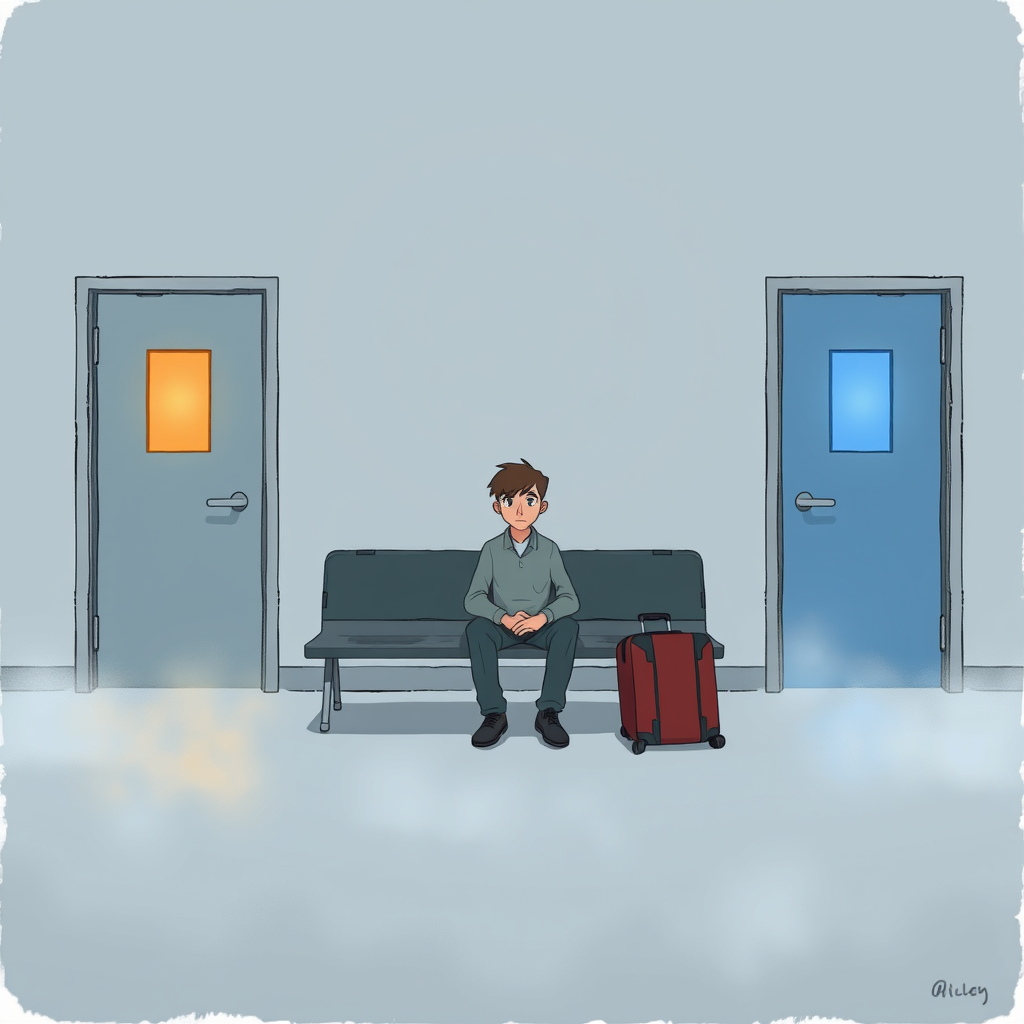
An uncertain state where you're stuck between two situations, with no clear direction.
Her visa application left her in limbo for eight months.
More examples: After graduating, he was in limbo — no job, no plan, no idea what came next. • The negotiations left the whole project in limbo. • She described her twenties as a beautiful kind of limbo.
Common collocations: left in limbo, stuck in limbo, a state of limbo
Word family: in limbo (phrase)
Synonyms: suspended state, no-man's-land, holding pattern
Antonyms: resolution, certainty, settlement
Related concepts: uncertainty, transition, waiting
Contexts: visa processes, career gaps, identity struggles
Usage note: Originally a theological term; now everyday language for any suspended, undecided situation. Often negative, but can be neutral or even playful.
Vocabulary Check
- What does 'assimilate' mean?
- To become part of a different culture and blend in
- To argue with people from another culture
- To translate documents between languages
- To move to a bigger city for work
- In which situation would you feel 'uprooted'?
- After getting a promotion at your own company
- After being moved to a new country against your wishes
- After cooking a meal from your childhood
- After learning a new language for fun
- What does 'straddle' mean in the sentence 'She straddles two cultures'?
- She has rejected both cultures
- She is part of both cultures at the same time
- She travels between two countries often
- She compares the two cultures critically
- What is a 'yearning'?
- A loud complaint
- A formal agreement
- A deep, quiet longing for something
- A sudden surprise
- If your plans are 'in limbo', what is happening?
- They are moving forward faster than expected
- They are stuck in an uncertain state with no clear outcome
- They have been completely cancelled
- They were decided long ago
Idioms & Phrasal Verbs
run the other way
the situation goes in the opposite direction
At work everyone keeps things formal, but at lunch the mood runs the other way — totally relaxed.
Usage note: The picture is a current or flow of water: one force moves one way, another force moves against it. · Right: the current ran the other way · Avoid: the current ran to the other way
Usage note: Often used to contrast two sides of the same person's life, like Mina's school and home.
a work in progress
something not finished yet, still being improved
My German is still a work in progress, but I can finally order coffee without pointing.
Usage note: Usually said about yourself with a light, self-aware tone — it sounds honest and a bit humorous, not like a failure.
Usage note: Common mistake: don't add 'a' twice. · Right: my life is a work in progress · Avoid: my life is a work in a progress
put down roots
settle somewhere and make it your home
After five years of moving around, she finally put down roots in Lisbon.
Usage note: The picture is a plant growing roots into the soil — it suggests staying for a long time, not just living somewhere.
Usage note: Not split: you put down roots, you don't 'put roots down' as often, though both are heard. · Right: put down roots · Avoid: put roots down (less natural)
be torn between
find two choices equally difficult to decide between
I'm torn between staying near my family and taking the job abroad.
Usage note: The picture is being pulled apart from both sides — stronger than just 'undecided'; it suggests real emotional conflict.
Usage note: Followed by 'between X and Y', or 'between doing X and doing Y'. · Right: torn between moving and staying · Avoid: torn to move or stay
Language Practice: Talking About Belonging
Practice expressing nuanced ideas about identity, belonging and compromise.
- Qualifying an opinion about identity
- Emerging: In a way, I ___, though ___. — In a way, I feel like a local here, though people still spot I'm not.
- Developing: I'd say I ___, though there's a part of me that ___. — I'd say I belong here now, though there's a part of me that switches off when I go back.
- Expanding: It's not so much that I ___; it's more that ___, though honestly ___. — It's not so much that I miss the place; it's more that I miss who I was there, though honestly that person needed to grow anyway.
- Conceding a point before disagreeing
- Emerging: I see the point about ___, but ___. — I see the point about fitting in, but you shouldn't have to erase yourself.
- Developing: Admittedly, ___, but that doesn't change the fact that ___. — Admittedly, learning the language helps enormously, but that doesn't change the fact that acceptance isn't guaranteed.
- Expanding: While I take the point that ___, I'd push back on ___, because ___. — While I take the point that blending in makes life easier, I'd push back on the idea that it's a duty, because ease is not the same as belonging.
- Describing personal experience of in-betweenness
- Emerging: There was a time when I felt ___. — There was a time when I felt uprooted.
- Developing: I remember feeling ___ when ___, and what helped was ___. — I remember feeling uprooted when I changed schools, and what helped was finding one person who got me.
- Expanding: Looking back, I was ___ — ___ — and it took me ___ to realise that ___. — Looking back, I was straddling two worlds — fluent in both, at home in neither — and it took me years to realise that the in-between was actually my strength.
Fill in the Blanks
When Daniel moved abroad for university, he expected to _____ within a semester. Instead, he spent his first year feeling _____, wandering a city that didn't know his name and _____ for the noise of his family's kitchen. He tried to _____ both worlds — video calls at midnight, local pubs at nine — but mostly he just felt stuck in _____, belonging nowhere in particular. Slowly, though, the city grew on him, and the ache faded into something he could live with.
Word bank: assimilate, uprooted, straddle, yearning, limbo
Sentence Unscramble
- She / spent / years / straddling / two / cultures / before / feeling / at / home / in / either.
- His / visa / application / left / him / in / limbo / for / almost / a / year.
- You / can't / force / people / to / assimilate / and / then / blame / them / for / losing / their / roots.
Discussion Questions
People often say you should 'blend in' when you move somewhere new — learn the language, adopt the habits, keep your head down. Others argue that integration should be a two-way street: newcomers keep their identity, and the host culture adapts too. The word 'assimilate' itself carries this tension, since it can imply losing something.
Where's the line between adapting to a new culture and losing yourself in it? Have you ever crossed it — or watched someone else cross it?
Mina in the reading felt a yearning for a place that existed mostly in her imagination — built from her parents' stories and half-memories. Many people who move away describe something similar: missing not the actual place, but a version of it, or a version of themselves.
Is there something you yearn for that doesn't really exist anymore — a place, a time, or a version of yourself? What is it exactly that you miss?
Some people describe living between cultures as being stuck in limbo — no clear identity, always explaining yourself. Others see it as a superpower: you learn to read two worlds, question assumptions, and build an identity on your own terms instead of inheriting one.
If you spent ten years living between two cultures, do you think it would break you or build you? What would be the hardest part for you personally?
Parents who move abroad often face a dilemma: hold tightly to their home culture so their children don't lose it, or loosen their grip so the children can fit in and thrive. The children, meanwhile, often feel uprooted in a different way — not from a country, but from a clear answer to 'who am I?'
Imagine raising a child in a country that isn't the one you grew up in. Would you push them to assimilate, or fight to keep your culture alive at home? Why?
People often say 'home is where the heart is', but for many it's more complicated: home can be a smell, a language, a group of people, or simply a feeling you carry with you. Some never find it again after leaving; others learn to build it from scratch anywhere.
Do you think home is a place you find, or something you build? And could you build it anywhere, or are some places simply not home for you?
Knowledge Check
- Which word describes being stuck between two situations with no clear outcome?
- Yearning
- Assimilate
- Limbo
- Straddle
- True or false: 'uprooted' suggests a gentle, voluntary move.
- True
- False
- Which sentence uses 'straddle' correctly?
- He straddled his homework before dinner.
- The town straddles the border, so two languages mix there.
- She straddled a yearning for the seaside.
- They straddled the visa in limbo.
- A 'yearning' is best described as:
- A sudden decision
- A deep, quiet longing
- A loud argument
- A formal request
- True or false: 'assimilate' can carry a negative shade, implying you lose part of your identity.
- True
- False
- If someone says their cooking is 'a work in progress', what do they mean?
- They have completely given up on cooking.
- They think their cooking is already perfect.
- They are still learning and getting better at it.
- They only cook at work, never at home.
Free to use with your students: Free to teach, screen-share, print and share with your students, with a credit to PlanWise ESL. Please do not sell it or republish it as your own. What you can do with free lessons.