Me and My Family
About this lesson: This is an A1 (Beginner) ESL lesson in the General English category. It takes about 60 minutes. It includes 5 vocabulary words, a reading text, comprehension questions, discussion questions and speaking patterns. Suits one-to-one or small-group online classes. Free to open and teach with no login, and it prints as a PDF.
Print just the discussion questions
How this lesson is built
This is a complete conversation lesson built on a scientific pedagogical formula, not a generic worksheet: recall prior topic vocabulary, pre-teach the new words in depth, read in context, practise active recall with flashcards and synonyms/antonyms, build accuracy with exercises, and finish with deep discussion.
- Warm-up: Discussion questions that connect the topic to the student’s own life and recall vocabulary they already know about the subject.
- Reading: A text written for this CEFR level that uses each new word two or three times in context, giving the student something meaningful to react to.
- Key vocabulary: 5 new words, pre-taught before the reading with a definition, pronunciation guide, example sentences and a picture, plus word families, usage notes, recall flashcards and synonyms/antonyms, giving a solid grounding before reading.
- Comprehension: 5 questions that check the new words: retrieval practice, not rereading.
- Sentence frames: 3 speaking patterns, each at three levels of support (emerging, developing, expanding) with model answers—especially helpful scaffolding for beginners and less confident speakers.
- Gap-fill: The new words again, in a shuffled order, so the student recalls them by meaning in context.
- Sentence unscramble: Natural sentences with the new words to put back in order, reinforcing grammar and collocation.
- Discussion: 5 open questions designed to talk deeply about the subject while actively using the lesson’s target vocabulary: the heart of a conversation lesson.
- Quiz: A short retrieval check that brings every new word back once more.
Unlike a generic worksheet, the new words are taught before the reading and met again in the activities, the speaking is supported at three levels and most of the time goes on the student talking. Teachers who use PlanWise ESL also get per-student vocabulary tracking (recycling earlier words into future readings and questions), a private learner dashboard with flashcards and custom lesson creation, and a downloadable study PDF.
Warm-up: Talk About You
Look at the questions and tell me about yourself and your family. There are no wrong answers!
- What is your name?
- Where do you live?
- How many people are in your family?
- Do you have brothers or sisters?
- Who do you live with?
Reading Text: Meet Leo's Family
Read about Leo and his family. Then we will talk about your family too.
My name is Leo. I am twenty years old. I live with my parents. My parents are Ana and Marco. They are very kind.
My parents married twenty-five years ago. They married in a small town near the sea. Every year, they go back there together.
I have one sister and one cousin. My sister is older than me. My cousin Sam is the same age as my sister.
I am the youngest in my family. My cousin's little daughter is the youngest too. She is only two years old.
On Sundays, we eat together at my grandmother's house. We cook, we talk, and we laugh. I love my family very much.
Key Vocabulary
parents

your mother and father
My parents live in a small house.
More examples: I call my parents every Sunday. • Her parents cook very well. • My parents help me a lot.
Common collocations: my parents' house, live with your parents, call your parents
Word family: parent, parenting
Synonyms: mom and dad, mother and father
Antonyms: children, kids
Related concepts: family, mother, father
Contexts: home, family talk, holidays
Usage note: Always use 'parents' for both mother and father together. Use 'my', 'your', 'his', 'her' before it.
cousin
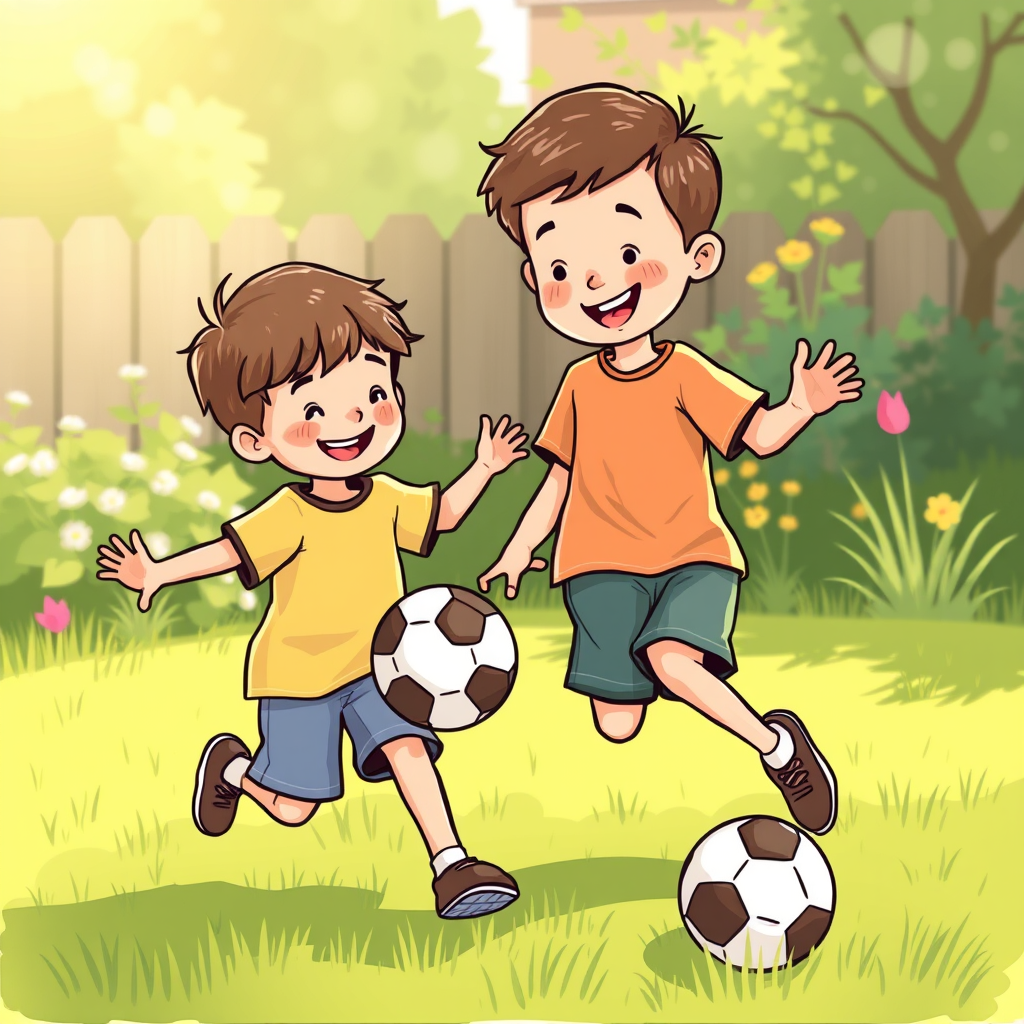
the child of your aunt or uncle
My cousin Sam lives in Canada.
More examples: I play football with my cousin. • She has five cousins. • My cousin is ten years old.
Common collocations: my cousin's house, a young cousin, visit your cousin
Word family: aunt, uncle
Synonyms: family member, relative
Antonyms: stranger
Related concepts: aunt, uncle, family tree
Contexts: family parties, childhood, holidays
Usage note: Use 'cousin' for boys and girls. Say 'he' or 'she' after the word.
married

having a husband or wife
My sister married last year.
More examples: They are married with two children. • He married his best friend. • Are you married or single?
Common collocations: get married, be married to someone, married for ten years
Word family: marry, marriage
Synonyms: with a husband or wife
Antonyms: single, divorced
Related concepts: wedding, husband, wife
Contexts: weddings, family talk, meeting people
Usage note: Say 'get married' for the action. Say 'be married' for the state. Ask: 'Are you married?'
youngest
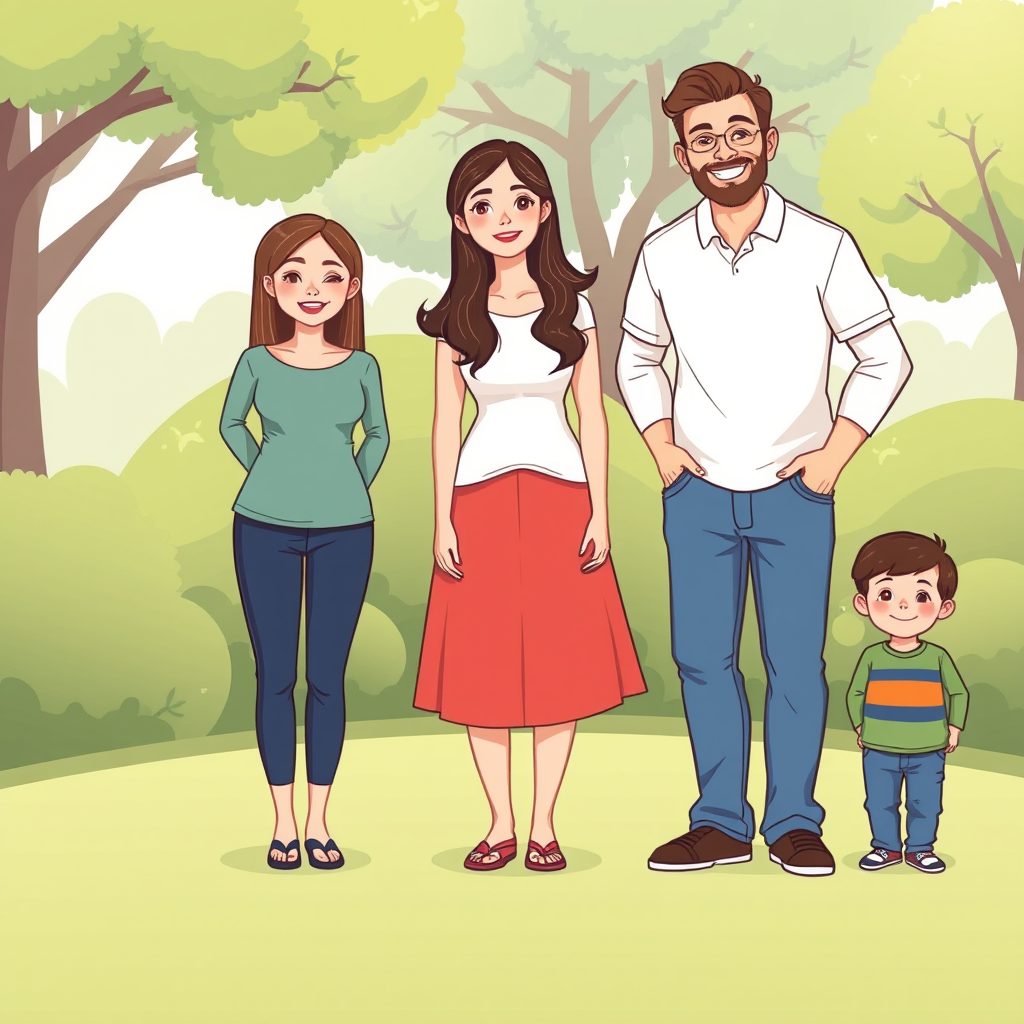
the one with the smallest age
I am the youngest in my family.
More examples: She is the youngest child. • My youngest brother is five. • The youngest person here is my cousin.
Common collocations: the youngest child, the youngest in the family, my youngest sister
Word family: young, younger
Synonyms: the little one, the baby of the family
Antonyms: oldest, eldest
Related concepts: young, age, brothers and sisters
Contexts: family talk, birthdays, photos
Usage note: Always use 'the' before 'youngest': 'the youngest'. Use it for people in one family or group.
together
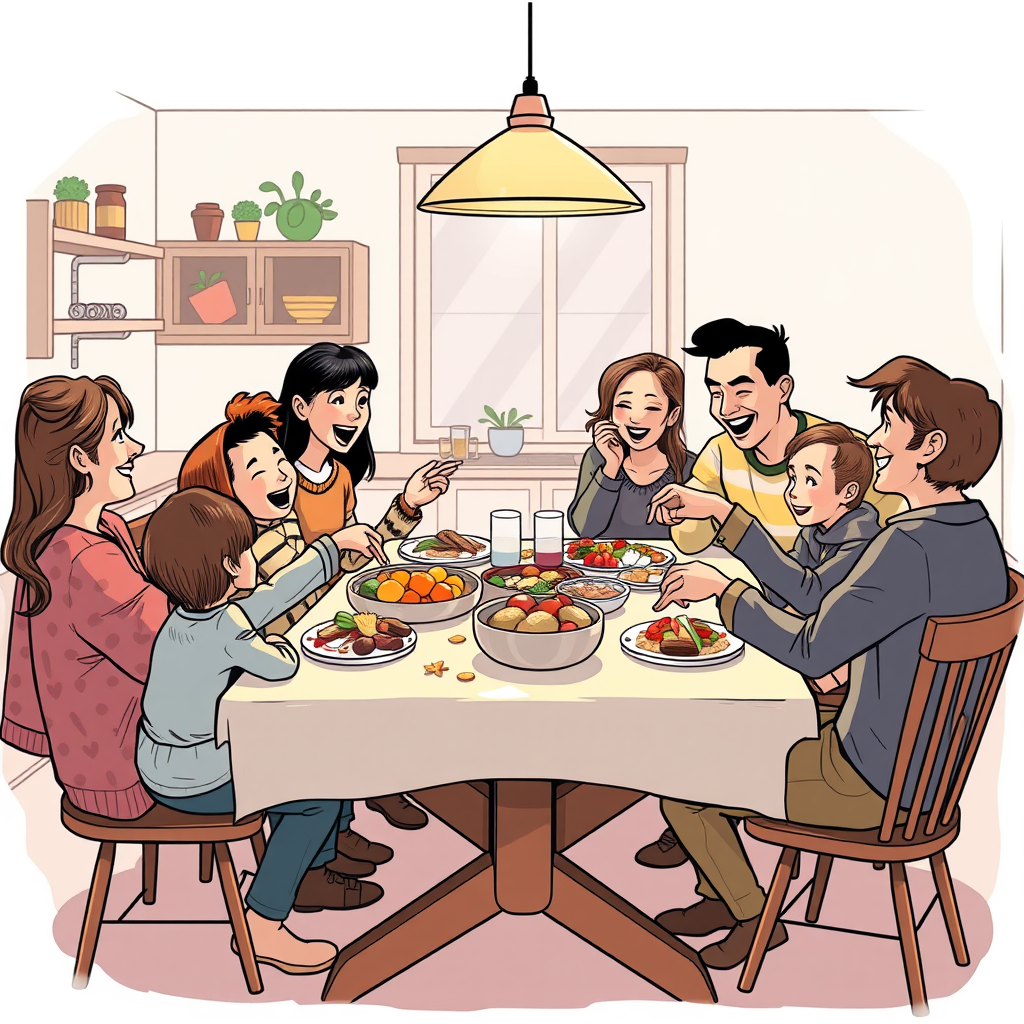
with each other, in one place
We eat dinner together every night.
More examples: They walk to school together. • Let's watch a movie together. • The family plays games together.
Common collocations: live together, eat together, spend time together
Word family: gather
Synonyms: with each other, as a group
Antonyms: alone, apart
Related concepts: family time, sharing, friends
Contexts: meals, holidays, games
Usage note: Put 'together' at the end of the sentence: 'We play together.' It shows two or more people do the same thing.
Vocabulary Check
- What does 'cousin' mean?
- Your mother and father
- The child of your aunt or uncle
- Your sister's daughter
- Your grandmother
- Which sentence uses 'married' correctly?
- She married to a doctor.
- She is married a doctor.
- She is married to a doctor.
- She marry a doctor.
- What does 'youngest' mean?
- The tallest person
- The person with the smallest age
- The first child
- The oldest person
- What does 'together' mean?
- Alone in a room
- Very fast
- With each other
- Every day
- Which sentence uses 'parents' correctly?
- My parents is at home.
- My parents are at home.
- My parent are at home.
- My parents am at home.
Language Practice: Talking About Family
Practice saying things about your family with these sentence patterns.
- Describing your family
- Emerging: I have ___. — I have one sister.
- Developing: I have ___ and ___. — I have one brother and two cousins.
- Expanding: I have ___, and he/she is ___. — I have one sister, and she is a teacher.
- Talking about family activities
- Emerging: We ___ together. — We eat together.
- Developing: We ___ together on ___. — We eat together on Sundays.
- Expanding: Every ___, we ___ together and ___. — Every Sunday, we eat together and talk a lot.
- Comparing ages in the family
- Emerging: I am the ___ in my family. — I am the youngest in my family.
- Developing: My ___ is the youngest in my family. — My brother is the youngest in my family.
- Expanding: I am the youngest, and my ___ is the oldest. — I am the youngest, and my father is the oldest.
Fill in the Blanks
My name is Sofia. I live with my _____ in a small city. I have one _____ named Rita. She is very funny. My sister _____ two years ago. She and her husband live near us. I am the _____ in my family. On Saturdays, we all cook _____ at my grandmother's house.
Word bank: parents, cousin, married, youngest, together
Sentence Unscramble
- My / parents / live / in / a / small / house.
- We / eat / dinner / together / every / night.
- My / cousin / is / the / youngest / in / the / family.
Discussion Questions
Leo lives with his parents. His parents are kind and they cook well. Many people live with their parents, and some people live alone or with friends.
Do you live with your parents? What do you like about your home?
Leo has one sister and one cousin. Cousins can be like friends. Some people see their cousins every week, and some only at big family parties.
Do you have cousins? Tell me about one of them.
Leo's parents married twenty-five years ago. People marry at different ages in different countries. Some people marry young, and some marry late.
Are you married? At what age do people marry in your country?
Leo is the youngest in his family. In some families, the youngest child gets a lot of attention. In big families, everyone has a different place.
Are you the youngest, the oldest, or in the middle? Do you like your place in the family?
On Sundays, Leo's family eats together at his grandmother's house. They cook, talk, and laugh. Family meals are important in many countries.
When does your family spend time together? What do you do together?
Knowledge Check
- Your aunt's son is your ___.
- brother
- cousin
- uncle
- parent
- True or false: 'Parents' means one mother or one father.
- True
- False
- Which word means 'with each other'?
- youngest
- married
- together
- cousin
- The baby of the family, born last, is the ___.
- oldest
- youngest
- married
- together
- True or false: We say 'She is married to a teacher.'
- True
- False
Free to use with your students: Free to teach, screen-share, print and share with your students, with a credit to PlanWise ESL. Please do not sell it or republish it as your own. What you can do with free lessons.