Asking for Directions in a New City
About this lesson: This is an A1 (Beginner) ESL lesson in the General English category. It takes about 60 minutes. It includes 5 vocabulary words, a reading text, comprehension questions, discussion questions and speaking patterns. Suits one-to-one or small-group online classes. Free to open and teach with no login, and it prints as a PDF.
Print just the discussion questions
How this lesson is built
This is a complete conversation lesson built on a scientific pedagogical formula, not a generic worksheet: recall prior topic vocabulary, pre-teach the new words in depth, read in context, practise active recall with flashcards and synonyms/antonyms, build accuracy with exercises, and finish with deep discussion.
- Warm-up: Discussion questions that connect the topic to the student’s own life and recall vocabulary they already know about the subject.
- Reading: A text written for this CEFR level that uses each new word two or three times in context, giving the student something meaningful to react to.
- Key vocabulary: 5 new words, pre-taught before the reading with a definition, pronunciation guide, example sentences and a picture, plus word families, usage notes, recall flashcards and synonyms/antonyms, giving a solid grounding before reading.
- Comprehension: 5 questions that check the new words: retrieval practice, not rereading.
- Sentence frames: 3 speaking patterns, each at three levels of support (emerging, developing, expanding) with model answers—especially helpful scaffolding for beginners and less confident speakers.
- Gap-fill: The new words again, in a shuffled order, so the student recalls them by meaning in context.
- Sentence unscramble: Natural sentences with the new words to put back in order, reinforcing grammar and collocation.
- Discussion: 5 open questions designed to talk deeply about the subject while actively using the lesson’s target vocabulary: the heart of a conversation lesson.
- Quiz: A short retrieval check that brings every new word back once more.
Unlike a generic worksheet, the new words are taught before the reading and met again in the activities, the speaking is supported at three levels and most of the time goes on the student talking. Teachers who use PlanWise ESL also get per-student vocabulary tracking (recycling earlier words into future readings and questions), a private learner dashboard with flashcards and custom lesson creation, and a downloadable study PDF.
Warm-up: Getting Lost
Look at the pictures and talk about being in a new city. Do you know the way to places?
- Do you like visiting new cities?
- Do you know your street well?
- Do you use a map on your phone?
- Do you ask people for help when you travel?
- Do you like walking in a new place?
Reading Text: A Day in a New City
Marco is on holiday. He is in a big city for the first time. He needs help to find places.
Marco is in a new city. He wants to see the old castle. He does not know the way. He asks a woman for directions. She smiles and helps him.
The woman says: 'Go straight down this street. Then turn left at the bank.' Marco says thank you. He walks straight for five minutes.
At the bank, Marco turns left. Now he is at a corner. The street is small and quiet. He sees a coffee shop and a book shop.
But the castle is not there. Marco is lost again. A man helps him. He says: 'Cross the road at the lights. The castle is in front of you.'
Marco crosses the big road. He looks up. The castle is there! It is old and beautiful. Marco takes a photo. He is happy. Directions are very useful in a new city.
Key Vocabulary
directions

words that tell you the way
I ask a man for directions to the station.
More examples: She gives me directions to the hotel. • I need directions. I am lost. • Can you give me directions, please?
Common collocations: ask for directions, give directions, follow the directions
Word family: direct (verb), directly (adverb)
Synonyms: the way, instructions, help
Antonyms: confusion, being lost
Related concepts: map, street, travel
Contexts: new city, train station, asking a stranger
Usage note: Use it when you talk about the way to a place. It is usually plural: directions.
turn
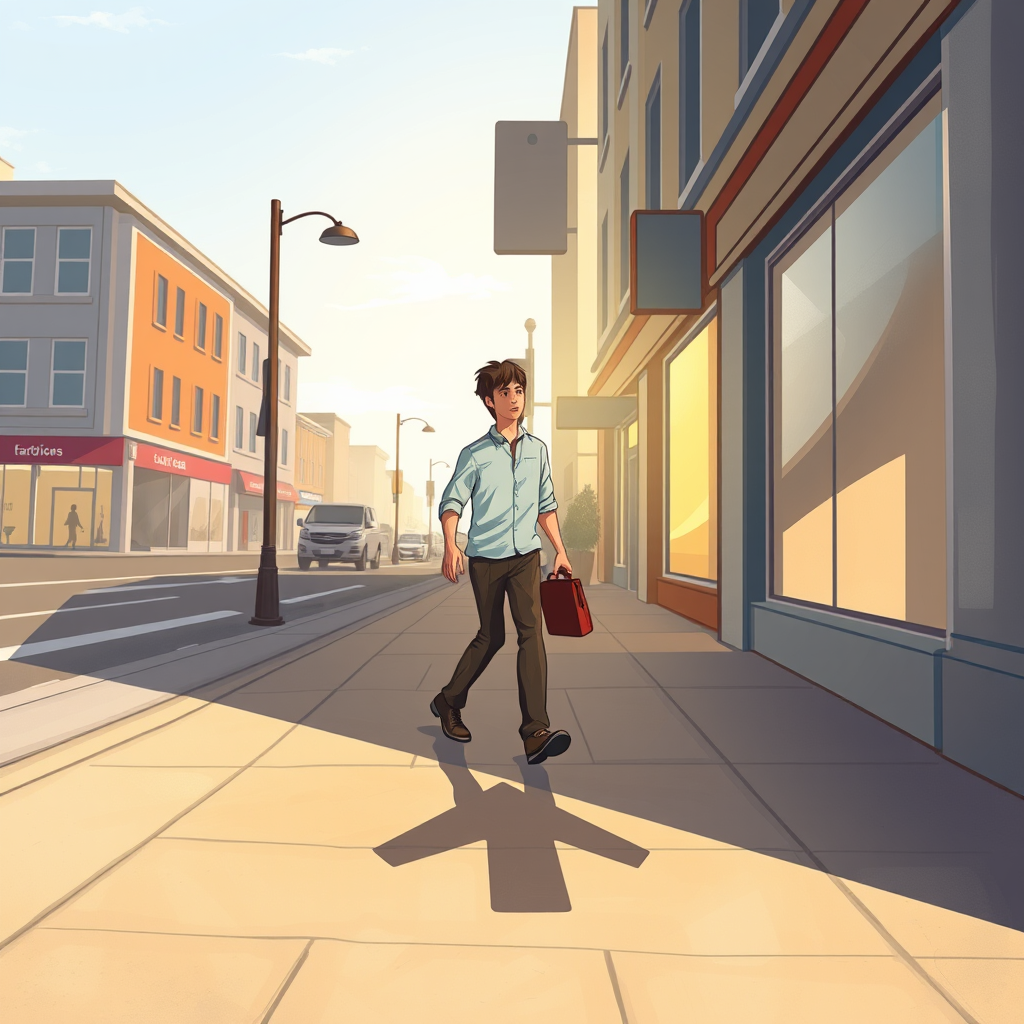
to change the way you go
Turn left at the bank.
More examples: Turn right at the lights. • I turn left after the shop. • Do not turn here. Go straight.
Common collocations: turn left, turn right, turn at the corner
Word family: turn (noun), return (verb)
Synonyms: change direction, go around, bend
Antonyms: go straight, continue
Related concepts: left, right, corner
Contexts: giving directions, driving, walking in a city
Usage note: Use with left or right: turn left, turn right. Very common when people give directions.
corner
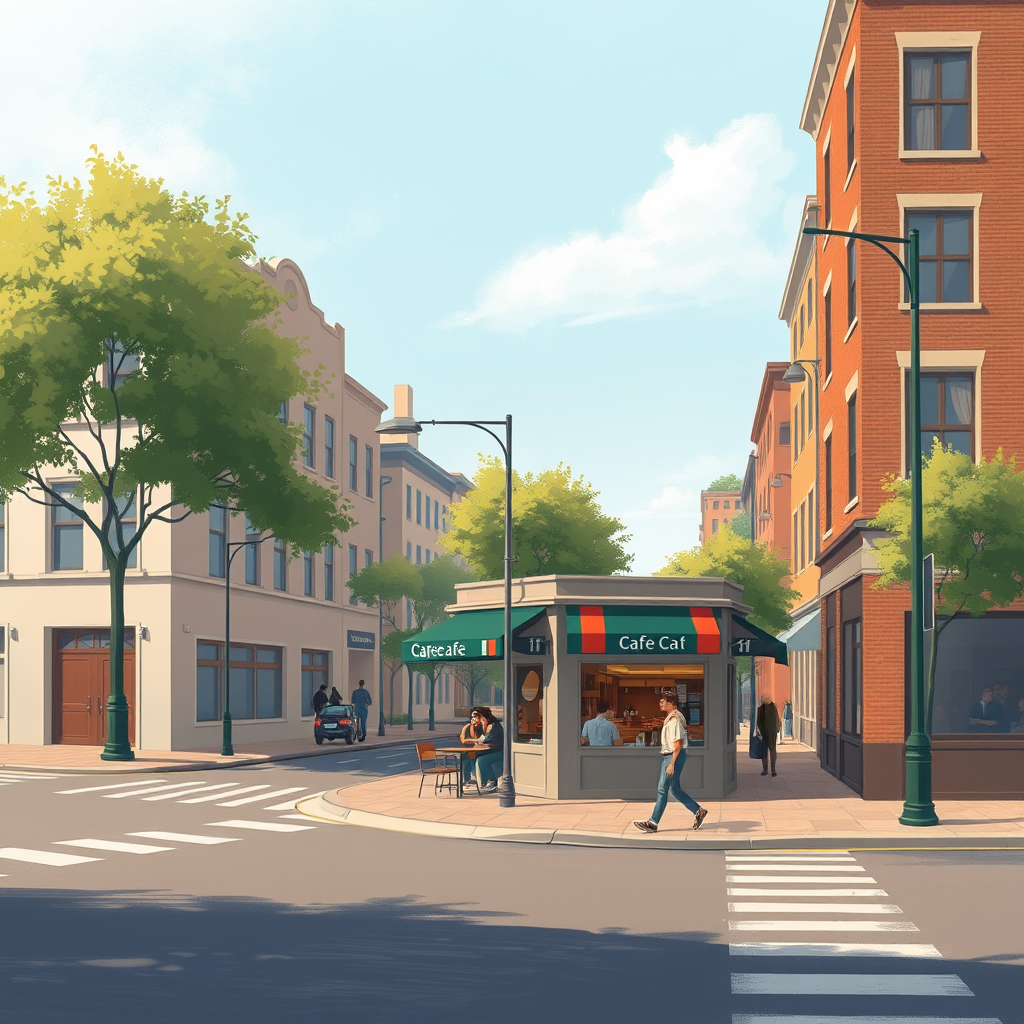
the place where two streets meet
The shop is on the corner.
More examples: Turn left at the corner. • There is a cafe on the corner. • I wait for you at the corner.
Common collocations: at the corner, on the corner, around the corner
Word family: corner (adjective use)
Synonyms: junction, crossing point, bend
Antonyms: middle, center
Related concepts: street, turn, building
Contexts: city streets, giving directions, meeting friends
Usage note: Use 'at' or 'on' with corner: at the corner, on the corner. Very useful for street directions.
straight

in one line, with no turns
Go straight for two minutes.
More examples: Go straight down this road. • The road goes straight to the park. • Walk straight and do not stop.
Common collocations: go straight, walk straight, straight ahead
Word family: straight (adjective)
Synonyms: ahead, forward, directly
Antonyms: around, back
Related concepts: line, road, walk
Contexts: giving directions, roads, walking
Usage note: Very common in directions: 'Go straight ahead.' Means keep walking, do not turn.
cross

to go from one side to the other
Cross the road at the lights.
More examples: Cross the street and turn right. • We cross the bridge to the park. • Do not cross here. It is dangerous.
Common collocations: cross the road, cross the street, cross at the lights
Word family: crossing (noun), crosswalk (noun)
Synonyms: go across, traverse, pass over
Antonyms: stay, stop
Related concepts: road, street, bridge
Contexts: crossing streets, crossing bridges, traffic
Usage note: Use for roads, streets, bridges and rivers. 'Cross the road' means walk to the other side.
Vocabulary Check
- What does 'directions' mean?
- Words that tell you the way
- A kind of food
- A big building
- A fast car
- Which sentence uses 'turn' correctly?
- I turn a coffee in the morning.
- Turn left at the bank.
- She turns very happy today.
- We turn the city is big.
- What is a 'corner'?
- A kind of animal
- A place where two streets meet
- A big river
- A time of day
- When someone says 'Go straight', what do you do?
- You go back home
- You walk in one line with no turns
- You run very fast
- You take a taxi
- In which situation would you use 'cross'?
- When you cook dinner
- When you go to the other side of the road
- When you sleep at night
- When you buy a ticket
Language Practice: Directions
Practice asking for and giving directions.
- Asking for directions
- Emerging: Excuse me, where is ___? — Excuse me, where is the station?
- Developing: Excuse me, how do I get to ___? — Excuse me, how do I get to the museum?
- Expanding: Excuse me, I am lost. Can you give me directions to ___? — Excuse me, I am lost. Can you give me directions to the old castle?
- Giving simple directions
- Emerging: Go ___. — Go straight.
- Developing: Turn ___ at the ___. — Turn left at the bank.
- Expanding: Go straight, then turn ___ at the ___, and cross the ___. — Go straight, then turn left at the bank, and cross the road.
- Talking about places in your city
- Emerging: There is a ___ near my home. — There is a shop near my home.
- Developing: There is a ___ on the corner of my street. — There is a small shop on the corner of my street.
- Expanding: I often go to ___. I turn ___ at the ___ near my home. — I often go to the market. I turn right at the big bank near my home.
Fill in the Blanks
Anna is in a new city. She wants to find the train station. She asks a man for _____. The man says: 'Go _____ down this street. Then _____ right at the big hotel.' Anna walks and turns right. Now she is at a _____. The station is on the other side, so she _____ the road. The station is there. Anna is happy.
Word bank: directions, straight, turn, corner, cross
Sentence Unscramble
- Turn / left / at / the / bank.
- Go / straight / down / this / street.
- Cross / the / road / at / the / lights.
Discussion Questions
Marco is in a new city and he is lost. He asks people for directions. People are friendly and they help him. Now he finds all the places he wants to see.
Are you good at finding places in a new city? Why or why not?
When you are lost, you can ask a person on the street. You can also use a map on your phone. Some people like to ask people. Some people like the phone.
Do you ask people or use your phone when you need directions? Why?
Think about your street. Maybe there is a shop, a park or a bus stop near your home. You can give directions from your home to these places.
What is near your home? Can you give me directions from your home to one place?
Sometimes people give directions and we do not understand. Sometimes we turn left, but we need to turn right. It is okay. We can ask again.
Do you ever get lost? Tell me about one time.
In Marco's city, people are friendly and they help him. In some places, people talk a lot. In other places, people are quiet. Every city is different.
In your city, do people help strangers? Do you like to help people who ask for directions?
Knowledge Check
- You want to find the station. What do you say?
- Excuse me, where is the station?
- Excuse me, the station is good.
- Excuse me, I like the station.
- Excuse me, the station is big.
- 'Go straight' means turn left or right.
- True
- False
- Where do two streets meet?
- In a river
- At the corner
- In the sky
- At the station
- You are on one side of the road. The station is on the other side. What do you do?
- You sleep
- You cross the road
- You turn the road
- You go straight home
- 'Turn left at the bank' is a direction.
- True
- False
Free to use with your students: Free to teach, screen-share, print and share with your students, with a credit to PlanWise ESL. Please do not sell it or republish it as your own. What you can do with free lessons.