Walking in Nature: Why Time Outdoors Is Good for Us
About this lesson: This is a B2 (Upper Intermediate) ESL lesson in the General English category. It takes about 60 minutes. It includes 5 vocabulary words, 4 idioms and phrasal verbs, a reading text, comprehension questions, discussion questions and speaking patterns. Suits one-to-one or small-group online classes. Free to open and teach with no login, and it prints as a PDF.
Print just the discussion questions
How this lesson is built
This is a complete conversation lesson built on a scientific pedagogical formula, not a generic worksheet: recall prior topic vocabulary, pre-teach the new words in depth, read in context, practise active recall with flashcards and synonyms/antonyms, build accuracy with exercises, and finish with deep discussion.
- Warm-up: Discussion questions that connect the topic to the student’s own life and recall vocabulary they already know about the subject.
- Reading: A text written for this CEFR level that uses each new word two or three times in context, giving the student something meaningful to react to.
- Key vocabulary: 5 new words, pre-taught before the reading with a definition, pronunciation guide, example sentences and a picture, plus word families, usage notes, recall flashcards and synonyms/antonyms, giving a solid grounding before reading.
- Comprehension: 5 questions that check the new words: retrieval practice, not rereading.
- Idioms and phrasal verbs: Expressions taken from the reading, each with its meaning, an example and a speaking question.
- Sentence frames: 3 speaking patterns, each at three levels of support (emerging, developing, expanding) with model answers—especially helpful scaffolding for beginners and less confident speakers.
- Gap-fill: The new words again, in a shuffled order, so the student recalls them by meaning in context.
- Sentence unscramble: Natural sentences with the new words to put back in order, reinforcing grammar and collocation.
- Discussion: 5 open questions designed to talk deeply about the subject while actively using the lesson’s target vocabulary: the heart of a conversation lesson.
- Quiz: A short retrieval check that brings every new word back once more.
Unlike a generic worksheet, the new words are taught before the reading and met again in the activities, the speaking is supported at three levels and most of the time goes on the student talking. Teachers who use PlanWise ESL also get per-student vocabulary tracking (recycling earlier words into future readings and questions), a private learner dashboard with flashcards and custom lesson creation, and a downloadable study PDF.
Warm-up: Talking About Time Outdoors
Look at the questions and talk about your own experiences of walking and spending time outside.
- When was the last time you went for a long walk? Where did you go?
- Do you prefer walking in a city or in the countryside? Why?
- What do you like to do when you want to relax after a busy day?
- Do you think people today spend enough time outside? What about you?
- If you had a free day tomorrow and perfect weather, what would you do outdoors?
Reading Text: The Simple Power of a Walk
Read a short article about why walking in nature has become so popular, and what it does for our minds and bodies.
Every Sunday morning, Marta leaves her phone at home and walks up the hill behind her town. The path is steep, but the view from the top is breathtaking: green fields, a slow river and, on clear days, distant mountains. She says the walk is the best part of her week.
Marta is not alone. All over the world, more people are discovering that a simple walk can help them unwind after a stressful week. Doctors in some countries even prescribe walks in nature instead of medicine. They call it 'green therapy', and supporters say it works.
Why does it help? Psychologists believe that natural scenes let our brains switch off in a way that city streets do not. There are no adverts, no traffic and no notifications demanding our attention. After twenty minutes among trees, many people feel calmer and think more clearly.
There are physical benefits too. Walking is invigorating: your heart beats faster, your breathing deepens and fresh air wakes you up in a way that coffee cannot. Regular walkers often report better sleep, more energy and fewer minor illnesses than people who stay indoors all weekend.
Not everyone is convinced, of course. Some researchers argue that the evidence for 'green therapy' is weaker than the headlines suggest, and that any exercise is good for your well-being, whether it happens in a forest or a shopping centre. Perhaps the real message is simpler: move your body, and your mind will thank you.
Key Vocabulary
unwind

To relax after a period of work or stress
After a long day at work, I unwind by walking along the river.
More examples: A hot bath is my favourite way to unwind in the evening. • I need a holiday to really unwind — a weekend isn't enough. • How do you unwind when work gets stressful?
Common collocations: unwind after work, unwind with a book, a chance to unwind
Word family: wind down
Synonyms: relax, de-stress, chill out
Antonyms: stress out, tense up
Related concepts: rest, free time, hobbies
Contexts: after work, weekends, holidays
Usage note: 'Unwind' is an irregular verb: unwind, unwound, unwound. It is usually used about people, not things. It often appears with 'after' — you unwind after something stressful.
invigorating

Making you feel fresh, energetic and full of life
The cold sea air was invigorating — I felt awake the whole day.
More examples: An invigorating morning swim is popular in many coastal towns. • She finds a brisk walk in the rain strangely invigorating. • The mountain air is so invigorating that you sleep like a baby.
Common collocations: invigorating walk, invigorating air, feel invigorated
Word family: invigorate, invigorated
Synonyms: refreshing, energising, stimulating
Antonyms: tiring, draining
Related concepts: fresh air, exercise, energy
Contexts: cold weather, sport, morning routines
Usage note: Use it for things that give you energy: air, exercise, cold water, a brisk wind. It is stronger and more positive than just 'refreshing'. People usually feel 'invigorated', while the thing itself is 'invigorating'.
well-being
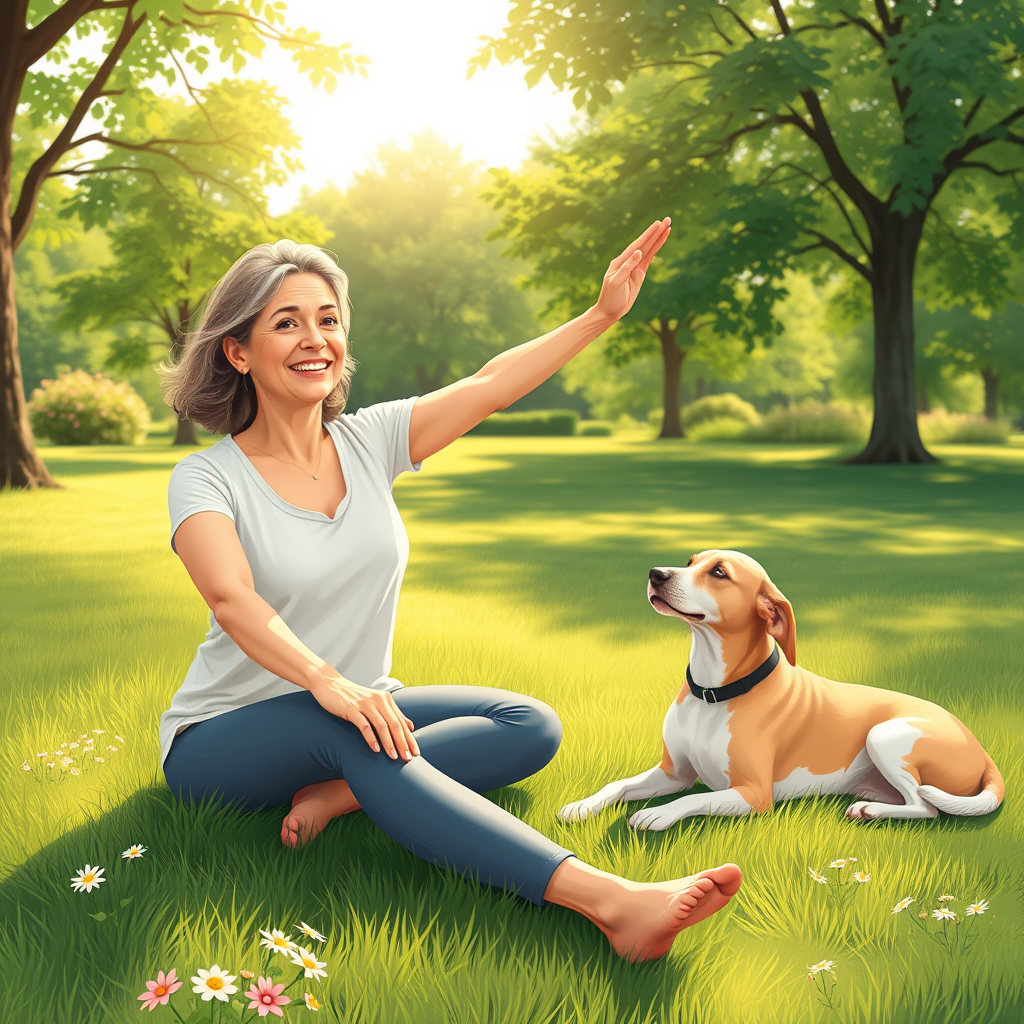
A state of feeling healthy, comfortable and happy
Spending time in nature improves your general well-being.
More examples: Many companies now have a well-being programme for their staff. • Sleep, diet and exercise all affect your well-being. • The government spends money on children's well-being at school.
Common collocations: physical well-being, mental well-being, improve your well-being
Word family: well, being
Synonyms: health, happiness, quality of life
Antonyms: misery, suffering
Related concepts: mental health, lifestyle, balance
Contexts: health news, the workplace, education
Usage note: 'Well-being' is an uncountable noun, so it has no plural. It is often used with 'mental', 'physical' or 'emotional'. It covers both health and happiness together.
switch off

To stop thinking about work and relax your mind
I find it hard to switch off when my phone keeps buzzing.
More examples: Walking the dog helps me switch off after a busy day. • He switches off completely when he plays football with friends. • Try leaving your laptop at the office so you can switch off at home.
Common collocations: switch off after work, hard to switch off, completely switch off
Word family: switched off
Synonyms: relax, unwind, take a break
Antonyms: worry, overthink
Related concepts: work-life balance, screens, rest
Contexts: after work, holidays, evenings
Usage note: This phrasal verb is separable: you can 'switch off your brain' or 'switch your brain off'. Both are correct. It also has a literal meaning — switching off a light or a machine — so context tells you which meaning is meant.
breathtaking

Extremely beautiful or impressive; it almost stops your breath
The view from the mountain top was absolutely breathtaking.
More examples: We stopped the car to admire the breathtaking scenery. • The northern lights were breathtaking — nobody said a word. • The city looks breathtaking from the bridge at night.
Common collocations: breathtaking view, breathtaking scenery, absolutely breathtaking
Word family: take your breath away
Synonyms: stunning, spectacular, magnificent
Antonyms: ordinary, unimpressive
Related concepts: landscapes, travel, photography
Contexts: travel, nature, art and performance
Usage note: Use it for views, scenery, buildings and performances — things you see or watch. It is a strong adjective, so it usually goes with 'absolutely' rather than 'very': say 'absolutely breathtaking', not 'very breathtaking'.
Vocabulary Check
- What does 'unwind' mean?
- To become confused about something
- To relax after a period of stress or work
- To undo a knot or a piece of string
- To walk a long distance in the countryside
- Which word best completes the sentence? 'The cold morning air was so ___ that I felt awake all day.'
- well-being
- switch off
- invigorating
- unwind
- What does 'well-being' mean?
- A state of feeling healthy, comfortable and happy
- A large amount of money saved for the future
- A type of exercise done outdoors
- A feeling of being tired after work
- What does 'switch off' mean in this sentence: 'I go for a walk so I can switch off after work'?
- To turn off the lights before leaving a room
- To stop working and never return
- To fall asleep very quickly
- To stop thinking about work and relax your mind
- In which situation would you use 'breathtaking'?
- Describing a slow, boring train journey
- Describing a view so beautiful it amazes you
- Describing a small mistake at work
- Describing a meal you didn't enjoy
Idioms & Phrasal Verbs
take up (a hobby)
to start doing a new hobby or activity regularly
I'd love to take up hiking, but I don't know any good routes near me.
Usage note: 'Up' often adds the idea of beginning something new, like in 'take up swimming' or 'take up photography'.
Usage note: You take up an activity or hobby, not a place: 'take up running', not 'take up the park'.
get away from it all
to go somewhere quiet and leave daily stress behind
When work gets too much, she drives to the coast to get away from it all.
Usage note: The picture is escaping 'it all' — the emails, the noise, the routine. It usually means a trip or a day out, not a permanent move.
Usage note: Informal and very common in conversation and travel writing.
recharge your batteries
to rest so you feel energetic again
A weekend in the mountains is the best way I know to recharge my batteries.
Usage note: The picture is simple: you're like a phone or a battery that has run low, and rest fills you up again.
Usage note: Often used with 'need': 'I just need to recharge my batteries for a few days.'
blow off steam
to release stress or anger through activity
After a difficult meeting, he goes for a hard run to blow off steam.
Usage note: The picture comes from old steam engines: pressure builds up inside, so you let it out safely.
Usage note: Informal. People often blow off steam with exercise, sport, or a loud conversation with a friend.
Language Practice: Talking About Nature and Relaxation
Practise expressing your opinions about walking, nature and relaxing.
- Comparing different views
- Emerging: Some people say ___, but I think ___. — Some people say exercise is boring, but I think walking is enjoyable.
- Developing: While some people believe ___, I would argue that ___ because ___. — While some people believe the gym is the best way to exercise, I would argue that walking outdoors is better because it's free and calming.
- Expanding: It's true that ___, whereas in my experience ___, which is why I reckon ___. — It's true that any exercise is good for you, whereas in my experience walking in a forest feels completely different from walking on a treadmill, which is why I reckon nature adds something special.
- Weighing up pros and cons
- Emerging: The good thing about ___ is ___. The bad thing is ___. — The good thing about walking is that it's free. The bad thing is the weather.
- Developing: One advantage of ___ is that ___, although on the other hand ___. — One advantage of walking to work is that it wakes me up, although on the other hand I arrive sweaty in summer.
- Expanding: If I ___, I would ___, but then again ___, so overall I'd say ___. — If I had a free Saturday, I would go hiking in the mountains, but then again the weather might turn, so overall I'd say a shorter local walk is the safer bet.
- Describing experiences and feelings
- Emerging: Last time I ___, I felt ___ because ___. — Last time I went hiking, I felt exhausted because the hill was so steep.
- Developing: I remember when I was ___, and suddenly ___. It was absolutely ___. — I remember when I was walking home at sunset, and suddenly the whole sky turned pink. It was absolutely breathtaking.
- Expanding: The most ___ experience I've ever had was when ___, and what struck me most was ___. — The most breathtaking experience I've ever had was when I reached the summit just before sunrise, and what struck me most was the total silence up there.
Fill in the Blanks
After months of working from home, Daniel decided to change his routine. Every evening, he left his laptop in the bedroom so he could _____ properly, and on Saturdays he went hiking in the hills near his village. The climb was hard, but the view from the top was _____ — rolling fields all the way to the sea. The fresh air was _____, and he always came home feeling calmer than when he left. Within a few weeks, his sleep improved and his general _____ got noticeably better. Now he tells everyone that walking is the best way he knows to _____ after a stressful week.
Word bank: unwind, invigorating, well-being, switch off, breathtaking
Sentence Unscramble
- a / long / walk / helps / me / unwind / after / a / stressful / day
- the / view / from / the / mountain / was / absolutely / breathtaking
- fresh / air / is / invigorating / and / good / for / your / well-being
Discussion Questions
Marta in the article leaves her phone at home every Sunday and walks up a hill. Many people say this kind of routine keeps them sane during a busy week. Others prefer to relax at home with a film or a book.
How do you usually unwind after a stressful week? Do you think being outdoors actually helps more than staying in?
Some doctors now prescribe walks in nature instead of medicine for stress and mild anxiety. Supporters say it is cheap and has no side effects. Critics say it is not a replacement for real treatment.
Do you think doctors should prescribe walks in nature? What are the pros and cons?
The article says natural scenes let our brains switch off because there are no adverts, traffic or notifications. But many of us spend hours a day looking at screens, even when we're outside.
Do you find it hard to switch off from your phone and work? What would help you do it more often?
Walkers often talk about breathtaking views: mountain tops, coastlines, sunsets over water. These moments seem to stay in our memory for years, long after we forget ordinary days.
What is the most breathtaking view or place you have ever seen? What made it so special?
The article ends by saying that maybe the place doesn't matter much: any exercise is good for your well-being, whether in a forest or a shopping centre. Not everyone agrees that nature is the magic ingredient.
If you could design your perfect week with more time outdoors, what would it look like? Would you choose the countryside, the coast, or green spaces in a city?
Knowledge Check
- Which word best completes the sentence? 'I need a quiet evening to ___ after this week.'
- breathtaking
- well-being
- unwind
- invigorating
- True or false: 'well-being' can be plural — you can talk about 'well-beings'.
- True
- False
- What does 'invigorating' mean?
- Making you feel fresh and full of energy
- Making you feel sleepy and heavy
- Making you feel worried about something
- Making you feel bored and impatient
- Which adjective is strongest for describing an amazing view?
- Breathtaking
- Nice
- Pleasant
- Ordinary
- Your friend says: 'I need a weekend away to recharge my batteries.' What does she mean?
- She wants to buy new batteries for her phone.
- She wants to rest so she feels energetic again.
- She wants to work all weekend without stopping.
- She wants to sell her old batteries.
Free to use with your students: Free to teach, screen-share, print and share with your students, with a credit to PlanWise ESL. Please do not sell it or republish it as your own. What you can do with free lessons.