Talking Prevention: Helping Patients Make Healthy Changes
About this lesson: This is a B2 (Upper Intermediate) ESL lesson in the General English category. It takes about 60 minutes. It includes 5 vocabulary words, 4 idioms and phrasal verbs, a reading text, comprehension questions, discussion questions and speaking patterns. Suits one-to-one or small-group online classes. Free to open and teach with no login, and it prints as a PDF.
Print just the discussion questions
How this lesson is built
This is a complete conversation lesson built on a scientific pedagogical formula, not a generic worksheet: recall prior topic vocabulary, pre-teach the new words in depth, read in context, practise active recall with flashcards and synonyms/antonyms, build accuracy with exercises, and finish with deep discussion.
- Warm-up: Discussion questions that connect the topic to the student’s own life and recall vocabulary they already know about the subject.
- Reading: A text written for this CEFR level that uses each new word two or three times in context, giving the student something meaningful to react to.
- Key vocabulary: 5 new words, pre-taught before the reading with a definition, pronunciation guide, example sentences and a picture, plus word families, usage notes, recall flashcards and synonyms/antonyms, giving a solid grounding before reading.
- Comprehension: 5 questions that check the new words: retrieval practice, not rereading.
- Idioms and phrasal verbs: Expressions taken from the reading, each with its meaning, an example and a speaking question.
- Sentence frames: 3 speaking patterns, each at three levels of support (emerging, developing, expanding) with model answers—especially helpful scaffolding for beginners and less confident speakers.
- Gap-fill: The new words again, in a shuffled order, so the student recalls them by meaning in context.
- Sentence unscramble: Natural sentences with the new words to put back in order, reinforcing grammar and collocation.
- Discussion: 5 open questions designed to talk deeply about the subject while actively using the lesson’s target vocabulary: the heart of a conversation lesson.
- Quiz: A short retrieval check that brings every new word back once more.
Unlike a generic worksheet, the new words are taught before the reading and met again in the activities, the speaking is supported at three levels and most of the time goes on the student talking. Teachers who use PlanWise ESL also get per-student vocabulary tracking (recycling earlier words into future readings and questions), a private learner dashboard with flashcards and custom lesson creation, and a downloadable study PDF.
Warm-up Activity
Talk about health habits and prevention before reading. Look at the questions together and share your own experiences.
- Do you go to the doctor when you feel fine, or only when something hurts?
- What do people in your country do to stay healthy?
- Have you ever tried to change a habit, like eating better or sleeping more? How did it go?
- Why do you think people find it hard to change their lifestyle?
- If you could give everyone one piece of health advice, what would it be?
Reading Text: The Doctor Who Stopped Lecturing
A short article about a doctor who changed how she talks to patients about health. Read it and notice the five key words.
Dr Amara Osei used to spend her evenings writing diet plans that nobody followed. Her patients nodded politely in her office, then went home to their old habits. She started to wonder if lecturing people about health simply does not work.
Her clinic tested a new approach. Instead of telling patients what to do, the doctors counsel them: they ask questions, listen, and let patients choose their own small goals. One man picked 'walk fifteen minutes a day' rather than 'go to the gym every day'. Six months later, he was still going.
The clinic also focuses on prevention. Every patient over forty is offered screening for blood pressure and blood sugar, because catching a chronic condition early is far easier than treating it late. 'A ten-minute check today can save someone years of trouble,' Amara says.
But results depend on one thing: adherence. Some patients take their medicine and show up for checks; others stop after a few weeks. Amara has learned not to get angry about this. 'People have jobs, children, money worries. If the plan does not fit their life, they drop it,' she explains.
Her advice to other health workers is simple. Keep goals moderate — small enough that people can actually reach them. Celebrate every step. And talk less, listen more. Change, she says, happens in kitchens and neighbourhoods, not just in clinics.
Key Vocabulary
screening

a test to check for a disease before symptoms appear
Regular screening can find cancer early, when treatment works best.
More examples: Free health screening is offered once a year at our workplace. • She goes for screening every two years because it runs in her family. • I had my first screening test last month and it was quick and painless.
Common collocations: health screening, routine screening, screening test
Word family: screen (verb), screen (noun, medical test)
Synonyms: health check, check-up, medical test
Antonyms: treatment, diagnosis after symptoms
Related concepts: prevention, early detection, public health
Contexts: doctor's appointments, workplace health, health campaigns
Usage note: Use for organised tests that look for disease early, not for checking a sick person. Countable or uncountable.
chronic
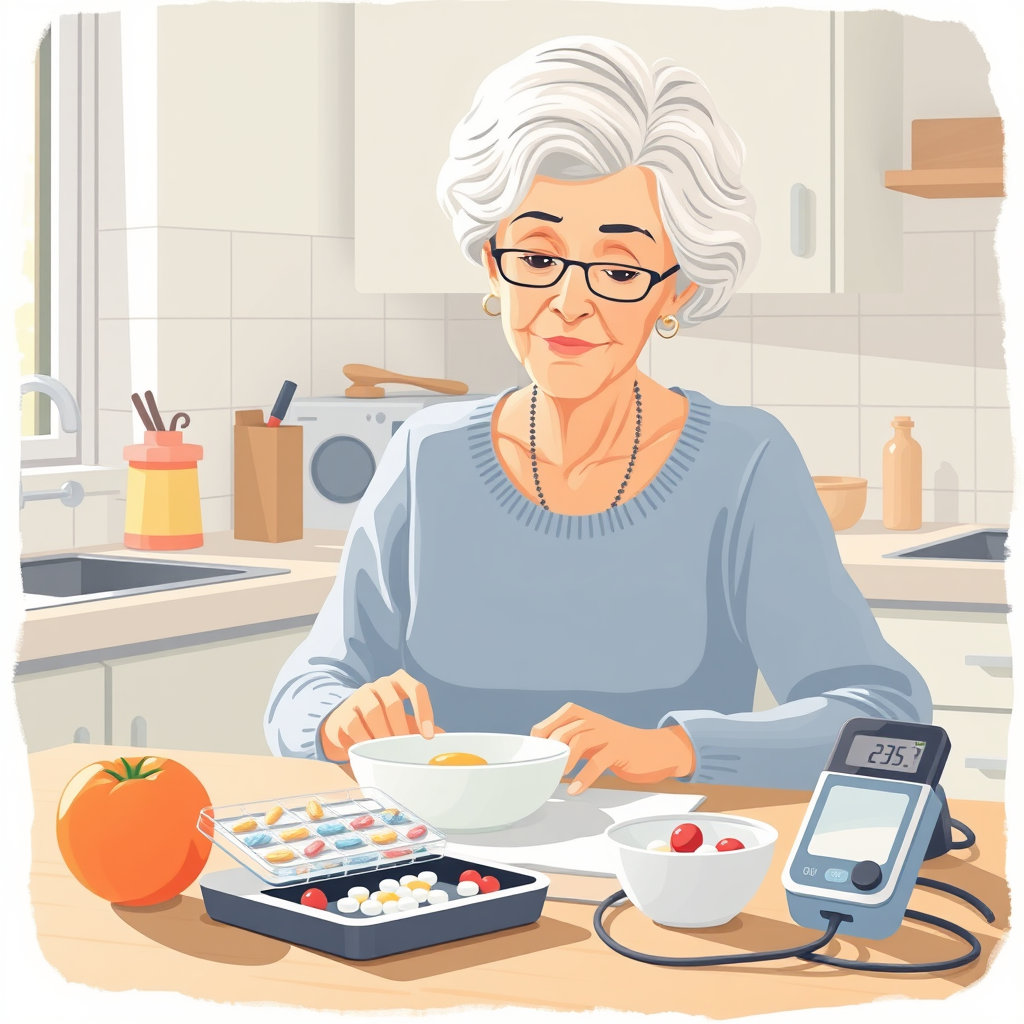
lasting a long time, often for life; used about illness or problems
Diabetes is a chronic condition, so patients manage it every day.
More examples: He has chronic back pain after years of driving. • Lack of sleep can become a chronic problem for new parents. • Smoking raises the risk of chronic lung disease.
Common collocations: chronic illness, chronic condition, chronic pain
Word family: chronically (adverb)
Synonyms: long-term, persistent, ongoing
Antonyms: acute, short-term, temporary
Related concepts: diabetes, heart disease, long-term care
Contexts: medical appointments, health news, insurance forms
Usage note: Mostly used before a noun. Careful: it does NOT mean 'very bad' — it means long-lasting. Do not confuse with 'chronic' as slang for something excellent.
counsel
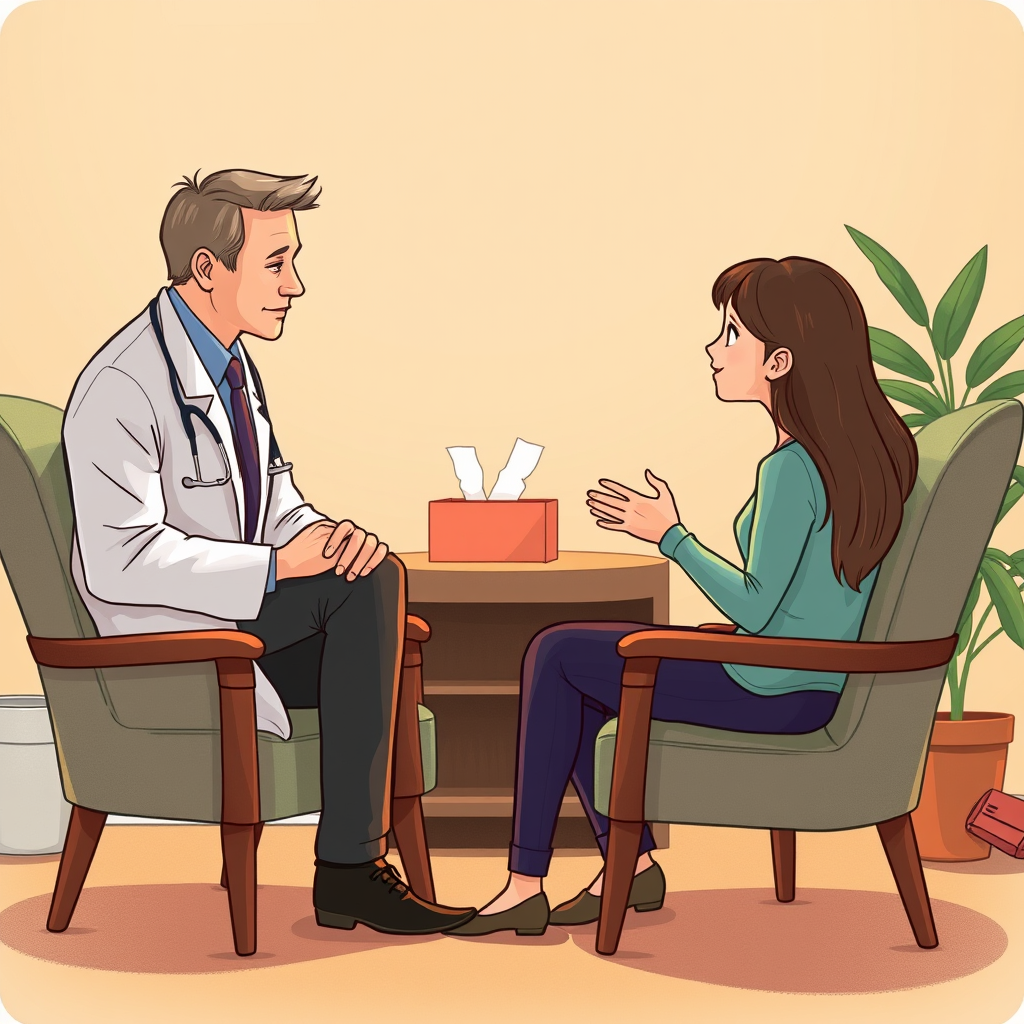
to give advice and support, often by listening carefully
The nurse counsels new patients about healthy eating and exercise.
More examples: Doctors counsel couples before they start a family. • She was counselled by a specialist about her treatment options. • Good doctors counsel patients rather than just giving orders.
Common collocations: counsel a patient, counsel someone about/on something, genetic counselling
Word family: counselling (noun), counsellor (noun), counsellor (person)
Synonyms: advise, guide, support
Antonyms: ignore, lecture, order
Related concepts: therapy, patient communication, shared decisions
Contexts: hospitals, mental health, genetics
Usage note: In health settings, 'counsel' means a two-way conversation with advice and support — not just telling people what to do. Note the double L in British spelling: 'counsellor'.
adherence
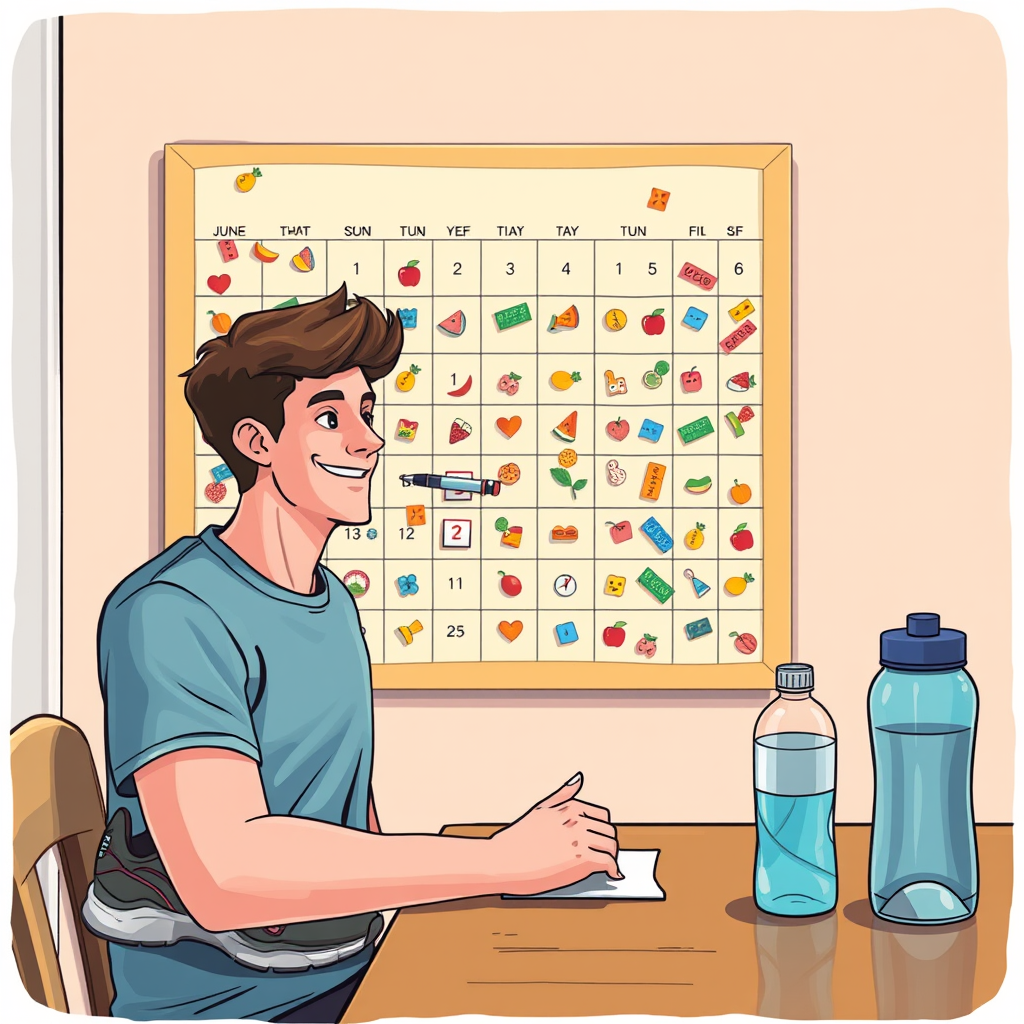
following a plan, treatment or rules faithfully
Good adherence to the diet plan made his test results improve quickly.
More examples: Poor adherence is the main reason medicines fail to work. • The app was designed to improve adherence to the exercise programme. • Her adherence to the schedule impressed the whole team.
Common collocations: adherence to treatment, strict adherence, poor adherence
Word family: adhere (verb), adherent (noun)
Synonyms: commitment, compliance, persistence
Antonyms: neglect, quitting, inconsistency
Related concepts: medication, self-discipline, habit
Contexts: clinical trials, doctor's advice, fitness programmes
Usage note: Common in medical and professional English. Usually with 'to': adherence TO the plan. Also used outside health, e.g. 'strict adherence to the rules'.
moderate

not too much and not too little; middle-sized or middle-level
Moderate exercise, like walking, is enough to improve your health.
More examples: Drink in moderation — or better, not at all. • She keeps a moderate pace so she can talk while jogging. • The diet allows moderate amounts of bread and rice.
Common collocations: moderate exercise, in moderation, a moderate amount
Word family: moderation (noun), moderately (adverb), moderate (verb)
Synonyms: reasonable, balanced, middle-of-the-road
Antonyms: extreme, excessive, intense
Related concepts: balance, healthy habits, portion sizes
Contexts: diet advice, exercise guidelines, weather reports
Usage note: Pronunciation changes with the part of speech: as an adjective, MOD-er-it; as a verb, MOD-er-ate. Often positive — balance is seen as wise.
Vocabulary Check
- What does 'adherence' mean?
- sticking to a plan or treatment
- a medical test for hidden disease
- advice from a trained expert
- an illness that lasts a long time
- In which situation would you use the word 'screening'?
- You are treating a patient who is already very sick.
- You are checking healthy people for early signs of disease.
- You are listening to a patient talk about their worries.
- You are telling someone to exercise more often.
- What does 'counsel' mean when a doctor uses it?
- to give orders to a patient
- to advise and support someone by listening
- to write a prescription
- to perform a physical examination
- Which sentence uses 'chronic' correctly?
- She felt chronic joy when she heard the news.
- He has chronic asthma, so he takes medicine daily.
- The chronic rain lasted for a single afternoon.
- They booked a chronic appointment for next Tuesday.
- What does 'moderate' mean in the phrase 'moderate exercise'?
- exercise that is extremely hard
- exercise you do alone
- exercise at a middle, comfortable level
- exercise done every hour
Idioms & Phrasal Verbs
show up
to arrive or appear at a place or event
I promised to go to the gym with my friend, and she actually showed up this time!
Usage note: You cannot split it: say 'show up for the meeting', not 'show the meeting up'. · Right: He showed up late. · Avoid: He showed late up.
Usage note: Very common in everyday talk, especially about appointments and parties.
drop
to stop doing or using something
I tried to learn Spanish at night school, but I dropped it after two months.
Usage note: Here 'drop' does not mean let something fall — it means quit a habit, plan or class.
Usage note: Common pattern: 'drop a habit', 'drop a plan', 'drop a course'.
catch
to find an illness early, before it gets worse
Luckily, they caught the problem early, so the treatment was simple.
Usage note: Two common meanings: catch an illness (get it) AND catch an illness early (find it soon). Context tells you which.
Usage note: Doctors say this a lot: 'catch it early', 'catch it in time'.
stick to
to keep doing something and not give up
New Year's resolutions are easy to make but hard to stick to.
Usage note: The picture is glue: you 'stick' to a plan like paper sticks to glue.
Usage note: You cannot split it: 'stick to a diet', not 'stick a diet to'. · Right: I stuck to my plan. · Avoid: I stuck my plan to.
Language Practice: Prevention and Lifestyle
Practice expressing ideas about prevention, patient advice and lifestyle change.
- Comparing two views about health advice
- Emerging: Some people say ___, but I think ___ because ___. — Some people say doctors should give orders, but I think listening works better because patients follow plans they choose themselves.
- Developing: While ___ works for some patients, I believe ___ is better because ___. — While strict diet plans work for some patients, I believe small realistic goals are better because people can stick to them for years.
- Expanding: Although there's a strong argument for ___, I'd argue that ___ , especially when you consider ___. — Although there's a strong argument for strict treatment schedules, I'd argue that flexible plans win, especially when you consider how busy people's lives are.
- Imagining situations and predicting outcomes
- Emerging: If I ___, I would ___. — If I felt fine, I would still go for a check-up once a year.
- Developing: If a patient refused to ___, I would try ___ because ___. — If a patient refused to take their medicine, I would try to find out why, because there's usually a side effect or a cost behind it.
- Expanding: If I were advising someone in that situation, I would ___ rather than ___, since ___. — If I were advising someone in that situation, I would focus on one habit rather than everything at once, since trying to change too much usually leads to quitting.
- Giving pros and cons of a health approach
- Emerging: The good thing about ___ is ___, but the problem is ___. — The good thing about screening is catching problems early, but the problem is it can worry people unnecessarily.
- Developing: On the plus side, ___; on the other hand, ___ , so ___. — On the plus side, strict screening saves lives; on the other hand, it costs a lot, so governments have to choose carefully.
- Expanding: ___ might work well for ___, though it could ___; it really depends on ___. — Rewarding patients might work well for short-term goals, though it could feel patronising to some; it really depends on the relationship.
Fill in the Blanks
Running a healthy workplace is harder than it sounds. Our company offers free health _____ every spring, but attendance is low. The doctor who visits says most staff already know what to do: they just don't follow the advice. She recommends _____ exercise, like a thirty-minute walk at lunch, rather than exhausting gym sessions that people give up. She also warns that sitting all day can lead to _____ problems with the back and heart. Her team now _____ employees one-on-one, setting small personal goals together. The real challenge, she admits, is _____ — people start with great energy in April and quietly stop by June. Her solution? Reminders, a walking group, and a little friendly competition between departments.
Word bank: screening, chronic, counsel, adherence, moderate
Sentence Unscramble
- regular / screening / can / catch / serious / illnesses / early
- patients / rarely / stick / to / plans / that / feel / impossible
- she / counsels / her / patients / about / moderate / exercise / every / visit
Discussion Questions
Many people only visit a doctor when something already hurts. Others go for regular check-ups and screening tests even when they feel perfectly healthy. Some countries offer free screening for people over a certain age, while in other places you have to arrange and pay for it yourself. What people do often depends on time, money and habit.
Do you think screening healthy people is a good use of time and money, or is it worrying about nothing? Would you go for a check-up if you felt fine? Why?
A doctor has just told a patient that he needs to lose weight, stop smoking and sleep more — all at once. The patient nods, thanks her, and goes home feeling overwhelmed. Three weeks later, nothing has changed. The doctor wonders if asking for one small change at the time would have worked better.
If you were that doctor, would you ask the patient to change everything at once or start with one small habit? Which one would you choose, and why?
Health apps now count steps, track sleep and remind people to take pills. Supporters say they improve adherence to treatment because everything is in one place. Critics say people get obsessed with the numbers or abandon the app after a month, and nothing really changes. Many doctors are still unsure whether to recommend them.
Do you think apps and gadgets really help people stick to healthy habits, or are they just toys? Have you ever used one — what happened?
Some governments have tried to change public health with laws: taxing sugary drinks, banning smoking in public places, putting warnings on alcohol. Supporters say these rules protect everyone, including people who can't afford to be ill. Critics say adults should decide for themselves, and that the rules hit poor people hardest.
Should governments make laws to force people to live more healthily, or should it be up to each person? Where would you draw the line?
Imagine you are a nurse at a busy clinic. A friendly patient in her sixties comes in for a routine check. Her blood pressure is slightly high, and she admits she rarely walks anywhere and loves fried food. She says, 'My mother lived to ninety, and she never exercised a day in her life. Why should I bother?' She seems cheerful, not resistant — just not convinced.
How would you counsel her? What would you say to convince her, without making her feel judged?
Knowledge Check
- Which word describes an illness that lasts for years, like diabetes?
- moderate
- acute
- chronic
- routine
- The doctor asked questions, listened, and helped the patient set her own goals. Which word best describes this?
- screening
- counselling
- diagnosing
- prescribing
- 'Adherence' means the same as 'compliance'.
- True
- False
- Why do doctors recommend 'moderate' exercise to beginners?
- Because it burns the most calories
- Because it is easier to keep doing regularly
- Because it requires special equipment
- Because doctors dislike intense exercise
- Screening is mainly for people who already feel sick.
- True
- False
- The doctor says: 'We caught the illness early.' What does she mean?
- The patient got the illness from someone else.
- The illness was found early, before it got worse.
- The illness was too difficult to treat.
- The patient caught a cold at the clinic.
Free to use with your students: Free to teach, screen-share, print and share with your students, with a credit to PlanWise ESL. Please do not sell it or republish it as your own. What you can do with free lessons.