Growing Plants at Home
About this lesson: This is an A2 (Elementary) ESL lesson in the General English category. It takes about 60 minutes. It includes 5 vocabulary words, 3 phrasal verbs, a reading text, comprehension questions, discussion questions and speaking patterns. Suits one-to-one or small-group online classes. Free to open and teach with no login, and it prints as a PDF.
Print just the discussion questions
How this lesson is built
This is a complete conversation lesson built on a scientific pedagogical formula, not a generic worksheet: recall prior topic vocabulary, pre-teach the new words in depth, read in context, practise active recall with flashcards and synonyms/antonyms, build accuracy with exercises, and finish with deep discussion.
- Warm-up: Discussion questions that connect the topic to the student’s own life and recall vocabulary they already know about the subject.
- Reading: A text written for this CEFR level that uses each new word two or three times in context, giving the student something meaningful to react to.
- Key vocabulary: 5 new words, pre-taught before the reading with a definition, pronunciation guide, example sentences and a picture, plus word families, usage notes, recall flashcards and synonyms/antonyms, giving a solid grounding before reading.
- Comprehension: 5 questions that check the new words: retrieval practice, not rereading.
- Idioms and phrasal verbs: Expressions taken from the reading, each with its meaning, an example and a speaking question.
- Sentence frames: 3 speaking patterns, each at three levels of support (emerging, developing, expanding) with model answers—especially helpful scaffolding for beginners and less confident speakers.
- Gap-fill: The new words again, in a shuffled order, so the student recalls them by meaning in context.
- Sentence unscramble: Natural sentences with the new words to put back in order, reinforcing grammar and collocation.
- Discussion: 5 open questions designed to talk deeply about the subject while actively using the lesson’s target vocabulary: the heart of a conversation lesson.
- Quiz: A short retrieval check that brings every new word back once more.
Unlike a generic worksheet, the new words are taught before the reading and met again in the activities, the speaking is supported at three levels and most of the time goes on the student talking. Teachers who use PlanWise ESL also get per-student vocabulary tracking (recycling earlier words into future readings and questions), a private learner dashboard with flashcards and custom lesson creation, and a downloadable study PDF.
Warm-up Activity
Look at the pictures and talk about plants at home.
- Do you have any plants at home?
- What plants can you see from your window?
- Have you ever grown a plant? What was it?
- Do you like flowers or vegetables more? Why?
- Would you like a small garden on a balcony or windowsill? Why?
Reading Text: Maya's Little Garden
Read about Maya and her small garden at home. What does she grow?
Maya lives in a small flat in the city. She has no garden, but she loves plants. Last spring, she decided to grow some tomatoes indoors, on her windowsill.
First, she put some soil in a big pot. She planted five small seeds and gave them water. Then she waited. Every morning, she looked at the pot before breakfast.
After ten days, she saw something exciting. Little green sprouts came out of the soil! They were very small, but they grew fast. Maya was very happy and took photos of them.
The plants grew taller every week. Under the soil, the roots got strong, and above it, the leaves got big. Maya moved each plant into a bigger pot because they needed more space.
In summer, red tomatoes grew on the plants. Maya picked them and made a salad for her family. They loved it. Now her friends want small pots indoors too, and Maya is happy to help them.
Key Vocabulary
sprout
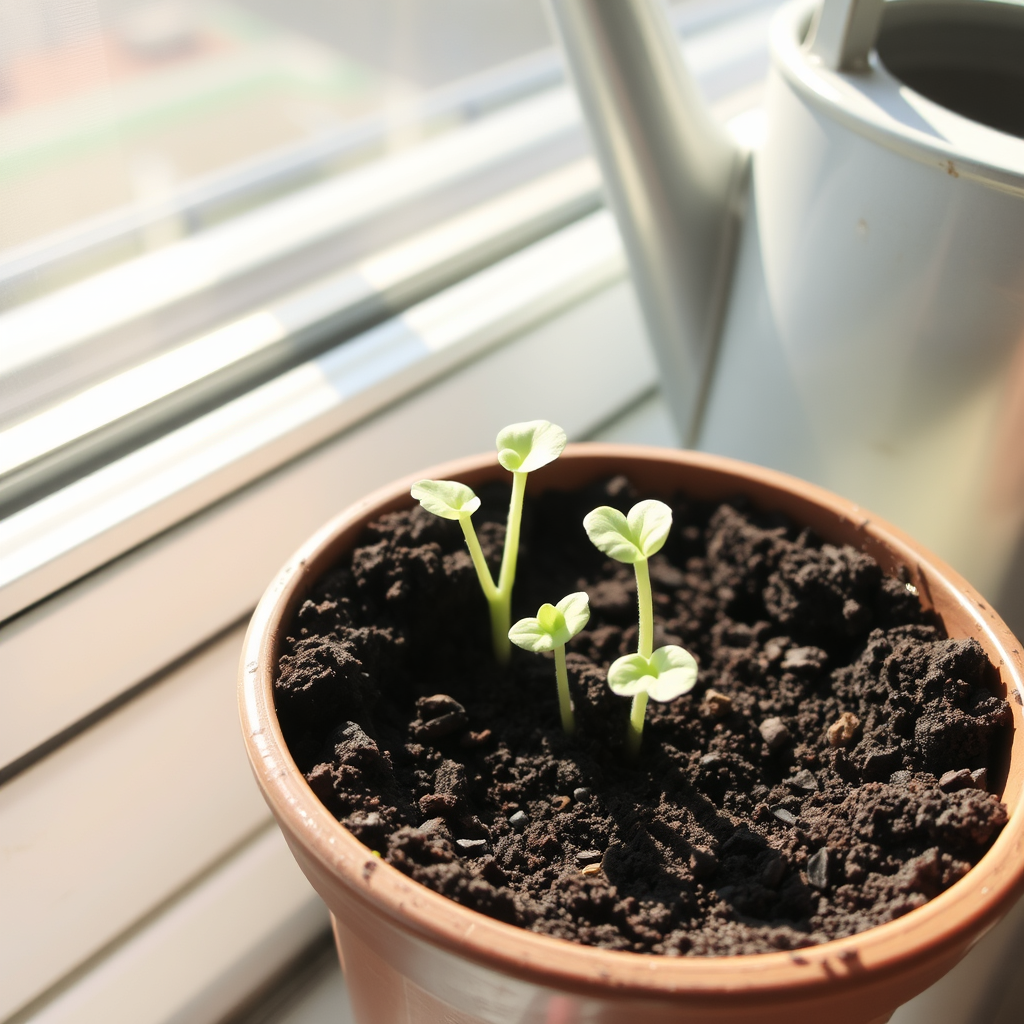
a small new plant that comes out of a seed
I saw two little sprouts in the pot this morning.
More examples: The sprouts appeared after one week. • My bean sprouts are growing fast. • First a sprout comes out, then leaves.
Common collocations: green sprouts, a little sprout, sprouts appear
Word family: sprout (verb), sprouted
Synonyms: shoot, seedling
Related concepts: seed, leaf, growth
Contexts: gardening, kitchen windowsill, school project
Usage note: Use 'sprout' as a noun for the tiny new plant itself, or as a verb: 'The seeds sprouted after five days.' It is about the very first stage of growth.
soil
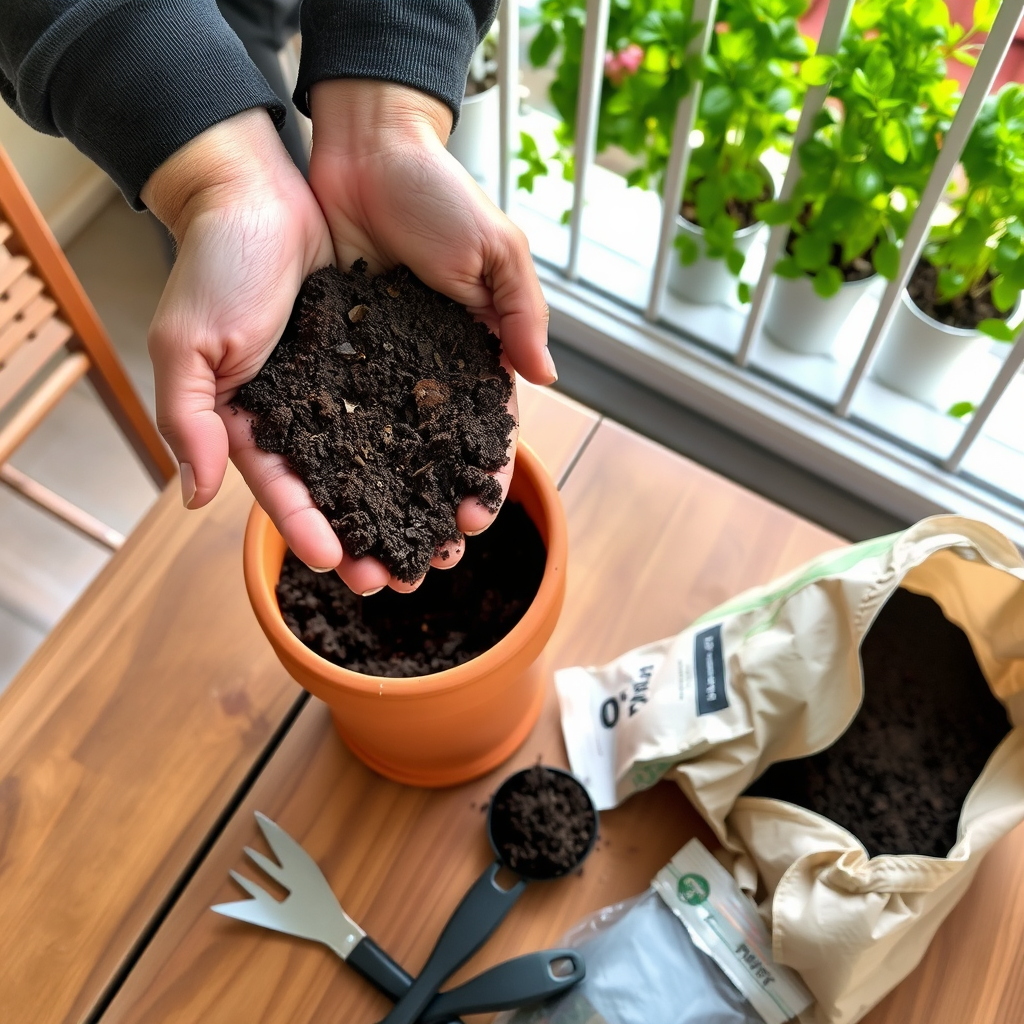
the dark material plants grow in
Put some soil in the pot before you plant the seeds.
More examples: This soil is very good for flowers. • My hands are dirty because of the soil. • The soil in that pot is dry.
Common collocations: plant in soil, wet soil, a bag of soil
Word family: soiled
Synonyms: earth, dirt
Related concepts: garden, planting, farming
Contexts: gardening, pot plants, the countryside
Usage note: 'Soil' is the material in gardens and pots. It is uncountable, so we say 'some soil' or 'a lot of soil', not 'a soil'.
pot
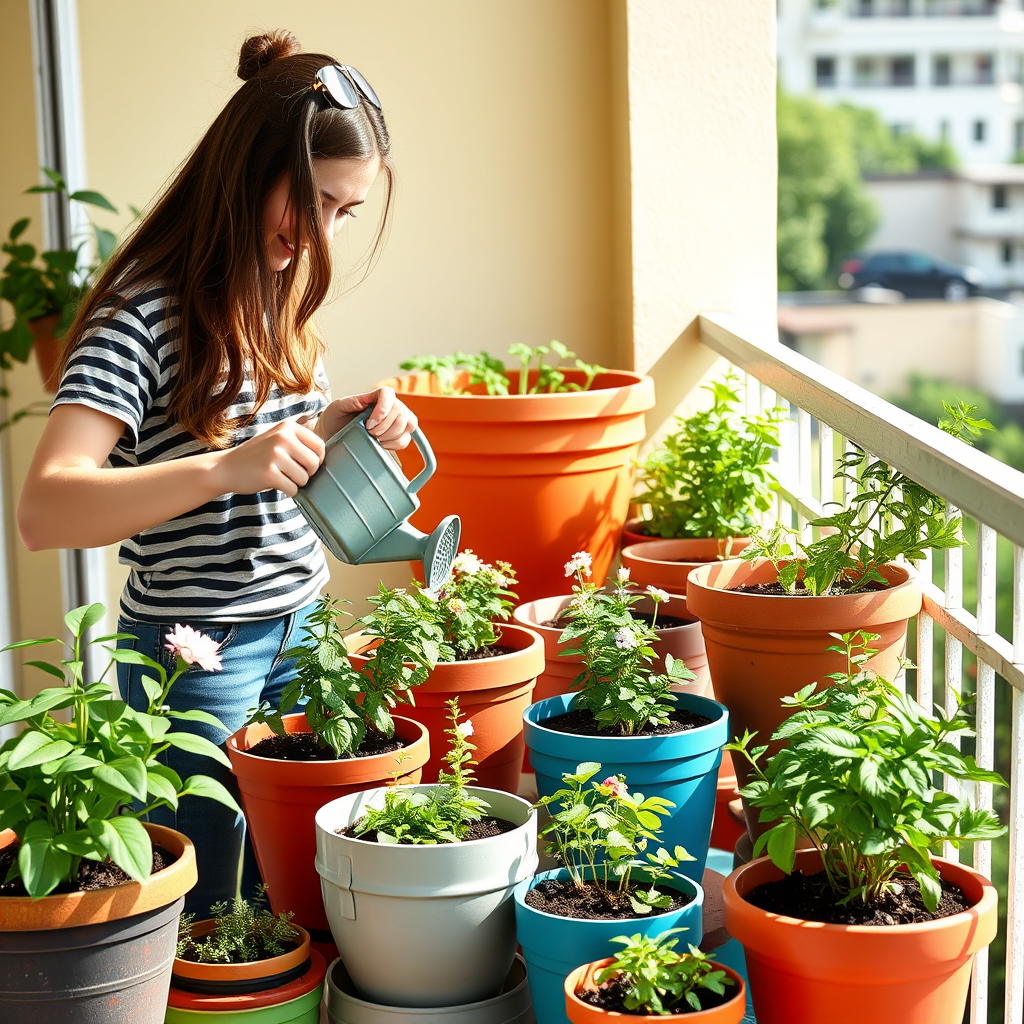
a container for growing a plant
This plant needs a bigger pot.
More examples: I bought three pots for my balcony. • There is a small pot on my desk. • She moved the plant into a new pot.
Common collocations: a flower pot, a plastic pot, a big pot
Word family: potted
Synonyms: container, plant pot
Related concepts: balcony, windowsill, garden centre
Contexts: home gardening, shops, balconies
Usage note: A 'pot' for plants is different from a cooking pot. Say 'flower pot' or 'plant pot' if the meaning is not clear.
root
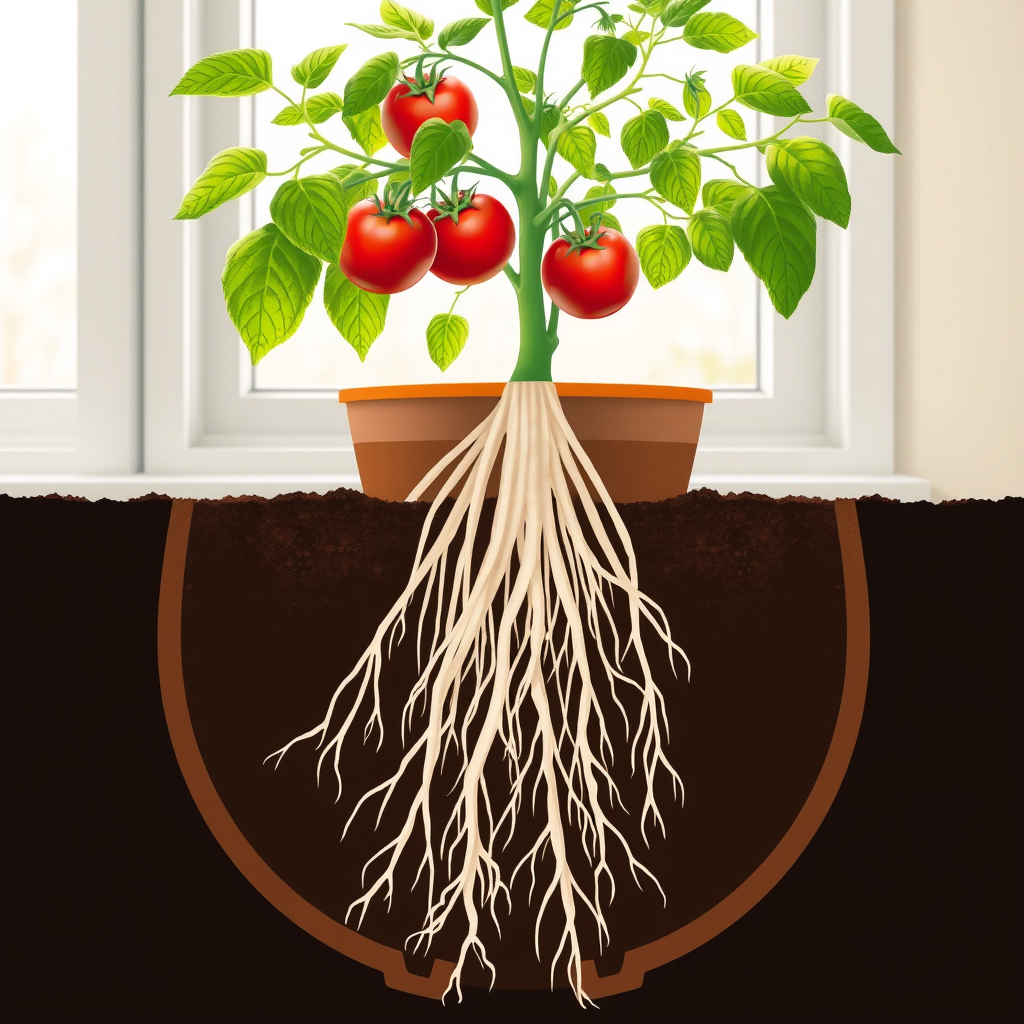
the part of a plant under the ground
The roots of the plant drink the water in the soil.
More examples: Be careful with the roots when you move the plant. • This plant has long roots. • The roots grow down into the soil.
Common collocations: plant roots, strong roots, the roots grow
Word family: rooted, rootless
Synonyms: root system
Related concepts: soil, water, plant parts
Contexts: gardening, science lessons, potting plants
Usage note: 'Roots' is usually plural because plants have many. We also say 'take root' when a plant starts to grow in a new place.
indoors
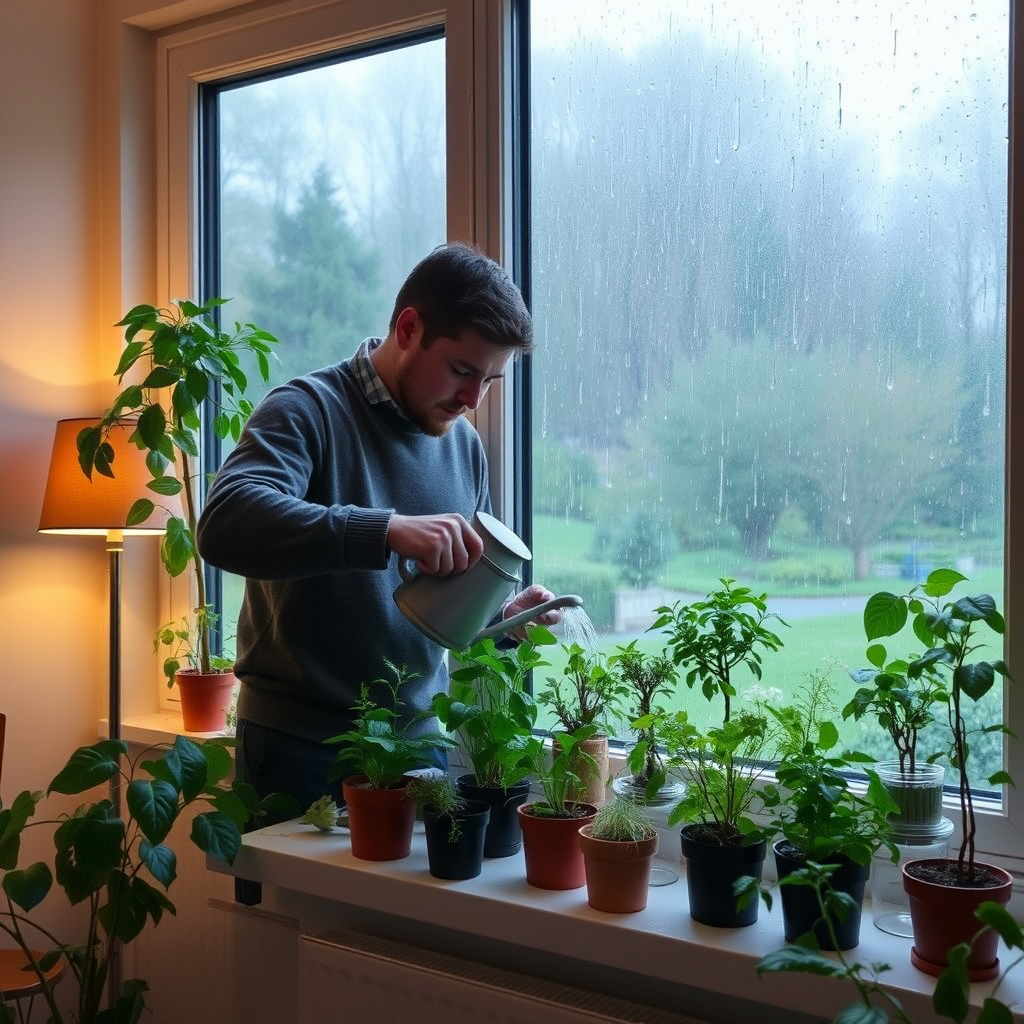
inside a building, not outside
We grow these plants indoors in winter.
More examples: It's raining, so let's stay indoors. • Cats like to sleep indoors. • My herbs grow indoors near the window.
Common collocations: stay indoors, grow plants indoors, play indoors
Word family: outdoors, indoor (adjective)
Synonyms: inside
Antonyms: outdoors, outside
Related concepts: home, weather, flat
Contexts: home life, weather talk, growing plants
Usage note: 'Indoors' tells you where an action happens: 'We ate indoors.' Use 'indoor' before a noun: 'indoor plants'.
Vocabulary Check
- What does 'sprout' mean?
- A small new plant from a seed
- A type of big tree
- The water you give a plant
- A kind of insect
- Which sentence uses 'soil' correctly?
- I ate some soil for lunch.
- Put the plant in soil so it can grow.
- She drove her soil to work.
- The soil was happy to see me.
- In which situation would you use the word 'pot'?
- When you read a book
- When you buy shoes
- When you plant a flower in a container
- When you cook rice in a pan on the stove
- Where are the roots of a plant?
- On the leaves
- Under the ground, in the soil
- Inside the flowers
- On the balcony wall
- What does 'indoors' mean?
- In a garden outside
- In a shop
- Inside a building
- On a roof
Phrasal Verbs
come out
to move from inside something to outside
The sun came out after lunch and the garden got warm.
Usage note: 'Out' shows the movement is going from inside to outside: the sprouts were under the soil, then outside it.
Usage note: We often use it for things that appear: flowers, the moon, a new film comes out.
move into
to go from one place to a new place to live there
My sister is going to move into a small flat near the station.
Usage note: 'Into' shows a change of place: the plant goes from the old pot into the new one. We use the same idea for moving into a new home.
Usage note: You can also move into a bigger size or a new job area: 'She moved into marketing.'
look after
to care for someone or something and keep them well
I look after my neighbour's cat when she travels.
Usage note: Often used with people, pets and plants: look after a baby, a dog, a garden. It means the job is yours.
Usage note: The noun is 'care', but 'look after' is what people really say.
Language Practice: Talking About Plants
Practise expressing ideas about growing plants at home.
- Describing plants and how they grow
- Emerging: First I put ___ in a pot, then I give it water. — First I put seeds in a pot, then I give it water.
- Developing: First I put ___ in a pot with ___, then I ___ every ___. — First I put seeds in a pot with soil, then I water it every morning.
- Expanding: First I ___, then I ___, and after a few weeks ___, because ___. — First I put soil in a big pot, then I plant the seeds, and after a few weeks I see little sprouts, because the seeds need warm days.
- Comparing places to grow plants
- Emerging: A balcony is ___er than a windowsill. — A balcony is bigger than a windowsill.
- Developing: I think a ___ is ___er than a ___ because ___. — I think a balcony is better than a windowsill because there is more sun.
- Expanding: I think growing plants indoors is more ___ than growing them outside, because ___. — I think growing plants indoors is more difficult than growing them outside, because there is less sun near the window.
- Giving opinions and wishes about plants
- Emerging: I think plants are ___. — I think plants are beautiful.
- Developing: I would like to grow ___ because ___. — I would like to grow tomatoes because I love salads.
- Expanding: I think people grow plants indoors because ___, and I would like to ___ ___. — I think people grow plants indoors because homes in cities have no gardens, and I would like to try basil on my windowsill.
Fill in the Blanks
Last month, my friend Leo started a small garden _____ on his windowsill. First, he put some _____ in a big _____ and planted a few seeds. After one week, he saw little green _____s coming out of the earth. Now the plants are strong, and their _____s hold them well in the pot.
Word bank: sprout, soil, pot, root, indoors
Sentence Unscramble
- I / put / some / soil / in / the / pot / .
- The / little / sprouts / grow / fast / indoors / .
- Be / careful / with / the / roots / when / you / move / the / plant / .
Discussion Questions
Some people grow plants in big gardens. Others grow them in small pots on a windowsill. Both ways can work well. It depends on your home and your time.
Where could you grow plants in your home — a windowsill, a balcony or somewhere else? What would you grow there?
Maya watched her seeds every morning. After ten days, she saw the little sprouts. Growing something takes time, but many people say it feels wonderful.
Have you ever watched a plant grow, or grown something yourself? How did it feel?
Plants need water, light and good soil. Some people water their plants every day. Others forget, and the plants die. It is the same with pets — they need care too.
Do you think you would be good at looking after plants? Are you good at remembering things like this?
In Maya's family, fresh tomatoes from the windowsill were special. In many countries, people grow food at home — herbs, peppers, tomatoes or spring onions. Home-grown food often tastes better.
Would you like to grow food at home? Which fruit, vegetable or herb would you choose, and why?
Some people say plants make a home feel alive. Others say they are too much work, or they forget to water them. Cats and dogs also like to eat houseplants, which can be a problem!
Do you think plants are a good idea in every home? Why or why not?
Knowledge Check
- What do you put in a pot before you plant seeds?
- Water only
- Soil
- Paper
- Salt
- What is a 'sprout'?
- A small new plant from a seed
- A big old tree
- A part of a flower pot
- True or false? Roots grow under the soil.
- True
- False
- Which sentence is correct?
- We play outdoors when it rains.
- We stay indoors when it rains.
- We stay indoors on sunny days only.
- In the reading, why did Maya move her plants into bigger pots?
- Because the plants needed more space
- Because she did not like the old pots
- Because the plants were dead
- 'Maya moved each plant into a bigger pot.' What does 'move into' mean here?
- to change the plant to a new place
- to grow very fast
- to put water on the plant
- to pick the plant up with your hands
Free to use with your students: Free to teach, screen-share, print and share with your students, with a credit to PlanWise ESL. Please do not sell it or republish it as your own. What you can do with free lessons.