Cooking at Home: My Favourite Meal
About this lesson: This is an A2 (Elementary) ESL lesson in the General English category. It takes about 60 minutes. It includes 5 vocabulary words, 3 phrasal verbs, a reading text, comprehension questions, discussion questions and speaking patterns. Suits one-to-one or small-group online classes. Free to open and teach with no login, and it prints as a PDF.
Print just the discussion questions
How this lesson is built
This is a complete conversation lesson built on a scientific pedagogical formula, not a generic worksheet: recall prior topic vocabulary, pre-teach the new words in depth, read in context, practise active recall with flashcards and synonyms/antonyms, build accuracy with exercises, and finish with deep discussion.
- Warm-up: Discussion questions that connect the topic to the student’s own life and recall vocabulary they already know about the subject.
- Reading: A text written for this CEFR level that uses each new word two or three times in context, giving the student something meaningful to react to.
- Key vocabulary: 5 new words, pre-taught before the reading with a definition, pronunciation guide, example sentences and a picture, plus word families, usage notes, recall flashcards and synonyms/antonyms, giving a solid grounding before reading.
- Comprehension: 5 questions that check the new words: retrieval practice, not rereading.
- Idioms and phrasal verbs: Expressions taken from the reading, each with its meaning, an example and a speaking question.
- Sentence frames: 3 speaking patterns, each at three levels of support (emerging, developing, expanding) with model answers—especially helpful scaffolding for beginners and less confident speakers.
- Gap-fill: The new words again, in a shuffled order, so the student recalls them by meaning in context.
- Sentence unscramble: Natural sentences with the new words to put back in order, reinforcing grammar and collocation.
- Discussion: 5 open questions designed to talk deeply about the subject while actively using the lesson’s target vocabulary: the heart of a conversation lesson.
- Quiz: A short retrieval check that brings every new word back once more.
Unlike a generic worksheet, the new words are taught before the reading and met again in the activities, the speaking is supported at three levels and most of the time goes on the student talking. Teachers who use PlanWise ESL also get per-student vocabulary tracking (recycling earlier words into future readings and questions), a private learner dashboard with flashcards and custom lesson creation, and a downloadable study PDF.
Warm-up: Let's Talk About Food
Look at the questions and talk about food and cooking in your life. There are no wrong answers - just say what you think!
- Do you like cooking, or do you prefer when someone else cooks for you?
- What did you eat yesterday? Was it good?
- What is your favourite meal?
- Do you eat at home more, or do you eat out more?
- When you cook, do you follow steps, or do you just try things?
Reading Text: My Friday Pasta
Read about someone's favourite meal and how they make it at home. While you read, think about your own favourite meal.
My favourite meal is pasta with tomato sauce. I cook it at home every Friday. It is easy, and it tastes wonderful. My mother taught me the recipe when I was young.
First, I boil a big pot of water. When the water boils, I put the pasta in. I stir it sometimes, so it does not stick to the pot.
Next, I get the other ingredients ready. I chop one onion and two tomatoes into small pieces. Fresh ingredients make the dish taste better.
Then I stir the onion in a hot pan with some oil. After five minutes, I add the tomatoes. I stir everything again and wait.
Finally, I mix the pasta and the sauce together. I taste it and add a little salt. It always tastes delicious. Maybe you can try my recipe too!
Key Vocabulary
chop
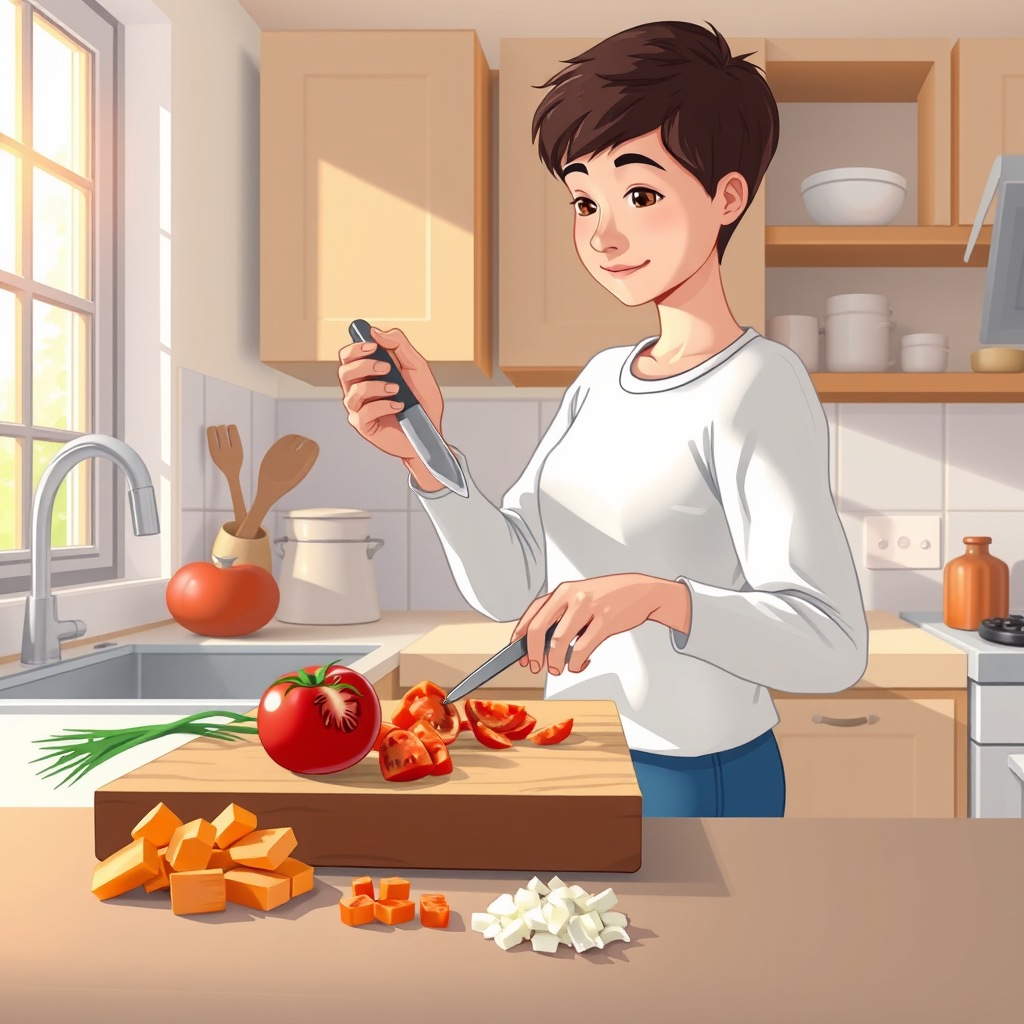
cut food into small pieces with a knife
I chop an onion for the soup.
More examples: Can you chop these carrots, please? • She chopped the tomatoes very small. • I always chop onions first when I cook.
Common collocations: chop vegetables, chop into small pieces, chop an onion
Word family: chopped, chopping
Synonyms: cut, cut up, dice
Related concepts: knife, cutting board, vegetables
Contexts: cooking at home, preparing a salad, making soup
Usage note: Chop is a regular verb: chop, chopped, chopped. You chop something into pieces, or you chop something up. It is only about cutting food or other things with a knife - do not use it for cooking with water or heat.
boil
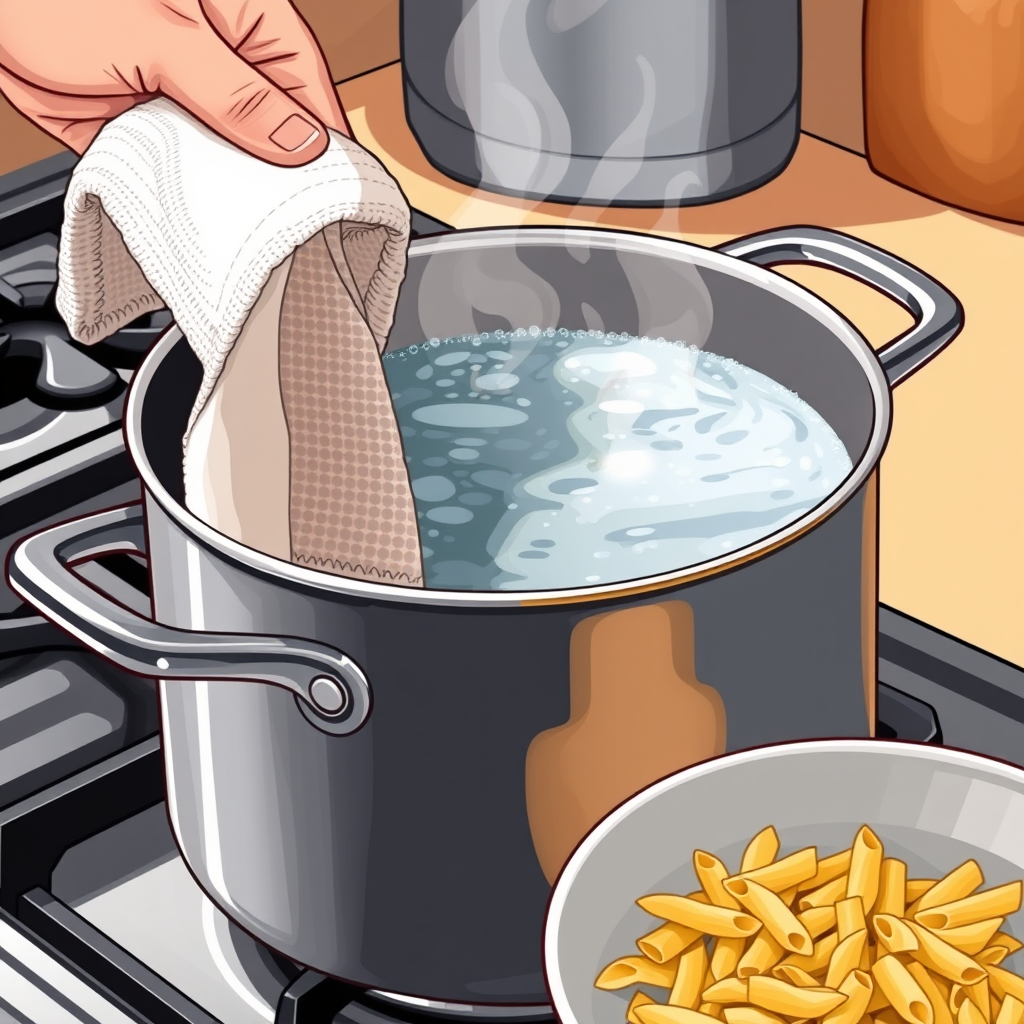
heat water until it makes many bubbles
Boil the water before you put in the pasta.
More examples: The water boils in five minutes. • I boiled some eggs for breakfast. • Can you boil water for the tea?
Common collocations: boil water, boil an egg, boil the potatoes
Word family: boiled, boiling
Synonyms: heat up, cook in hot water
Antonyms: freeze, cool
Related concepts: water, pot, steam
Contexts: cooking pasta, making soup, making tea
Usage note: You can boil water, or the water boils by itself. You can also boil food in hot water, like 'boil an egg' or 'boil potatoes'. Boiled eggs and boiled potatoes are very common phrases.
stir
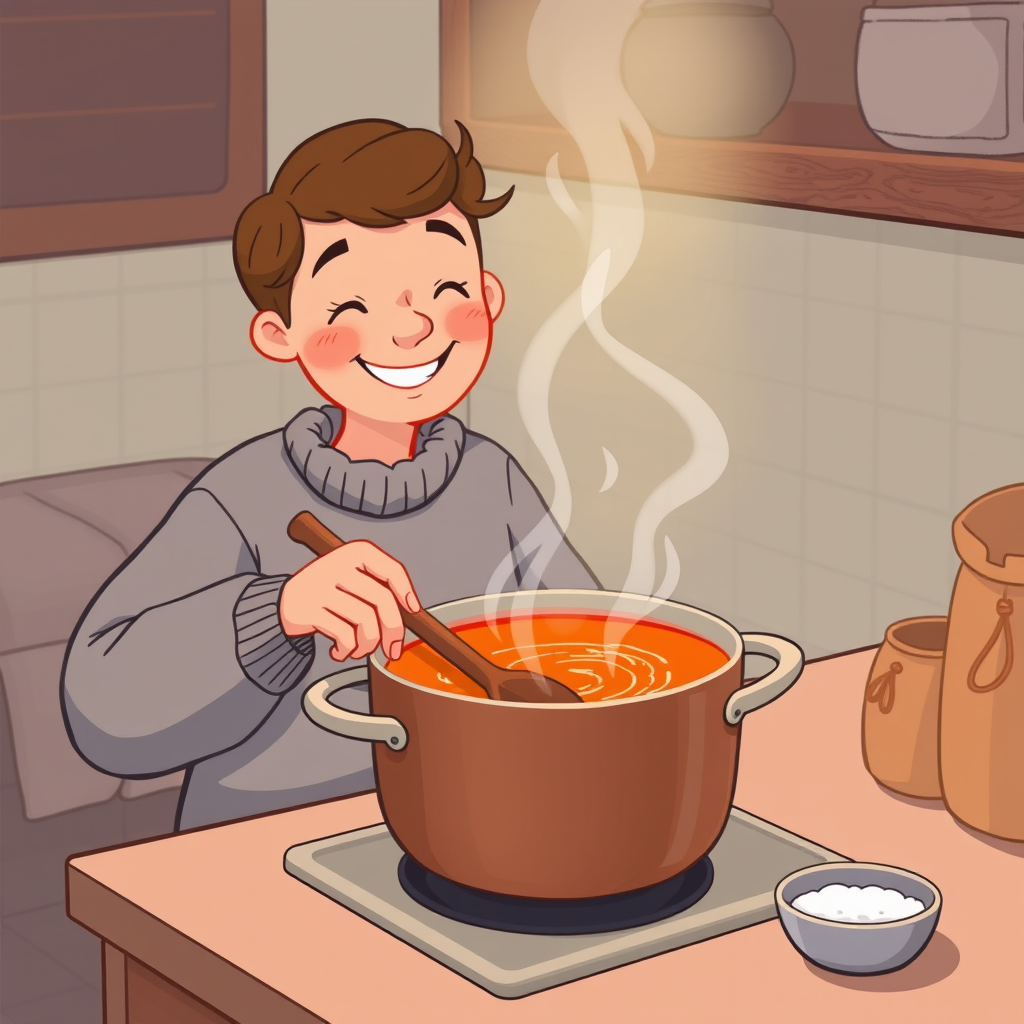
move food or drink around with a spoon
Stir the soup so it does not burn.
More examples: I stir my coffee with a small spoon. • She stirred the sauce for ten minutes. • Stir the rice every few minutes.
Common collocations: stir the soup, stir well, stir gently
Word family: stirred, stirring
Synonyms: mix, turn
Related concepts: spoon, sauce, soup
Contexts: making soup, cooking sauce, making tea or coffee
Usage note: Stir is a regular verb, but the past form doubles the r: stir, stirred, stirred. You stir something with a spoon or a fork. People also stir tea and coffee, not only food.
ingredient
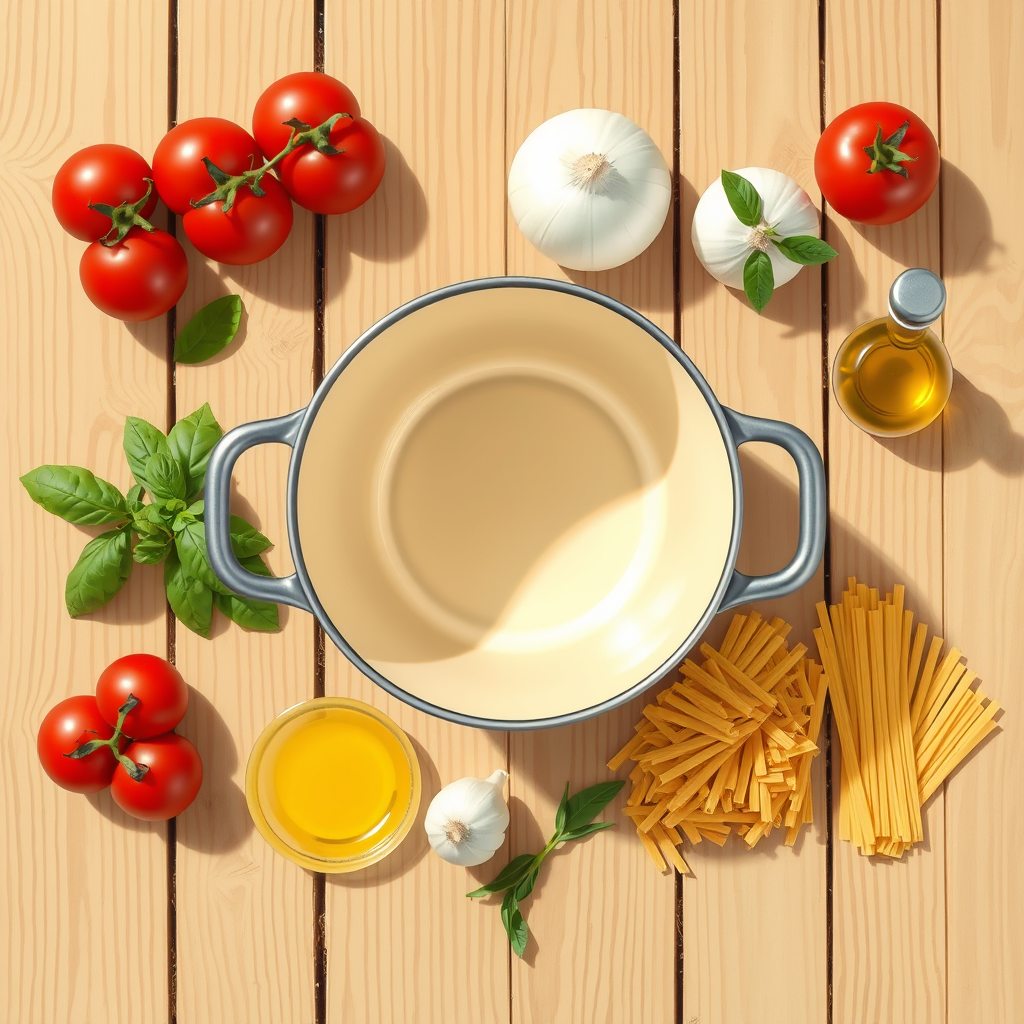
one of the foods you use to cook a dish
The main ingredients are rice, eggs and oil.
More examples: I need four ingredients for this cake. • Check the ingredients before you buy it. • Fresh ingredients make food taste better.
Common collocations: main ingredient, fresh ingredients, list of ingredients
Word family: ingredients
Synonyms: food item, part of a dish
Related concepts: cooking, shopping list, food
Contexts: cooking at home, shopping for food, reading food packages
Usage note: Ingredient is a countable noun, so you can say one ingredient, two ingredients. It is very often plural: 'the ingredients for a cake'. Do not confuse it with recipe - the recipe is the instructions, the ingredients are the foods.
recipe
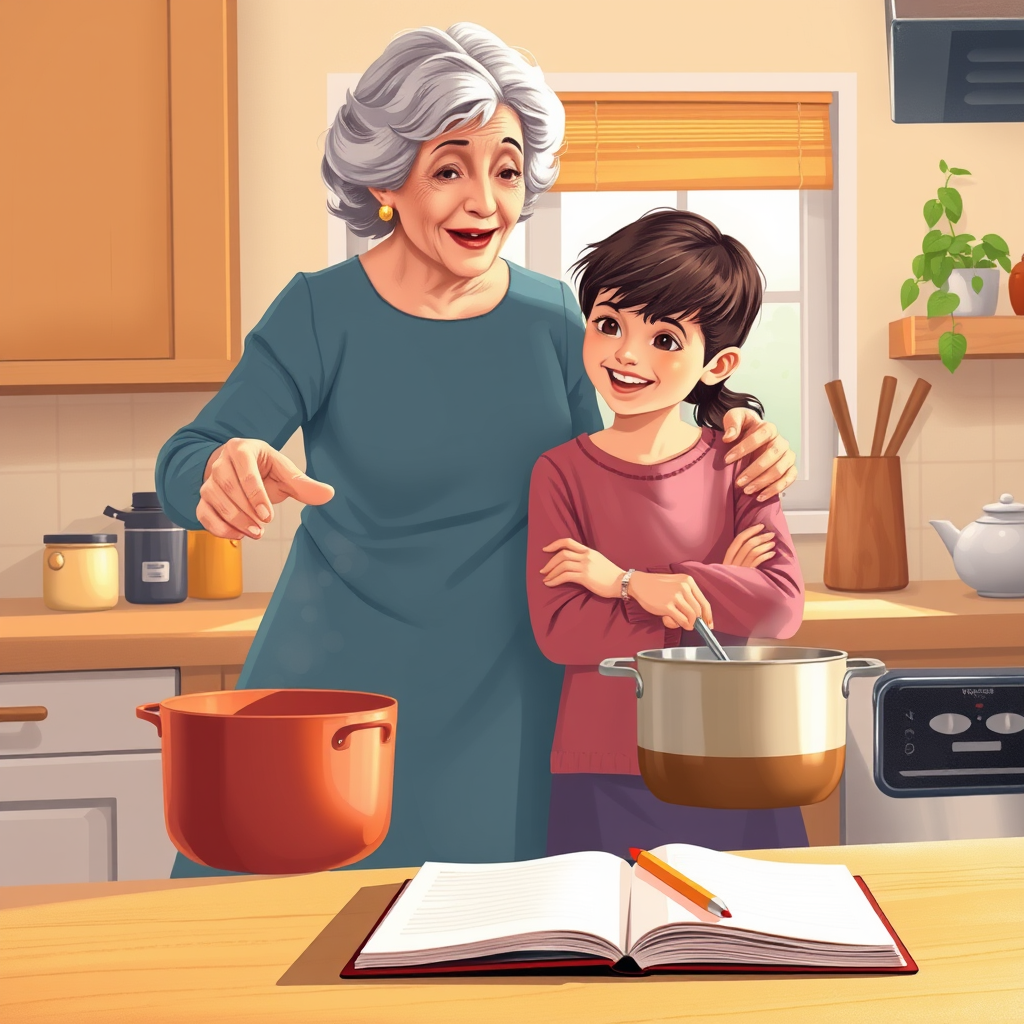
the instructions for making a dish
This soup recipe is very easy.
More examples: My grandmother gave me her cake recipe. • I found a good recipe online. • I never follow a recipe - I just cook!
Common collocations: follow a recipe, family recipe, an easy recipe
Word family: recipes
Synonyms: instructions, steps for cooking
Related concepts: cooking, family, cookbook
Contexts: learning to cook, cooking with family, looking for ideas online
Usage note: Recipe is a countable noun. Use 'a recipe for something': 'a recipe for pancakes'. A family recipe is a special dish that parents teach their children. Note the spelling: there is no extra letter before the final e.
Vocabulary Check
- What does 'chop' mean?
- cut food into small pieces with a knife
- cook food in hot water
- move food around with a spoon
- put food on a plate
- What does 'boil' mean?
- cut food into small pieces
- make food cold in the fridge
- heat water until it makes many bubbles
- add salt to food
- What is an 'ingredient'?
- a kind of kitchen knife
- one of the foods you use to cook a dish
- the name of a dish
- a place where you cook
- In which situation do you use the word 'recipe'?
- when you want to know how to make a dish
- when you wash the dishes
- when you buy food at a shop
- when you set the table
- What does 'stir' mean?
- put food in the fridge
- cut food with a knife
- eat food slowly
- move food around with a spoon
Phrasal Verbs
put in
to put something inside something
I put in some salt before the soup starts to boil.
Usage note: "In" shows the thing goes inside the pot, pan or bowl: put it in the pan.
stick to
to stay fixed on a surface and not move
The rice sticks to the pot if the fire is too hot.
Usage note: "To" shows what it stays on: it sticks to the pot, the pan, the plate.
mix together
to put two or more things together and stir them
I mix together the eggs and the milk in a big bowl.
Usage note: "Together" shows the two things become one dish: mix the rice together with the vegetables.
Language Practice: Talking About Cooking
Practise talking about your favourite meal and how you make it. Use the frames to help you build your sentences.
- Explaining how you make a dish
- Emerging: First, I ___ the ___. — First, I boil the water.
- Developing: Next, I ___ the ___ and then I ___ it. — Next, I chop the tomatoes and then I boil them.
- Expanding: First I ___, then I ___, and finally I ___ before I eat. — First I boil the water, then I cook the pasta, and finally I stir in the sauce before I eat.
- Describing your favourite meal
- Emerging: My favourite meal is ___. — My favourite meal is pasta.
- Developing: I love ___ because it is ___. — I love pasta because it is delicious.
- Expanding: My favourite meal is ___ because ___, and I usually eat it ___. — My favourite meal is pasta with tomato sauce because it tastes wonderful, and I usually eat it on Fridays.
- Recommending a dish to someone
- Emerging: You should try ___. — You should try my pasta.
- Developing: I think ___ is ___ because ___. — I think homemade soup is better than shop soup because it is fresh.
- Expanding: If you want to make ___, you should ___ because ___. — If you want to make good pasta, you should use fresh ingredients because they taste better.
Fill in the Blanks
Last weekend, I made vegetable soup for my family. I found an easy _____ online. First, I _____ed some water in a big pot. Then I _____ped three carrots and an onion into small pieces. I put all the _____s into the pot. Finally, I _____ed the soup and waited twenty minutes. It was delicious!
Word bank: chop, boil, stir, ingredient, recipe
Sentence Unscramble
- I / chop / the / onions / into / small / pieces
- Boil / the / water / first / then / add / the / pasta
- This / recipe / needs / six / simple / ingredients
Discussion Questions
Everyone has a meal that makes them happy. For some people it is a big dinner, and for others it is something simple like eggs or noodles. Sometimes the meal is special because of the taste, and sometimes because of the people we eat it with.
What is your favourite meal to eat at home? Who usually cooks it?
Learning to cook starts with one easy dish. Many people begin with something simple like fried eggs, rice or toast. The first dish is often the one we remember best, even years later.
Can you cook? What was the first dish you learned to make?
In many families, children help in the kitchen. They wash vegetables, stir the pot or taste the food. Cooking together is a way to spend time with family and learn family recipes.
Did you cook with your family when you were a child? What did you make together?
Some people love cooking at home because it is cheap and relaxing. Other people prefer restaurants because they can try new dishes and nobody has to wash the dishes. Both ways have good points.
Which do you like more, food at home or food at a restaurant? Why?
There are millions of dishes in the world, and nobody can try them all. Maybe you saw a dish in a film, or a friend talked about food from their country. Learning one new dish can be a fun challenge.
If you could learn to make one new dish, what would it be? Why?
Knowledge Check
- Which word means 'cut food into small pieces'?
- stir
- chop
- boil
- recipe
- True or false: a recipe tells you how to make a dish.
- True
- False
- Which one is an ingredient for tomato pasta?
- a plate
- a knife
- a tomato
- a pot
- True or false: when you stir food, you cut it with a knife.
- True
- False
- You want to make soup. What do you do with the water first?
- You boil it.
- You chop it.
- You put it in the fridge.
- You follow it.
- The rice sticks to the pot. What does this mean?
- The rice stays on the pot and does not move
- The rice falls out of the pot
- The rice gets bigger in the pot
- The rice becomes very hot
Free to use with your students: Free to teach, screen-share, print and share with your students, with a credit to PlanWise ESL. Please do not sell it or republish it as your own. What you can do with free lessons.