Cooking the World from Your Kitchen
About this lesson: This is a B1 (Intermediate) ESL lesson in the General English category. It takes about 60 minutes. It includes 5 vocabulary words, 3 phrasal verbs and expressions, a reading text, comprehension questions, discussion questions and speaking patterns. Suits one-to-one or small-group online classes. Free to open and teach with no login, and it prints as a PDF.
Print just the discussion questions
How this lesson is built
This is a complete conversation lesson built on a scientific pedagogical formula, not a generic worksheet: recall prior topic vocabulary, pre-teach the new words in depth, read in context, practise active recall with flashcards and synonyms/antonyms, build accuracy with exercises, and finish with deep discussion.
- Warm-up: Discussion questions that connect the topic to the student’s own life and recall vocabulary they already know about the subject.
- Reading: A text written for this CEFR level that uses each new word two or three times in context, giving the student something meaningful to react to.
- Key vocabulary: 5 new words, pre-taught before the reading with a definition, pronunciation guide, example sentences and a picture, plus word families, usage notes, recall flashcards and synonyms/antonyms, giving a solid grounding before reading.
- Comprehension: 5 questions that check the new words: retrieval practice, not rereading.
- Idioms and phrasal verbs: Expressions taken from the reading, each with its meaning, an example and a speaking question.
- Sentence frames: 3 speaking patterns, each at three levels of support (emerging, developing, expanding) with model answers—especially helpful scaffolding for beginners and less confident speakers.
- Gap-fill: The new words again, in a shuffled order, so the student recalls them by meaning in context.
- Sentence unscramble: Natural sentences with the new words to put back in order, reinforcing grammar and collocation.
- Discussion: 5 open questions designed to talk deeply about the subject while actively using the lesson’s target vocabulary: the heart of a conversation lesson.
- Quiz: A short retrieval check that brings every new word back once more.
Unlike a generic worksheet, the new words are taught before the reading and met again in the activities, the speaking is supported at three levels and most of the time goes on the student talking. Teachers who use PlanWise ESL also get per-student vocabulary tracking (recycling earlier words into future readings and questions), a private learner dashboard with flashcards and custom lesson creation, and a downloadable study PDF.
Warm-up: Food from Far Away
Look at the questions and talk about food from other countries. There are no wrong answers - just talk!
- What was the last new food you tried? Did you like it?
- Which country's food do you like best? Why?
- Do you cook at home, or does someone else in your family cook?
- If you could eat dinner in any country in the world tonight, where would you go?
- Is there a food from another country you really want to try one day?
Reading Text: One Dish a Week
Read this short story about Maria, who decided to cook one dish from a different country every week. Think about whether you would enjoy doing this!
Maria loves food from other countries, but she used to spend a lot of money in restaurants. Last January, she made a plan: every week, she would cook one dish from a different country at home. She wanted to see if it was worthwhile, and if she could save money too.
The first week was hard. She wanted to make a Thai soup, but she couldn't find one special ingredient. The shop assistant told her she could use lemon juice as a substitute, so she tried it. The soup wasn't exactly the same, but it was still delicious.
After that, Maria started to experiment more. She put different spices in her Indian curry and made her Mexican beans mild for her little brother, who doesn't like hot food. Sometimes the dishes were wonderful, and sometimes they were strange.
Her friends thought cooking every week was too much work. However, Maria said it was tempting to give up at first, but she kept going because she was learning new skills. After two months, she could cook ten dishes from ten countries.
Now Maria cooks for her friends every Friday. They bring drinks, and she brings food from a surprise country. She says the best part isn't the food - it's trying new things with people she likes. She thinks that learning to cook new dishes is one of the most worthwhile hobbies she has ever tried.
Key Vocabulary
substitute

to use one thing instead of another thing
You can substitute honey for sugar in this cake.
More examples: There is no fresh fish, so we'll use a substitute - frozen fish. • I substituted olive oil for butter and it tasted great. • A good substitute for cream is thick yoghurt.
Common collocations: substitute X for Y, a good substitute for, use a substitute
Word family: substitution
Synonyms: replace, swap, exchange
Antonyms: keep, use the original
Related concepts: ingredients, recipes, alternatives
Contexts: cooking, football teams, school classes
Usage note: As a verb, use the pattern 'substitute A for B' (you use A instead of B). As a noun, a substitute is the thing you use instead. Common in cooking, sport and work.
experiment

to try something new to see what happens
I like to experiment with new spices when I cook.
More examples: This weekend I want to experiment with a Japanese recipe. • My first experiment in the kitchen was a disaster! • She experimented with different flavours until she found one she loved.
Common collocations: experiment with, try an experiment, a little experiment
Word family: experimental
Synonyms: try out, test, play with ideas
Antonyms: follow a fixed plan, copy
Related concepts: invention, creativity, testing ideas
Contexts: cooking, science, fashion, music
Usage note: The verb pattern is 'experiment with something'. In everyday speech, it often means trying new ideas freely, not only in a science lab. Past forms: experimented (stress moves: ex-PER-i-mented).
tempting

attractive; making you want to do or have it
That chocolate cake looks very tempting.
More examples: It was tempting to order takeaway, but I cooked instead. • The menu had so many tempting dishes that I couldn't choose. • I know it's tempting, but try not to eat all the biscuits.
Common collocations: look tempting, it's tempting to + verb, resist the temptation
Word family: tempt, temptation
Synonyms: attractive, inviting, appealing
Antonyms: unappetising, unattractive, off-putting
Related concepts: desire, choices, self-control
Contexts: food, shopping, offers and sales
Usage note: Often used with 'it's tempting to...' when talking about a choice you almost make. Slightly negative feeling: you want it, but maybe you shouldn't. The verb 'tempt' is usually used in passive-like forms: 'I was tempted to...'
worthwhile

useful or enjoyable; worth the time and effort
Learning to cook new dishes is worthwhile.
More examples: That course was expensive, but it was worthwhile. • Is it worthwhile to buy an expensive knife for cooking? • Volunteering at the food bank was a worthwhile experience.
Common collocations: a worthwhile experience, be worthwhile to do something, make it worthwhile
Word family: worth
Synonyms: useful, valuable, rewarding
Antonyms: pointless, wasteful
Related concepts: effort, value, hobbies
Contexts: work, study, hobbies, travel
Usage note: Often used to talk about time, money and effort: 'It was worthwhile' = the good result was bigger than the cost. Patterns: 'It is worthwhile to do X' or 'X is worthwhile'.
mild
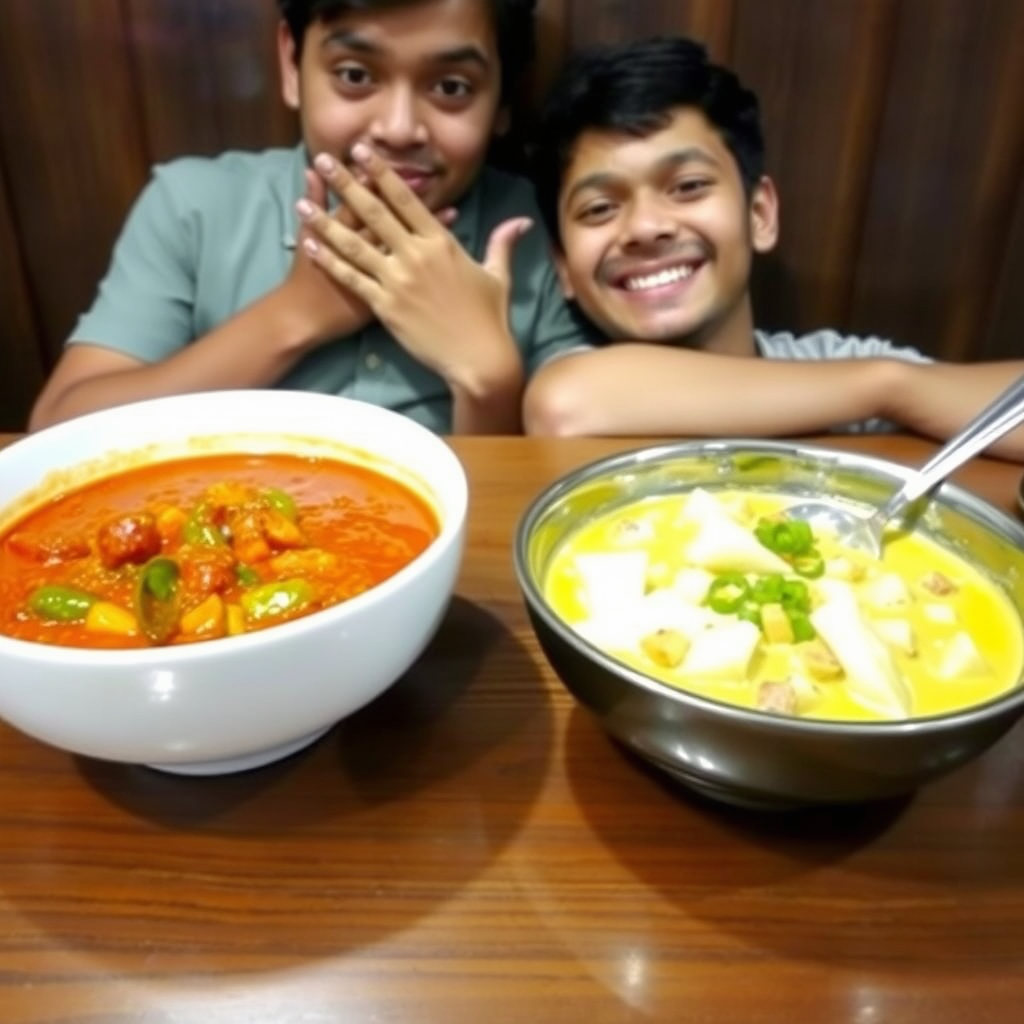
not strong or spicy; gentle in taste or weather
This curry is mild, so children can eat it.
More examples: I prefer mild cheese to strong blue cheese. • The weather here is mild, even in winter. • Would you like your sauce spicy or mild?
Common collocations: mild curry, mild weather, a mild flavour
Word family: mildly
Synonyms: gentle, soft, not spicy
Antonyms: spicy, hot, strong
Related concepts: taste, weather, personality
Contexts: cooking, restaurants, describing climate
Usage note: Used for taste (not spicy, not strong), weather (not too hot or cold) and personality (gentle). Very common when ordering food in restaurants: 'Is this dish mild?'
Vocabulary Check
- What does 'substitute' mean?
- To cook something slowly
- To make food hotter
- To use one thing instead of another
- To buy something new
- Which word best completes the sentence? 'The smell of fresh bread was so ____ that I went into the bakery.'
- tempting
- mild
- worthwhile
- substitute
- What does 'worthwhile' mean?
- Very expensive
- Quick and easy
- Full of strong flavour
- Worth the time and effort
- In which situation would you use the word 'mild'?
- When a dish has a lot of chilli in it
- When a sauce is gentle and not spicy
- When you try a dish for the first time
- When you replace an ingredient in a recipe
- What does 'experiment' mean in this sentence: 'I love to experiment with new recipes at the weekend'?
- To follow a recipe exactly
- To cook the same dish every week
- To try new things to see what happens
- To clean the kitchen carefully
Phrasal Verbs & Expressions
give up
stop trying to do something
The bread didn't rise the first time, but I didn't give up.
Usage note: 'Up' here often means finishing or completing an action, like in 'eat up' or 'use up'.
Usage note: Common pattern: give up + -ing, e.g. 'I gave up eating sugar.'
keep going
continue, don't stop
The recipe took two hours, but I kept going because it smelled amazing.
Usage note: 'Keep' + -ing means to continue doing something, e.g. 'keep trying', 'keep cooking'.
Usage note: People say 'Keep going!' to encourage someone during something difficult.
eat out
eat in a restaurant, not at home
We usually eat out on Fridays because nobody wants to cook.
Usage note: 'Out' means away from home, like in 'go out' or 'night out'.
Usage note: Common pattern: eat out at + place, e.g. 'We eat out at a Thai place.'
Language Practice: Talking About Food and Choices
Practise expressing your opinions and experiences about cooking food from other countries.
- Giving opinions with reasons
- Emerging: I think ____ because ____. — I think Thai food is great because it's fresh and spicy.
- Developing: For me, ____ is worthwhile because ____. — For me, learning new recipes is worthwhile because I can cook for my family.
- Expanding: I'd say that ____, although ____, because ____. — I'd say that mild food is better for family meals, although spicy food is more exciting, because everyone can enjoy mild dishes.
- Describing experiences and results
- Emerging: When I ____ , I ____. — When I cook at home, I feel relaxed.
- Developing: When I tried ____, it was ____ , so ____. — When I tried Indian food for the first time, it was very spicy, so I drank lots of water.
- Expanding: The first time I ____, I was tempted to ____, but instead I ____. — The first time I cooked a foreign dish, I was tempted to give up, but instead I asked my mum for help.
- Making suggestions and comparing options
- Emerging: You could substitute ____ for ____. — You could substitute yoghurt for cream.
- Developing: If you can't find ____, you could substitute ____ for ____, and it would still taste good. — If you can't find fresh basil, you could substitute dried basil for it, and it would still taste good.
- Expanding: Rather than ____, it might be better to ____ , especially if ____. — Rather than buying expensive imported spices, it might be better to find a local substitute, especially if you cook this dish often.
Fill in the Blanks
Last month, my friend Tom decided to cook a different dish from another country every weekend. He wanted to know if it was _____, so he kept a note of the money he saved. The first dish was a curry, but it was too hot for him, so next time he made it _____ with less chilli. He couldn't find coconut milk in his local shop, so he used normal milk as a _____. After a few weeks, he started to _____ with flavours from his own ideas, not just recipes from books. Sometimes the food was strange, but it was always _____ to try another new dish the next weekend!
Word bank: substitute, experiment, tempting, worthwhile, mild
Sentence Unscramble
- could / you / yoghurt / substitute / for / cream / in / this / recipe
- it / was / tempting / to / give / up / but / she / kept / going
- i / like / to / experiment / with / mild / spices / when / i / cook
Discussion Questions
Maria in the story decided to cook one dish from a new country every week. Some people love trying new recipes; others prefer to cook the same five dishes they know well. Both ways of cooking have good points.
Are you someone who likes to experiment in the kitchen, or do you prefer to cook the same things? Why?
Sometimes you can't find an ingredient from another country in your local shops, or it costs too much. Good cooks know clever ways to solve this problem, like using lemon juice instead of a special fruit.
If you couldn't find an important ingredient for a recipe, would you try to find a substitute or choose a different dish? What could you use instead of common things like cream or fresh herbs?
People have very different tastes. Some love food that makes their eyes water, while others prefer mild dishes they can eat every day. Families often argue about this at dinner time!
Do you prefer spicy food or mild food? Has anyone ever cooked something too spicy or too mild for you?
Eating at a foreign restaurant is easy and fun, but cooking that country's food at home is cheaper and you learn a lot. Maria in the story saved money and learned new skills by cooking at home.
Is it more worthwhile to eat out at foreign restaurants or to learn to cook those dishes at home? Why?
When you see a beautiful photo of a dish online, it can be tempting to try it immediately. However, some dishes look amazing but are actually very difficult or disappointing to make. Many people have a story about a cooking attempt that went wrong!
Tell me about a time you saw a tempting recipe or dish and tried to make it. Did it go well? What happened?
Knowledge Check
- Which word best completes the sentence? 'If you don't have butter, you can ____ oil for it in most recipes.'
- mild
- substitute
- tempt
- worthwhile
- True or false? 'Mild' food usually has a lot of chilli in it.
- True
- False
- Which word best completes the sentence? 'That course took a lot of time, but it was ____ because I use what I learned every day.'
- experiment
- mild
- worthwhile
- substitute
- True or false? To 'experiment with' a new recipe means to follow it exactly, step by step.
- True
- False
- Your friend says: 'I wanted to give up, but I kept going.' What did your friend do?
- They stopped and started something new
- They wanted to stop, but they continued
- They went out to eat instead of cooking
- They finished everything quickly
Free to use with your students: Free to teach, screen-share, print and share with your students, with a credit to PlanWise ESL. Please do not sell it or republish it as your own. What you can do with free lessons.