Family Arguments at Christmas: Keeping the Peace
About this lesson: This is a B1 (Intermediate) ESL lesson in the Conversation Practice category. It takes about 60 minutes. It includes 5 vocabulary words, 3 phrasal verbs and expressions, a reading text, comprehension questions, discussion questions and speaking patterns. Suits one-to-one or small-group online classes. Free to open and teach with no login, and it prints as a PDF.
Print just the discussion questions
How this lesson is built
This is a complete conversation lesson built on a scientific pedagogical formula, not a generic worksheet: recall prior topic vocabulary, pre-teach the new words in depth, read in context, practise active recall with flashcards and synonyms/antonyms, build accuracy with exercises, and finish with deep discussion.
- Warm-up: Discussion questions that connect the topic to the student’s own life and recall vocabulary they already know about the subject.
- Reading: A text written for this CEFR level that uses each new word two or three times in context, giving the student something meaningful to react to.
- Key vocabulary: 5 new words, pre-taught before the reading with a definition, pronunciation guide, example sentences and a picture, plus word families, usage notes, recall flashcards and synonyms/antonyms, giving a solid grounding before reading.
- Comprehension: 5 questions that check the new words: retrieval practice, not rereading.
- Idioms and phrasal verbs: Expressions taken from the reading, each with its meaning, an example and a speaking question.
- Sentence frames: 3 speaking patterns, each at three levels of support (emerging, developing, expanding) with model answers—especially helpful scaffolding for beginners and less confident speakers.
- Gap-fill: The new words again, in a shuffled order, so the student recalls them by meaning in context.
- Sentence unscramble: Natural sentences with the new words to put back in order, reinforcing grammar and collocation.
- Discussion: 5 open questions designed to talk deeply about the subject while actively using the lesson’s target vocabulary: the heart of a conversation lesson.
- Quiz: A short retrieval check that brings every new word back once more.
Unlike a generic worksheet, the new words are taught before the reading and met again in the activities, the speaking is supported at three levels and most of the time goes on the student talking. Teachers who use PlanWise ESL also get per-student vocabulary tracking (recycling earlier words into future readings and questions), a private learner dashboard with flashcards and custom lesson creation, and a downloadable study PDF.
Warm-up: Big Family Days
Let's talk about big family holidays and how they really go!
- Do you enjoy big family meals, or do they make you tired?
- What was the last big family celebration you went to?
- Is there a topic your family should not talk about at dinner?
- Do people in your family argue a lot, or are they usually calm?
- What makes a family day go really well?
Reading Text: One Christmas Dinner, Two Big Arguments
Read this short story about a family Christmas. It really happened to a woman called Marta. What would you do in her place?
Last Christmas, Marta went to her parents' house for dinner. She was happy at first, because she had not seen her family for months. However, the evening did not go well. Her uncle and her brother started an argument about politics, and soon everyone at the table felt tense.
The argument blew up very fast. Her uncle raised his voice, and her brother left the table angrily. Marta's mother tried to change the topic, but nobody listened. Marta says she could not put up with the shouting, so she went to the kitchen to help her mother.
In the kitchen, Marta's mother gave her some good advice. She said, 'You cannot change other people, but you can stay calm yourself.' She also said that a small compromise can save a big day. For example, the family could agree to talk about politics on another day, not at dinner.
This year, Marta has a plan. Before dinner, she will talk to her uncle and her brother separately. She will ask them to avoid politics for one evening. She knows it is not a perfect solution, but she thinks a peaceful dinner is worth the effort.
Marta's story is very common. Many families have arguments at big holidays, because people spend long hours together and old problems come back. However, experts say that planning ahead helps. If you know which topics cause trouble, you can prepare, stay calm, and enjoy the day.
Key Vocabulary
argument
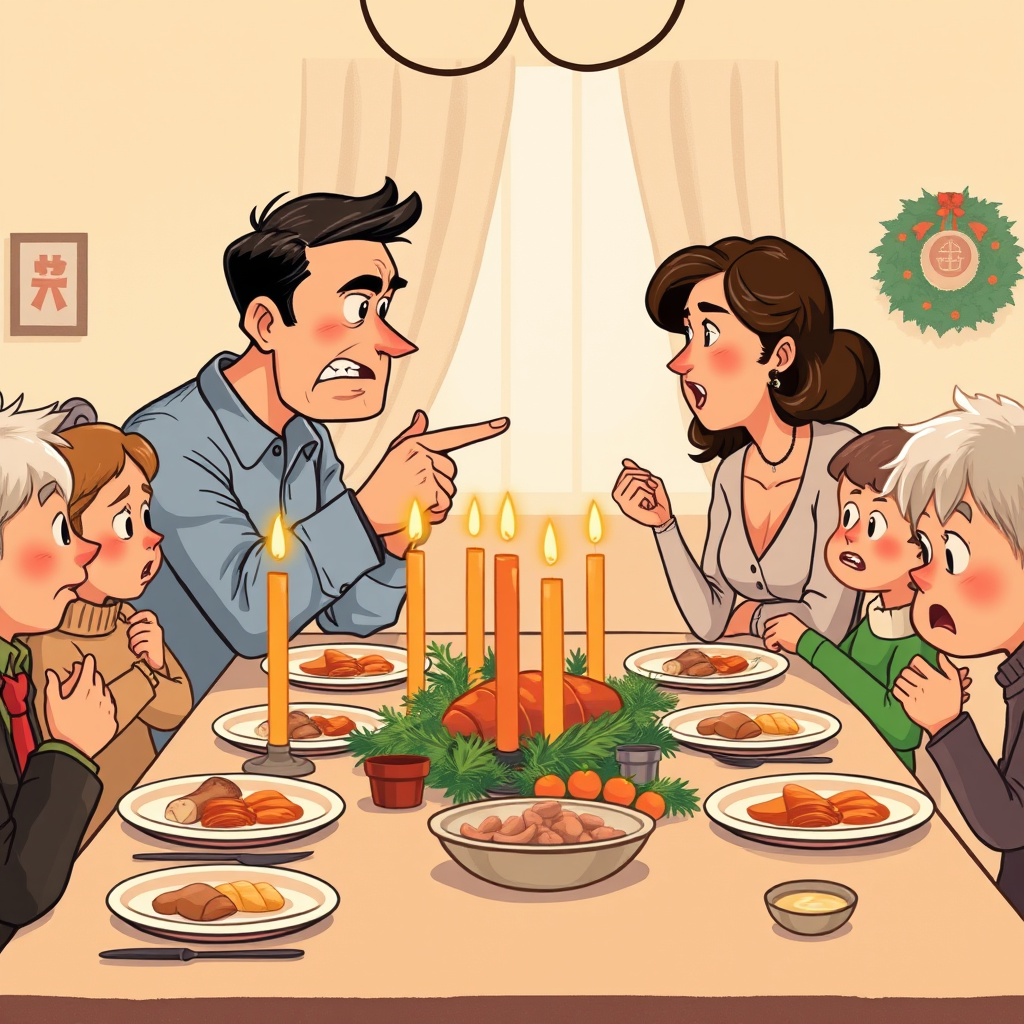
an angry talk where people do not agree
My parents had an argument about where to go on holiday.
More examples: They had a big argument about money last night. • I don't want an argument; let's just stay calm. • She always avoids arguments with her sister.
Common collocations: have an argument, start an argument, avoid an argument
Word family: argue (verb), arguing (noun/gerund)
Synonyms: quarrel, fight, disagreement
Antonyms: agreement, peace
Related concepts: conflict, family, anger
Contexts: family dinners, workplaces, couples
Usage note: Use 'have an argument', not 'make an argument' for a quarrel. Countable noun: one argument, two arguments.
tense

nervous and not relaxed; a situation that feels uncomfortable
The room felt tense after they started shouting.
More examples: Dinner was tense because nobody spoke. • I felt tense before the exam. • There was a tense silence at the table.
Common collocations: a tense moment, a tense silence, feel tense
Word family: tension (noun), tensely (adverb)
Synonyms: nervous, uncomfortable, strained
Antonyms: relaxed, calm
Related concepts: stress, silence, atmosphere
Contexts: family dinners, meetings, exams
Usage note: Describes people (I feel tense) and situations (the atmosphere is tense). Very common for describing awkward family moments.
compromise

an agreement where each person gives up something
We made a compromise: we visit my family one year and his family the next.
More examples: A good compromise makes both people a little happy. • Finding a compromise is not always easy. • They reached a compromise after a long talk.
Common collocations: make a compromise, reach a compromise, a fair compromise
Word family: compromise (verb)
Synonyms: agreement, deal, middle ground
Antonyms: refusal, deadlock
Related concepts: negotiation, fairness, peace
Contexts: families, work, politics
Usage note: Usually positive: a compromise means both sides win a little. Common pattern: compromise on/about something.
blow up
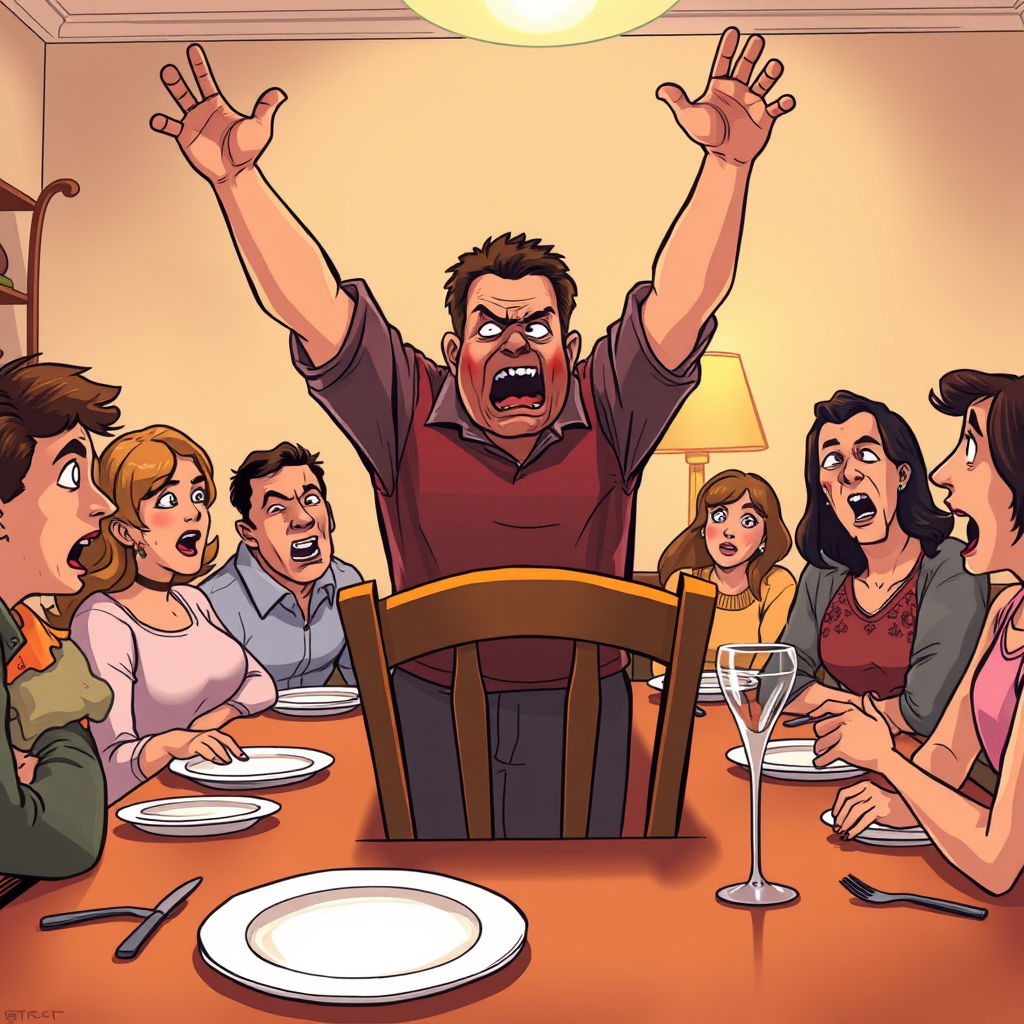
to suddenly become very angry
My dad blew up when he saw the broken window.
More examples: He blew up and left the room. • Don't blow up; let's talk about it calmly. • She blew up at her brother for no reason.
Common collocations: blow up at someone, blow up over something, suddenly blow up
Word family: blow-up (noun, informal)
Synonyms: explode, lose your temper, get furious
Antonyms: stay calm, keep cool
Related concepts: anger, shouting, temper
Contexts: family arguments, traffic, work stress
Usage note: Informal but very common in speech. Past tense: blew up. Use for sudden anger, not slow unhappiness.
put up with
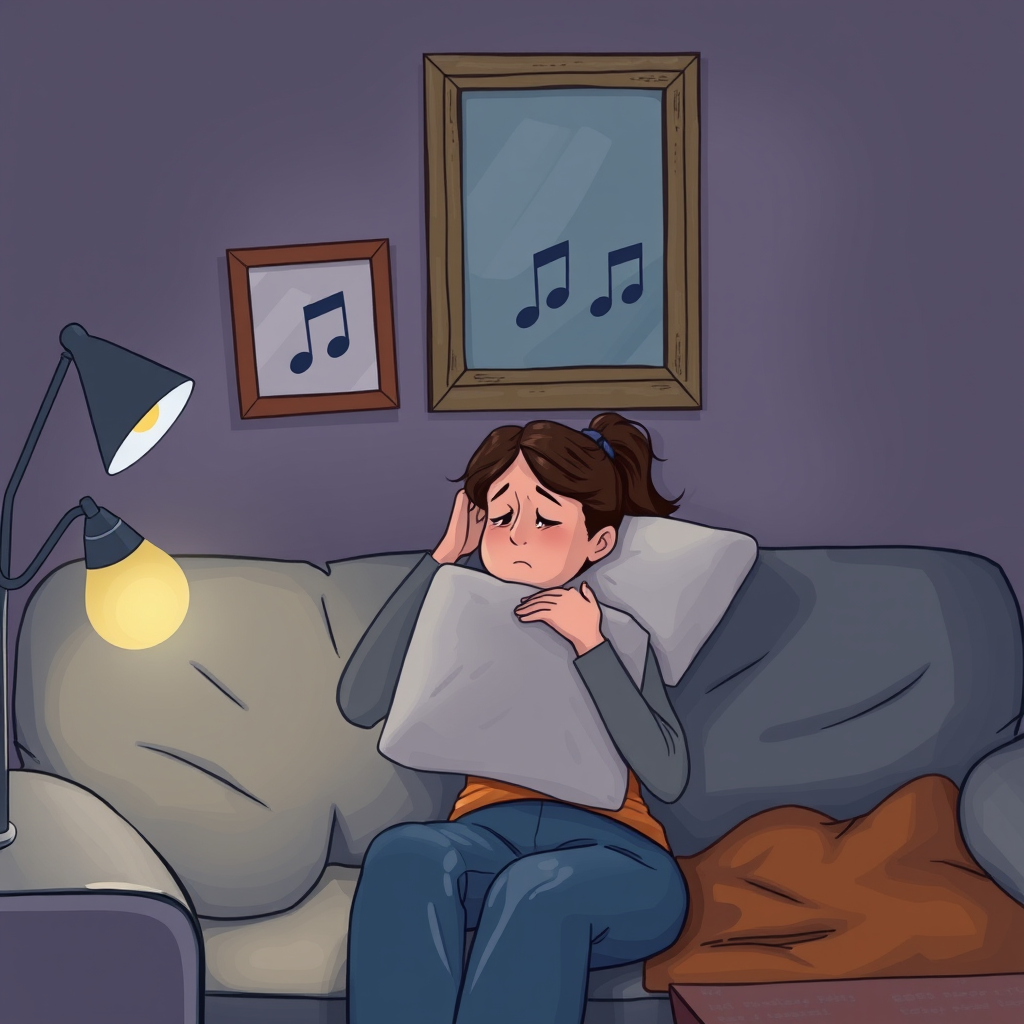
to accept something annoying without complaining
I can't put up with the noise from my neighbours any more.
More examples: She puts up with her boss's bad mood every day. • Why do you put up with that behaviour? • We put up with the cold because heating is expensive.
Common collocations: can't put up with, put up with someone, put up with the noise
Word family: stand (informal synonym)
Synonyms: tolerate, accept, stand
Antonyms: complain, refuse, stop
Related concepts: patience, annoyance, tolerance
Contexts: family life, neighbours, work
Usage note: Always followed by a noun or -ing: put up with the shouting, put up with living there. Often used with 'can't'.
Vocabulary Check
- What does 'tense' mean?
- Very relaxed and happy
- Nervous and uncomfortable
- Very expensive
- Loud and funny
- Which sentence uses 'blow up' correctly?
- She blew up the cake for dessert.
- He blew up when he heard the bad news.
- They blew up their holiday in July.
- I blew up my homework yesterday.
- What is a 'compromise'?
- A big fight between two people
- A gift you give at Christmas
- An agreement where each side gives up something
- A plan for the weekend
- Which sentence uses 'put up with' correctly?
- I can't put up with this noise any more.
- I put up with my friend to the cinema.
- She put up with a cake for her birthday.
- We put up with the bus at six o'clock.
- What does 'argument' mean?
- A calm talk about plans
- An angry talk where people disagree
- A written invitation
- A funny family story
Phrasal Verbs & Expressions
change the topic
start talking about something different
When my aunt started asking about my job, I tried to change the topic.
Usage note: We say 'change the topic' or 'change the subject'. Both are natural.
Usage note: People often do this when a conversation gets uncomfortable.
calm down
become less angry or less excited
My dad always goes for a walk when he needs to calm down.
Usage note: 'Down' suggests going from high emotion to low emotion, like coming down stairs.
Usage note: Be careful with 'calm down' in a real argument - telling an angry person to calm down can make them angrier!
put your foot down
say firmly that something must not happen
My mother put her foot down and said no politics at Christmas dinner.
Usage note: The picture: a car driver presses hard on the brake pedal to stop - so you stop something firmly.
Usage note: It is informal and used a lot in family talk about rules and decisions.
Language Practice: Talking About Family Conflicts
Practise expressing ideas about family arguments and keeping the peace.
- Giving an opinion with a reason
- Emerging: I think ___ because ___. — I think families argue because they are tired.
- Developing: I think ___ because ___, but I understand why ___. — I think long dinners cause arguments because people drink and talk too much, but I understand why families want to spend time together.
- Expanding: In my opinion, ___, because when ___, ___. — In my opinion, planning topics before dinner helps, because when people feel tense, small problems blow up quickly.
- Describing what happens in an argument
- Emerging: When ___, people ___. — When people shout, others feel tense.
- Developing: When ___, people often ___, so ___. — When someone blows up at dinner, people often go quiet, so the evening feels tense.
- Expanding: When ___, it usually makes people ___, which is why ___. — When old problems come back at dinner, it usually makes people tense, which is why some families plan topics before holidays.
- Suggesting solutions and compromises
- Emerging: They could ___ . — They could change the topic.
- Developing: They could ___, or maybe ___. — They could avoid politics at dinner, or maybe talk about it after coffee.
- Expanding: If I were them, I would ___ instead of ___, because ___. — If I were them, I would agree on safe topics instead of arguing, because peace is more important than winning.
Fill in the Blanks
Big family dinners can be difficult. Last New Year, my uncle started an _____ about money, and soon the whole table felt _____. My aunt almost _____ and left the room, but my mother made a _____: no money talk during dinner. Everyone agreed, and honestly, I was happy to _____ a boring evening instead of a shouting one!
Word bank: argument, tense, compromise, blew up, put up with
Sentence Unscramble
- they / had / an / argument / about / the / holiday / plans
- my / dad / blew / up / when / the / food / was / late
- we / made / a / compromise / so / nobody / felt / angry
Discussion Questions
At big family dinners, people often talk about work, money, or politics. Some topics make everyone happy, but others make the room feel tense very quickly. Many families have one topic that always causes trouble.
Which topics cause arguments in your family? Why do you think that topic is so difficult?
Sometimes a small problem at a family dinner suddenly becomes a big fight. One comment, one look, and someone blows up. After that, the whole evening changes and people stop talking.
Have you ever seen someone blow up at a family event? What happened, and what did people do after?
When two people in a family want different things, a compromise can help. For example, one person wants a quiet holiday at home, and the other wants a big party, so they do a little of both. Compromises are not perfect, but they keep the peace.
Do you think compromise is always a good idea, or is it better to say exactly what you want? Why?
Some people stay quiet during family arguments because they don't want trouble. They put up with rude comments for years. Other people speak immediately, even if it starts a fight. Both choices have good and bad sides.
Are you the kind of person who puts up with difficult family members, or do you speak up? Has that changed as you got older?
Marta in the story made a plan for this year: she talked to the difficult family members before dinner and asked them to avoid politics. Some people say planning like this is wise; others say it feels like controlling people.
If you could plan one rule for your next big family dinner, what would it be? Do you think rules like this really work?
Knowledge Check
- If a dinner 'felt tense', how did people feel?
- Happy and relaxed
- Nervous and uncomfortable
- Hungry and excited
- Sleepy and bored
- What does it mean if someone 'blew up' at dinner?
- They cooked something quickly
- They suddenly became very angry
- They arrived late
- They ate too much
- True or false? A compromise means one person wins and the other loses completely.
- True
- False
- Which phrase means 'to accept something annoying without complaining'?
- blow up
- put up with
- make an argument
- feel tense
- Which is the correct collocation?
- make an argument
- do an argument
- have an argument
- give an argument
- Your brother starts shouting at Christmas dinner. What does he need to do?
- He needs to change the topic
- He needs to put up a photo
- He needs to calm down
- He needs to put his foot up
Free to use with your students: Free to teach, screen-share, print and share with your students, with a credit to PlanWise ESL. Please do not sell it or republish it as your own. What you can do with free lessons.