Dealing with Homesickness During Your First Year Abroad
About this lesson: This is a B1 (Intermediate) ESL lesson in the General English category. It takes about 60 minutes. It includes 5 vocabulary words, 3 phrasal verbs and expressions, a reading text, comprehension questions, discussion questions and speaking patterns. Suits one-to-one or small-group online classes. Free to open and teach with no login, and it prints as a PDF.
Print just the discussion questions
How this lesson is built
This is a complete conversation lesson built on a scientific pedagogical formula, not a generic worksheet: recall prior topic vocabulary, pre-teach the new words in depth, read in context, practise active recall with flashcards and synonyms/antonyms, build accuracy with exercises, and finish with deep discussion.
- Warm-up: Discussion questions that connect the topic to the student’s own life and recall vocabulary they already know about the subject.
- Reading: A text written for this CEFR level that uses each new word two or three times in context, giving the student something meaningful to react to.
- Key vocabulary: 5 new words, pre-taught before the reading with a definition, pronunciation guide, example sentences and a picture, plus word families, usage notes, recall flashcards and synonyms/antonyms, giving a solid grounding before reading.
- Comprehension: 5 questions that check the new words: retrieval practice, not rereading.
- Idioms and phrasal verbs: Expressions taken from the reading, each with its meaning, an example and a speaking question.
- Sentence frames: 3 speaking patterns, each at three levels of support (emerging, developing, expanding) with model answers—especially helpful scaffolding for beginners and less confident speakers.
- Gap-fill: The new words again, in a shuffled order, so the student recalls them by meaning in context.
- Sentence unscramble: Natural sentences with the new words to put back in order, reinforcing grammar and collocation.
- Discussion: 5 open questions designed to talk deeply about the subject while actively using the lesson’s target vocabulary: the heart of a conversation lesson.
- Quiz: A short retrieval check that brings every new word back once more.
Unlike a generic worksheet, the new words are taught before the reading and met again in the activities, the speaking is supported at three levels and most of the time goes on the student talking. Teachers who use PlanWise ESL also get per-student vocabulary tracking (recycling earlier words into future readings and questions), a private learner dashboard with flashcards and custom lesson creation, and a downloadable study PDF.
Warm-up: Missing Home
Talk about what home means to you and how it feels to be far away from familiar places and people.
- What do you miss most when you are away from home?
- Have you ever felt homesick? When was that?
- What food or smell makes you think of home?
- Do you think it's easy or hard to live in a new country? Why?
- What would you do first if you moved to a new city tomorrow?
Reading Text: Maria's First Year in Canada
Maria moved from Brazil to Canada for work. Read about her first year and how she felt.
Maria moved to Toronto last January for a new job. The first week was exciting, but after that she felt very homesick. She missed her family, her friends and the warm weather. At night she called her mother and sometimes she cried. She thought, 'Maybe I made a mistake.'
The biggest problem was that she felt lonely. In Brazil she saw friends every day, but in Toronto she went to work and came home alone. Her colleagues were friendly, but she didn't know how to start conversations with them.
After a month, Maria decided to make a daily routine. She got up early, walked in the park before work, and cooked dinner at the same time every evening. The routine helped her feel calmer. She also joined a Saturday football group, so she met new people every week.
Little by little, Maria began to adjust to her new life. She learned how the city worked, she understood Canadian humour, and she stopped comparing everything to Brazil. However, she still had bad days, especially on birthdays and holidays.
Now, one year later, Maria says the hard first months taught her something important. Everyone feels homesick sometimes, and that's normal. The secret is not to wait for the sadness to go away. You have to build a new life step by step, and then the new country starts to feel like home too.
Key Vocabulary
homesick

sad because you are far from home
After two weeks abroad, she felt homesick and called her parents every night.
More examples: I got homesick during my first month at university. • Don't worry, everyone feels a bit homesick at first. • Are you homesick for your hometown, or just tired?
Common collocations: feel homesick, get homesick, a little homesick
Word family: homesickness (noun), sick (adjective)
Synonyms: missing home, nostalgic, sad
Antonyms: at home, settled, comfortable
Related concepts: missing family, living abroad, memories
Contexts: studying abroad, moving to a new city, long trips
Usage note: Use it to describe the feeling of missing home. It's usually temporary: 'I felt homesick at first, but now I'm fine.'
adjust

to change so a new situation feels normal
It took me three months to adjust to the cold weather here.
More examples: She adjusted quickly to her new school. • You need time to adjust to a different time zone. • He found it hard to adjust to working at night.
Common collocations: adjust to a new life, adjust to the culture, slowly adjust
Word family: adjustment (noun), adjustable (adjective)
Synonyms: adapt, get used to, settle in
Antonyms: resist, stay the same
Related concepts: new habits, culture, change
Contexts: moving abroad, new job, new school
Usage note: Usually followed by 'to': adjust to something. Often used with time expressions: 'It takes time to adjust.'
cope

to deal successfully with a problem
She coped with the stress by going for a run every evening.
More examples: How do you cope with a heavy workload? • He couldn't cope with all the noise in the city. • Talking to friends helps me cope with bad days.
Common collocations: cope with stress, cope with change, find ways to cope
Word family: coping (adjective/noun)
Synonyms: deal with, handle, manage
Antonyms: give up, fail
Related concepts: stress, solutions, problems
Contexts: work stress, difficult emotions, big changes
Usage note: Almost always used with 'with': cope with something. Very common when talking about stress, problems and difficult feelings.
lonely
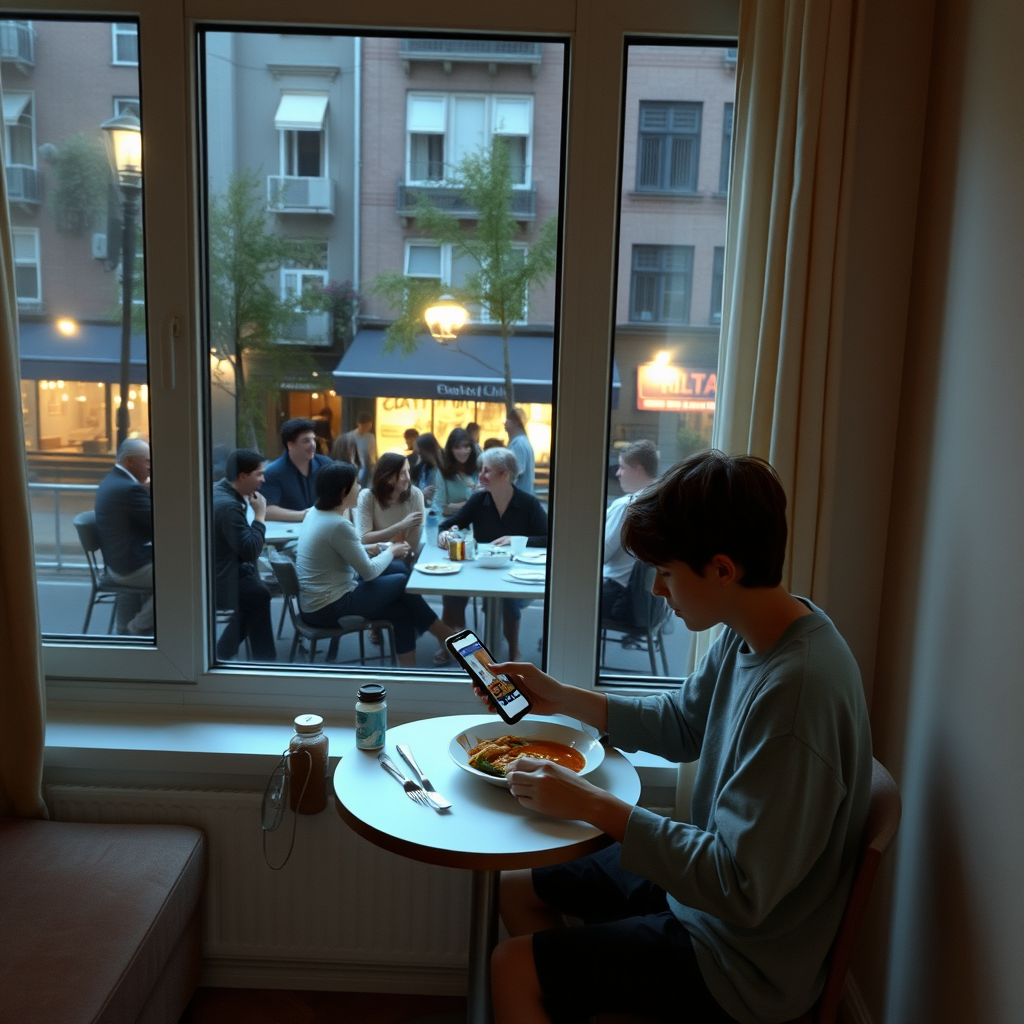
sad because you are alone or have no friends
He felt lonely in the big city because he knew nobody there.
More examples: Old people often feel lonely if their family lives far away. • I was lonely at first, but then I joined a club. • You can feel lonely even in a room full of people.
Common collocations: feel lonely, get lonely, lonely place
Word family: loneliness (noun), alone (adjective)
Synonyms: isolated, alone and sad
Antonyms: connected, surrounded, with friends
Related concepts: friendship, isolation, community
Contexts: moving to a new city, working from home, living by yourself
Usage note: Important difference: 'alone' is neutral (I live alone), but 'lonely' is a sad feeling. You can be alone and happy, or lonely in a crowd.
routine

things you do regularly in the same way
My morning routine is simple: coffee, shower, then breakfast.
More examples: A good routine helps you feel calm and organised. • Her evening routine includes reading for thirty minutes. • I need a new routine now that I work from home.
Common collocations: daily routine, morning routine, stick to a routine
Word family: routinely (adverb)
Synonyms: habit, schedule, pattern
Antonyms: chaos, surprise
Related concepts: habits, discipline, stability
Contexts: morning habits, work life, exercise
Usage note: Countable noun. Very useful for talking about habits and lifestyle. Often used with 'daily', 'morning' or 'evening'.
Vocabulary Check
- What does 'homesick' mean?
- Sick from bad food
- Sad because you are far from home
- Excited about a new place
- Tired after a long trip
- Which sentence uses 'adjust' correctly?
- I adjusted to my new job after a few weeks.
- I adjusted my friend to the cinema.
- She adjusted a lot of friends last year.
- We adjusted the party until midnight.
- In which situation would you use the word 'cope'?
- When you buy new shoes
- When you deal with a difficult problem
- When you cook dinner
- When you watch a film
- What is the difference between 'alone' and 'lonely'?
- They mean exactly the same thing
- 'Alone' is a fact, 'lonely' is a sad feeling
- 'Lonely' means you are with friends
- 'Alone' is always a sad feeling
- Which sentence uses 'routine' correctly?
- My routine every morning is coffee and a walk.
- I routine to school every day.
- She is very routine person happy.
- We routine the weather yesterday.
Phrasal Verbs & Expressions
get up
to leave your bed and start your day
I usually get up at seven, even on Sundays.
Usage note: No object, so you cannot split it: · Right: I get up at six. · Avoid: I get up the bed at six.
Usage note: 'Wake up' means you stop sleeping; 'get up' means you actually leave the bed.
come home
to arrive back at your home
After work I just come home, eat and watch TV.
Usage note: Use 'come home' when you return to where you live now, not only to your country.
Usage note: No object, so you cannot split it: · Right: She came home late. · Avoid: She came the home late.
step by step
slowly, one small thing at a time
I'm learning to cook step by step — this week, simple pasta.
Usage note: The picture is climbing stairs: each step is small, but you go up.
Usage note: It works like an adverb: · Right: I improved step by step. · Avoid: I did step by step work.
Language Practice: Talking About Feelings and Change
Practice expressing how you deal with new situations and difficult feelings.
- Describing feelings and their causes
- Emerging: I felt ___ because ___. — I felt homesick because I missed my mother's cooking.
- Developing: When I ___, I felt ___, so I ___. — When I moved to a new city, I felt lonely, so I joined a sports club.
- Expanding: The hardest thing about ___ was ___, because ___, but I coped by ___. — The hardest thing about moving abroad was the language, because I couldn't say what I wanted, but I coped by practising with neighbours.
- Giving advice about difficult situations
- Emerging: You should ___ every day. — You should call your family every day.
- Developing: If you feel ___, you could ___ because ___. — If you feel lonely, you could join a club because you meet people there.
- Expanding: In my experience, the best way to cope with ___ is to ___, although it also helps to ___. — In my experience, the best way to cope with homesickness is to keep busy, although it also helps to talk about your feelings with someone.
- Comparing past and present situations
- Emerging: Before, I ___. Now, I ___. — Before, I lived with my family. Now, I live alone.
- Developing: I used to ___, but now I ___ because ___. — I used to see my friends every day, but now I only call them because they live far away.
- Expanding: When I first ___, I used to ___, however, after a few months I adjusted and now I ___. — When I first started my job, I used to feel stressed every morning, however, after a few months I adjusted and now I enjoy the challenge.
Fill in the Blanks
When Daniel moved to Australia for study, the first weeks were hard. He felt _____ because he knew nobody in Sydney, and at night he got very _____. His advice to new students is simple: make a _____ quickly, because it helps you _____ to a new life. He also says you need good ways to _____ with stress, like exercise or talking to friends.
Word bank: homesick, adjust, cope, lonely, routine
Sentence Unscramble
- felt / she / very / homesick / during / her / first / week / abroad
- a / good / routine / helps / you / adjust / to / a / new / country
- he / coped / with / the / lonely / evenings / by / joining / a / football / club
Discussion Questions
Imagine you move to a new country for work or study. Everything is new: the food, the language, the streets. The first week is exciting, but after that, many people start to miss home. Some people feel this strongly, others hardly at all.
Do you think you would get homesick quickly, or would you be fine? Why?
Maria in the reading made a daily routine to feel calmer: walking, cooking at the same time, playing football on Saturdays. Some people love routines because they feel safe. Others think routines are boring and prefer to do something different every day.
Do you prefer to have a routine or to change things every day? Why?
When people feel lonely abroad, they often call family or friends from home. But some say you should spend less time on the phone and more time meeting new people, or you never adjust. Others say staying close to family is the most important thing.
What is the best way to cope with feeling lonely in a new place: calling people from home or making new friends? Why?
Adjusting to a new country takes time, and everyone is different. Some people adjust in a few weeks. Others need a year or more, and that's normal too. It can depend on the language, the culture, or the person's character.
What do you think is the hardest thing to adjust to in a new country: the language, the food, or the people? Why?
Maria says the difficult first months taught her something important, and she is happy she stayed. But not everyone stays. Some people decide after a few months that life abroad is not for them and go home. Both choices can be the right one.
If you moved abroad and felt unhappy after six months, would you stay and try harder, or go home? Why?
Knowledge Check
- Maria joined a Saturday football group mainly to...
- get fit for a competition
- meet new people and feel less lonely
- learn Canadian rules
- save money
- True or false? 'Alone' and 'lonely' mean exactly the same thing.
- True
- False
- Which word means 'things you do regularly in the same way'?
- adjust
- cope
- routine
- homesick
- Which phrase is correct?
- cope a problem
- cope with a problem
- cope to a problem
- cope for a problem
- True or false? According to the reading, Maria stopped feeling homesick completely after one year.
- True
- False
- Maria built a new life 'step by step'. What does that mean?
- She built a house with stairs
- She made big changes all at once
- She improved slowly, one small thing at a time
- She walked a lot every day
Free to use with your students: Free to teach, screen-share, print and share with your students, with a credit to PlanWise ESL. Please do not sell it or republish it as your own. What you can do with free lessons.