New Year's Resolutions: Why We Make Them and Why Most Fade by February
About this lesson: This is a B1 (Intermediate) ESL lesson in the Conversation Practice category. It takes about 60 minutes. It includes 5 vocabulary words, 3 phrasal verbs and expressions, a reading text, comprehension questions, discussion questions and speaking patterns. Suits one-to-one or small-group online classes. Free to open and teach with no login, and it prints as a PDF.
Print just the discussion questions
How this lesson is built
This is a complete conversation lesson built on a scientific pedagogical formula, not a generic worksheet: recall prior topic vocabulary, pre-teach the new words in depth, read in context, practise active recall with flashcards and synonyms/antonyms, build accuracy with exercises, and finish with deep discussion.
- Warm-up: Discussion questions that connect the topic to the student’s own life and recall vocabulary they already know about the subject.
- Reading: A text written for this CEFR level that uses each new word two or three times in context, giving the student something meaningful to react to.
- Key vocabulary: 5 new words, pre-taught before the reading with a definition, pronunciation guide, example sentences and a picture, plus word families, usage notes, recall flashcards and synonyms/antonyms, giving a solid grounding before reading.
- Comprehension: 5 questions that check the new words: retrieval practice, not rereading.
- Idioms and phrasal verbs: Expressions taken from the reading, each with its meaning, an example and a speaking question.
- Sentence frames: 3 speaking patterns, each at three levels of support (emerging, developing, expanding) with model answers—especially helpful scaffolding for beginners and less confident speakers.
- Gap-fill: The new words again, in a shuffled order, so the student recalls them by meaning in context.
- Sentence unscramble: Natural sentences with the new words to put back in order, reinforcing grammar and collocation.
- Discussion: 5 open questions designed to talk deeply about the subject while actively using the lesson’s target vocabulary: the heart of a conversation lesson.
- Quiz: A short retrieval check that brings every new word back once more.
Unlike a generic worksheet, the new words are taught before the reading and met again in the activities, the speaking is supported at three levels and most of the time goes on the student talking. Teachers who use PlanWise ESL also get per-student vocabulary tracking (recycling earlier words into future readings and questions), a private learner dashboard with flashcards and custom lesson creation, and a downloadable study PDF.
Warm-up Activity
Look at the questions and talk about your own experience with New Year's resolutions.
- Have you ever made a New Year's resolution? What was it?
- Do you think January is a good time to start something new? Why or why not?
- What is something you would like to change in your daily life?
- Why do you think people love making plans on January 1st?
- If you could promise yourself one thing this year, what would it be?
Reading Text: The January Promise
Read a short text about why people make resolutions and why most of them disappear by February.
Every January, millions of people make a resolution. They promise to exercise more, eat better, or save money. It feels like a fresh start. The new year gives people motivation to change something in their lives.
However, there is a problem. Studies show that most people give up before February. Gyms are full in January, but by March they are almost empty. So why does this happen so often?
One reason is that people choose goals that are too big. Someone who never runs decides to run every day. That is very hard. When a goal is too difficult, people lose their motivation quickly and stop trying.
Another reason is that a resolution is not the same as a habit. Experts say you need about two months to build a habit. If you go to the gym for two weeks, it is not a habit yet. It is still an effort, so it is easy to give up.
So what works? People who stick to their goals usually start small. They make one easy change and repeat it every day. For example, they walk for ten minutes instead of running for an hour. Small steps are boring, but they last. Maybe that is the real secret of a good resolution.
Key Vocabulary
resolution
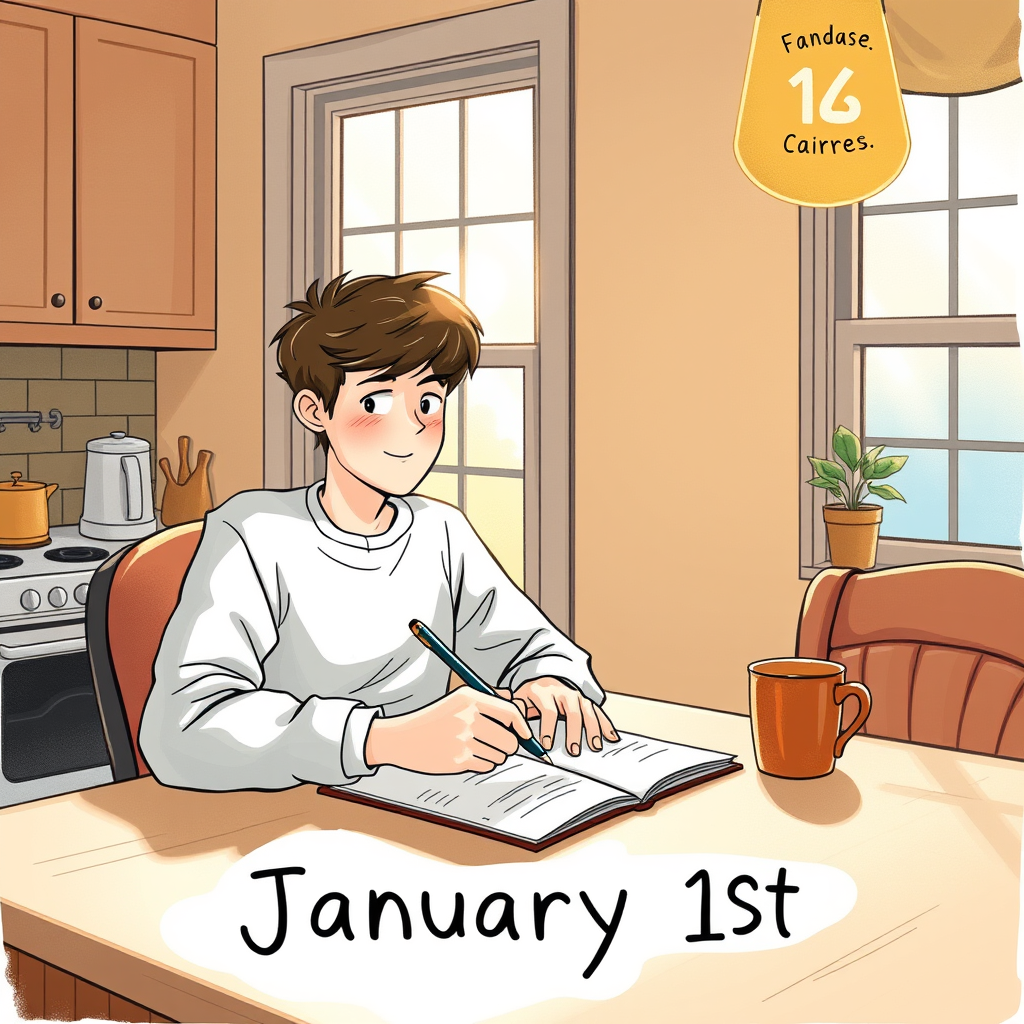
a promise to yourself to do something better
My resolution this year is to read more books.
More examples: She made a resolution to stop drinking coffee. • Did you keep your resolution from last year? • I never tell anyone my resolutions.
Common collocations: make a resolution, keep a resolution, break a resolution
Word family: resolve (verb), resolute (adjective)
Synonyms: promise, goal, plan
Antonyms: wish, dream
Related concepts: New Year, self-improvement, commitment
Contexts: January, fitness, money
Usage note: Used mostly for New Year's promises, but you can make a resolution at any time of year.
stick to
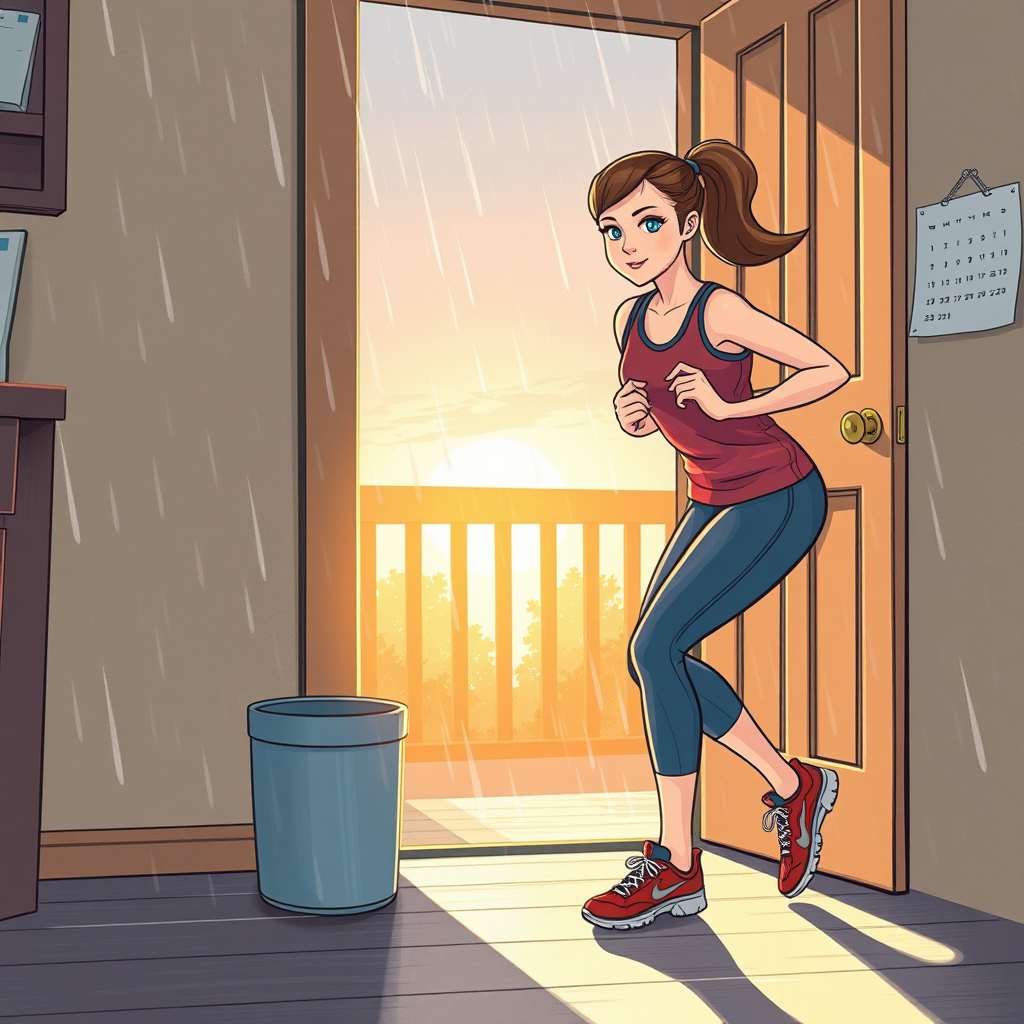
to continue doing something and not stop
I want to stick to my plan of walking every morning.
More examples: It's hard to stick to a diet at a party. • He stuck to his budget all year. • Can you stick to this schedule every week?
Common collocations: stick to a plan, stick to a diet, stick to your decision
Word family: stick (verb), stuck (past)
Synonyms: continue, keep going, follow
Antonyms: quit, abandon
Related concepts: discipline, routine, persistence
Contexts: diets, budgets, exercise plans
Usage note: Always followed by 'to' plus a noun: stick to a plan, stick to the rules.
give up
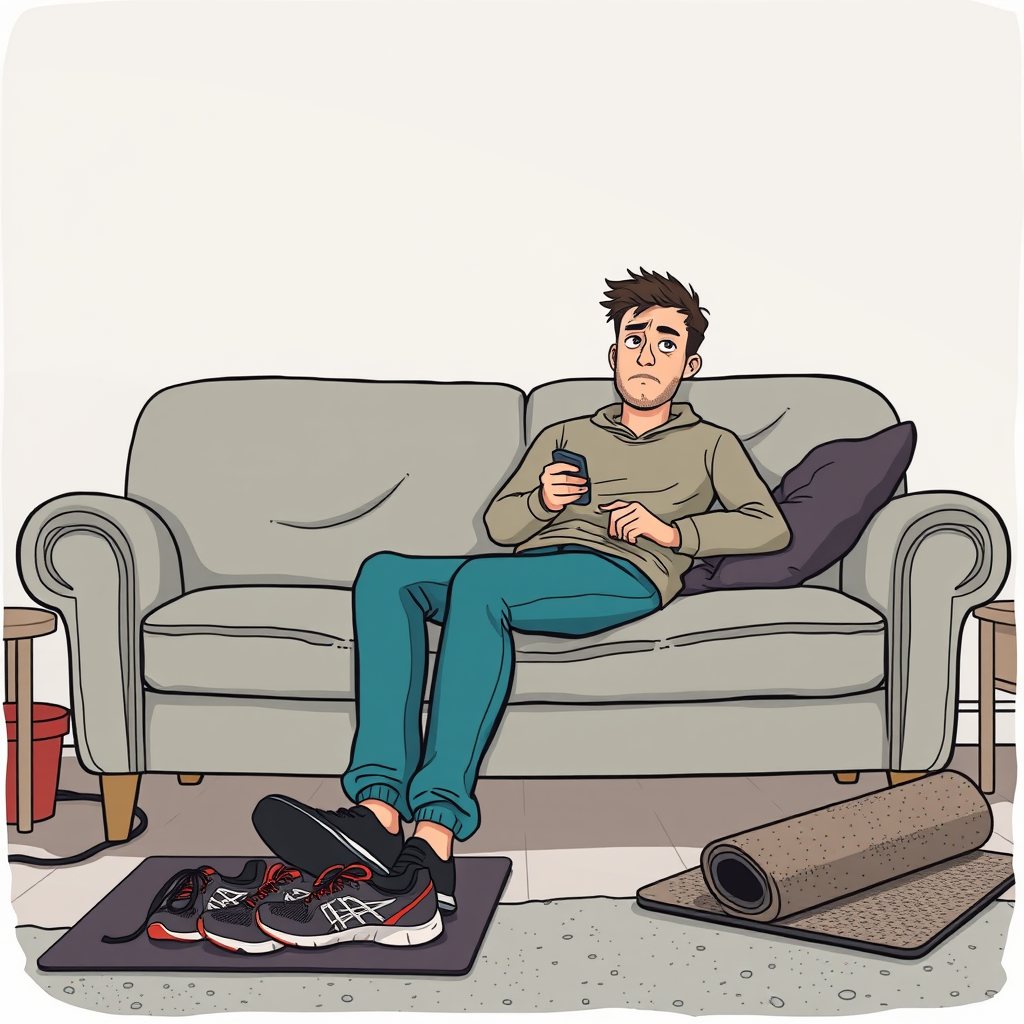
to stop trying to do something
Most people give up on their resolutions by February.
More examples: Don't give up after one bad day. • She gave up smoking two years ago. • He gave up learning the guitar after a month.
Common collocations: give up on something, give up smoking, never give up
Word family: give (verb), gave up (past)
Synonyms: quit, stop, surrender
Antonyms: persist, continue, keep going
Related concepts: failure, bad habits, frustration
Contexts: diets, hobbies, smoking
Usage note: Can mean stop trying ('give up on a goal') or stop a habit ('give up sugar').
motivation

the reason or feeling that makes you want to do something
In January I have a lot of motivation, but it disappears fast.
More examples: Music gives me motivation to exercise. • Her motivation is to be healthy for her children. • I need motivation on Monday mornings.
Common collocations: lose motivation, find motivation, lack motivation
Word family: motivate (verb), motivated (adjective)
Synonyms: drive, reason, enthusiasm
Antonyms: laziness, boredom
Related concepts: goals, energy, willpower
Contexts: work, fitness, study
Usage note: Uncountable noun. Say 'a lot of motivation', not 'motivations'.
habit
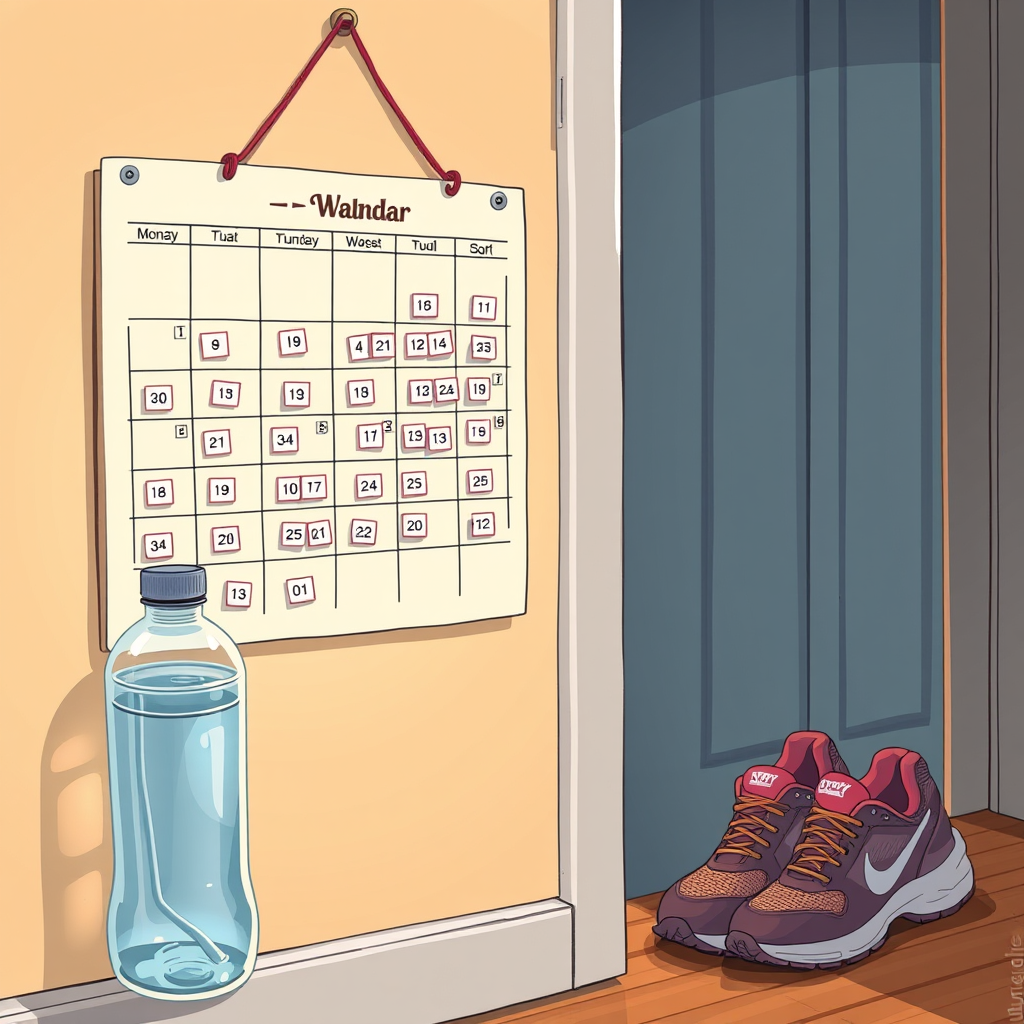
something you do often without thinking about it
Brushing your teeth is a habit you do every day.
More examples: I have a bad habit of checking my phone at night. • Small habits can change your life. • It takes time to build a new habit.
Common collocations: build a habit, break a habit, bad habit
Word family: habitual (adjective)
Synonyms: routine, custom, practice
Antonyms: one-off, rarity
Related concepts: routine, repetition, behavior
Contexts: health, work, sleep
Usage note: Countable noun. Common verbs: build, form, break, have a habit.
Vocabulary Check
- What does 'resolution' mean?
- A promise to yourself to do something better
- A problem you cannot solve
- A photo of the new year
- A type of holiday
- Which sentence uses 'stick to' correctly?
- I stick to my phone every night.
- She stuck to her plan and went running every day.
- He sticks to his bed until noon.
- They stick to the movie last weekend.
- In which situation would you say 'give up'?
- When you start a new hobby
- When you stop trying to do something
- When you finish something successfully
- When you make a new plan
- What does 'motivation' mean?
- A difficult goal
- A type of exercise
- The feeling that makes you want to do something
- A rule you must follow
- Which sentence uses 'habit' correctly?
- Drinking coffee every morning is my habit.
- I habit a new car last year.
- She is very habit at her job.
- We went to the habit yesterday.
Phrasal Verbs & Expressions
work out
to understand or decide something from what you see
I can't work out why I always stop going to the gym.
Usage note: You can split it: 'work it out', 'work it out from the picture'.
Usage note: It also means 'to do exercise': 'I work out at the gym.'
fresh start
a new beginning, when you forget the past
Moving to a new city gave me a fresh start.
Usage note: A very common phrase in January: people often say 'I want a fresh start this year.'
fade away
to slowly become smaller or disappear
My plan to study every evening faded away after one week.
Usage note: 'Fade' is the picture of a colour that slowly loses its colour in the sun.
Usage note: You can split it: 'it faded away', but not 'fade it away'.
Language Practice: Talking About Goals
Practice expressing opinions, plans and reasons about goals and habits.
- Giving an opinion with a reason
- Emerging: I think ___ because ___. — I think small goals are better because they are easy.
- Developing: In my opinion, ___ because ___, so ___. — In my opinion, big goals fail because they are too hard, so people lose motivation.
- Expanding: The way I see it, ___, because if ___, then ___. — The way I see it, most resolutions fail, because if a goal is too big, then people stop after the first bad week.
- Talking about past experiences with goals
- Emerging: Last year, I tried to ___, but I ___. — Last year, I tried to eat less sugar, but I stopped in February.
- Developing: A few years ago, I decided to ___, but after ___, I ___. — A few years ago, I decided to go to the gym, but after three weeks, I gave up.
- Expanding: I remember when I tried to ___. At first ___, but then ___, so in the end ___. — I remember when I tried to learn Spanish. At first I studied every day, but then I lost motivation, so in the end I stopped.
- Explaining cause and effect about habits
- Emerging: When I ___, I ___. — When I feel tired, I eat sweets.
- Developing: When I ___, I usually ___, because ___. — When I feel stressed, I usually eat junk food, because it makes me feel better fast.
- Expanding: When I ___, I find it hard to ___, so I try to ___ instead. — When I start a big goal, I find it hard to stay motivated, so I try to start small instead.
Fill in the Blanks
Last January, my friend Anna made a _____ to run every morning. At first she had a lot of _____ and got up at six o'clock every day. However, after two weeks, the weather got cold and she started to _____ up. The problem was that running every day was not a _____ yet, so it still felt difficult. This year she has a better plan: she wants to _____ to one small goal, walking for ten minutes a day.
Word bank: resolution, motivation, give, habit, stick
Sentence Unscramble
- my / resolution / this / year / is / to / exercise / more
- it / is / hard / to / stick / to / a / new / habit
- don't / give / up / when / you / have / a / bad / day
Discussion Questions
Every January, people around the world promise themselves something new: more exercise, less phone time, better food. Some people love this tradition and feel excited. Others think it is pointless because they always fail. Both groups have a reason for their opinion.
Do you think New Year's resolutions are a good idea, or a waste of time? Why?
The reading says most people give up before February. Gyms are full in January and empty in March. Maybe the goals are too big, or maybe life just gets busy again. Everyone has a different breaking point.
Have you ever given up on a goal? What happened?
Some people say motivation is the key to success. Others say motivation always disappears, so habits are more important. A habit is something you do without thinking, like brushing your teeth. Motivation comes and goes, but a habit stays.
What is more important for changing your life: motivation or habits? Why?
Experts say small goals work better than big ones. Walking ten minutes a day is easier than running an hour. But small goals can feel boring, and some people want a big challenge. There are good arguments on both sides.
Is it better to start with a small goal or a big one? Why?
Imagine your best friend tells you about a big resolution: they want to completely change their life this year - new diet, new exercise, new hobby, all at once. You have seen this before, and you know how it usually ends.
What advice would you give your friend? Why?
Knowledge Check
- What do most people do with their resolutions by February?
- They finish them successfully
- They give up
- They make new ones every day
- They tell everyone about them
- Which phrase means 'to continue with a plan and not stop'?
- give up on
- look up to
- stick to
- come up with
- According to the reading, why do big goals often fail?
- Because January is too cold
- Because they are too difficult, so people lose motivation
- Because gyms are too expensive
- Because people forget them
- A habit is something you do often without thinking about it.
- True
- False
- What does the reading say works best for keeping a resolution?
- Starting small and repeating it every day
- Telling all your friends
- Starting on January 1st exactly
- Choosing a very big goal
- In the sentence 'Moving to a new city gave me a fresh start', what does 'a fresh start' mean?
- A very cold morning
- A new beginning
- A big house
- A fast car
Free to use with your students: Free to teach, screen-share, print and share with your students, with a credit to PlanWise ESL. Please do not sell it or republish it as your own. What you can do with free lessons.