The Joy of Baking
About this lesson: This is a B2 (Upper Intermediate) ESL lesson in the General English category. It takes about 60 minutes. It includes 5 vocabulary words, 4 idioms and phrasal verbs, a reading text, comprehension questions, discussion questions and speaking patterns. Suits one-to-one or small-group online classes. Free to open and teach with no login, and it prints as a PDF.
Print just the discussion questions
How this lesson is built
This is a complete conversation lesson built on a scientific pedagogical formula, not a generic worksheet: recall prior topic vocabulary, pre-teach the new words in depth, read in context, practise active recall with flashcards and synonyms/antonyms, build accuracy with exercises, and finish with deep discussion.
- Warm-up: Discussion questions that connect the topic to the student’s own life and recall vocabulary they already know about the subject.
- Reading: A text written for this CEFR level that uses each new word two or three times in context, giving the student something meaningful to react to.
- Key vocabulary: 5 new words, pre-taught before the reading with a definition, pronunciation guide, example sentences and a picture, plus word families, usage notes, recall flashcards and synonyms/antonyms, giving a solid grounding before reading.
- Comprehension: 5 questions that check the new words: retrieval practice, not rereading.
- Idioms and phrasal verbs: Expressions taken from the reading, each with its meaning, an example and a speaking question.
- Sentence frames: 3 speaking patterns, each at three levels of support (emerging, developing, expanding) with model answers—especially helpful scaffolding for beginners and less confident speakers.
- Gap-fill: The new words again, in a shuffled order, so the student recalls them by meaning in context.
- Sentence unscramble: Natural sentences with the new words to put back in order, reinforcing grammar and collocation.
- Discussion: 5 open questions designed to talk deeply about the subject while actively using the lesson’s target vocabulary: the heart of a conversation lesson.
- Quiz: A short retrieval check that brings every new word back once more.
Unlike a generic worksheet, the new words are taught before the reading and met again in the activities, the speaking is supported at three levels and most of the time goes on the student talking. Teachers who use PlanWise ESL also get per-student vocabulary tracking (recycling earlier words into future readings and questions), a private learner dashboard with flashcards and custom lesson creation, and a downloadable study PDF.
Warm-up: Let's Talk About Baking
Look at the questions and share your thoughts about baking and homemade food. There are no wrong answers — just talk!
- Do you enjoy baking, or does it feel like too much work?
- What's the last thing you baked, or the last homemade treat someone gave you?
- When you smell fresh bread or cookies, how does it make you feel?
- Do you prefer sweet baking, like cakes and cookies, or savoury things like bread?
- If you had a completely free Sunday afternoon, would you spend it in the kitchen? Why or why not?
Reading Text: Why Baking Makes People Happy
Read this short article about why so many people love baking at home. As you read, notice the five key words in bold.
On a rainy Sunday afternoon, millions of people around the world head to their kitchens to bake. Some follow family recipes passed down through generations; others watch videos online and try something completely new. Many say the process itself is therapeutic, a calm break from busy, screen-filled lives. Whatever the reason, home baking is more popular than ever.
Take Marta, a nurse from Poland. Every Friday evening, she makes bread from scratch, using only flour, water, salt and yeast. 'The best moment is opening the oven door and letting that warm aroma fill the flat,' she says. 'No shop-bought loaf has that smell.' Her neighbours recognise her baking days by the aroma alone.
Psychologists are not surprised. They explain that baking can be therapeutic because measuring, kneading and waiting for dough to rise force you to slow down and focus. For a couple of hours, the kitchen becomes a quiet space far away from deadlines and notifications.
There is also the pleasure of sharing. One batch of cinnamon rolls is too much for a single person, so bakers usually give most of a batch away. And when friends indulge in a warm slice of cake and ask for the recipe, the baker feels quietly proud.
Of course, not everyone is convinced. Some people find baking stressful: too many steps, too much mess and, sometimes, disappointing results. Others say it is cheaper to buy a cake than to make one from scratch. But fans argue that even a failed loaf teaches you something, and that it is worth the effort to indulge in something homemade once in a while. Perhaps that is the real joy of baking — it rewards patience.
Key Vocabulary
from scratch
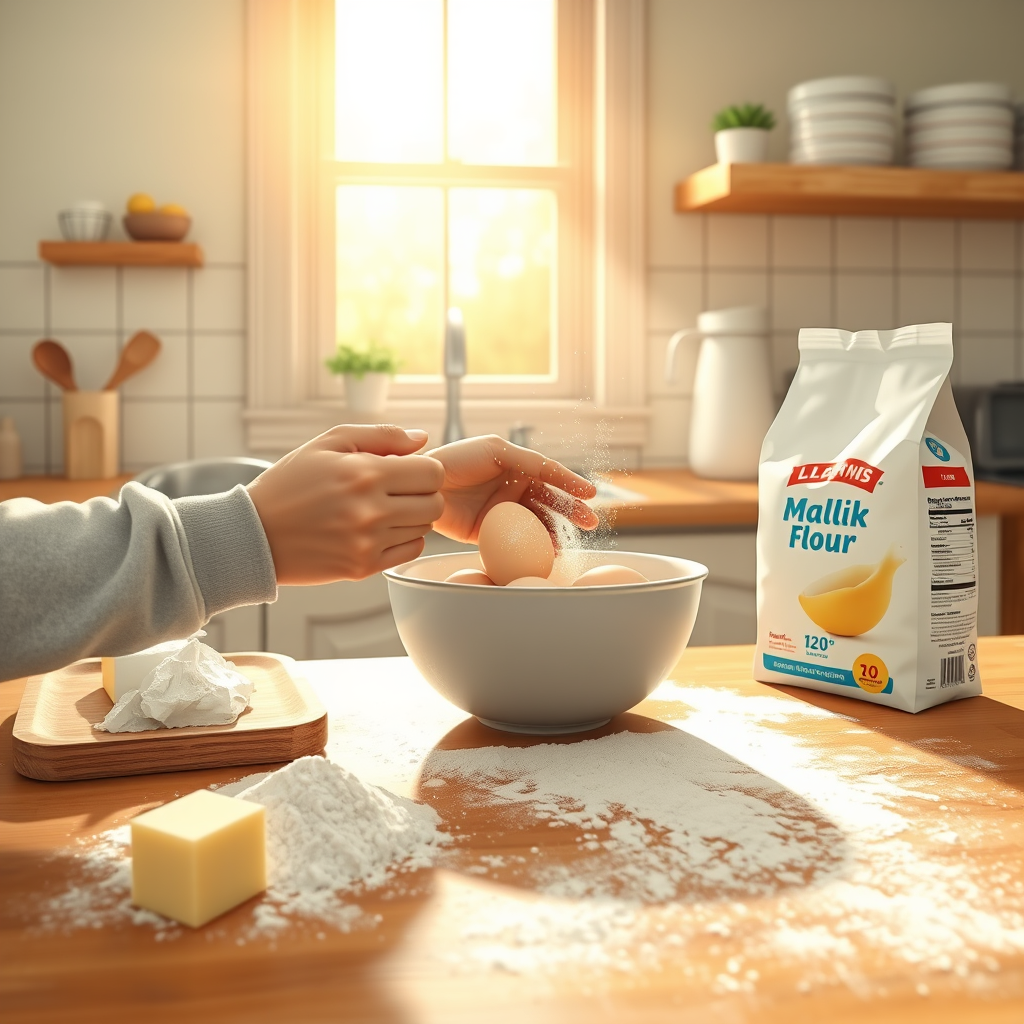
made using basic ingredients, not a ready-made mix
She baked the birthday cake from scratch instead of using a packet mix.
More examples: It takes two hours to make this soup from scratch. • I never bake from scratch — I always cheat a little. • My grandmother made everything from scratch, even pasta.
Common collocations: bake from scratch, make something from scratch, cook a meal from scratch
Word family: scratch (noun), start from scratch
Synonyms: from raw ingredients, by hand, homemade
Antonyms: ready-made, store-bought, from a mix
Related concepts: basic ingredients, home cooking, traditional recipes
Contexts: baking, cooking, building a business
Usage note: Used with cooking and making things by hand. Very common in everyday conversation. Also used outside cooking: 'He built the business from scratch.'
aroma
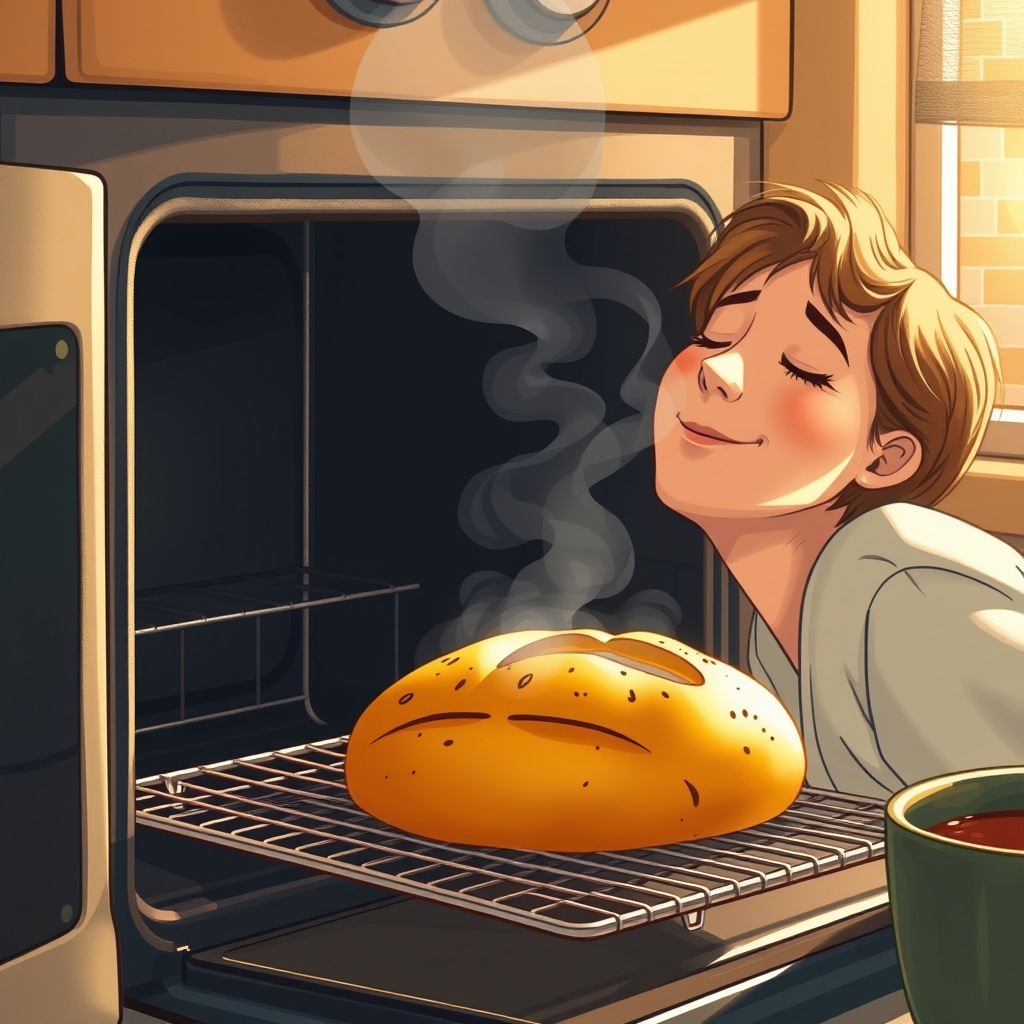
a strong, pleasant smell, especially from food or drink
The aroma of fresh coffee filled the kitchen in the morning.
More examples: The aroma of cinnamon rolls drifted down the stairs. • I love the aroma of garlic cooking in olive oil. • The bakery's aroma made everyone on the street hungry.
Common collocations: a rich aroma, a warm aroma, the aroma of fresh bread
Word family: aromatic (adjective), aromatherapy (noun)
Synonyms: scent, fragrance, smell
Antonyms: stink, bad odour
Related concepts: fresh bread, coffee, spices, memory and smell
Contexts: cooking, bakeries, coffee shops, describing food
Usage note: Always positive — use 'smell' or 'odour' for bad smells. Very common with food, coffee, spices and flowers.
therapeutic
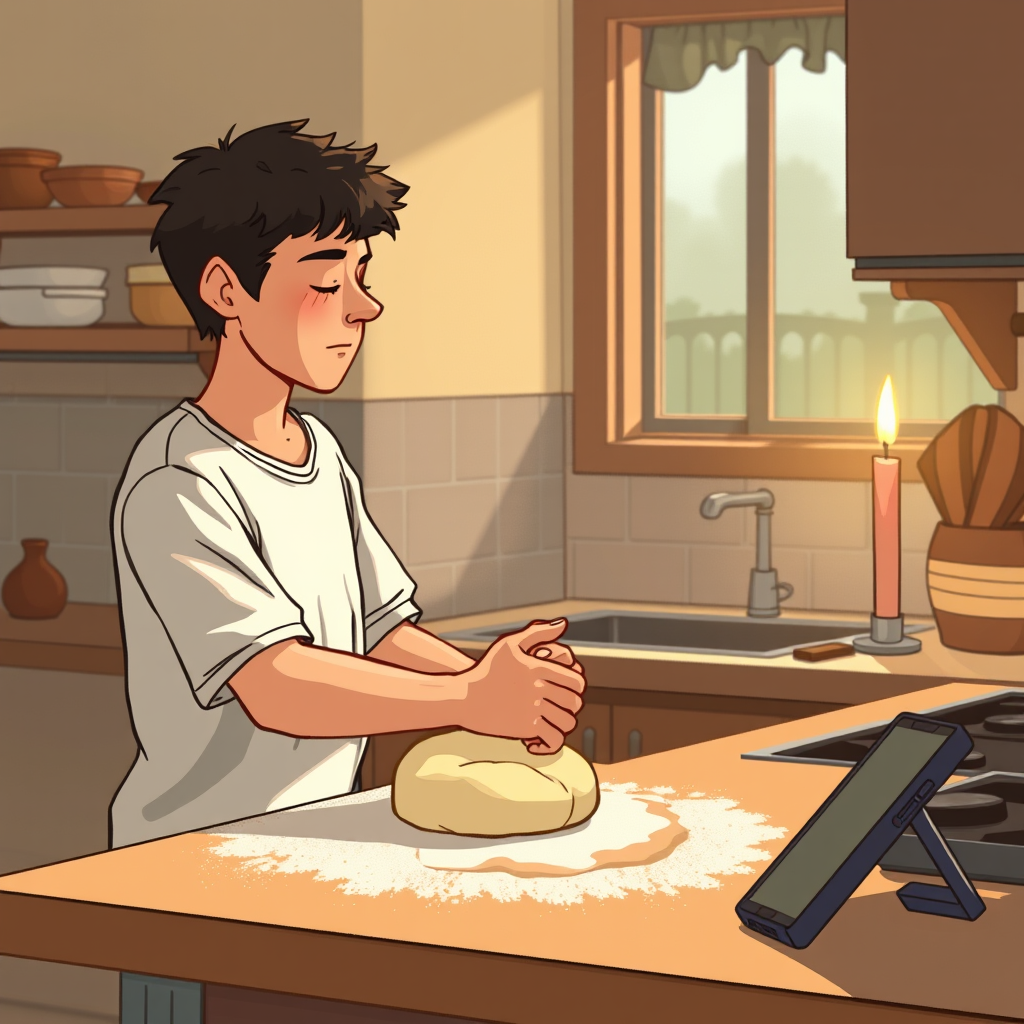
helping you relax and feel better in mind or body
I find gardening really therapeutic after a stressful week.
More examples: Kneading dough is surprisingly therapeutic. • Some people find long walks therapeutic. • She says painting is therapeutic — it clears her head.
Common collocations: feel therapeutic, find something therapeutic, therapeutic effect
Word family: therapy (noun), therapist (noun)
Synonyms: relaxing, calming, soothing
Antonyms: stressful, tiring
Related concepts: mindfulness, relaxation, mental health, hobbies
Contexts: hobbies, stress and wellbeing, work-life balance, describing routines
Usage note: Used for activities that calm you or improve your mood, not only medical treatment. Common in conversation: 'I find it therapeutic.'
batch
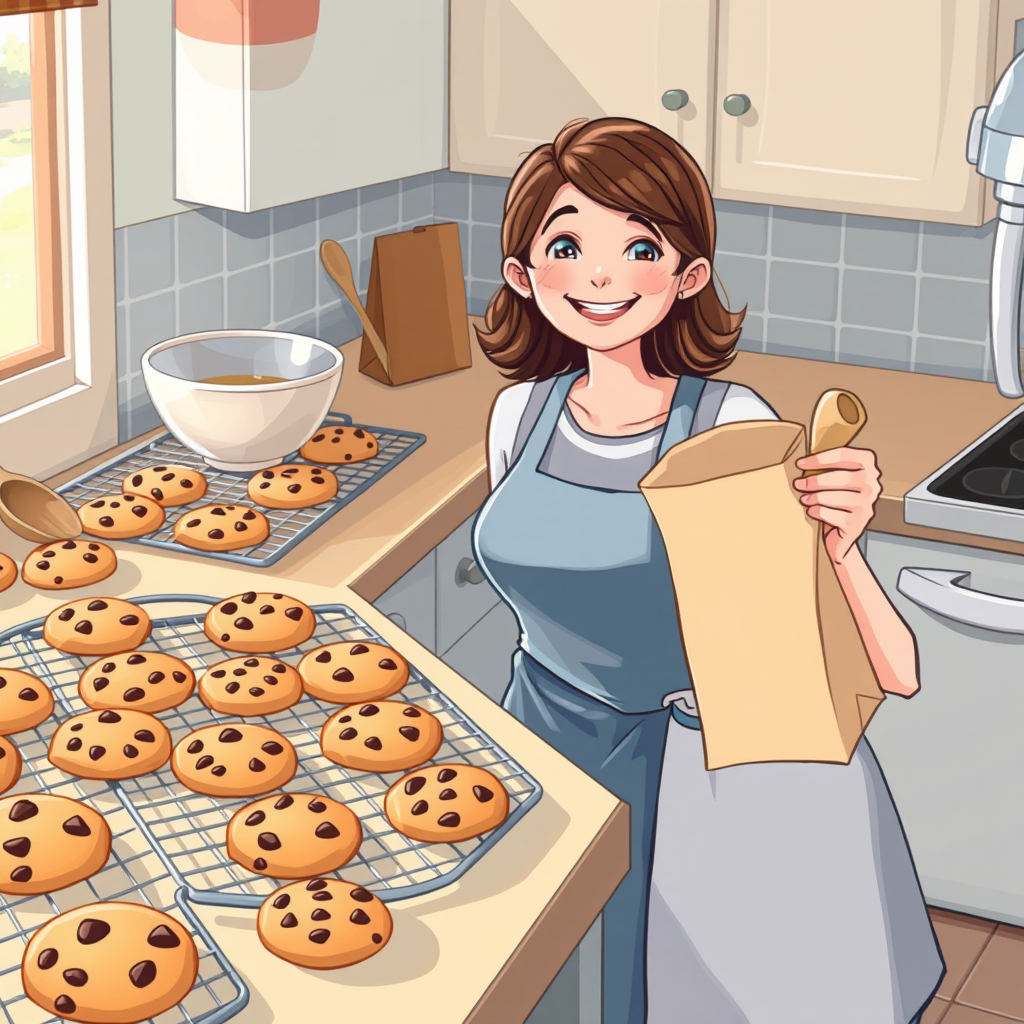
an amount of something made at one time
She baked a batch of cookies for the school party.
More examples: I made a double batch of soup and froze half of it. • This recipe makes a batch of twelve muffins. • The first batch of bread came out slightly burnt.
Common collocations: a batch of cookies, a fresh batch, a double batch
Word family: batch (verb, less common)
Synonyms: group, set, lot
Antonyms: single item, one piece
Related concepts: baking in quantity, sharing food, production
Contexts: baking, cooking for others, factories, organising tasks
Usage note: Used for things produced or cooked together: a batch of bread, cakes, or even a batch of emails. Very natural in everyday speech.
indulge
to allow yourself to enjoy something special, often too much
At the weekend, I indulge in a big slice of chocolate cake.
More examples: Go on, indulge yourself — you've earned it. • We indulged in a huge dessert after dinner. • He indulges in expensive coffee every morning.
Common collocations: indulge in something, indulge yourself, a guilty indulgence
Word family: indulgence (noun), indulgent (adjective)
Synonyms: treat yourself, spoil yourself, enjoy freely
Antonyms: deny yourself, hold back, restrict
Related concepts: treats, dessert, guilty pleasures, reward
Contexts: food and dessert, weekends and holidays, shopping, relaxing
Usage note: Often used with 'in': 'indulge in cake, in a long bath, in gossip'. Suggests pleasure with a hint of 'maybe I shouldn't, but I will'.
Vocabulary Check
- Which sentence uses 'from scratch' correctly?
- I bought a cake from scratch at the supermarket.
- She was tired from scratch all day at work.
- He made the soup from scratch, using fresh vegetables.
- They moved to a new house from scratch last year.
- What does 'aroma' mean?
- a strong, pleasant smell, especially from food
- a loud noise from the kitchen
- a special taste in your mouth
- a warm colour you can see
- In which situation would you use 'therapeutic'?
- Describing a cake that costs a lot of money.
- Describing a recipe that is very difficult to follow.
- Describing an oven that heats up very fast.
- Describing an activity that helps you relax and feel calmer.
- What does 'batch' mean?
- a type of oven used in bakeries
- an amount of something made at one time
- a special ingredient in bread
- a person who loves baking
- Which sentence uses 'indulge' correctly?
- I indulge my bread in the oven for thirty minutes.
- He indulged the dough until it was smooth.
- At the weekend, I indulge in a big piece of chocolate cake.
- They indulge the kitchen before every party.
Idioms & Phrasal Verbs
pass down
give something to younger people in your family
My grandmother passed down her apple pie recipe to my mum.
Usage note: You can split it: 'pass a recipe down' or 'pass down a recipe'. With 'it', split it: 'pass it down'. · Right: She passed it down to me. · Avoid: She passed down it to me.
Usage note: The picture is handing something down the family line, from older to younger.
give away
give something free to other people
We baked too many cookies, so we gave away half to the neighbours.
Usage note: You can split it: 'give the cake away' or 'give away the cake'. With 'it', split it: 'give it away'. · Right: I gave them away. · Avoid: I gave away them.
Usage note: Don't confuse it with 'give up', which means stop trying.
slow down
do things less fast; become calmer
I need to slow down — I've been working every weekend this month.
Usage note: No object here: you just slow down. 'Slow something down' means make something else slower. · Right: I want to slow down at work. · Avoid: I want to slow me down.
Usage note: Very common in conversation and in the news about busy modern life.
worth the effort
the result is good enough for the work you do
Making pasta by hand takes hours, but it's worth the effort.
Usage note: The picture is a balance: on one side the work, on the other the reward. If the reward wins, it's worth the effort.
Usage note: Also used in the negative: 'It's not worth the effort' means don't bother.
Language Practice: Talking About Baking
Practice expressing ideas about baking, hobbies and sharing food. Start with the easiest frame and move up when you feel ready.
- Comparing your view with other people's views
- Emerging: Some people say ___, but I think ___. — Some people say baking is a waste of time, but I think it's relaxing.
- Developing: Some people say ___, but I think ___ because ___. — Some people say baking is old-fashioned, but I think it's making a comeback because everyone wants to slow down.
- Expanding: Although many people say ___, I would argue that ___, especially when ___. — Although many people say baking from scratch is too time-consuming, I would argue that it's worth it, especially when the aroma fills the whole house.
- Weighing up pros and cons
- Emerging: The good thing about ___ is ___. — The good thing about baking is the smell.
- Developing: The big advantage of ___ is ___, but the downside is ___. — The big advantage of baking from scratch is the taste, but the downside is the washing-up.
- Expanding: On the one hand, ___ means ___; on the other hand, it can ___, so it really depends on ___. — On the one hand, baking from scratch means you know exactly what's in your food; on the other hand, it can take all afternoon, so it really depends on how much free time you have.
- Imagining situations and hypothetical plans
- Emerging: If I baked something this weekend, I would make ___. — If I baked something this weekend, I would make banana bread.
- Developing: If I had a free afternoon, I would ___ and then ___. — If I had a free afternoon, I would bake a batch of cinnamon rolls and then deliver them to my neighbours.
- Expanding: If I opened a small bakery, I would ___ every morning, and I think my customers would love ___ because ___. — If I opened a small bakery, I would bake everything from scratch every morning, and I think my customers would love the aroma of fresh bread because nothing smells better.
Fill in the Blanks
Last month, my sister decided to learn to bake. Her first _____ of cookies burned badly, but she did not give up. Now she makes bread _____ every Sunday, and the _____ fills the whole house. She says kneading dough is really _____ after a stressful week. And when friends visit, she lets them _____ in warm cake straight from the oven.
Word bank: from scratch, aroma, therapeutic, batch, indulge
Sentence Unscramble
- Nothing / beats / the / aroma / of / fresh / bread / straight / from / the / oven.
- She / baked / a / huge / batch / of / cookies / and / shared / them / with / her / neighbours.
- I / find / kneading / dough / really / therapeutic / after / a / long / day / at / work.
Discussion Questions
For many people, baking is connected to childhood memories: a grandmother's kitchen, the smell of a cake in the oven, licking the spoon after mixing. These memories often stay with us for life, even if we never bake ourselves. Food and memory are deeply linked in every culture.
Does baking or homemade food remind you of anyone in your family? What do you remember?
In the reading, psychologists said baking can be therapeutic because it forces you to slow down and focus. Many people say the same about gardening, knitting, painting or even washing the dishes. Different activities calm different people.
What activity makes you feel calm and relaxed after a stressful day? Do you think baking could have that effect on you?
One batch of cookies or cinnamon rolls is usually too much for one household, so bakers often share with neighbours, colleagues or friends. In many cultures, giving food is an important way of building relationships. Some people love it; others feel shy about it.
If you baked a big batch of something delicious, who would you share it with? Would you feel comfortable giving food to your neighbours?
Baking from scratch takes time: measuring, mixing, waiting, cleaning up. Buying a cake from a shop takes five minutes. Yet many people still choose the slow way, even when the shop version looks perfect. There are good arguments on both sides.
Do you think homemade food is really better than shop-bought, or is that just a nice idea? What about the price and the time?
Imagine you suddenly had a free month and decided to bake something new every week — bread, cakes, pastries, anything. You could keep everything, give it away, or even try to sell it. Some people would find this a dream; others would find it a nightmare.
If you had a whole free month to learn to bake, what would you make first, and who would you invite to taste it?
Knowledge Check
- What does 'from scratch' mean?
- very quickly, using shortcuts
- using basic ingredients, not a ready-made product
- starting with a shop-bought base
- cooking without any recipe
- True or false: 'aroma' usually describes a pleasant smell.
- True
- False
- Which word best completes this sentence: 'She made a ___ of twelve muffins for the party.'?
- aroma
- therapeutic
- indulge
- batch
- True or false: 'therapeutic' describes something that causes stress and tiredness.
- True
- False
- If you 'indulge in' something, you...
- allow yourself to enjoy it, often a little too much
- avoid it completely
- share it equally with everyone
- study it carefully
- Your friend says her new hobby is 'worth the effort'. What does she mean?
- It's too much work, so she'll stop.
- The good result makes the hard work OK.
- She needs to work faster.
- Someone gave it to her for free.
Free to use with your students: Free to teach, screen-share, print and share with your students, with a credit to PlanWise ESL. Please do not sell it or republish it as your own. What you can do with free lessons.