Learning a Musical Instrument as an Adult: Practice, Patience and Playing for Pleasure
About this lesson: This is a B2 (Upper Intermediate) ESL lesson in the General English category. It takes about 60 minutes. It includes 5 vocabulary words, 4 idioms and phrasal verbs, a reading text, comprehension questions, discussion questions and speaking patterns. Suits one-to-one or small-group online classes. Free to open and teach with no login, and it prints as a PDF.
Print just the discussion questions
How this lesson is built
This is a complete conversation lesson built on a scientific pedagogical formula, not a generic worksheet: recall prior topic vocabulary, pre-teach the new words in depth, read in context, practise active recall with flashcards and synonyms/antonyms, build accuracy with exercises, and finish with deep discussion.
- Warm-up: Discussion questions that connect the topic to the student’s own life and recall vocabulary they already know about the subject.
- Reading: A text written for this CEFR level that uses each new word two or three times in context, giving the student something meaningful to react to.
- Key vocabulary: 5 new words, pre-taught before the reading with a definition, pronunciation guide, example sentences and a picture, plus word families, usage notes, recall flashcards and synonyms/antonyms, giving a solid grounding before reading.
- Comprehension: 5 questions that check the new words: retrieval practice, not rereading.
- Idioms and phrasal verbs: Expressions taken from the reading, each with its meaning, an example and a speaking question.
- Sentence frames: 3 speaking patterns, each at three levels of support (emerging, developing, expanding) with model answers—especially helpful scaffolding for beginners and less confident speakers.
- Gap-fill: The new words again, in a shuffled order, so the student recalls them by meaning in context.
- Sentence unscramble: Natural sentences with the new words to put back in order, reinforcing grammar and collocation.
- Discussion: 5 open questions designed to talk deeply about the subject while actively using the lesson’s target vocabulary: the heart of a conversation lesson.
- Quiz: A short retrieval check that brings every new word back once more.
Unlike a generic worksheet, the new words are taught before the reading and met again in the activities, the speaking is supported at three levels and most of the time goes on the student talking. Teachers who use PlanWise ESL also get per-student vocabulary tracking (recycling earlier words into future readings and questions), a private learner dashboard with flashcards and custom lesson creation, and a downloadable study PDF.
Warm-up Activity
Look at the questions below and talk about music and learning. There are no wrong answers — just say what you really think.
- Did you ever learn an instrument, at school or as an adult? How did it go?
- Is there an instrument you would love to play if you had the time?
- Do you think adults can learn music as well as children can? Why or why not?
- When you practise something new, what keeps you going when it gets hard?
- Would you rather play music for other people, or just for yourself?
Reading Text: It's Never Too Late to Learn
Read this short article about adults learning instruments. As you read, notice the five key words — they appear in bold. After reading, we'll talk about what you think.
When Maria turned forty, she bought a second-hand guitar and signed up for lessons. Friends laughed. Surely learning an instrument was for children? But Maria was determined. She made a disciplined routine: twenty minutes of practice every morning before work, no excuses, not even at weekends.
The first months were humbling. Her fingers hurt, the chords sounded awful, and progress felt slow. Her teacher told her to tackle one small problem at a time — a single chord, a single bar of music — instead of trying to master a whole song. That advice changed everything.
Then came the plateau. For weeks, nothing seemed to improve. Many adult learners quit here, convinced they have no talent. Maria chose to persevere. She kept showing up, even on days when the guitar felt like an enemy.
The breakthrough came quietly. One evening she played a full song from beginning to end, almost without thinking. It was enormously gratifying — proof that all those small, boring sessions had added up to something real.
Not everyone agrees it's worth the effort. Some say adults should relax rather than add another chore to their week. But Maria disagrees. Playing for pleasure, with nobody judging her, is the most satisfying hobby she has ever had. 'I'm not trying to be a professional,' she says. 'I'm just enjoying the journey.'
Key Vocabulary
disciplined
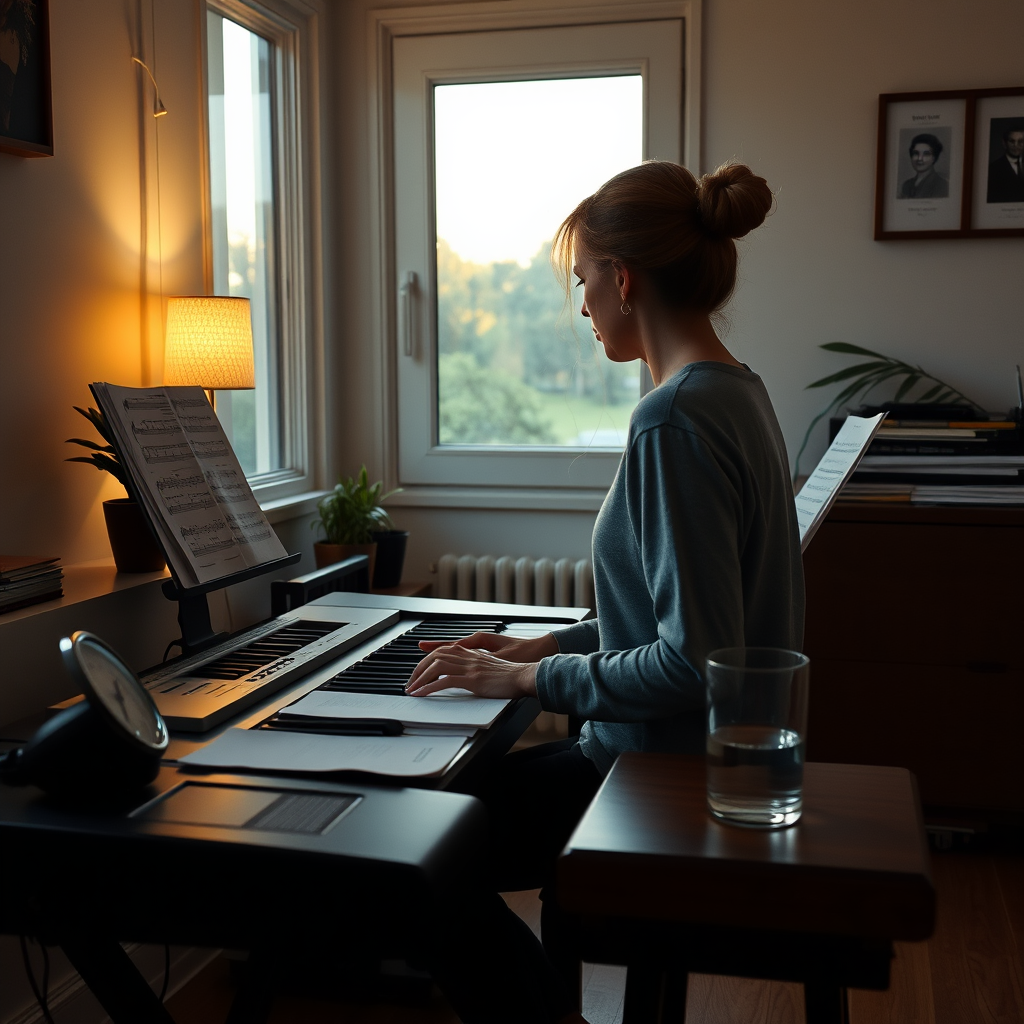
controlled and organised; following rules or habits carefully
She is very disciplined about practising the piano every morning.
More examples: A disciplined athlete trains even when the weather is bad. • You have to be quite disciplined to learn anything as an adult. • I'm disciplined at work but hopeless with my hobbies!
Common collocations: highly disciplined, a disciplined approach, disciplined about something
Word family: discipline (noun), discipline (verb)
Synonyms: self-controlled, organised, methodical
Antonyms: undisciplined, disorganised
Related concepts: routine, self-control, habits
Contexts: training, study, work habits
Usage note: Usually positive: it means having good habits, not being punished. Common pattern: 'disciplined about + noun/gerund'. The opposite idea is 'undisciplined' or 'lacking discipline'.
tackle
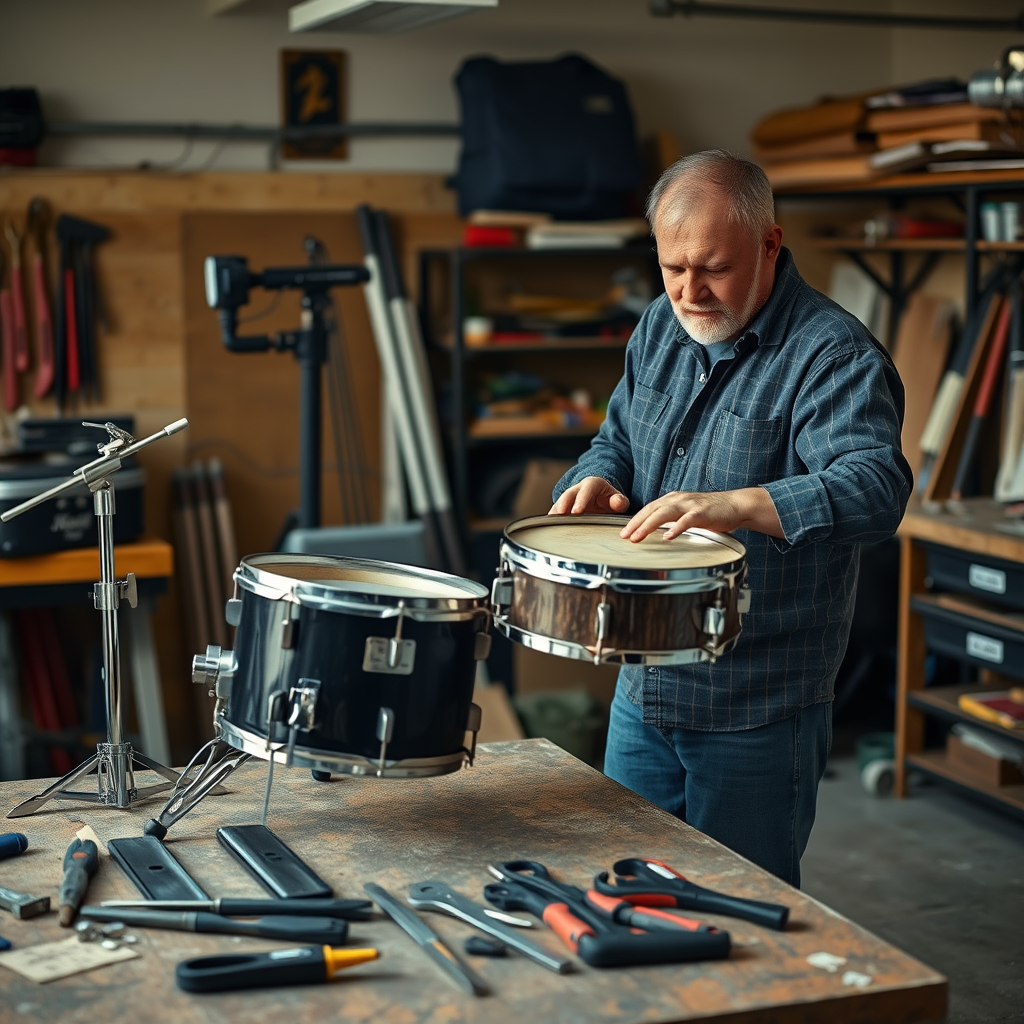
to deal with a problem or task directly
Let's tackle the difficult part of the song first.
More examples: He decided to tackle his fear of public speaking by joining a club. • We should tackle this problem before it gets worse. • How are you going to tackle the exam?
Common collocations: tackle a problem, tackle a task, tackle something head-on
Synonyms: deal with, take on, address
Antonyms: avoid, ignore
Related concepts: problem-solving, challenges, effort
Contexts: work, sport, learning
Usage note: A common everyday verb: you tackle a problem, a task, a challenge or a person (to talk to them about something difficult). It suggests energy and facing something rather than avoiding it.
gratifying

giving you a feeling of pleasure and satisfaction
It was gratifying to finally play the whole song without mistakes.
More examples: It's gratifying to see your students make progress. • Receiving that thank-you message was really gratifying. • The results were gratifying after months of hard work.
Common collocations: deeply gratifying, gratifying results, it is gratifying to...
Word family: gratify (verb), gratification (noun)
Synonyms: satisfying, rewarding, fulfilling
Antonyms: disappointing, unsatisfying
Related concepts: achievement, satisfaction, pride
Contexts: learning, work, personal goals
Usage note: Slightly more formal than 'satisfying' but very usable. Common pattern: 'It is gratifying to + verb'. Often used about the reward that comes after effort, not about instant pleasure.
plateau
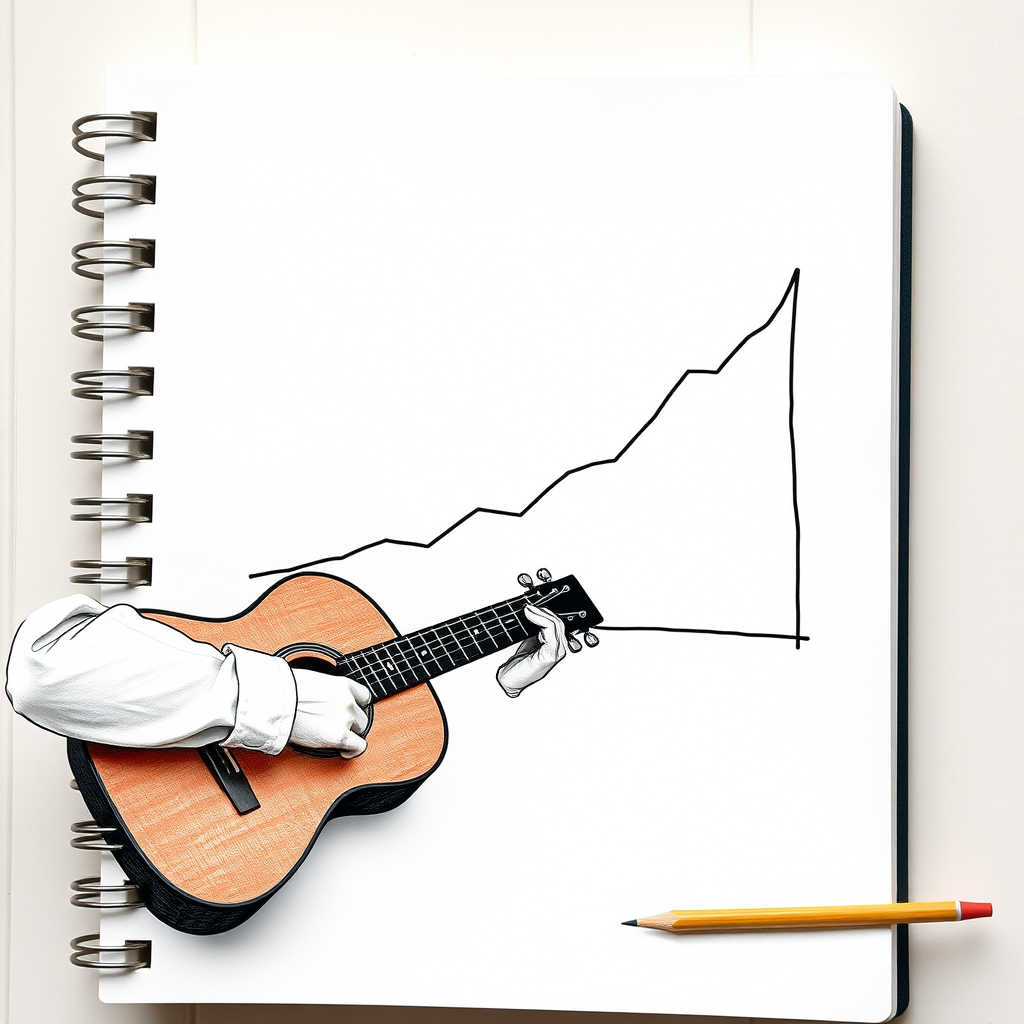
a period when progress stops improving
After three months my learning hit a plateau and nothing changed.
More examples: Her weight loss reached a plateau despite her diet. • You often hit a plateau halfway through learning a language. • The plateau stage is where most learners give up.
Common collocations: hit a plateau, reach a plateau, break through a plateau
Synonyms: standstill, stalemate
Antonyms: breakthrough, improvement
Related concepts: progress, learning curves, motivation
Contexts: learning, fitness, career
Usage note: Always used with the idea of progress that has flattened out, never for a sudden failure. The most common phrase is 'hit a plateau'. Countable noun.
persevere

to keep trying despite difficulties
If you persevere with the guitar, you will improve eventually.
More examples: She persevered even when everyone told her to stop. • The team persevered through a very difficult year. • Keep persevering — the breakthrough is closer than you think.
Common collocations: persevere with something, persevere despite difficulties, persevere in doing something
Word family: perseverance (noun), persevering (adjective)
Synonyms: persist, keep going, stick with it
Antonyms: give up, quit
Related concepts: determination, patience, resilience
Contexts: learning, sport, difficult projects
Usage note: Formal-ish but useful and common in motivational contexts. Pattern: 'persevere with + noun' (persevere with the guitar) or just 'persevere' alone. Stronger than 'continue' — it implies difficulty.
Vocabulary Check
- What does 'disciplined' mean?
- Feeling bored and tired
- Naturally talented without effort
- Controlled and organised, following habits carefully
- Strict and unfriendly to other people
- Which word best completes the sentence? 'We decided to ___ the hardest exercise first, while we still had energy.'
- tackle
- plateau
- gratify
- quit
- What does 'gratifying' mean in this sentence: 'It was gratifying to hear my recording from a year ago and hear how much I'd improved.'?
- Embarrassing and awkward
- Giving you pleasure and satisfaction
- Surprising and confusing
- Requiring more effort
- In which situation would you use the word 'plateau'?
- When you make faster progress than ever before
- When you start learning something completely new
- When you give up a hobby completely
- When your progress stops improving for a while
- What does 'persevere' mean?
- To keep trying despite difficulties
- To start something new with excitement
- To ask for help from a teacher
- To finish something quickly
Idioms & Phrasal Verbs
sign up for
to join a course or activity by putting your name down
I signed up for a ten-week photography course at the local college.
Usage note: The small word 'for' shows what you join: sign up for a class, for a gym, for a marathon.
Usage note: You can just say 'sign up' when it's obvious what: 'I signed up yesterday.'
show up
to arrive and be there, especially again and again
Half the secret to learning anything is just showing up every day.
Usage note: The small word 'up' adds the idea of appearing or arriving somewhere.
Usage note: British speakers often say 'turn up' with the same meaning: 'He didn't turn up to the lesson.'
add up to
to produce a bigger result together, little by little
Ten minutes of reading a day soon adds up to several books a year.
Usage note: 'Up' suggests the amount growing; the picture is small numbers adding up to a big total.
Usage note: Also used for money or time: 'It all adds up to about two hours a week.'
from beginning to end
the whole thing, start to finish, with nothing missing
It wasn't a great film, but I watched it from beginning to end.
Usage note: The picture is simply the two extremes: the beginning and the end, with everything in between.
Usage note: Very useful for books, films, concerts, matches and process.
Language Practice: Talking About Learning
Practice expressing ideas about learning, effort and progress using these frames. Start with the easiest tier and move up when you feel confident.
- Comparing your view with a common opinion
- Emerging: Some people think ___, but I think ___. — Some people think learning music is for children, but I think adults can do it too.
- Developing: Some people say ___, whereas I believe ___ because ___. — Some people say adults learn too slowly, whereas I believe experience actually helps because adults understand their own mistakes.
- Expanding: Although many people would argue that ___, I'd say ___, mainly because ___. — Although many people would argue that it's too late to start an instrument after thirty, I'd say age is an advantage, mainly because adults choose music for themselves rather than for their parents.
- Weighing up pros and cons
- Emerging: The good thing about ___ is ___. The bad thing is ___. — The good thing about learning alone is freedom. The bad thing is nobody corrects you.
- Developing: On the plus side, ___, but on the other hand, ___. — On the plus side, self-teaching is cheap and flexible, but on the other hand, you can pick up bad habits.
- Expanding: I can see the appeal of ___ — for example, ___ — but for me, ___ matters more, because ___. — I can see the appeal of formal lessons — for example, you get feedback immediately — but for me, enjoyment matters more, because if you don't love it, you won't persevere.
- Imagining future situations
- Emerging: If I had more free time, I would ___. — If I had more free time, I would learn the guitar.
- Developing: If I decided to learn ___, I would probably ___ at first, but then I would ___. — If I decided to learn the piano, I would probably struggle with my left hand at first, but then I would get more confident.
- Expanding: If I ever hit a plateau, I think the key would be to ___, because otherwise ___. — If I ever hit a plateau, I think the key would be to change my routine completely, because otherwise frustration would slowly kill my motivation.
Fill in the Blanks
Tom started learning the piano at thirty-five, and he quickly discovered that adult learning is a strange journey. At first, he was very _____ about practising — thirty minutes every evening, without fail. His teacher told him to _____ the difficult parts slowly, one small piece at a time. For a while, everything went well, and each small success felt really _____. Then, after about six months, he hit a _____: no matter how much he practised, he didn't seem to get any better. Some friends told him to give up, but Tom decided to _____. A year later, he was playing songs he loved — and enjoying every minute of it.
Word bank: disciplined, tackle, gratifying, plateau, persevere
Sentence Unscramble
- I / had / to / be / very / disciplined / about / practising / every / single / day
- It / was / so / gratifying / to / finally / play / the / song / from / beginning / to / end
- She / hit / a / plateau / after / six / months / but / chose / to / persevere / anyway
Discussion Questions
Maria in the article had a very fixed routine: twenty minutes every morning. Some people love routines like this and find them comforting. Others find them suffocating and prefer to do things when the mood strikes. There's a real debate about which approach works better for learning.
Are you a disciplined person or more of a 'when I feel like it' person? Has that helped or hurt you when learning something?
Maria's teacher told her to tackle one small problem at a time rather than trying to learn a whole song. This idea applies far beyond music — to languages, fitness, work projects and even big life decisions. Most people, though, tend to do the opposite and get overwhelmed.
When something feels too big to handle, how do you tackle it? Do you break it into small pieces, or do you dive in and hope for the best?
Almost every learner hits a plateau at some point — in music, in languages, at the gym, at work. For weeks nothing improves and it feels like wasted effort. Some people quit at this stage; others find clever ways to push through it.
Have you ever hit a plateau in something? What did you do — persevere, change your method, or give up?
Maria says she plays for pleasure, not to become a professional — nobody is judging her. Some people need goals, exams and performances to stay motivated. Others say the moment you turn a hobby into a serious project, the joy disappears.
Would you want to play music just for yourself, or would you need goals and an audience to stay motivated? Why?
There's a popular belief that children learn skills more easily than adults, and that if you didn't start music young, you've missed your chance. Maria's story challenges that. Many adult learners say they actually enjoy it more, because they chose it themselves.
Do you believe it's ever 'too late' to learn something new? If you started an instrument next month, what would be the biggest thing in your way — and how would you deal with it?
Knowledge Check
- Which word best completes the sentence? 'Progress was slow all year, and in October I finally hit a ___.
- plateau
- gratification
- discipline
- breakthrough
- True or false? 'Persevere' and 'give up' mean roughly the same thing.
- True
- False
- Which word best completes the sentence? 'After months of practice, it was extremely ___ to finally play in front of friends.'
- gratifying
- plateau
- avoid
- undisciplined
- True or false? 'Disciplined' always means strict or punishing.
- True
- False
- In the article, why did Maria's teacher tell her to tackle one small problem at a time?
- Because big songs are against the rules for beginners
- Because focusing on small pieces made progress feel possible instead of overwhelming
- Because her fingers needed rest between songs
- Because one small problem was all she would ever need to learn
- Maria kept showing up for practice even when she didn't feel like it. What does 'showing up' mean here?
- Improving quickly
- Arriving and taking part
- Dressing smartly
- Playing louder
Free to use with your students: Free to teach, screen-share, print and share with your students, with a credit to PlanWise ESL. Please do not sell it or republish it as your own. What you can do with free lessons.