Talking About Inequality
About this lesson: This is a B2 (Upper Intermediate) ESL lesson in the General English category. It takes about 60 minutes. It includes 5 vocabulary words, 4 idioms and phrasal verbs, a reading text, comprehension questions, discussion questions and speaking patterns. Suits one-to-one or small-group online classes. Free to open and teach with no login, and it prints as a PDF.
Print just the discussion questions
How this lesson is built
This is a complete conversation lesson built on a scientific pedagogical formula, not a generic worksheet: recall prior topic vocabulary, pre-teach the new words in depth, read in context, practise active recall with flashcards and synonyms/antonyms, build accuracy with exercises, and finish with deep discussion.
- Warm-up: Discussion questions that connect the topic to the student’s own life and recall vocabulary they already know about the subject.
- Reading: A text written for this CEFR level that uses each new word two or three times in context, giving the student something meaningful to react to.
- Key vocabulary: 5 new words, pre-taught before the reading with a definition, pronunciation guide, example sentences and a picture, plus word families, usage notes, recall flashcards and synonyms/antonyms, giving a solid grounding before reading.
- Comprehension: 5 questions that check the new words: retrieval practice, not rereading.
- Idioms and phrasal verbs: Expressions taken from the reading, each with its meaning, an example and a speaking question.
- Sentence frames: 3 speaking patterns, each at three levels of support (emerging, developing, expanding) with model answers—especially helpful scaffolding for beginners and less confident speakers.
- Gap-fill: The new words again, in a shuffled order, so the student recalls them by meaning in context.
- Sentence unscramble: Natural sentences with the new words to put back in order, reinforcing grammar and collocation.
- Discussion: 5 open questions designed to talk deeply about the subject while actively using the lesson’s target vocabulary: the heart of a conversation lesson.
- Quiz: A short retrieval check that brings every new word back once more.
Unlike a generic worksheet, the new words are taught before the reading and met again in the activities, the speaking is supported at three levels and most of the time goes on the student talking. Teachers who use PlanWise ESL also get per-student vocabulary tracking (recycling earlier words into future readings and questions), a private learner dashboard with flashcards and custom lesson creation, and a downloadable study PDF.
Warm-up: Fair or Not Fair?
Look at some everyday situations and decide how fair they are. There are no right answers - the goal is to start talking about what fairness means to you.
- Do you think life is fair where you live? Why or why not?
- Is it fair that some people earn ten times more than others for similar work?
- Have you ever felt someone got an opportunity just because of who they knew?
- Do children from rich families have an easier start in life? How?
- What's one thing you would change to make things fairer in your country?
Reading Text: Two Starts in Life
A short article about two people who grew up in the same city but had very different chances in life.
Maya and Daniel grew up in the same city, only a few kilometres apart. But their lives could not have started more differently. Maya went to a crowded school with old books and three students sharing one desk. Daniel's school had small classes, new laptops and a football pitch.
The gap between them was not really about effort. It was about money and luck. Daniel's parents owned their home and could pay for extra lessons. Maya's family worked hard too, but every euro went on rent and food. Economists call this kind of inequality a 'birth lottery' - you don't choose your ticket.
Daniel also enjoyed a quiet privilege he never noticed. When he looked for his first job, his father's friend gave him an interview. Maya sent out sixty applications and heard nothing. Nobody was cruel to her, and nobody broke the rules. The system simply helped one of them more than the other.
Over time, small disadvantages add up. Maya took a lower-paid job to support her family, so she had no time or money to study further. Daniel moved from job to job, each one better paid. Twenty years later, he earns four times what she does. Neither of them thinks this is fair, but neither knows how to change it.
Some people say the answer is discrimination - treating people unfairly because of their background, gender or accent. Others point to bigger causes, like housing prices and school funding. Most agree on one thing: talent is spread evenly, but opportunity is not. The question is what we do about it.
Key Vocabulary
inequality
an unfair difference between people or groups
The city has grown richer, but inequality has grown with it.
More examples: Inequality between rich and poor regions is a big political issue. • She wrote an article about inequality in the workplace. • I never really thought about inequality until I moved abroad.
Common collocations: economic inequality, social inequality, reduce inequality
Word family: inequal (rare), unequal, equal, equality
Synonyms: imbalance, unfairness, disparity
Antonyms: equality, fairness
Related concepts: justice, wealth, opportunity
Contexts: news reports, politics, workplace discussions
Usage note: Use it for unfair differences between groups, not small personal differences. Often used with 'between' or 'in'.
gap
a big difference between two groups or amounts
The gap between the highest and lowest salaries keeps growing.
More examples: There's a huge gap between what men and women earn in some industries. • The gap between city and village schools is easy to see. • Closing the gap will take years, not months.
Common collocations: the wealth gap, the pay gap, close/narrow the gap
Word family: gap (noun), gap (verb, 'to gap'), gaping
Synonyms: difference, divide, distance
Antonyms: similarity, balance
Related concepts: comparison, statistics, division
Contexts: news headlines, economics, education debates
Usage note: Very common in news: 'the gender pay gap', 'the gap between rich and poor'. Also used for missing time or space.
privilege
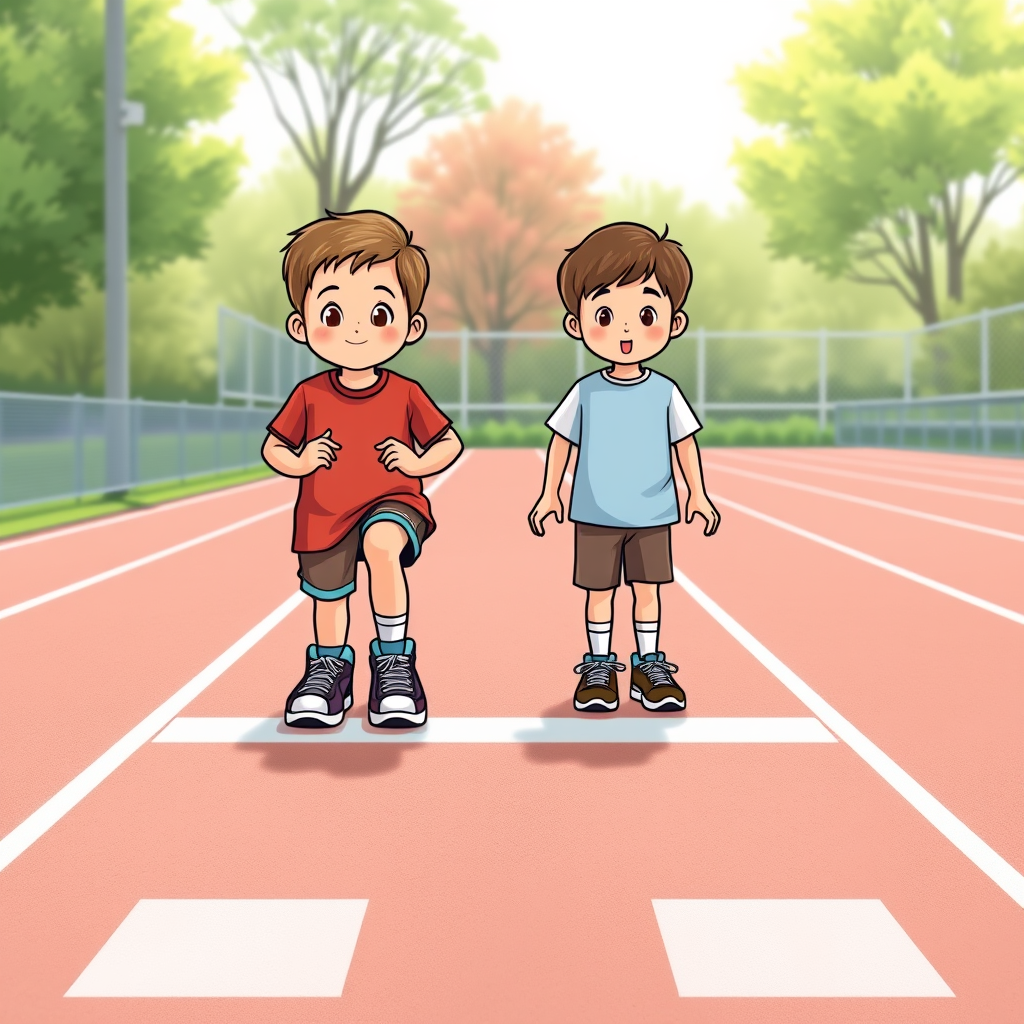
a special advantage that not everyone has
Going to a good school for free was a privilege he never questioned.
More examples: Speaking the local language from birth is a kind of privilege. • She admits her comfortable childhood gave her many privileges. • Having parents who could help with rent is a privilege many don't have.
Common collocations: a privileged background, white privilege, enjoy a privilege
Word family: privileged (adjective), underprivileged (adjective)
Synonyms: advantage, benefit, head start
Antonyms: hardship, disadvantage
Related concepts: luck, birth, opportunity
Contexts: social debates, personal stories, media discussions
Usage note: Often used to describe advantages people have without noticing. 'Underprivileged' is a softer, common way to say 'poor'.
disadvantage
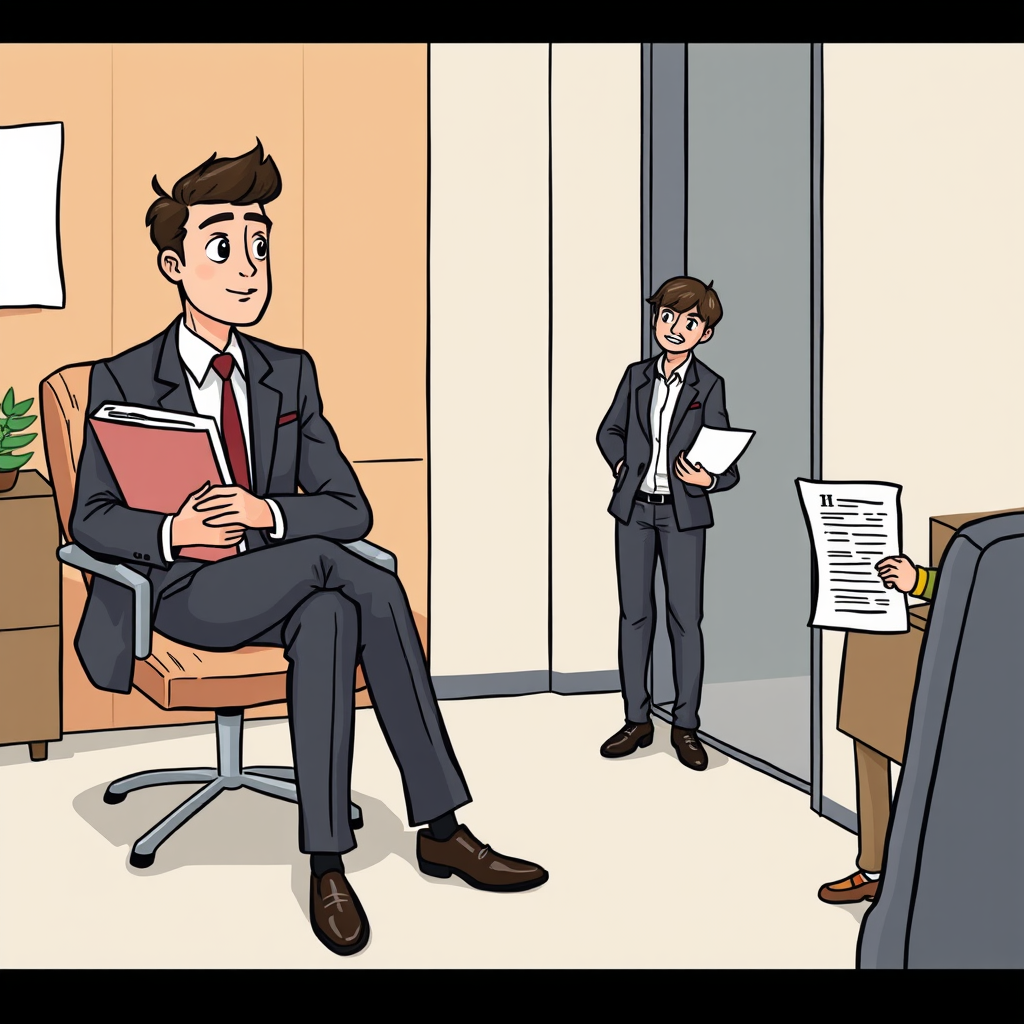
something that makes success harder for a person
Growing up without a computer was a real disadvantage at school.
More examples: Not having connections is a big disadvantage when job hunting. • Children from poor areas face disadvantage from their first day at school. • Her lack of experience put her at a disadvantage in the interview.
Common collocations: at a disadvantage, put someone at a disadvantage, disadvantaged background
Word family: disadvantaged (adjective), advantage (noun), advantageous (adjective)
Synonyms: drawback, handicap, setback
Antonyms: advantage, benefit
Related concepts: obstacle, poverty, fairness
Contexts: job interviews, school discussions, debates
Usage note: Common pattern: 'be/put someone at a disadvantage'. Also used for the negative side of a choice: 'The main disadvantage of city life is the noise.'
discrimination
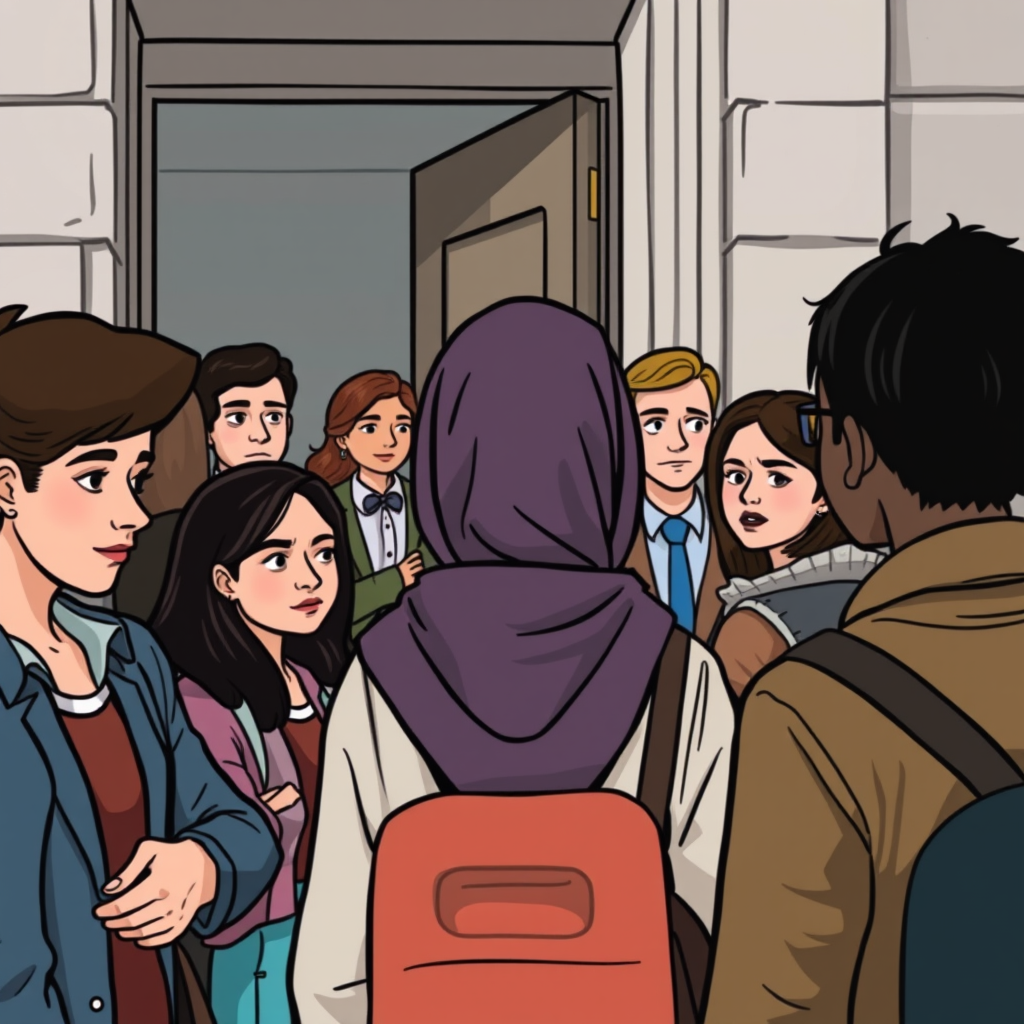
unfair treatment of a person because of who they are
She left the company after experiencing discrimination during promotions.
More examples: Discrimination against older workers is still common in some industries. • The law bans discrimination based on gender or religion. • He says he faced discrimination when landlords saw his name.
Common collocations: face discrimination, racial discrimination, discrimination based on
Word family: discriminate (verb), discriminatory (adjective)
Synonyms: unfair treatment, bias, prejudice
Antonyms: fairness, equal treatment
Related concepts: human rights, prejudice, law
Contexts: workplace, housing, news stories
Usage note: Always negative in this meaning. Followed by 'against' or 'based on'. Note: 'discriminating' can also mean having good taste - a rare, positive use.
Vocabulary Check
- What does 'inequality' mean?
- A situation where everyone is treated the same
- An unfair difference between people or groups
- A rule that everyone must follow
- A competition between two teams
- Which sentence uses 'gap' correctly?
- The gap between the two salaries is about two thousand euros a month.
- She gap her homework before dinner every day.
- He felt gap when he failed the exam.
- We gap the meeting until Monday.
- In which situation would you use 'privilege'?
- When someone works harder than everyone else
- When someone has an advantage that others don't have
- When someone loses their job unfairly
- When someone wins a sports competition
- What does 'disadvantage' mean?
- A prize for doing something well
- A plan to help poor families
- Something that makes success harder for a person
- A disagreement between two friends
- Which sentence uses 'discrimination' correctly?
- The company showed great discrimination by hiring only family members of managers.
- He faced discrimination when no landlord would rent to him because of his accent.
- She won the discrimination for best employee of the year.
- They discrimination the meeting to discuss salaries.
Idioms & Phrasal Verbs
add up
small things grow together into something big
Coffee costs seem small, but they add up over a month.
Usage note: In this meaning it has no object - things add up, you don't add up things. · Right: small costs add up · Avoid: add up small costs
Usage note: Also used literally for maths: 'The numbers don't add up' means something is wrong or suspicious.
send out
post or email something to many people
She sent out invitations to the whole class.
Usage note: You can split it: 'sent them out'. The 'out' suggests spreading to many people.
Usage note: Common with applications, invitations, emails and CVs.
break the rules
do something you are not allowed to do
He broke the rules by using his phone during the exam.
Usage note: Picture the rules as a stick that can snap in half - that's how you break one.
Usage note: The opposite is 'play by the rules' - to always behave fairly.
birth lottery
the family and country you are born into are pure luck
Being born in a wealthy country is winning the birth lottery.
Usage note: A lottery is a game of pure luck - the picture is that your parents and start in life are like a random ticket.
Usage note: You can also say 'win the birth lottery' (lucky start) or 'lose it' (unlucky start).
Language Practice: Talking About Fairness
Practice expressing ideas about inequality and fairness.
- Comparing different views
- Emerging: Some people think ___, but I think ___. — Some people think hard work is enough, but I think luck matters too.
- Developing: While some people say ___, I believe ___ because ___. — While some people say anyone can succeed, I believe your starting point matters because rich parents can open doors.
- Expanding: There's a real gap between what people say about ___ and what actually happens, because ___. — There's a real gap between what companies say about equal opportunity and what actually happens, because the same types of people keep getting promoted.
- Weighing pros and cons
- Emerging: The main advantage is ___. The main disadvantage is ___. — The main advantage is fairness. The main disadvantage is the cost.
- Developing: On the one hand ___, but on the other hand ___. — On the one hand free education closes the gap, but on the other hand taxpayers have to pay for it.
- Expanding: ___ might help in the short term, but in the long term it could ___ because ___. — Free childcare might help in the short term, but in the long term it could create staff shortages because demand would explode.
- Imagining situations
- Emerging: If I ___, I would ___. — If I won the lottery, I would help my family first.
- Developing: If I were in that situation, I would ___ because ___. — If I were in that situation, I would look for a fairer employer because life's too short.
- Expanding: If I could change one thing about ___ in my country, I would ___, and I think it would ___ because ___. — If I could change one thing about education in my country, I would fund poor schools more, and I think it would narrow the gap because money buys better teachers.
Fill in the Blanks
Last year, a report looked at life in two neighbouring towns. It found a huge _____ between them: one town had good schools and jobs, while the other had high unemployment. People in the second town faced real _____ from birth, and some said they had experienced _____ when applying for jobs in the richer town. Local leaders admitted that years of _____ had made things worse, and that families with money enjoyed a quiet _____ the poorer families never had. Now the towns are working together to change that.
Word bank: inequality, gap, privilege, disadvantage, discrimination
Sentence Unscramble
- the / gap / between / rich / and / poor / keeps / growing
- she / faced / discrimination / when / she / applied / for / the / job
- growing / up / poor / put / him / at / a / big / disadvantage
Discussion Questions
Imagine two children starting school on the same day. One has a quiet room, a laptop and parents who read with her every night. The other shares a small flat with six people and works evenings to help his family. Both are clever and hardworking.
Do you think these two children have the same chance of success? What would help the second child most?
In many countries, people with certain names, accents or ages get fewer callbacks for jobs, even with the same CV. Some companies now hide names and photos on applications to prevent this.
Have you or someone you know ever felt treated unfairly at work or when job hunting? Do you think hiding names on CVs is a good idea?
Some people believe that anyone who works hard can become successful, no matter where they start. Others say that privilege - money, contacts, the right postcode - decides most of it, and talent without connections often goes nowhere.
Which side are you closer to? Has hard work paid off for you, or has luck played a bigger role?
Cities around the world are getting more expensive. People with well-paid jobs can buy homes near good schools and jobs, while others move further out and spend hours commuting. Over time, rich and poor neighbourhoods drift apart.
Is your city becoming divided this way? What happens to a city when rich and poor live completely separate lives?
Governments try different things: free education, higher minimum wages, taxes on the very rich, support for struggling families. Supporters say these reduce inequality; critics say they cost too much or punish success.
If you could change one thing to make your country fairer, what would it be? Why that and not something else?
Knowledge Check
- Which word describes a big difference between two groups, like rich and poor?
- Privilege
- Gap
- Discrimination
- Advantage
- True or false: 'inequality' and 'equality' mean the same thing.
- True
- False
- Someone says: 'I never had to worry about money, and I got my first job through a family friend.' What are they describing?
- Discrimination
- Disadvantage
- Privilege
- Inequality
- Which phrase means 'unfair treatment because of who someone is'?
- Discrimination
- Disadvantage
- A gap
- Equality
- True or false: 'disadvantage' can only describe poor people.
- True
- False
- In the story, 'small disadvantages add up'. What does 'add up' mean here?
- They are easy to count
- Together they become a big problem
- They cancel each other out
- They happen only once
Free to use with your students: Free to teach, screen-share, print and share with your students, with a credit to PlanWise ESL. Please do not sell it or republish it as your own. What you can do with free lessons.