Traditional Libraries in a Digital Age
About this lesson: This is a B2 (Upper Intermediate) ESL lesson in the General English category. It takes about 60 minutes. It includes 5 vocabulary words, 4 idioms and phrasal verbs, a reading text, comprehension questions, discussion questions and speaking patterns. Suits one-to-one or small-group online classes. Free to open and teach with no login, and it prints as a PDF.
Print just the discussion questions
How this lesson is built
This is a complete conversation lesson built on a scientific pedagogical formula, not a generic worksheet: recall prior topic vocabulary, pre-teach the new words in depth, read in context, practise active recall with flashcards and synonyms/antonyms, build accuracy with exercises, and finish with deep discussion.
- Warm-up: Discussion questions that connect the topic to the student’s own life and recall vocabulary they already know about the subject.
- Reading: A text written for this CEFR level that uses each new word two or three times in context, giving the student something meaningful to react to.
- Key vocabulary: 5 new words, pre-taught before the reading with a definition, pronunciation guide, example sentences and a picture, plus word families, usage notes, recall flashcards and synonyms/antonyms, giving a solid grounding before reading.
- Comprehension: 5 questions that check the new words: retrieval practice, not rereading.
- Idioms and phrasal verbs: Expressions taken from the reading, each with its meaning, an example and a speaking question.
- Sentence frames: 3 speaking patterns, each at three levels of support (emerging, developing, expanding) with model answers—especially helpful scaffolding for beginners and less confident speakers.
- Gap-fill: The new words again, in a shuffled order, so the student recalls them by meaning in context.
- Sentence unscramble: Natural sentences with the new words to put back in order, reinforcing grammar and collocation.
- Discussion: 5 open questions designed to talk deeply about the subject while actively using the lesson’s target vocabulary: the heart of a conversation lesson.
- Quiz: A short retrieval check that brings every new word back once more.
Unlike a generic worksheet, the new words are taught before the reading and met again in the activities, the speaking is supported at three levels and most of the time goes on the student talking. Teachers who use PlanWise ESL also get per-student vocabulary tracking (recycling earlier words into future readings and questions), a private learner dashboard with flashcards and custom lesson creation, and a downloadable study PDF.
Warm-Up: Libraries and You
Look at the questions and share your experiences with libraries — old and new.
- When did you last visit a library, or spend time in one?
- What do you usually do on a computer or phone that people used to do at a library?
- What comes to mind first when you hear the word 'library' — the smell, the books, the quiet?
- Do you think your local library still matters to people in your area?
- If libraries disappeared, would you notice? What would we lose?
Reading Text: The Last Library in Town
Read a short article about a city library that nearly closed — and the surprising reasons people fought to save it.
When the city announced it would stop funding its central library, most officials expected quiet agreement. The building was over ninety years old, the paint was peeling, and some local politicians called the whole idea outdated. Why keep a place full of paper books, they argued, when everyone carries a smartphone?
But the reaction took the council by surprise. Within a week, hundreds of residents had signed a petition, and letters poured in from schoolteachers, parents and retired readers. Their message was simple: the library was not just about books. It was one of the last free, warm, welcoming public spaces in the city centre.
For students like Amira, it was the only place to study. She lives with four family members in a small flat, and the library offered her a desk, fast internet and long quiet hours. It is also fully accessible: there are ramps, large-print books, and staff who help visitors with sight problems. 'My library card opened more doors than my passport,' she said.
The library also holds the city's official archive — old newspapers, maps and photographs going back to the 1800s. Historians and curious neighbours use it to trace their family stories. Digitising all of that would cost millions, and many originals would still be too fragile to throw away.
In the end, the council agreed to fund the library for three more years, with money for repairs and a small café. Critics say it was a gesture more than a plan. Supporters say it proved something bigger: people still want a place to slow down, meet others and be part of a community. Both sides, perhaps, have a point.
Key Vocabulary
outdated

old-fashioned and no longer useful or suitable
Some people think paper books are outdated, but sales are actually rising.
More examples: The official called the library's system outdated and expensive. • My phone is so outdated that apps take ages to load. • I felt outdated when the new interns started using words I'd never heard.
Common collocations: outdated equipment, outdated ideas, severely outdated
Word family: outdate (verb, rare), dated (adjective)
Synonyms: old-fashioned, out of date, antiquated
Antonyms: modern, up to date
Related concepts: technology, progress, tradition
Contexts: technology reviews, workplaces, debates about tradition
Usage note: Use for things — systems, ideas, rules, technology — that used to work but don't fit today. Often carries gentle criticism.
accessible
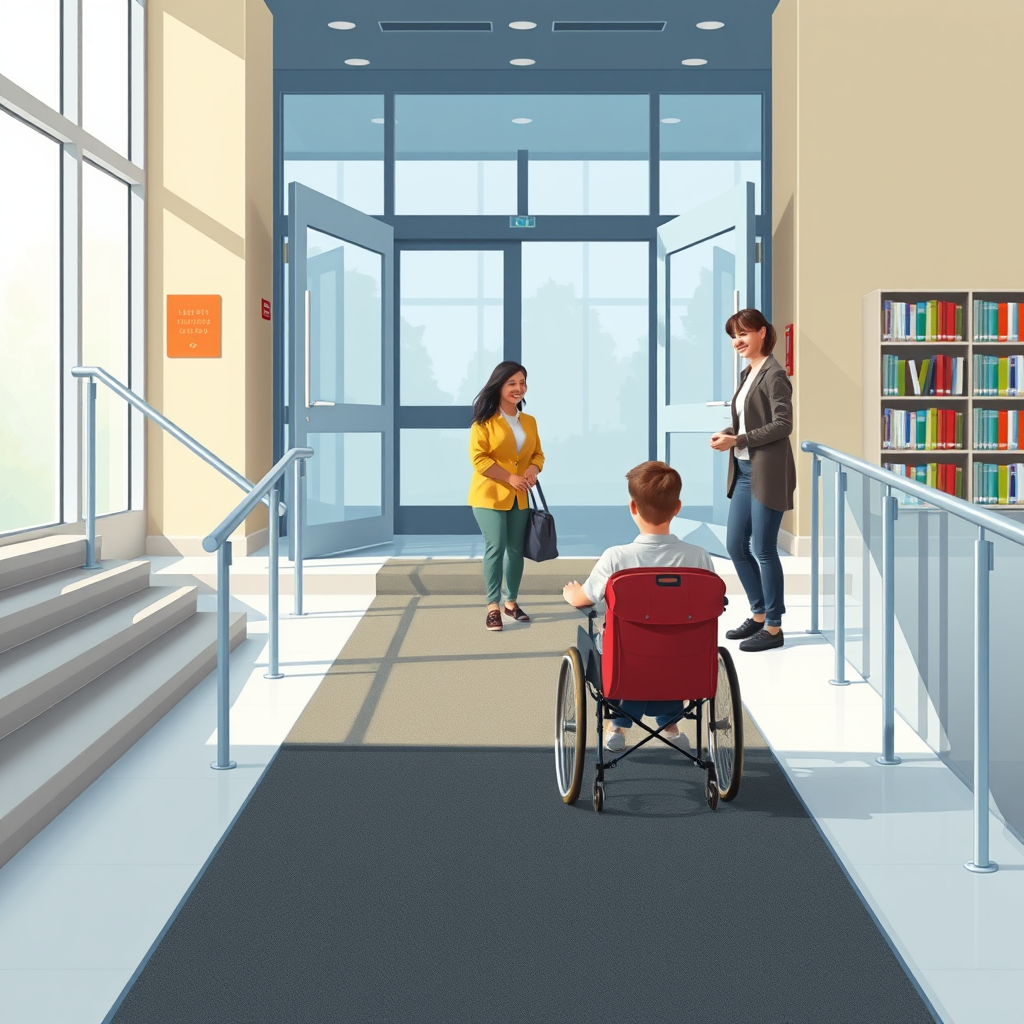
easy to reach, enter or use, including for disabled people
The new library is fully accessible, with ramps and lifts on every floor.
More examples: Public transport should be accessible to everyone, not only the young and healthy. • The teacher made the lesson accessible by explaining everything with simple examples. • We chose a hotel with accessible rooms for my grandmother.
Common collocations: fully accessible, accessible to everyone, wheelchair-accessible
Word family: access (noun/verb), accessibility (noun)
Synonyms: available, easy to use, user-friendly
Antonyms: inaccessible, off-limits
Related concepts: disability, public services, inclusion
Contexts: travel, websites, public buildings
Usage note: Two main uses: physically reachable and easy to enter for disabled people, or easy to understand and use.
atmosphere

the feeling or mood of a place
The café tried hard to recreate the quiet atmosphere of a reading room.
More examples: I love the calm atmosphere of a library in the afternoon. • The stadium had a fantastic atmosphere before the match started. • The office atmosphere changed completely when the new manager arrived.
Common collocations: a relaxed atmosphere, create an atmosphere, the atmosphere of a place
Word family: atmospheric (adjective)
Synonyms: mood, ambience, vibe
Antonyms: (no direct antonym) — contrast with a 'tense' or 'unpleasant atmosphere'
Related concepts: mood, design, community
Contexts: restaurants, events, workplaces
Usage note: Always about feeling, not air. Talk about 'the atmosphere of/at a place'. Common with adjectives: friendly, tense, calm, magical.
archive
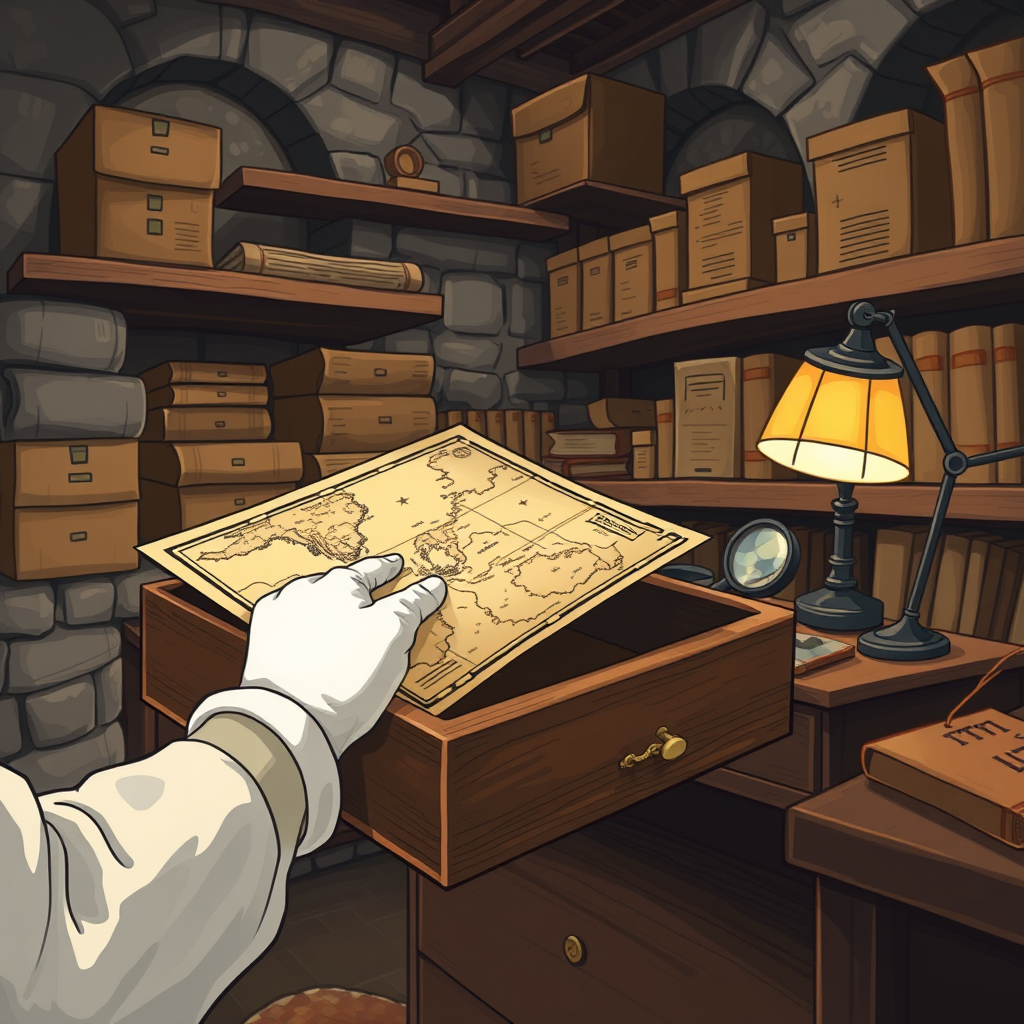
a collection of old records kept for history
The newspaper's archive goes back to 1870, with every edition preserved.
More examples: She found her grandmother's name in the city archive. • The band released a double album of archive recordings from the 1990s. • Old photos in the national archive showed the street exactly as it was.
Common collocations: a national archive, the family archive, archive material
Word family: archivist (noun), archival (adjective)
Synonyms: records, collection, depository
Antonyms: (no direct antonym) — contrast with things thrown away or lost
Related concepts: history, photographs, genealogy
Contexts: museums, libraries, family history
Usage note: Usually a formal collection kept somewhere, but also used for old photos, footage or emails stored digitally. Pronounced 'AR-kive'.
fund
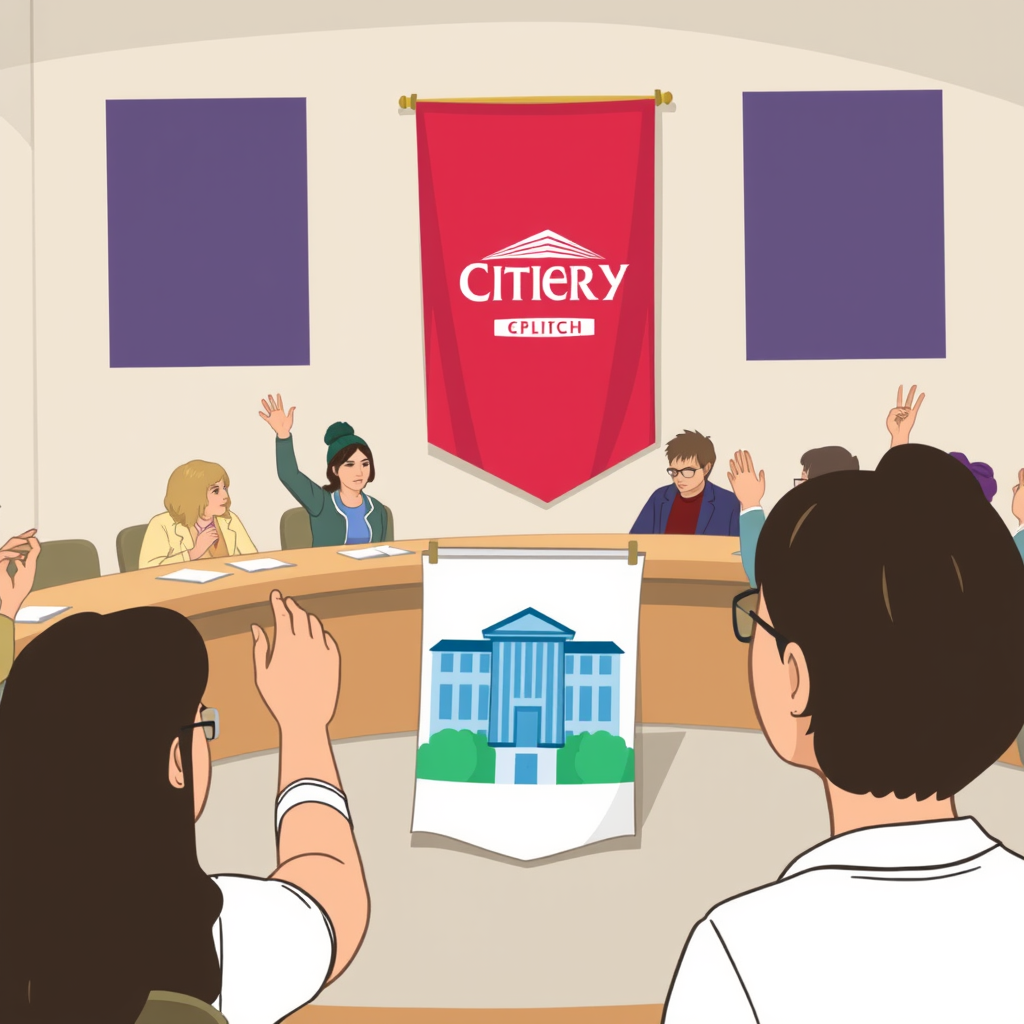
to provide money for something
The council agreed to fund the library for another three years.
More examples: The government plans to fund thousands of new hospital beds. • Her parents funded her first year at university. • The project is funded by a group of local businesses.
Common collocations: fund a project, government-funded, cut funding
Word family: funding (noun), funds (noun), funder (noun)
Synonyms: finance, pay for, sponsor
Antonyms: defund, cut, withdraw
Related concepts: budgets, public services, taxes
Contexts: politics, charities, business
Usage note: Very common in news and public debate. Passive form is frequent: 'The service is funded by the state.' Watch the noun 'funding' — often with 'cut' or 'increase'.
Vocabulary Check
- What does 'outdated' mean?
- Very expensive
- Old-fashioned and no longer useful
- Extremely popular
- Difficult to understand
- Which sentence uses 'accessible' correctly?
- The accessible hotel room had a lift and a wide bathroom door.
- She accessible the library every Sunday morning.
- The accessible rain ruined our weekend plans completely.
- He felt very accessible after finishing the exam.
- In which situation would you use 'atmosphere'?
- Choosing the cheapest ticket online
- Describing how relaxed and welcoming a café feels
- Counting the money in your wallet
- Explaining how a printer works
- What does 'archive' mean?
- A special room in a school
- A collection of old records kept for history
- A type of library card
- A fee you pay for borrowing books
- Which sentence uses 'fund' correctly?
- The city funded a new sports centre last year.
- The city fund a new sports centre last year.
- The city funding a new sports centre last year.
- The city is fund a new sports centre last year.
Idioms & Phrasal Verbs
take someone by surprise
to happen when someone is not expecting it
The news that the cinema was closing took everyone by surprise.
Usage note: The picture: something arrives before you are ready for it, like a surprise guest. · Right: took me by surprise · Avoid: took me with surprise
pour in
to arrive quickly and in large numbers
After the job advert went online, applications started pouring in.
Usage note: The picture: water pouring out of a tap — fast and a lot of it. Used for letters, messages, money, complaints.
Usage note: No object: things pour in, you don't pour in something.
go back to
to have existed since a time in the past
Our family photos go back to the 1950s.
Usage note: You can also go back to a place or activity: 'Let's go back to the hotel.' Here it means how far in time something starts.
open doors
to give someone new chances or opportunities
Learning English opened doors for her at work.
Usage note: The picture: a closed door is a chance you can't reach; opening it lets you in. Often used with education or languages.
Language Practice: Talking About Libraries
Practice expressing ideas about libraries, technology and public spaces.
- Comparing two points of view
- Emerging: Some people say ___, but I think ___ because ___. — Some people say libraries are outdated, but I think they still matter because everyone needs free quiet space.
- Developing: While some argue that ___, I believe ___, especially because ___. — While some argue that libraries waste public money, I believe they save people money, especially because buying books is expensive.
- Expanding: Although ___ is a fair point, when I weigh it against ___, I still think ___, mainly because ___. — Although the cost of running libraries is a fair point, when I weigh it against the value of free learning for everyone, I still think we should keep them, mainly because the poorest people would lose the most.
- Giving pros and cons
- Emerging: The good thing about ___ is ___. The problem is ___. — The good thing about digital books is the price. The problem is my eyes get tired.
- Developing: On the one hand, ___; on the other hand, ___, though ___. — On the one hand, a library gives you a free place to study; on the other hand, you have to travel there, though it's usually worth it.
- Expanding: The main advantage of ___ is that ___, and even though ___, I'd still choose ___ because ___. — The main advantage of a local library is that it gives everyone equal access to knowledge, and even though it costs the city money, I'd still choose to keep it because equality matters more than small savings.
- Imagining situations (hypotheticals)
- Emerging: If I ___, I would ___ because ___. — If I had a free afternoon, I would spend it in a library because it's so quiet.
- Developing: If ___ didn't exist, I would ___, and I think ___. — If public libraries didn't exist, I would spend much more money on books, and I think many people would just read less.
- Expanding: If I had the power to ___ , I would ___, provided that ___ , because ___. — If I had the power to redesign the library system, I would turn branch libraries into community hubs, provided that reading rooms stayed quiet, because people need both noise and silence.
Fill in the Blanks
Last month, our city debated whether to _____ its central library or shut it down. Critics called the building _____ and said the money could be better spent elsewhere. But supporters pointed out that the library holds the region's historical _____, which contains documents you cannot find anywhere online. They also stressed that the building is _____ to wheelchair users and offers free courses for older residents. In the end, what convinced the council was something harder to measure: the calm _____ that draws people in and keeps them reading for hours.
Word bank: outdated, accessible, atmosphere, archive, fund
Sentence Unscramble
- the / reading / atmosphere / of / the / library / calm / room / makes / it / easy / to / focus
- the / city / agreed / to / fund / the / archive / so / that / old / documents / would / survive
- some / call / paper / books / outdated / but / a / library / is / still / accessible / to / everyone
Discussion Questions
In the reading, Amira said the library was the only place she could study. Millions of people share a similar experience — they go there for quiet, internet and a desk, not mainly for books.
Where do you go when you need to concentrate or get work done — home, a café, a library, somewhere else? Why does that place work for you?
Some politicians called the library outdated, yet the citizens protested until it was funded again. It seems the 'old' and the 'new' can sit together — libraries now lend tools, offer coding classes and host events.
Do you think libraries should become more modern, or is their old-fashioned quality part of their value? What would you change, if anything?
The library's archive holds maps and photos from the 1800s, and historians use them to trace family stories. Digitising it would cost millions, and some originals would be too fragile to handle much longer.
If your city had one million euros, would you spend it digitising the archive or protecting the original documents? Why?
Imagine your town suddenly had no public library at all. No building to study in, no free books, no archive, no quiet reading room for the community.
What would people in your area lose first? Who would be affected the most?
In the reading, the council finally agreed to fund the library for three years — a short-term solution that some call a gesture rather than a plan. Public money is always a choice: stadiums, roads, hospitals, libraries.
Who should pay for libraries — the government, businesses, or the people who use them? Should visiting be free for everyone?
Knowledge Check
- If a building is 'fully accessible', what does that mean?
- It is free to enter
- It is easy for everyone to enter and use, including disabled people
- It is always open
- It is full of accessible books
- True or false: if something is 'outdated', it is very modern and useful.
- True
- False
- Which word describes the mood or feeling of a place?
- Archive
- Fund
- Atmosphere
- Accessible
- True or false: 'fund' as a verb means to provide money for something.
- True
- False
- Where would you most likely find a family's old letters and documents from the 1800s?
- In a discount shop
- In an archive
- In an outdated system
- In an atmosphere
- If letters 'poured in' after a news story, what happened?
- They arrived very slowly, one by one.
- A huge number arrived in a short time.
- They were all written in the rain.
- They were sent back unread.
Free to use with your students: Free to teach, screen-share, print and share with your students, with a credit to PlanWise ESL. Please do not sell it or republish it as your own. What you can do with free lessons.