Seeing the Doctor Through a Screen: Telemedicine, Trust and the Future of Care
About this lesson: This is a C1 (Advanced) ESL lesson in the General English category. It takes about 60 minutes. It includes 5 vocabulary words, 4 idioms and phrasal verbs, a reading text, comprehension questions, discussion questions and speaking patterns. Suits one-to-one or small-group online classes. Free to open and teach with no login, and it prints as a PDF.
Print just the discussion questions
How this lesson is built
This is a complete conversation lesson built on a scientific pedagogical formula, not a generic worksheet: recall prior topic vocabulary, pre-teach the new words in depth, read in context, practise active recall with flashcards and synonyms/antonyms, build accuracy with exercises, and finish with deep discussion.
- Warm-up: Discussion questions that connect the topic to the student’s own life and recall vocabulary they already know about the subject.
- Reading: A text written for this CEFR level that uses each new word two or three times in context, giving the student something meaningful to react to.
- Key vocabulary: 5 new words, pre-taught before the reading with a definition, pronunciation guide, example sentences and a picture, plus word families, usage notes, recall flashcards and synonyms/antonyms, giving a solid grounding before reading.
- Comprehension: 5 questions that check the new words: retrieval practice, not rereading.
- Idioms and phrasal verbs: Expressions taken from the reading, each with its meaning, an example and a speaking question.
- Sentence frames: 3 speaking patterns, each at three levels of support (emerging, developing, expanding) with model answers—especially helpful scaffolding for beginners and less confident speakers.
- Gap-fill: The new words again, in a shuffled order, so the student recalls them by meaning in context.
- Sentence unscramble: Natural sentences with the new words to put back in order, reinforcing grammar and collocation.
- Discussion: 5 open questions designed to talk deeply about the subject while actively using the lesson’s target vocabulary: the heart of a conversation lesson.
- Quiz: A short retrieval check that brings every new word back once more.
Unlike a generic worksheet, the new words are taught before the reading and met again in the activities, the speaking is supported at three levels and most of the time goes on the student talking. Teachers who use PlanWise ESL also get per-student vocabulary tracking (recycling earlier words into future readings and questions), a private learner dashboard with flashcards and custom lesson creation, and a downloadable study PDF.
Warm-up Activity
Think about the last time you talked to a doctor. Was it face to face, or through a screen? Share a story and a strong opinion.
- When did you last see a doctor — in person or online? How did it go?
- Have you ever googled your symptoms before a doctor's appointment? Be honest!
- What would make you trust an app that diagnosed you?
- Would you take medical advice from a doctor you'd never met, in a different country?
- What's the one thing a computer will never be able to do for a patient?
Reading Text: The Video Call That Missed the Point
A short magazine-style article about what can go wrong — and right — when a doctor only sees you through a screen. As you read, watch out for five words that will come back later.
It started with a cough that wouldn't quit. Marta, a project manager in her forties, booked a telemedicine appointment — easier than taking half a day off work — and showed her throat to a doctor through her phone camera. The doctor, friendly enough, prescribed something for a mild infection. Everyone was satisfied. For about three weeks, that is.
What Marta didn't know was that her symptoms were difficult to read through a screen, and the real problem — something in her lungs — went unnoticed. Her case is now held up as a classic example of why remote medicine, for all its convenience, can be fraught with risk. Doctors are only human: they're fallible, and they rely on subtle clues — a patient's breathing, posture, the way they hold their chest — that a camera simply doesn't capture.
Yet the story isn't one-sided. For every Marta, there are thousands of patients in rural areas or busy cities for whom a video call is the difference between getting care and getting nothing. Telemedicine has made real headway in places where hospitals are hours away, and many older patients, initially wary of anything involving a screen, have quietly grown to love it.
The lesson many health systems have drawn is not 'go back to the waiting room', but 'be smarter about it'. Some now use AI tools that flag urgent cases for in-person visits, while regulators have moved to vet the apps and platforms that handle our most sensitive data. Trust, they argue, has to be designed in — not assumed.
Back at the clinic, Marta is doing fine, and she still books video appointments — but for small things only. 'I'd say I'm about seventy per cent converted,' she laughs. 'The trick is knowing what a screen is good for, and what it isn't. Doctors make mistakes. Apps make mistakes. The people who do best are the ones who treat both as tools, not oracles.'
Key Vocabulary
fraught

full of problems, danger or anxiety
Negotiating with the landlord was fraught with tension from the start.
More examples: The peace talks were fraught with difficulty. • Bringing up screen time with teenagers can be a fraught subject. • Our wedding planning got pretty fraught at times, I don't mind admitting.
Common collocations: fraught with danger, a fraught situation, a fraught relationship
Word family: fraught
Synonyms: risky, anxiety-inducing, hazardous
Antonyms: smooth, hassle-free
Related concepts: tension, uncertainty, high stakes
Contexts: negotiations, family relationships, medical decisions
Usage note: Use 'fraught with X' (danger, risk, difficulty, tension) or alone before a noun: 'a fraught decision'. It signals that something is loaded with problems.
wary
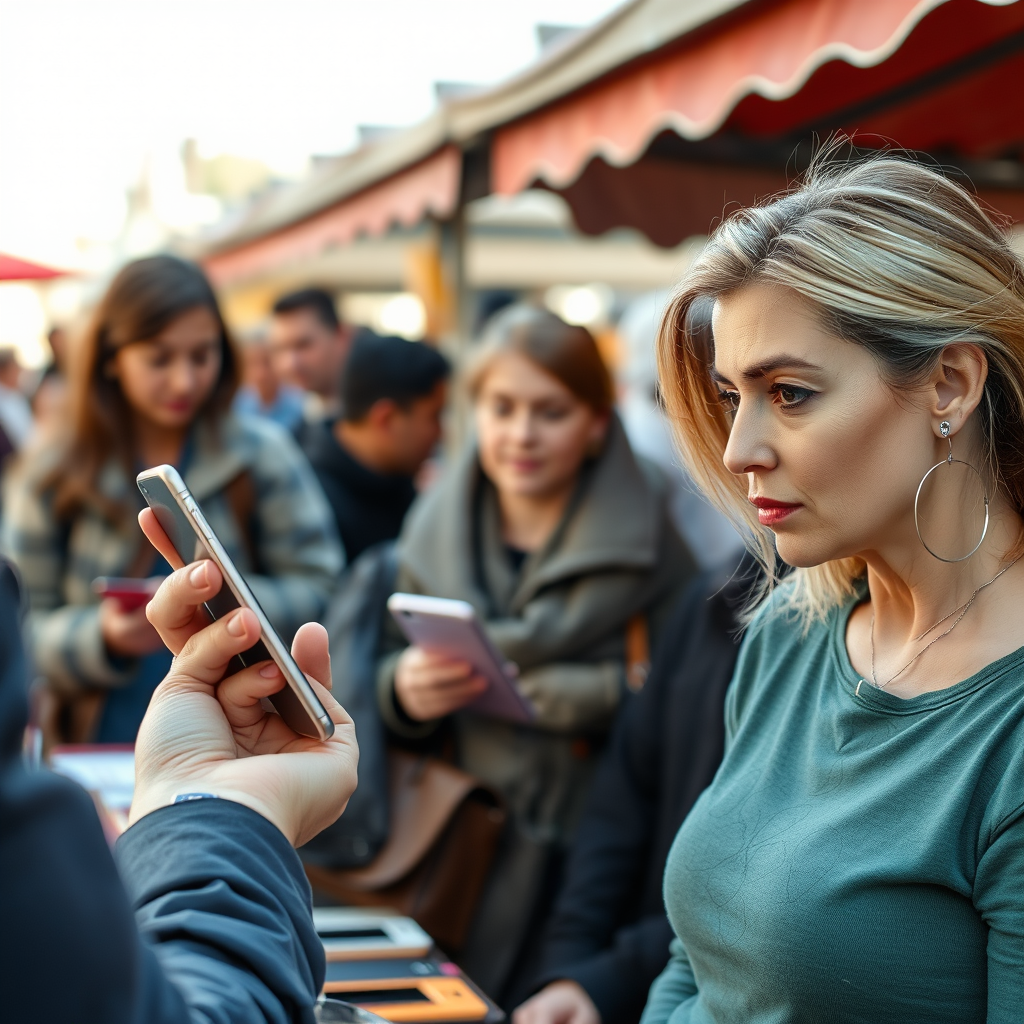
careful because you are not sure you can trust something
I'm a bit wary of online stores I've never heard of.
More examples: Investors have grown wary of promises of huge returns. • She was wary of the new colleague's instant friendliness. • After being burned once, he's understandably wary about lending money again.
Common collocations: wary of, grow wary, a wary eye
Word family: warily, wariness
Synonyms: cautious, distrustful, guarded
Antonyms: trusting, naive
Related concepts: skepticism, experience, self-protection
Contexts: online shopping, health advice, investments
Usage note: Almost always followed by 'of' or 'about'. It suggests watchfulness based on experience, not just general shyness.
vet

to check someone or something carefully before approving them
All the company's new hires are vetted by two managers.
More examples: The claims in the report hadn't been properly vetted. • Refugee applications are vetted over several months. • I always get a friend to vet my important emails before I send them.
Common collocations: vet an applicant, thoroughly vetted, vet a candidate
Word family: vetting, vetted
Synonyms: screen, scrutinize, check out
Antonyms: approve blindly, rubber-stamp
Related concepts: background checks, due diligence, quality control
Contexts: hiring, regulation, publishing
Usage note: Common in professional and security contexts: vetting staff, apps, sources, information. Often passive: 'the app was vetted by regulators'.
fallible

able to make mistakes, not perfect
Even experienced judges are fallible — that's why appeals exist.
More examples: Memory is notoriously fallible; witnesses get details wrong all the time. • We should design systems assuming the people running them are fallible. • He admitted, with a rueful smile, that he was as fallible as the rest of us.
Common collocations: inherently fallible, human beings are fallible, fallible memory
Word family: fallibility, infallible, infallibly
Synonyms: imperfect, error-prone, only human
Antonyms: infallible, flawless
Related concepts: human error, humility, safety systems
Contexts: medicine, aviation, justice systems
Usage note: Slightly formal but common in thoughtful discussion. Pairs beautifully with 'human': 'fallible humans, fallible machines'.
headway

progress towards finishing or achieving something
We're finally making headway on the housing shortage.
More examples: Talks between the unions and management failed to make any headway. • She's made real headway with her French since moving to Lyon. • The charity struggled for years before gaining headway with donors.
Common collocations: make headway, make little headway, gain headway
Synonyms: progress, inroads, ground
Antonyms: stalemate, setback
Related concepts: momentum, breakthrough, effort
Contexts: negotiations, recovery, projects
Usage note: Nearly always with the verb 'make' or 'gain'. Often used negatively: 'couldn't make headway', 'made no headway against'.
Vocabulary Check
- Which situation would you describe as 'fraught with risk'?
- A relaxing holiday at the beach with no plans at all
- Crossing a mountain pass in a storm with a broken radio
- Reading a novel on a rainy Sunday afternoon
- Cooking a simple dinner for two friends
- What does it mean if someone is 'wary of' an app?
- They use it constantly and love it
- They helped design it
- They're cautious about it because they don't fully trust it
- They can't download it because of a technical problem
- If regulators 'vet' a medical app, what do they do?
- Ban it immediately
- Check it thoroughly before allowing it to be used
- Sell it to the public
- Translate it into other languages
- Which sentence uses 'fallible' correctly?
- The fallible machine never made a single error in ten years.
- Her fallible memory meant she misremembered the date of the meeting.
- He is fallible, so we trust his judgement completely.
- The fallible instructions were perfectly clear to everyone.
- If you 'made headway' on a difficult project, what happened?
- You abandoned it
- You started arguing about it
- You moved forward and got closer to finishing it
- You handed it to someone else
Idioms & Phrasal Verbs
wouldn't quit
it kept going and would not stop
I've had a headache that wouldn't quit since Monday morning.
Usage note: Very natural in spoken English, often for problems or symptoms that just keep going.
hold up as
shown to people as a good example of something
My grandmother is always held up as the model of patience in our family.
Usage note: Separable: 'they held her case up as an example' is fine. Often used in the passive, like in the text.
Usage note: The 'up' suggests lifting something up so everyone can see it.
for all its
despite its good qualities; even with all its advantages
For all its charm, living in that city gets exhausting after a while.
Usage note: Sounds a bit literary but people use it in conversation to sound thoughtful. Followed by a noun: 'for all its flaws', 'for all his talent'.
Usage note: Don't confuse it with 'for all' meaning 'because of' — here it always means 'despite'.
the difference between getting care and getting nothing
a situation where one option helps you and the other leaves you with nothing
For people in small villages, the new bus route is the difference between having a job and having none.
Usage note: The pattern 'the difference between X and Y' is great for dramatic contrasts: 'the difference between passing and failing'.
Usage note: Related idiom: 'a lifeline' — something that saves you when you have no other options.
Language Practice: Talking About Trust and Technology
Practice expressing qualified opinions about trusting technology — conceding a point, striking a balance, and challenging an idea.
- Conceding a point while holding your position
- Emerging: I see the point about ___, but ___ — I see the point about convenience, but I'd still want a human doctor for anything serious.
- Developing: While I accept that ___, I'd still argue that ___ — While I accept that apps catch some problems early, I'd still argue that they miss the subtle ones.
- Expanding: Granted, ___ — and I don't want to downplay that — but the real question is whether ___ — Granted, remote consultations have made genuine headway in underserved areas — and I don't want to downplay that — but the real question is whether convenience is quietly eroding the quality of care.
- Drawing a line: what technology is good for and what it isn't
- Emerging: It's useful for ___, but not for ___ — It's useful for repeat prescriptions, but not for chest pain.
- Developing: It's not so much ___ as ___ — It's not so much a replacement for doctors as a very long leash for them.
- Expanding: What it comes down to is knowing where ___ ends and ___ begins — What it comes down to is knowing where the screen's usefulness ends and the examination room begins.
- Speculating about consequences
- Emerging: If we ___ too much, we might ___ — If we trust apps too much, we might miss serious illnesses.
- Developing: One thing that could easily happen is ___ — One thing that could easily happen is a two-tier system: screens for the poor, specialists for the rich.
- Expanding: Should we ___ wholesale, there's every chance that ___ — Should we adopt these systems wholesale, there's every chance that patients will stop being fallible-actor-aware and start treating every diagnosis as gospel.
Fill in the Blanks
When my GP switched to video consultations, I'll admit I was _____ at first — something about discussing my health with a pixelated face on a laptop just felt wrong. But the system had clearly done its homework. Every doctor on the platform had to be _____ed before joining, and patients could check their credentials with one click. Within a few months, telemedicine had made real _____ in our town, especially among commuters who'd rather not sacrifice an afternoon to sit in a waiting room. Still, my neighbour prefers to remind everyone that remote diagnosis is _____ with pitfalls — his father's blood-pressure app 'nearly panicked him to death' with a false alarm. He has a point: any system, however slick, is run by _____ humans and imperfect code. My own view? Use the screen for the small stuff, and keep the hands-on appointments for anything that worries you.
Word bank: fraught, wary, vet, fallible, headway
Sentence Unscramble
- patients / many / remain / wary / of / receiving / a / diagnosis / through / a / screen
- telemedicine / has / made / genuine / headway / in / rural / areas / short / of / doctors
- no / app / however / clever / can / escape / being / fallible / in / a / fraught / situation
Discussion Questions
During the pandemic, millions of people saw a doctor for the first time through a screen. Some loved it — no waiting rooms, no commute. Others found it cold and rushed, and missed the reassurance of a doctor in the room. Many health systems kept the video appointments even after lockdowns ended, and for some conditions they're now the default.
When would you insist on seeing a doctor in person rather than accepting a video call — and would you feel guilty asking?
A new AI app claims to spot skin cancer from a photo more accurately than most dermatologists. It's cheap, instant and available anywhere. But when it's wrong, nobody in a white coat is there to catch the mistake — and the company behind it is, after all, a business with shareholders.
Would you let an app with a better track record than a human doctor make the final call? What would have to happen before you did?
In many countries there's a quiet worry: if telemedicine becomes the cheap, easy option, it might end up reserved for the poor, while the wealthy keep their in-person specialists. Convenience for some, face time for others. Some call this efficient; others call it a two-tier system.
Could telemedicine widen the gap in healthcare instead of closing it? What would stop that happening?
Doctors are fallible — they miss things, they get tired, they bring their own biases. Machines are fallible too, just in different ways: they miss context, they fail weirdly, they can't be questioned the way a person can. Some argue the safest system is one where each checks the other; others say adding a second fallible layer just doubles the risk.
Do you think human plus machine is really safer than human alone, or is that just a comforting story we tell ourselves?
Imagine a near future where a health app on your wrist monitors your heart rate, sleep and blood chemistry around the clock, warns you before you feel ill, and books its own appointments. Your doctor mostly steps in when the system says so. Some people would find that liberating; others would find it suffocating — a life lived under medical surveillance.
Would you sign up for round-the-clock health monitoring if it caught diseases early — and where's your personal line?
Knowledge Check
- Which word best fills the gap: 'The merger talks were ___ with tension from day one.'
- wary
- fallible
- fraught
- headway
- True or false: 'fallible' and 'infallible' mean the same thing.
- True
- False
- Which is the most natural collocation with 'headway'?
- take headway
- do headway
- give headway
- make headway
- If a company 'vetted' its suppliers, it would most likely...
- sign long contracts with all of them
- investigate them carefully before working with them
- replace all of them with cheaper options
- invite them to a company event
- Someone who is 'wary of' telemedicine would most likely say:
- "I book every appointment online — it's so convenient."
- "I'd rather double-check that advice with a real doctor first."
- "The app crashed twice, so I gave up."
- "My doctor recommended this platform to me."
- If a case is 'held up as' a classic example, what happens to it?
- It is criticised publicly
- It is shown to people as a good example
- It is kept secret
- It is forgotten over time
Free to use with your students: Free to teach, screen-share, print and share with your students, with a credit to PlanWise ESL. Please do not sell it or republish it as your own. What you can do with free lessons.