Breaking Difficult Medical News with Empathy and Clarity
About this lesson: This is a C1 (Advanced) ESL lesson in the General English category. It takes about 60 minutes. It includes 5 vocabulary words, 4 idioms and phrasal verbs, a reading text, comprehension questions, discussion questions and speaking patterns. Suits one-to-one or small-group online classes. Free to open and teach with no login, and it prints as a PDF.
Print just the discussion questions
How this lesson is built
This is a complete conversation lesson built on a scientific pedagogical formula, not a generic worksheet: recall prior topic vocabulary, pre-teach the new words in depth, read in context, practise active recall with flashcards and synonyms/antonyms, build accuracy with exercises, and finish with deep discussion.
- Warm-up: Discussion questions that connect the topic to the student’s own life and recall vocabulary they already know about the subject.
- Reading: A text written for this CEFR level that uses each new word two or three times in context, giving the student something meaningful to react to.
- Key vocabulary: 5 new words, pre-taught before the reading with a definition, pronunciation guide, example sentences and a picture, plus word families, usage notes, recall flashcards and synonyms/antonyms, giving a solid grounding before reading.
- Comprehension: 5 questions that check the new words: retrieval practice, not rereading.
- Idioms and phrasal verbs: Expressions taken from the reading, each with its meaning, an example and a speaking question.
- Sentence frames: 3 speaking patterns, each at three levels of support (emerging, developing, expanding) with model answers—especially helpful scaffolding for beginners and less confident speakers.
- Gap-fill: The new words again, in a shuffled order, so the student recalls them by meaning in context.
- Sentence unscramble: Natural sentences with the new words to put back in order, reinforcing grammar and collocation.
- Discussion: 5 open questions designed to talk deeply about the subject while actively using the lesson’s target vocabulary: the heart of a conversation lesson.
- Quiz: A short retrieval check that brings every new word back once more.
Unlike a generic worksheet, the new words are taught before the reading and met again in the activities, the speaking is supported at three levels and most of the time goes on the student talking. Teachers who use PlanWise ESL also get per-student vocabulary tracking (recycling earlier words into future readings and questions), a private learner dashboard with flashcards and custom lesson creation, and a downloadable study PDF.
Warm-up Activity
Think about a time someone had to tell you something difficult — or a time you had to deliver bad news yourself. What made it easier or harder?
- Have you ever had to give someone bad news? How did you start the conversation?
- When a doctor explains something serious, do you prefer the plain truth straight away, or a gentler build-up? Why?
- What do people in your country typically say to soften bad news? Are there phrases you hear all the time?
- Do you think medical jargon ever does more harm than good? Can you remember a term a doctor used that confused you?
- Who is the best 'bad news giver' you know? What exactly do they do well?
Reading Text: The Conversation Doctors Dread Most
An article about how doctors learn to deliver bad news — and why some do it far better than others.
Dr. Amara Osei still remembers the first time she had to break the news to a family that their father's illness had progressed further than anyone hoped. She was twenty-six, freshly qualified, and she walked into the room clutching a clipboard like a shield. She recited the facts in a flat voice, used half a page of technical jargon, and left the family staring at her in silence. 'I delivered the information,' she says now, 'but I completely failed to deliver the message.'
That gap between saying the words and actually communicating is what medical schools have spent decades trying to close. Most now run communication labs where actors play patients, and trainee doctors practise on them again and again. The actors are ruthless in their feedback. One common note: 'You told me my prognosis before I'd even sat down.' The lesson is simple but hard to internalise — timing and tone matter as much as content.
There's a well-worn framework for these conversations, and its first step is surprisingly human: before anything else, build rapport. Ask how the person is feeling. Sit down at eye level. Warn them that difficult information is coming, so the ground shifts under them gently rather than all at once. Critics call this choreography artificial, but its defenders argue the opposite — that without a structure, doctors default to whatever their nerves produce, which is usually worse.
The hardest skill, most doctors agree, is learning how to soften the blow without distorting the truth. Euphemisms like 'we lost him' or 'it's not looking hopeful' can feel kind in the moment, but they leave families confused, sometimes for years. The better approach, research suggests, is a 'warning shot' — a short, honest sentence that signals what's coming — followed by the plain facts, delivered slowly, in words a frightened person can actually absorb.
What strikes many observers is how much of this applies far beyond hospitals. Managers laying off staff, teachers giving harsh feedback, friends confronting each other — all of them face the same dilemma. How honest is too honest? How gentle is too gentle? Dr. Osei's answer, after fifteen years of practice, is disarmingly modest: 'You'll never get it perfect. You just get slightly less clumsy.'
Key Vocabulary
break the news

to be the first to tell someone important, often bad, news
Someone had to break the news to her that the flight had been cancelled.
More examples: The manager gently broke the news that the whole department was being restructured. • I drew the short straw and had to break the news to Grandpa that his car had failed its test. • Honestly, breaking the news was the hardest part — after that, people were surprisingly calm.
Common collocations: break the news to someone, break the news gently, hate to break the news
Word family: news (noun), newsworthy (adj)
Synonyms: deliver bad news, give someone the bad news, let someone down
Antonyms: withhold information, keep something from someone
Related concepts: difficult conversations, honesty, timing
Contexts: hospitals, workplaces, families
Usage note: Almost always used for significant, often negative news. Very common in everyday speech: 'I hate to break it to you, but...' is a lighter, teasing variant.
prognosis

a doctor's prediction of how an illness will develop and end
The surgery went well, but the doctors are still cautious about the long-term prognosis.
More examples: The prognosis is excellent if the condition is caught early. • Nobody wanted to give the family a formal prognosis until all the scans came back. • He asked point-blank for an honest prognosis, even if it was hard to hear.
Common collocations: a grim prognosis, a favourable prognosis, guard the prognosis / give a prognosis
Word family: prognosticate (verb, formal), diagnosis (noun)
Synonyms: outlook, forecast, outlook for recovery
Antonyms: past history, retrospect
Related concepts: diagnosis, recovery, terminal illness
Contexts: oncology, sports injuries, business forecasting (figurative)
Usage note: Mostly medical, but used figuratively for any forecast: 'The prognosis for the company looks bleak.' Plural: prognoses.
jargon
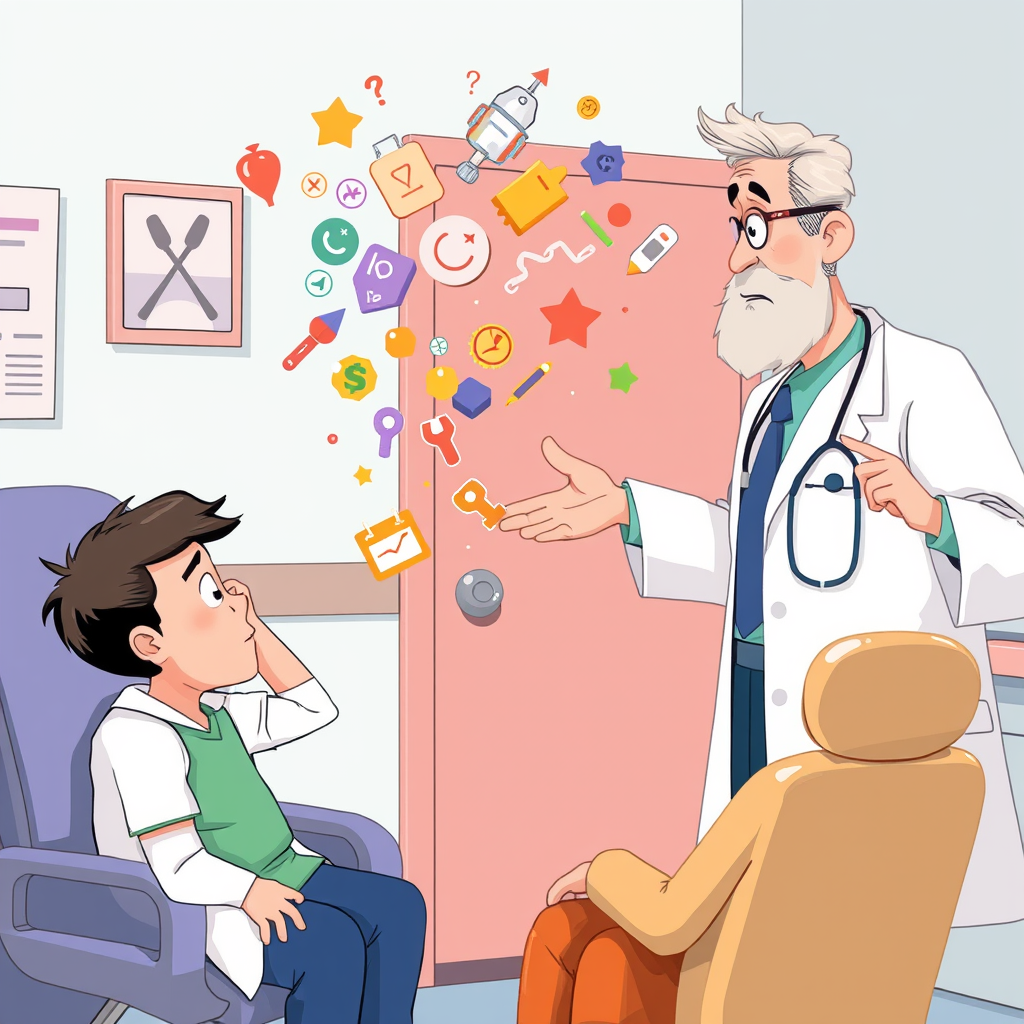
special words used by a profession that outsiders find hard to understand
The contract was full of legal jargon, so I asked a friend to explain it.
More examples: Cut the jargon and tell me in plain English what went wrong. • Tech companies are notorious for drowning their presentations in jargon. • She has a gift for explaining complex science without a trace of jargon.
Common collocations: technical jargon, cut the jargon, full of jargon
Word family: jargonistic (adj, rare), jargony (informal adj)
Synonyms: technical terms, insider language, buzzwords
Antonyms: plain English, layman's terms
Related concepts: specialist language, communication barriers, professions
Contexts: medicine, law, IT, finance
Usage note: Almost always slightly negative — it implies unnecessary or exclusionary language. Uncountable: 'jargons' is wrong.
soften the blow
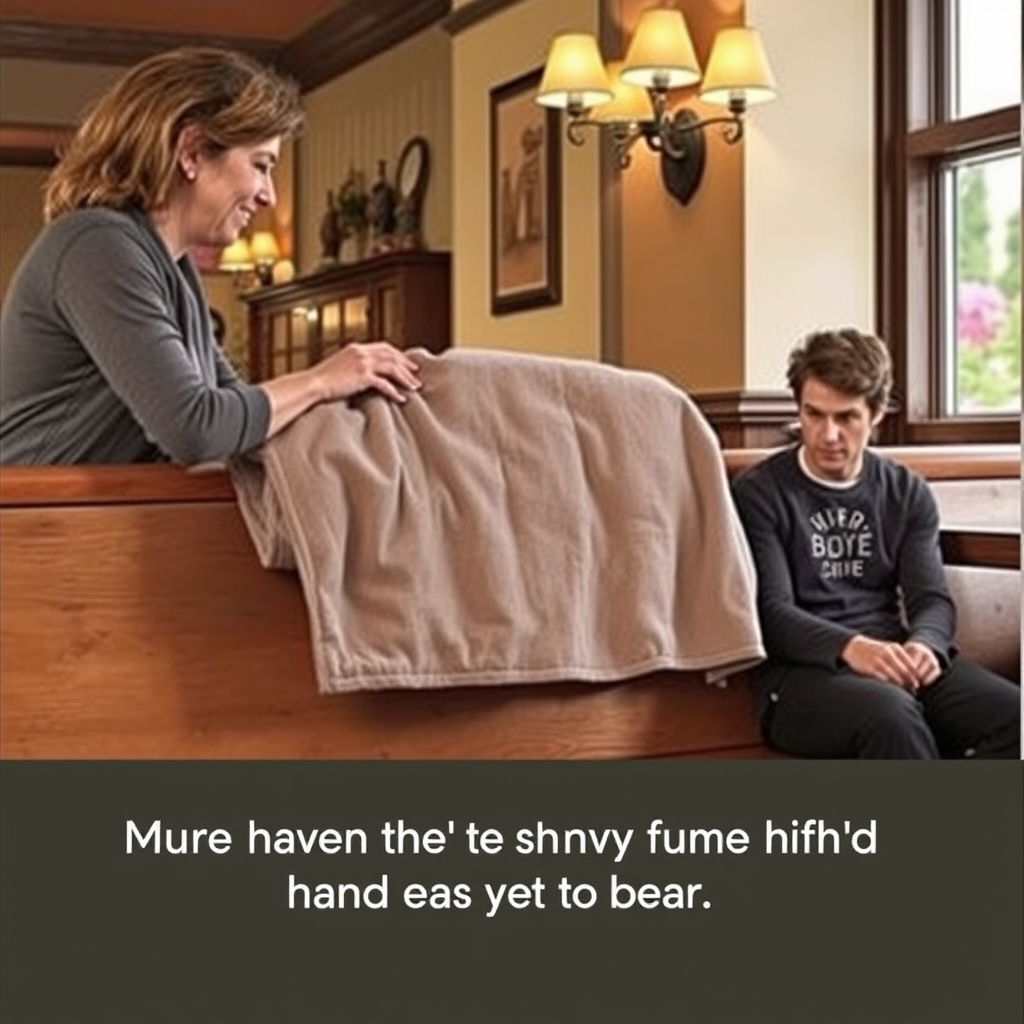
to make bad news or a bad situation feel less painful
He tried to soften the blow by reminding her how much she'd wanted a change anyway.
More examples: The severance package was generous, clearly meant to soften the blow. • There's no way to soften the blow of a diagnosis like that — only ways to deliver it kindly. • She softened the blow with a joke, which somehow made it easier to hear.
Common collocations: soften the blow of something, try to soften the blow, cushion the blow (variant)
Word family: soften (verb), blow (noun: a shock)
Synonyms: cushion the blow, ease the pain, take the edge off
Antonyms: rub salt in the wound, make things worse
Related concepts: euphemism, kindness, bad news
Contexts: layoffs, medical news, breakups, price rises
Usage note: Used for both words and events (a price rise, a defeat). 'Cushion the blow' is a near-identical variant. Often used with 'try to', implying imperfect success.
rapport

a friendly, trusting connection between people who understand each other
Within ten minutes she'd built such a rapport with the interview panel that everyone relaxed.
More examples: Good doctors establish rapport before they ask a single medical question. • He has an easy rapport with customers — they ask for him by name. • There was an obvious rapport between the two presenters, as if they'd worked together for years.
Common collocations: build rapport, establish rapport, a natural rapport with someone
Word family: rapport-building (noun/adj), en rapport (rare)
Synonyms: connection, mutual understanding, chemistry
Antonyms: estrangement, friction
Related concepts: trust, empathy, bedside manner
Contexts: healthcare, job interviews, teaching, negotiations
Usage note: Always positive and mutual. Note the silent final 't': pronounced ra-POR. Common in professional contexts: sales, teaching, healthcare, interviews.
Vocabulary Check
- What does 'prognosis' mean?
- The identification of what illness a person has right now
- A prediction of how an illness will develop in the future
- A list of medicines a patient must take
- The official record of a hospital visit
- In which situation would you most likely 'break the news' to someone?
- When you want to share exciting gossip with a large group
- When you need to ask someone a simple factual question
- When you have to tell someone something difficult they don't yet know
- When you want to repeat news that everyone has already heard
- Which sentence uses 'jargon' correctly?
- The lawyer explained everything without using any jargon, so we understood perfectly.
- I felt real jargon with my new colleague from the first day.
- She gave me some jargon about the prognosis, and I felt much better.
- The doctor's jargon was very kind and gentle with the family.
- What does it mean to 'soften the blow'?
- To make bad news feel less painful for the listener
- To deliver bad news as directly as possible
- To postpone telling someone bad news indefinitely
- To criticise someone gently instead of harshly
- If two people have a good 'rapport', what is true?
- They are competing with each other
- They have known each other since childhood
- They feel a friendly, trusting connection
- They avoid talking about personal topics
Idioms & Phrasal Verbs
lay off
to fire employees because the company no longer needs or can afford them
The company is laying off two hundred people by the end of the month.
Usage note: Separable: 'lay people off' or 'lay off people' both work. · Right: They laid him off last week. · Avoid: They laid off him last week.
Usage note: Different from 'fire': firing suggests the person did something wrong; being laid off is not their fault.
a warning shot
a short statement that tells someone bad news is coming before you say it
Before showing her the figures, he fired a warning shot: 'You might want to sit down for this.'
Usage note: The picture is from military language: a shot fired into the air to warn, not to harm.
Usage note: Often used with 'fire': 'fire a warning shot' is a very natural collocation.
the ground shifts under someone
someone's situation changes suddenly, so they feel unstable or shocked
When the diagnosis came, the ground shifted under the whole family.
Usage note: The picture is literal: imagine an earthquake under your feet. Often used with 'the rug' — 'pull the rug out from under someone' means to remove support suddenly.
sugarcoat
to make bad news sound nicer than it really is
I won't sugarcoat it — the test results are not good, but there are options.
Usage note: The picture is coating a bitter pill in sugar. Very common in the negative: 'I won't sugarcoat it' or 'no sugarcoating'.
Usage note: One word, not two — and usually about words, not actions.
Language Practice: Talking About Difficult Conversations
Practice expressing ideas about delivering bad news, being honest, and comforting people.
- Qualifying an opinion about honesty
- Emerging: I think honesty matters, but ___. — I think honesty matters, but timing matters too.
- Developing: To some extent I agree that ___, but in practice ___. — To some extent I agree that patients should hear everything, but in practice most people can only absorb so much at once.
- Expanding: It's not so much a question of ___ as a question of ___ — because ___. — It's not so much a question of how honest you are as a question of how much the other person can take in at that moment — because shock narrows your attention dramatically.
- Describing how to deliver difficult news
- Emerging: First, I would ___ so the person doesn't feel ___. — First, I would sit down so the person doesn't feel rushed.
- Developing: I'd start by ___, and then give the facts slowly, in plain English, without ___. — I'd start by building a bit of rapport, and then give the facts slowly, in plain English, without drowning them in jargon.
- Expanding: If I were in that position, I'd ___ first, because ___ — and I'd steer clear of ___, which tends to ___. — If I were in that position, I'd give a warning shot first, because people need a second to brace themselves — and I'd steer clear of false reassurance, which tends to destroy trust later.
- Challenging an idea politely
- Emerging: I see the point about ___, but isn't there a risk that ___? — I see the point about being gentle, but isn't there a risk that people misunderstand?
- Developing: That's fair, though I'd argue ___, especially when ___. — That's fair, though I'd argue structure actually frees you up to listen, especially when you're nervous.
- Expanding: I take your point, but that assumes ___ — whereas in reality ___. — I take your point, but that assumes people want optimism more than truth — whereas in reality most patients say they'd rather know and plan.
Fill in the Blanks
When Marta was asked to _____ the news to the team that the project was being cancelled, she spent the evening planning every word. She knew the _____ for the company's funding was grim, but she didn't want to drown her colleagues in corporate _____ — phrases like 'resource realignment' that would only confuse people. She decided to _____ the blow by explaining the severance package first, but only after taking time to build some _____, asking each person how they were really doing. By the end of the meeting, nobody felt good, exactly — but nobody felt ambushed either.
Word bank: break, prognosis, jargon, soften, rapport
Sentence Unscramble
- she / had / to / break / the / news / to / the / family / gently
- the / doctor / avoided / jargon / and / explained / the / prognosis / in / plain / english
- building / rapport / first / helps / soften / the / blow / of / bad / news
Discussion Questions
In the reading, Dr. Osei's first attempt failed not because her facts were wrong, but because her delivery was. She recited information without any human connection. Many people say the same thing happens in offices, schools and even families — the message is technically correct, but it never really lands.
Think of a time someone told you something difficult badly — or well. What exactly made the difference? Was it their words, their tone, or something else?
Some countries have a tradition of telling terminally ill patients very little, protecting them from a grim prognosis — while in others, patients legally must be told everything, sometimes brutally directly. Neither approach is simply right or wrong; each reflects deep beliefs about dignity, family and truth.
How does your culture usually handle this? Do you personally believe a dying person should always hear the full prognosis, even if they haven't asked? Why?
The reading describes 'softening the blow' with euphemisms — saying someone 'passed away' or that things are 'not looking hopeful'. Critics say this kindness has a cost: families leave the room confused, sometimes misunderstanding completely what is happening. Defenders say raw bluntness can feel like violence.
Where's your personal line? Can you remember a euphemism that confused you or someone you know — and would you rather hear the plain truth, however harsh?
Doctors train for years to deliver bad news, but most people never get any training at all — and yet managers, teachers and parents all have to do it. Some companies now hire coaches; others just throw people in the deep end and hope for the best.
Should schools teach everyone how to break bad news, the way they teach writing or first aid? What would such a lesson actually look like — and who would be terrible at teaching it?
Imagine a near future where an AI app analyses your test results and delivers the diagnosis and prognosis instantly, in perfectly calibrated gentle language, at any hour of the day. It would never have a bad day, never rush you, never use confusing jargon. But it would never be human, either.
Would you want a machine to break the news about a serious illness if it did it more skilfully than any human could? What would be lost — and is rapport something a machine can actually build?
Knowledge Check
- Which phrase means 'to make bad news feel less painful'?
- break the news
- soften the blow
- build rapport
- cut the jargon
- True or false: 'jargon' is usually a positive word, praising clear communication.
- True
- False
- A doctor tells a patient how their illness is likely to develop over the next year. This is called:
- a diagnosis
- a jargon
- a prognosis
- a rapport
- Which is the correct collocation?
- make rapport
- build rapport
- do rapport
- take rapport
- True or false: 'break the news' can only be used for deaths and medical diagnoses.
- True
- False
- If a doctor 'fires a warning shot' before giving bad news, what are they doing?
- Giving the bad news immediately and directly
- Saying something short first to signal that bad news is coming
- Asking a colleague to deliver the news instead
- Using technical jargon to sound professional
Free to use with your students: Free to teach, screen-share, print and share with your students, with a credit to PlanWise ESL. Please do not sell it or republish it as your own. What you can do with free lessons.