Ageing Populations and Healthcare Funding
About this lesson: This is a C1 (Advanced) ESL lesson in the General English category. It takes about 60 minutes. It includes 5 vocabulary words, 4 idioms and phrasal verbs, a reading text, comprehension questions, discussion questions and speaking patterns. Suits one-to-one or small-group online classes. Free to open and teach with no login, and it prints as a PDF.
Print just the discussion questions
How this lesson is built
This is a complete conversation lesson built on a scientific pedagogical formula, not a generic worksheet: recall prior topic vocabulary, pre-teach the new words in depth, read in context, practise active recall with flashcards and synonyms/antonyms, build accuracy with exercises, and finish with deep discussion.
- Warm-up: Discussion questions that connect the topic to the student’s own life and recall vocabulary they already know about the subject.
- Reading: A text written for this CEFR level that uses each new word two or three times in context, giving the student something meaningful to react to.
- Key vocabulary: 5 new words, pre-taught before the reading with a definition, pronunciation guide, example sentences and a picture, plus word families, usage notes, recall flashcards and synonyms/antonyms, giving a solid grounding before reading.
- Comprehension: 5 questions that check the new words: retrieval practice, not rereading.
- Idioms and phrasal verbs: Expressions taken from the reading, each with its meaning, an example and a speaking question.
- Sentence frames: 3 speaking patterns, each at three levels of support (emerging, developing, expanding) with model answers—especially helpful scaffolding for beginners and less confident speakers.
- Gap-fill: The new words again, in a shuffled order, so the student recalls them by meaning in context.
- Sentence unscramble: Natural sentences with the new words to put back in order, reinforcing grammar and collocation.
- Discussion: 5 open questions designed to talk deeply about the subject while actively using the lesson’s target vocabulary: the heart of a conversation lesson.
- Quiz: A short retrieval check that brings every new word back once more.
Unlike a generic worksheet, the new words are taught before the reading and met again in the activities, the speaking is supported at three levels and most of the time goes on the student talking. Teachers who use PlanWise ESL also get per-student vocabulary tracking (recycling earlier words into future readings and questions), a private learner dashboard with flashcards and custom lesson creation, and a downloadable study PDF.
Warm-up: Getting Older, Getting Costlier
A quick chat to get you thinking about ageing societies and who pays for them.
- Do you know anyone in their eighties or nineties? What's their life like?
- Who looked after your grandparents when they got older — family, the state, or both?
- Do you expect to retire at the same age your parents did? Why or why not?
- If you had to guess, what's the biggest cost of an ageing population: pensions, healthcare, or something else?
- Would you rather live a long life with health problems, or a shorter one in good shape?
Reading Text: Who Pays When Everyone Lives Longer?
A short magazine-style article about the money problems that come with living longer. Read it, then we'll talk.
In 1950, the average person in a wealthy country could expect to die around 65. Today, that same person might easily see 85 — and the numbers keep climbing. Longevity is one of humanity's greatest achievements, but it comes with a bill attached, and nobody is entirely sure who's going to foot it.
Governments across the developed world are now grappling with what economists politely call a demographic time bomb: fewer workers, more retirees, and a healthcare system stretched thinner every year. In Japan, nearly a third of the population is over 65. In Italy and South Korea, birth rates have fallen so low that each generation is smaller than the last. The maths is unforgiving.
The strain shows up in unexpected places. Hospitals in rural areas close because there aren't enough young staff. Nurses work double shifts. Waiting lists grow. In some countries, families quietly absorb the cost — adult children cutting back their hours to care for ageing parents, often without any formal support at all.
Not everyone agrees on the fix. Some argue we should raise the retirement age: if people live to 90, working until 70 seems reasonable, they say. Others call that cruel — try telling a bricklayer or a nurse to work until 70. Meanwhile, some economists suggest immigration as the obvious answer, which tends to ignite political fireworks in exactly the countries that need it most.
There's also a quieter, more personal question underneath the policy debate. If the state can no longer guarantee a comfortable old age, what do we owe our parents — and what will we expect our own children to owe us? The generation now retiring may be the last one to take state pensions for granted. The rest of us may need a very different plan.
Key Vocabulary
demographic time bomb

A population trend, like ageing, that will cause serious problems later if ignored.
Policymakers have known about the demographic time bomb for decades, yet done little about it.
More examples: The shrinking workforce is a demographic time bomb ticking away under the pension system. • Some say the housing crisis is the next demographic time bomb. • Honestly, our town's ageing population feels like a demographic time bomb for local services.
Common collocations: a ticking demographic time bomb, defuse the demographic time bomb, face a demographic time bomb
Word family: demographics (noun), demographic (adjective), demographer (noun)
Synonyms: looming crisis, population crisis, ticking problem
Antonyms: stable population, demographic dividend
Related concepts: ageing population, falling birth rate, pension crisis
Contexts: news analysis, policy debates, economics
Usage note: Usually used with 'ticking' or 'defuse' for drama. Slightly journalistic tone — great for essays and debates, less common in casual chat.
foot the bill
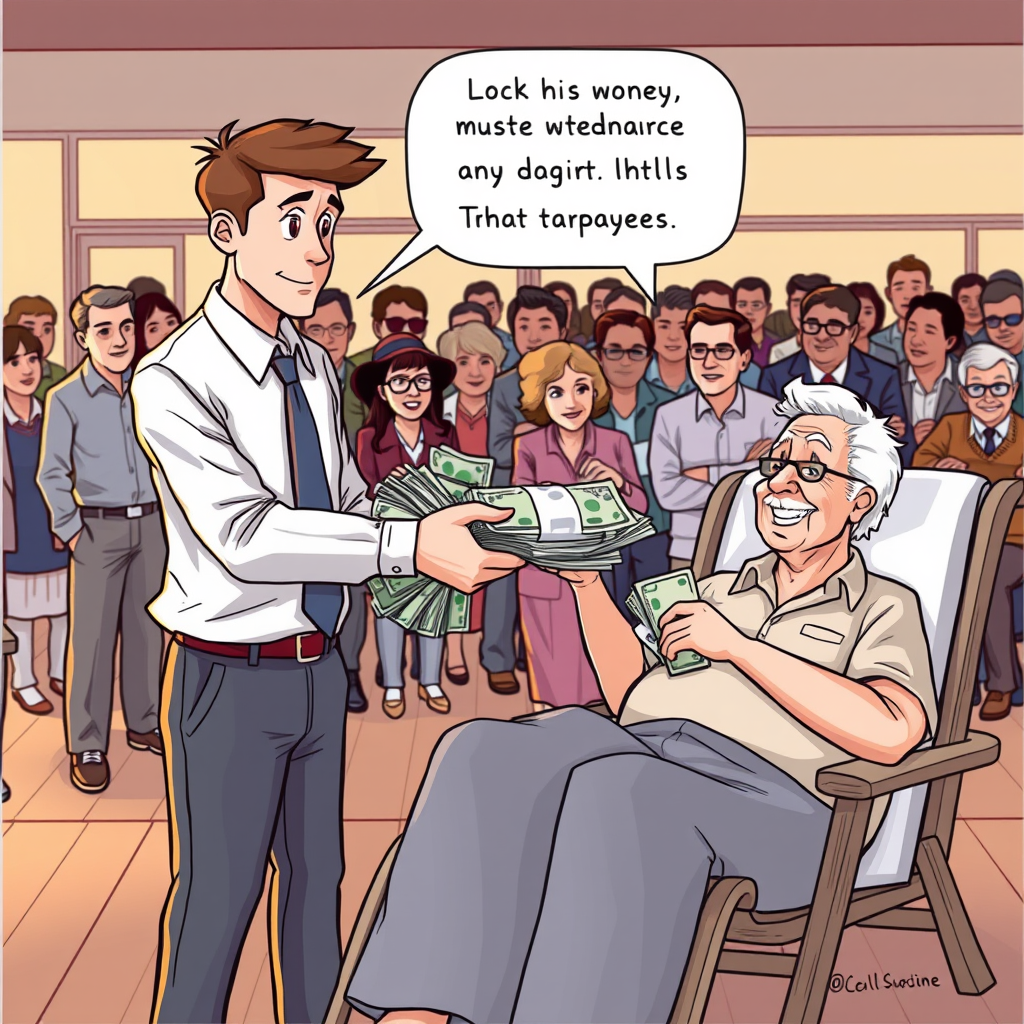
To pay for something, especially something expensive that others benefit from.
Taxpayers will end up footing the bill for the extra hospital beds.
More examples: The company messed up the project, and we're footing the bill. • Who's going to foot the bill for the wedding — both families, or the couple? • Young workers are footing the bill for a pension system designed decades ago.
Common collocations: foot the bill for something, left footing the bill, taxpayers foot the bill
Word family: bill (noun), foot (verb, here = pay)
Synonyms: pay for, cover the cost, pick up the tab
Antonyms: dodge the cost, default on
Related concepts: taxation, public spending, shared responsibility
Contexts: everyday conversation, news, workplace talk
Usage note: Informal to neutral. Often implies the payer didn't choose the expense or feels it's unfair. Very common in journalism and everyday speech.
grapple with

To struggle seriously to deal with a difficult problem or idea.
Every rich country is grappling with the cost of caring for its elderly.
More examples: She's still grappling with the decision about moving her mother into a care home. • The city has grappled with traffic congestion for twenty years without success. • Philosophers have long grappled with what a 'good death' actually means.
Common collocations: grapple with a problem, grapple with the question of, continue to grapple with
Word family: grapple (verb, literal: wrestle), grappling (noun/adjective)
Synonyms: struggle with, wrestle with, contend with
Antonyms: resolve, master, shrug off
Related concepts: dilemma, policy challenge, moral question
Contexts: journalism, academic discussion, serious conversation
Usage note: Suggests ongoing, serious effort — stronger than 'deal with'. Often followed by abstract nouns: issues, questions, dilemmas.
strain

As a noun: pressure or damage caused by too much demand. As a verb: to push something too hard.
An ageing population puts a huge strain on the healthcare system.
More examples: Caring for her father put a real strain on their relationship. • The sudden influx of tourists strained the island's water supply. • Budgets are under strain everywhere, and health is feeling it most.
Common collocations: put a strain on, under strain, strain resources
Word family: strain (noun), strain (verb), strained (adjective), straining (adjective)
Synonyms: pressure, burden, stress (on a system)
Antonyms: relief, ease, slack
Related concepts: overstretched services, burnout, resource shortage
Contexts: news, healthcare, personal relationships
Usage note: Very versatile: relationships, budgets, systems, health. 'Under strain' is the go-to phrase for systems under pressure. Not the same as 'stress' (personal feeling).
longevity

Living a long time; long life or long lifespan.
Rising longevity is great news for individuals and a headache for pension funds.
More examples: The Mediterranean diet is often credited with the region's remarkable longevity. • Job longevity matters less to employers than it used to. • Scientists studying longevity keep returning to the same boring advice: sleep, exercise, don't smoke.
Common collocations: increased longevity, remarkable longevity, longevity risk (insurance term)
Word family: long (adjective), long-lived (adjective), longevity (noun)
Synonyms: long life, lifespan, long life expectancy
Antonyms: early mortality, short lifespan
Related concepts: life expectancy, healthy ageing, blue zones
Contexts: health journalism, insurance, wellness culture
Usage note: Slightly formal but common in health and finance talk. Note the second meaning: lasting a long time in a job or position.
Vocabulary Check
- What does 'grapple with' mean?
- To avoid a problem completely
- To struggle seriously with a difficult problem
- To solve a problem quickly
- To argue with another person
- Which sentence uses 'foot the bill' correctly?
- The government refused to foot the bill for the new hospitals.
- She footed the bill to her friend about the mistake.
- We foot the bill every morning before breakfast.
- He footed the bill down the stairs.
- If a hospital is 'under strain', what is happening?
- It is being rebuilt
- It is under too much pressure from demand
- It is performing better than ever
- It is closing permanently
- What does 'longevity' mean?
- Living a long time
- Feeling lonely in old age
- Retiring early
- Being born in a large family
- A 'demographic time bomb' is best described as...
- A sudden natural disaster
- A population trend that will cause serious problems later
- A new medical technology
- A type of pension scheme
Idioms & Phrasal Verbs
cut back (on something)
to spend less money or time on something
I've cut back on takeaways this year to save for a holiday.
Usage note: You can split it: 'cut back my hours'. Adding 'on' needs an object: 'cut back on coffee'.
take something for granted
to not appreciate something because you expect it will always be there
My grandparents' generation took free healthcare for granted; mine can't.
Usage note: The picture is of accepting a gift without even looking at it. Almost always negative or a warning — people say 'don't take it for granted'.
tip the odds in your favour
to do something that makes success more likely
Regular checkups and decent sleep can really tip the odds in your favour.
Usage note: Comes from betting: 'odds' are the chances of winning, and 'tip' means to shift a balance. Often used with health, exams or job interviews.
stretch something thin
to use too few resources for too many needs
Trying to cover the whole region, the clinic's budget is stretched very thin.
Usage note: Picture pulling dough or a rubber band until it barely covers the table. Often used about budgets, staff and time — and usually passive: 'be stretched thin'.
Language Practice: Talking About Trade-offs
Practice expressing ideas about ageing, money and who should take responsibility.
- Conceding a point before disagreeing
- Emerging: I see the point about ___, but honestly, ___. — I see the point about raising the retirement age, but honestly, not everyone can work that long.
- Developing: It's true that ___, but that argument falls apart when you consider ___. — It's true that people live longer, but that argument falls apart when you consider nurses and manual workers.
- Expanding: I'd be the first to admit that ___, and yet I can't help feeling that ___, if only because ___. — I'd be the first to admit that longevity is a triumph of modern medicine, and yet I can't help feeling that we've planned for the quantity of life and ignored the quality, if only because our institutions still assume everyone retires at 65.
- Speculating about consequences
- Emerging: If nothing changes, ___ will probably ___. — If nothing changes, hospitals will probably collapse under the strain.
- Developing: Unless we ___ soon, we could well end up with ___. — Unless we reform pensions soon, we could well end up with a generation that never retires.
- Expanding: It's not hard to imagine a future in which ___, in which case ___ might well have to ___. — It's not hard to imagine a future in which working until 75 is the norm, in which case entire industries might well have to redesign jobs for older workers.
- Weighing personal versus collective responsibility
- Emerging: It's not just the government's job — ___ should ___ too. — It's not just the government's job — families should step in too.
- Developing: It's one thing to say ___, but quite another to ___. — It's one thing to say people should save more, but quite another when wages barely cover rent.
- Expanding: What strikes me as unfair isn't so much ___ as ___, because ___. — What strikes me as unfair isn't so much the rising retirement age as the fact that office workers and bricklayers are treated identically, because their bodies age very differently.
Fill in the Blanks
Every rich country is _____ing with the same uncomfortable question: who is going to _____ the bill when millions more of us reach old age? Rising _____ is wonderful news for individuals, but it puts an enormous _____ on pensions and hospitals, and some economists warn that the whole system is a _____ time bomb waiting to go off. The trouble is that every possible fix — working longer, higher taxes, more immigration — upsets someone.
Word bank: demographic, foot, grapple, longevity, strain
Sentence Unscramble
- taxpayers / will / inevitably / foot / the / bill / for / an / ageing / population / .
- rising / longevity / has / put / an / enormous / strain / on / the / pension / system / .
- governments / have / grappled / with / this / demographic / time / bomb / for / decades / .
Discussion Questions
In many countries, adult children are expected to look after ageing parents — sometimes moving them into the family home, sometimes paying for care. In others, the state is expected to take on that role, and families stay involved emotionally rather than financially. Neither system seems to work perfectly.
Who should foot the bill for caring for the elderly — the state, the family, or the individuals themselves while they're still working? What happens in your family or culture?
Some countries are raising the retirement age to 67, 68, even 70. Office workers might manage that, but a 68-year-old nurse or construction worker has spent decades on their feet. Critics say a single retirement age treats very different bodies as if they were the same.
Should the retirement age depend on the job you do? Would you personally want to work into your late sixties — and could you?
Japan, Italy and South Korea all have extremely low birth rates and long life expectancy. Some of them are quietly turning to immigration to keep the workforce going, which sparks heated political debate. Others are trying robots and automation in care homes instead.
If your country needed more young workers to support the elderly, which would you prefer: immigration, automation, or higher taxes? Why?
Imagine a country where the pension system runs out of money. The government has three options: raise taxes on everyone, cut pensions for current retirees, or make young people save privately from day one. Each choice creates winners and losers, and the losers vote too.
If you were forced to choose just one of those options, which would you pick — and who would you be hurting? What would happen in your country if this came up tomorrow?
People talk a lot about how long we live, but less about how well. Living to 95 with ten years of serious illness is a very different prospect from living to 95 and dancing at your great-grandchild's wedding. Some health experts now argue we should fund 'healthspan', not just lifespan.
Would you rather have a longer life or a healthier one? And honestly — what are you doing now, if anything, to tip the odds in your favour?
Knowledge Check
- If a government 'grapples with' a problem, it...
- ignores it completely
- struggles seriously to deal with it
- solves it immediately
- passes it to another country
- True or false: 'foot the bill' means to avoid paying for something.
- True
- False
- Which phrase correctly completes this sentence? 'Caring for her mother put a real ___ on her marriage.'
- longevity
- demographic
- strain
- bill
- True or false: 'longevity' can describe staying a long time in a job as well as living a long life.
- True
- False
- A 'demographic time bomb' refers to...
- a sudden war
- a population trend that will cause a future crisis
- a medical emergency
- a type of tax
- If someone says their budget is 'stretched thin', what do they mean?
- They are managing their money very carefully.
- They don't have enough money for everything they need.
- They have just received a large amount of money.
- They refuse to spend money on anything.
Free to use with your students: Free to teach, screen-share, print and share with your students, with a credit to PlanWise ESL. Please do not sell it or republish it as your own. What you can do with free lessons.