Navigating Informed Consent and Treatment Trade-Offs
About this lesson: This is a C1 (Advanced) ESL lesson in the General English category. It takes about 60 minutes. It includes 5 vocabulary words, 4 idioms and phrasal verbs, a reading text, comprehension questions, discussion questions and speaking patterns. Suits one-to-one or small-group online classes. Free to open and teach with no login, and it prints as a PDF.
Print just the discussion questions
How this lesson is built
This is a complete conversation lesson built on a scientific pedagogical formula, not a generic worksheet: recall prior topic vocabulary, pre-teach the new words in depth, read in context, practise active recall with flashcards and synonyms/antonyms, build accuracy with exercises, and finish with deep discussion.
- Warm-up: Discussion questions that connect the topic to the student’s own life and recall vocabulary they already know about the subject.
- Reading: A text written for this CEFR level that uses each new word two or three times in context, giving the student something meaningful to react to.
- Key vocabulary: 5 new words, pre-taught before the reading with a definition, pronunciation guide, example sentences and a picture, plus word families, usage notes, recall flashcards and synonyms/antonyms, giving a solid grounding before reading.
- Comprehension: 5 questions that check the new words: retrieval practice, not rereading.
- Idioms and phrasal verbs: Expressions taken from the reading, each with its meaning, an example and a speaking question.
- Sentence frames: 3 speaking patterns, each at three levels of support (emerging, developing, expanding) with model answers—especially helpful scaffolding for beginners and less confident speakers.
- Gap-fill: The new words again, in a shuffled order, so the student recalls them by meaning in context.
- Sentence unscramble: Natural sentences with the new words to put back in order, reinforcing grammar and collocation.
- Discussion: 5 open questions designed to talk deeply about the subject while actively using the lesson’s target vocabulary: the heart of a conversation lesson.
- Quiz: A short retrieval check that brings every new word back once more.
Unlike a generic worksheet, the new words are taught before the reading and met again in the activities, the speaking is supported at three levels and most of the time goes on the student talking. Teachers who use PlanWise ESL also get per-student vocabulary tracking (recycling earlier words into future readings and questions), a private learner dashboard with flashcards and custom lesson creation, and a downloadable study PDF.
Warm-Up: Making Medical Choices
Talk about your own experiences and opinions on health decisions before meeting the lesson vocabulary.
- When you last had to make a decision about your health, how much information did you actually want?
- Have you ever agreed to a treatment without really understanding what you were signing up for?
- Do you tend to trust doctors straight away, or do you like to do your own research first?
- If a treatment offered benefits but also serious side effects, how would you decide?
- Who should have the final say when family members disagree about someone's medical care?
Reading Text: Who Really Decides?
A short magazine-style article about how patients and doctors share - or don't share - decisions about treatment.
When Marguerite's doctor recommended surgery, she signed the consent form without reading it. She isn't unusual. Studies in several countries suggest that most patients skim consent documents, or skip them entirely, trusting that whatever the specialist proposes must be the sound option. In theory, informed consent exists precisely to prevent this. In practice, it often amounts to a formality - a piece of paper signed under time pressure in a bright corridor.
Part of the problem is that doctors are trained to talk about treatment options in a particular way. Some present a single recommended path and expect compliance; the patient nods, the plan proceeds, everyone is satisfied. Others take the opposite approach, laying out every possibility in exhaustive detail until the patient feels more anxious than before. Neither style genuinely invites the patient into the decision - it simply dresses up persuasion, or confusion, as choice.
Then there are the trade-offs that nobody mentions out loud. A drug that eases one symptom may blunt concentration; an operation that extends life may curtail independence. A prudent patient weighs these against each other, but that requires information most clinics never volunteer. Unless someone takes the trouble to advocate for the patient - translating medical jargon into plain consequences - the scale stays tilted in whatever direction the institution prefers.
Some countries have tried to mitigate this by making second opinions a legal right, or by sending decision aids home with patients so they can reflect without an expert hovering nearby. The results are mixed. Given more time, some people simply feel coerced by their own doubts, while others discover that a relative's opinion carries more weight than any pamphlet.
Perhaps the honest conclusion is that no consent is ever fully informed - it is a best-effort agreement between two parties with different knowledge and different stakes. Still, that seems preferable to coercion dressed as care, or a signature given in the dark. The next time a form slides across the desk, Marguerite reads it. She asks what the surgery would take away from her life, not just what it might add. The doctor pauses. It turns out he has to think about it too.
Key Vocabulary
compliance
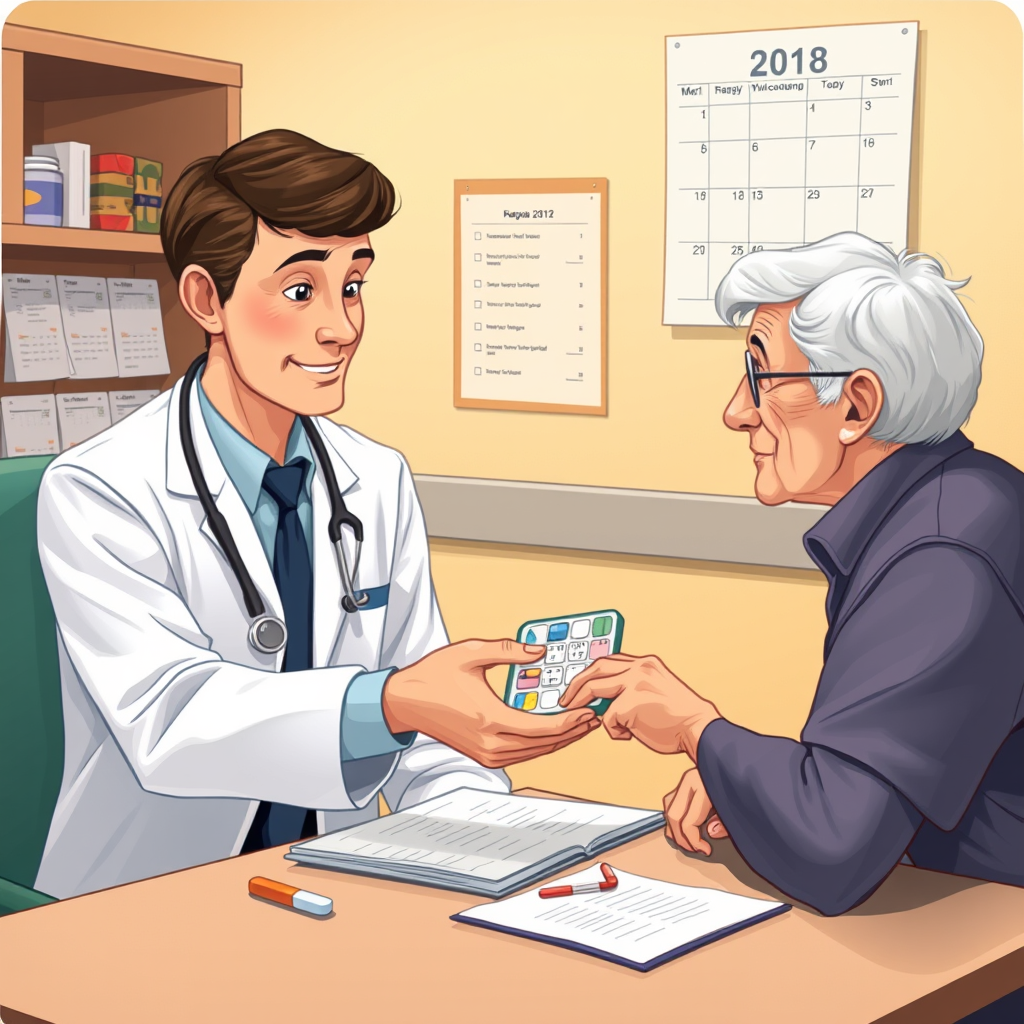
The act of doing what you are told or asked to do, often following rules or instructions
The treatment only works if the patient's compliance is good - taking the pills exactly as prescribed.
More examples: Doctors often complain about poor compliance among patients who stop medication early. • The new safety rules demand full compliance from every department. • Her compliance with the recovery plan impressed the whole medical team.
Common collocations: strict compliance, compliance with regulations, patient compliance
Word family: comply (verb), compliant (adjective), compliantly (adverb)
Synonyms: obedience, conformity, observance
Antonyms: defiance, noncompliance, resistance
Related concepts: following instructions, rule-following, medication schedules
Contexts: hospitals, workplace regulations, legal agreements
Usage note: Often used in medicine, law and business. Can carry a slightly negative shade when it implies passive obedience rather than genuine agreement.
prudent

Careful and sensible; thinking ahead about risks before making a decision
It would be prudent to get a second opinion before agreeing to major surgery.
More examples: A prudent investor never puts all their savings in one place. • She was prudent enough to read the contract before signing. • Is it prudent to travel without insurance these days?
Common collocations: a prudent decision, prudent to wait, on the prudent side
Word family: prudence (noun), prudently (adverb), imprudent (adjective, negative)
Synonyms: sensible, judicious, circumspect
Antonyms: rash, reckless, imprudent
Related concepts: risk assessment, careful planning, looking before leaping
Contexts: finance, medical decisions, career choices
Usage note: Formal but common in speech among educated speakers; suggests wisdom, not just caution. Never used to describe people rudely - it's a compliment.
advocate for

To publicly support or speak on behalf of a person, idea or cause
Nurses often advocate for patients who feel too intimidated to question their doctors.
More examples: She advocates for clearer pricing in private healthcare. • He advocated for his elderly mother when her insurance claim was rejected. • Several organisations advocate for free access to basic medication.
Common collocations: advocate strongly for, a patient advocate, advocate for change
Word family: advocate (noun: a person who supports something), advocacy (noun: the activity)
Synonyms: champion, support, speak up for
Antonyms: oppose, undermine, abandon
Related concepts: representation, patient rights, lobbying
Contexts: healthcare, politics, social movements
Usage note: Pronunciation shifts: AD-vo-kit (noun) vs AD-vo-kate (verb). Always followed by 'for' when you mean supporting someone or something.
mitigate

To make something bad, such as harm or risk, less severe or less serious
Hospitals introduced checklists to mitigate the risk of surgical errors.
More examples: Regular exercise can mitigate some of the effects of ageing. • Nothing could fully mitigate the disappointment of the cancelled operation. • The company installed filters to mitigate the pollution from its factory.
Common collocations: mitigate the risk, mitigate the effects, mitigate against harm
Word family: mitigation (noun), mitigating (adjective, as in 'mitigating factors')
Synonyms: alleviate, reduce, lessen
Antonyms: aggravate, worsen, intensify
Related concepts: risk management, damage control, safety measures
Contexts: medicine, environment, business risk
Usage note: Formal register, common in professional and medical talk. You mitigate something negative - never something positive.
coercion

The act of making someone do something by using pressure, threats or force
Signing under pressure from relatives is not consent - it's coercion.
More examples: Any agreement reached through coercion is legally worthless. • He claimed his confession was the result of police coercion. • There's a fine line between persuasion and coercion.
Common collocations: under coercion, subtle coercion, coercion tactics
Word family: coerce (verb), coercive (adjective), coercively (adverb)
Synonyms: pressure, intimidation, compulsion
Antonyms: free will, voluntariness, autonomy
Related concepts: consent, manipulation, power imbalance
Contexts: law, medicine, relationships
Usage note: Strong word - implies the person's free will was overridden. Often used in legal and ethical debates about consent.
Vocabulary Check
- What does 'coercion' mean?
- Making someone do something through pressure or threats
- Gently persuading someone with good arguments
- Offering someone money to change their mind
- Waiting patiently until someone agrees
- Which sentence uses 'mitigate' correctly?
- She mitigated her joy when she heard the news.
- Exercise can mitigate some effects of stress on the body.
- He mitigated the prize for winning the competition.
- They mitigated the party until three in the morning.
- What does 'compliance' mean in a medical context?
- A doctor's refusal to treat a patient
- A patient following the prescribed treatment correctly
- A hospital's fee for consultations
- An operation performed in an emergency
- In which situation would you 'advocate for' someone?
- When you ignore their complaints entirely
- When you make decisions for them without telling them
- When you speak up to support them or their interests
- When you charge them for your services
- What does 'prudent' mean?
- Extremely generous
- Careful and sensible, thinking about risks ahead
- Very talkative
- Strangely formal
Idioms & Phrasal Verbs
weigh up
to think carefully about the good and bad sides of something before deciding
I'm still weighing up whether to take the new job or stay put.
Usage note: The object can go in the middle or after: 'weigh up the options' or 'weigh the options up' both work.
Usage note: Very common in everyday talk about decisions, not just big ones.
draw the line
to set a limit on what you will accept or do
I don't mind helping my sister out, but I draw the line at lending her money.
Usage note: The picture is literally drawing a line you won't cross. Often used with 'at': 'draw the line at something'.
Usage note: Common mistake: it's 'draw THE line', not 'draw a line', when you mean setting a limit. · Right: draw the line · Avoid: draw a line
take something on board
to accept and seriously consider advice or criticism
She really took my feedback on board and changed the whole plan.
Usage note: The picture is loading something onto a ship - you carry the idea with you afterwards.
Usage note: Split it with the object: 'take it on board', not 'take on board it'. · Right: take it on board · Avoid: take on board it
a grey area
a situation that is not clearly right or wrong, allowed or forbidden
Whether bosses can read your work emails is still a grey area in many countries.
Usage note: The picture is between black (clearly wrong) and white (clearly right) - grey is in between.
Usage note: Very useful for discussing ethics, rules and medicine. Often 'a legal grey area' or 'an ethical grey area'.
Language Practice: Talking About Consent and Trade-Offs
Practice expressing nuanced opinions about medical decisions, qualifying your views and challenging ideas politely.
- Qualifying an opinion (saying it's true only up to a point)
- Emerging: Up to a point, ___, but ___. — Up to a point, patients should trust their doctors, but trust shouldn't replace understanding.
- Developing: That's true as far as it goes, but it doesn't take ___ into account. — That's true as far as it goes, but it doesn't take the patient's quality of life into account.
- Expanding: It's not so much ___ as ___; the real question is whether ___. — It's not so much a lack of information as a lack of time; the real question is whether anyone can decide well in a ten-minute appointment.
- Weighing a trade-off between two options
- Emerging: I'd rather ___ than ___, because ___. — I'd rather keep my independence than extend my life in a hospital bed.
- Developing: If I had to choose, I'd trade ___ for ___, provided that ___. — If I had to choose, I'd trade a few years of old age for the chance to stay sharp, provided that the surgery wasn't experimental.
- Expanding: Weighing it up, ___ seems worth the cost of ___, whereas ___ would be a gamble I couldn't live with. — Weighing it up, a shorter but fuller life seems worth the cost of a risky operation, whereas endless treatment that merely prolongs the inevitable would be a gamble I couldn't live with.
- Challenging an idea politely
- Emerging: I see the point about ___, but isn't ___ also true? — I see the point about saving time, but isn't rushing consent risky?
- Developing: I'm not entirely convinced that ___, mainly because ___. — I'm not entirely convinced that more information always helps, mainly because it can paralyse rather than empower.
- Expanding: I'd push back a little: doesn't ___ rest on the assumption that ___? — I'd push back a little: doesn't the idea of informed consent rest on the assumption that patients can process medical evidence as well as a doctor can?
Fill in the Blanks
When Elena's mother was diagnosed with a heart condition, the whole family became involved in her care. The cardiologist recommended surgery almost immediately, but Elena, ever _____, asked for time to consider the trade-offs. She knew that good _____ after the operation would matter as much as the surgery itself - months of careful medication and physiotherapy. Her brother accused her of hesitation, but Elena insisted she was not being pressured; anything approaching _____ would make the decision meaningless. She also decided to _____ her mother during every consultation, translating the jargon into plain consequences. Finally, the family agreed on a plan designed to _____ the main risks: a less invasive procedure, a longer recovery, but a better chance of the life her mother actually wanted.
Word bank: compliance, prudent, advocate for, mitigate, coercion
Sentence Unscramble
- good / compliance / with / the / medication / plan / makes / all / the / difference / to / recovery
- a / prudent / patient / asks / what / the / treatment / might / take / away / not / just / what / it / offers
- consent / given / under / coercion / is / no / consent / at / all
Discussion Questions
In many hospitals, patients sign consent forms minutes before surgery, sometimes while a nurse is already checking their blood pressure. The forms are long, the language is dense, and the patient may be anxious or premedicated. Critics say this makes informed consent an illusion - a ritual rather than a real decision.
Have you or someone close to you ever signed a medical form without really understanding it? How did that feel afterwards?
Some treatments involve a hard trade-off: a medication that controls one condition but causes fatigue, or surgery that prolongs life but takes away independence. Doctors tend to focus on survival statistics, while patients often care just as much about how they'll actually live afterwards.
If a treatment promised more years but took away something you loved doing, how would you weigh that up?
Families often get involved in medical decisions, especially in close-knit communities. Sometimes their help is invaluable; other times relatives push a reluctant patient towards a treatment, or away from one, for reasons that have more to do with the family than the patient.
Where would you draw the line between a family's caring involvement and coercion?
Imagine a future where an app reads your medical records, explains every treatment option in your own language, and asks you a series of questions to confirm you truly understand the risks. Some see this as the future of informed consent; others worry it replaces human judgement with a checklist.
Would you trust an app to inform you about a serious treatment decision, or does real consent need a human conversation?
In a public health crisis, governments sometimes face a dilemma: protecting the population may require measures that feel like pressure - mandatory vaccinations, travel restrictions, or penalties for those who refuse. Supporters call it prudence; critics call it the state overriding personal choice.
When does protecting people slide into coercing them - and who should decide where that line sits?
Knowledge Check
- Which word means 'careful and sensible, thinking about risks before deciding'?
- Compliant
- Prudent
- Coercive
- Mitigating
- A nurse who 'advocates for' a patient is...
- prescribing them medication
- monitoring their vital signs
- speaking up to support their interests
- discharging them from hospital
- 'Mitigate' means to make a bad situation worse. True or false?
- True
- False
- Which sentence describes coercion?
- She read the consent form carefully and asked two questions.
- He agreed to the surgery after his brother threatened to cut him off.
- They chose the less invasive option after a long discussion.
- The doctor explained the risks clearly before the operation.
- In a medical context, 'compliance' refers to how well a patient follows their prescribed treatment. True or false?
- True
- False
- If you say you 'draw the line at' something, what do you mean?
- You find it hard to decide
- You refuse to go that far
- You change your mind completely
- You follow someone's advice
Free to use with your students: Free to teach, screen-share, print and share with your students, with a credit to PlanWise ESL. Please do not sell it or republish it as your own. What you can do with free lessons.