Ethical Dilemmas in Healthcare and Biotech
About this lesson: This is a C1 (Advanced) ESL lesson in the Conversation Practice category. It takes about 60 minutes. It includes 5 vocabulary words, 4 idioms and phrasal verbs, a reading text, comprehension questions, discussion questions and speaking patterns. Suits one-to-one or small-group online classes. Free to open and teach with no login, and it prints as a PDF.
Print just the discussion questions
How this lesson is built
This is a complete conversation lesson built on a scientific pedagogical formula, not a generic worksheet: recall prior topic vocabulary, pre-teach the new words in depth, read in context, practise active recall with flashcards and synonyms/antonyms, build accuracy with exercises, and finish with deep discussion.
- Warm-up: Discussion questions that connect the topic to the student’s own life and recall vocabulary they already know about the subject.
- Reading: A text written for this CEFR level that uses each new word two or three times in context, giving the student something meaningful to react to.
- Key vocabulary: 5 new words, pre-taught before the reading with a definition, pronunciation guide, example sentences and a picture, plus word families, usage notes, recall flashcards and synonyms/antonyms, giving a solid grounding before reading.
- Comprehension: 5 questions that check the new words: retrieval practice, not rereading.
- Idioms and phrasal verbs: Expressions taken from the reading, each with its meaning, an example and a speaking question.
- Sentence frames: 3 speaking patterns, each at three levels of support (emerging, developing, expanding) with model answers—especially helpful scaffolding for beginners and less confident speakers.
- Gap-fill: The new words again, in a shuffled order, so the student recalls them by meaning in context.
- Sentence unscramble: Natural sentences with the new words to put back in order, reinforcing grammar and collocation.
- Discussion: 5 open questions designed to talk deeply about the subject while actively using the lesson’s target vocabulary: the heart of a conversation lesson.
- Quiz: A short retrieval check that brings every new word back once more.
Unlike a generic worksheet, the new words are taught before the reading and met again in the activities, the speaking is supported at three levels and most of the time goes on the student talking. Teachers who use PlanWise ESL also get per-student vocabulary tracking (recycling earlier words into future readings and questions), a private learner dashboard with flashcards and custom lesson creation, and a downloadable study PDF.
Warm-up: Who Gets to Decide?
Think about a few everyday medical choices before we dive into the really tricky ones.
- Have you ever had to make a difficult decision about your own health or a family member's health? What happened?
- If a hospital has one machine and two patients who need it, how would you decide who gets it?
- Would you ever agree to be part of a medical experiment if it might help thousands of people?
- Do you trust doctors to make the right call, or should patients always have the final say?
- If you could edit one thing about your future children's genes, would you do it? Be honest!
Reading Text: The Heart Machine
A short true-to-life story about a hospital ethics committee facing an impossible choice.
When the storm knocked out the power at St. Aldric's Hospital, the generators kept the lights on but not much else. In the intensive care unit, Dr. Amara Osei faced a nightmare scenario: one working portable ventilator, two patients who needed it, and minutes to decide. It was, she later said, the purest example of triage she had ever encountered — no committees, no paperwork, just a choice between two human lives.
One patient was a 78-year-old retired teacher with fragile lungs. The other was a 34-year-old father of three, injured when a tree fell on his car. Dr. Osei had to weigh up not just the odds of survival, but what survival would mean for each of them. Age, family, fairness, luck — every factor felt both relevant and somehow obscene to calculate.
She gave the machine to the younger man. The older patient survived the night on manual breathing support, barely. But the story didn't end there: the retired teacher's family filed a complaint, arguing that age had been used against her. The hospital's ethics board now faced a fraught question that medicine has dodged for decades — is it ever acceptable to rank lives, and if so, by what measure?
What makes such cases so slippery is that every principle sounds noble until you apply it. Save the most years of life? Then the young man wins. Save whoever has the best chance? Then the fragile lungs lose. Treat everyone identically? Then you might save no one. Bioethicists call this the problem of tragic choice, and hospitals worldwide are drafting unprecedented formal guidelines precisely because they'd rather argue on paper than at a bedside at 3 a.m.
Dr. Osei's own verdict was quietly devastating. 'I don't regret the decision,' she told a journalist. 'I regret that we live in a world where a doctor has to make it alone, in ninety seconds, with a storm howling outside.' Her hospital has since built an ethics rapid-response team — proof, perhaps, that even our darkest dilemmas can push us to build something better.
Key Vocabulary
triage
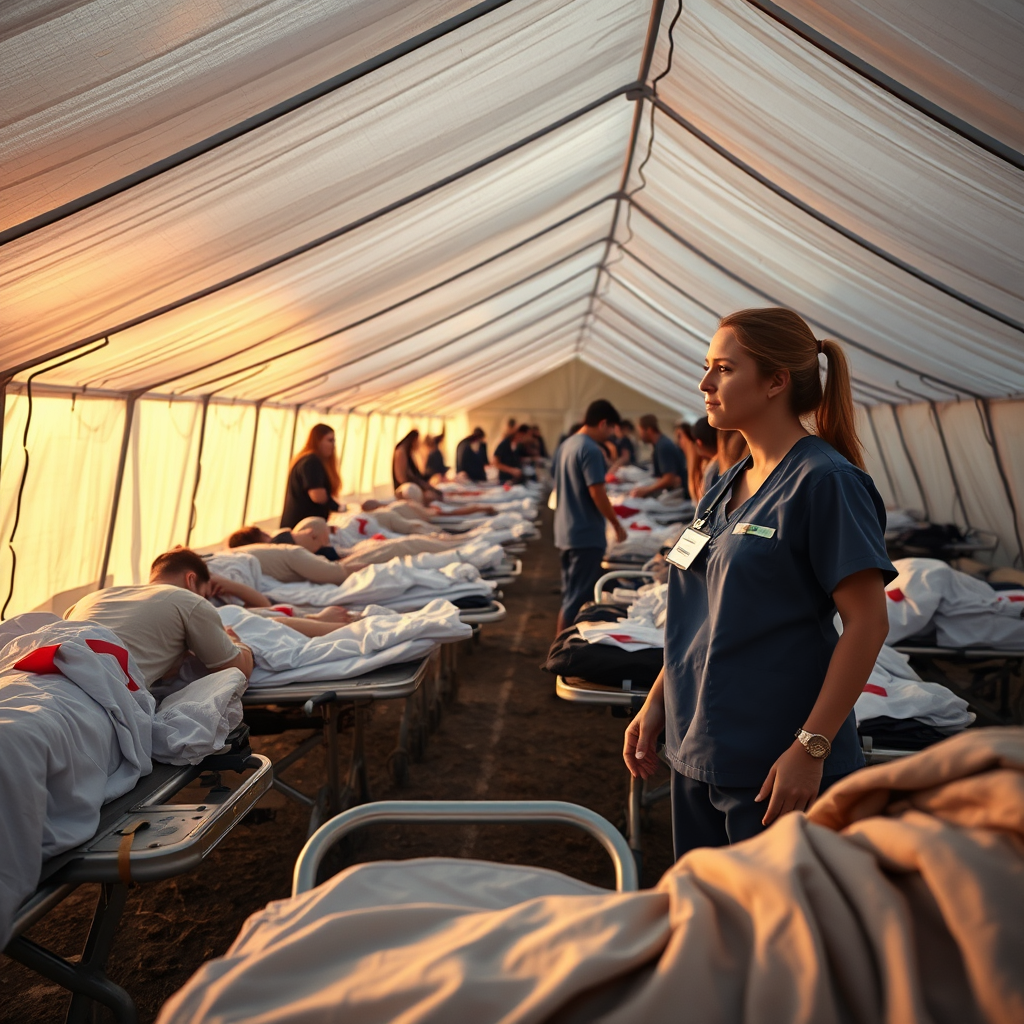
deciding which sick or injured people need help first when there isn't enough help for all
The field hospital set up a triage tent at the entrance to sort the wounded.
More examples: Nurses performed triage within minutes of the crash victims arriving. • My inbox is chaos — I basically do triage every morning, answering the most urgent emails first. • During the pandemic, doctors in some cities had to triage patients for beds.
Common collocations: triage system, triage nurse, do triage
Word family: triage (noun), triage (verb, 'to triage patients')
Synonyms: prioritisation, sorting, ranking
Antonyms: indiscriminate treatment, first-come-first-served
Related concepts: emergency medicine, resource scarcity, prioritisation
Contexts: hospitals, disaster response, workplace management
Usage note: Originally a battlefield medical term, now used metaphorically for prioritising anything under pressure — emails, problems, budgets. Very natural in professional conversation.
fraught

full of tension, worry or risk; likely to cause problems
Negotiations between the two hospitals were fraught from the very first meeting.
More examples: The decision to remove her from life support was fraught with doubt. • Their relationship with the regulators has always been fraught. • It's a fraught time for the family — everyone's exhausted and emotions are raw.
Common collocations: fraught with danger, a fraught decision, fraught relationship
Word family: fraught (adjective), fraughtness (rare noun)
Synonyms: tense, anxious, charged
Antonyms: relaxed, calm, uneventful
Related concepts: conflict, anxiety, high stakes
Contexts: negotiations, family matters, medical decisions
Usage note: A favourite of quality journalism. Slightly formal but very common in speech among educated speakers. Usually describes situations, decisions or relationships, not people directly.
unprecedented

never having happened before; completely new in history
The speed of the vaccine's development was unprecedented in medical history.
More examples: Hospitals faced unprecedented demand during the winter wave. • It's unprecedented for a gene therapy to be approved this quickly. • The crisis created an unprecedented level of cooperation between rival labs.
Common collocations: unprecedented scale, wholly unprecedented, unprecedented access
Word family: precedent (noun), precede (verb), unprecedentedly (adverb)
Synonyms: unheard-of, groundbreaking, novel
Antonyms: commonplace, routine, typical
Related concepts: breakthrough, history, firsts
Contexts: science, news reporting, crises
Usage note: Strong word — use it when something genuinely breaks new ground, not just for anything unusual. Often intensified with 'truly', 'wholly' or 'virtually'.
weigh up
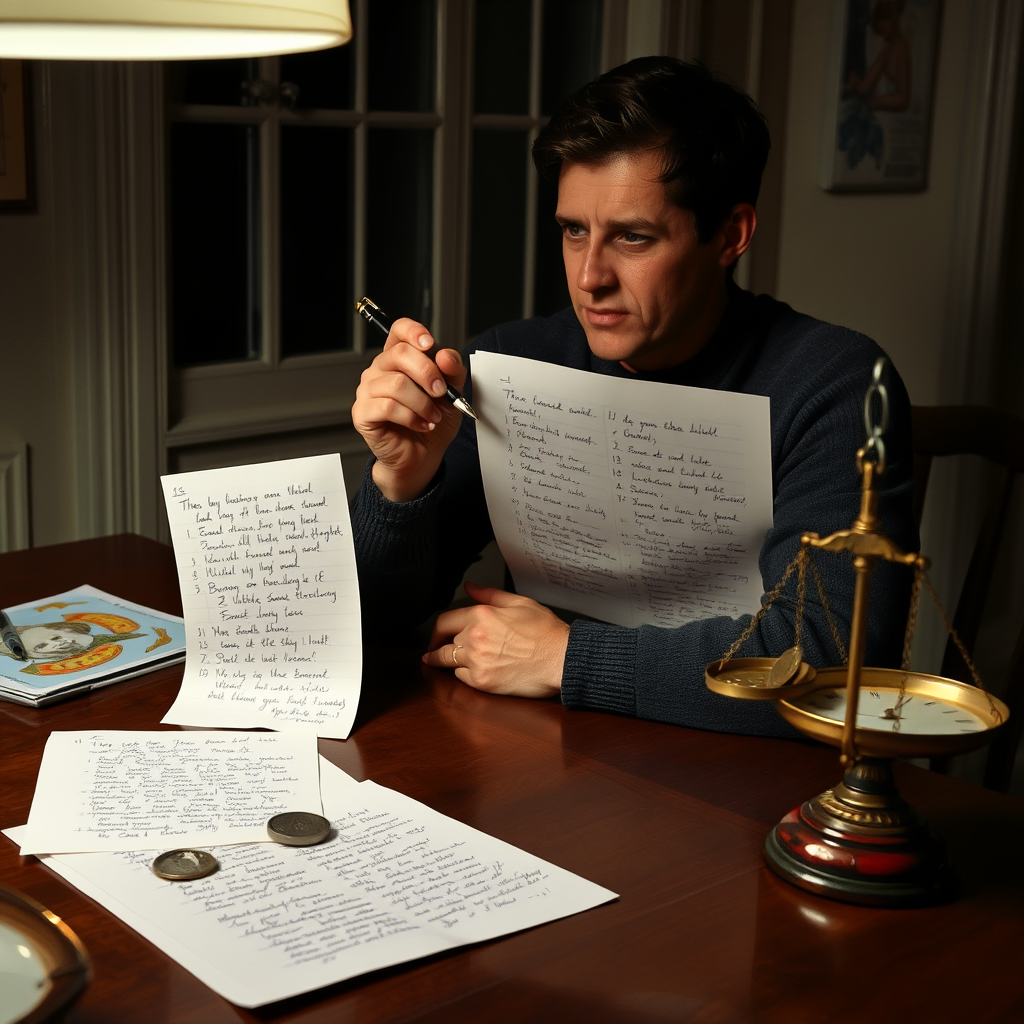
to carefully compare the good and bad sides of something before deciding
She had to weigh up the risks of the surgery against the alternative of doing nothing.
More examples: We weighed up our options for days before choosing the treatment. • It's hard to weigh up the costs and benefits when emotions run high. • Take your time — weigh up what matters most to you.
Common collocations: weigh up the pros and cons, weigh up your options, weigh the risks against
Word family: weigh up (phrasal verb), weighing (noun, 'the weighing of options'), weigh (verb)
Synonyms: consider, evaluate, balance
Antonyms: decide instantly, act on impulse
Related concepts: trade-offs, judgement, deliberation
Contexts: medical choices, career decisions, purchases
Usage note: Very common in British English; Americans often say 'weigh the options'. Perfect for expressing careful, balanced judgement — much richer than just 'think about'.
slippery slope

a small first step that could lead to worse and worse actions you can't stop
Allowing gene editing for health reasons might be a slippery slope towards designing babies.
More examples: Critics warn it's a slippery slope from screening for disease to screening for height. • Once we let insurers see our genetic data, it's a slippery slope. • Some call that argument a slippery slope fallacy — small steps don't always lead to disaster.
Common collocations: a slippery slope towards, on a slippery slope, the slippery slope argument
Word family: slippery slope (noun phrase), the slippery slope argument/fallacy
Synonyms: dangerous path, point of no return, domino effect
Antonyms: safe boundary, clear limit
Related concepts: ethics, consequences, logical fallacies
Contexts: bioethics debates, politics, policy discussions
Usage note: Extremely common in ethical and political debate. Sophisticated speakers know both uses: warning about real risks, and dismissing weak arguments as 'slippery slope fallacies'. Knowing both makes you sound sharp.
Vocabulary Check
- What does 'triage' mean?
- A machine that helps people breathe
- Deciding who gets help first when there isn't enough help for everyone
- A hospital department for serious cases
- A type of emergency surgery
- Which sentence uses 'fraught' correctly?
- The meeting was fraught with tension from start to finish.
- She felt fraught after winning the lottery.
- The fraught doctor examined the patient quickly.
- We had a fraught of problems last year.
- In which situation would you use 'unprecedented'?
- Describing your usual morning routine
- Describing something that has never happened before in history
- Describing something that happens every year
- Describing a small, unimportant change
- What does it mean to 'weigh up' your options?
- To measure how heavy your choices are
- To write your options on paper
- To carefully compare the advantages and disadvantages before deciding
- To ask other people what they think
- When someone warns that a decision is a 'slippery slope', what are they saying?
- The decision is physically dangerous
- A small first step might lead to worse and worse actions that are hard to stop
- The decision will definitely be reversed later
- The decision is easy and obvious
Idioms & Phrasal Verbs
knock out
to stop something, like power or a machine, from working
A single lightning strike knocked out the whole hospital's computer system for hours.
Usage note: You can split it: 'the storm knocked the power out' is also correct. · Right: knocked the power out · Avoid: knocked out the power out
Usage note: The picture is a punch that puts someone 'out' cold — the storm hits the power and it goes dead.
dodge
to avoid a difficult question or duty instead of facing it
Politicians dodge the hard questions about healthcare costs every election season.
Usage note: The picture is ducking sideways so a ball flies past you — you don't block the question, you just get out of its way.
Usage note: Often used with 'the question' or 'the issue': 'stop dodging the question' is a very natural way to push someone to answer.
file a complaint
to officially record a protest with an organization or authority
After the mix-up with her test results, she filed a complaint with the hospital's patient office.
Usage note: 'File' here comes from putting a document into an official file — it signals something formal and written, not just complaining to a friend.
Usage note: You file a complaint *with* or *against* an organization: 'file a complaint against the clinic'.
draw the line
to set a clear limit on what you will accept or do
I'd edit my genes to avoid disease, but I draw the line at choosing my child's eye colour.
Usage note: The picture is literally drawing a line on the ground and saying 'no further' — perfect for ethics debates, where you decide exactly where your limit sits.
Usage note: Common patterns: 'draw the line at something' and 'where do you draw the line?' — both great for discussions like today's.
Language Practice: Talking About Hard Choices
Practice expressing ideas about ethical dilemmas — agreeing, conceding and challenging.
- Conceding a point before disagreeing
- Emerging: I see the point about ___, but I still think ___. — I see the point about saving the most lives, but I still think age shouldn't decide.
- Developing: Granted, ___ is a real concern, but that doesn't mean we should ___. — Granted, saving the younger patient is a real concern, but that doesn't mean we should write age into official policy.
- Expanding: While I'd be the first to admit that ___, it's not so much ___ as ___ that worries me. — While I'd be the first to admit that triage saves lives, it's not so much the principle as the lack of oversight that worries me.
- Expressing a qualified personal stance
- Emerging: On balance, I'd say ___, although ___. — On balance, I'd say the younger patient should get the machine, although it feels cruel.
- Developing: My instinct is to ___, but I'd want to weigh up ___ before committing to that. — My instinct is to trust the doctor's judgement, but I'd want to weigh up how accountable they'd be afterwards.
- Expanding: Were it not for ___, I'd argue ___ without hesitation; as it stands, I'm torn between ___ and ___. — Were it not for the risk of abuse, I'd argue for open access to genetic screening without hesitation; as it stands, I'm torn between privacy and prevention.
- Warning about consequences
- Emerging: If we allow ___, it could be a slippery slope towards ___. — If we allow editing for height, it could be a slippery slope towards designer babies.
- Developing: The danger is that once we ___ , there's no obvious place to draw the line. — The danger is that once we accept ranking lives by age, there's no obvious place to draw the line.
- Expanding: I'm wary of the slippery slope argument, but in this case the first step genuinely does make the second one easier, because ___. — I'm wary of the slippery slope argument, but in this case the first step genuinely does make the second one easier, because each approval normalises the next.
Fill in the Blanks
When the first lab announced it had edited the genes of human embryos, the reaction was _____ in its intensity. Scientists, religious leaders and politicians all agreed on one thing: this was _____ with danger. Critics warned that allowing it for medical reasons might be a _____ towards parents designing their children's eye colour or intelligence. Supporters had to _____ the chance of wiping out inherited disease against the risk of abuse. In the end, most countries banned the research outright, though a few set up special committees to _____ which rare genetic conditions might justify an exception.
Word bank: triage, fraught, unprecedented, weigh up, slippery slope
Sentence Unscramble
- the / committee / had / to / weigh / up / the / risks / before / approving / the / trial / .
- her / decision / was / fraught / with / doubt / from / the / very / start / .
- doctors / used / triage / to / decide / who / needed / help / first / .
Discussion Questions
In the reading, Dr. Osei had ninety seconds to choose between two patients for one ventilator. Most of us will never face that exact moment, but we all make smaller versions of the same choice — who gets our time, money and attention when there isn't enough to go around.
Have you ever had to choose between two people or two things when you couldn't do both? How did you decide — and did you stand by it afterwards?
Gene editing can now technically prevent inherited diseases like cystic fibrosis. Some countries allow it for serious conditions; others ban it completely. The technology is moving faster than the rules, and every year the line moves a little further.
If a safe treatment could remove a serious disease from your future children's genes, would you do it? Where would you personally draw the line?
Hospitals are starting to use algorithms to help decide who gets scanned first, who gets a bed, even who gets flagged for urgent care. The software is fast and consistent, but it learns from past data — including past biases — and it can't explain itself in human terms.
Would you be comfortable with an algorithm helping decide your medical priority? What would it take to convince you it was fair?
During a crisis, some countries asked elderly patients to give up ventilators for younger ones, and some nursing homes quietly rationed care. It sparked fierce debate about whether age should ever count against you — and who gets to make that call.
Do you think age should play any role in deciding who gets scarce medical treatment? Why or why not?
Pharmaceutical companies sometimes test new drugs in poorer countries, where people are desperate for any treatment and regulations are looser. The trials can bring medicine and money to places that need both — but the participants may never afford the finished drug.
Is it fair to run medical trials in poorer countries if the people there might never benefit from the results? What would you change?
Knowledge Check
- Which word describes the process of deciding who gets medical help first when resources are limited?
- Triage
- Precedent
- Consent
- Prognosis
- True or false: 'fraught' usually describes a situation full of tension or risk.
- True
- False
- Which phrase means 'to carefully compare pros and cons before deciding'?
- Slippery slope
- Set a precedent
- Weigh up
- Sort out
- True or false: calling an argument a 'slippery slope' always means you agree with it.
- True
- False
- If something is 'unprecedented', it is...
- happening regularly
- never having happened before
- easy to predict
- against the law
- If a politician 'dodges' a question, what is she doing?
- Answering it quickly and honestly
- Writing the question down for later
- Avoiding it instead of facing it
- Asking the question back to the journalist
Free to use with your students: Free to teach, screen-share, print and share with your students, with a credit to PlanWise ESL. Please do not sell it or republish it as your own. What you can do with free lessons.