Written in the Stars? Exploring Astrology
About this lesson: This is a C1 (Advanced) ESL lesson in the General English category. It takes about 60 minutes. It includes 5 vocabulary words, a reading text, comprehension questions, discussion questions and speaking patterns. Suits one-to-one or small-group online classes. Free to open and teach with no login, and it prints as a PDF.
Print just the discussion questions
How this lesson is built
This is a complete conversation lesson built on a scientific pedagogical formula, not a generic worksheet: recall prior topic vocabulary, pre-teach the new words in depth, read in context, practise active recall with flashcards and synonyms/antonyms, build accuracy with exercises, and finish with deep discussion.
- Warm-up: Discussion questions that connect the topic to the student’s own life and recall vocabulary they already know about the subject.
- Reading: A text written for this CEFR level that uses each new word two or three times in context, giving the student something meaningful to react to.
- Key vocabulary: 5 new words, pre-taught before the reading with a definition, pronunciation guide, example sentences and a picture, plus word families, usage notes, recall flashcards and synonyms/antonyms, giving a solid grounding before reading.
- Comprehension: 5 questions that check the new words: retrieval practice, not rereading.
- Sentence frames: 3 speaking patterns, each at three levels of support (emerging, developing, expanding) with model answers—especially helpful scaffolding for beginners and less confident speakers.
- Gap-fill: The new words again, in a shuffled order, so the student recalls them by meaning in context.
- Sentence unscramble: Natural sentences with the new words to put back in order, reinforcing grammar and collocation.
- Discussion: 5 open questions designed to talk deeply about the subject while actively using the lesson’s target vocabulary: the heart of a conversation lesson.
- Quiz: A short retrieval check that brings every new word back once more.
Unlike a generic worksheet, the new words are taught before the reading and met again in the activities, the speaking is supported at three levels and most of the time goes on the student talking. Teachers who use PlanWise ESL also get per-student vocabulary tracking (recycling earlier words into future readings and questions), a private learner dashboard with flashcards and custom lesson creation, and a downloadable study PDF.
Warm-up Activity
Students share their experiences with astrology and discuss why it remains popular despite scientific criticism.
- Do you know your zodiac sign? Do you ever read your horoscope?
- Why do you think astrology is so popular on social media today?
- Have you ever made a decision based on astrology? What happened?
- Do you think astrology is harmless fun or potentially misleading?
- What is the difference between believing in astrology and simply enjoying it?
Reading Text: The Enduring Appeal of Astrology
A short analytical text exploring why astrology thrives in the modern age, despite lacking scientific support.
For thousands of years, humans have looked up at celestial bodies — the sun, the moon, and the planets — and searched for meaning in their movements. Ancient Babylonians mapped the stars with remarkable precision, believing that the heavens mirrored events on Earth. That ancient impulse has never truly disappeared; it has simply adapted to new eras and new technologies.
Today, astrology has undergone a striking revival, particularly among younger demographics. Daily horoscope apps send personalized predictions to millions of phones, and zodiac memes circulate endlessly online. Interestingly, many consumers of this content describe themselves as skeptics. They do not literally believe that Mercury's position determines their love life, yet they keep reading anyway.
Scientists, however, remain firmly unconvinced. Astrology is widely classified as a pseudoscience: it borrows the language and appearance of science — charts, calculations, precise terminology — without following its methods. Controlled studies have repeatedly shown that horoscope predictions perform no better than random guessing. For critics, this is decisive evidence.
Yet defenders of astrology rarely claim it is scientific. They argue it functions more like a mirror than a map: a vocabulary for self-reflection. Reading a horoscope, they say, prompts people to consider questions about their relationships, careers, and emotions that they might otherwise avoid. In this sense, its value may be psychological rather than predictive.
Perhaps the real question is not whether the stars influence our fate, but why we find comfort in believing they might. In an unpredictable world, even a fictional sense of order can reduce anxiety. Whether one treats astrology as wisdom, entertainment, or pure superstition, its persistence reveals something profound about the human need for meaning.
Key Vocabulary
celestial
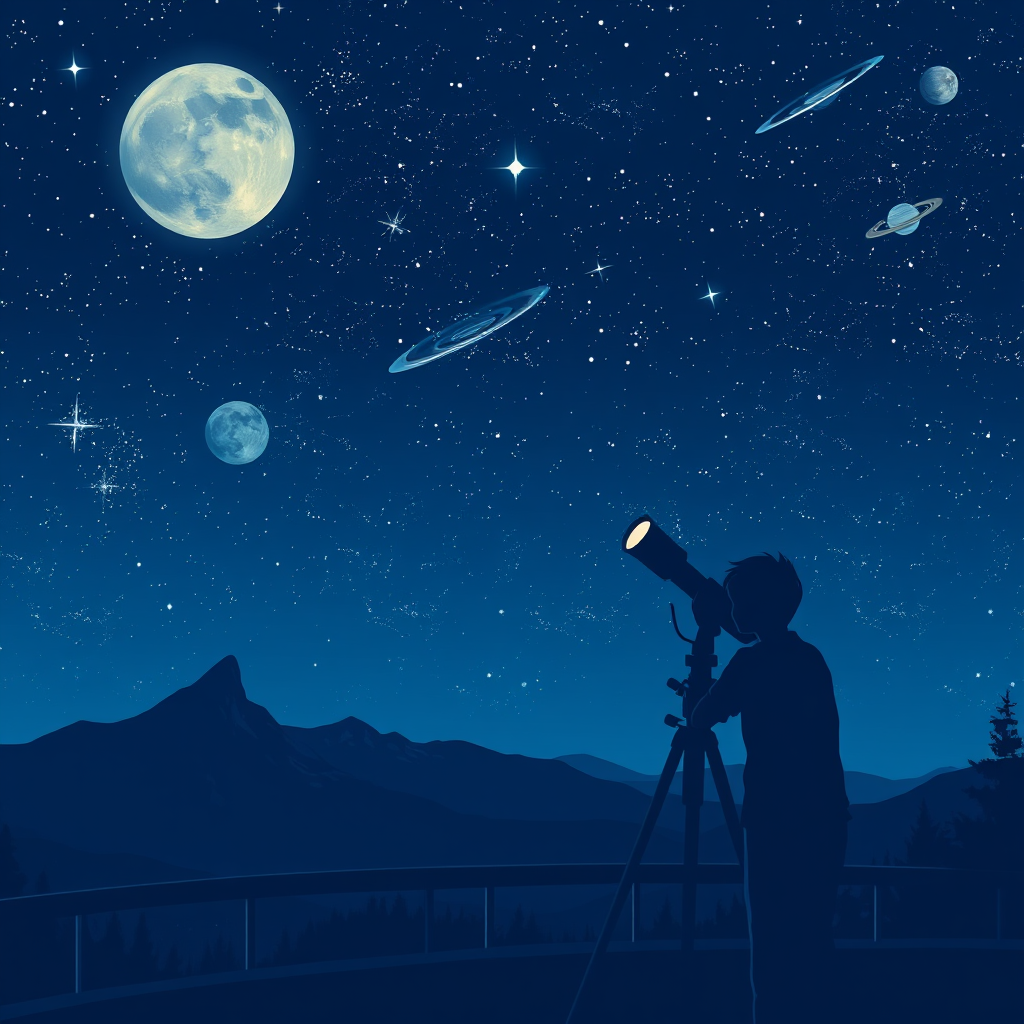
Relating to the sky or objects in space, such as stars, planets, and the moon.
The telescope captured stunning images of celestial bodies far beyond our galaxy.
More examples: Ancient sailors navigated using celestial navigation techniques. • A meteor shower is a beautiful celestial event. • She finds celestial phenomena far more fascinating than celebrity gossip.
Common collocations: celestial bodies, celestial events, celestial navigation
Word family: celestial (adj), celestially (adv), celestial body (noun phrase)
Synonyms: heavenly, astronomical, stellar
Antonyms: terrestrial, earthly
Related concepts: astronomy, cosmos, orbit
Contexts: science, mythology, poetry
Usage note: Formal or scientific register. Common in astronomy, mythology, and poetic writing. Do not confuse with 'celestial' used informally to mean 'heavenly' in religious contexts.
horoscope

A prediction of a person's future based on the positions of stars and planets at their birth, often published daily for each zodiac sign.
She reads her horoscope every morning over coffee, purely for entertainment.
More examples: The newspaper's horoscope column has a devoted following. • His horoscope predicted a career breakthrough this month. • Horoscope apps use algorithms to generate personalized readings.
Common collocations: read your horoscope, daily horoscope, check the horoscope
Word family: horoscope (noun), horoscopes (plural)
Synonyms: prediction, forecast, reading
Antonyms: fact, reality
Related concepts: zodiac, astrology, fortune-telling
Contexts: media, entertainment, daily routines
Usage note: Countable noun. Often paired with verbs of routine (check, read, glance at). Frequently modified by 'daily' or 'weekly'.
skeptic
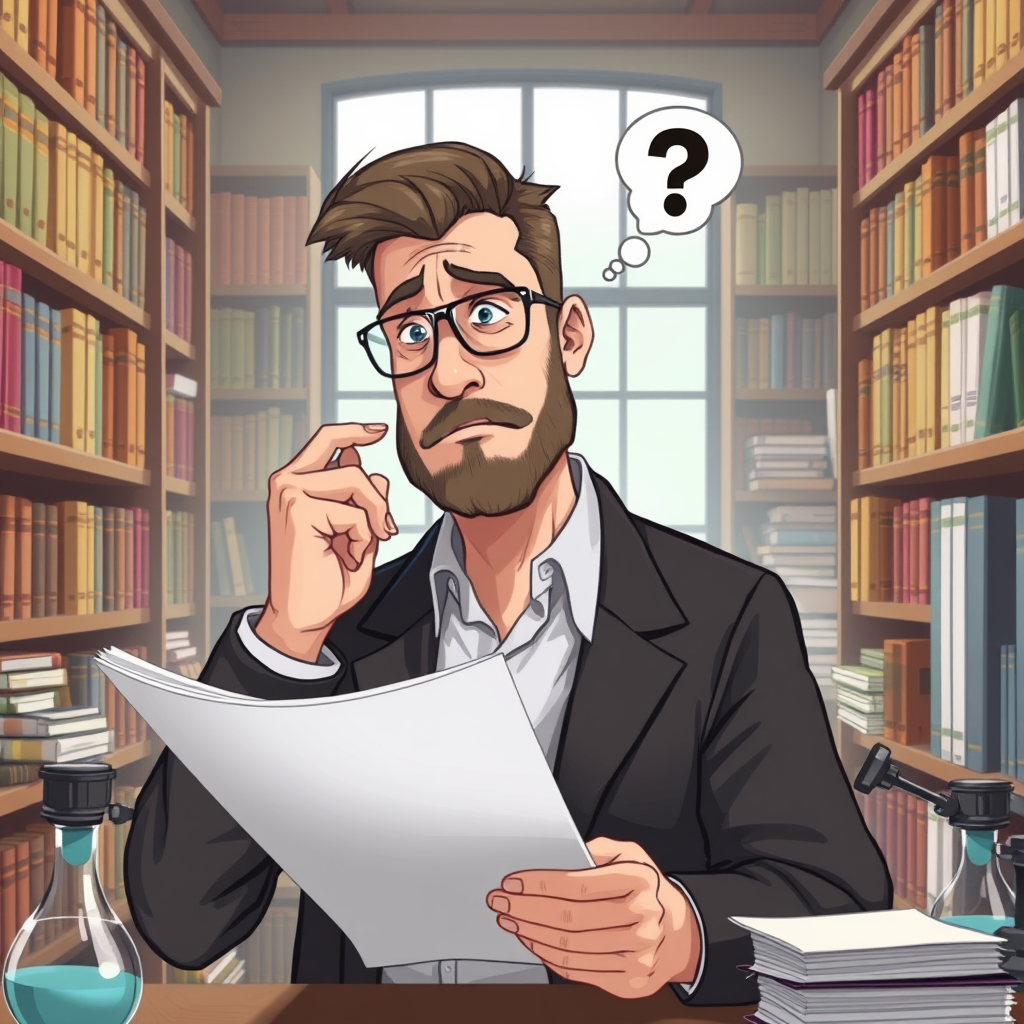
A person who doubts or questions claims until they see convincing evidence.
As a lifelong skeptic, he demanded peer-reviewed data before accepting the claim.
More examples: Skeptics pointed out the flaws in the study's methodology. • Even the most hardened skeptic was impressed by the results. • She remained a skeptic about the new health trend.
Common collocations: a hardened skeptic, remain skeptical, healthy skepticism
Word family: skeptic (noun), skeptical (adj), skepticism (noun), skeptically (adv)
Synonyms: doubter, cynic, questioner
Antonyms: believer, devotee
Related concepts: critical thinking, evidence, rationality
Contexts: science, debate, media literacy
Usage note: Neutral or positive connotation in English — being a skeptic implies critical thinking, not negativity. British spelling: 'sceptic'.
superstition

A belief or practice based on fear or the idea that certain actions cause luck, without any rational basis.
Avoiding walking under ladders is a common superstition in many cultures.
More examples: Knocking on wood is a superstition meant to protect good fortune. • The superstition about black cats varies dramatically between cultures. • Athletes are notorious for their pre-game superstitions.
Common collocations: a common superstition, old superstitions, dismiss as superstition
Word family: superstition (noun), superstitious (adj), superstitiously (adv)
Synonyms: folk belief, old wives' tale, myth
Antonyms: science, rationality
Related concepts: luck, ritual, tradition
Contexts: culture, sports, family traditions
Usage note: Can sound dismissive, so use carefully when discussing others' beliefs. Plural 'superstitions' refers to multiple such beliefs. Culturally sensitive topic — frame respectfully.
pseudoscience

A set of beliefs or practices that claims to be scientific but does not follow proper scientific methods or evidence.
Critics argue that astrology is a pseudoscience because its claims cannot be tested.
More examples: The documentary was criticized for promoting pseudoscience. • Learning to spot pseudoscience is an essential media literacy skill. • Pseudoscience often mimics scientific language to gain credibility.
Common collocations: pure pseudoscience, dismiss as pseudoscience, promote pseudoscience
Word family: pseudoscience (noun), pseudoscientific (adj)
Synonyms: quackery, junk science, false science
Antonyms: science, empirical research
Related concepts: falsifiability, evidence, critical thinking
Contexts: science education, media literacy, debate
Usage note: Strongly critical term — labeling something pseudoscience is a serious claim. Use when discussing claims that mimic science without evidence. Related: 'quackery', 'junk science'.
Vocabulary Check
- What does 'celestial' mean?
- Relating to the sky and objects in space
- Extremely famous or popular
- Related to ancient traditions
- Extremely precise or careful
- In which situation would you most likely use the word 'pseudoscience'?
- Describing a well-designed laboratory experiment
- Criticizing a practice that looks scientific but lacks evidence
- Praising a doctor's successful treatment
- Explaining how a telescope works
- What does 'skeptic' mean?
- Someone who believes everything they read
- Someone who studies the stars professionally
- Someone who doubts claims until they see evidence
- Someone who follows traditions closely
- Which sentence uses 'superstition' correctly?
- The superstition of the telescope revealed distant galaxies.
- Her superstition in the data made her a careful researcher.
- Knocking on wood for luck is a well-known superstition.
- He used superstition to calculate the planet's orbit.
- What is a 'horoscope'?
- A scientific instrument for viewing stars
- A prediction based on the positions of stars and planets
- A type of ancient calendar
- A mathematical model of planetary motion
Language Practice for astrology
Practice expressing and defending nuanced opinions about astrology using sophisticated structures.
- Conceding and countering an argument
- Emerging: I think astrology is ___, but I understand why people enjoy it. — I think astrology is silly, but I understand why people enjoy it.
- Developing: While astrology is arguably a pseudoscience, it may still serve a purpose as ___. — While astrology is arguably a pseudoscience, it may still serve a purpose as a tool for self-reflection.
- Expanding: Granted, skeptics are right to point out that ___, yet dismissing astrology entirely overlooks its ___ function, which arguably explains its enduring appeal. — Granted, skeptics are right to point out that horoscope predictions perform no better than chance, yet dismissing astrology entirely overlooks its psychological function, which arguably explains its enduring appeal.
- Speculating about causes and effects
- Emerging: People might believe in astrology because ___. — People might believe in astrology because it gives them comfort.
- Developing: The popularity of horoscopes could stem from ___, particularly among people who ___. — The popularity of horoscopes could stem from a desire for certainty, particularly among people who feel anxious about the future.
- Expanding: The resurgence of astrology might be accounted for by a combination of factors: ___ on one hand, and ___ on the other, which together suggest that ___. — The resurgence of astrology might be accounted for by a combination of factors: digital personalization on one hand, and widespread anxiety about the future on the other, which together suggest that people crave both identity and reassurance.
- Evaluating evidence and drawing conclusions
- Emerging: The evidence for astrology is ___, so I ___ it. — The evidence for astrology is weak, so I doubt it.
- Developing: Given that studies show horoscopes perform no better than chance, the claim that stars shape our fate seems ___. — Given that studies show horoscopes perform no better than chance, the claim that stars shape our fate seems highly questionable.
- Expanding: Although the empirical case against astrology is decisive, the more nuanced conclusion is that its value lies not in prediction but in ___, a distinction that skeptics and believers alike would benefit from recognizing. — Although the empirical case against astrology is decisive, the more nuanced conclusion is that its value lies not in prediction but in prompting self-reflection, a distinction that skeptics and believers alike would benefit from recognizing.
Fill in the Blanks
My aunt has always been a firm believer in astrology. Every morning, she checks her _____ before making any important decision, and she refuses to schedule meetings when Mercury is in retrograde. As a _____, I used to tease her gently, pointing out that astrology is widely regarded as a _____ whose predictions cannot be tested. She would simply smile and remind me that _____ runs deep in every culture — even mine, since I knock on wood without thinking. Last summer, she took me stargazing and showed me how ancient navigators read _____ patterns to cross entire oceans. Watching the night sky together, I began to understand that her interest was never really about predicting the future; it was about feeling connected to something vast and ancient.
Word bank: horoscope, skeptic, pseudoscience, superstition, celestial
Sentence Unscramble
- Although / many / people / read / their / horoscope / daily, / few / would / call / themselves / true / believers.
- Skeptics / argue / that / astrology / is / simply / a / pseudoscience / dressed / up / in / impressive / language.
- Ancient / civilizations / tracked / celestial / movements / with / remarkable / precision, / blending / science / and / superstition.
Discussion Questions
Astrology has existed for millennia, yet its popularity fluctuates dramatically across generations. Today, horoscope apps and zodiac content dominate social media, especially among people under thirty. Some see this as a harmless trend; others worry it signals a retreat from rational thinking.
Why do you think astrology appeals so strongly to younger generations, and does this trend concern you or amuse you?
Scientists classify astrology as a pseudoscience because its claims cannot be tested or falsified. Controlled studies have found that horoscope predictions are no more accurate than random guesses. Yet millions of people continue to consult their horoscopes every day.
If astrology demonstrably does not predict the future, can it still have genuine value? What kind of value might that be?
Nearly every culture has its own superstitions: unlucky numbers, lucky charms, rituals before exams or matches. These beliefs vary enormously across societies, yet the underlying psychology — seeking control over uncertainty — appears universal.
What superstitions exist in your culture, and why do you think humans across all societies develop such beliefs?
Critics argue that pseudoscience can cause real harm when people make medical, financial, or life decisions based on unverified claims. Defenders respond that reading a horoscope is no different from reading a fortune cookie — light entertainment, not guidance.
Where should society draw the line between harmless entertainment and dangerous misinformation?
The reading suggests that astrology functions as a mirror rather than a map — a vocabulary for self-reflection rather than a predictive tool. Some psychologists note that vague, flattering descriptions feel personally accurate to almost anyone, a phenomenon known as the Barnum effect.
Do you think people use astrology to understand themselves, to avoid understanding themselves, or something in between?
Knowledge Check
- Which word describes a belief system that imitates science but lacks scientific methods?
- Superstition
- Pseudoscience
- Horoscope
- Celestial
- True or false: Being a 'skeptic' is generally seen as a negative trait in English.
- True
- False
- Which phrase is a natural collocation with 'celestial'?
- celestial cooking
- celestial bodies
- celestial paperwork
- celestial traffic
- A 'horoscope' is best described as:
- A telescope for viewing planets
- A prediction based on astrological positions
- A scientific study of tides
- A type of ancient map
- True or false: 'Superstitious' is the adjective form of 'superstition'.
- True
- False
Free to use with your students: Free to teach, screen-share, print and share with your students, with a credit to PlanWise ESL. Please do not sell it or republish it as your own. What you can do with free lessons.