Scientific Progress vs. Moral Responsibility
About this lesson: This is a C2 (Proficiency) ESL lesson in the General English category. It takes about 60 minutes. It includes 5 vocabulary words, 4 idioms and phrasal verbs, a reading text, comprehension questions, discussion questions and speaking patterns. Suits one-to-one or small-group online classes. Free to open and teach with no login, and it prints as a PDF.
Print just the discussion questions
How this lesson is built
This is a complete conversation lesson built on a scientific pedagogical formula, not a generic worksheet: recall prior topic vocabulary, pre-teach the new words in depth, read in context, practise active recall with flashcards and synonyms/antonyms, build accuracy with exercises, and finish with deep discussion.
- Warm-up: Discussion questions that connect the topic to the student’s own life and recall vocabulary they already know about the subject.
- Reading: A text written for this CEFR level that uses each new word two or three times in context, giving the student something meaningful to react to.
- Key vocabulary: 5 new words, pre-taught before the reading with a definition, pronunciation guide, example sentences and a picture, plus word families, usage notes, recall flashcards and synonyms/antonyms, giving a solid grounding before reading.
- Comprehension: 5 questions that check the new words: retrieval practice, not rereading.
- Idioms and phrasal verbs: Expressions taken from the reading, each with its meaning, an example and a speaking question.
- Sentence frames: 3 speaking patterns, each at three levels of support (emerging, developing, expanding) with model answers—especially helpful scaffolding for beginners and less confident speakers.
- Gap-fill: The new words again, in a shuffled order, so the student recalls them by meaning in context.
- Sentence unscramble: Natural sentences with the new words to put back in order, reinforcing grammar and collocation.
- Discussion: 5 open questions designed to talk deeply about the subject while actively using the lesson’s target vocabulary: the heart of a conversation lesson.
- Quiz: A short retrieval check that brings every new word back once more.
Unlike a generic worksheet, the new words are taught before the reading and met again in the activities, the speaking is supported at three levels and most of the time goes on the student talking. Teachers who use PlanWise ESL also get per-student vocabulary tracking (recycling earlier words into future readings and questions), a private learner dashboard with flashcards and custom lesson creation, and a downloadable study PDF.
Warm-up: Where Do You Draw the Line?
Look at these statements about science and ethics and say whether you agree, disagree, or aren't sure — and why.
- If a technology can be invented, does that mean it should be?
- Would you edit your own genes if it guaranteed a longer, healthier life?
- Should scientists ever keep a discovery secret for moral reasons?
- Who do you trust more to make ethical decisions: scientists, politicians, or ordinary people?
- Has science ever gone too far, in your opinion? Where would you draw the line?
Reading Text: The Lab and the Conscience
A short opinion piece about whether science should police itself — or be policed.
In 2018, a Chinese researcher announced that he had edited the genes of human babies. The reaction was swift and furious. Colleagues who had once worked alongside him distanced themselves, and governments rushed to impose a moratorium on similar experiments. What struck many observers wasn't the science itself, which had been creeping closer for years, but the sense that a line had been crossed in broad daylight.
Defenders of unfettered research have a familiar argument: knowledge is neutral, and slowing it down only hands the advantage to someone less scrupulous. It's a seductive line of reasoning. After all, the genie doesn't go back in the bottle, so why pretend otherwise? But critics hear something else in that argument — a note of hubris, the quiet assumption that because we can do something, we're entitled to.
The truth is that most ethical questions in science are fraught with compromise. Gene editing could eliminate inherited diseases; it could also open the door to designer children. Artificial intelligence can diagnose cancer earlier than any doctor; the same systems can be turned to surveillance. The benefits and the dangers aren't rivals — they're twins.
Interestingly, much of the restraint in science is tacit rather than written down. Researchers inherit a sense of what one simply doesn't do, passed from supervisor to student like an unwritten family rule. When that tacit understanding breaks down, formal bans tend to follow — clumsy, late, but sometimes necessary.
So who should hold the pen when the rules are written? Scientists claim the expertise, politicians claim the mandate, and the public — the ones who live with the consequences — often get a referendum nobody organised. Perhaps the honest answer is that no one group deserves unfettered authority over the future, and that discomfort is the point.
Key Vocabulary
unfettered

completely free, not controlled or restricted by anyone
The startup enjoyed unfettered access to its users' personal data.
More examples: Unfettered capitalism tends to produce spectacular booms and spectacular crashes. • She gave the designers unfettered freedom to rethink the product. • I'd love a week of unfettered free time — no emails, no meetings.
Common collocations: unfettered access, unfettered freedom, unfettered capitalism
Word family: fetter (noun/verb), unfettered (adjective)
Synonyms: unrestricted, unchecked, unbridled
Antonyms: restricted, constrained, regulated
Related concepts: deregulation, free rein, laissez-faire
Contexts: business and markets, scientific research, political debate
Usage note: Usually describes abstract freedom — access, power, markets, expression. Slightly formal or literary; often carries a hint of warning, as if the freedom might be dangerous.
fraught
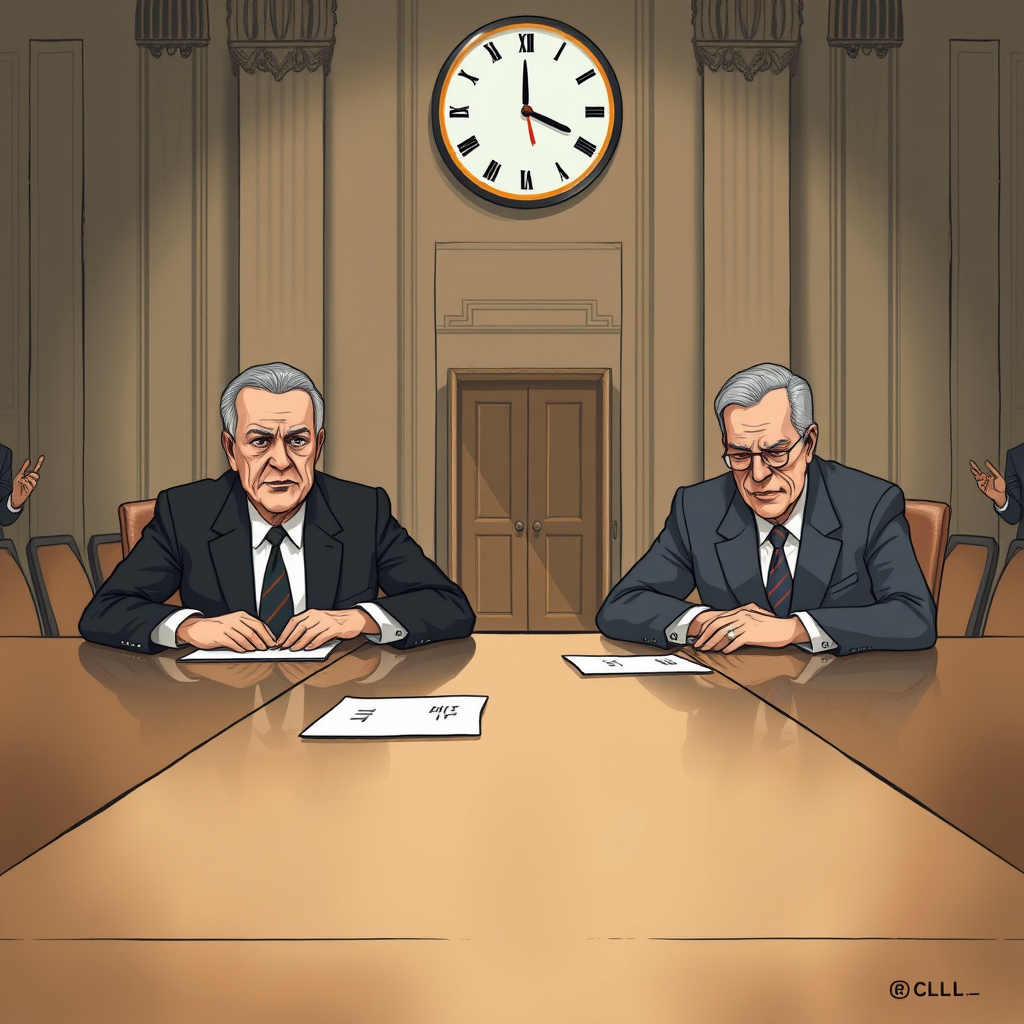
full of tension, risk or difficulty; often used with 'with'
Negotiations over the new climate treaty were fraught from the start.
More examples: The relationship between celebrity and privacy is fraught with contradiction. • Bringing up money at a family dinner is always a fraught business. • Their peace talks proved fraught with misunderstandings on both sides.
Common collocations: fraught with danger, fraught with difficulty, a fraught relationship
Word family: freight (noun), fraught (adjective)
Synonyms: tense, delicate, problematic
Antonyms: relaxed, harmonious, untroubled
Related concepts: diplomacy, negotiation, moral dilemmas
Contexts: politics, family relationships, business negotiations
Usage note: Very common in quality journalism. Often followed by 'with' plus a noun of trouble, or used alone to mean 'tense and delicate'. Describes situations and relationships, not objects.
tacit

understood or agreed without being said directly
There was a tacit agreement never to mention her first marriage.
More examples: His silence was taken as tacit approval of the plan. • The two rivals maintained a tacit truce at family gatherings. • Senior staff enjoy tacit privileges that never appear in any contract.
Common collocations: tacit approval, tacit agreement, tacit understanding
Word family: tacit (adjective), tacitly (adverb), taciturn (adjective)
Synonyms: implicit, unspoken, implied
Antonyms: explicit, stated, formal
Related concepts: social norms, consent, professional etiquette
Contexts: workplace culture, diplomacy, family dynamics
Usage note: Almost always describes agreement, approval, knowledge or rules that exist without being stated. Pairs beautifully with 'consent', 'assumption' and 'knowledge'.
hubris

excessive pride or confidence that leads to a downfall
The company's collapse was pure hubris — they ignored every warning sign.
More examples: It took a certain hubris to launch the product without testing it. • History is full of leaders undone by hubris at the height of their power. • There's real hubris in believing technology can fix every human problem.
Common collocations: sheer hubris, undone by hubris, a hubris of power
Word family: hubris (noun), hubristic (adjective)
Synonyms: arrogance, overconfidence, conceit
Antonyms: humility, modesty, self-doubt
Related concepts: Greek tragedy, Icarus, corporate failure
Contexts: business, politics, scientific ambition
Usage note: Always negative and always about overconfidence that invites disaster. Strong literary flavour — perfect for discussing scientists, CEOs and politicians. Uncountable.
moratorium
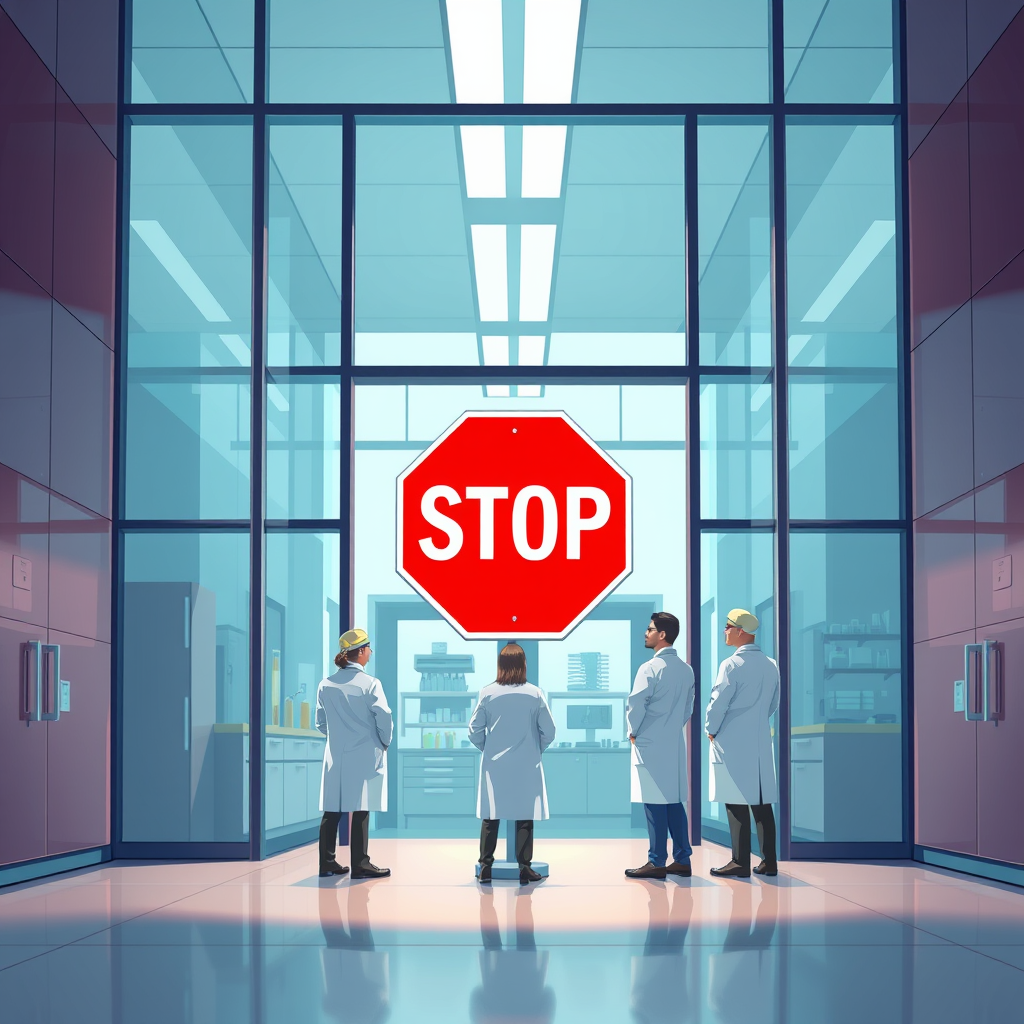
an official temporary stop on an activity
The government declared a moratorium on deep-sea mining for five years.
More examples: A global moratorium on whaling has been in place since the 1980s. • The university called for a moratorium on the controversial experiments. • The bank announced a moratorium on new loans until the audit finished.
Common collocations: declare/impose a moratorium, a moratorium on something, lift a moratorium
Word family: moratorium (noun), moratoria (plural)
Synonyms: suspension, freeze, halt
Antonyms: resumption, approval, go-ahead
Related concepts: regulation, precautionary principle, public debate
Contexts: genetic research, environmental policy, finance
Usage note: Key idea: temporary, official and deliberate — not a permanent ban. Common in news about science, environment and finance. Always followed by 'on' plus the activity.
Vocabulary Check
- What does 'unfettered' mean?
- Completely free from control or limits
- Carefully supervised
- Officially banned
- Funded by the government
- Which situation would best be described as 'fraught'?
- A relaxing holiday by the sea
- A tense negotiation where anything could go wrong
- A simple maths exercise
- A well-organised conference
- What does 'tacit' mean?
- Written down formally
- Spoken loudly in public
- Understood without being said
- Completely rejected
- In which situation would you use 'hubris'?
- A team quietly celebrates a small win
- A CEO is so overconfident that he ignores every warning and ruins the company
- A student politely asks for help
- A scientist admits she was wrong
- What is a 'moratorium'?
- A permanent worldwide ban
- A temporary official pause on an activity
- A scientific breakthrough
- A government subsidy
Idioms & Phrasal Verbs
distance yourself from
To make it clear you are not connected with someone or something risky or shameful
After the scandal broke, the company quickly distanced itself from its former director.
Usage note: Reflexive: you distance *yourself* from something — you don't distance something else. · Right: She distanced herself from the project. · Avoid: She distanced the project.
Usage note: Often used in news about politics and business when someone quietly backs away from trouble.
creep closer
To move forward slowly and quietly, step by step, often without anyone noticing
Self-driving cars have been creeping closer to everyday reality for a decade now.
Usage note: 'Creep' adds the idea of slow, almost sneaky progress — nobody announces it, it just happens.
Usage note: You can also creep up on someone: get near them unnoticed.
the genie doesn't go back in the bottle
Once something exists or is known, you can't undo it — no use trying
People complain about smartphones, but the genie doesn't go back in the bottle — we just have to manage them.
Usage note: Picture Aladdin's lamp: once the genie is out, it won't squeeze back in. Used to argue against trying to ban or reverse something.
Usage note: Common in debates about AI, nuclear weapons and social media — very current.
open the door to
To make something new possible, usually something with risks or consequences
That court ruling could open the door to a whole wave of similar lawsuits.
Usage note: Often followed by something you'd rather not see happen — 'open the door to chaos', 'to abuse', 'to copycats'.
Usage note: The opposite image is 'close the door on something' — shut down a possibility for good.
Language Practice: Arguing About Ethics
Practice expressing ideas about scientific progress and moral responsibility.
- Conceding a point before disagreeing
- Emerging: I see why people say ___, but I think ___. — I see why people say science should be free, but I think it needs rules.
- Developing: Granted, ___ — that's a fair point. Still, it doesn't follow that ___. — Granted, slowing research might hand the advantage to less careful countries — that's a fair point. Still, it doesn't follow that anything goes.
- Expanding: While I'd be the first to admit that ___, the trouble is that this argument quietly assumes ___, which is exactly what we should be questioning. — While I'd be the first to admit that innovation has saved millions of lives, the trouble is that this argument quietly assumes all innovation is equally benign, which is exactly what we should be questioning.
- Speculating about future consequences
- Emerging: If we allow ___, we might get ___. — If we allow designer babies, we might get a society that values some lives more.
- Developing: The moment we cross that line, there's no telling where it ends — we could easily end up with ___. — The moment we cross that line, there's no telling where it ends — we could easily end up with a two-tier genetic class system.
- Expanding: It's not the first step that worries me so much as the tacit precedent it sets: once ___ becomes normal, refusing ___ starts to look like ___ rather than a choice. — It's not the first step that worries me so much as the tacit precedent it sets: once editing out disease becomes normal, refusing to edit starts to look like negligence rather than a choice.
- Proposing a balanced solution
- Emerging: Maybe the best answer is to ___ before ___. — Maybe the best answer is to make strict rules before allowing the experiments.
- Developing: A middle path might be to impose a moratorium on ___ while we work out ___. — A middle path might be to impose a moratorium on human gene editing while we work out international rules.
- Expanding: What I'd argue for isn't unfettered freedom nor a blanket ban, but something in between: ___ — provided, and this is the crucial proviso, that ___ stays genuinely accountable to the public. — What I'd argue for isn't unfettered freedom nor a blanket ban, but something in between: independent ethics boards with real teeth — provided, and this is the crucial proviso, that their decisions stay genuinely accountable to the public.
Fill in the Blanks
When the first self-driving car killed a pedestrian in Arizona, the public debate quickly became _____ with anger and confusion. The company had enjoyed years of _____ access to public roads, testing its technology with minimal oversight, and critics argued that this amounted to corporate _____ — a belief that engineers could safely rewrite the rules of the road without asking anyone. Regulators in several countries responded by placing a temporary _____ on similar trials while they worked out what a sensible rulebook should look like. What struck many commentators, though, was how much of the old culture of caution had been _____: engineers had long understood which risks were simply unacceptable, without anyone needing to put it in writing.
Word bank: unfettered, fraught, tacit, hubris, moratorium
Sentence Unscramble
- the / government / imposed / a / moratorium / on / human / gene / editing / experiments
- there / was / a / tacit / agreement / among / the / researchers / never / to / cut / corners
- unfettered / ambition / often / curdles / into / hubris / when / nobody / asks / hard / questions
Discussion Questions
In 1996, the first cloned sheep, Dolly, made headlines worldwide. Many countries immediately restricted cloning research, and several called for a complete moratorium. Yet cloning has since produced medical advances, from lab-grown tissue to preserved endangered species. The same technology sits somewhere between miracle and nightmare, depending on who you ask.
Would you personally want cloning technology used to save endangered animals or grow replacement organs? Where does it stop being acceptable for you?
AI systems can now write essays, diagnose diseases and drive cars. Every country is racing to lead in this field, and companies argue that any regulation will simply hand the advantage to their competitors abroad. Critics reply that this 'race' argument is how every dangerous technology has justified itself throughout history.
Do you buy the argument that if we regulate AI, someone less careful will just get there first? Has that argument ever convinced you about anything?
Most workplaces, families and professions run on tacit rules — things everyone understands but nobody says aloud. In science, these unwritten codes have historically done a lot of the ethical work. Some people worry that as research becomes global, competitive and fast-moving, those quiet understandings are breaking down faster than formal laws can replace them.
Can you think of tacit rules in your own profession or family that would cause chaos if everyone suddenly ignored them? Why do you think unwritten rules are so powerful?
History is full of brilliant people undone by hubris: the Titanic's designers declared it unsinkable, and countless tech founders have promised to 'fix humanity' before crashing spectacularly. Yet the same overconfidence, some argue, is what drives people to attempt things everyone else thought impossible. Without a little arrogance, maybe nothing ambitious ever gets built.
Do you think a certain amount of hubris is actually necessary for great achievements? Tell me about someone — famous or personal — whose confidence impressed or worried you.
Imagine your government announces a five-year moratorium on a controversial new medical technology — say, gene editing — while a panel of experts and citizens debates the rules. Some patients with genetic diseases protest that a pause is a death sentence for them. Others argue that five years of caution is nothing compared to generations of consequences.
If you were on that panel, would you lift the moratorium or extend it? Whose voice should matter most in that decision — patients, scientists, or the general public?
Knowledge Check
- Which phrase correctly completes the sentence: 'The negotiations were ______ with tension.'?
- unfettered
- fraught
- tacit
- moratorium
- True or false: A moratorium is intended to be permanent.
- True
- False
- Which word describes agreement that exists without ever being spoken or written down?
- explicit
- unfettered
- tacit
- fraught
- True or false: 'Hubris' is a positive quality that describes healthy self-confidence.
- True
- False
- Which sentence uses 'unfettered' correctly?
- She felt unfettered after eating a large lunch.
- The company enjoyed unfettered access to customer data for years.
- He gave an unfettered answer of exactly two words.
- The unfettered rain ruined our picnic blanket.
- If someone says 'the genie doesn't go back in the bottle', what do they mean?
- Some things, once done, can't be undone
- Old ideas always come back into fashion
- You should keep dangerous secrets locked away
- Technology improves faster than we expect
Free to use with your students: Free to teach, screen-share, print and share with your students, with a credit to PlanWise ESL. Please do not sell it or republish it as your own. What you can do with free lessons.