Privacy, Surveillance, and Digital Citizenship
About this lesson: This is a C2 (Proficiency) ESL lesson in the General English category. It takes about 60 minutes. It includes 5 vocabulary words, 4 idioms and phrasal verbs, a reading text, comprehension questions, discussion questions and speaking patterns. Suits one-to-one or small-group online classes. Free to open and teach with no login, and it prints as a PDF.
Print just the discussion questions
How this lesson is built
This is a complete conversation lesson built on a scientific pedagogical formula, not a generic worksheet: recall prior topic vocabulary, pre-teach the new words in depth, read in context, practise active recall with flashcards and synonyms/antonyms, build accuracy with exercises, and finish with deep discussion.
- Warm-up: Discussion questions that connect the topic to the student’s own life and recall vocabulary they already know about the subject.
- Reading: A text written for this CEFR level that uses each new word two or three times in context, giving the student something meaningful to react to.
- Key vocabulary: 5 new words, pre-taught before the reading with a definition, pronunciation guide, example sentences and a picture, plus word families, usage notes, recall flashcards and synonyms/antonyms, giving a solid grounding before reading.
- Comprehension: 5 questions that check the new words: retrieval practice, not rereading.
- Idioms and phrasal verbs: Expressions taken from the reading, each with its meaning, an example and a speaking question.
- Sentence frames: 3 speaking patterns, each at three levels of support (emerging, developing, expanding) with model answers—especially helpful scaffolding for beginners and less confident speakers.
- Gap-fill: The new words again, in a shuffled order, so the student recalls them by meaning in context.
- Sentence unscramble: Natural sentences with the new words to put back in order, reinforcing grammar and collocation.
- Discussion: 5 open questions designed to talk deeply about the subject while actively using the lesson’s target vocabulary: the heart of a conversation lesson.
- Quiz: A short retrieval check that brings every new word back once more.
Unlike a generic worksheet, the new words are taught before the reading and met again in the activities, the speaking is supported at three levels and most of the time goes on the student talking. Teachers who use PlanWise ESL also get per-student vocabulary tracking (recycling earlier words into future readings and questions), a private learner dashboard with flashcards and custom lesson creation, and a downloadable study PDF.
Warm-up Activity
Look at the questions and talk about your own digital life — where your data goes, and whether that bothers you.
- Do you know roughly how many apps have access to your location, camera or contacts?
- When you accept a cookie banner without reading it, do you ever wonder what you've just agreed to?
- Have you ever had that slightly creepy moment where your phone shows you an ad for something you only talked about out loud?
- Would you say you're a private person, or does it not really bother you?
- If you could delete one thing about yourself from the internet forever, what would it be?
Reading Text: The Slow Surrender
A short opinion piece about how we gave away our privacy — not in one dramatic moment, but a little at a time.
Nobody wakes up one morning and decides to hand over their entire life to a handful of tech companies. The loss of privacy happens by degrees: a permission granted here, a terms-and-conditions box ticked there. Surveillance doesn't crash into our lives; it encroaches, inch by inch, until the idea of being watched stops feeling like an intrusion at all.
What makes this so dangerous is how insidious the whole process is. There's no villain to point at, no dramatic moment of surrender — just a thousand small conveniences. Directions that arrive instantly, photos that recognise your friends, a streaming service that somehow knows your taste better than your partner does. Each on its own seems negligible.
The industry, of course, knows exactly how to placate us. Every scandal is followed by a shiny new privacy dashboard, a toggle switch buried four menus deep, a heartfelt blog post about 'your data'. It works beautifully — not because it restores anything, but because it makes us feel heard enough to stop complaining.
And make no mistake, the appetite is enormous. Unfettered access to personal data is the single most valuable raw material of the modern economy, and companies have fought legislation over it with the desperation of an old empire defending its colonies. We are not the customers in this arrangement; we are, rather awkwardly, the product.
Still, it would be too easy to paint people as helpless victims. Most of us could opt out of far more than we do, and we don't, because the trade is genuinely comfortable. The real question is not whether companies will keep pushing — they will — but whether we'll ever decide that what we're getting back is worth what we're quietly giving away.
Key Vocabulary
encroach

To gradually enter or take over someone's space, rights or time, without permission.
Work emails keep encroaching on the weekend, and by Sunday night I'm answering them anyway.
More examples: New apartment blocks are encroaching on what used to be quiet farmland. • Parents' groups complained that advertising had begun to encroach on children's playgrounds. • I feel like the algorithm encroaches on decisions I used to make for myself.
Common collocations: encroach on privacy, encroach on someone's rights, the slow encroachment of
Word family: encroachment (noun), encroaching (adjective)
Synonyms: intrude, trespass, infringe
Antonyms: withdraw, retreat, recede
Related concepts: gradual loss, territorial boundaries, mission creep
Contexts: privacy debates, urban planning, work-life balance
Usage note: Always gradual and unwelcome — you don't 'encroach' quickly or by invitation. It needs 'on' or 'upon': you encroach on something. Often used with abstract nouns like privacy, freedom, territory or time.
insidious

Harmful in a slow, subtle way, so you don't notice until serious damage is done.
The most insidious part of targeted advertising is that it never announces itself — it just quietly narrows what you see.
More examples: Insidious habits, like checking notifications every thirty seconds, build up before you notice. • She called misinformation an insidious threat because it spreads through trust, not force. • There's something insidious about a free service that quietly charges you in personal data.
Common collocations: insidious threat, insidious influence, something insidious about
Word family: insidiously (adverb), insidiousness (noun)
Synonyms: subversive, stealthy, pernicious
Antonyms: overt, obvious, blatant
Related concepts: boiling frog, creeping normality, hidden costs
Contexts: media literacy, public health, political commentary
Usage note: Stronger and more negative than 'subtle' — subtle can be neutral or elegant, but insidious always implies hidden harm. Often describes ideas, habits or influences rather than physical dangers.
negligible
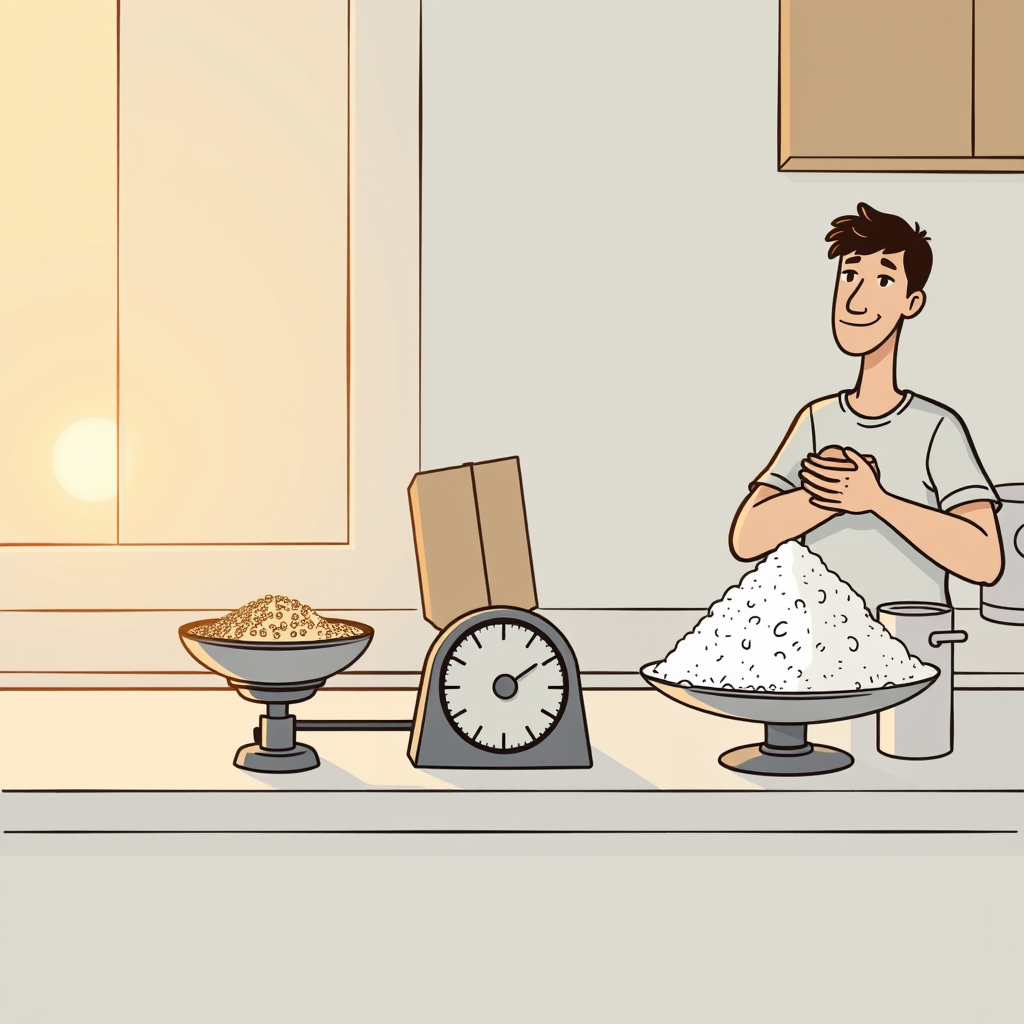
So small or unimportant that it isn't worth considering.
The risk of a single message being read is negligible; the risk of a million messages being analysed is not.
More examples: The discount was negligible — three cents off something that costs eight dollars. • For most users, the delay is negligible and completely invisible. • He argued the environmental cost of streaming was negligible compared with flying, which surprised me.
Common collocations: negligible difference, negligible risk, practically negligible
Word family: negligibly (adverb), negligence (noun, related meaning)
Synonyms: negligible, immaterial, inconsequential
Antonyms: significant, substantial, considerable
Related concepts: cost-benefit analysis, marginal effects, statistical noise
Contexts: debates, finance, risk assessment
Usage note: A judgement word — you're dismissing something as too small to matter. Often used with difference, effect, cost, risk or amount. Slightly more formal than 'tiny'; very common in debate and argument.
placate

To make someone calmer or less angry by giving them something, often without fixing the real problem.
The company released a privacy dashboard purely to placate angry users — nothing actually changed underneath.
More examples: A quick apology placates most customers long enough for the news cycle to move on. • The government announced a small inquiry, clearly meant to placate critics rather than answer them. • I find a biscuit usually placates my aunt when the conversation turns to politics.
Common collocations: placate critics, placate public anger, an attempt to placate
Word family: placatory (adjective), placation (noun)
Synonyms: appease, mollify, pacify
Antonyms: provoke, antagonise, inflame
Related concepts: crisis management, public relations, empty gestures
Contexts: corporate scandals, politics, customer service
Usage note: Implies the anger is managed rather than resolved — there's usually something slightly cosmetic or insincere about it. Compare with 'appease' (often bigger concessions) and 'soothe' (genuine comfort).
unfettered

Completely free from any restriction or control.
Unfettered data collection is what makes the current advertising model possible — remove the limits and everything flows.
More examples: The report warned of unfettered access to citizens' phone records. • She let the children run unfettered through the museum, which the guides did not appreciate. • Unfettered capitalism and unfettered surveillance make surprisingly good dance partners.
Common collocations: unfettered access, unfettered power, unfettered freedom
Word family: fetter (verb), unfetter (verb)
Synonyms: unrestricted, unchecked, unbridled
Antonyms: restricted, regulated, constrained
Related concepts: deregulation, free markets, civil liberties
Contexts: politics, economics, surveillance debates
Usage note: Almost always used before a noun, and often slightly critical — the writer suggests the freedom is excessive or dangerous. Commonest collocations involve access, power, markets and speech.
Vocabulary Check
- What does 'encroach on' mean?
- To improve something gradually and helpfully
- To gradually take over someone's space or rights
- To defend something fiercely against attack
- To borrow something and return it late
- In which situation would you use 'insidious'?
- A loud argument in the street that everyone can hear
- A fire that destroys a building in minutes
- A habit that quietly harms you over years without you noticing
- A comedy show with a joke nobody understands
- What does 'negligible' mean?
- So small or unimportant that it can be ignored
- Careless about a duty or responsibility
- Generous to a fault with other people's money
- Impossible to measure or calculate
- If a company releases a report to 'placate' its critics, what has it done?
- It has proven the critics completely wrong
- It has calmed the critics down without really fixing anything
- It has publicly humiliated the critics
- It has invited the critics to negotiate a solution
- Which sentence uses 'unfettered' correctly?
- He felt fettered and unfettered at the same time, which confused him.
- The committee gave the auditor unfettered access to all the financial records.
- Unfettered, she finally signed the contract after months of delay.
- The rain was so unfettered that we stayed indoors all weekend.
Idioms & Phrasal Verbs
by degrees
gradually, in small steps rather than all at once
I stopped trusting the app by degrees — first one odd ad, then my phone listening to a conversation.
Usage note: Slightly more formal or literary than 'little by little', but fine in conversation. · Right: happens by degrees · Avoid: happens by degree
Usage note: Often used for slow changes people barely notice: 'The city changed by degrees.'
opt out (of)
choose not to take part in something, or withdraw from it
You can opt out of targeted ads, but the setting is deliberately hard to find.
Usage note: Not usually split: you opt out of something, you don't 'opt something out of'. · Right: opt out of the scheme · Avoid: opt the scheme out
Usage note: The opposite is 'opt in (to)' — choosing to join. Very common in tech and workplace contexts.
paint someone/something as
describe someone in a particular way, often unfairly or too simply
The media painted him as a villain before the full story came out.
Usage note: The picture is of painting a portrait — you choose the colours, so the image may not be fair or complete.
Usage note: Very common in journalism and debate: 'paint it as a win', 'paint the company as greedy'.
creep up on
arrive or develop slowly and unnoticed until it suddenly feels real
Middle age crept up on me — one day I just realised I was the oldest person in the room.
Usage note: Not split: the thing creeps up on you, not 'creeps you up'. · Right: it crept up on me · Avoid: it crept me up
Usage note: The image is of someone approaching quietly on tiptoe. Often used for deadlines, ageing, costs, or change.
Language Practice: Arguing about Privacy
Practice expressing ideas about privacy and surveillance with precision — qualifying what you say, conceding points, and weighing up trade-offs.
- Conceding a point while still holding your position
- Emerging: I can see that ___, but I still think ___. — I can see that convenience matters, but I still think privacy matters more.
- Developing: It's true that ___, but the risk is negligible compared with ___, so ___. — It's true that I share photos online, but the risk is negligible compared with what my phone already records, so I don't lose sleep over it.
- Expanding: Much as I accept that ___, the insidious thing about ___ is ___, which means ___. — Much as I accept that personalised ads are sometimes useful, the insidious thing about them is that they quietly narrow what I'm shown, which means I stop discovering things by accident.
- Speculating about motives and future consequences
- Emerging: They probably ___ because ___. — They probably collect our data because it's simply cheaper than asking permission.
- Developing: I suspect they're using it to placate ___, when really ___. — I suspect they're using it to placate regulators, when really nothing in the code has changed.
- Expanding: If they'd been given unfettered access from the start, I imagine ___, and by now ___. — If they'd been given unfettered access from the start, I imagine the backlash would have come a decade earlier, and by now we'd have real privacy laws worth the name.
- Persuading someone to change their mind about surveillance
- Emerging: Don't you think ___ is worth ___? — Don't you think your privacy is worth ten seconds of reading the settings?
- Developing: The difference between ___ and ___ may seem negligible, but in practice ___. — The difference between an anonymous account and a tracked one may seem negligible, but in practice the tracked one changes what news you see.
- Expanding: If we keep letting surveillance encroach on ___, we'll wake up one day to find ___, and at that point ___. — If we keep letting surveillance encroach on our downtime, we'll wake up one day to find there's no hour of the day that isn't monetised, and at that point complaining will be pointless.
Fill in the Blanks
The hearing lasted three hours, and nobody left convinced. The committee had summoned the tech executives to explain, once again, how their platforms had been allowed to harvest data so _____ that even regulators had missed it. The executives insisted the harm was _____ — a few misplaced records, nothing more — and produced a glossy new safeguards document that seemed designed entirely to _____ the angriest senators. One senator, unmoved, asked why her constituents should accept the _____ of corporate surveillance into every corner of family life. Another warned that without legislation, companies would enjoy _____ access to the personal data of an entire generation. The executives promised change. Nobody in the room believed them, and the documents they submitted are already being read, presumably, by the very systems they were meant to restrain.
Word bank: encroachment, insidiously, negligible, placate, unfettered
Sentence Unscramble
- It's / hard / to / trace / where / the / insidious / loss / of / privacy / actually / began.
- Her / sincere / apology / did / nothing / to / placate / the / furious / customers.
- The / difference / between / the / two / policies / is / practically / negligible.
Discussion Questions
In 2018, a fitness app accidentally revealed the locations of secret military bases, because soldiers were jogging with their trackers on. Nobody intended to leak anything — the technology simply collected what it was designed to collect. Something similar happens on a smaller scale to everyone, every day.
Have you ever realised that some app or device knew something about you that it had no business knowing? What was your reaction — did it encroach enough to change your behaviour, or did you just shrug?
Surveillance in China is famously sweeping, but European countries and the US have their own versions — facial recognition at football stadiums, contact-tracing databases, border algorithms. Every government frames it as protection. Critics call the logic the same everywhere, whatever the flag.
Where's the line between a government keeping people safe and a government keeping an eye on them? Would you trust your own government with that line — or any government at all?
Some companies now monitor employees' keystrokes, mouse movements and even 'focus levels' through software that takes periodic screenshots. Employers call it transparency; workers call it something less polite. Remote work made the practice far easier to hide.
If your employer could see everything you did during work hours, would it make you work better — or just make you perform working? And would the difference even matter to them?
There's a growing argument that privacy is a luxury good: the wealthy can buy encrypted phones, private banking and legal protection, while everyone else gets the free service that watches them. Some commentators even call privacy 'the new status symbol'.
Do you think privacy is becoming something only the rich can afford? If you had to choose — keep your data but pay for every service, or pay nothing but be fully tracked — which would you actually pick?
A curious thing about the privacy debate is that people say they care deeply in surveys, then hand over their contacts and location within seconds in real life. Researchers call this the 'privacy paradox'. It might be carelessness — or a perfectly rational belief that individual resistance is negligible.
Are people being irresponsible when they click 'accept', or are they just being honest about a deal they're happy to make? What would it take to make you genuinely change your digital habits?
Knowledge Check
- Which word best completes this? 'The new security cameras ___ on the residents' privacy.'
- placated
- encroached
- negligible
- unfettered
- True or false: something 'insidious' is usually obvious and dramatic.
- True
- False
- Which pair of words is closest in meaning to 'unfettered'?
- restricted and bound
- careless and negligent
- soothing and calming
- unchecked and unrestrained
- A 'placatory' gesture is one intended to make someone less angry, often without solving the real problem.
- True
- False
- When is it appropriate to call something 'negligible'?
- When it is enormous but harmless
- When it is so small that it can be ignored
- When it is impossible to measure
- When it is new and not yet understood
- If you opt out of a service, what do you do?
- You choose to stop taking part in it
- You pay extra to upgrade it
- You complain about it publicly
- You sign up for it enthusiastically
Free to use with your students: Free to teach, screen-share, print and share with your students, with a credit to PlanWise ESL. Please do not sell it or republish it as your own. What you can do with free lessons.