Trust, Privacy, and Regulation in the Age of AI
About this lesson: This is a C2 (Proficiency) ESL lesson in the Conversation Practice category. It takes about 60 minutes. It includes 5 vocabulary words, 4 idioms and phrasal verbs, a reading text, comprehension questions, discussion questions and speaking patterns. Suits one-to-one or small-group online classes. Free to open and teach with no login, and it prints as a PDF.
Print just the discussion questions
How this lesson is built
This is a complete conversation lesson built on a scientific pedagogical formula, not a generic worksheet: recall prior topic vocabulary, pre-teach the new words in depth, read in context, practise active recall with flashcards and synonyms/antonyms, build accuracy with exercises, and finish with deep discussion.
- Warm-up: Discussion questions that connect the topic to the student’s own life and recall vocabulary they already know about the subject.
- Reading: A text written for this CEFR level that uses each new word two or three times in context, giving the student something meaningful to react to.
- Key vocabulary: 5 new words, pre-taught before the reading with a definition, pronunciation guide, example sentences and a picture, plus word families, usage notes, recall flashcards and synonyms/antonyms, giving a solid grounding before reading.
- Comprehension: 5 questions that check the new words: retrieval practice, not rereading.
- Idioms and phrasal verbs: Expressions taken from the reading, each with its meaning, an example and a speaking question.
- Sentence frames: 3 speaking patterns, each at three levels of support (emerging, developing, expanding) with model answers—especially helpful scaffolding for beginners and less confident speakers.
- Gap-fill: The new words again, in a shuffled order, so the student recalls them by meaning in context.
- Sentence unscramble: Natural sentences with the new words to put back in order, reinforcing grammar and collocation.
- Discussion: 5 open questions designed to talk deeply about the subject while actively using the lesson’s target vocabulary: the heart of a conversation lesson.
- Quiz: A short retrieval check that brings every new word back once more.
Unlike a generic worksheet, the new words are taught before the reading and met again in the activities, the speaking is supported at three levels and most of the time goes on the student talking. Teachers who use PlanWise ESL also get per-student vocabulary tracking (recycling earlier words into future readings and questions), a private learner dashboard with flashcards and custom lesson creation, and a downloadable study PDF.
Warm-up: Who's Watching?
A quick chat to get you thinking about how much of your life is online, and how comfortable you are with that.
- When was the last time an app knew something about you that surprised you?
- Do you actually read privacy policies, or do you just click 'accept' like everyone else?
- Would you rather have a smart assistant that knows everything about you, or one that knows nothing?
- Have you ever changed a habit because you felt you were being watched online?
- If AI could predict what you want before you ask, would that feel helpful or creepy?
Reading Text: The Slow Surrender
A short opinion piece about how AI companies have won our trust — and what we gave up in return.
Nobody signed a contract, and yet here we are. Over the past decade, technology companies have made steady inroads into the most private corners of our lives — not through force, but through convenience. Each small surrender felt harmless: a location here, a contact list there. The process was so gradual, so insidious, that most of us never noticed the moment our data became a commodity.
The genius of it lies in the framing. Companies don't demand our information; they offer a trade dressed up as a gift. Personalised recommendations! Faster service! And when the occasional scandal breaks, a carefully worded apology is issued to placate the public, followed by a settings update buried three menus deep that nobody will ever find.
Regulators, meanwhile, have been playing catch-up with the enthusiasm of a jogger chasing a high-speed train. The EU's AI Act is the boldest attempt so far, but critics argue that by the time legislation passes, the technology has already encroached on territory the law never anticipated. Rules written for yesterday's machines, applied to tomorrow's.
To be fair, not everyone is complacent. A growing number of users have become distinctly wary, deleting apps, using VPNs, and asking pointed questions about where their data ends up. Some have even discovered that companies collect information surreptitiously — through microphones, browsing habits, and patterns so subtle they escape notice entirely.
The real question isn't whether AI will know more about us than our friends do. It probably already does. The question is whether we'll negotiate the terms of that relationship while we still have any leverage — or simply keep clicking 'accept' and call it progress.
Key Vocabulary
insidious

Harmful in a slow, hidden way that is hard to notice until serious damage is done
The insidious spread of tracking software means we gave up our privacy one click at a time.
More examples: Insidious advertising techniques shape our desires without our awareness. • There's something insidious about a device that listens even when switched off. • I found the app's insidious notifications slowly taking over my mornings.
Common collocations: an insidious influence, insidiously creeping into, the insidious effects of
Word family: insidiously (adverb), insidiousness (noun)
Synonyms: subtle, underhand, pernicious
Antonyms: obvious, blatant, harmless
Related concepts: gradual harm, hidden threats, manipulation
Contexts: technology, health, politics
Usage note: Use for dangers that work gradually and invisibly — stronger and more sinister than 'harmful'. Often paired with spread, influence, effects.
encroach

To gradually take more of someone's space, time or rights than you should
Smart home devices keep encroaching on spaces we used to consider private.
More examples: Work emails have encroached on my weekends completely. • The new law stops companies from encroaching on users' personal data. • Advertising encroaches on every corner of public life these days.
Common collocations: encroach on privacy, encroach upon rights, gradual encroachment
Word family: encroachment (noun), encroaching (adjective)
Synonyms: intrude, trespass, infringe
Antonyms: respect, withdraw, surrender
Related concepts: boundaries, gradual takeover, rights
Contexts: law, technology, urban development
Usage note: Always followed by 'on' or 'upon'. Implies slow, step-by-step taking — not a single invasion. Common in legal and political writing.
wary
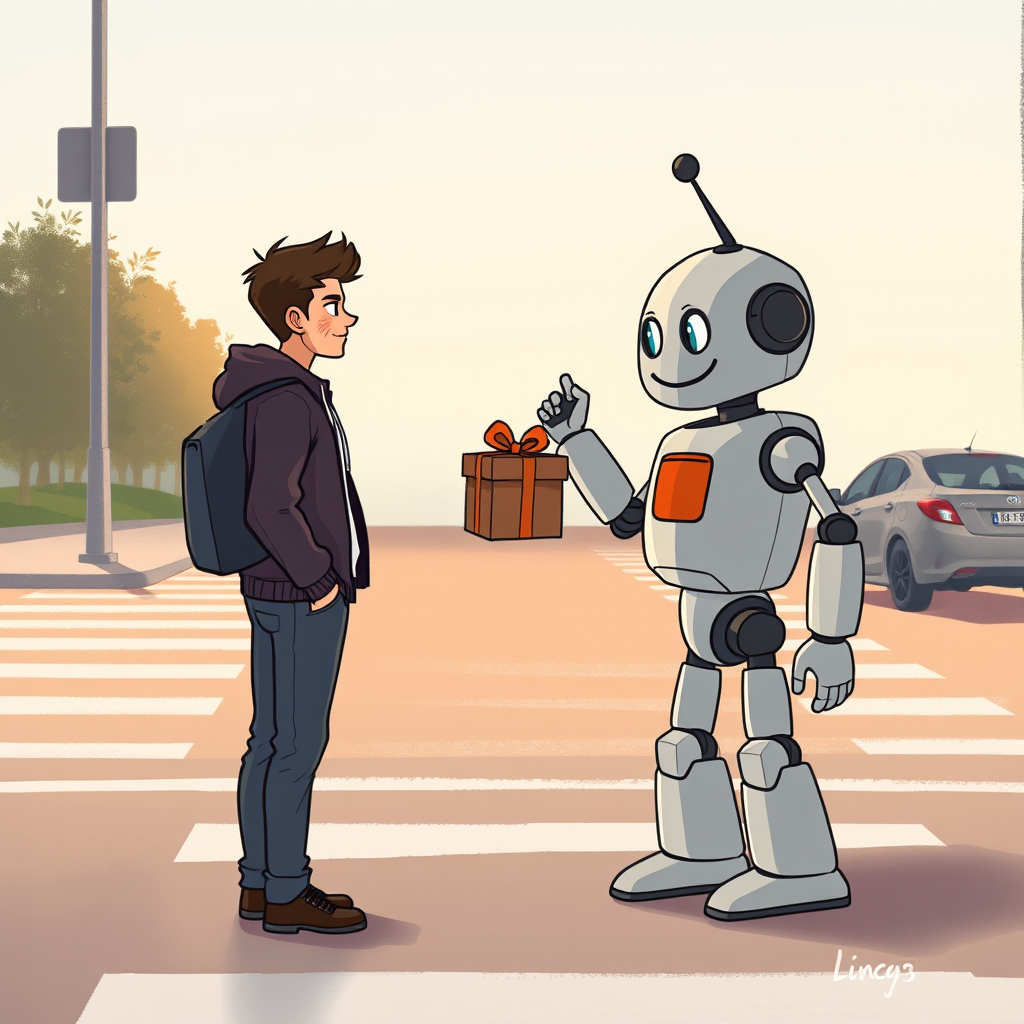
Careful and slightly suspicious because you sense possible danger or deception
After the data leak, even loyal customers grew wary of the company's promises.
More examples: I'm wary of any app that asks for access to my contacts. • Consumers have become wary of 'free' services that aren't really free. • She was wary about sharing her location with the new fitness app.
Common collocations: wary of, grow wary, justifiably wary
Word family: warily (adverb), wariness (noun)
Synonyms: cautious, guarded, skeptical
Antonyms: trusting, naive, unsuspecting
Related concepts: healthy suspicion, self-protection, distrust
Contexts: consumer behaviour, relationships, negotiation
Usage note: Followed by 'of' or 'about'. Softer than 'suspicious' — it suggests healthy caution rather than firm accusation.
surreptitious

Done secretly to avoid being seen or noticed, especially because it's not allowed
The app made surreptitious changes to its privacy settings after the update.
More examples: A surreptitious glance at my phone during the meeting told me the deal was off. • Companies make surreptitious use of microphone data, critics claim. • He took a surreptitious photo of the contract before anyone noticed.
Common collocations: a surreptitious glance, surreptitiously collect data, surreptitious recording
Word family: surreptitiously (adverb), surreptitiousness (noun)
Synonyms: stealthy, furtive, covert
Antonyms: open, overt, brazen
Related concepts: secrecy, avoiding detection, deception
Contexts: workplace, surveillance, everyday behaviour
Usage note: Emphasises stealth and avoiding detection — different from 'secret' (which can be official) or 'covert' (which can be sanctioned). Often slightly disapproving.
placate

To make someone stop feeling angry by giving them something or saying nice things
The company issued a vague apology to placate angry users, then changed nothing.
More examples: Free premium months were offered to placate subscribers after the outage. • The government announced an inquiry to placate public outrage. • He bought her flowers to placate her after forgetting the anniversary.
Common collocations: placate critics, placate public anger, an attempt to placate
Word family: placatory (adjective), placation (noun), implacable (adjective)
Synonyms: appease, mollify, pacify
Antonyms: provoke, aggravate, enrage
Related concepts: public relations, conflict management, superficial fixes
Contexts: business, politics, customer service
Usage note: Suggests calming someone without fixing the real problem — often cynical or superficial. Stronger than 'appease' in implying the anger was real.
Vocabulary Check
- Which situation best describes something insidious?
- A storm that destroys a house in one night
- A habit that quietly damages your sleep over years
- A loud argument between neighbours
- A clear warning sign on a product
- What does 'encroach' mean?
- To gradually take more of something than you should
- To agree to a compromise
- To protect a boundary firmly
- To move away from a place quickly
- In which situation would you be 'wary'?
- When you trust a friend completely
- When you feel excited about a gift
- When an unknown caller asks for your bank details
- When you're asleep at home
- Which sentence uses 'surreptitious' correctly?
- The company published a surreptitious press release on its website.
- He gave a surreptitious glance at the exam answers hidden under his desk.
- The museum held a surreptitious exhibition open to everyone.
- She made a surreptitious speech in front of the whole parliament.
- What does it mean to 'placate' someone?
- To solve their problem completely
- To provoke them into arguing
- To calm their anger, often without fixing the real issue
- To ignore their complaints entirely
Idioms & Phrasal Verbs
make inroads into
to gradually enter or start affecting an area that used to be closed to you
Streaming services have made inroads into markets that TV networks dominated for decades.
Usage note: The picture is literally cutting a road into wild territory — slow, steady progress. · Right: make inroads into something · Avoid: make inroads on something (less common)
Usage note: Often used for business, technology or politics entering a new space.
dress up as
to present something as nicer or more innocent than it really is
The company called the layoffs a 'restructuring', but it was just cost-cutting dressed up as strategy.
Usage note: You can split it: 'dressed it up as'. The small word 'as' introduces what it's pretending to be. · Right: dressed up as a gift · Avoid: dressed up like a gift
Usage note: Almost always negative — it implies deception.
play catch-up
to try to reach the same level as someone who is far ahead of you
After missing a week of work, I spent the whole month playing catch-up.
Usage note: From the children's game 'catch-up' — you're always behind and chasing. Very common in work and tech talk.
Usage note: Usually suggests you're permanently behind, not just briefly.
draw the line
to set a clear limit on what you will accept or do
I'm happy to share my music taste with an app, but I draw the line at letting it listen to my conversations.
Usage note: The picture is drawing a line on the ground that you refuse to cross. Often followed by 'at': draw the line at something.
Usage note: Common in arguments about limits: 'You have to draw the line somewhere.'
Language Practice: Talking About Trust and Technology
Practice expressing qualified opinions, conceding points, and speculating about technology and privacy.
- Expressing a qualified opinion
- Emerging: To some extent, I think ___, but I'm wary of ___. — To some extent, I think smart speakers are useful, but I'm wary of the microphone.
- Developing: While I'd accept that ___, I'm wary of the way ___. — While I'd accept that convenience matters, I'm wary of the way these apps quietly change their terms.
- Expanding: While I'd accept that ___ has genuine benefits, I'm wary of the way it encroaches on ___, particularly when ___. — While I'd accept that AI assistants have genuine benefits, I'm wary of the way they encroach on family conversations, particularly when they record without a clear signal.
- Speculating about consequences
- Emerging: If companies keep ___, we might end up with ___. — If companies keep collecting data, we might end up with no privacy at all.
- Developing: If regulators don't step in soon, there's a real risk that ___. — If regulators don't step in soon, there's a real risk that AI firms will write their own rules.
- Expanding: Unless someone draws a line soon, I suspect we'll look back and realise ___ — and by then it may be too late to ___. — Unless someone draws a line soon, I suspect we'll look back and realise we traded our privacy for convenience without noticing — and by then it may be too late to reclaim it.
- Conceding and countering in debate
- Emerging: I see your point, but what really bothers me is ___. — I see your point, but what really bothers me is the lack of choice.
- Developing: That's a fair point — that said, what companies are really doing is ___. — That's a fair point — that said, what companies are really doing is buying our silence with convenience.
- Expanding: That's a fair point, and I wouldn't dismiss it — but what strikes me as insidious is that ___, which suggests ___. — That's a fair point, and I wouldn't dismiss it — but what strikes me as insidious is that the surrender happens one harmless click at a time, which suggests no single moment will ever feel worth resisting.
Fill in the Blanks
When the scandal broke, the tech giant moved quickly to _____ its critics with a glossy apology video, but many users had already grown _____ of its promises. Journalists revealed that the app had been _____ly recording voice data for months — a _____ practice hidden deep in the terms of service. Regulators promised action, warning that such companies would keep _____ing on personal privacy until the law drew a firm line.
Word bank: placate, wary, surreptitious, insidious, encroach
Sentence Unscramble
- The / company / issued / a / vague / apology / to / placate / its / angry / users.
- Many / people / have / grown / wary / of / apps / that / collect / data / surreptitiously.
- The / insidious / spread / of / surveillance / has / encroached / on / almost / every / part / of / daily / life.
Discussion Questions
Most of us hand over personal data dozens of times a day without a second thought — through phones, loyalty cards, smart devices, even doorbells. Each individual trade seems trivial, but together they add up to a detailed portrait of our lives. Some people find this exchange perfectly reasonable; others feel something has been taken from them without their full understanding.
Do you think we've traded our privacy too cheaply, or is it a fair price for convenience? What's the one thing you'd refuse to give up?
When companies face a backlash — a data breach, a creepy feature, an algorithm gone wrong — the response usually follows a script: an apology, a promise to do better, maybe a free month of service. Public anger cools, headlines move on, and little actually changes. Critics call this crisis management; defenders call it accountability.
When a company apologises after a scandal, do you ever believe them? What would a genuine apology look like, as opposed to one designed just to placate people?
Governments are struggling to regulate AI: the EU passed its AI Act, other countries are drafting their own rules, and tech companies lobby hard in every direction. Some argue regulation protects citizens; others say it just slows innovation and pushes companies to friendlier jurisdictions. Meanwhile, the technology keeps evolving faster than any law can be written.
Do you trust your government to regulate AI well? Would you rather have strict rules that slow things down, or a freer market with more risk?
AI systems now screen job applications, assess loan requests, flag suspicious behaviour, and even influence what news we see. The people affected often never know an algorithm was involved, let alone how it decided. Supporters point to consistency and speed; critics point to hidden bias and the impossibility of appealing to a machine.
Would you rather be judged by an algorithm or by a human stranger? Why? Has an algorithm ever made a decision about you that felt unfair?
Some futurists imagine a world where AI knows us so well that it anticipates our needs before we express them — ordering food, drafting messages, choosing routes. It sounds like luxury, but it raises a deeper question: if a machine shapes our choices before we make them, whose preferences are we actually living out? Our own, or the system's?
If AI could predict what you want before you even knew you wanted it, would you let it? Where would you draw the line between help and control?
Knowledge Check
- Which word describes harm that spreads slowly and invisibly?
- Blatant
- Insidious
- Overt
- Placating
- True or false: 'wary' means trusting and open with others.
- True
- False
- A company offers free subscriptions to calm public anger after a breach, without fixing the problem. This is an attempt to ___ the public.
- encroach
- placate
- wary
- insidiate
- True or false: 'encroach' usually describes a sudden, violent invasion.
- True
- False
- Which sentence uses 'surreptitiously' correctly?
- She surreptitiously announced her engagement to the entire stadium.
- He surreptitiously copied the files while his manager was out of the room.
- The mayor surreptitiously gave a speech on live television.
- They surreptitiously celebrated in the middle of the crowded square.
- If a company's apology is 'dressed up as' concern for users, what does that mean?
- It's genuinely caring but badly worded
- It's made to look better than it really is
- It's too formal and old-fashioned
- It's written by lawyers only
Free to use with your students: Free to teach, screen-share, print and share with your students, with a credit to PlanWise ESL. Please do not sell it or republish it as your own. What you can do with free lessons.