The Longevity Race: Should Science Extend Human Lifespan?
About this lesson: This is a C2 (Proficiency) ESL lesson in the Conversation Practice category. It takes about 60 minutes. It includes 5 vocabulary words, 4 idioms and phrasal verbs, a reading text, comprehension questions, discussion questions and speaking patterns. Suits one-to-one or small-group online classes. Free to open and teach with no login, and it prints as a PDF.
Print just the discussion questions
How this lesson is built
This is a complete conversation lesson built on a scientific pedagogical formula, not a generic worksheet: recall prior topic vocabulary, pre-teach the new words in depth, read in context, practise active recall with flashcards and synonyms/antonyms, build accuracy with exercises, and finish with deep discussion.
- Warm-up: Discussion questions that connect the topic to the student’s own life and recall vocabulary they already know about the subject.
- Reading: A text written for this CEFR level that uses each new word two or three times in context, giving the student something meaningful to react to.
- Key vocabulary: 5 new words, pre-taught before the reading with a definition, pronunciation guide, example sentences and a picture, plus word families, usage notes, recall flashcards and synonyms/antonyms, giving a solid grounding before reading.
- Comprehension: 5 questions that check the new words: retrieval practice, not rereading.
- Idioms and phrasal verbs: Expressions taken from the reading, each with its meaning, an example and a speaking question.
- Sentence frames: 3 speaking patterns, each at three levels of support (emerging, developing, expanding) with model answers—especially helpful scaffolding for beginners and less confident speakers.
- Gap-fill: The new words again, in a shuffled order, so the student recalls them by meaning in context.
- Sentence unscramble: Natural sentences with the new words to put back in order, reinforcing grammar and collocation.
- Discussion: 5 open questions designed to talk deeply about the subject while actively using the lesson’s target vocabulary: the heart of a conversation lesson.
- Quiz: A short retrieval check that brings every new word back once more.
Unlike a generic worksheet, the new words are taught before the reading and met again in the activities, the speaking is supported at three levels and most of the time goes on the student talking. Teachers who use PlanWise ESL also get per-student vocabulary tracking (recycling earlier words into future readings and questions), a private learner dashboard with flashcards and custom lesson creation, and a downloadable study PDF.
Warm-up: Living Longer
A quick chat about lifespan, ageing and what a longer life would actually mean before diving into the reading.
- How long do you hope to live, roughly? What would a 'good' number be for you?
- Do you know anyone who's stayed sharp and active into their nineties? What's their secret?
- If a pill could add twenty healthy years to your life, would you take it without hesitation?
- Is there such a thing as wanting to live too long? Where's the line for you?
- Would you rather live to 90 in good health, or to 120 with a decade of decline at the end?
Reading Text: Cheating Death, One Decade at a Time
A short opinion piece on the race to extend human lifespan — and whether we should win it.
In Silicon Valley, longevity has become something of a religion. Billionaires swallow supplement cocktails, track their sleep to the minute, and speak openly of living to two hundred. Critics call it hubris — the ancient Greek tragedy of mortals who believed they could outsmart the gods. The optimists, naturally, prefer the word 'progress'.
The science is real, if still elusive. Researchers have extended lifespan in mice, reversed some markers of ageing in human cells, and identified genes that seem to stave off decline in centenarians. What none of them can promise yet is a genuine cure for the thing that actually kills us: not ageing itself, but the infirmity that rides along with it — frail bodies, failing minds, the slow loss of independence.
And that's where the quandary begins. Suppose we could add thirty years to the average life. Would those years be vibrant ones, or merely extra time in a hospital bed? Extending lifespan without extending healthspan would be a grim gift — more years, but not more life.
There's a social dimension, too. If the wealthy buy themselves decades while the rest of us get whatever the public health system offers, longevity becomes the ultimate luxury good. Some philosophers argue this is the real scandal: not that we might live longer, but who gets to.
Others take the opposite view — that the quest itself is the problem. Death, they say, gives life its shape and urgency, the way a frame gives a picture its edges. Remove the frame and you may find you have a great deal of canvas and very little painting. It's a poetic argument, though one suspects its supporters would change their minds the moment a serious illness came knocking.
Key Vocabulary
infirmity

Physical or mental weakness, especially from old age or illness; stronger and more specific than just 'illness'.
He lived to ninety-five with barely an infirmity to slow him down.
More examples: The clinic specializes in the infirmities of extreme old age. • She bore her infirmities with remarkable good humour. • I worry less about dying than about the infirmities that might come first.
Common collocations: the infirmities of old age, suffer from infirmity, mental and physical infirmities
Word family: infirm (adjective), infirmarian (noun, rare)
Synonyms: frailty, debility, feebleness
Antonyms: vigour, robustness
Related concepts: ageing, chronic illness, dependency
Contexts: healthcare, literature, insurance
Usage note: Formal or literary register. Use for lasting weakness tied to age or chronic condition, not for a passing cold or injury. Often plural.
stave off

To prevent something unpleasant from happening for a while; to hold it at bay temporarily, not permanently.
A brisk daily walk may stave off memory loss for a few years.
More examples: The company cut costs to stave off bankruptcy. • She drank coffee to stave off sleep during the night shift. • Vaccination helped stave off the worst of the outbreak.
Common collocations: stave off disaster, stave off hunger, stave off old age
Word family: stave (noun, as in 'stave off' origin)
Synonyms: ward off, hold at bay, fend off
Antonyms: succumb to, surrender to
Related concepts: prevention, delay, coping
Contexts: medicine, business news, everyday life
Usage note: The object is always something bad. Emphasise the temporary nature: you stave off a crisis, you don't solve it. Very common in journalism.
quandary

A state of uncertainty about which of two difficult options to choose; stronger and more stuck than a simple 'dilemma'.
She was in a quandary: accept the promotion abroad, or stay for her ageing parents.
More examples: The government finds itself in a quandary over the new tax. • His refusal left me in something of a quandary. • Doctors face a moral quandary when treatment prolongs suffering.
Common collocations: be in a quandary, a moral quandary, face a quandary
Word family: quandaries (plural)
Synonyms: dilemma, predicament, impasse
Antonyms: certainty, clarity
Related concepts: ethics, decision-making, moral conflict
Contexts: ethics debates, personal life, politics
Usage note: Often preceded by 'in a' or 'something of a'. Suggests genuine paralysis, not just a choice. Slightly formal but common in thoughtful speech and writing.
hubris

Excessive pride or self-confidence that leads to downfall; arrogance that offends or ignores limits.
It was sheer hubris to believe the algorithm could never fail.
More examples: The project collapsed through the founder's hubris. • There's a fine line between ambition and hubris. • History is full of empires undone by hubris.
Common collocations: sheer hubris, punished for his hubris, a note of hubris
Word family: hubristic (adjective)
Synonyms: arrogance, overconfidence, vanity
Antonyms: humility, modesty
Related concepts: Greek tragedy, Icarus, overreach
Contexts: politics, business, literary criticism
Usage note: Borrowed from Greek tragedy, where hubris invites divine punishment. Always disapproving, often ironic. Perfect for criticising overreach in science, business or politics.
elusive
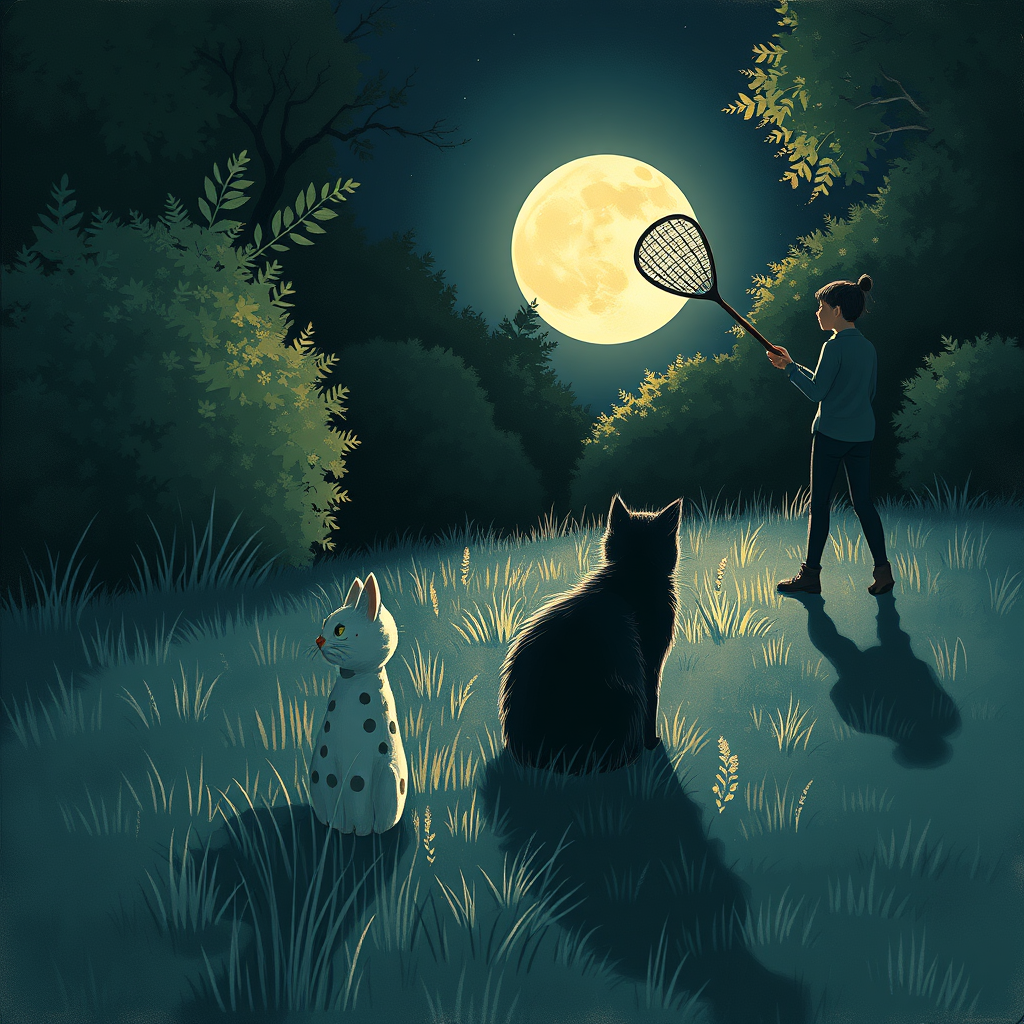
Hard to find, achieve or pin down; always slipping just out of reach.
A good night's sleep has been elusive ever since he took the new job.
More examples: Peace in the region remains as elusive as ever. • The perfect word was elusive, so she rewrote the sentence. • Happiness, for some people, is a permanently elusive goal.
Common collocations: elusive goal, remain elusive, elusively simple
Word family: elude (verb), elusively (adverb), elusiveness (noun)
Synonyms: evasive, slippery, unattainable
Antonyms: accessible, tangible
Related concepts: pursuit, goals, mystery
Contexts: science reporting, self-help, sports commentary
Usage note: Often used with abstract goals: success, peace, truth, sleep. Carries a wistful, slightly literary tone. Very frequent in journalism and reviews.
Vocabulary Check
- What does 'infirmity' mean?
- A sudden injury from an accident
- Lasting physical or mental weakness, especially from old age
- A brief feeling of tiredness after work
- A contagious disease you catch from others
- Which sentence uses 'stave off' correctly?
- She staved off the good news to her colleagues.
- He staved off hunger with a handful of nuts.
- They staved off the party until midnight.
- I staved off my friend at the airport.
- In which situation would you use 'quandary'?
- You've decided exactly what to order at a restaurant.
- You must choose between a job you love and a salary you need.
- You're telling a friend about your holiday plans.
- You're explaining how a machine works.
- What does 'hubris' mean?
- Modest pride in a job well done
- Excessive confidence that leads to downfall
- Fear of taking risks
- Generosity towards rivals
- Which goal would most likely be described as 'elusive'?
- A goal you achieved years ago
- A goal that keeps slipping out of reach
- A goal you've never wanted
- A goal someone handed to you
Idioms & Phrasal Verbs
come knocking
to arrive at your life or door, usually something unwanted that you can't ignore
I was a sceptic about insurance until middle age came knocking.
Usage note: The picture: trouble literally knocking at your door like a visitor. · Right: when opportunity came knocking · Avoid: when opportunity knocked the door
Usage note: Very common in conversation; often with 'opportunity', 'trouble' or 'illness' as the subject.
ride along with
to happen together with something else, as an unwanted companion
Success sounds lovely, but the stress that rides along with it is less glamorous.
Usage note: Not usually split: 'the pressure that rides along with fame', not 'rides it along with'. The 'along' suggests a passenger sitting beside you.
Usage note: Slightly figurative — the thing isn't literally riding, it just tags along.
draw the line
to set a clear limit on what you will accept or do
I'll work late most weeks, but I draw the line at weekends.
Usage note: The picture: literally drawing a line you refuse to cross. Often followed by 'at': 'draw the line at lying'.
Usage note: Very natural in arguments and debates about ethics or personal limits.
take for granted
to not appreciate something because you assume it will always be there
I took my health for granted until I spent a winter recovering from surgery.
Usage note: Usually split with a person or thing in the middle: 'take it for granted', 'took them for granted'.
Usage note: Often used with a slight tone of regret or criticism: 'you don't know what you've got till you lose it'.
Language Practice: Arguing About Longevity
Practice expressing ideas about longevity, trade-offs and ethical limits.
- Conceding a point before disagreeing
- Emerging: I see why people say ___, but I think ___. — I see why people say longer life is good, but I think quality matters more.
- Developing: It's true that ___, but that argument overlooks ___. — It's true that extra years could mean more time with family, but that argument overlooks who gets access to them.
- Expanding: Much as I sympathise with ___, I can't help feeling that ___, if only because ___. — Much as I sympathise with the desire to see my grandchildren grow up, I can't help feeling that radical life extension would strain society, if only because resources are finite.
- Speculating about hypothetical futures
- Emerging: If this technology worked, I would ___. — If this technology worked, I would try it for a few extra healthy years.
- Developing: Assuming it were safe and affordable, I'd probably ___, though I might draw the line at ___. — Assuming it were safe and affordable, I'd probably add a decade or two, though I might draw the line at replacing organs.
- Expanding: Were it to become routine, I suspect we'd end up ___, and whether that's a good thing rather depends on ___. — Were it to become routine, I suspect we'd end up rethinking retirement entirely, and whether that's a good thing rather depends on whether work stays meaningful.
- Qualifying an opinion with nuance
- Emerging: I'd say ___, up to a point. — I'd say longer life is a good thing, up to a point.
- Developing: By and large I'd agree, though it rather depends on ___. — By and large I'd agree, though it rather depends on whether the extra years are healthy ones.
- Expanding: I'd go so far as to say ___, though I'd stop short of claiming ___, since ___. — I'd go so far as to say longevity research is the most important science of our century, though I'd stop short of calling it a moral duty, since priorities are ultimately personal.
Fill in the Blanks
The dream of cheating death is as old as civilisation itself, yet a genuine cure for ageing remains stubbornly _____. Scientists have managed to _____ some of the worst effects of growing old in laboratory animals, but translating that to humans is another matter. Even if we succeed, a troubling _____ awaits: will those extra years be full ones, or merely a longer stretch of _____? Some researchers dismiss such worries as pessimism; others see in the whole enterprise a dangerous _____ — mortals once again reaching for the gods' fire.
Word bank: elusive, stave off, quandary, infirmity, hubris
Sentence Unscramble
- Her / greatest / fear / isn't / death / but / the / infirmity / that / often / precedes / it.
- Regular / exercise / may / stave / off / cognitive / decline / for / a / decade / or / more.
- The / promise / of / immortality / has / always / been / elusive, / dangling / just / beyond / our / grasp.
Discussion Questions
The reading mentions that extending lifespan without extending healthspan would be 'a grim gift'. In other words, more years in a hospital bed might be worse than fewer good years. Some countries are already ageing rapidly, with shrinking workforces and growing care bills.
Would you want those extra years even if they came with infirmity, or is healthspan what really matters to you? Why?
Suppose a treatment existed that reliably added thirty healthy years, but initially cost as much as a house. The wealthy would buy decades of life; everyone else would wait, perhaps for generations, for the price to fall. This isn't science fiction — early medical technologies always start expensive.
If you were rich, would you buy the treatment, knowing most people couldn't? And should governments step in here, or stay out of it?
The reading calls Silicon Valley's longevity obsession a form of hubris — mortals trying to outsmart the gods. But you could argue the same about the first vaccines, or heart transplants, which once seemed equally arrogant and are now routine. History has a habit of making yesterday's hubris look like tomorrow's common sense.
Where do you draw the line between admirable ambition and dangerous hubris? Can you think of something once considered outrageous that we now take for granted?
One philosopher in the reading argues that death gives life its shape, the way a frame gives a picture its edges. Deadlines make us act; endings make stories meaningful. If you knew you had five hundred years, would you still feel any urgency to do anything at all?
Do you think knowing life ends is actually what makes it feel valuable? Would you personally lose motivation if time stopped mattering?
Imagine your own future: you're ninety, still reasonably healthy, and a doctor offers you a new therapy that could stave off decline for another twenty years — with no guarantees about quality of life. Your family has opinions, of course. So does your bank account.
Honestly, would you take it? And who do you think should decide — you, your family, or the doctor?
Knowledge Check
- Which word describes excessive self-confidence that leads to a downfall?
- Quandary
- Elusive
- Hubris
- Infirmity
- True or false? 'Stave off' means to solve a problem permanently.
- True
- False
- If a goal is 'elusive', it is...
- easily achieved
- hard to pin down or achieve
- impossible to want
- shared by everyone
- Which phrase correctly completes this sentence: 'She was in a ___ about whether to move abroad.'
- hubris
- infirmity
- quandary
- stave off
- True or false? 'Infirmity' can refer to mental as well as physical weakness.
- True
- False
- If someone says they 'draw the line at' something, what do they mean?
- They sketch it quickly
- They refuse to accept it
- They find it hard to describe
- They enjoy it secretly
Free to use with your students: Free to teach, screen-share, print and share with your students, with a credit to PlanWise ESL. Please do not sell it or republish it as your own. What you can do with free lessons.