Unusual Schools and Different Ways of Learning
About this lesson: This is an A2 (Elementary) ESL lesson in the General English category. It takes about 60 minutes. It includes 5 vocabulary words, a reading text, comprehension questions, discussion questions and speaking patterns. Suits one-to-one or small-group online classes. Free to open and teach with no login, and it prints as a PDF.
Print just the discussion questions
How this lesson is built
This is a complete conversation lesson built on a scientific pedagogical formula, not a generic worksheet: recall prior topic vocabulary, pre-teach the new words in depth, read in context, practise active recall with flashcards and synonyms/antonyms, build accuracy with exercises, and finish with deep discussion.
- Warm-up: Discussion questions that connect the topic to the student’s own life and recall vocabulary they already know about the subject.
- Reading: A text written for this CEFR level that uses each new word two or three times in context, giving the student something meaningful to react to.
- Key vocabulary: 5 new words, pre-taught before the reading with a definition, pronunciation guide, example sentences and a picture, plus word families, usage notes, recall flashcards and synonyms/antonyms, giving a solid grounding before reading.
- Comprehension: 5 questions that check the new words: retrieval practice, not rereading.
- Sentence frames: 3 speaking patterns, each at three levels of support (emerging, developing, expanding) with model answers—especially helpful scaffolding for beginners and less confident speakers.
- Gap-fill: The new words again, in a shuffled order, so the student recalls them by meaning in context.
- Sentence unscramble: Natural sentences with the new words to put back in order, reinforcing grammar and collocation.
- Discussion: 5 open questions designed to talk deeply about the subject while actively using the lesson’s target vocabulary: the heart of a conversation lesson.
- Quiz: A short retrieval check that brings every new word back once more.
Unlike a generic worksheet, the new words are taught before the reading and met again in the activities, the speaking is supported at three levels and most of the time goes on the student talking. Teachers who use PlanWise ESL also get per-student vocabulary tracking (recycling earlier words into future readings and questions), a private learner dashboard with flashcards and custom lesson creation, and a downloadable study PDF.
Warm-up Activity
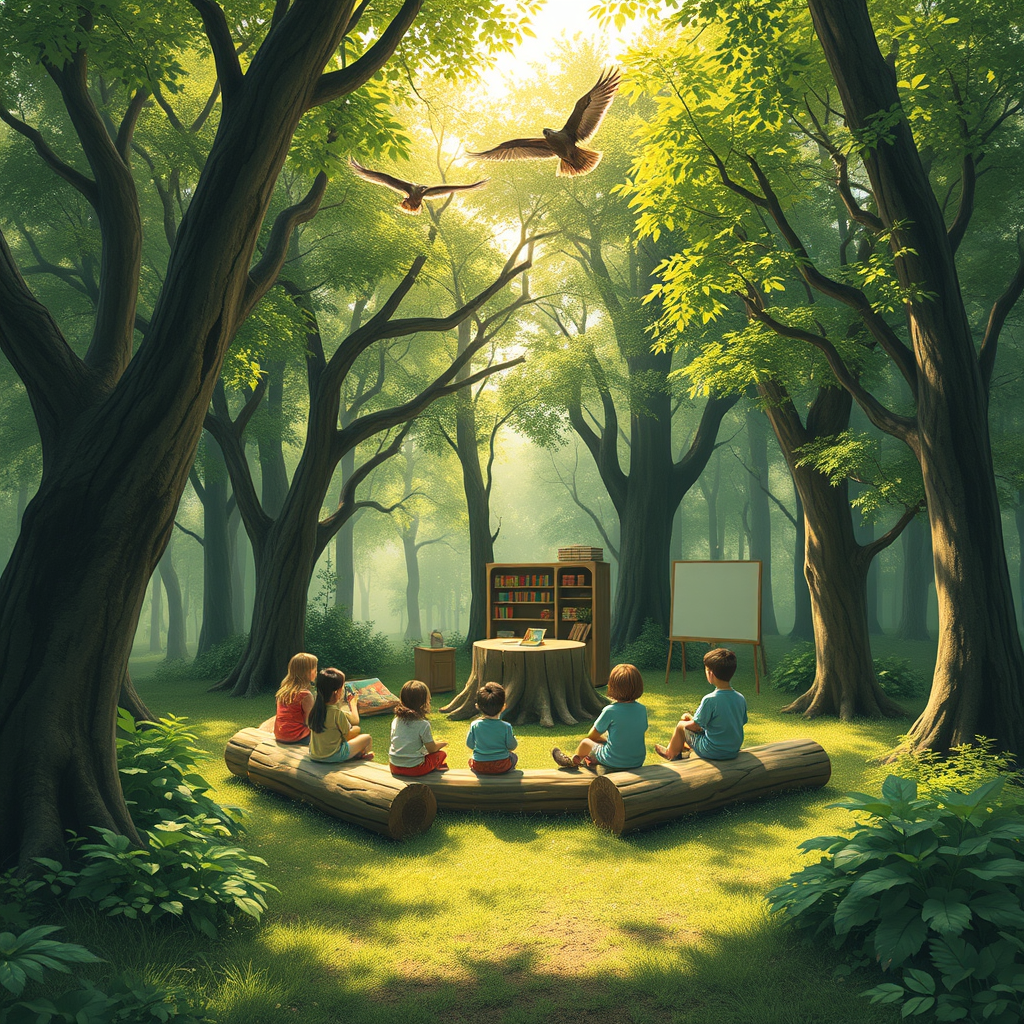
Look at the picture and talk about schools and learning. Get ready to use five new words: unusual, experiment, design, gain, project.
- What does your perfect school look like? What is in it?
- How do you learn best - reading, watching videos, or doing things?
- Do you like your usual school day? Why or why not?
- If you could change one thing about school, what would you change?
- Do you know anyone who learns in a different way, like at home?
Reading Text: A Week at a Strange School
Read about Timo, a boy who visits a school in the forest. What do you think about it?
Timo is 12 years old. Last month, he visited a school in the forest for one week. It was very unusual. There were no desks, no chairs and no books in the classroom. The students sat on logs and wrote in notebooks.
On the first day, the teacher gave the students an experiment. They made a small boat from sticks and rope. The boat had to float on the river. Timo's boat did not float, but he learned why it failed.
The students did not only study science. They worked on a project together. They designed a small garden for the school. First, they drew a plan. Then they planted flowers and vegetables in the ground.
Timo loved the project because the students made all the decisions. The teacher did not talk much. The students asked questions and found the answers. Timo says he learned more in one week than in one month.
Timo gained many things from the week. He gained new friends and new skills. He also gained confidence. Now he wants to go back to the forest school every year. He thinks learning outside is the best!
Timo says he gained many things from the week. He gained new friends and new skills. He also gained confidence. Now he wants to go back to the forest school every year. He thinks learning outside is the best!
Key Vocabulary
unusual
not normal; different and special
A school in the forest is unusual.
More examples: That cat has two colours on one eye. It is unusual. • It was unusual to see snow here. • My breakfast was unusual today - pizza!
Common collocations: unusual school, unusual idea, something unusual
Word family: usual, usually
Synonyms: strange, different, special
Antonyms: usual, normal, common
Related concepts: surprise, difference, new things
Contexts: describing places, describing ideas, describing food
Usage note: Use 'unusual' before a noun (an unusual school) or after 'is/was' (The school is unusual). It is often a nice or interesting word, not bad.
experiment

a test to see how something works
We did an experiment with water and salt.
More examples: The science experiment was fun and messy. • My experiment failed, but I learned a lot. • We do an experiment every Friday in science class.
Common collocations: do an experiment, science experiment, try an experiment
Word family: experimental
Synonyms: test, trial
Antonyms: guess
Related concepts: science, laboratory, learning by doing
Contexts: science class, making things, trying new ideas
Usage note: We usually say 'do an experiment'. It can also be a verb: 'They experimented with sticks to make a boat.'
design
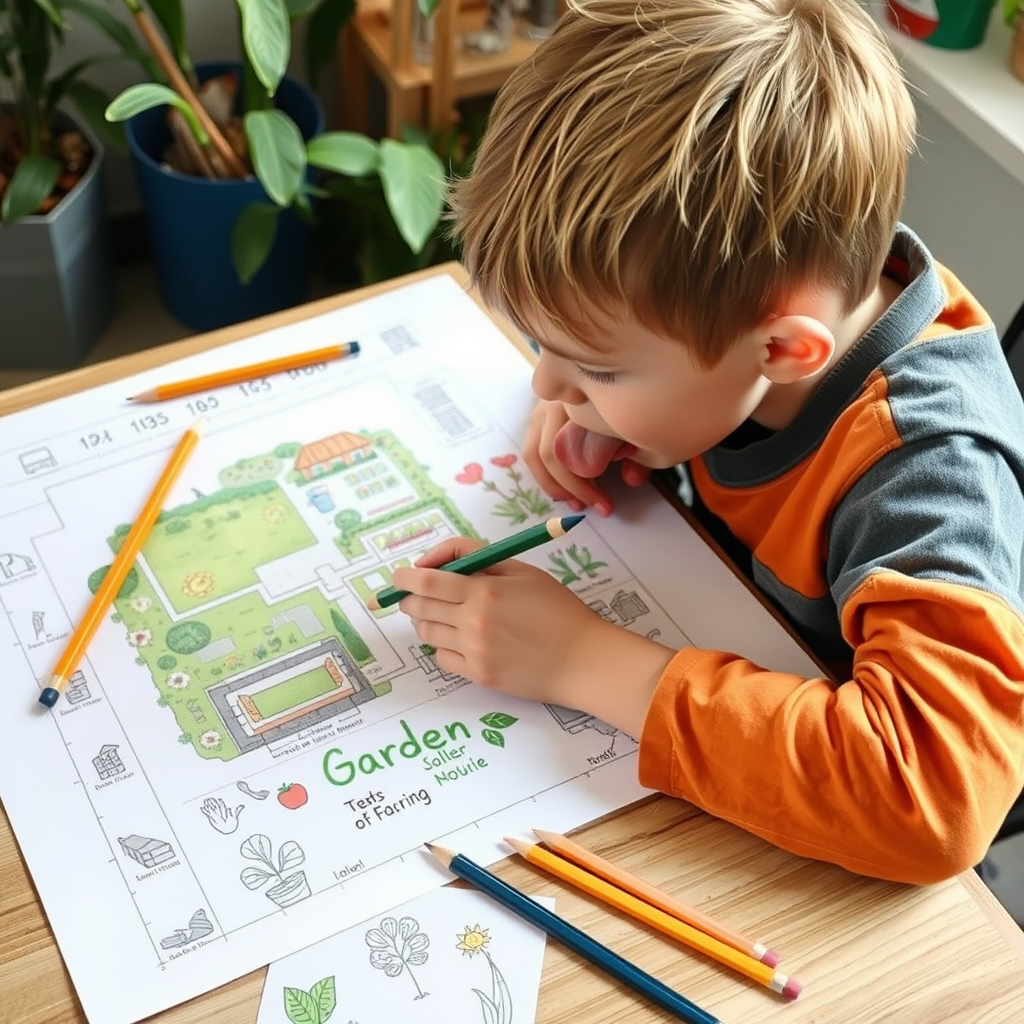
to make a plan or drawing for something new
The students designed a garden with flowers.
More examples: She designs video games on her computer. • I want to design my own t-shirt. • They designed a house on paper first.
Common collocations: design a garden, design a game, design a poster
Word family: designer, design
Synonyms: plan, draw, create
Antonyms: copy, destroy
Related concepts: art, architecture, invention
Contexts: art class, technology, building things
Usage note: 'Design' is both a verb and a noun: 'I design it' / 'I like the design.' Past forms: designed, designing.
project
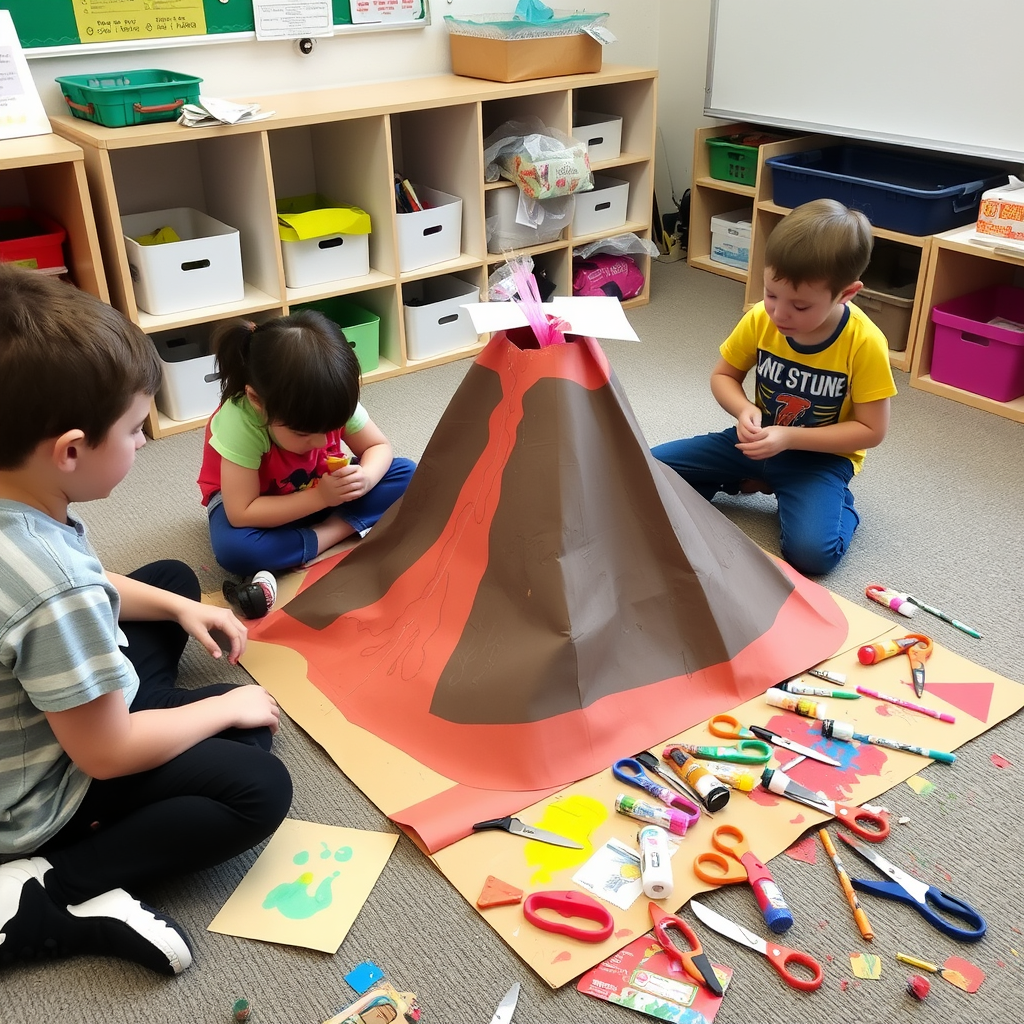
a big piece of work you do over some time
Our class project is about animals.
More examples: The project took three weeks to finish. • I built a model castle for my school project. • We worked on the project in a group of four.
Common collocations: school project, group project, work on a project
Word family: project
Synonyms: task, work, activity
Antonyms: break, rest
Related concepts: teamwork, homework, building
Contexts: school, art, science
Usage note: Say 'work on a project'. A project is longer than homework - it can take days or weeks.
gain

to get something good or more of something
He gained new skills at the forest school.
More examples: You gain experience when you play sports. • I gained three new friends this year. • She gained confidence after the show.
Common collocations: gain skills, gain experience, gain confidence
Word family: gain
Synonyms: get, receive, earn
Antonyms: lose, give away
Related concepts: growth, success, learning
Contexts: school, sports, friends
Usage note: We gain good things like skills, friends, time or confidence. We usually do not say 'gain a present' - we get or receive presents.
Vocabulary Check
- What does 'unusual' mean?
- very old
- not normal; different and special
- very big
- easy to do
- Which sentence uses 'experiment' correctly?
- We did an experiment with water and salt.
- I experiment my homework every day.
- She is a good experiment at football.
- He experiments pizza for dinner.
- What does 'design' mean?
- to break something
- to find something lost
- to make a plan or drawing for something new
- to buy something
- In which situation would you use the word 'project'?
- When you sleep at night
- When you do a big piece of work over some time
- When you eat lunch
- When you run fast
- Which sentence uses 'gain' correctly?
- I gain a bicycle for my birthday.
- She gained new skills at the forest school.
- He gains the door and goes out.
- We gain TV in the evening.
Language Practice: Talking About Schools and Learning
Practice expressing ideas about unusual schools and different ways of learning.
- Comparing two kinds of school
- Emerging: A ___ school is ___ than a ___ school. — A forest school is more fun than a normal school.
- Developing: I think a ___ school is more ___ than a ___ school because ___. — I think a forest school is more interesting than a normal school because we learn outside.
- Expanding: In my opinion, learning ___ is ___ than learning ___, because you can ___. — In my opinion, learning by doing is better than learning from books, because you can touch things and try again when you make a mistake.
- Describing an experience in the past
- Emerging: Last year, I ___ at school. — Last year, I visited a museum at school.
- Developing: When I was in ___, I ___ and I gained ___. — When I was in grade four, I did a science experiment and I gained new skills.
- Expanding: The best project I did was ___. I designed ___ and I gained ___. It was ___ because ___. — The best project I did was a model volcano. I designed the volcano with paper and paint and I gained new skills. It was fun because it exploded with red water.
- Making a suggestion for a new school
- Emerging: Students should ___ at school. — Students should do experiments at school.
- Developing: I want to design a school with ___, because students ___. — I want to design a school with a big garden, because students learn about plants.
- Expanding: If I could design an unusual school, it would have ___, and students would gain ___ because ___. — If I could design an unusual school, it would have a big workshop, and students would gain new skills because they build real things with their hands.
Fill in the Blanks
Last month, our class visited a farm school. It was very _____ because there were no classrooms. On day one, we did a science _____ with plants and water. Then our teacher gave us a big _____: we had to _____ a new playground for the farm. We worked in groups and drew plans on paper. I _____ed a lot from the week - new friends and new skills!
Word bank: unusual, experiment, design, project, gain
Sentence Unscramble
- Our / school / project / took / three / weeks / to / finish.
- The / students / designed / a / garden / with / flowers / and / vegetables.
- He / gained / a / lot / of / confidence / at / the / unusual / school.
Discussion Questions
Some children go to school in a forest. They sit outside and learn about trees and animals every day. There are no normal classrooms. Other children learn at home with their family. Timo in our reading liked the forest school a lot.
Would you like to go to a school in a forest? Why or why not?
Timo's class did an experiment with boats made from sticks. The boats had to float on the river. One boat failed, but the students learned why. Doing experiments helps people learn by trying and sometimes failing.
Do you like doing experiments? Tell me about one you did at school or at home.
Imagine you can design your dream school. You can put anything in it: a science lab, a big garden, a games room, a music studio, anything you want. Think about what helps students learn and have fun.
If you could design your dream school, what would be in it? Why?
In some schools, students work on projects all year. They work in groups and make real things. In other schools, students do more homework and tests. Timo says he learned more with projects.
Which do you like more - doing projects or doing homework and tests? Why?
Timo gained new friends, new skills and confidence from one week at the forest school. Everyone learns something from every year at school - not only from books. Think about your last school year.
What did you gain from school this year - friends, skills, or confidence?
Knowledge Check
- A school with no desks and no books is...
- usual
- unusual
- easy
- cheap
- We do an experiment to...
- see how something works
- draw a plan
- make new friends
- finish homework
- 'Design' means to make a plan or drawing for something new. True or false?
- True
- False
- Which one is a project?
- eating lunch
- building a model castle over three weeks
- going to bed
- watching TV
- Timo says he gained confidence at the forest school. This means he...
- lost something
- got something good
- broke something
- sold something
Free to use with your students: Free to teach, screen-share, print and share with your students, with a credit to PlanWise ESL. Please do not sell it or republish it as your own. What you can do with free lessons.