Match Day: Watching Football with Friends
About this lesson: This is an A2 (Elementary) ESL lesson in the General English category. It takes about 60 minutes. It includes 5 vocabulary words, 3 phrasal verbs, a reading text, comprehension questions, discussion questions and speaking patterns. Suits one-to-one or small-group online classes. Free to open and teach with no login, and it prints as a PDF.
Print just the discussion questions
How this lesson is built
This is a complete conversation lesson built on a scientific pedagogical formula, not a generic worksheet: recall prior topic vocabulary, pre-teach the new words in depth, read in context, practise active recall with flashcards and synonyms/antonyms, build accuracy with exercises, and finish with deep discussion.
- Warm-up: Discussion questions that connect the topic to the student’s own life and recall vocabulary they already know about the subject.
- Reading: A text written for this CEFR level that uses each new word two or three times in context, giving the student something meaningful to react to.
- Key vocabulary: 5 new words, pre-taught before the reading with a definition, pronunciation guide, example sentences and a picture, plus word families, usage notes, recall flashcards and synonyms/antonyms, giving a solid grounding before reading.
- Comprehension: 5 questions that check the new words: retrieval practice, not rereading.
- Idioms and phrasal verbs: Expressions taken from the reading, each with its meaning, an example and a speaking question.
- Sentence frames: 3 speaking patterns, each at three levels of support (emerging, developing, expanding) with model answers—especially helpful scaffolding for beginners and less confident speakers.
- Gap-fill: The new words again, in a shuffled order, so the student recalls them by meaning in context.
- Sentence unscramble: Natural sentences with the new words to put back in order, reinforcing grammar and collocation.
- Discussion: 5 open questions designed to talk deeply about the subject while actively using the lesson’s target vocabulary: the heart of a conversation lesson.
- Quiz: A short retrieval check that brings every new word back once more.
Unlike a generic worksheet, the new words are taught before the reading and met again in the activities, the speaking is supported at three levels and most of the time goes on the student talking. Teachers who use PlanWise ESL also get per-student vocabulary tracking (recycling earlier words into future readings and questions), a private learner dashboard with flashcards and custom lesson creation, and a downloadable study PDF.
Warm-up: Let's Talk Football
Look at the questions and tell me about football in your life.
- Do you like football? Why or why not?
- Do you have a favourite team? Tell me about it.
- Do you watch football alone or with friends?
- When did you last watch a match? What happened?
- Do you prefer watching at home or at a stadium? Why?
Reading Text: A Big Match Day
Read about Leo's match day with his friends. What does he love about it?
Leo loves football. His favourite team plays every Saturday, and he never misses a match. Last Saturday, his team played against their biggest rival. Leo invited three friends to watch the game at his flat.
The match kicked off at three o'clock. Before the game, Leo made snacks and everyone wore their team's colours. His friend Maria is a supporter of the other team, so they laughed and joked about it.
In the first half, Leo's team scored a goal. Everyone jumped up and cheered very loudly. Maria was quiet, but she smiled because the football was good.
Then, ten minutes before the end, the other team scored too. The score was 1-1. Leo felt nervous. 'Come on, we can still win!' he shouted.
In the last minute, Leo's team scored again. The final score was 2-1. Leo and his friends cheered for a long time. Even Maria clapped. 'It was a great match,' she said. 'Next time, my team will win!'
Key Vocabulary
match
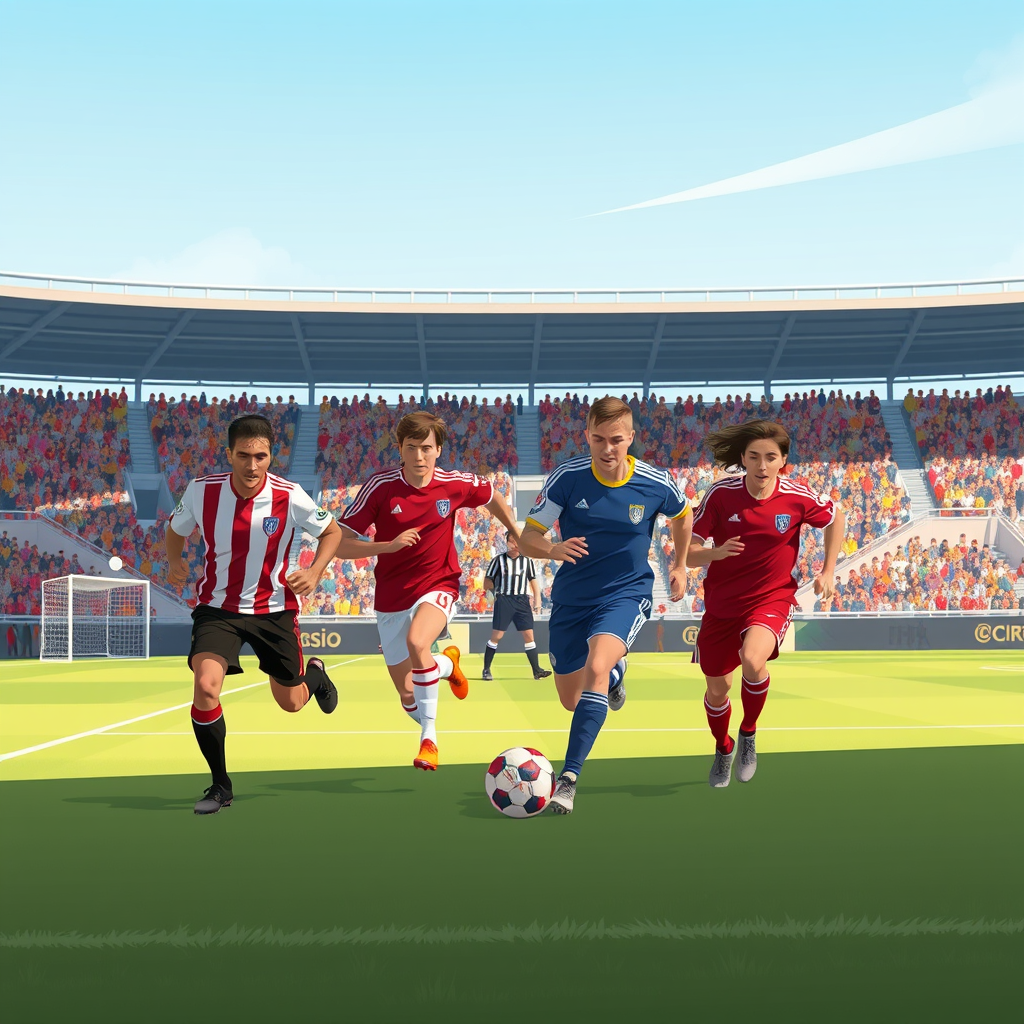
a game between two teams
We watched a great match last night.
More examples: The match starts at eight o'clock. • I saw the match on TV with my dad. • Tickets for the match were cheap.
Common collocations: watch a match, a football match, win/lose a match
Word family: matchday
Synonyms: game, contest
Related concepts: team, stadium, referee
Contexts: football, tennis, boxing
Usage note: Use 'match' for games like football. For tennis, we also say 'match'. Do not say 'game of football' when 'match' is more natural in British English.
cheer

to shout because you are happy
The fans cheered when their team scored.
More examples: Everyone cheered at the end of the match. • She cheered for her brother at the race. • We cheered when we heard the good news.
Common collocations: cheer for a team, cheer loudly, give a cheer
Word family: cheerful, cheers
Synonyms: shout, clap
Antonyms: boo, groan
Related concepts: fans, celebration, goal
Contexts: stadiums, concerts, sports events
Usage note: You cheer FOR someone or something: 'I cheered for Brazil.' Also the noun: 'We heard a big cheer.'
score
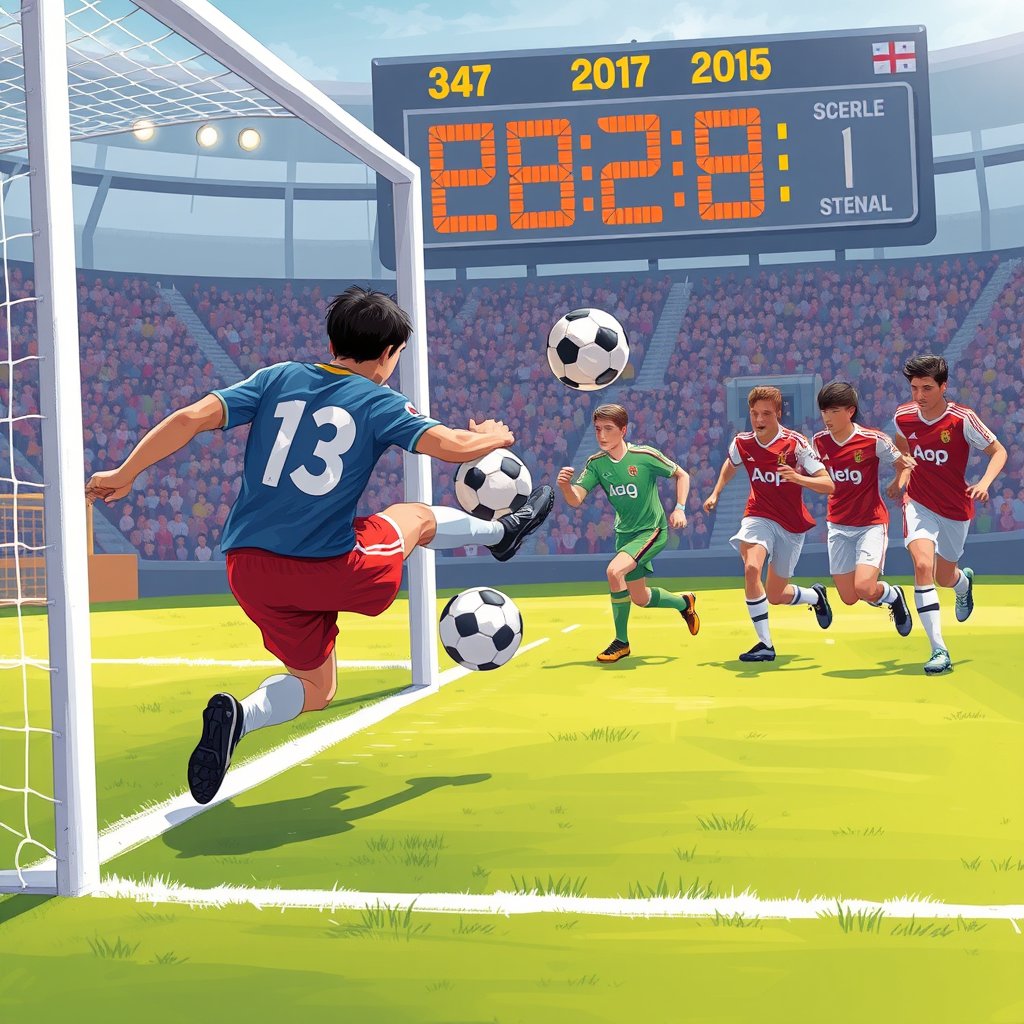
to get a goal or points
Our team scored in the last minute.
More examples: She scored three points in the game. • Nobody scored in the first half. • He scored the winning goal.
Common collocations: score a goal, the final score, score points
Word family: score (noun), scorer
Synonyms: win points, get a goal
Antonyms: miss, concede
Related concepts: goal, points, result
Contexts: football, basketball, video games
Usage note: Both verb and noun. As a noun: 'The score was 2-1.' As a verb: 'They scored two goals.'
supporter
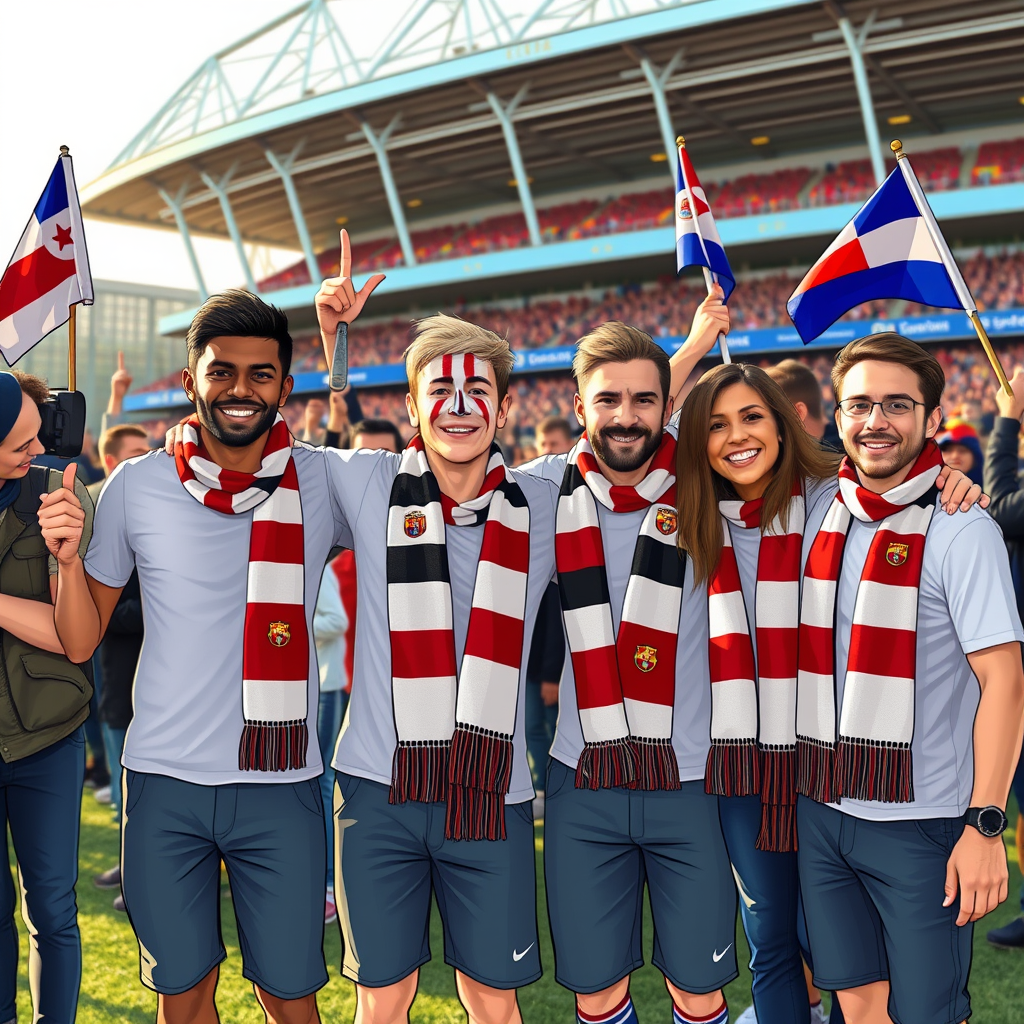
a person who loves a team
He is a supporter of Liverpool.
More examples: Thousands of supporters travelled to the match. • She has been a supporter since she was a child. • The supporters sang all game.
Common collocations: a football supporter, a loyal supporter, supporters of a team
Word family: support (verb), supportive
Synonyms: fan, follower
Antonyms: critic, opponent
Related concepts: team, loyalty, fandom
Contexts: football, politics, charity
Usage note: In football, a supporter is like a fan, but it often means a strong, loyal fan. 'Fan' is more casual.
kick off
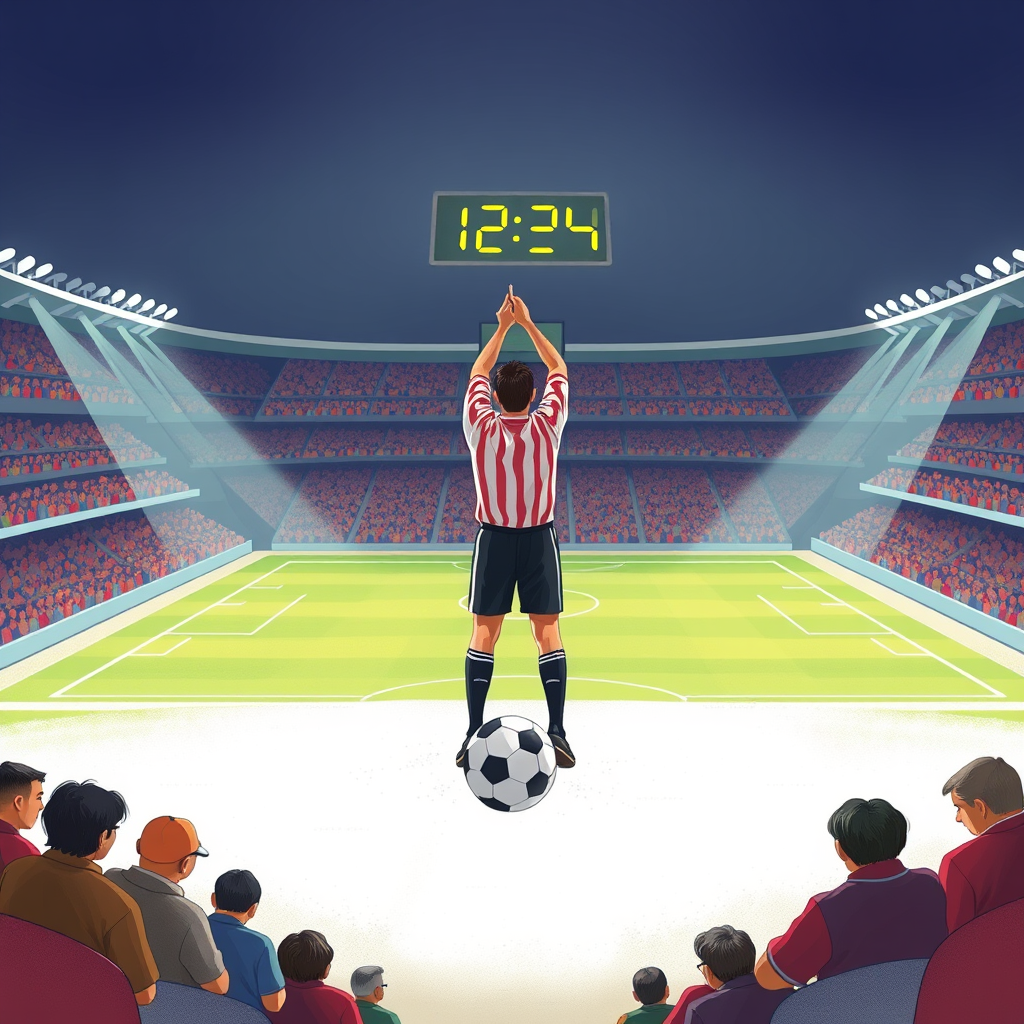
to start a football match
The match kicked off at three o'clock.
More examples: What time does the match kick off? • The second half kicked off late. • The game kicks off in ten minutes.
Common collocations: kick off at 3pm, the kick-off time, just before kick-off
Word family: kick-off (noun)
Synonyms: start, begin
Antonyms: finish, end
Related concepts: whistle, half-time, schedule
Contexts: football, parties, events
Usage note: It can also mean 'to start' any event informally: 'The party kicked off at nine.'
Vocabulary Check
- What does 'cheer' mean?
- To shout because you are happy
- To play very badly
- To watch quietly
- To stop a game
- Which sentence uses 'kick off' correctly?
- The match kicked off at three o'clock.
- I kicked off my team a goal.
- She kicked off the stadium.
- We kicked off the score.
- What is a 'supporter'?
- A player on the pitch
- The referee of the match
- A person who loves a team
- A person who sells tickets
- What does 'score' mean as a verb?
- To watch a match
- To get a goal or points
- To lose a game
- To start the second half
- In which situation would you use the word 'match'?
- When you cook dinner
- When two football teams play a game
- When you go to sleep
- When you buy a ticket for a concert
Phrasal Verbs
jump up
stand up very fast
When my team scored, I jumped up and hit my head on the lamp!
Usage note: "Up" shows the movement: from sitting to standing. "He jumped up from the sofa."
come on
words you shout to help your team
Thousands of fans shouted 'Come on, England!' at the TV.
Usage note: Fans say "Come on!" plus the team name: "Come on, United!" It means "I believe in you, do it!"
Usage note: It is also used to ask someone to hurry: "Come on, we're late!"
warm up
get ready before sport or a match
The players warmed up for twenty minutes before the match.
Usage note: Use it for the body before exercise, or for a room getting warmer: "The flat warmed up quickly."
Language Practice: Talking About Match Day
Practice expressing ideas about football and match day.
- Describing a match you watched
- Emerging: I watched a match with ___. — I watched a match with my brother.
- Developing: Last weekend, I watched a match with ___ and we ___. — Last weekend, I watched a match with my friends and we ate pizza.
- Expanding: The last match I watched was ___, and it kicked off at ___ because ___. — The last match I watched was Real Madrid versus Barcelona, and it kicked off at nine because it was a big game.
- Talking about the team you support
- Emerging: I support ___. — I support Arsenal.
- Developing: I support ___ because ___. — I support Arsenal because my father did too.
- Expanding: I have been a supporter of ___ for ___, and my favourite player is ___ because ___. — I have been a supporter of Arsenal for ten years, and my favourite player is Saka because he works very hard.
- Giving opinions about watching football
- Emerging: I think watching at ___ is ___. — I think watching at home is easy.
- Developing: I think watching at ___ is more ___ than watching at ___. — I think watching at the stadium is more exciting than watching at home.
- Expanding: For me, watching with friends is better because you can ___ and ___. — For me, watching with friends is better because you can cheer together and talk about the match.
Fill in the Blanks
Last Sunday was a big day for me. The match _____ed ___ at five o'clock, so I met my friends at four. We are all _____s of the same team, and we wore our red scarves. The other team played very well, and they _____d first. We were sad, but we didn't stop _____ing for our team. Then, in the last minute, our best player scored too! The _____ ended 1-1, and everyone was happy.
Word bank: cheer, score, match, supporter, kick off
Sentence Unscramble
- The / match / kicked / off / at / seven / o'clock / .
- Our / supporters / cheered / when / we / scored / .
- I / watched / the / match / with / my / friends / .
Discussion Questions
Leo watched the match with three friends at his flat. They made snacks and wore their team's colours. Watching together is a big part of match day for many people.
Who do you like to watch football with, and what do you do together? Why?
In the reading, the match kicked off at three o'clock. Some big matches kick off late in the evening. The time can change the whole experience.
Do you prefer matches in the afternoon or in the evening? Why?
Leo's friend Maria supported the other team, but they still enjoyed the match together. Sometimes friends or family support different teams.
Do you know someone who supports a different team than you? What happens when your teams play each other?
When Leo's team scored in the last minute, everyone cheered for a long time. A late goal is one of the most exciting moments in football.
Tell me about an exciting moment in a match you watched. What happened?
Some people say the stadium is the best place to watch because of the atmosphere. Others prefer home, where it is comfortable and cheap.
Which is better, watching at the stadium or at home? Why?
Knowledge Check
- What time did the match in the reading kick off?
- At five o'clock
- At three o'clock
- At nine o'clock
- At one o'clock
- What was the final score in the reading?
- 1-1
- 2-0
- 2-1
- 3-1
- True or false? 'Kick off' can also mean the start of a party.
- True
- False
- Which word means 'a person who loves a team'?
- A scorer
- A supporter
- A referee
- A match
- True or false? 'Score' can be both a verb and a noun.
- True
- False
- What does "warm up" mean?
- get ready before sport
- make food hot
- stop playing
- shout at the other team
Free to use with your students: Free to teach, screen-share, print and share with your students, with a credit to PlanWise ESL. Please do not sell it or republish it as your own. What you can do with free lessons.