My Dreams and Goals: A Journey of Big Wins
About this lesson: This is an A2 (Elementary) ESL lesson in the General English category. It takes about 60 minutes. It includes 5 vocabulary words, a reading text, comprehension questions, discussion questions and speaking patterns. Suits one-to-one or small-group online classes. Free to open and teach with no login, and it prints as a PDF.
Print just the discussion questions
How this lesson is built
This is a complete conversation lesson built on a scientific pedagogical formula, not a generic worksheet: recall prior topic vocabulary, pre-teach the new words in depth, read in context, practise active recall with flashcards and synonyms/antonyms, build accuracy with exercises, and finish with deep discussion.
- Warm-up: Discussion questions that connect the topic to the student’s own life and recall vocabulary they already know about the subject.
- Reading: A text written for this CEFR level that uses each new word two or three times in context, giving the student something meaningful to react to.
- Key vocabulary: 5 new words, pre-taught before the reading with a definition, pronunciation guide, example sentences and a picture, plus word families, usage notes, recall flashcards and synonyms/antonyms, giving a solid grounding before reading.
- Comprehension: 5 questions that check the new words: retrieval practice, not rereading.
- Sentence frames: 1 speaking pattern, each at three levels of support (emerging, developing, expanding) with model answers—especially helpful scaffolding for beginners and less confident speakers.
- Gap-fill: The new words again, in a shuffled order, so the student recalls them by meaning in context.
- Sentence unscramble: Natural sentences with the new words to put back in order, reinforcing grammar and collocation.
- Discussion: 5 open questions designed to talk deeply about the subject while actively using the lesson’s target vocabulary: the heart of a conversation lesson.
- Quiz: A short retrieval check that brings every new word back once more.
Unlike a generic worksheet, the new words are taught before the reading and met again in the activities, the speaking is supported at three levels and most of the time goes on the student talking. Teachers who use PlanWise ESL also get per-student vocabulary tracking (recycling earlier words into future readings and questions), a private learner dashboard with flashcards and custom lesson creation, and a downloadable study PDF.
Warm-up: Dream Big!
Look at pictures of famous goals: winning a race, getting a gold star, swimming across a pool. Students say what they want to do someday.
- What is one thing you want to do very much someday?
- Did you ever win a prize at school?
- Who helps you practice new skills?
- How do you feel when you finish something difficult?
- What is your big dream?
Reading Text: Maya and the Big Race
Today we read about Maya, a girl who had a dream and worked hard for it.
Maya is eleven years old. She has a big dream: she wants to swim in a real race. Last year, she was slow, but she practiced every morning before school. Her mother smiles and says, 'Keep going!'
Maya set a goal for herself. The goal was to swim one hundred meters in one minute. At first it was very difficult. Sometimes she made mistakes and drank water! But she did not stop.
Her teacher, Mr. Lee, told her about a school competition. 'You can compete with girls from other schools,' he said. Maya was nervous, but she wanted to try. Her coach gave her a plan.
On race day, there was a big crowd by the pool. Maya's friends came to watch and clap. She swam fast, and her arms felt strong. When she finished, she looked at the clock: fifty-eight seconds!
Maya won a small gold prize, a medal, and a big hug. 'I feel so proud,' she said. 'This is my first step to my big dream.' Everyone clapped for her, and her smile was very big.
Key Vocabulary
goal

something you want to do or get
My goal is to read ten books this year.
More examples: She made a goal to swim every day. • We worked together and reached our goal. • What is your goal for this month?
Common collocations: set a goal, reach a goal, a big goal
Word family: goals (plural)
Synonyms: aim, target, plan
Antonyms: wish without a plan
Related concepts: dream, success, practice
Contexts: school, sports, family plans
Usage note: Use with verbs 'set', 'reach', or 'have'. I set a goal... I reached my goal.
dream

a big wish for the future
Her dream is to be a famous singer.
More examples: I have a dream to visit many countries. • His dream came true last summer. • Never stop following your dream.
Common collocations: have a dream, a dream came true, big dream
Word family: dream (verb), dreamer (noun)
Synonyms: wish, hope, ambition
Antonyms: fear, worry
Related concepts: future, goal, imagination
Contexts: talking about the future, school essays, family talks
Usage note: Use 'a dream came true' when a dream happens in real life.
prize
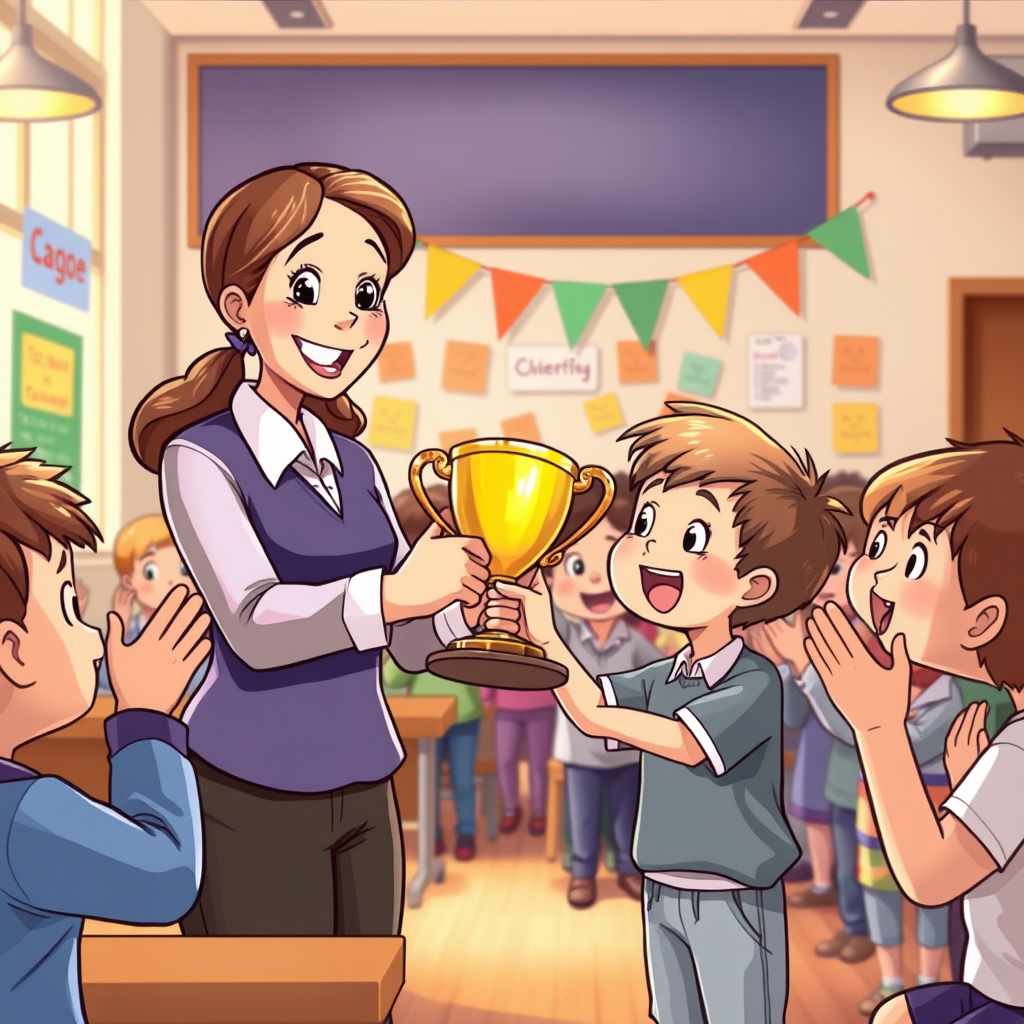
something you win in a game or contest
He won first prize in the art contest.
More examples: The prize was a big book about animals. • She got a prize for her project. • There is a prize for the fastest runner.
Common collocations: win a prize, first prize, a big prize
Word family: prizes (plural)
Synonyms: award, medal, trophy
Antonyms: penalty, loss
Related concepts: winning, contest, recognition
Contexts: school contests, sports days, games
Usage note: Use with 'win' or 'get'. First prize is the best place.
compete
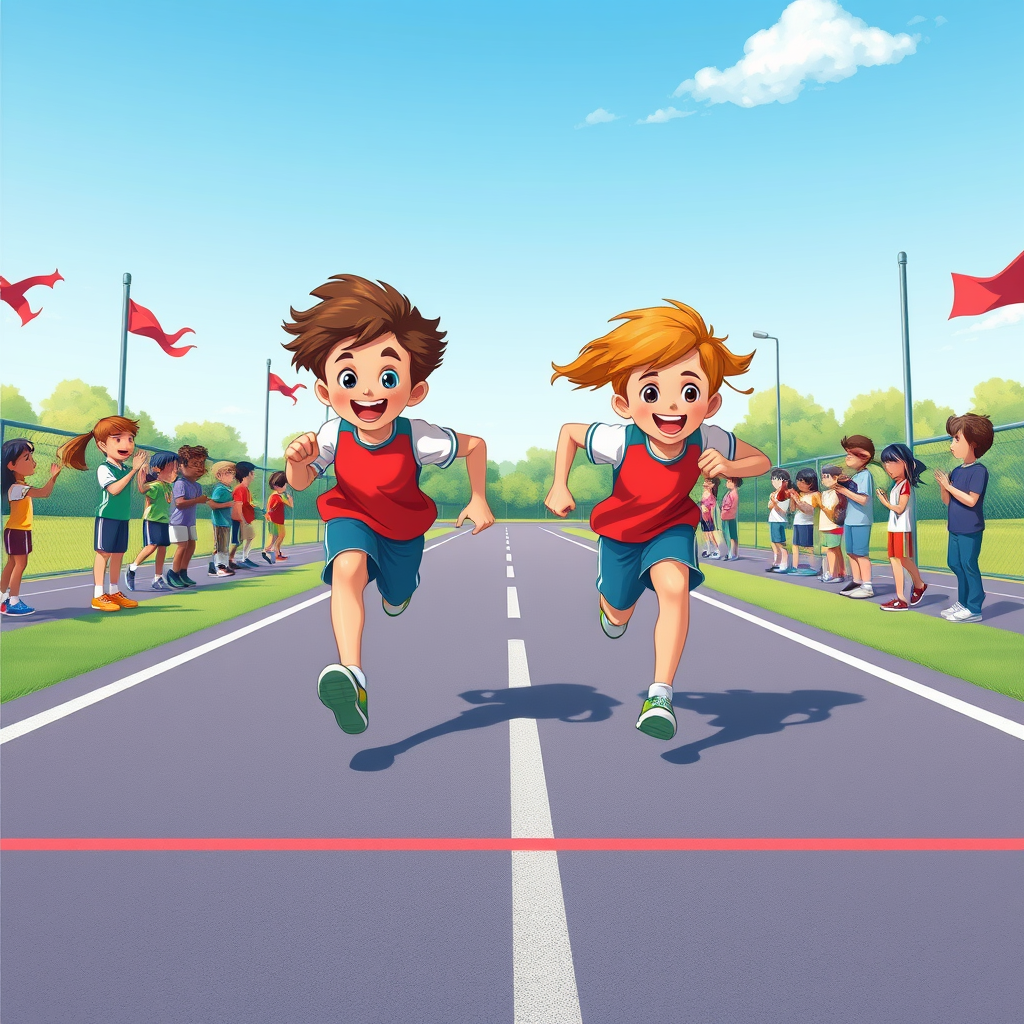
to try to win against other people
Twenty teams compete in the football cup.
More examples: She will compete in the race on Saturday. • We compete in a friendly game. • Four singers compete for the top spot.
Common collocations: compete in a race, compete with someone, compete against a team
Word family: competition (noun), competitor (noun)
Synonyms: race, contend, challenge
Antonyms: cooperate, watch
Related concepts: contest, team, winning
Contexts: sports days, chess clubs, video games
Usage note: Use 'compete in' for the event and 'compete with/against' for people or teams.
proud
feeling happy about something you did well
I felt proud after my piano concert.
More examples: Her parents were proud of her exam result. • He is proud of his good drawing. • We felt proud when our team won.
Common collocations: feel proud, proud of someone, really proud
Word family: proudly (adverb), pride (noun)
Synonyms: happy, glad, confident
Antonyms: ashamed, sad
Related concepts: achievement, success, family
Contexts: after a win, good school results, helping others
Usage note: Use 'proud of' with a person: 'I am proud of you.'
Vocabulary Check
- What does 'goal' mean?
- Something you want to do or get
- A place in a game
- A kind of music
- A school subject
- In which situation would you use the word 'proud'?
- When you feel very sleepy
- When you did something well
- When you are watching TV
- When it is raining
- Which sentence uses 'compete' correctly?
- I compete a banana yesterday.
- She competes in the swimming race every summer.
- He compete with his homework.
- They compete to school by bus.
- What does 'dream' mean in this lesson?
- The pictures in your head when you sleep only
- A big wish for the future
- A kind of food
- A short rest at school
- Which sentence uses 'prize' correctly?
- I prize my shoes to school.
- He won first prize in the art contest.
- She prize with her friends after class.
- The prize is feeling cold today.
Language Practice: Talking About Goals
Practice expressing ideas about achievements and goals.
- Describing goals and achievements
- Emerging: I want to ___. — I want to ride a bike fast.
- Developing: My goal is to ___ because ___. — My goal is to swim fast because I love water.
- Expanding: Last year I ___, and this year I want to ___ because ___. — Last year I could not swim far, and this year I want to practice every day because I felt proud after my first race.
Fill in the Blanks
Leo loves football. His big _____ is to play on a real team. Last month, he made a _____: to kick the ball into the net ten times without a mistake. It was difficult at first, but he practiced every day after school. On Sunday, all the children _____ in a small game at the park. Leo played very well and he won a small _____ for being the best player. His father said, 'You played amazingly, and I am very _____ of you!' Leo smiled happily.
Word bank: dream, goal, compete, prize, proud
Sentence Unscramble
- my / dream / is / to / play / in / a / band / .
- we / compete / with / the / north / school / every / year / .
- she / was / very / proud / of / her / gold / prize / .
Discussion Questions
Many children have big dreams, like becoming a doctor, a pilot, or an artist. Dreams can be big or small. A small dream today can become a goal tomorrow.
What is your big dream for the future? Why do you like it?
Maya practiced swimming every morning. She did not stop when it was difficult. Small steps every day help us reach big goals. You can also take small steps!
What small steps can you take this week to reach a goal?
Winning feels great, but working hard is also wonderful. When we lose a game, we can learn and try again. Many famous people lost first and won later.
How do you feel when you lose a game? What do you do next?
Families and friends help us a lot. Maya's mother and Mr. Lee encouraged her. When someone encourages you, you feel braver and stronger.
Who encourages you the most? How does that person help you?
You can be proud of many things: a good grade, a kind act, or helping a friend. These are all achievements too, not only medals and prizes.
Tell me about a time you felt very proud. What happened?
Knowledge Check
- Maya's goal was to swim 100 meters in one minute. What is a 'goal'?
- A kind of swimming pool
- Something you want to do or get
- A food for runners
- A game on the computer
- Maya won a medal. Which word can also describe something you win?
- A penalty
- A prize
- A mistake
- A lecture
- True or false? 'Proud' means feeling sad about something.
- True
- False
- Which sentence is correct?
- I dream came true last summer.
- My dream came true last summer.
- My dream come true last summer.
- My dreams cam true last summer.
- What do we call the event where people try to win against others?
- A competition
- A classroom
- A holiday
- A recipe
Free to use with your students: Free to teach, screen-share, print and share with your students, with a credit to PlanWise ESL. Please do not sell it or republish it as your own. What you can do with free lessons.