Staying Fit as an Adult: Running, Cycling and the Gym
About this lesson: This is a B1 (Intermediate) ESL lesson in the General English category. It takes about 60 minutes. It includes 5 vocabulary words, 3 phrasal verbs and expressions, a reading text, comprehension questions, discussion questions and speaking patterns. Suits one-to-one or small-group online classes. Free to open and teach with no login, and it prints as a PDF.
Print just the discussion questions
How this lesson is built
This is a complete conversation lesson built on a scientific pedagogical formula, not a generic worksheet: recall prior topic vocabulary, pre-teach the new words in depth, read in context, practise active recall with flashcards and synonyms/antonyms, build accuracy with exercises, and finish with deep discussion.
- Warm-up: Discussion questions that connect the topic to the student’s own life and recall vocabulary they already know about the subject.
- Reading: A text written for this CEFR level that uses each new word two or three times in context, giving the student something meaningful to react to.
- Key vocabulary: 5 new words, pre-taught before the reading with a definition, pronunciation guide, example sentences and a picture, plus word families, usage notes, recall flashcards and synonyms/antonyms, giving a solid grounding before reading.
- Comprehension: 5 questions that check the new words: retrieval practice, not rereading.
- Idioms and phrasal verbs: Expressions taken from the reading, each with its meaning, an example and a speaking question.
- Sentence frames: 3 speaking patterns, each at three levels of support (emerging, developing, expanding) with model answers—especially helpful scaffolding for beginners and less confident speakers.
- Gap-fill: The new words again, in a shuffled order, so the student recalls them by meaning in context.
- Sentence unscramble: Natural sentences with the new words to put back in order, reinforcing grammar and collocation.
- Discussion: 5 open questions designed to talk deeply about the subject while actively using the lesson’s target vocabulary: the heart of a conversation lesson.
- Quiz: A short retrieval check that brings every new word back once more.
Unlike a generic worksheet, the new words are taught before the reading and met again in the activities, the speaking is supported at three levels and most of the time goes on the student talking. Teachers who use PlanWise ESL also get per-student vocabulary tracking (recycling earlier words into future readings and questions), a private learner dashboard with flashcards and custom lesson creation, and a downloadable study PDF.
Warm-up: Let's Talk About Exercise
Look at the questions and share your own experiences of exercise and keeping habits going.
- Do you do any exercise at the moment? What kind?
- Have you ever started a new hobby like running or cycling and then stopped? What happened?
- Do you prefer exercising alone or with other people? Why?
- What time of day do you have the most energy?
- If you had one free hour every day, would you use it to get fit? How?
Reading Text: Marta's Story - Why Can't I Keep Going?
Read about Marta, who wants to get fit but keeps stopping. Does any of this sound familiar to you?
Marta is thirty-four and works in an office. Every January, she buys new trainers and says, 'This year I will get fit.' Her motivation is very strong for the first two weeks. She runs before work and feels great. However, by February, her motivation disappears, and she stops.
Her friend Leo has a different way of doing things. He does not wait to feel motivated. Instead, he has a simple routine: he cycles to work every day, rain or shine. Because it is part of his day, he never thinks about whether he wants to do it. He just does it.
Leo also goes to the gym twice a week. He says the secret is to work out with a friend, so you cannot easily cancel. 'If someone is waiting for me, I go,' he laughs. 'Alone, I would find a hundred excuses.'
Marta's problem is time. She works long hours and finds it hard to fit in exercise around her job. Leo told her, 'You don't need two hours. Twenty minutes is enough. Fit it in before dinner.' She tried it last week and, although it was hard, she managed three short sessions.
After one month, Marta can already see progress: she runs faster and sleeps better. She says the biggest change is in her head. 'I stopped trying to be perfect,' she explains. 'Now I just try to keep going, even on bad days. That is why it is working this time.'
Key Vocabulary
motivation

the reason or feeling that makes you want to do something
I need motivation to go running when it's cold.
More examples: Her motivation is to be healthy for her children. • Music gives me motivation at the gym. • I lose motivation when I don't see results quickly.
Common collocations: lose motivation, find motivation, lack motivation
Word family: motivate (verb), motivated (adjective)
Synonyms: drive, reason, enthusiasm
Antonyms: laziness, apathy
Related concepts: goals, willpower, habits
Contexts: sport, work, study
Usage note: Motivation is uncountable here, so we say 'a lot of motivation', not 'a motivation'. The person you do it for is your 'motivation to do something'.
routine
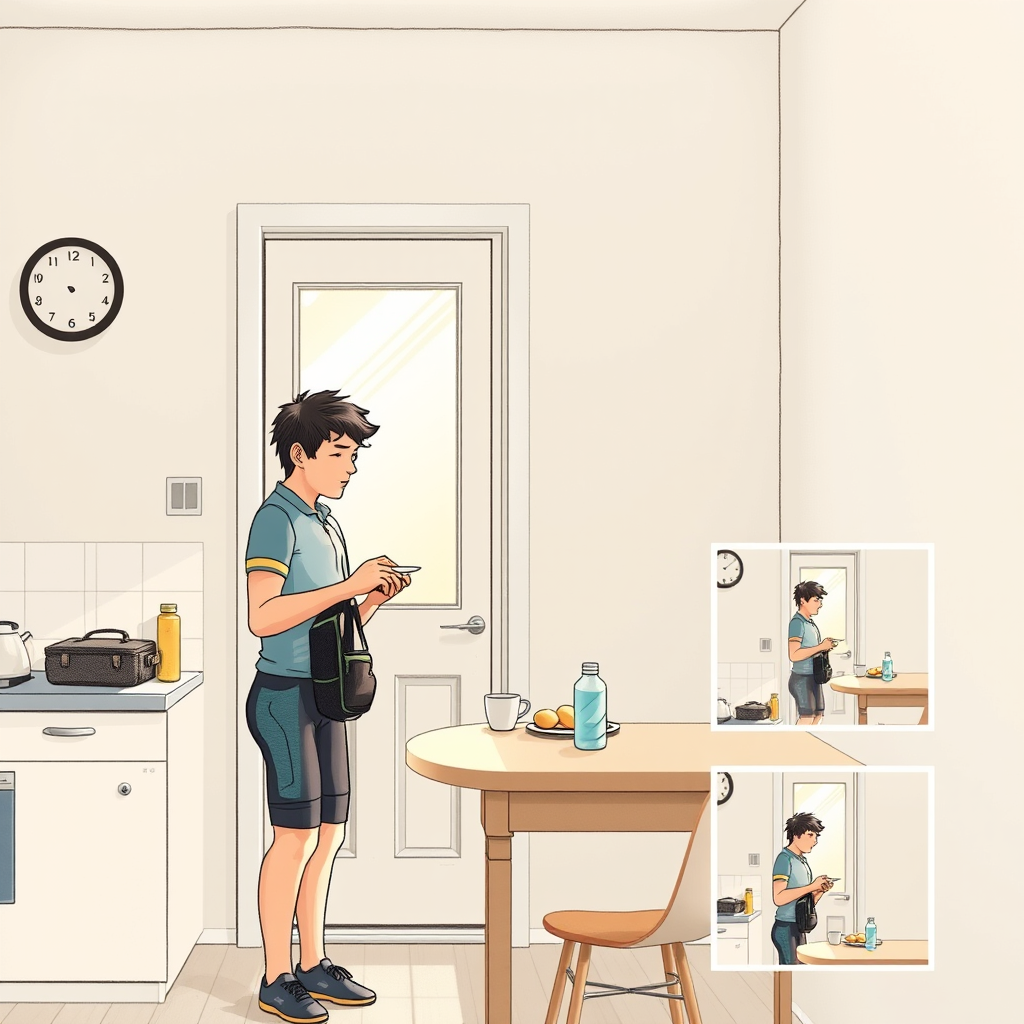
things you do regularly in the same way
My morning routine starts with a short run.
More examples: Cycling to work is part of his daily routine. • A good sleep routine helps you rest well. • My routine changed when I started a new job.
Common collocations: daily routine, morning routine, stick to a routine
Word family: routinely (adverb)
Synonyms: habit, schedule, pattern
Antonyms: chaos, spontaneity
Related concepts: habits, schedules, discipline
Contexts: mornings, work, fitness
Usage note: We usually talk about 'a routine' or 'my routine'. The adjective 'routine' also exists and means 'normal, not special', e.g. 'a routine check'.
work out
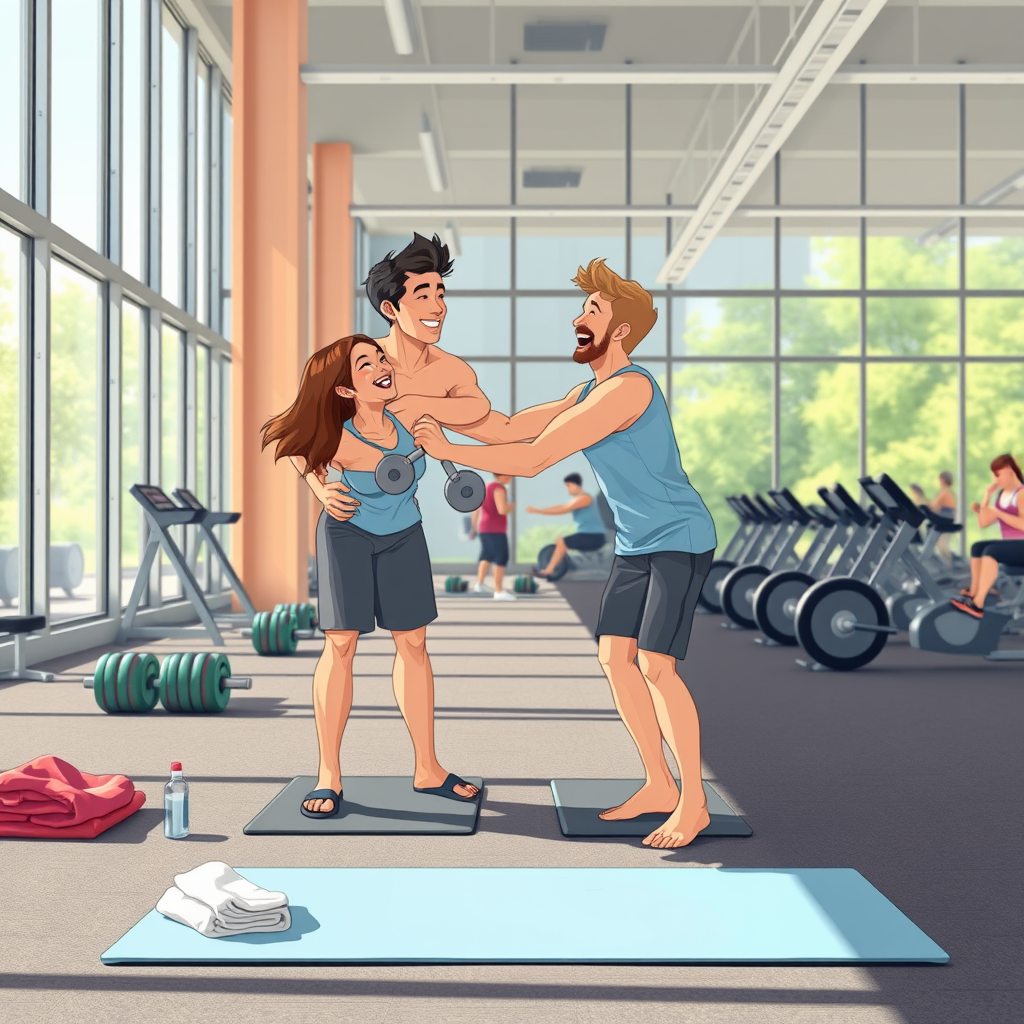
to do exercise, especially at a gym
I work out at the gym twice a week.
More examples: She works out for an hour before dinner. • He worked out with a friend yesterday. • Do you work out at home or at a gym?
Common collocations: work out at the gym, work out with a friend, a hard workout
Word family: workout (noun)
Synonyms: exercise, train
Antonyms: rest, relax
Related concepts: gym, fitness, strength
Contexts: gyms, home exercise, training plans
Usage note: In the exercise meaning it has no object: 'I work out at home.' Do not confuse it with 'work it out' meaning 'solve a problem', or 'it worked out' meaning 'it turned out well'.
fit in
to find time for something in a busy day
I try to fit in a run before dinner.
More examples: How do you fit in exercise with a full-time job? • She fitted in a quick swim at lunchtime. • I can't fit in anything else this week.
Common collocations: fit in a workout, fit in around work, fit it in
Synonyms: make time for, squeeze in, manage
Related concepts: busy schedules, time management, priorities
Contexts: work life, family life, study
Usage note: This phrasal verb is separable and usually is: 'fit it in', 'fit a run in'. We often say 'fit in something around something else' when talking about busy schedules.
progress

improvement; getting better or closer to a goal
After a month, I can see real progress in my running.
More examples: She is making good progress at the gym. • Small progress is still progress. • He checks his progress once a week.
Common collocations: make progress, see progress, slow progress
Word family: progress (verb), progressive (adjective)
Synonyms: improvement, development, advance
Antonyms: setback, decline
Related concepts: goals, results, growth
Contexts: fitness, learning, work projects
Usage note: Progress is uncountable: say 'some progress' or 'a lot of progress', never 'a progress'. The common verb phrase is 'make progress'.
Vocabulary Check
- What does 'motivation' mean?
- A feeling that makes you want to do something
- A type of exercise you do at the gym
- A plan for your free time at the weekend
- A strong and healthy body
- Which word best completes the sentence? 'Cycling to work every day is part of his daily ______.'
- progress
- motivation
- routine
- workout
- What does 'work out' mean in this sentence: 'I work out at the gym twice a week'?
- Solve a difficult problem
- Do exercise
- Finish work early
- Plan a schedule
- In which situation would you use 'fit in'?
- When you are too tired to continue doing something
- When you want to find time for something in a busy day
- When you buy clothes that are the right size
- When you join a gym for the first time
- What does 'progress' mean?
- A difficult problem you must solve
- A rest day between workouts
- Improvement; getting closer to your goal
- A reason for doing something
Phrasal Verbs & Expressions
keep going
to continue, not stop
I was tired after ten minutes, but I kept going until the end.
Usage note: 'Keep' + -ing means to continue an action: 'keep running', 'keep trying'.
rain or shine
in every situation, good or bad
He plays football with his friends every Sunday, rain or shine.
Usage note: The picture is simple: you do it when it rains and when the sun shines.
warm up
to prepare your body before exercise
Always warm up for five minutes before you run.
Usage note: 'Up' often means the activity is starting or increasing: 'warm up', 'speed up'.
Language Practice: Talking About Fitness Habits
Practise expressing ideas about exercise, habits and motivation.
- Giving opinions with reasons
- Emerging: I think ___ because ___. — I think running is fun because I can listen to music.
- Developing: In my opinion, ___ is better than ___ because ___. — In my opinion, cycling is better than running because it is easier on my knees.
- Expanding: For me, the main thing is ___, because if ___, then ___. — For me, the main thing is enjoyment, because if I enjoy it, then I keep doing it for years.
- Describing habits and routines
- Emerging: I ___ every day / every week. — I walk every day.
- Developing: My routine is simple: first I ___, then I ___. — My routine is simple: first I wake up at six, then I run for twenty minutes.
- Expanding: I try to ___ regularly, although sometimes ___ , so ___. — I try to work out regularly, although sometimes work gets busy, so I only manage twice a week.
- Talking about problems and solutions
- Emerging: When I ___, I ___. — When I feel tired, I rest.
- Developing: My biggest problem is ___, so I try to ___. — My biggest problem is time, so I try to fit in short workouts.
- Expanding: When I lose motivation, I usually ___, because that helps me ___. — When I lose motivation, I usually watch a running video, because that helps me remember why I started.
Fill in the Blanks
Sam wants to get fit this year. At first his _____ was very strong, but after two weeks it started to disappear. His sister gave him some advice: 'Make exercise part of your daily _____. You don't need hours - just _____ twenty minutes before dinner.' So Sam decided to _____ at a small gym near his office twice a week. After a month, he could see real _____: he felt stronger and slept much better.
Word bank: motivation, routine, fit in, work out, progress
Sentence Unscramble
- I / try / to / fit / in / a / short / run / before / dinner / .
- She / works / out / with / a / friend / so / she / cannot / cancel / .
- After / one / month / I / can / see / real / progress / in / my / fitness / .
Discussion Questions
Many adults start exercising with big plans in January, but most stop after a few weeks. Marta in the reading had strong motivation at first, but it disappeared by February. Some people say motivation is not the answer - habits are.
Do you agree that habits are more important than motivation? What usually happens with your own plans?
Leo cycles to work every day, so he does not need extra time for exercise. Other people prefer the gym, where they can use machines and lift weights. Both ways can keep you fit, but they feel very different.
Which sounds better to you: making exercise part of your day, like cycling to work, or going to a gym? Why?
Most adults are busy with work and family, and exercise is often the first thing to go. Marta found it hard to fit in exercise around her long hours, until she tried short twenty-minute sessions.
When you have a really busy week, what is the first thing you stop doing? Could you fit in twenty minutes of exercise if you really tried?
Leo says the secret is to work out with a friend, because you cannot easily cancel. Some people love exercising with others; others prefer to be alone with music or a podcast. There is no right answer.
Do you prefer exercising alone or with other people? Has anyone ever helped you keep a good habit going?
Marta's biggest lesson was to stop trying to be perfect. She now keeps going even on bad days, and after a month she can see real progress. Many people give up because they miss one session and feel they have failed.
When you try to learn something new or build a habit, how do you deal with bad days? Do you think small progress is enough?
Knowledge Check
- Which word best completes the sentence? 'I go to the gym twice a week - it's part of my weekly ______.'
- progress
- routine
- motivation
- workout plan
- True or false? 'Progress' is a countable noun, so you can say 'I made three progresses this month'.
- True
- False
- What does 'fit in' mean in this sentence: 'I can't fit in a workout today - my day is full'?
- Find time for a workout
- Finish a workout quickly
- Enjoy a workout
- Remember a workout
- True or false? In the reading, Leo says the secret is to work out with a friend, so you cannot easily cancel.
- True
- False
- If your friend goes running 'rain or shine', what does that mean?
- She only runs when the weather is good
- She runs in every kind of weather
- She stops running when it rains
- She runs only at the weekend
Free to use with your students: Free to teach, screen-share, print and share with your students, with a credit to PlanWise ESL. Please do not sell it or republish it as your own. What you can do with free lessons.