Talking About Medicine: Dosages and Side Effects
About this lesson: This is a B1 (Intermediate) ESL lesson in the General English category. It takes about 60 minutes. It includes 5 vocabulary words, 3 phrasal verbs and expressions, a reading text, comprehension questions, discussion questions and speaking patterns. Suits one-to-one or small-group online classes. Free to open and teach with no login, and it prints as a PDF.
Print just the discussion questions
How this lesson is built
This is a complete conversation lesson built on a scientific pedagogical formula, not a generic worksheet: recall prior topic vocabulary, pre-teach the new words in depth, read in context, practise active recall with flashcards and synonyms/antonyms, build accuracy with exercises, and finish with deep discussion.
- Warm-up: Discussion questions that connect the topic to the student’s own life and recall vocabulary they already know about the subject.
- Reading: A text written for this CEFR level that uses each new word two or three times in context, giving the student something meaningful to react to.
- Key vocabulary: 5 new words, pre-taught before the reading with a definition, pronunciation guide, example sentences and a picture, plus word families, usage notes, recall flashcards and synonyms/antonyms, giving a solid grounding before reading.
- Comprehension: 5 questions that check the new words: retrieval practice, not rereading.
- Idioms and phrasal verbs: Expressions taken from the reading, each with its meaning, an example and a speaking question.
- Sentence frames: 3 speaking patterns, each at three levels of support (emerging, developing, expanding) with model answers—especially helpful scaffolding for beginners and less confident speakers.
- Gap-fill: The new words again, in a shuffled order, so the student recalls them by meaning in context.
- Sentence unscramble: Natural sentences with the new words to put back in order, reinforcing grammar and collocation.
- Discussion: 5 open questions designed to talk deeply about the subject while actively using the lesson’s target vocabulary: the heart of a conversation lesson.
- Quiz: A short retrieval check that brings every new word back once more.
Unlike a generic worksheet, the new words are taught before the reading and met again in the activities, the speaking is supported at three levels and most of the time goes on the student talking. Teachers who use PlanWise ESL also get per-student vocabulary tracking (recycling earlier words into future readings and questions), a private learner dashboard with flashcards and custom lesson creation, and a downloadable study PDF.
Warm-up: At the Pharmacy
Look at the picture of a pharmacy and talk about your experiences with medicine and doctors.
- When did you last go to a doctor or a pharmacy?
- Do you usually understand what a doctor tells you about your medicine?
- Do you read the information on medicine boxes? Why or why not?
- Have you ever had a bad reaction to a medicine? What happened?
- Do you prefer pills, syrups or injections? Why?
Reading Text: Maria's Cold That Wouldn't Go Away
Read this short story about a woman who takes medicine for a cold. Think about what she does well and what she does wrong.
Last winter, Maria got a bad cold. Her first symptom was a sore throat, and then she started coughing at night. She felt tired all the time, so she went to the pharmacy near her house.
The pharmacist asked her some questions and then gave her a prescription for strong cough syrup. He explained the dosage clearly: one spoonful, three times a day, after meals. He also said, 'Don't take more than that, even if you feel worse.'
However, Maria didn't listen carefully. She wanted to get better quickly, so she took two spoonfuls each time. After two days, she felt very drowsy at work. She nearly fell asleep in a meeting, and her boss was not happy.
Then Maria read the small paper inside the box. It said the syrup could make you drowsy, and that taking too much was dangerous. She realized her mistake and called the pharmacist. He told her to go back to the correct dosage and drink a lot of water.
After a week, Maria's cold went away. Now she always reads the information before she takes any medicine. She says, 'Medicine can help you, but only if you use it properly. The side effects are no joke.'
Key Vocabulary
prescription

A paper from a doctor that says what medicine you need
The doctor wrote a prescription for my cough.
More examples: You can't buy this medicine without a prescription. • I need to get my prescription from the pharmacy. • My prescription runs out next week, so I need a new one.
Common collocations: get a prescription, fill a prescription, a prescription for antibiotics
Word family: prescribe (verb), prescribed (adjective)
Synonyms: doctor's note, doctor's order
Antonyms: over-the-counter medicine
Related concepts: pharmacy, doctor, medicine
Contexts: clinic, pharmacy, hospital
Usage note: Use for medicine you can only buy with a doctor's paper. The verb is 'prescribe': 'The doctor prescribed something for my headache.'
dosage
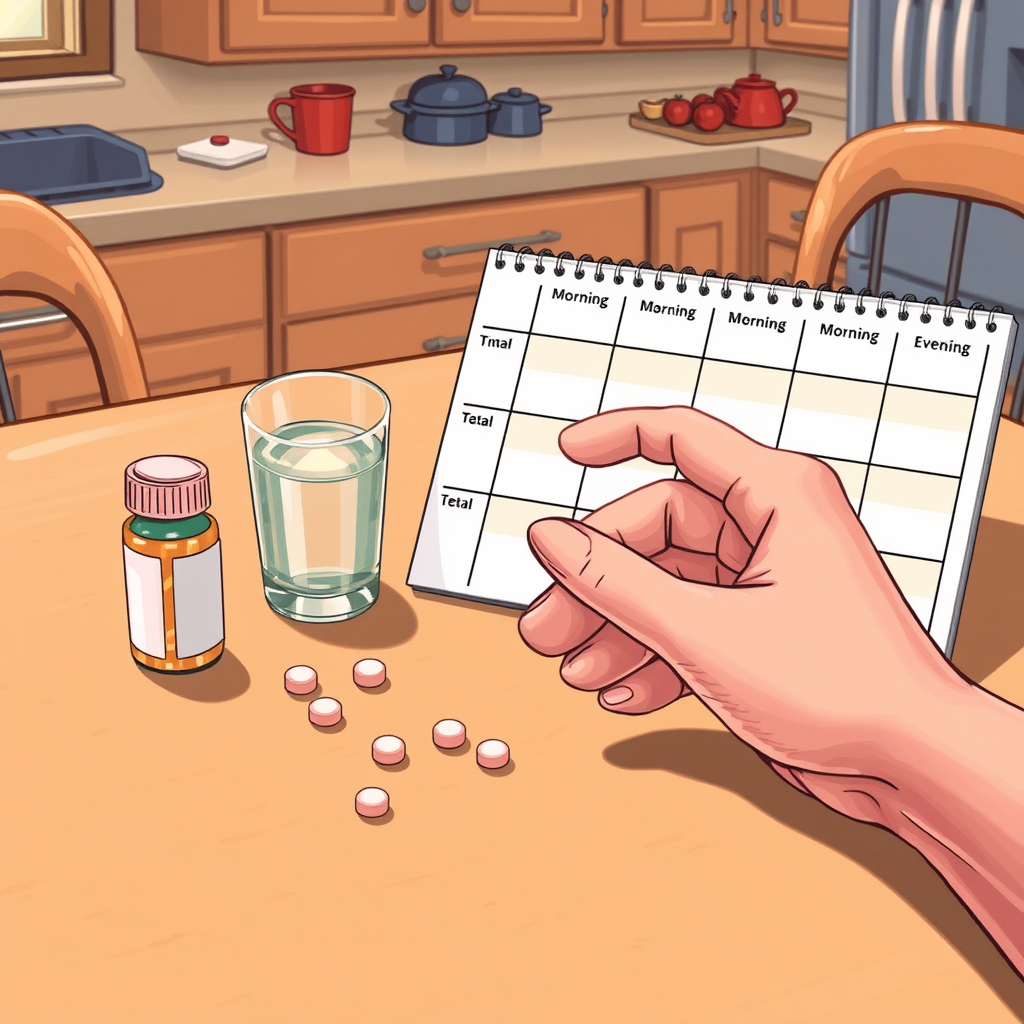
The amount of medicine you should take, and how often
The dosage is one pill twice a day.
More examples: Never change your dosage without asking a doctor. • The dosage for children is smaller than for adults. • I forgot the dosage, so I read the box again.
Common collocations: the correct dosage, a daily dosage, reduce the dosage
Word family: dose (noun), dose (verb)
Synonyms: dose, amount
Antonyms: overdose
Related concepts: medicine, pills, instructions
Contexts: pharmacy, hospital, home
Usage note: Use when talking about how much medicine to take. 'Dose' is one single amount; 'dosage' is the whole plan of how much and how often.
side effect
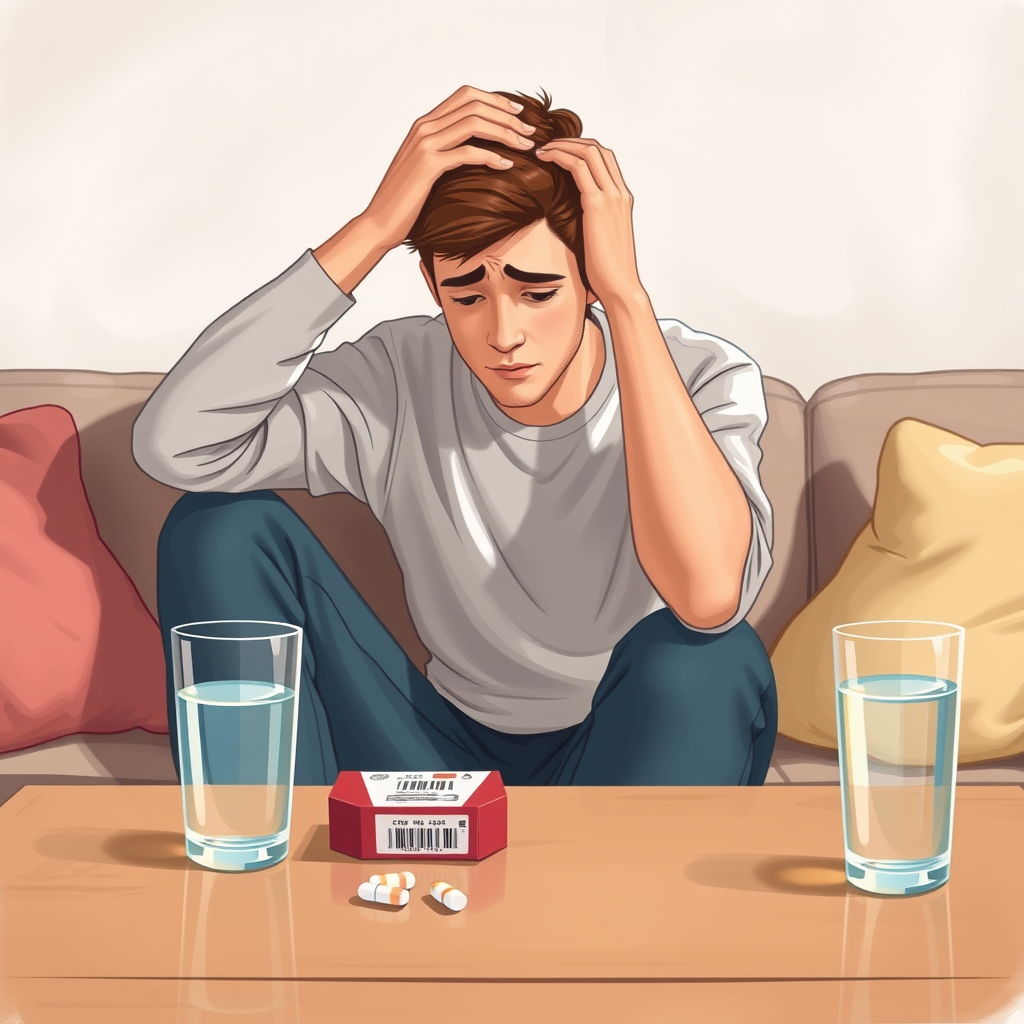
An extra, often bad, effect that a medicine can cause
A common side effect of this medicine is a dry mouth.
More examples: Read the box to learn about possible side effects. • The side effects went away after a few days. • I stopped taking it because of the side effects.
Common collocations: common side effect, mild side effects, suffer from side effects
Word family: effect (noun), affect (verb)
Synonyms: bad reaction, unwanted effect
Antonyms: benefit, main effect
Related concepts: medicine, allergy, warning
Contexts: pharmacy, doctor's office, home
Usage note: Almost always plural or with 'a'. Often used with adjectives like 'common', 'mild' or 'serious'.
symptom
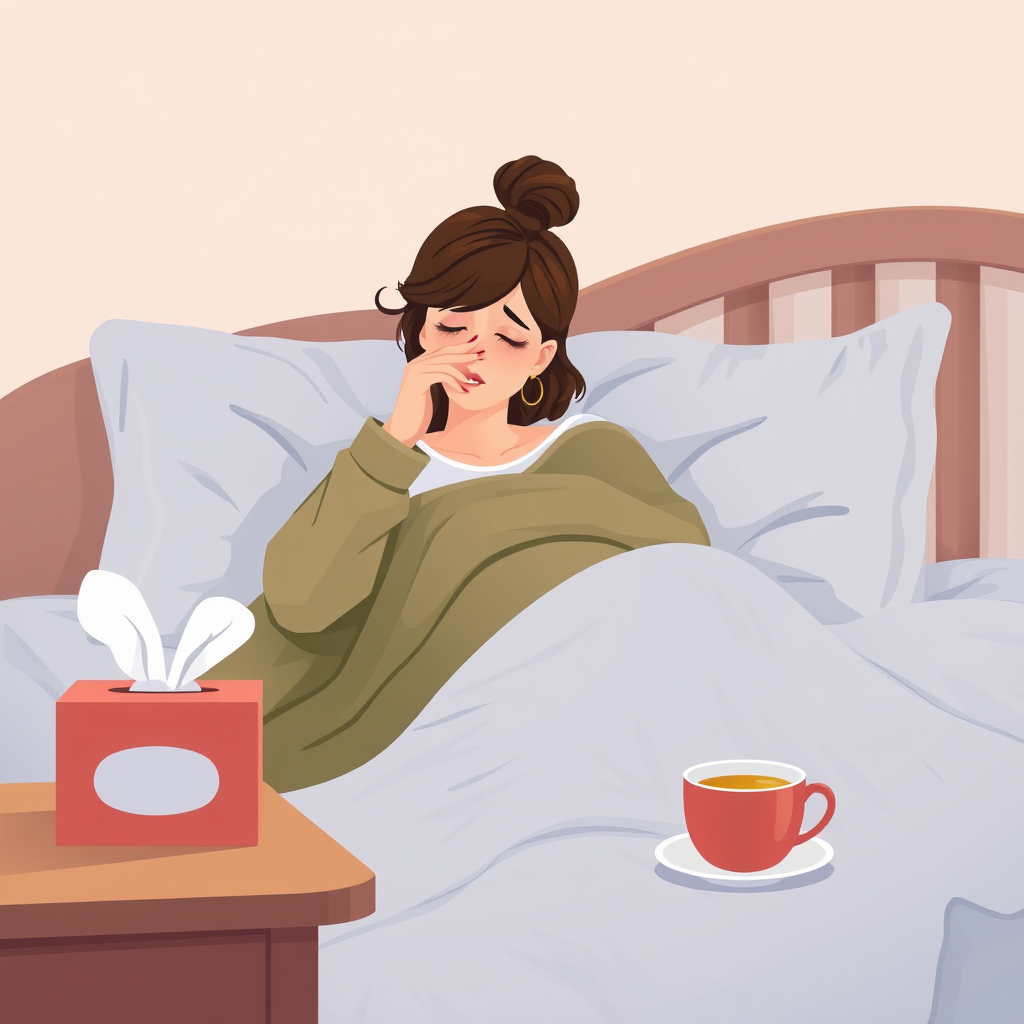
A sign that shows you may be ill
A headache is a common symptom of stress.
More examples: My first symptom was a high temperature. • Tell the doctor about all your symptoms. • Coughing is a symptom of many illnesses.
Common collocations: common symptom, early symptoms, describe your symptoms
Word family: symptomatic (adjective)
Synonyms: sign, warning sign
Antonyms: recovery, good health
Related concepts: illness, fever, cough
Contexts: doctor's office, home, hospital
Usage note: Use for the signs of an illness: fever, cough, pain, tiredness. Often plural because illnesses have several signs.
drowsy

Feeling very sleepy, so it is hard to stay awake
This medicine can make you drowsy, so don't drive.
More examples: I felt drowsy after taking the syrup. • Warm milk sometimes makes me drowsy. • Don't drive if you feel drowsy.
Common collocations: feel drowsy, make you drowsy, slightly drowsy
Word family: drowsiness (noun), drowse (verb, rare)
Synonyms: sleepy, half asleep
Antonyms: awake, alert
Related concepts: tiredness, sleep, medicine warnings
Contexts: work, driving, home
Usage note: Use for mild sleepiness, often caused by medicine or tiredness. Stronger than 'a bit tired' but weaker than 'falling asleep'.
Vocabulary Check
- What does 'dosage' mean?
- The name of a medicine
- How much medicine to take and how often
- The price of the medicine
- The illness the medicine treats
- Which sentence uses 'drowsy' correctly?
- I felt drowsy after running five kilometres.
- The coffee made me drowsy, so I couldn't sleep.
- This medicine can make you drowsy, so don't drive.
- I was drowsy because I won the game.
- In which situation would you use the word 'symptom'?
- When you buy new shoes
- When you tell a doctor how you feel ill
- When you plan a holiday
- When you cook dinner
- What is a 'side effect'?
- The good result the medicine gives you
- An extra effect of a medicine, often bad
- A second illness you get later
- The correct amount of medicine
- Which sentence uses 'prescription' correctly?
- I got a prescription for antibiotics from my doctor.
- I ate a prescription for breakfast.
- The prescription was very delicious.
- She drove her prescription to work.
Phrasal Verbs & Expressions
get better
to become healthy again after being ill
Drink warm tea and rest — you'll get better in a few days.
Usage note: 'get' here means 'become'. Compare: get better / get worse / get old. · Right: I'm getting better. · Avoid: I'm getting more better.
fall asleep
to go into sleep, often without planning to
I was so tired on the train that I fell asleep and missed my stop.
Usage note: The past form is irregular: fall asleep → fell asleep. · Right: I fell asleep at ten. · Avoid: I felled asleep at ten.
Usage note: 'Fall asleep' is the moment you start sleeping; 'sleep' is the whole night.
go away
to disappear, to stop
Take this medicine and the pain will go away soon.
Usage note: It cannot be split: say 'the pain went away', not 'went the pain away'. · Right: The headache went away. · Avoid: The headache went the pain away.
Language Practice: Talking About Medicine
Practice explaining health problems, giving advice about medicine, and talking about experiences.
- Describing symptoms and health problems
- Emerging: I have a ___. — I have a headache.
- Developing: For two days, I've had a ___ and I also feel ___. — For two days, I've had a cough and I also feel drowsy.
- Expanding: First I had a ___, but now the worst symptom is ___, so I think I should ___. — First I had a sore throat, but now the worst symptom is the cough, so I think I should see a doctor.
- Giving advice about taking medicine
- Emerging: You should take ___ . — You should take one pill.
- Developing: You should follow the dosage, because if you take too much, you might ___. — You should follow the dosage, because if you take too much, you might feel drowsy.
- Expanding: If I were you, I would check the dosage first, because the side effects can be serious, especially if you ___. — If I were you, I would check the dosage first, because the side effects can be serious, especially if you drive.
- Talking about past experiences with medicine
- Emerging: Last year, I took ___. — Last year, I took painkillers.
- Developing: Last time I was ill, I took ___, and it made me feel ___. — Last time I was ill, I took cough syrup, and it made me feel drowsy.
- Expanding: Once I took ___ without checking the dosage, and because of that I ___, so now I always ___. — Once I took cough syrup without checking the dosage, and because of that I fell asleep at my desk, so now I always read the box first.
Fill in the Blanks
Last month, my brother had a fever and a bad headache. The fever was the first _____ of his illness, so he went to the doctor. The doctor gave him a _____ for some strong pills and explained the _____: one pill in the morning and one at night. However, the pills had a strange _____. They made him very _____, so he couldn't watch TV in the evening without falling asleep. After five days, he felt much better.
Word bank: prescription, dosage, side effect, symptom, drowsy
Sentence Unscramble
- the / doctor / gave / me / a / prescription / for / my / cough
- this / medicine / can / make / you / drowsy / so / don't / drive
- a / common / side / effect / of / these / pills / is / a / headache
Discussion Questions
Maria in the story took too much medicine because she wanted to get better quickly. Many people do things like this: they take extra pills, stop medicine too early, or mix medicines without asking anyone. Sometimes it works out, and sometimes it doesn't.
Have you ever taken medicine without reading the instructions or asking a doctor? What happened?
Some medicines need a prescription from a doctor, but in many countries you can buy other medicines, like painkillers or cough syrup, directly in a shop or pharmacy. Rules are different around the world.
In your country, is it easy to buy medicine without a prescription? Do you think that's a good thing? Why?
Some side effects are mild, like a dry mouth, but others are serious, like feeling very drowsy at work or getting a stomach problem. People react differently: some stop the medicine immediately, others continue because they want to get better.
If a medicine helped you but gave you an unpleasant side effect, would you continue taking it or stop? Why?
Doctors are often very busy, so appointments can be short. Some patients feel shy about asking questions, and others ask a lot. Understanding your dosage and side effects can depend on how well you communicate.
Do you usually ask your doctor questions, or do you feel shy? What would you like doctors to explain more clearly?
Some people take medicine immediately when they feel ill. Others prefer to wait, rest, drink tea, or try natural things like honey and ginger before taking any pills. Both approaches have fans and critics.
When you feel ill, do you take medicine straight away or wait and see? Which way do you think is better?
Knowledge Check
- What does a pharmacist do with a prescription?
- They write a new one
- They give you the medicine
- They throw it away
- They send it to a hospital
- 'Dosage' means the same as 'dose'.
- True
- False
- Which of these is a symptom of a cold?
- A new phone
- A sore throat
- A bus ticket
- A prescription
- If a medicine makes you drowsy, you should probably avoid driving.
- True
- False
- What should you do if you notice a strong side effect?
- Take double the dosage
- Ignore it completely
- Tell a doctor or pharmacist
- Give the medicine to a friend
- Maria took two spoonfuls instead of one. What happened to her?
- She fell asleep at work
- She got better quickly
- Her cold went away in one day
- She stopped feeling drowsy
Free to use with your students: Free to teach, screen-share, print and share with your students, with a credit to PlanWise ESL. Please do not sell it or republish it as your own. What you can do with free lessons.