How Do You Feel? Talking About Life, Habits and Happiness
About this lesson: This is a B1 (Intermediate) ESL lesson in the General English category. It takes about 60 minutes. It includes 5 vocabulary words, 3 phrasal verbs and expressions, a reading text, comprehension questions, discussion questions and speaking patterns. Suits one-to-one or small-group online classes. Free to open and teach with no login, and it prints as a PDF.
Print just the discussion questions
How this lesson is built
This is a complete conversation lesson built on a scientific pedagogical formula, not a generic worksheet: recall prior topic vocabulary, pre-teach the new words in depth, read in context, practise active recall with flashcards and synonyms/antonyms, build accuracy with exercises, and finish with deep discussion.
- Warm-up: Discussion questions that connect the topic to the student’s own life and recall vocabulary they already know about the subject.
- Reading: A text written for this CEFR level that uses each new word two or three times in context, giving the student something meaningful to react to.
- Key vocabulary: 5 new words, pre-taught before the reading with a definition, pronunciation guide, example sentences and a picture, plus word families, usage notes, recall flashcards and synonyms/antonyms, giving a solid grounding before reading.
- Comprehension: 5 questions that check the new words: retrieval practice, not rereading.
- Idioms and phrasal verbs: Expressions taken from the reading, each with its meaning, an example and a speaking question.
- Sentence frames: 3 speaking patterns, each at three levels of support (emerging, developing, expanding) with model answers—especially helpful scaffolding for beginners and less confident speakers.
- Gap-fill: The new words again, in a shuffled order, so the student recalls them by meaning in context.
- Sentence unscramble: Natural sentences with the new words to put back in order, reinforcing grammar and collocation.
- Discussion: 5 open questions designed to talk deeply about the subject while actively using the lesson’s target vocabulary: the heart of a conversation lesson.
- Quiz: A short retrieval check that brings every new word back once more.
Unlike a generic worksheet, the new words are taught before the reading and met again in the activities, the speaking is supported at three levels and most of the time goes on the student talking. Teachers who use PlanWise ESL also get per-student vocabulary tracking (recycling earlier words into future readings and questions), a private learner dashboard with flashcards and custom lesson creation, and a downloadable study PDF.
Warm-up Activity
Look at the pictures and talk about how you feel in different everyday situations.
- How do you usually feel on Monday mornings?
- What small things make you feel good every day?
- Do you have any habits that help you relax?
- When was the last time you gave someone advice?
- Do you have a pet, or would you like one? Why?
Reading Text: A Week of Small Changes
Read about Marta, who decided to change a few small things in her life. What do you think about her ideas?
Marta works in an office, and last year she felt tired and unhappy every day. Her mood was low, especially in the mornings. She did not want to take strong medicine or see a doctor, so she thought about her daily habits instead.
First, she made a new habit: she went to bed one hour earlier. It was difficult at the start, but after two weeks it felt normal. Her mood improved quickly, and she stopped drinking so much coffee.
Second, Marta started to practise the guitar again. She played it as a teenager, but she stopped because she was busy. Now she practises for fifteen minutes every evening. It is not much, but it makes her feel proud and calm.
Her friend Ana gave her some good advice too. Ana said, 'Do not try to change everything at once. Change one small thing, and keep doing it.' Marta thinks this is the best advice she has ever received.
Marta also thought about getting a pet. She lives alone, and she wanted some company in the evenings. However, she travels a lot for work, so a dog is difficult. In the end, she chose a cat, and now it sleeps next to her while she practises the guitar.
Key Vocabulary
pet

an animal that lives with you at home
My sister has a pet rabbit called Coco.
More examples: A pet can help people feel less lonely. • What was your first pet? • I would love a pet, but my flat is too small.
Common collocations: have a pet, get a pet, pet owner
Word family: pet owner, pet shop
Synonyms: animal, companion
Antonyms: wild animal
Related concepts: company, responsibility, home
Contexts: home life, family, free time
Usage note: Use 'pet' for animals people keep at home for company, like dogs, cats, fish or birds. It is a friendly, everyday word.
practise

to do something many times to get better at it
I practise English for ten minutes every day.
More examples: She practises the piano before school. • You cannot learn a language without practising it. • He practises serving the ball every weekend.
Common collocations: practise regularly, practise a skill, practise speaking
Word family: practice (noun), practised
Synonyms: train, rehearse, repeat
Antonyms: give up, stop
Related concepts: improvement, routine, skill
Contexts: music, sport, language learning
Usage note: In British English, 'practise' is the verb and 'practice' is the noun. Use it with sports, music and languages.
habit

something you do often, usually without thinking
Drinking water in the morning is a good habit.
More examples: I have a bad habit of checking my phone at night. • Small habits can change your life. • It takes time to build a new habit.
Common collocations: good habit, bad habit, break a habit
Word family: habitual, habitat
Synonyms: routine, custom, pattern
Antonyms: one-off, rarity
Related concepts: routine, discipline, change
Contexts: health, work, self-improvement
Usage note: Use 'habit' for actions you repeat every day or week. We often say 'get into a habit' or 'break a habit'.
advice
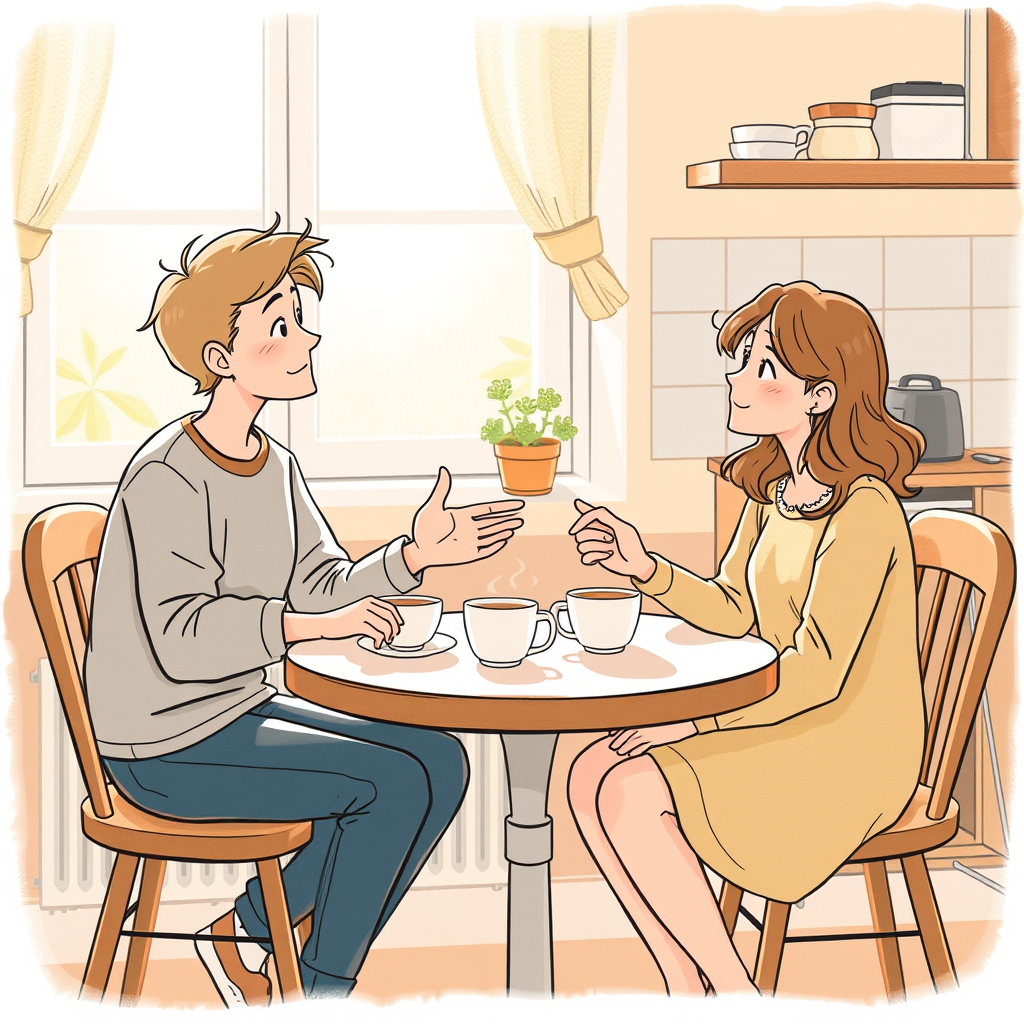
words that tell someone what you think they should do
My mother gave me good advice about my job.
More examples: Can I give you some advice? • She never listens to my advice. • Thank you, that was really useful advice.
Common collocations: give advice, take advice, a piece of advice
Word family: advise (verb), adviser
Synonyms: suggestion, tip, guidance
Antonyms: criticism, order
Related concepts: help, opinion, trust
Contexts: friendship, family, work
Usage note: 'Advice' is uncountable, so say 'some advice' or 'a piece of advice', never 'advices'.
mood
the way you feel at one time, happy or sad
The sunny weather put me in a good mood.
More examples: He is in a bad mood today, so be careful. • Music always changes my mood. • I woke up in a great mood this morning.
Common collocations: in a good mood, in a bad mood, change your mood
Word family: moody
Synonyms: feeling, state of mind, temper
Antonyms: indifference
Related concepts: emotion, energy, weather
Contexts: daily life, work, relationships
Usage note: We usually say someone is 'in a good/bad mood'. Use it for feelings that last a short time, not personality.
Vocabulary Check
- What does 'mood' mean?
- The way you feel at one time
- A place where you live
- A kind of animal
- Something you eat
- Which sentence uses 'practise' correctly?
- I practise the guitar every evening.
- I practise a cat at home.
- I practise my best friend.
- I practise pizza for dinner.
- What is a 'habit'?
- A difficult problem
- Something you do often without thinking
- A kind of feeling
- A person who helps you
- Which sentence uses 'advice' correctly?
- She gave me three advices.
- She gave me some good advice.
- She gave me many advices last week.
- She advices me a present.
- In which situation would you use the word 'pet'?
- When talking about your job
- When talking about a cat that lives with you
- When talking about the weather
- When talking about a school exam
Phrasal Verbs & Expressions
work out
to think about something until you understand it
I couldn't work out why I was so tired — then I saw I was going to bed too late.
Usage note: You can split it: 'work it out', 'work the answer out'. · Right: I worked it out. · Avoid: I worked out it.
Usage note: It also means to exercise: 'I work out at the gym twice a week.'
at once
all together, at the same time
Don't eat breakfast and answer emails at once — enjoy your food!
Usage note: 'At once' can also mean 'immediately': 'Come here at once!' — but in the reading it means 'everything together'.
give up
to stop doing something
I gave up sugar for a month, and I felt much better.
Usage note: Use 'give up' + -ing: 'give up smoking', not 'give up to smoke'. · Right: She gave up drinking coffee. · Avoid: She gave up to drink coffee.
Usage note: It can also mean to stop trying: 'Never give up!'
Language Practice: Feelings and Daily Life
Practice expressing your feelings, habits and opinions about daily life.
- Talking about habits and routines
- Emerging: I ___ every day. — I drink tea every day.
- Developing: I usually ___ because ___. — I usually cook at home because it is cheaper.
- Expanding: When I ___, I feel ___, so I try to ___. — When I sleep well, I feel happy, so I try to go to bed early.
- Giving opinions with reasons
- Emerging: I think ___ is good. — I think cats are good.
- Developing: I think ___ because ___. — I think pets are good company because they make you feel less alone.
- Expanding: In my opinion, ___, although I know some people think ___. — In my opinion, everyone should have a hobby, although I know some people are too busy.
- Describing feelings and moods
- Emerging: I am in a ___ mood today. — I am in a good mood today.
- Developing: ___ makes me feel ___. — Rainy weather makes me feel sleepy.
- Expanding: When ___, my mood changes, so I usually ___. — When I work too long, my mood changes, so I usually take a short walk.
Fill in the Blanks
Last month, my friend Leo decided to change his life. His first new _____ was running before work. At the start, it was hard, but now he _____s three times a week and he is much fitter. His sister gave him some useful _____: start small and do not stop. Leo also wanted a _____, because he lives alone and sometimes feels lonely. Now he has a small dog, and the dog always puts him in a good _____.
Word bank: pet, practise, habit, advice, mood
Sentence Unscramble
- My / cat / always / puts / me / in / a / good / mood / .
- She / practises / the / piano / every / evening / after / dinner
- Can / I / give / you / a / piece / of / advice / about / your / new / habit / ?
Discussion Questions
Many people have a pet, or would like one. Pets need time and money, but they give company and love. Some people say a pet is like a member of the family.
Do you have a pet now, or would you like one? What animal would be best for your life, and why?
Marta in the reading changed her life with small habits, like going to bed earlier. Big changes are hard to keep, but small ones can grow. Many people try to build good habits in January or on their birthday.
What is one good habit you have, and one bad habit you would like to change? Why is the bad habit hard to break?
Our mood changes during the day and the week. Weather, sleep, music, food and people all change how we feel. Some people are very sensitive to these things, and others are not.
What usually puts you in a good mood, and what puts you in a bad one? Does the weather change your mood?
When we have a problem, we often ask family or friends for advice. Sometimes the advice is useful, and sometimes it is not. Some people prefer to decide alone.
Who gives you the best advice in your life? Tell me about a piece of advice that really helped you.
Marta practises the guitar for fifteen minutes every evening. Learning a skill takes time, and many people stop practising when it gets difficult. But regular practice, even a little, makes a big difference.
Is there something you practise or would like to get better at? Do you think fifteen minutes a day is enough?
Knowledge Check
- My dog always puts me in a good ____.
- habit
- mood
- advice
- pet
- True or false: 'Advice' can be plural, so you can say 'three advices'.
- True
- False
- Which word means 'something you do often without thinking'?
- mood
- advice
- habit
- pet
- What does 'practise' mean?
- To buy something new
- To do something many times to get better
- To feel happy
- To give someone help
- True or false: A 'pet' is an animal that lives with you at home.
- True
- False
- Marta's friend says: 'Don't change everything at once.' What does 'at once' mean here?
- immediately
- all together, at the same time
- one by one
- never
Free to use with your students: Free to teach, screen-share, print and share with your students, with a credit to PlanWise ESL. Please do not sell it or republish it as your own. What you can do with free lessons.