Taking a Clear Medical History in English
About this lesson: This is a B1 (Intermediate) ESL lesson in the General English category. It takes about 60 minutes. It includes 5 vocabulary words, 3 phrasal verbs and expressions, a reading text, comprehension questions, discussion questions and speaking patterns. Suits one-to-one or small-group online classes. Free to open and teach with no login, and it prints as a PDF.
Print just the discussion questions
How this lesson is built
This is a complete conversation lesson built on a scientific pedagogical formula, not a generic worksheet: recall prior topic vocabulary, pre-teach the new words in depth, read in context, practise active recall with flashcards and synonyms/antonyms, build accuracy with exercises, and finish with deep discussion.
- Warm-up: Discussion questions that connect the topic to the student’s own life and recall vocabulary they already know about the subject.
- Reading: A text written for this CEFR level that uses each new word two or three times in context, giving the student something meaningful to react to.
- Key vocabulary: 5 new words, pre-taught before the reading with a definition, pronunciation guide, example sentences and a picture, plus word families, usage notes, recall flashcards and synonyms/antonyms, giving a solid grounding before reading.
- Comprehension: 5 questions that check the new words: retrieval practice, not rereading.
- Idioms and phrasal verbs: Expressions taken from the reading, each with its meaning, an example and a speaking question.
- Sentence frames: 3 speaking patterns, each at three levels of support (emerging, developing, expanding) with model answers—especially helpful scaffolding for beginners and less confident speakers.
- Gap-fill: The new words again, in a shuffled order, so the student recalls them by meaning in context.
- Sentence unscramble: Natural sentences with the new words to put back in order, reinforcing grammar and collocation.
- Discussion: 5 open questions designed to talk deeply about the subject while actively using the lesson’s target vocabulary: the heart of a conversation lesson.
- Quiz: A short retrieval check that brings every new word back once more.
Unlike a generic worksheet, the new words are taught before the reading and met again in the activities, the speaking is supported at three levels and most of the time goes on the student talking. Teachers who use PlanWise ESL also get per-student vocabulary tracking (recycling earlier words into future readings and questions), a private learner dashboard with flashcards and custom lesson creation, and a downloadable study PDF.
Warm-up: At the Doctor's Office
Talk about your experiences with doctors and health before we learn the key words.
- When did you last visit a doctor? What happened?
- Do you feel relaxed at the doctor's, or a little nervous? Why?
- Have you ever seen a doctor in another country or in English? How was it?
- What do you usually say when a doctor asks, 'What's the problem?'
- If a nurse asked about your health history, could you answer in English? What would be difficult?
Reading Text: Marta Goes to the Doctor
Read about Marta, a nurse who moved to a new city and visited a doctor for the first time in English. Notice the five key words as you read.
Marta moved to a new city last month, so she needed a new doctor. At her first appointment, the doctor sat down and said, 'Tell me about your health history.' Marta felt nervous because she wanted to explain everything clearly.
First, the doctor asked about her symptoms. Marta said she often felt dizzy when she stood up quickly, and she had a headache two or three times a week. The doctor wrote everything down carefully.
Next, the doctor asked, 'Do you have any allergies?' Marta said yes - she has an allergy to penicillin, a common medicine. The doctor said this was very important information, because some prescriptions contain penicillin.
The doctor then checked Marta's old prescription for her headaches. 'Is this the correct dosage?' she asked. 'Two tablets a day?' Marta said yes, but sometimes she forgot the evening one.
At the end, the doctor smiled. 'Your symptoms are not serious, and your dizzy spells may come from standing up too fast. Take your prescription as I explained, and come back in a month.' Marta left feeling calm and happy.
Key Vocabulary
symptoms

signs that show you are ill, like pain or a cough
The doctor asked Marta about her symptoms before the examination.
More examples: A high temperature and a sore throat are common symptoms of flu. • Tell the doctor your symptoms - don't leave anything out. • My main symptoms are a cough and feeling tired all the time.
Common collocations: describe your symptoms, common symptoms, symptoms of an illness
Word family: symptom (singular), symptomatic (adjective)
Synonyms: signs, signs of illness, complaints
Antonyms: good health, wellness
Related concepts: illness, doctor's visit, diagnosis
Contexts: clinic, hospital, pharmacy
Usage note: Use 'symptoms' when talking to doctors or nurses. Ask 'What are your symptoms?' not 'What is your symptom?' - it's usually plural.
dizzy
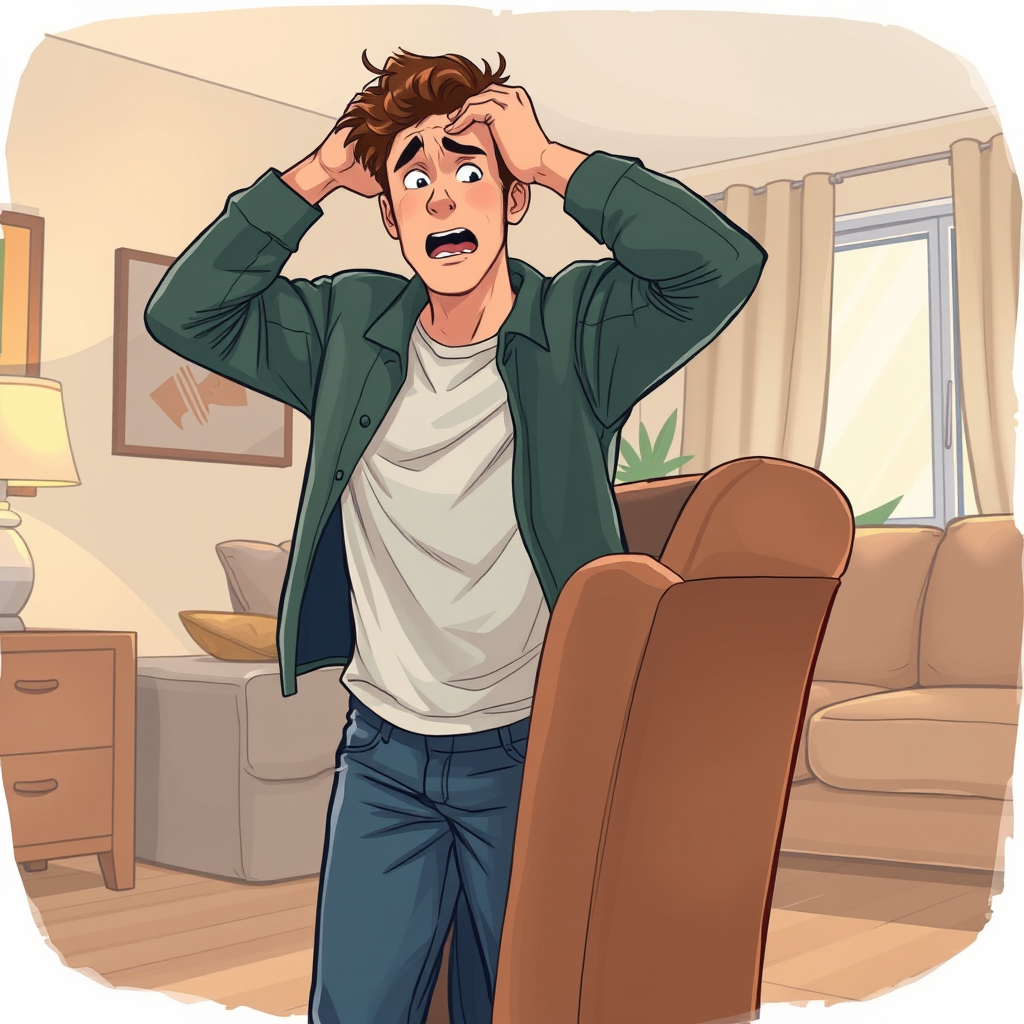
feeling that everything is turning, so you might fall
Marta felt dizzy when she stood up too quickly.
More examples: I felt dizzy after standing in the hot sun for an hour. • Stop the exercise if you start to feel dizzy. • She gets dizzy when she skips meals.
Common collocations: feel dizzy, get dizzy, slightly dizzy
Word family: dizziness (noun), dizzily (adverb)
Synonyms: light-headed, giddy, unsteady
Antonyms: steady, clear-headed
Related concepts: balance, fainting, tiredness
Contexts: illness, hot weather, medicine side effects
Usage note: Always used with the verb 'feel' or 'get': 'I feel dizzy', never 'I am dizzy person'. Say 'I felt dizzy', not 'I was dizzy to stand up'.
allergy

a bad body reaction to food, medicine or something in the air
Marta has an allergy to penicillin, so she cannot take that medicine.
More examples: My sister has an allergy to nuts, so we never buy them. • In spring, my allergy to pollen makes my eyes red. • The doctor keeps a note of my allergy in my file.
Common collocations: have an allergy to, food allergy, mild/severe allergy
Word family: allergies (plural), allergic (adjective), allergist (noun)
Synonyms: sensitivity, bad reaction
Antonyms: tolerance
Related concepts: medicine, food, rash
Contexts: pharmacy, doctor's office, restaurant menus
Usage note: Say 'I have an allergy to X' or the shorter 'I'm allergic to X'. Very common in doctor questions: 'Any allergies?'
prescription

a doctor's written order for medicine from a pharmacy
The doctor wrote a prescription for Marta's headaches.
More examples: Take this prescription to the pharmacy and come back tomorrow. • You cannot buy these tablets without a prescription. • My prescription runs out next week, so I need a new one.
Common collocations: write a prescription, fill a prescription, on prescription
Word family: prescribe (verb), prescribed (adjective)
Synonyms: doctor's order, script (informal)
Antonyms: over-the-counter medicine
Related concepts: pharmacy, medicine, doctor
Contexts: doctor's office, pharmacy, hospital
Usage note: Use 'prescription' for the paper or the medicine order itself. Verb form: 'The doctor prescribed two tablets a day.'
dosage
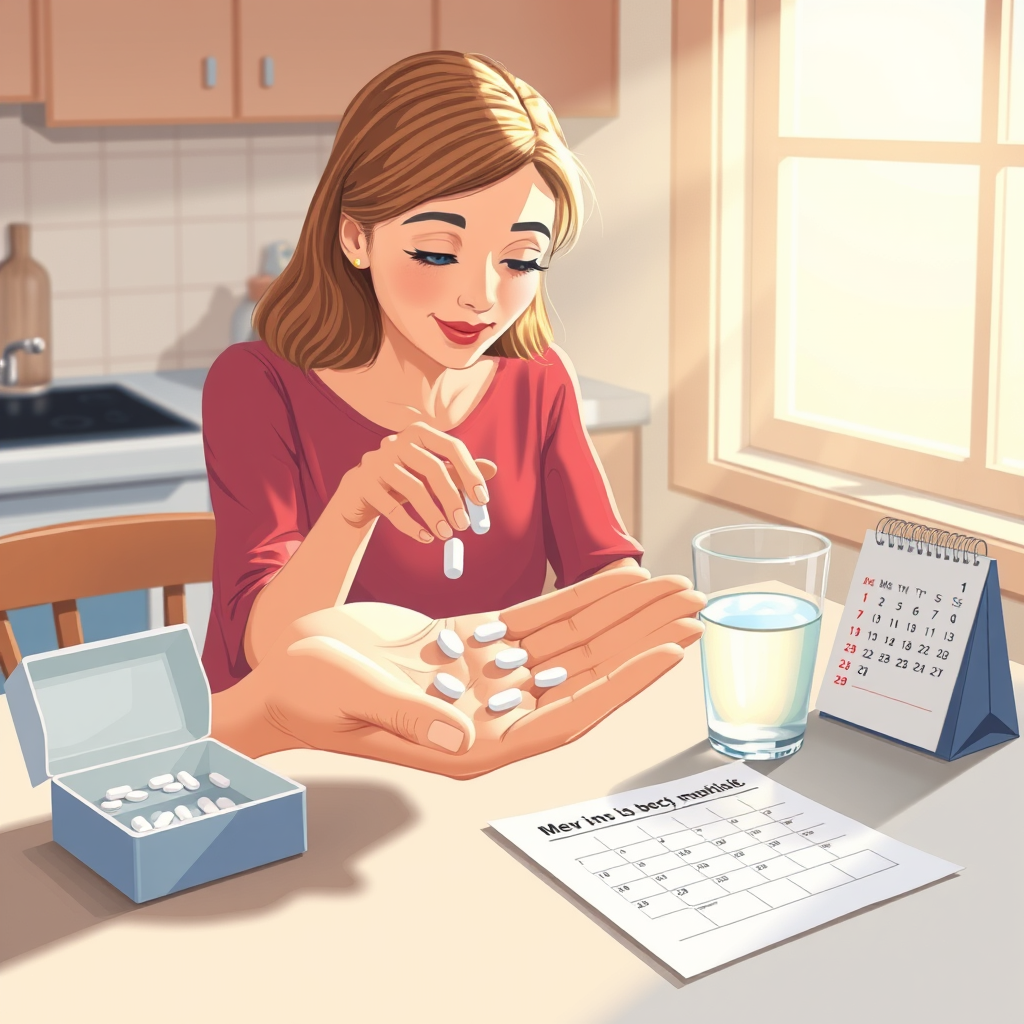
the amount of medicine you should take and how often
The doctor checked the dosage: two tablets a day.
More examples: Read the label carefully - the dosage is one spoon twice a day. • Don't change your dosage without asking the doctor. • The usual dosage for adults is different from the dosage for children.
Common collocations: correct dosage, usual dosage, reduce the dosage
Word family: dose (noun)
Synonyms: amount, dose
Antonyms: overdose (too much)
Related concepts: medicine, instructions, schedule
Contexts: pharmacy, home, hospital
Usage note: Use 'dosage' for the full plan ('the dosage is two tablets a day') and 'dose' for one time ('take a dose before bed').
Vocabulary Check
- What does 'symptoms' mean?
- Signs that show you are ill
- Medicines from the pharmacy
- Exercises for the body
- Rooms in a hospital
- In which situation would you say 'I feel dizzy'?
- When you are very hungry
- When the room seems to turn and you might fall
- When you are happy about good news
- When you want to go to sleep
- Which sentence uses 'allergy' correctly?
- I allergy the doctor yesterday.
- My allergy is very kind and friendly.
- She has an allergy to penicillin.
- The allergy wrote me a prescription.
- What does 'prescription' mean?
- A written order from a doctor for medicine
- A type of headache
- A test at the hospital
- A nurse's uniform
- What does 'dosage' mean?
- The name of a medicine
- The price of the medicine
- The amount of medicine to take and how often
- The colour of the medicine box
Phrasal Verbs & Expressions
write down
to write something on paper so you remember it
Please write down your phone number so I don't forget it.
Usage note: You can split it: 'write it down', not 'write down it'. · Right: write it down · Avoid: write down it
Usage note: 'Down' here means onto paper. Very common in everyday talk.
come back
to return to a place
The doctor asked me to come back next week for the results.
Usage note: You can split it: 'come back soon' or 'come back on Monday'. · Right: come back on Monday · Avoid: come on Monday back
Usage note: Also used for returning home: 'What time did you come back last night?'
straight away
immediately, without waiting
When I get a bad headache, I take a painkiller straight away.
Usage note: 'Straight away' is common in British English; Americans usually say 'right away'.
Usage note: It goes at the end of the sentence: 'I'll do it straight away.'
Language Practice: Talking About Health
Practise describing health problems, asking about medicines and talking about past experiences.
- Describing your health to a doctor
- Emerging: I have ___. — I have a headache.
- Developing: I've had ___ for ___, and I also feel ___. — I've had a headache for three days, and I also feel dizzy in the morning.
- Expanding: Since ___, I've been getting ___, and it happens mostly when ___. — Since Monday, I've been getting headaches, and they happen mostly when I look at a screen for a long time.
- Asking about medicines and treatments
- Emerging: How often ___? — How often do I take it?
- Developing: What should I do if I ___? — What should I do if I feel dizzy again?
- Expanding: Could you explain the dosage again, because I want to make sure I ___. — Could you explain the dosage again, because I want to make sure I take the right amount?
- Talking about past experiences with health care
- Emerging: Last year, I ___. — Last year, I went to the dentist.
- Developing: When I ___, I ___ because ___. — When I felt dizzy at work, I went to the doctor because I was worried.
- Expanding: The last time I went to the doctor, ___ , and that's why I now ___. — The last time I went to the doctor, I forgot to mention my allergy, and that's why I now always write my symptoms down before I go.
Fill in the Blanks
Sam woke up on Monday feeling terrible. His main _____ were a sore throat and a headache, and he felt _____ every time he stood up. He remembered that he has an _____ to one kind of medicine, so he was careful at the pharmacy. The pharmacist looked at his doctor's _____ and checked the _____: one tablet in the morning and one at night. By Thursday, Sam felt much better.
Word bank: symptoms, dizzy, allergy, prescription, dosage
Sentence Unscramble
- The / doctor / asked / about / my / symptoms / carefully.
- I / always / feel / dizzy / when / I / stand / up / too / quickly.
- The / pharmacist / checked / the / prescription / and / explained / the / dosage.
Discussion Questions
When you visit a doctor, the first question is usually 'What are your symptoms?' This can be hard in another language. Some people prepare a list before they go, and others just explain in their own words.
When you last visited a doctor, how did you describe your problem? Was it easy or difficult to explain?
Doctors in many countries now ask a standard question: 'Do you have any allergies?' Allergies seem to be more common than in the past. Some people carry special medicine because of them.
Do you or someone close to you have any allergies? How does it change daily life?
In some countries, you can buy many medicines at the pharmacy without a prescription. In others, you must see a doctor first. Both systems have good and bad sides.
Is it better to need a prescription for medicine, or to buy it freely at the pharmacy? Why?
Some people go to the doctor immediately when they feel ill. Others wait, try home remedies, or search for answers online first. The best choice may depend on the problem.
When you feel ill, do you go to the doctor straight away or wait a few days first? Why?
Imagine visiting a doctor abroad who speaks only English. You would need to talk about your symptoms, old illnesses, allergies and medicines. Marta managed it after moving to a new city.
If a doctor in an English-speaking country asked you for your full health history, what would be the hardest part for you? Why?
Knowledge Check
- The doctor asks, 'What are your symptoms?' What does she want to know?
- Your name and address
- The signs of your illness
- The name of your pharmacy
- Your family history
- True or false: If you feel dizzy, it means you are very hungry.
- True
- False
- Which sentence is correct?
- The doctor prescribed me a new medicine.
- The doctor prescription me a new medicine.
- I prescribed to the doctor yesterday.
- The pharmacy prescribed the doctor.
- True or false: 'Dosage' means the price of a medicine.
- True
- False
- A pharmacist asks, 'Any allergies?' What is a good answer if penicillin is a problem for you?
- Yes, I am allergic to penicillin.
- Yes, I prescribe penicillin.
- Yes, I dizzy penicillin.
- Yes, penicillin is my dosage.
- The doctor says: 'Please come back in a month.' What does she want you to do?
- Call her on the phone in a month
- Return to her office in a month
- Take more medicine for a month
- Stay at home for a month
Free to use with your students: Free to teach, screen-share, print and share with your students, with a credit to PlanWise ESL. Please do not sell it or republish it as your own. What you can do with free lessons.