Rocket League: Soccer with Cars!
About this lesson: This is a B1 (Intermediate) ESL lesson in the General English category. It takes about 60 minutes. It includes 5 vocabulary words, 3 phrasal verbs and expressions, a reading text, comprehension questions, discussion questions and speaking patterns. Suits one-to-one or small-group online classes. Free to open and teach with no login, and it prints as a PDF.
Print just the discussion questions
How this lesson is built
This is a complete conversation lesson built on a scientific pedagogical formula, not a generic worksheet: recall prior topic vocabulary, pre-teach the new words in depth, read in context, practise active recall with flashcards and synonyms/antonyms, build accuracy with exercises, and finish with deep discussion.
- Warm-up: Discussion questions that connect the topic to the student’s own life and recall vocabulary they already know about the subject.
- Reading: A text written for this CEFR level that uses each new word two or three times in context, giving the student something meaningful to react to.
- Key vocabulary: 5 new words, pre-taught before the reading with a definition, pronunciation guide, example sentences and a picture, plus word families, usage notes, recall flashcards and synonyms/antonyms, giving a solid grounding before reading.
- Comprehension: 5 questions that check the new words: retrieval practice, not rereading.
- Idioms and phrasal verbs: Expressions taken from the reading, each with its meaning, an example and a speaking question.
- Sentence frames: 3 speaking patterns, each at three levels of support (emerging, developing, expanding) with model answers—especially helpful scaffolding for beginners and less confident speakers.
- Gap-fill: The new words again, in a shuffled order, so the student recalls them by meaning in context.
- Sentence unscramble: Natural sentences with the new words to put back in order, reinforcing grammar and collocation.
- Discussion: 5 open questions designed to talk deeply about the subject while actively using the lesson’s target vocabulary: the heart of a conversation lesson.
- Quiz: A short retrieval check that brings every new word back once more.
Unlike a generic worksheet, the new words are taught before the reading and met again in the activities, the speaking is supported at three levels and most of the time goes on the student talking. Teachers who use PlanWise ESL also get per-student vocabulary tracking (recycling earlier words into future readings and questions), a private learner dashboard with flashcards and custom lesson creation, and a downloadable study PDF.
Warm-up: Games and Friends
Let's talk about video games and playing with friends before we read about a strange game: soccer, but with cars!
- Do you play video games? Which ones?
- Do you prefer playing games alone or with friends? Why?
- What was the first video game you ever played?
- Do you think video games are a good way to spend free time?
- Have you ever watched someone play a game online or on TV?
Reading Text: Soccer, But with Cars
You're going to read about Rocket League, a video game where cars play soccer. What do you think about that idea?
Imagine a soccer field inside a big glass arena. Now imagine the players are cars. That is Rocket League, a popular video game where two teams of cars try to hit a giant ball into the other team's goal. It sounds strange, but millions of people around the world love it.
The game is very competitive. Players race around at high speed, jumping and flying through the air to hit the ball. Games are short, only five minutes, so every second counts. When two good teams play, the match is fast and exciting, and one small mistake can decide the winner.
Teamwork is the most important thing in Rocket League. You cannot win alone. Good players talk to each other, pass the ball, and take turns attacking and defending. One player might chase the ball while another waits near the goal. If everyone runs after the ball at the same time, the team usually loses.
There is also a lot of strategy in the game. Teams plan how to start, when to attack, and when to go back and defend. Some players are fast attackers, and others are careful defenders. A team with a clear plan often beats a team with better cars but no plan.
Of course, skill matters too. New players miss the ball completely, but after months of practice, they can hit it in the air and score amazing goals. Many players say the game is addictive: they plan to play for thirty minutes and suddenly two hours have passed. It is fun, but like anything, it is good to take breaks.
Key Vocabulary
competitive
wanting to win, or about winning and losing
My brother is very competitive, so he never likes losing.
More examples: Rocket League is a competitive game with ranked matches. • She gets very competitive when we play cards. • I'm not very competitive; I just play for fun.
Common collocations: a competitive game, very competitive, competitive person
Word family: compete (verb), competition (noun), competitor (noun)
Synonyms: ambitious, fighting to win
Antonyms: relaxed, easy-going
Related concepts: winning, losing, rivalry
Contexts: sports, video games, work
Usage note: Use it for people who want to win and for games, sports or jobs where people compete. Often used with 'very' or 'really'.
teamwork

working together well as a group
Good teamwork helped our team win the match.
More examples: Rocket League needs teamwork; you can't win alone. • The project was successful because of great teamwork. • Their teamwork is excellent; they always pass to each other.
Common collocations: good teamwork, great teamwork, teamwork skills
Word family: team (noun), teammate (noun)
Synonyms: cooperation, collaboration
Antonyms: working alone, selfishness
Related concepts: team, passing, trust
Contexts: sports, office work, school projects
Usage note: It is an uncountable noun, so we say 'good teamwork', not 'a teamwork'. Common at work and in sports.
strategy
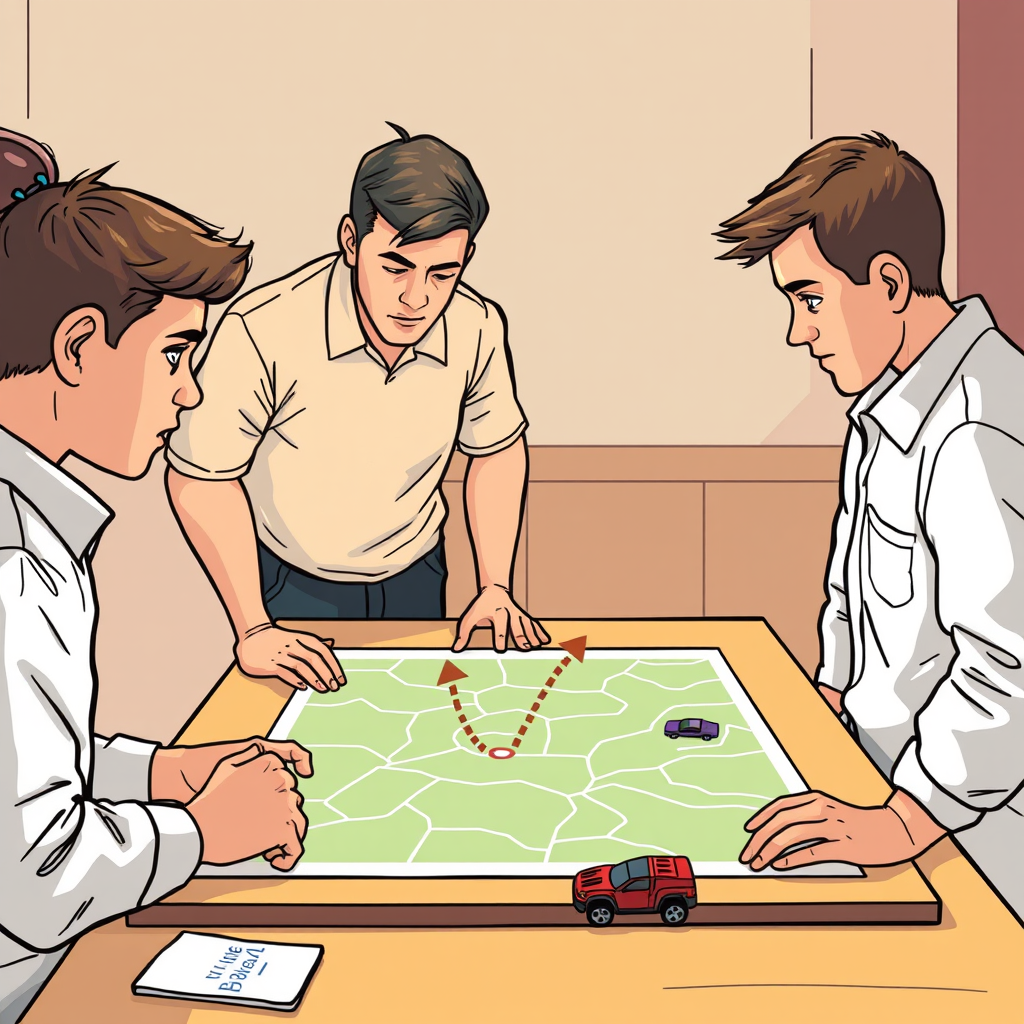
a plan to reach a goal or win
Our strategy was simple: defend first, then attack.
More examples: A good strategy is more important than fast cars. • What's your strategy for the exam? • Their strategy failed because they attacked too early.
Common collocations: a clear strategy, change your strategy, a winning strategy
Word family: strategic (adjective), strategically (adverb)
Synonyms: plan, game plan, approach
Antonyms: randomness, improvisation
Related concepts: planning, tactics, goals
Contexts: sports, business, video games
Usage note: Use it for plans in games, business, sports or studying. Often used with 'have', 'need' or 'change'.
skill
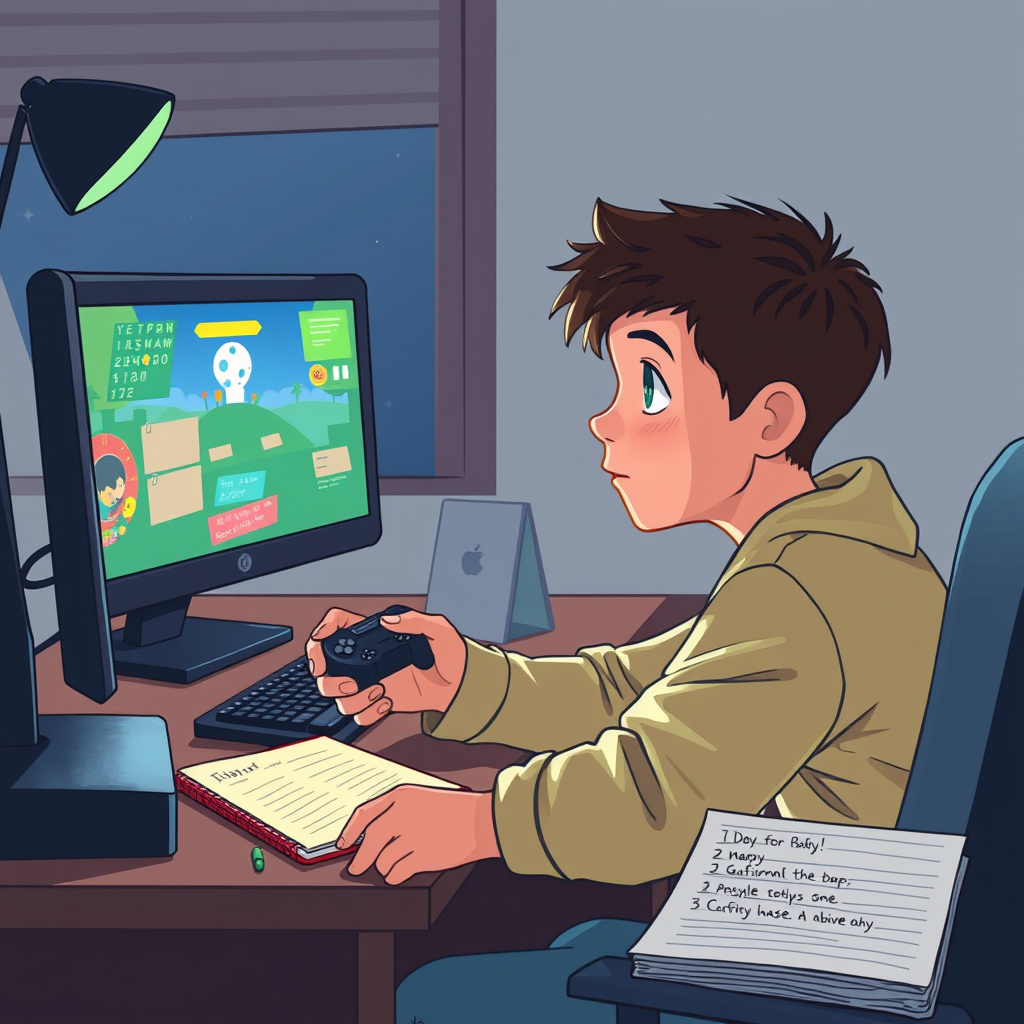
the ability to do something well
It takes a lot of skill to hit the ball in the air.
More examples: His skill improved after months of practice. • Cooking is a useful skill to have. • She has amazing skill with the ball.
Common collocations: practical skills, improve your skills, a useful skill
Word family: skilled (adjective), skilful (adjective)
Synonyms: ability, talent, technique
Antonyms: inability, clumsiness
Related concepts: practice, improvement, training
Contexts: sports, work, hobbies
Usage note: Countable when talking about one ability ('a skill'), uncountable when talking about ability in general ('with skill').
addictive

so fun or interesting that you can't stop
This game is addictive; I played for three hours!
More examples: Short games like this are really addictive. • That TV series is addictive; I watched five episodes. • Some apps are designed to be addictive.
Common collocations: highly addictive, addictive game, become addictive
Word family: addict (noun), addiction (noun)
Synonyms: hooking, hard to stop
Antonyms: boring, easy to put down
Related concepts: habits, free time, balance
Contexts: video games, social media, TV series
Usage note: Often used for games, apps, series and food. It can be slightly negative, so people say 'it's addictive, but I should take breaks'.
Vocabulary Check
- What does 'competitive' mean?
- Wanting to win or about winning and losing
- Feeling tired after a game
- Playing slowly and calmly
- Watching a game on TV
- Which sentence uses 'teamwork' correctly?
- We won because of a good teamwork.
- Good teamwork means passing and helping each other.
- I teamwork with my friends every day.
- Teamwork are important in games.
- In which situation would you use the word 'strategy'?
- When you describe the color of a car
- When you talk about a plan to win a game
- When you say how much a game costs
- When you name your favorite player
- What does 'skill' mean?
- A lucky moment in a game
- A team you play with
- The ability to do something well
- A rule in a game
- If a game is 'addictive', what is true?
- It is boring and slow
- It is very hard to buy
- It is only for children
- It is hard to stop playing it
Phrasal Verbs & Expressions
take turns
To have a chance to do something in sequence with other people.
When we play board games, we take turns rolling the dice.
Usage note: This is a common phrasal verb used in daily life, not just in sports. · Right: take turns · Avoid: take turn
every second counts
Time is very important; you must use it well.
In a competition, every second counts, so you must be fast.
Usage note: This is an idiom, meaning time is valuable and you cannot waste it.
lose track of time
To spend so much time doing something that you forget what time it is.
I can lose track of time when I am listening to music.
Usage note: This is a very common idiom used when talking about hobbies or fun activities.
Language Practice: Talking About Games
Practice expressing opinions, reasons and habits about games and free time.
- Giving an opinion with a reason
- Emerging: I think ___ because ___. — I think Rocket League looks fun because cars can fly.
- Developing: In my opinion, ___ is ___ because ___. — In my opinion, Rocket League is exciting because the matches are only five minutes long.
- Expanding: The reason I think ___ is that ___, so ___. — The reason I think teamwork matters most is that one player can't cover the whole field, so everyone needs a role.
- Describing cause and effect in games and habits
- Emerging: When I play ___, I feel ___. — When I play with friends, I feel happy.
- Developing: When I ___, I usually ___, because ___. — When I play competitive games, I usually focus more, because I want to win.
- Expanding: When ___, ___ happens, so I try to ___. — When a game is addictive, hours disappear, so I try to set a timer before I start.
- Comparing choices and preferences
- Emerging: I prefer ___ to ___. — I prefer team games to solo games.
- Developing: I prefer ___ing to ___ing because ___. — I prefer playing with friends to playing alone because it's more fun.
- Expanding: For me, ___ is better than ___ because ___, although ___. — For me, team games are better than solo games because you learn teamwork, although you can't always choose your teammates.
Fill in the Blanks
Last weekend, my friends and I played a new game online. It was very _____, so everyone really wanted to win. At first, we had no plan and we lost quickly. Then we made a _____: one player attacks, one defends. Our _____ got much better, and we started winning. My _____ with the controller is still weak, but I practice every day. The problem is that the game is so _____ that I sometimes play for three hours!
Word bank: competitive, strategy, teamwork, skill, addictive
Sentence Unscramble
- good / teamwork / wins / more / games / than / luck
- this / game / is / so / addictive / that / i / lose / track / of / time
- our / strategy / was / simple / defend / first / and / then / attack
Discussion Questions
Rocket League is soccer played with cars, which sounds strange at first. But many strange ideas become popular games. Some people love new and unusual games, while others prefer classic ones like football or chess.
Do you like trying new and unusual games, or do you prefer classic ones? Why?
In Rocket League, teamwork is everything. Players who chase the ball alone often lose, even if they are very skilled. The best teams talk, pass and trust each other. This is true in many parts of life, not just games.
Tell me about a time when teamwork helped you, at work, school or in a game. What happened?
Some players say strategy beats skill: a smart plan can beat a faster player. Others say skill is everything, because plans fail when the game gets fast and chaotic. Both sides have good arguments.
Which is more important in games: strategy or skill? Why?
Many people say games like Rocket League are addictive. They plan to play for thirty minutes and stop three hours later. Some people think this is a problem, and others say it just means the game is fun.
Have you ever lost track of time playing a game or watching something? What happened, and how did you feel after?
Some parents worry that children play too many video games. Others say games teach useful things: teamwork, strategy, quick thinking and even English. The truth is probably somewhere in the middle.
Do you think video games are good or bad for children? Should parents limit gaming time?
Knowledge Check
- In Rocket League, what do the players use to play soccer?
- Bicycles
- Cars
- Skateboards
- Robots
- A person who always wants to win is very ______.
- addictive
- skillful
- competitive
- strategic
- True or false: 'teamwork' means working alone very fast.
- True
- False
- Which word means 'a plan to win or reach a goal'?
- Skill
- Teamwork
- Addictive
- Strategy
- If a game is addictive, you probably ______.
- play it for a short time and stop
- find it hard to stop playing
- never want to see it again
- need to pay a lot for it
- What does the phrase 'every second counts' mean?
- A) You must run very fast.
- B) Time is very important.
- C) Seconds are noisy.
- D) You should count the seconds.
Free to use with your students: Free to teach, screen-share, print and share with your students, with a credit to PlanWise ESL. Please do not sell it or republish it as your own. What you can do with free lessons.