Drone Soccer: A New Kind of Team Sport
About this lesson: This is a B1 (Intermediate) ESL lesson in the General English category. It takes about 60 minutes. It includes 5 vocabulary words, 3 phrasal verbs and expressions, a reading text, comprehension questions, discussion questions and speaking patterns. Suits one-to-one or small-group online classes. Free to open and teach with no login, and it prints as a PDF.
Print just the discussion questions
How this lesson is built
This is a complete conversation lesson built on a scientific pedagogical formula, not a generic worksheet: recall prior topic vocabulary, pre-teach the new words in depth, read in context, practise active recall with flashcards and synonyms/antonyms, build accuracy with exercises, and finish with deep discussion.
- Warm-up: Discussion questions that connect the topic to the student’s own life and recall vocabulary they already know about the subject.
- Reading: A text written for this CEFR level that uses each new word two or three times in context, giving the student something meaningful to react to.
- Key vocabulary: 5 new words, pre-taught before the reading with a definition, pronunciation guide, example sentences and a picture, plus word families, usage notes, recall flashcards and synonyms/antonyms, giving a solid grounding before reading.
- Comprehension: 5 questions that check the new words: retrieval practice, not rereading.
- Idioms and phrasal verbs: Expressions taken from the reading, each with its meaning, an example and a speaking question.
- Sentence frames: 3 speaking patterns, each at three levels of support (emerging, developing, expanding) with model answers—especially helpful scaffolding for beginners and less confident speakers.
- Gap-fill: The new words again, in a shuffled order, so the student recalls them by meaning in context.
- Sentence unscramble: Natural sentences with the new words to put back in order, reinforcing grammar and collocation.
- Discussion: 5 open questions designed to talk deeply about the subject while actively using the lesson’s target vocabulary: the heart of a conversation lesson.
- Quiz: A short retrieval check that brings every new word back once more.
Unlike a generic worksheet, the new words are taught before the reading and met again in the activities, the speaking is supported at three levels and most of the time goes on the student talking. Teachers who use PlanWise ESL also get per-student vocabulary tracking (recycling earlier words into future readings and questions), a private learner dashboard with flashcards and custom lesson creation, and a downloadable study PDF.
Warm-up: Sports and Flying Machines
Look at the picture of a drone soccer game and talk about sports you know and how technology is changing them.
- Do you enjoy watching or playing sports? Which ones?
- Have you ever flown a drone or seen one up close?
- What sports are popular in your country?
- Do you think robots and technology will change sports in the future? How?
- If you could invent a completely new sport, what would it be like?
Reading Text: Drone Soccer Takes Off
A short article about a new sport that mixes football with flying robots. Read it and tell me what you think.
Have you heard of drone soccer? It is a new team sport that started in Korea, and now teams all over the world compete against each other. Players fly small drones inside a big net cage. The goal is simple: fly your drone through a ring above the other team's goal area.
The equipment is not too expensive. A basic drone costs about the same as a pair of good sports shoes. Each team has five drones, and one of them, the striker, is the only drone allowed to fly through the ring. The other four drones try to block the other team.
It sounds easy, but it takes real skill. New players often crash their drones in the first weeks, so teams practise flying every day. However, when a drone crashes, it is not a big problem. The drones are light and protected, so players can fix them quickly and keep playing.
Many schools have started drone soccer clubs, and there is now an international league with teams from more than thirty countries. Students who join a club learn to fly, but they also learn to build and repair drones. Some of them say it is more exciting than video games because they move and compete together in real life.
Fans of the sport say it is perfect for young people who love technology but also want to be part of a team. Although the sport is still young, it is growing fast. Maybe one day drone soccer will be in the Olympics. Would you try it?
Key Vocabulary
compete
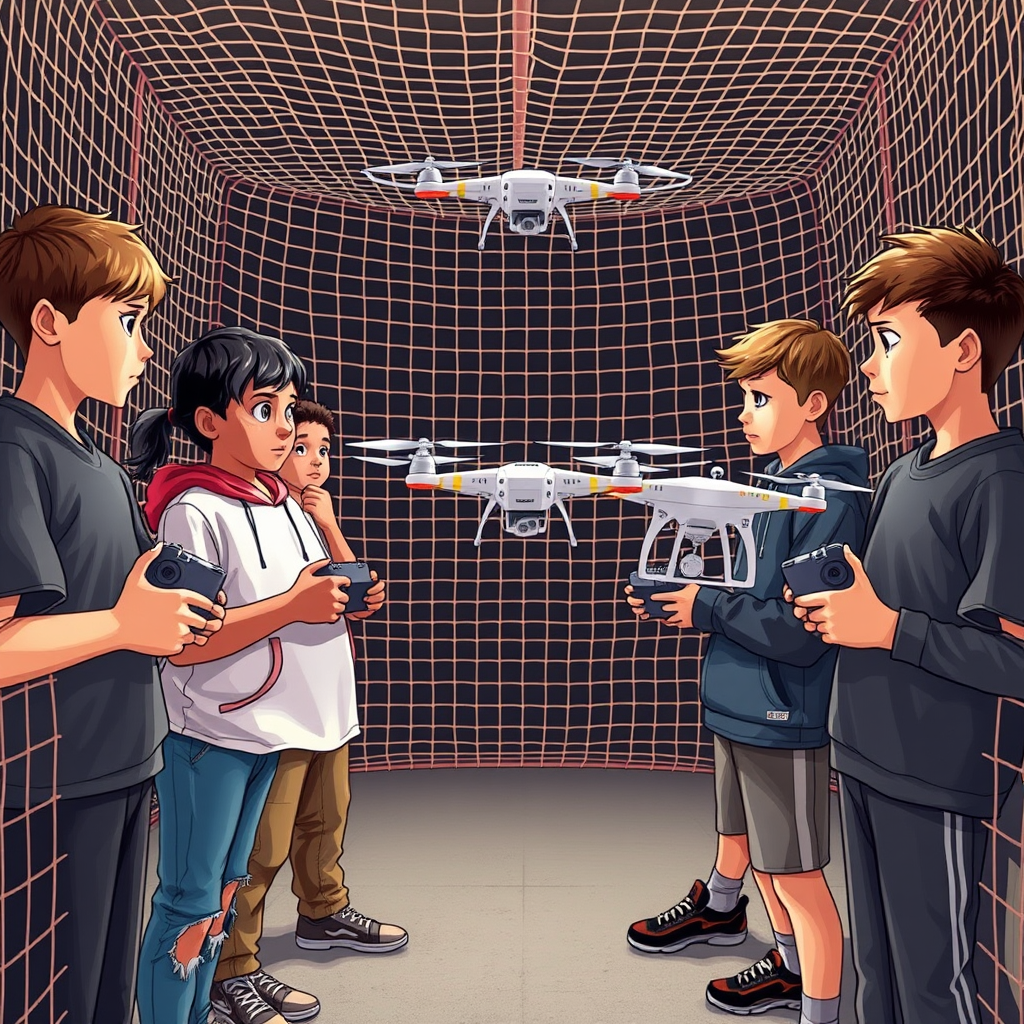
to try to win against other people in a game or contest
Twenty teams compete in the drone soccer tournament every year.
More examples: She will compete in the final on Saturday. • My brother competes with his friends at everything! • I'd love to compete in something like that one day.
Common collocations: compete against a team, compete in a tournament, compete for a prize
Word family: competition (noun), competitor (noun), competitive (adjective)
Synonyms: contend, take part, go up against
Antonyms: cooperate, give up
Related concepts: tournament, match, winner
Contexts: sports, business, video games
Usage note: Use 'compete in' for the event and 'compete against/with' for the opponent. It is stronger than just 'play' - it means trying to win.
equipment
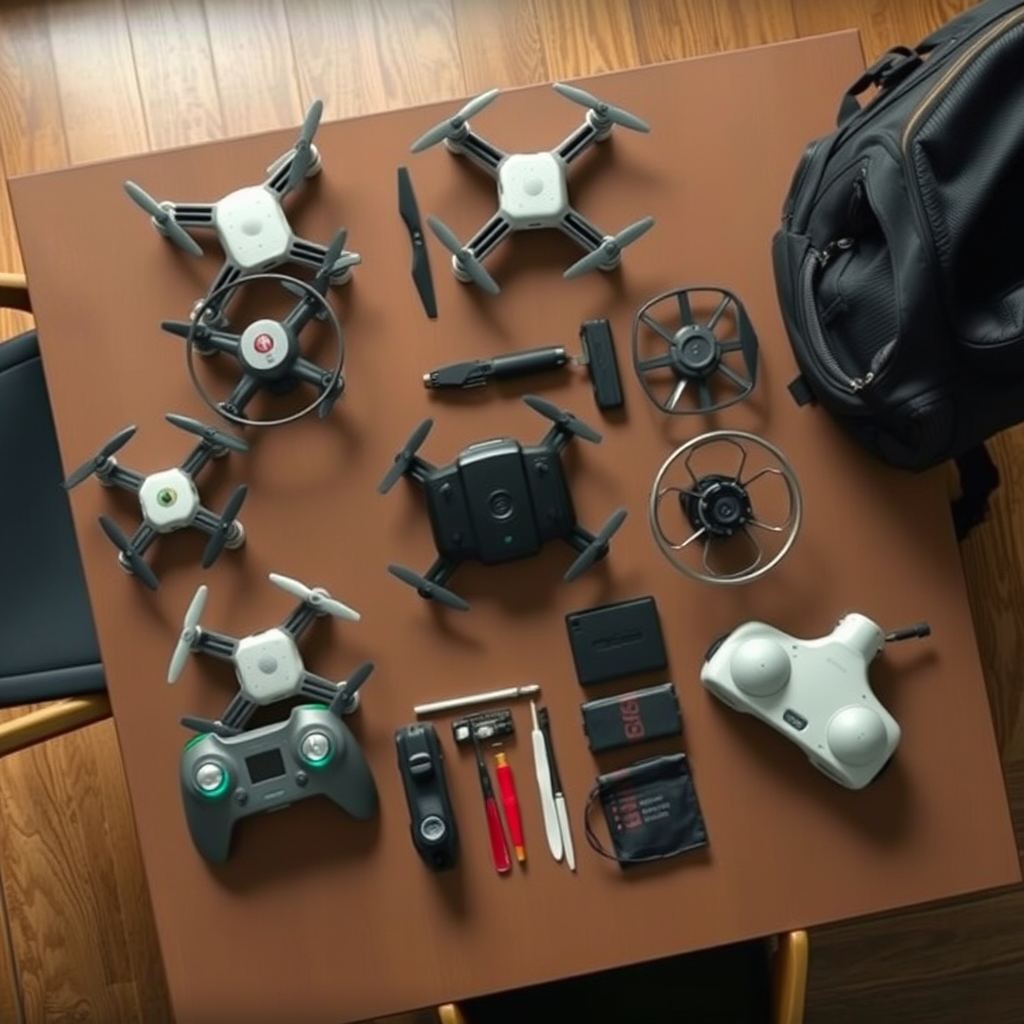
the things you need for an activity, like tools or machines
You need special equipment to fly drones safely.
More examples: The school bought new equipment for the science lab. • Camping equipment can be heavy to carry. • I don't have the equipment to repair my bike myself.
Common collocations: buy equipment, expensive equipment, sports equipment
Word family: equip (verb), well-equipped (adjective)
Synonyms: gear, kit, tools
Related concepts: tools, machines, supplies
Contexts: sports, school, work
Usage note: Equipment is uncountable - say 'a piece of equipment' or 'some equipment', never 'equipments'.
skill
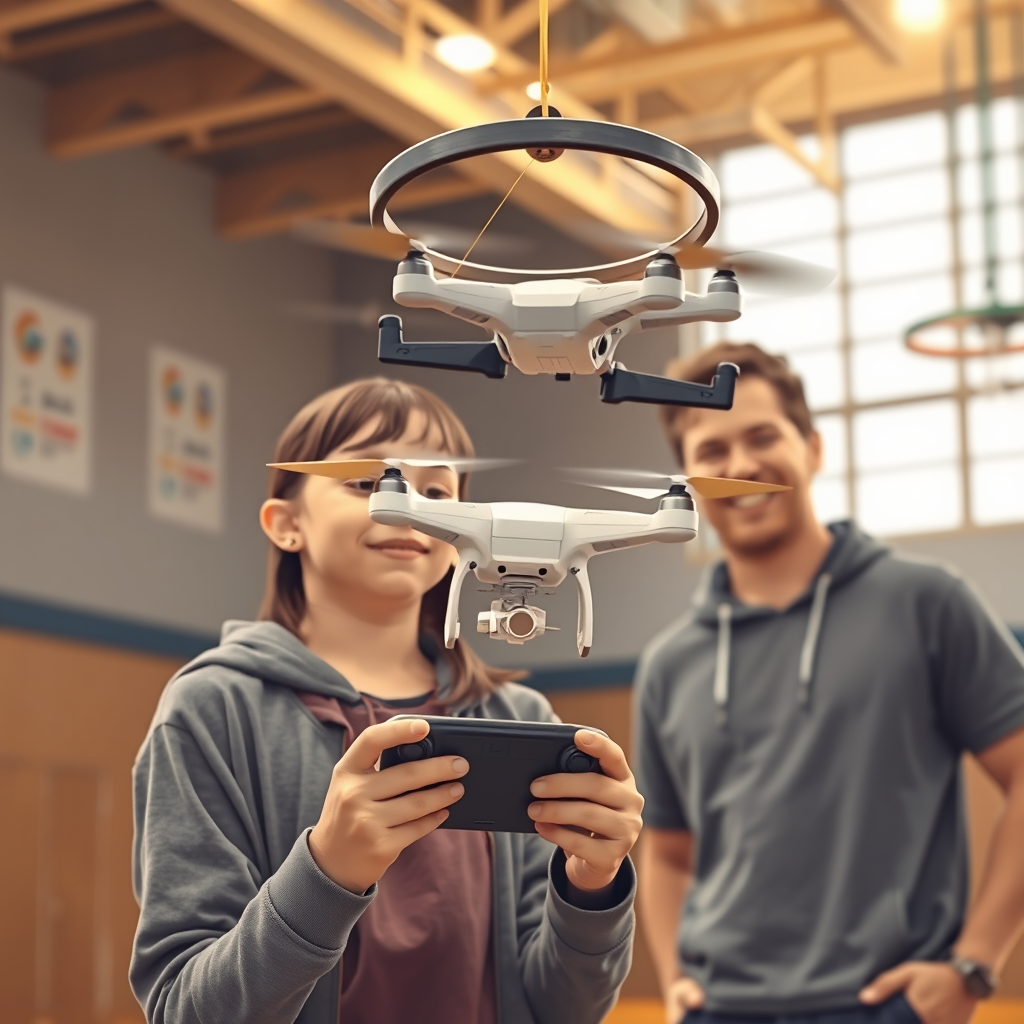
the ability to do something well because you have practised
Flying a drone through a small ring takes a lot of skill.
More examples: Cooking is a useful skill for everyone. • He has great skill with computers. • Learning a language is a skill that takes time.
Common collocations: learn a skill, practise your skills, a useful skill
Word family: skilled (adjective), skilful (adjective)
Synonyms: ability, talent, technique
Antonyms: inability, weakness
Related concepts: practice, training, talent
Contexts: sports, work, school
Usage note: Often used with 'take': 'It takes skill to...'. Countable when talking about a specific ability: 'a skill'.
league
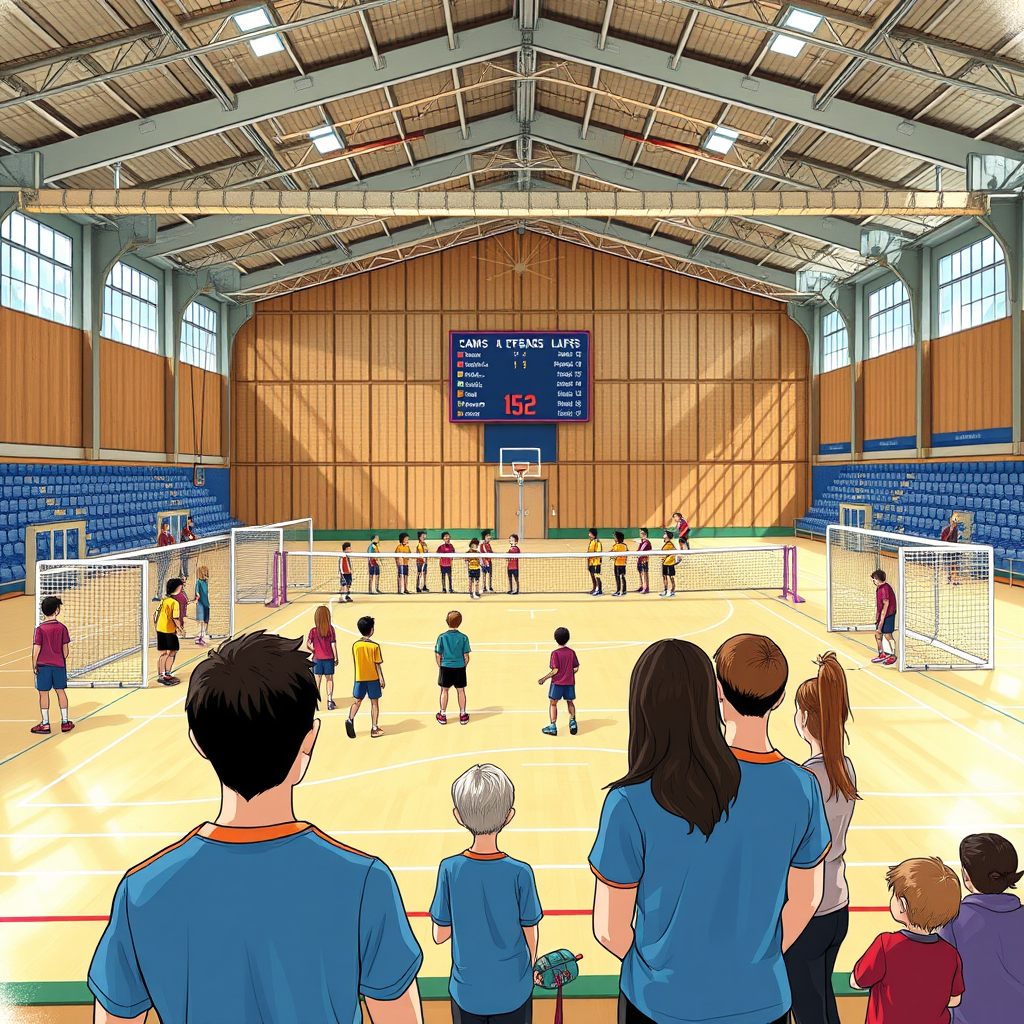
a group of teams that play against each other in a season
Our city started a drone soccer league last year.
More examples: Her team is at the top of the league this season. • He plays in a local football league on weekends. • The league has twelve teams from different cities.
Common collocations: join a league, top of the league, a local league
Word family: league (in other uses)
Synonyms: division, association, competition
Related concepts: season, championship, standings
Contexts: sports, esports, school clubs
Usage note: Mostly used for sports. 'Out of my league' is a common idiom meaning something is too difficult for you.
crash
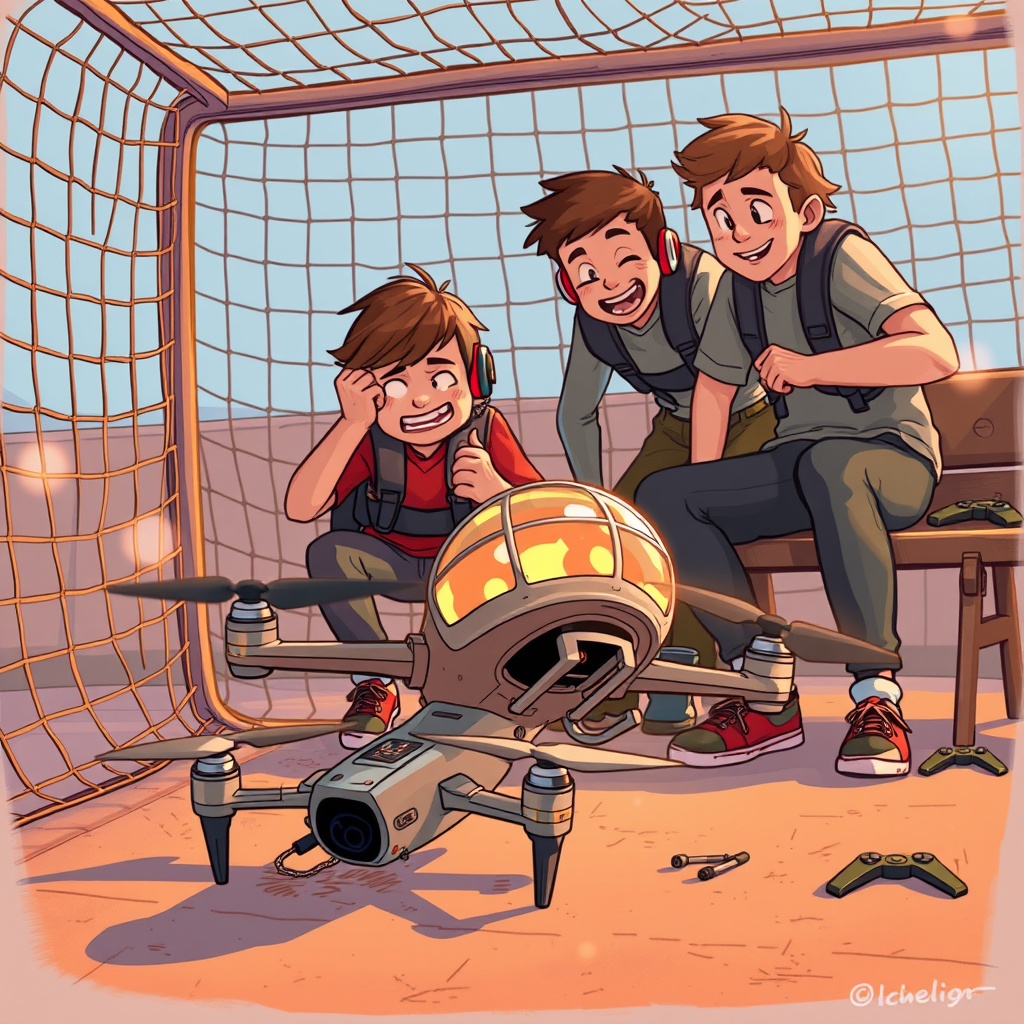
to hit something hard and suddenly, often by accident
Beginners often crash their drones into the net.
More examples: The car crashed into a tree, but nobody was hurt. • My computer crashed and I lost my work. • He crashed his bike on the way to school.
Common collocations: crash into something, crash a drone, a car crash
Word family: crash (noun), car crash (phrase)
Synonyms: collide, hit, smash
Antonyms: land safely, avoid
Related concepts: accident, damage, repair
Contexts: flying, driving, computers
Usage note: Used for vehicles, planes, drones and computers. 'Crash into' needs the preposition when you say what was hit.
Vocabulary Check
- What does 'compete' mean?
- To try to win against others
- To watch a game
- To practise alone
- To teach a sport
- Which sentence uses 'equipment' correctly?
- I bought three equipments for my drone.
- The equipment for drone soccer is quite cheap.
- She equipments her team every week.
- He is equipment at flying drones.
- In which situation would you use the word 'skill'?
- When you buy a new drone
- When you describe how well someone can do something
- When you talk about the weather
- When you count the players on a team
- What is a 'league'?
- A kind of drone
- A training video
- A group of teams that play against each other
- A rule in a sport
- Which sentence uses 'crash' correctly?
- The drone crashed into the net.
- The drone crashed the net happily.
- She crashes very good at flying.
- They crash the league last year.
Phrasal Verbs & Expressions
keep doing something
continue; do not stop
It was hard at first, but I kept practising every day.
Usage note: After 'keep', use the -ing form: · Right: keep playing · Avoid: keep to play
Usage note: You can also say 'keep on doing something' - it means the same.
be part of
belong to a group; do an activity with others
I love being part of my football team - we always help each other.
Usage note: Use it with groups and activities: 'be part of a team', 'be part of the class', 'be part of the club'.
take up
start a new hobby or sport
I want to take up drone flying - it looks really fun.
Usage note: You can split it: 'take it up', 'take up a hobby'. Use it for hobbies and sports, not jobs.
Usage note: Common mistake: don't say 'take up a job'. · Right: start a job · Avoid: take up a job
Language Practice: Talking About Sports and Hobbies
Practice expressing opinions, comparing activities and talking about learning new things.
- Giving an opinion with a reason
- Emerging: I think drone soccer is ___ because ___. — I think drone soccer is fun because it is fast.
- Developing: In my opinion, ___ is more exciting than ___ because ___. — In my opinion, drone soccer is more exciting than video games because you move in real life.
- Expanding: If I had the chance to try ___, I think I would ___ because ___. — If I had the chance to try drone soccer, I think I would say yes because it mixes technology and sport.
- Talking about learning and practising
- Emerging: You need ___ to play drone soccer. — You need good equipment to play drone soccer.
- Developing: To get better at ___, you should practise ___ every week. — To get better at flying, you should practise ten minutes every week.
- Expanding: When you learn a new skill like ___, the hardest part is ___ at first, but it gets easier when you ___. — When you learn a new skill like flying a drone, the hardest part is controlling it at first, but it gets easier when you practise slowly.
- Describing cause and effect
- Emerging: When you ___, you ___. — When you practise, you improve.
- Developing: When beginners ___, they often ___, so ___. — When beginners fly too fast, they often crash, so they learn to go slowly.
- Expanding: Although ___ at first, if you ___, you will probably ___ because ___. — Although it looks difficult at first, if you practise a little every day, you will probably enjoy it because progress feels great.
Fill in the Blanks
Last month, my school started a drone soccer club, and I joined immediately. At first, I was worried because I didn't have the right _____, but the club lends drones to all the new players. In my first lesson, I flew too fast and _____ed into the net - everyone laughed, but the teacher said it happens to everyone. Now we _____ against other schools every month, and our city even has a small _____ with eight teams. Flying well takes a lot of _____, so we practise twice a week. I still crash sometimes, but I am getting better!
Word bank: compete, equipment, skill, league, crash
Sentence Unscramble
- It / takes / real / skill / to / fly / a / drone / well
- Beginners / often / crash / their / drones / in / the / first / weeks
- Our / team / wants / to / compete / in / the / national / league / next / year
Discussion Questions
Drone soccer mixes sport with technology. Some people love this idea, while others prefer traditional sports like football or basketball, where you use your whole body.
Would you rather try drone soccer or a traditional sport like football? Why?
In drone soccer, beginners crash their drones a lot in the first weeks. Coaches say crashing is a normal part of learning, not a failure.
Do you agree that making mistakes is the best way to learn something new? Can you give an example from your life?
A basic drone soccer drone costs about the same as good sports shoes, but serious players spend much more on better equipment. Some families think it is too expensive.
How much money is it reasonable to spend on a hobby? Has money ever stopped you from trying something?
Some students say drone soccer is better than video games because you compete with real people in the same room. Others say video games are cheaper and easier to play at home.
Do you think real-life activities are always better than screen activities? Why or why not?
Drone soccer started in one country and spread to more than thirty in just a few years. Some people believe it could become an Olympic sport one day.
Would you like to see new technology sports in the Olympics, or should the Olympics keep traditional sports only?
Knowledge Check
- In drone soccer, which drone is allowed to fly through the ring?
- Any drone on the team
- Only the striker drone
- The biggest drone
- Two drones at the same time
- The word 'equipment' can be plural: 'equipments'.
- True
- False
- Which preposition correctly completes: 'Our team competes ___ three other schools'?
- at
- for
- against
- of
- What can 'crash' also mean besides hitting something?
- To win a game
- When a computer stops working
- To join a league
- To practise a skill
- According to the reading, why is drone soccer good for young people who love technology?
- Because it is cheaper than video games
- Because it lets them use technology and be part of a team
- Because it is easy and needs no practice
- Because there are no rules
- Your friend says: 'I want to take up photography.' What does she want to do?
- She wants to stop photography.
- She wants to sell her camera.
- She wants to start photography as a hobby.
- She wants to teach photography.
Free to use with your students: Free to teach, screen-share, print and share with your students, with a credit to PlanWise ESL. Please do not sell it or republish it as your own. What you can do with free lessons.