Robots at Work: Friends or Rivals?
About this lesson: This is a B1 (Intermediate) ESL lesson in the General English category. It takes about 60 minutes. It includes 5 vocabulary words, 3 phrasal verbs and expressions, a reading text, comprehension questions, discussion questions and speaking patterns. Suits one-to-one or small-group online classes. Free to open and teach with no login, and it prints as a PDF.
Print just the discussion questions
How this lesson is built
This is a complete conversation lesson built on a scientific pedagogical formula, not a generic worksheet: recall prior topic vocabulary, pre-teach the new words in depth, read in context, practise active recall with flashcards and synonyms/antonyms, build accuracy with exercises, and finish with deep discussion.
- Warm-up: Discussion questions that connect the topic to the student’s own life and recall vocabulary they already know about the subject.
- Reading: A text written for this CEFR level that uses each new word two or three times in context, giving the student something meaningful to react to.
- Key vocabulary: 5 new words, pre-taught before the reading with a definition, pronunciation guide, example sentences and a picture, plus word families, usage notes, recall flashcards and synonyms/antonyms, giving a solid grounding before reading.
- Comprehension: 5 questions that check the new words: retrieval practice, not rereading.
- Idioms and phrasal verbs: Expressions taken from the reading, each with its meaning, an example and a speaking question.
- Sentence frames: 3 speaking patterns, each at three levels of support (emerging, developing, expanding) with model answers—especially helpful scaffolding for beginners and less confident speakers.
- Gap-fill: The new words again, in a shuffled order, so the student recalls them by meaning in context.
- Sentence unscramble: Natural sentences with the new words to put back in order, reinforcing grammar and collocation.
- Discussion: 5 open questions designed to talk deeply about the subject while actively using the lesson’s target vocabulary: the heart of a conversation lesson.
- Quiz: A short retrieval check that brings every new word back once more.
Unlike a generic worksheet, the new words are taught before the reading and met again in the activities, the speaking is supported at three levels and most of the time goes on the student talking. Teachers who use PlanWise ESL also get per-student vocabulary tracking (recycling earlier words into future readings and questions), a private learner dashboard with flashcards and custom lesson creation, and a downloadable study PDF.
Warm-up: Machines Around You
Look at the questions and talk about the machines and technology you use every day.
- Do you use any machines or apps that make your work or study easier?
- Have you ever talked to a robot, like a chatbot or a self-checkout machine?
- Would you like a robot to help you at home? What would it do?
- Is there a job you think a machine could never do? Why?
- Do you get excited or worried when you hear about new technology? Why?
Reading Text: The Cashier Who Lost Her Job
A short story about Maria, a supermarket worker, and what happened when her shop brought in new machines.
Maria worked as a cashier in a supermarket for eight years. She loved talking to customers and she knew everyone by name. However, last year the shop decided to automate the checkouts. They installed machines where customers scan and pay for their food themselves.
At first, Maria was not worried. She thought the machines would only help the staff. But soon the manager told her some bad news. The shop did not need so many cashiers, so her position became redundant. She lost her job because a machine could do the same work faster.
Maria's friend Elena kept her job in the same shop. Elena works in the bakery, and she was not replaced. Why? Because customers want a real person to advise them about bread and cakes. Machines are very efficient at simple, repeated tasks, but they cannot be warm or friendly.
Six months later, Maria found a new job in a small bookshop. She says the best part of any job is the human contact. A machine can count money, but it cannot make a customer laugh or notice when someone is having a bad day.
Maria now believes that workers should learn skills that machines do not have. She says creativity and kindness are the safest things to offer an employer. Although machines will take over more simple tasks, people will always pay for a human touch.
Key Vocabulary
automate

to make a process work using machines, not people
The factory automated its production line, so fewer workers are needed.
More examples: Many banks have automated their customer service with chatbots. • My uncle's farm automated the milking process last year. • I wish someone would automate the cleaning in my house!
Common collocations: automate a process, automate a task, fully automated
Word family: automation (noun), automated (adjective)
Synonyms: mechanise, use machines for
Antonyms: do by hand, do manually
Related concepts: robots, factories, technology
Contexts: factories, banks, supermarkets
Usage note: A regular verb: automate, automated, automating. Often used with tasks, processes, systems or factories. The noun 'automation' is very common in news about jobs and technology.
replace
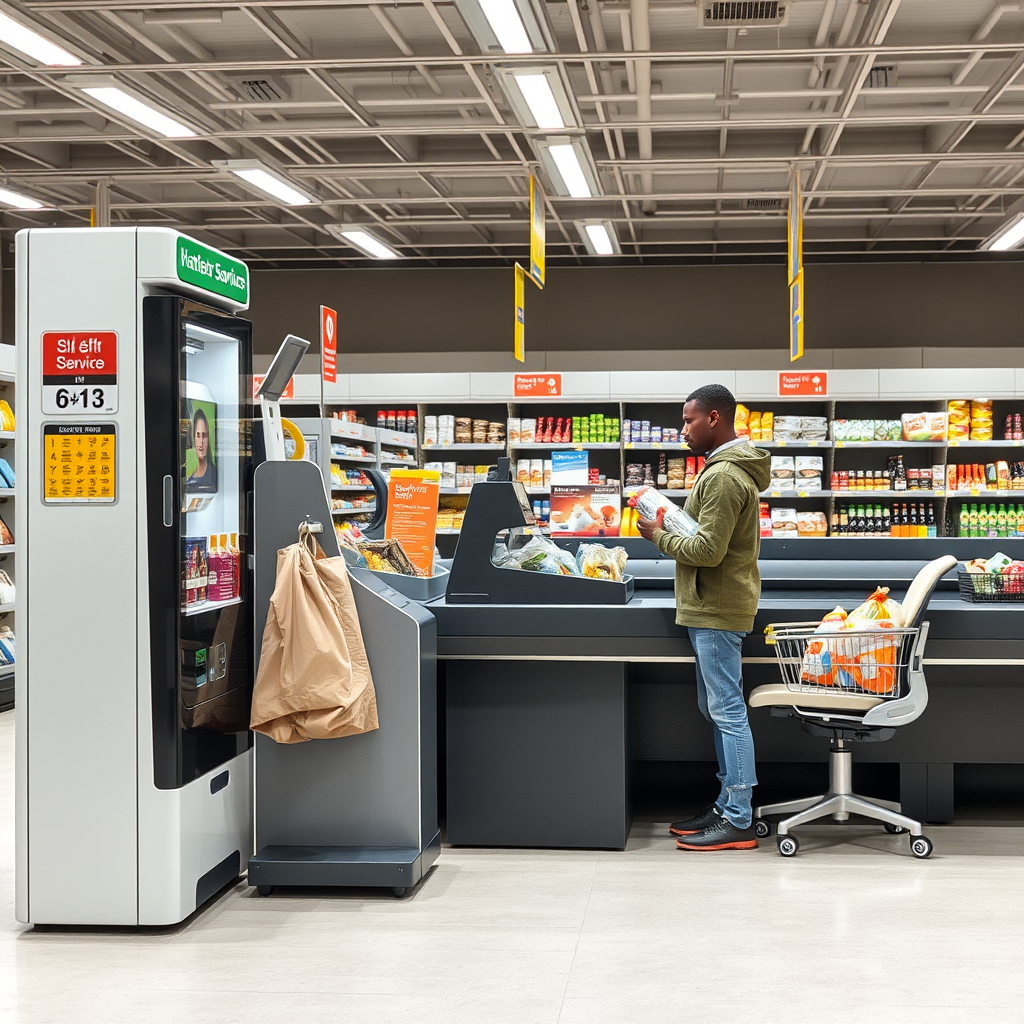
to take the place of something or someone
The company replaced the old computers with new ones.
More examples: Robots have replaced some workers in car factories. • Nothing can replace a good night's sleep. • They replaced the broken lift last week.
Common collocations: replace something with something, be replaced by machines, a replacement for
Word family: replacement (noun)
Synonyms: take the place of, substitute
Antonyms: keep, restore
Related concepts: change, new for old, job losses
Contexts: work, shopping, home repairs
Usage note: Pattern: replace A with B, or passive 'A was replaced by B'. Both are common. Do not confuse with 'put back'.
efficient

working well, quickly and without wasting time or money
The new system is very efficient; it saves us two hours a day.
More examples: Trains are an efficient way to travel across the city. • She is an efficient worker; she never wastes time. • The heating in this building is not very efficient.
Common collocations: highly efficient, an efficient system, energy efficient
Word family: efficiency (noun), efficiently (adverb)
Synonyms: productive, well-organised
Antonyms: inefficient, wasteful
Related concepts: speed, saving time, saving money
Contexts: work, transport, energy
Usage note: Usually positive: it means good AND fast with no waste. Careful: 'efficient' is about saving time and resources; 'effective' is about getting the result you want.
creativity

the ability to make new and original ideas or things
Her creativity shows in every meal she cooks.
More examples: Machines can calculate, but they lack creativity. • Art lessons give children a chance to use their creativity. • Good advertising needs a lot of creativity.
Common collocations: use your creativity, show creativity, a lack of creativity
Word family: creative (adjective), create (verb), creatively (adverb)
Synonyms: imagination, originality
Antonyms: boringness, lack of ideas
Related concepts: art, new ideas, problem solving
Contexts: art, work, education
Usage note: Uncountable noun. The adjective 'creative' is very common with jobs and people: a creative job, a creative person.
redundant

losing your job because the company no longer needs you
Twenty workers were made redundant when the factory closed.
More examples: She was made redundant after the shop automated its checkouts. • His role became redundant when the two offices merged. • Losing staff as redundant is hard for any manager.
Common collocations: be made redundant, become redundant, compulsory redundancies
Word family: redundancy (noun)
Synonyms: laid off, let go
Antonyms: employed, hired
Related concepts: unemployment, job losses, company changes
Contexts: companies, factories, news about jobs
Usage note: British English: we usually say 'be made redundant'. In American English people more often say 'be laid off'. The word describes the job, not the person's quality of work.
Vocabulary Check
- What does 'efficient' mean?
- Working well without wasting time or money
- Working very slowly and carefully
- Working alone without help
- Working only when the boss is watching
- Which word best completes the sentence? 'The company decided to ______ its warehouse, so now robots move all the boxes.'
- replace
- automate
- create
- employ
- What does 'redundant' mean in this sentence: 'Her job became redundant after the shop bought self-checkout machines.'?
- Her job became easier
- Her job became better paid
- Her job was no longer needed
- Her job became more interesting
- In which situation would you use the word 'creativity'?
- When you count money very quickly
- When you paint an original picture or invent a new game
- When you follow instructions exactly
- When you copy a page from a book
- What does 'replace' mean?
- To repair something that is broken
- To take the place of something or someone
- To buy something new for yourself
- To work together with someone
Phrasal Verbs & Expressions
take over
to start doing a job that someone else did before
Self-service machines are taking over in supermarkets everywhere.
Usage note: "Over" suggests moving from one person or thing to another: the job moves from people to machines.
Usage note: Common pattern: take over + the thing, e.g. "Robots will take over the boring tasks."
at first
in the beginning, but then things changed
At first I didn't like my new job, but now I love it.
Usage note: Use it to tell a story: at first... but then... e.g. "At first I was nervous, but then I relaxed."
Usage note: It always suggests a change later, so it often comes with "but" or "after a while".
find out
to get new information about something
I want to find out if my company will use more robots next year.
Usage note: "Out" suggests information coming out into the open: you learn something you didn't know.
Usage note: Common pattern: find out + if/whether/that/what, e.g. "I found out that the shop was closing."
Language Practice: Talking About Robots and Jobs
Practise expressing ideas about technology, jobs and the future of work.
- Giving an opinion with a reason
- Emerging: I think robots ______ because ______. — I think robots are useful because they never get tired.
- Developing: In my opinion, machines are good at ______, but people are better at ______ because ______. — In my opinion, machines are good at counting, but people are better at talking because we understand feelings.
- Expanding: I don't think robots will completely replace people at work, because although they are more efficient at ______, they can't ______. — I don't think robots will completely replace people at work, because although they are more efficient at simple tasks, they can't be creative.
- Talking about cause and effect at work
- Emerging: When a company automates a task, workers ______. — When a company automates a task, workers lose their jobs.
- Developing: When companies automate simple jobs, some workers become redundant, so they need to ______. — When companies automate simple jobs, some workers become redundant, so they need to find new work.
- Expanding: If machines replace more jobs in the future, people will have to learn new skills, because ______. — If machines replace more jobs in the future, people will have to learn new skills, because simple tasks will disappear.
- Comparing people and machines
- Emerging: Machines are faster than people at ______. — Machines are faster than people at counting money.
- Developing: Machines are more efficient than people at ______, but people are more creative when they ______. — Machines are more efficient than people at simple tasks, but people are more creative when they design new things.
- Expanding: Although machines are far better than us at ______, I'd still rather have a person do this job, because ______. — Although machines are far better than us at calculating, I'd still rather have a person do this job, because I want to talk to a human.
Fill in the Blanks
David works in a big factory that makes car parts. Two years ago, the company decided to _____ most of the production line, so robots now do many of the jobs that people did before. The robots are very _____ — they work day and night and never make mistakes. David was lucky: his job was not _____d, because his work needs _____ and careful thinking, which machines cannot do well. Sadly, some of his colleagues were not so lucky, and their positions became _____. David thinks the company should have helped them find new jobs.
Word bank: automate, replace, efficient, creativity, redundant
Sentence Unscramble
- machines / can / simple / automate / tasks / very / quickly
- she / was / made / redundant / when / the / factory / closed
- people / are / more / creative / than / machines / at / solving / problems
Discussion Questions
In many countries, supermarkets now have self-checkout machines instead of cashiers. Some customers love them because they are quick. Others miss talking to a person at the till.
Would you rather be served by a machine or a person? Why?
Maria lost her job when her supermarket automated the checkouts, but her friend Elena kept hers because customers wanted human contact in the bakery. Not every job disappears when machines arrive.
Do you know someone whose job has changed because of technology? What happened?
Machines are very efficient at repeated tasks, like scanning boxes or checking numbers. But some people say machines will never be truly creative, because they only follow instructions.
Do you think a machine could ever be creative? Can you give an example?
If your job became redundant tomorrow, you would need to learn something new. Some people take courses, others change to a completely different kind of work.
If you had to learn a new skill for work, what would you choose? Why?
Some experts say that in the future, people will work together with robots instead of competing against them. A doctor might use a robot for tests, but the doctor still talks to the patient.
Would you like to work together with a robot? What would it help you with?
Knowledge Check
- Which word best completes the sentence? 'Many companies want to ______ boring, repeated tasks so people can do more interesting work.'
- replace
- automate
- redundant
- creative
- True or false? 'Efficient' means working slowly and carefully.
- True
- False
- What does 'made redundant' mean in this sentence: 'He was made redundant last month.'?
- He got a promotion last month
- He lost his job because the company did not need him
- He started a new job last month
- He moved to a new office last month
- Which word best completes the sentence? 'Nothing can ______ a mother's love.'
- replace
- automate
- efficient
- redundancy
- According to the reading, why did Elena keep her job in the bakery?
- Because she was more efficient than the machines
- Because customers wanted a real person to advise them
- Because the machines were too expensive
- Because she was the manager's friend
- Maria was not worried at first. What does "at first" mean?
- She was never worried
- In the beginning, but things changed later
- She was worried all the time
- At the end of the story
Free to use with your students: Free to teach, screen-share, print and share with your students, with a credit to PlanWise ESL. Please do not sell it or republish it as your own. What you can do with free lessons.