Carols, Cathedrals and a Noisy World: Sacred Music Today
About this lesson: This is a C1 (Advanced) ESL lesson in the Conversation Practice category. It takes about 60 minutes. It includes 5 vocabulary words, 4 idioms and phrasal verbs, a reading text, comprehension questions, discussion questions and speaking patterns. Suits one-to-one or small-group online classes. Free to open and teach with no login, and it prints as a PDF.
Print just the discussion questions
How this lesson is built
This is a complete conversation lesson built on a scientific pedagogical formula, not a generic worksheet: recall prior topic vocabulary, pre-teach the new words in depth, read in context, practise active recall with flashcards and synonyms/antonyms, build accuracy with exercises, and finish with deep discussion.
- Warm-up: Discussion questions that connect the topic to the student’s own life and recall vocabulary they already know about the subject.
- Reading: A text written for this CEFR level that uses each new word two or three times in context, giving the student something meaningful to react to.
- Key vocabulary: 5 new words, pre-taught before the reading with a definition, pronunciation guide, example sentences and a picture, plus word families, usage notes, recall flashcards and synonyms/antonyms, giving a solid grounding before reading.
- Comprehension: 5 questions that check the new words: retrieval practice, not rereading.
- Idioms and phrasal verbs: Expressions taken from the reading, each with its meaning, an example and a speaking question.
- Sentence frames: 3 speaking patterns, each at three levels of support (emerging, developing, expanding) with model answers—especially helpful scaffolding for beginners and less confident speakers.
- Gap-fill: The new words again, in a shuffled order, so the student recalls them by meaning in context.
- Sentence unscramble: Natural sentences with the new words to put back in order, reinforcing grammar and collocation.
- Discussion: 5 open questions designed to talk deeply about the subject while actively using the lesson’s target vocabulary: the heart of a conversation lesson.
- Quiz: A short retrieval check that brings every new word back once more.
Unlike a generic worksheet, the new words are taught before the reading and met again in the activities, the speaking is supported at three levels and most of the time goes on the student talking. Teachers who use PlanWise ESL also get per-student vocabulary tracking (recycling earlier words into future readings and questions), a private learner dashboard with flashcards and custom lesson creation, and a downloadable study PDF.
Warm-up Activity
A relaxed chat to get you talking about music, memory and tradition before we dive into the reading.
- Do you have any memories of church services, carols or sacred music from your childhood?
- What kind of music, if any, gives you goosebumps — and where are you when it happens?
- Is Christmas in your country mostly religious, mostly commercial, or a bit of both?
- Have you ever been moved by a place — a church, a temple, a concert hall — even though you're not religious?
- Do you think old traditions can survive in a modern, diverse society, or do they have to change to survive?
Reading Text: The Carol in the Shopping Mall
A short magazine-style piece about why sacred music still pulls crowds in an age when most people don't go to church. Read it, then tell me what you think.
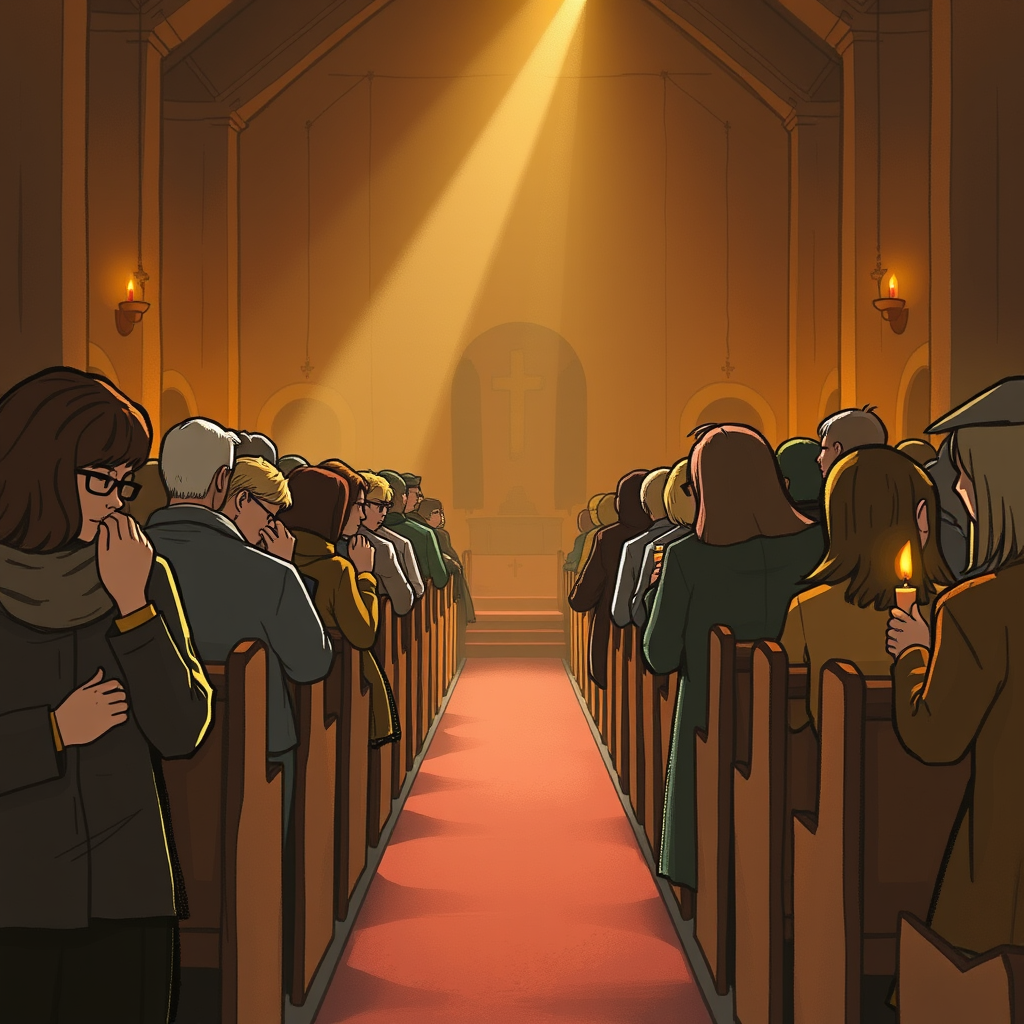
Every December, cathedrals and village churches fill with people who rarely set foot in them the rest of the year. The doors close, the chatter dies away, and a hushed expectancy settles over the pews. Then the first carol begins — and even the most distracted visitor seems to sit up straighter.
Of course, we live in a largely secular age. For many, church is not part of weekly life, and centuries-old hymns can feel like a foreign language. Yet every year, millions stream into services they would normally avoid, drawn by music rather than belief. Carols pour out of shopping malls, and even the most secular shopper hums along, often without hearing the words.
Why? Perhaps because sacred music resonates with something deeper than doctrine. A choir in full voice can move a believer and an atheist in exactly the same way. The melodies carry memories — of childhood, of family, of winters long past — and those memories resonate whatever your faith, or lack of it.
Churches have noticed. Many cities now host inclusive 'carols for all' services, with readings from different traditions and no demands on anyone. Critics grumble that faith is being watered down; supporters reply that great music has always transcended the walls between us, and that a reverent silence needs no shared creed — beauty, at its best, transcends belief.
Either way, the atmosphere in those packed pews is unmistakably reverent. Voices drop, breath is held at the right moments, and people file out humming into the cold. In a noisy, divided world, that shared, hushed stillness might be the rarest gift the season offers.
Key Vocabulary
reverent
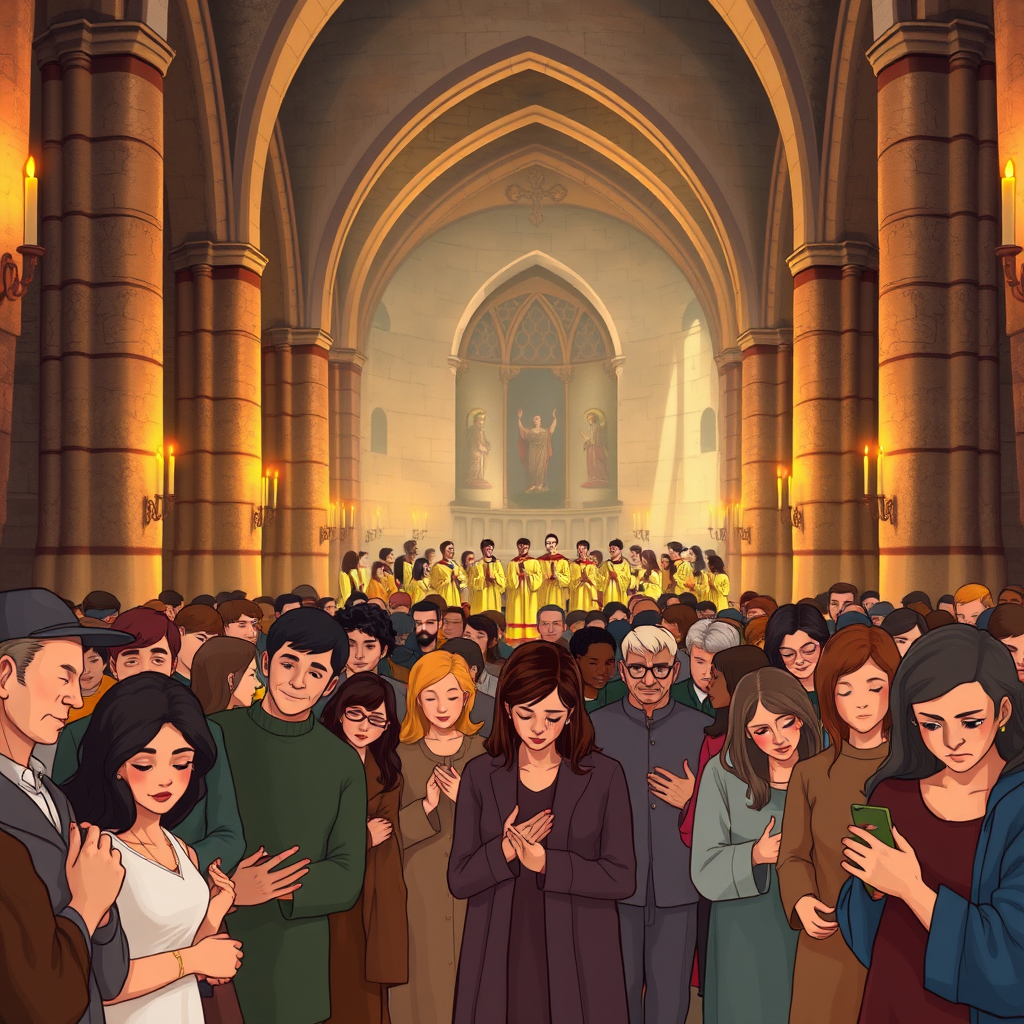
Showing deep respect, often in a quiet, serious way.
The congregation fell reverent the moment the choir began to sing.
More examples: The documentary takes a reverent tone towards its subject, almost worshipping the chef. • Everyone got weirdly reverent when the boss started his farewell speech. • I felt reverent walking into that old temple, even though I didn't know any of the rituals.
Common collocations: a reverent silence, a reverent tone, a reverent atmosphere
Word family: reverence (noun), reverently (adverb)
Synonyms: solemn, devout, awed
Antonyms: irreverent, disrespectful, flippant
Related concepts: worship, ceremony, awe
Contexts: religious services, memorials, formal ceremonies
Usage note: Describes people, voices, gestures or atmospheres where respect is shown quietly, not loudly. Often used for religious or ceremonial settings, but also ironically for anything treated with exaggerated seriousness.
secular
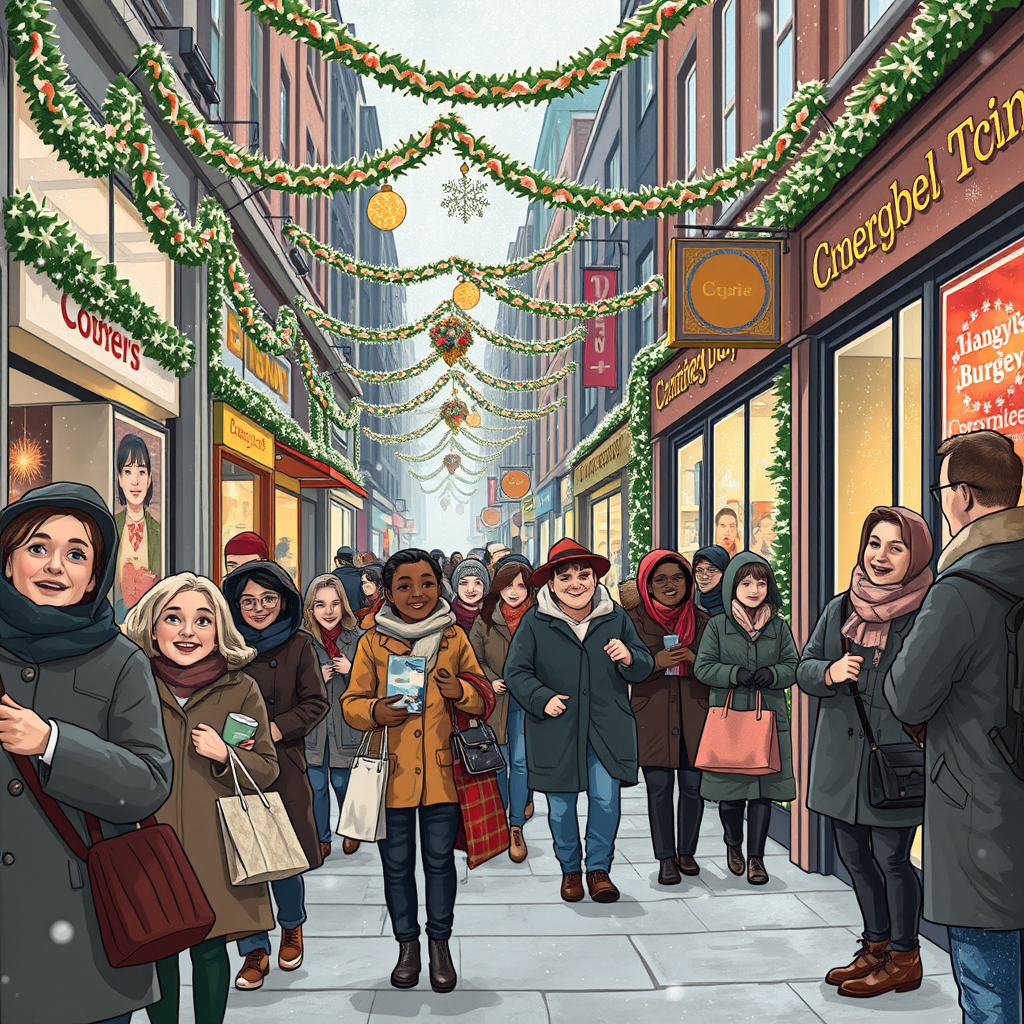
Not connected with religion or spiritual matters.
Christmas has a thoroughly secular side: presents, parties and time off work.
More examples: The constitution guarantees a secular state, with no official religion. • Honestly, my Christmas is completely secular — tree, food, films, zero church. • Sacred music has found a huge secular audience through streaming platforms.
Common collocations: secular society, secular music, a secular age
Word family: secularism (noun), secularize (verb), secularization (noun)
Synonyms: non-religious, worldly, lay
Antonyms: sacred, religious, spiritual
Related concepts: modernization, tradition, public life
Contexts: politics and law, music and art, holidays and festivals
Usage note: The standard word for the non-religious side of anything: music, education, holidays, government. Neutral in tone — it describes, it doesn't criticise.
resonate
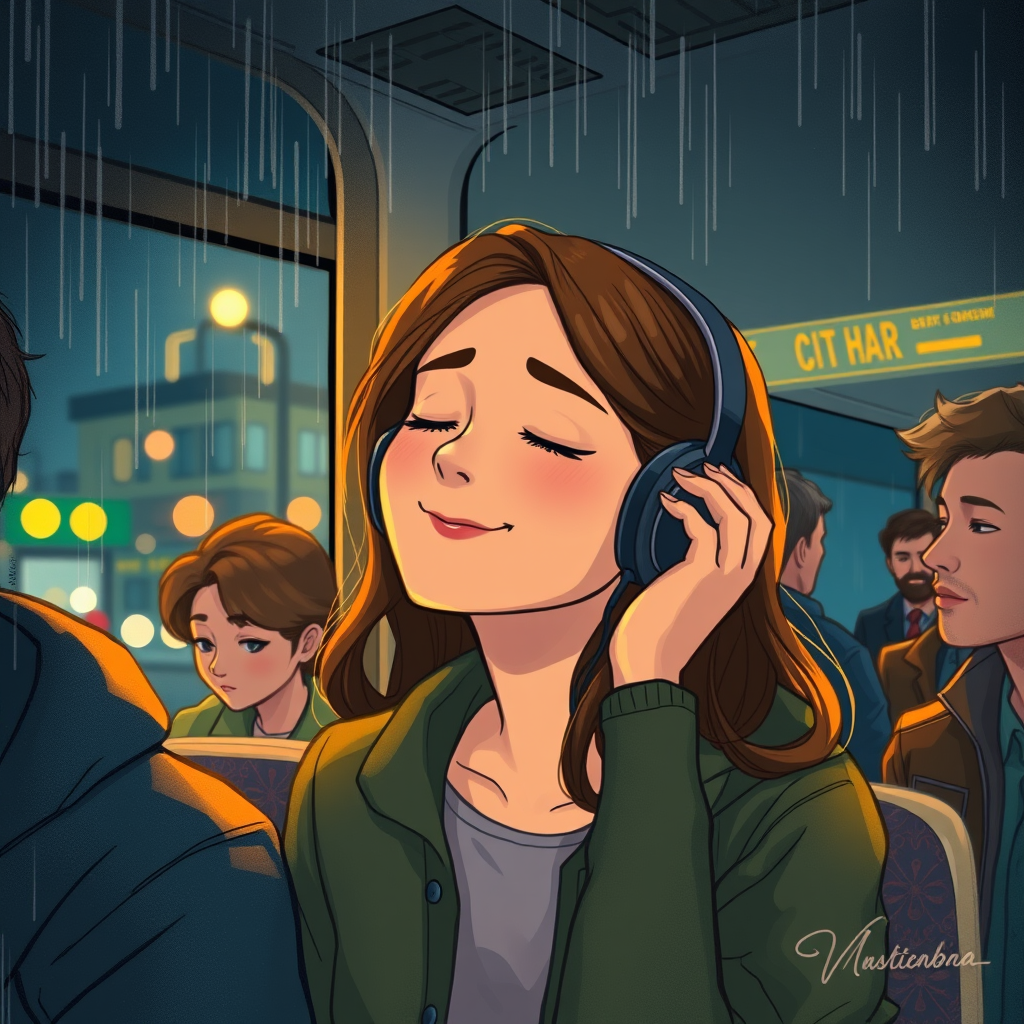
To have special meaning for someone; to produce deep feelings.
Her story resonated with everyone who had ever moved abroad.
More examples: The speech resonated far beyond the party's traditional supporters. • That song really resonates with me — it's basically my twenties in four minutes. • Ideas of home and belonging resonate strongly in her novels.
Common collocations: resonate with someone, resonate deeply, continue to resonate
Word family: resonance (noun), resonant (adjective)
Synonyms: strike a chord, move, speak to
Antonyms: leave cold, fall flat, mean nothing to
Related concepts: memory, identity, art
Contexts: music and film, politics and speeches, personal stories
Usage note: Almost always followed by 'with'. Used for ideas, stories, music and messages that feel personally meaningful. Slightly elevated register but common in everyday conversation about art and opinions.
transcend
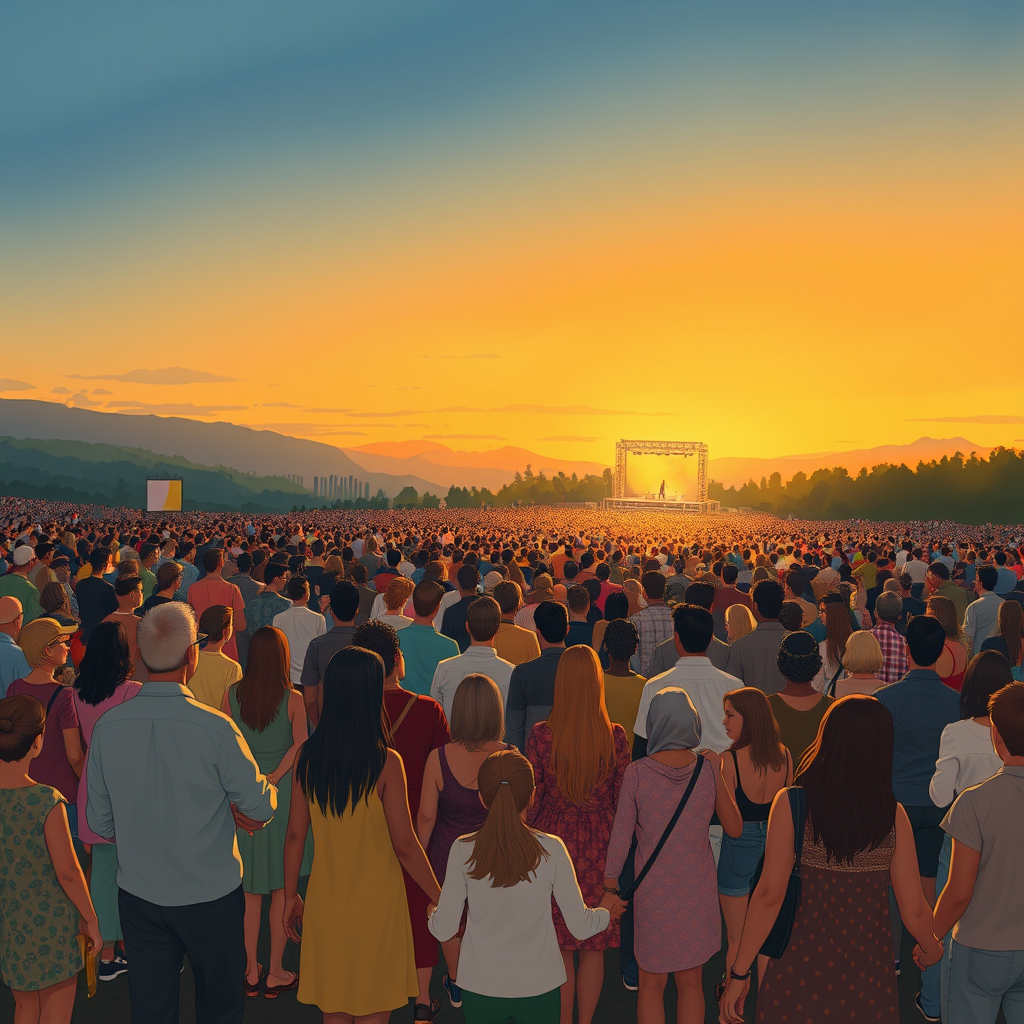
To go beyond the limits or reach of something.
The best music transcends language and culture.
More examples: Her appeal transcends party politics; even her rivals admire her. • The film is about football, but it transcends sport — it's really about dignity. • Some friendships simply transcend distance and time.
Common collocations: transcend borders, transcend differences, transcend belief
Word family: transcendent (adjective), transcendence (noun)
Synonyms: go beyond, surpass, rise above
Antonyms: be limited by, be confined to, be bound by
Related concepts: universality, art, human nature
Contexts: art and music, philosophy, sport and achievement
Usage note: Formal-leaning but frequent in thoughtful conversation. The object is usually an abstract limit: differences, categories, expectations, belief. Never used for physical movement.
hushed
Quiet and calm, as if people are waiting or speaking softly.
A hushed crowd waited in the dark for the lights to come up.
More examples: She spoke in hushed tones about the family secret. • The library went hushed the second the exam papers were handed out. • We walked through the hushed galleries, our footsteps echoing.
Common collocations: a hushed voice, hushed tones, a hushed silence
Word family: hush (noun), hush (verb)
Synonyms: muted, hushed-up, still
Antonyms: noisy, rowdy, deafening
Related concepts: anticipation, respect, silence
Contexts: churches and ceremonies, theatres and cinemas, hospitals and libraries
Usage note: Describes atmospheres heavy with expectation or respect — theatres, churches, hospitals at night. Stronger than 'quiet': it implies people are deliberately lowering their voices.
Vocabulary Check
- Which situation calls for a 'reverent' attitude?
- A loud birthday party with games and music
- A football match with thousands of shouting fans
- A memorial service for someone who has died
- A comedy show where everyone is laughing
- What does 'secular' mean?
- Not connected to religion
- Extremely old
- Very serious and sad
- Sung by a choir
- If an idea 'resonates' with you, what happens?
- You find it confusing and give up on it
- You forget it almost immediately
- You disagree with it strongly
- It feels meaningful and stays with you
- Which sentence uses 'transcend' correctly?
- She transcended the bus this morning.
- His kindness transcends cultural differences.
- We transcended the meeting until Friday.
- The soup transcends delicious.
- In which situation would you most likely hear a 'hushed' voice?
- At a rock concert in a stadium
- During a penalty shootout at a cup final
- In a library or a quiet church
- At a busy street market at noon
Idioms & Phrasal Verbs
set foot in
to enter or visit a place
I hadn't set foot in a gym for years until my doctor gave me a stern talking-to.
Usage note: The picture is your foot literally stepping over a threshold — often used with 'never' or 'rarely' for places you avoid. · Right: set foot in a church · Avoid: set a foot in a church
Usage note: Slightly dramatic; plain 'go to' sounds flatter.
stream into
to enter somewhere quickly and in large numbers
When the gates opened, fans streamed into the stadium like water through a broken dam.
Usage note: The image is a stream of water — a steady, flowing crowd. You can't split it: 'streamed into', not 'streamed the hall into'. · Right: crowds streamed into the hall · Avoid: crowds streamed the hall into
Usage note: Used for movement into a place; for movement out, say 'stream out of'.
water down
to make something weaker or less strong than it should be
The new safety rules are so watered down that they barely change anything.
Usage note: The picture is literally adding water to a drink to make it weaker — used for rules, messages, courses, beliefs. · Right: a watered-down version · Avoid: a water-downed version
Usage note: Almost always negative — it implies the original strength has been lost.
file out
to leave a place slowly in a neat single line
The exam ended and we filed out in silence, too tired to speak.
Usage note: 'File' here is the line of soldiers or documents — one person at a time. No splitting: 'filed out of the church', not 'filed the church out of'. · Right: file out of the room · Avoid: file the room out of
Usage note: Often suggests quiet or orderly leaving — great for describing the end of a service, film or ceremony.
Language Practice: Tradition and Change
Practice expressing nuanced ideas about tradition, belief and change — conceding, qualifying and speculating, the way articulate speakers actually do it.
- Conceding a point before disagreeing
- Emerging: I see why people say ___, but I think ___. — I see why people say Christmas is too commercial, but I think families still make it meaningful.
- Developing: I take the point that ___, but surely ___. — I take the point that inclusive services water things down, but surely a shared evening of music beats an empty church.
- Expanding: Admittedly, ___ has a point when it comes to ___, but that doesn't mean ___. — Admittedly, the purists have a point when it comes to preserving the liturgy, but that doesn't mean a carol loses its power the moment it leaves the church.
- Qualifying and sharpening an opinion
- Emerging: It's not really ___, it's more ___. — It's not really religion, it's more the memories.
- Developing: It's not so much ___ as ___. — It's not so much faith as nostalgia that fills the pews in December.
- Expanding: For me, it's less a question of ___ than one of ___ — after all, ___. — For me, it's less a question of belief than one of belonging — after all, nobody checks your creed at the door of a carol concert.
- Speculating about hypothetical change
- Emerging: If ___ happened, I think ___. — If carols disappeared from the radio, I think people would miss them more than they admit.
- Developing: If ___ were to ___, I suspect ___. — If public carol singing were to vanish, I suspect December would feel strangely empty.
- Expanding: Were ___ to ___, I'd imagine ___, though ___. — Were the traditions to fade completely, I'd imagine people would invent new rituals within a generation, though the old melodies would probably survive them.
Fill in the Blanks
My aunt is the least religious person I know — she calls herself completely _____ — yet every Christmas Eve she joins the midnight service. She says the _____ atmosphere does something to her that no party can. 'The music seems to _____ all the usual arguments about belief,' she told me. 'I don't pray, but I do feel _____ when that choir starts.' For her, the carols _____ with memories of her grandmother, and that's reason enough to go.
Word bank: reverent, secular, resonate, transcend, hushed
Sentence Unscramble
- The / hushed / silence / before / the / first / carol / always / gives / me / goosebumps.
- Sacred / music / seems / to / transcend / the / differences / between / believers / and / skeptics.
- Even / in / a / secular / age, / those / old / melodies / resonate / with / millions.
Discussion Questions
Almost everyone has some memory of sacred music, whether it's a school choir, a midnight service, or a carol on the radio while wrapping presents. These sounds tend to attach themselves to very specific moments in our lives. Sometimes the memory is religious; often it's really about family, weather or atmosphere.
What's your earliest or strongest memory connected to carols, hymns or sacred music — and why do you think it stuck with you?
In many countries, Christmas has drifted far from its religious roots. Offices hold 'holiday parties', shops start playing carols in November, and millions celebrate without ever entering a church. Some see this as a sad loss of meaning; others see a festival simply evolving with the people who celebrate it.
Is the secular version of Christmas a loss, or just the natural next stage of an old tradition? Which version do you prefer, honestly?
Some churches now hold 'carols for all' services: readings from several traditions, no pressure to believe anything, tea and biscuits afterwards. Believers sometimes feel their faith is being diluted; others say it's the only way to keep the doors open in a diverse city. Both sides sound convincing.
Would you attend a service like that? And where should churches draw the line between welcoming everyone and standing for something?
There's a curious fact about sacred music: it often moves people who believe none of it. An atheist can weep at a requiem; a Buddhist might love a Christmas carol. Beauty seems to travel without a passport, crossing borders that arguments never manage to cross.
Do you think art and music can be genuinely shared between people of different faiths — or does belief always colour how we experience them?
Imagine a future where public carol singing, nativity plays and church concerts have faded away entirely — sacred music lives only in recordings and specialist choirs. Town squares in December are silent, and each community celebrates privately, behind closed doors. It's not hard to picture, honestly.
What do you think would be lost in that world — and is there anything that might actually be gained?
Knowledge Check
- Which word describes things that are not religious?
- reverent
- hushed
- transcend
- secular
- True or false: a 'hushed' room is noisy and lively.
- True
- False
- The choir's performance ___ with everyone in the hall, believer and skeptic alike.
- hushed
- resonated
- secular
- reverent
- True or false: if music transcends differences, it is stopped by them.
- True
- False
- A 'reverent' atmosphere is one of...
- deep respect
- loud excitement
- boredom
- fear
- If a government 'waters down' a policy, what have they done?
- Made it weaker and less effective than before
- Made it clearer and easier to understand
- Made it stricter than the original version
- Made it apply to more people than before
Free to use with your students: Free to teach, screen-share, print and share with your students, with a credit to PlanWise ESL. Please do not sell it or republish it as your own. What you can do with free lessons.