Gone Viral: Stories That Swept the World
About this lesson: This is a C1 (Advanced) ESL lesson in the General English category. It takes about 60 minutes. It includes 5 vocabulary words, 4 idioms and phrasal verbs, a reading text, comprehension questions, discussion questions and speaking patterns. Suits one-to-one or small-group online classes. Free to open and teach with no login, and it prints as a PDF.
Print just the discussion questions
How this lesson is built
This is a complete conversation lesson built on a scientific pedagogical formula, not a generic worksheet: recall prior topic vocabulary, pre-teach the new words in depth, read in context, practise active recall with flashcards and synonyms/antonyms, build accuracy with exercises, and finish with deep discussion.
- Warm-up: Discussion questions that connect the topic to the student’s own life and recall vocabulary they already know about the subject.
- Reading: A text written for this CEFR level that uses each new word two or three times in context, giving the student something meaningful to react to.
- Key vocabulary: 5 new words, pre-taught before the reading with a definition, pronunciation guide, example sentences and a picture, plus word families, usage notes, recall flashcards and synonyms/antonyms, giving a solid grounding before reading.
- Comprehension: 5 questions that check the new words: retrieval practice, not rereading.
- Idioms and phrasal verbs: Expressions taken from the reading, each with its meaning, an example and a speaking question.
- Sentence frames: 3 speaking patterns, each at three levels of support (emerging, developing, expanding) with model answers—especially helpful scaffolding for beginners and less confident speakers.
- Gap-fill: The new words again, in a shuffled order, so the student recalls them by meaning in context.
- Sentence unscramble: Natural sentences with the new words to put back in order, reinforcing grammar and collocation.
- Discussion: 5 open questions designed to talk deeply about the subject while actively using the lesson’s target vocabulary: the heart of a conversation lesson.
- Quiz: A short retrieval check that brings every new word back once more.
Unlike a generic worksheet, the new words are taught before the reading and met again in the activities, the speaking is supported at three levels and most of the time goes on the student talking. Teachers who use PlanWise ESL also get per-student vocabulary tracking (recycling earlier words into future readings and questions), a private learner dashboard with flashcards and custom lesson creation, and a downloadable study PDF.
Warm-up Activity
Look at the questions and talk about viral moments you remember — dances, memes, news stories that everyone suddenly knew about.
- What's the most viral thing you've ever shared or forwarded to a friend?
- Can you remember a viral trend from your country that outsiders found bizarre?
- Have you ever jumped on a trend early, before everyone else did?
- Do you think viral fame is mostly luck, or is there a formula?
- What's the last thing that made you laugh out loud online?
Reading Text: The Strange Life of a Viral Sensation
A short magazine-style piece about how things go viral — and what happens afterwards.
Every few months, the internet crowns a new king. One week it's a dance from a teenager's bedroom in Manila, the next it's a grandmother reviewing raincoats in Manchester. What starts as a private joke between strangers can become ubiquitous within days, appearing on every screen from São Paulo to Seoul.
The mechanics are surprisingly predictable. A video strikes a nerve, a few influencers share it, and the attention begins to snowball: each repost drags in a fresh audience, and the numbers grow faster than anyone can track. Platforms, of course, feed the fire, pushing whatever is already popular to even more eyes.
But virality is a fad by nature. The same crowd that lifts something up gets bored of it just as quickly, and last week's sensation becomes this week's embarrassment. Marketers who chase trends often arrive late, flogging a joke that everyone has already grown tired of.
Not everything viral is trivial, though. Some posts resonate because they capture something real — a frustration, a joy, a shared experience that people couldn't put into words themselves. When that happens, a silly clip can spark serious conversations about work, family or fairness.
And there's a darker side. Ordinary people who go viral by accident often face a brutal backlash: strangers dissect their past, mock their appearance and demand they apologise for things that were never their fault. The internet's memory is long, even when its attention span is short.
Key Vocabulary
fad

a short-lived fashion or interest that many people follow briefly
Fidget spinners were just a fad — nobody touches them now.
More examples: Critics dismissed the diet as another passing fad. • Low-rise jeans turned out to be more than a fad; they came back for good. • I refuse to buy that gadget — it smells like a fad to me.
Common collocations: a passing fad, the latest fad, dismiss something as a fad
Word family: fad (n), fad diet (n), fad-driven (adj)
Synonyms: craze, trend, mania
Antonyms: classic, staple
Related concepts: fashion, hype, novelty
Contexts: social media, consumer products, fitness and diets
Usage note: Slightly dismissive tone — calling something a fad suggests it won't last. Common in discussions of fashion, diets, technology and social media.
resonate
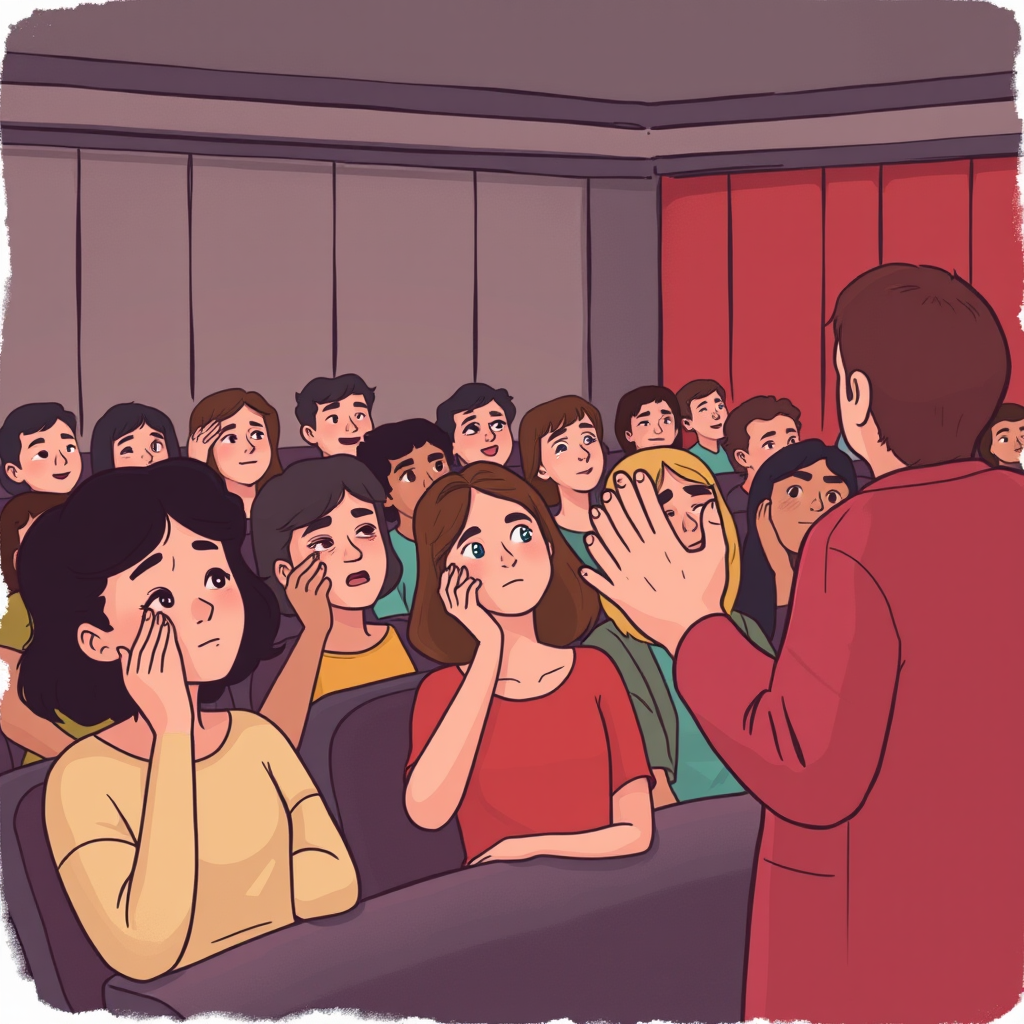
to feel meaningful or emotionally true to someone; to strike a chord
Her speech about burnout really resonated with young workers.
More examples: The film's themes of migration resonated with audiences worldwide. • That song resonates with me every time I hear it. • His story resonated far beyond his own community.
Common collocations: resonate with someone, resonate deeply, resonate with an audience
Word family: resonate (v), resonance (n), resonant (adj)
Synonyms: strike a chord, connect, hit home
Antonyms: fall flat, leave cold
Related concepts: empathy, shared experience, meaning
Contexts: public speaking, advertising, art and music
Usage note: Almost always followed by 'with'. Often used with ideas, art, speeches or stories — not with physical objects.
backlash
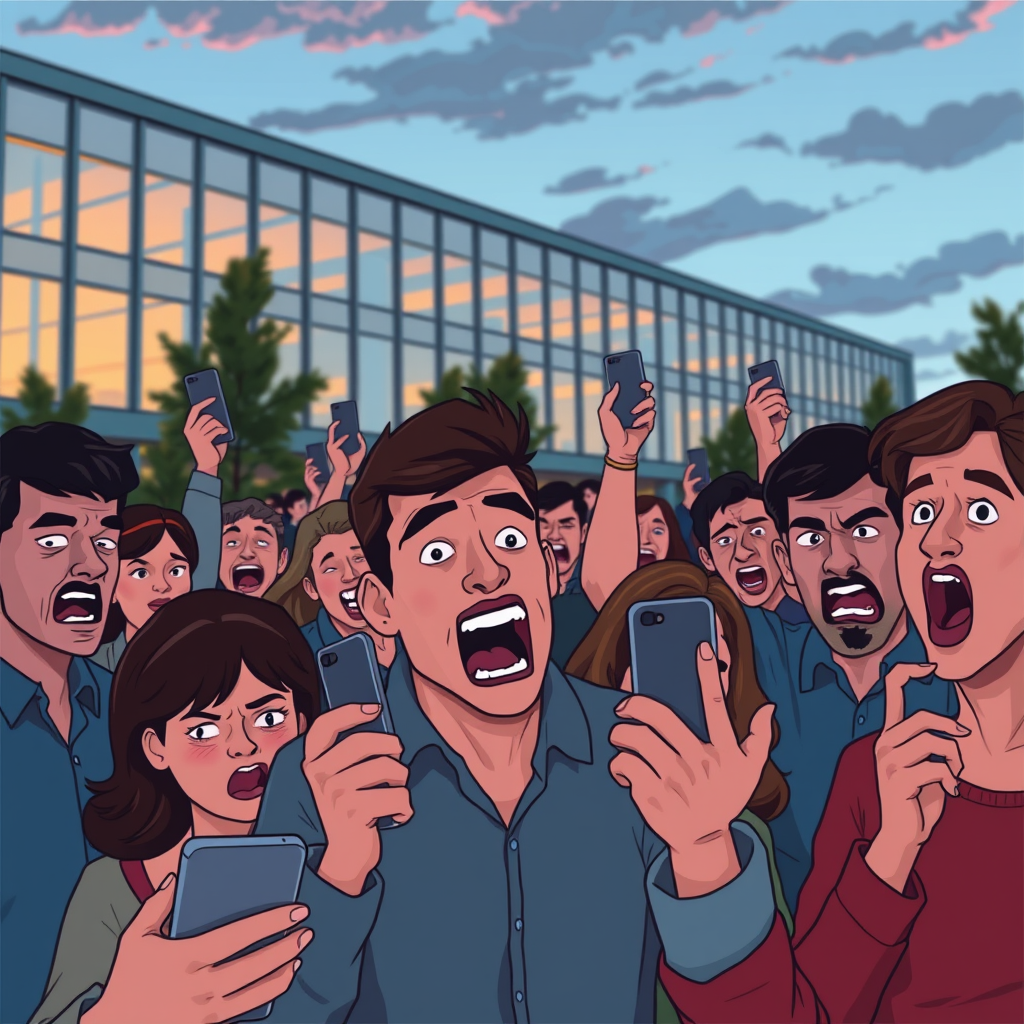
a strong negative public reaction to something, often sudden and angry
The company faced a huge backlash after raising prices during the crisis.
More examples: The new law sparked an immediate backlash on social media. • She wasn't prepared for the backlash when her comments went public. • There was a backlash against tourists in the city centre.
Common collocations: spark a backlash, face a backlash, a public backlash against
Word family: backlash (n)
Synonyms: uproar, furore, hostile reaction
Antonyms: praise, support
Related concepts: cancel culture, public opinion, outrage
Contexts: politics, social media, celebrity culture
Usage note: Used with public opinion, politics, brands and celebrities. Verbs like 'spark', 'provoke', 'trigger' and 'face' collocate strongly.
snowball

to grow rapidly, getting bigger and bigger as it develops
A small complaint snowballed into a national scandal.
More examples: The rumour snowballed until nobody could tell what was true. • Their side project snowballed into a full-time business. • Costs snowballed once the renovation started.
Common collocations: snowball into, snowball effect, let the debt snowball
Word family: snowball (v), snowball (n), snowball effect (n)
Synonyms: escalate, balloon, spiral
Antonyms: fizzle out, shrink
Related concepts: momentum, compounding, chain reaction
Contexts: finance, rumours, social movements
Usage note: Describes processes that feed themselves: rumours, debts, movements, popularity. Often followed by 'into'.
ubiquitous

seeming to be everywhere at the same time
Smartphones have become ubiquitous — even grandparents carry them.
More examples: Coffee shops are ubiquitous in this city; there's one on every corner. • The logo was ubiquitous during the tournament. • Plastic packaging is so ubiquitous we barely notice it.
Common collocations: ubiquitous in, become ubiquitous, now ubiquitous
Word family: ubiquitous (adj), ubiquity (n), ubiquitously (adv)
Synonyms: everywhere, pervasive, omnipresent
Antonyms: rare, scarce
Related concepts: globalisation, saturation, mass culture
Contexts: technology, advertising, urban life
Usage note: Slightly formal but very common in journalism and quality conversation. Often used with technology, brands and cultural phenomena.
Vocabulary Check
- What does 'fad' mean?
- Something that lasts for generations
- A short-lived fashion or interest
- A serious social problem
- A type of online advertisement
- In which situation would you say something 'resonated' with people?
- When it confused them completely
- When it made them angry
- When it felt emotionally true and meaningful to them
- When they forgot it immediately
- What does 'backlash' mean?
- A strong negative public reaction
- A sudden surge in popularity
- A technical failure of a website
- A friendly debate between experts
- Which sentence uses 'snowball' correctly?
- The party snowballed at exactly eight o'clock.
- A minor misunderstanding snowballed into a huge argument.
- She snowballed her coffee before the meeting.
- The snowball was very resonant this winter.
- What does 'ubiquitous' mean?
- Extremely expensive
- Highly controversial
- Appearing to be everywhere
- Very difficult to find
Idioms & Phrasal Verbs
strike a nerve
To touch a feeling or problem that people strongly relate to
Her post about burnout really struck a nerve — thousands of people replied with their own stories.
Usage note: The picture: like touching a raw nerve in your body — it hurts because it's real. · Right: strike a nerve · Avoid: strike a nerve of people
Usage note: Usually about something that touches a sensitive or shared feeling, not just any popular thing.
feed the fire
To make a bad or intense situation even stronger
Don't feed the fire by replying to his angry comments — just ignore him.
Usage note: Also said as 'add fuel to the fire' — same meaning, slightly more common in American English.
Usage note: Usually negative: you feed the fire when you make drama or conflict bigger.
flog a dead horse
To keep trying something that has no chance of working
That meme died months ago — posting it now is just flogging a dead horse.
Usage note: Mainly British; Americans more often say 'beat a dead horse'.
Usage note: The picture: whipping a horse that's already dead — no matter how hard you try, nothing moves.
pile on
When lots of people join in criticising one person at the same time
One wrong tweet and suddenly thousands of strangers were piling on, each insult harsher than the last.
Usage note: Separable: 'pile on someone' or 'pile on' alone. The small word 'on' gives the picture of people jumping onto a heap.
Usage note: Very common in discussions about cancel culture and online outrage.
Language Practice: Talking About Trends
Practice expressing and qualifying opinions about viral trends and internet fame.
- Conceding a point before disagreeing
- Emerging: I agree that ___, but ___. — I agree that viral videos are fun, but they disappear so fast.
- Developing: It's true that ___, although I'd argue that ___. — It's true that going viral can change someone's life, although I'd argue most of the changes are temporary.
- Expanding: I can see the appeal of ___, but isn't it the case that ___? — I can see the appeal of instant global fame, but isn't it the case that nobody is prepared for that kind of attention?
- Speculating about causes and consequences
- Emerging: Maybe ___ because ___. — Maybe that video went viral because it was totally unexpected.
- Developing: It might well be that ___, in which case ___. — It might well be that the algorithm amplified it, in which case luck mattered more than talent.
- Expanding: If ___ were to ___, I suspect ___, which could explain why ___. — If a random stranger were to become famous overnight, I suspect the attention would overwhelm them, which could explain why so many viral stars crash and burn.
- Describing how things change over time
- Emerging: At first ___, then ___. — At first only locals noticed it, then the whole country was talking about it.
- Developing: What started as ___ eventually snowballed into ___. — What started as a home video eventually snowballed into a global campaign.
- Expanding: It began as ___, snowballed into ___, and by the end ___. — It began as an inside joke, snowballed into a national obsession, and by the end even the president had commented on it.
Fill in the Blanks
When a video of a street musician singing in the rain was uploaded last spring, nobody expected much. Within a week, though, the clip had become _____ — you couldn't open your phone without hearing it. The attention began to _____: first radio stations played it, then a famous singer invited him on stage. Not everyone was delighted, of course. Some critics dismissed the whole thing as a _____ that would be forgotten by summer, and a small but loud _____ followed, with people accusing the media of hyping an ordinary performance. But the song clearly _____d with millions who had, at some point, felt like singing in the rain themselves.
Word bank: fad, resonate, backlash, snowball, ubiquitous
Sentence Unscramble
- what / started / as / a / joke / snowballed / into / a / global / trend
- the / backlash / was / swift / but / the / video / kept / spreading
- some / viral / moments / resonate / because / they / capture / something / real
Discussion Questions
Most viral content is harmless fun — a dance, a cat, a clever joke. But some viral moments change lives: a singer gets a record deal, a small business gets flooded with orders, a missing person is found. The same mechanism produces both silly entertainment and genuine opportunity.
If you could make one thing from your life or your country go viral, what would it be, and why?
Ordinary people who go viral by accident often describe it as a whirlwind: interview requests, strangers recognising them, old posts dug up and judged. Some embrace it, others delete their accounts and disappear. There's rarely a way back to anonymity.
Would you secretly want to go viral, even for a week? What would worry you most about it?
Trends used to spread slowly — through TV, radio and word of mouth — and could stay popular for years. Now something can be ubiquitous on Monday and forgotten by Friday. Some people say we're losing shared culture because nothing lasts long enough to become a classic.
Do you think anything from the internet age will still be famous in fifty years, or is it all just fads?
When something goes viral for the wrong reasons — an offensive joke, a public mistake — the backlash can be enormous and immediate. Some say this public punishment keeps people accountable; others say it's disproportionate and destroys people over small things.
Where would you draw the line between holding someone accountable and piling on unfairly?
Platforms decide what we see, and they promote whatever is already getting attention — so popularity snowballs, and the same few videos drown out everything else. Critics say this narrows what we laugh at, what we care about and even what we talk about at dinner.
Do you think algorithms make our sense of humour and culture richer or poorer? Has your own taste changed because of what gets pushed to you?
Knowledge Check
- Which word best completes this: 'The protest started small but soon ___ into a nationwide movement.'
- resonated
- snowballed
- fadded
- backlashed
- True or false: calling something a 'fad' suggests it will last a long time.
- True
- False
- Which preposition normally follows 'resonate' when talking about people connecting with an idea?
- to
- for
- with
- at
- A company changes its logo and thousands of angry posts appear within hours. This is best described as:
- a fad
- a backlash
- ubiquity
- a snowball
- True or false: 'ubiquitous' means something is rare and hard to find.
- True
- False
- If a video 'strikes a nerve', what does it do?
- It makes people angry on purpose
- It touches a feeling that many people strongly relate to
- It spreads very slowly at first
- It gets removed by the platform
Free to use with your students: Free to teach, screen-share, print and share with your students, with a credit to PlanWise ESL. Please do not sell it or republish it as your own. What you can do with free lessons.