Delivering the Numbers: Talking About Risk and Uncertainty
About this lesson: This is a C1 (Advanced) ESL lesson in the Business English category. It takes about 60 minutes. It includes 5 vocabulary words, 4 idioms and phrasal verbs, a reading text, comprehension questions, discussion questions and speaking patterns. Suits one-to-one or small-group online classes. Free to open and teach with no login, and it prints as a PDF.
Print just the discussion questions
How this lesson is built
This is a complete conversation lesson built on a scientific pedagogical formula, not a generic worksheet: recall prior topic vocabulary, pre-teach the new words in depth, read in context, practise active recall with flashcards and synonyms/antonyms, build accuracy with exercises, and finish with deep discussion.
- Warm-up: Discussion questions that connect the topic to the student’s own life and recall vocabulary they already know about the subject.
- Reading: A text written for this CEFR level that uses each new word two or three times in context, giving the student something meaningful to react to.
- Key vocabulary: 5 new words, pre-taught before the reading with a definition, pronunciation guide, example sentences and a picture, plus word families, usage notes, recall flashcards and synonyms/antonyms, giving a solid grounding before reading.
- Comprehension: 5 questions that check the new words: retrieval practice, not rereading.
- Idioms and phrasal verbs: Expressions taken from the reading, each with its meaning, an example and a speaking question.
- Sentence frames: 3 speaking patterns, each at three levels of support (emerging, developing, expanding) with model answers—especially helpful scaffolding for beginners and less confident speakers.
- Gap-fill: The new words again, in a shuffled order, so the student recalls them by meaning in context.
- Sentence unscramble: Natural sentences with the new words to put back in order, reinforcing grammar and collocation.
- Discussion: 5 open questions designed to talk deeply about the subject while actively using the lesson’s target vocabulary: the heart of a conversation lesson.
- Quiz: A short retrieval check that brings every new word back once more.
Unlike a generic worksheet, the new words are taught before the reading and met again in the activities, the speaking is supported at three levels and most of the time goes on the student talking. Teachers who use PlanWise ESL also get per-student vocabulary tracking (recycling earlier words into future readings and questions), a private learner dashboard with flashcards and custom lesson creation, and a downloadable study PDF.
Warm-up: Bad News and Boardrooms
Look at the questions below and talk through your first reactions. There are no wrong answers — the idea is to start thinking about how people communicate risk and uncertainty, especially when the news isn't good.
- Have you ever had to deliver bad news to a boss, a client or a team? How did you do it?
- When someone presents you with a forecast, what makes you believe it — or doubt it?
- Do you think it's better to sound confident and be vague, or sound unsure and be honest?
- Who in your life is best at explaining complicated or risky situations clearly? What do they do?
- If a plan could fail in three different ways, would you rather hear about all three, or just the most likely one?
Reading Text: The Quarterly Meeting Maya Dreaded
A finance director has to present a shaky quarterly forecast to the company's board. Read about the choices she makes — and think about whether you'd do the same.
Maya had been dreading this meeting for weeks. The quarter had been turbulent, and the numbers told an uncomfortable story: revenue was up, but the forecast for next quarter rested on assumptions that wouldn't survive much scrutiny. As CFO, she could have polished the slides until everything gleamed. Instead, she decided the board deserved the truth, warts and all.
Her first move was to attach a caveat to every projection. 'This assumes the supplier holds prices until June' — that kind of thing. Some colleagues warned her that caveats make a presenter look unsure. Maya disagreed. A caveat, she argued, isn't an admission of weakness; it's a line drawn around what you actually know.
Her deputy suggested a different tactic: hedge everything. Say 'might', 'could', 'possibly' until no statement can ever be pinned on you. Maya saw the trap. Hedge too much and the audience stops listening; every sentence sounds like a shrug. She chose to hedge only where the uncertainty was genuine, and to speak plainly everywhere else.
Then came the contingencies. For each major risk, she prepared a contingency: a concrete plan for what they'd do if the worst happened. She also refused to downplay the downside. 'If I downplay this and it blows up in September, we lose credibility for a decade,' she told her team.
In the boardroom, the scrutiny was sharp but fair. One director pushed hard on the cash-flow assumptions; Maya conceded the point and walked him through her contingency plan. By the end, something surprising had happened: the honesty itself had become reassuring. The board didn't leave certain about the future — nobody can be — but they left trusting the person navigating it.
Key Vocabulary
caveat

a warning or condition added to a statement, limiting what it really means
The forecast looks great, but there's one caveat: it assumes no new tariffs.
More examples: One important caveat before we start: these figures are preliminary. • With the usual caveat that plans change, I'd say we're on track. • I'd recommend the restaurant, with the caveat that it gets very noisy.
Common collocations: add a caveat, one important caveat, with the caveat that
Word family: caveats (plural), caveated (adjective, rare)
Synonyms: qualification, proviso, warning
Antonyms: blanket statement, unqualified claim
Related concepts: fine print, terms and conditions, disclaimer
Contexts: business presentations, legal advice, product recommendations
Usage note: Used when you want to be honest about the limits of what you're saying. Very common in presentations, reports and careful advice. Often introduced with 'one caveat' or 'with the caveat that'.
hedge

to speak in a deliberately vague way so you can't be pinned down or blamed
Stop hedging and tell us: will the project finish on time or not?
More examples: Politicians hedge constantly — 'it depends', 'time will tell', 'we're looking into it'. • She hedged when I asked about the pay rise, which told me the answer was no. • I'm not hedging when I say 'probably' — the data genuinely is mixed.
Common collocations: hedge your bets, stop hedging, hedge a statement
Word family: hedging (noun/gerund), hedged (adjective), hedgy (informal adjective)
Synonyms: equivocate, fudge, waffle
Antonyms: commit, state plainly, be direct
Related concepts: evasion, diplomacy, plausible deniability
Contexts: politics, job interviews, difficult conversations
Usage note: Often negative — it suggests evasiveness. But hedging language ('might', 'arguably', 'to some extent') is also a normal, polite feature of careful speech. Note the separate financial meaning: hedging an investment to reduce risk.
contingency

a plan prepared for something possible but not certain to happen
If the launch slips again, our contingency is to ship the core features first.
More examples: We have a contingency for every supplier on that list. • Good project managers build contingencies in from day one. • Her contingency, if the funding falls through, is to bootstrap for six months.
Common collocations: contingency plan, build in a contingency, have a contingency for
Word family: contingencies (plural), contingent (adjective), contingency plan (noun phrase)
Synonyms: backup plan, fallback, plan B
Antonyms: single point of failure, no plan B
Related concepts: risk management, insurance, scenario planning
Contexts: project management, event planning, personal finance
Usage note: Slightly formal but very common in work contexts. The plural 'contingencies' often means possible problems in general: 'budget for contingencies'.
downplay
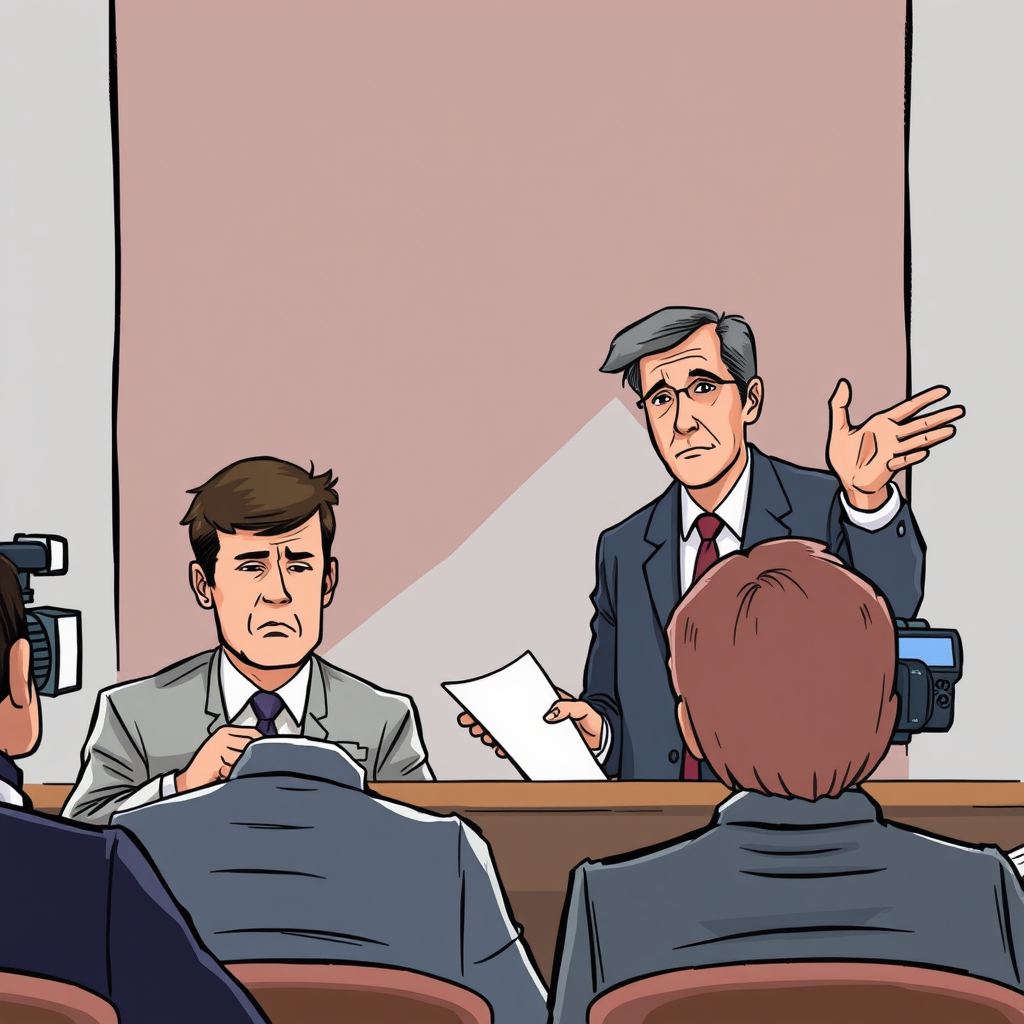
to make something seem less important or serious than it really is
The report downplayed the delays, calling them 'minor adjustments'.
More examples: Don't downplay your achievements in the interview — own them. • He downplayed the argument, saying they'd both forgotten it by morning. • The government was accused of downplaying the scale of the shortage.
Common collocations: downplay the risks, downplay the significance, accused of downplaying
Word family: downplayed (past forms), downplaying (gerund)
Synonyms: understate, minimise, soft-pedal
Antonyms: exaggerate, play up, overstate
Related concepts: spin, modesty, damage control
Contexts: politics, crisis communication, job interviews
Usage note: Almost always carries mild criticism — it implies someone is being less than fully honest, or being modest. The opposite idea is 'play up' or 'exaggerate'. Note the separable grammar: 'downplay it', 'downplay the problem'.
scrutiny

very careful and critical examination of something
Every line of the budget came under scrutiny before sign-off.
More examples: Her expenses claim didn't survive close scrutiny. • Public figures live their lives under constant media scrutiny. • The deal collapsed when regulators began their scrutiny of the accounts.
Common collocations: come under scrutiny, close scrutiny, escape scrutiny
Word family: scrutinise (verb), scrutiny (noun)
Synonyms: examination, inspection, oversight
Antonyms: casual glance, oversight (in the sense of a miss)
Related concepts: accountability, audit, due diligence
Contexts: finance, journalism, regulation
Usage note: Almost always used with the idea of pressure: claims, documents and people 'come under' or 'face' scrutiny. Strong collocation with 'close' and 'intense'. Slightly formal but very common in news and work language.
Vocabulary Check
- When would you add a caveat to a statement?
- When you want to make the statement sound more exciting
- When you want to repeat the statement in different words
- When you want to warn people about the limits of what the statement covers
- When you want to end a conversation politely
- What does it mean to hedge when you speak?
- To speak vaguely so you can't be pinned down to one clear claim
- To speak loudly so everyone pays attention
- To repeat your main point several times
- To interrupt politely while someone else is talking
- A contingency is best described as...
- a detailed record of everything that went wrong last time
- a promise that nothing will go wrong
- a formal apology for a mistake
- a plan you prepare in case something possible actually happens
- If you downplay a problem, you...
- make it seem less serious than it really is
- describe it in enormous detail
- hand it over to someone else to solve
- write it down so you don't forget it
- If your work comes under scrutiny, it is...
- praised publicly by senior people
- examined very carefully and critically
- filed away and forgotten
- sent to a different department
Idioms & Phrasal Verbs
warts and all
the whole truth, including the bad or unattractive parts
I gave them my honest assessment of the project, warts and all.
Usage note: The picture: old portraits of a leader were ordered 'with warts and all' — honest, not flattering.
Usage note: It suggests courage and honesty, so it's usually said with approval.
blow up
to suddenly fail badly or become a big problem
The deal looked safe, but it blew up two days before signing.
Usage note: Not usually split: 'the plan blew up', not 'blew the plan up' (that means explode something with a bomb).
Usage note: The small word 'up' adds the idea of something bursting out of control.
walk someone through
to explain something step by step, patiently
Let me walk you through how the new system works.
Usage note: Always split: 'walk her through it', never 'walk through her it'.
Usage note: The picture: you guide someone by the hand through each stage, like a tour.
push back
to resist or challenge an idea or decision
When the deadline moved up, the whole team pushed back.
Usage note: Very common in office talk; it sounds more professional than 'complain'.
Usage note: Not split: 'they pushed back on the proposal', not 'pushed the proposal back on'.
Language Practice: Qualifying and Defending Your Position
Practice expressing ideas about risk, honesty and uncertainty — qualifying your claims, adding caveats, and holding your ground when someone pushes back.
- Qualifying a claim without abandoning it
- Emerging: I don't want to downplay ___, but ___. — I don't want to downplay the cost, but I think it's worth it.
- Developing: I don't want to downplay the risks here, but I genuinely think ___. — I don't want to downplay the risks here, but I genuinely think we should go ahead.
- Expanding: I don't want to downplay how serious ___ could be, but at the same time, I'd argue ___. — I don't want to downplay how serious a supply disruption could be, but at the same time, I'd argue we've over-corrected on inventory.
- Adding a caveat to a recommendation
- Emerging: One caveat: ___. — One caveat: the price might change.
- Developing: One caveat I'd add is that this only works if ___. — One caveat I'd add is that this only works if the whole team agrees.
- Expanding: The main caveat — and it's an important one — is that ___. — The main caveat — and it's an important one — is that none of this holds if the market turns before spring.
- Conceding a point and standing firm under questioning
- Emerging: That's a fair point, but ___. — That's a fair point, but we've already tried it their way.
- Developing: I take your point about ___, but the evidence suggests ___. — I take your point about the cost, but the evidence suggests it pays for itself within a year.
- Expanding: I concede that ___, but that's precisely why ___. — I concede that the forecast is uncertain, but that's precisely why we need a contingency rather than a promise.
Fill in the Blanks
Before I present the forecast on Monday, I want to run it past you. My main worry is that people will _____ the supply-chain risk because the headline numbers look healthy — I don't want us making that mistake. Every projection needs a _____ stating which assumption it rests on, and for the two biggest risks we need a proper _____, not just a vague promise to 'keep an eye on things'. I'll _____ where the uncertainty is real, but I won't hedge everywhere — the board will put weak claims under _____, and vague language won't survive it.
Word bank: caveat, hedge, contingency, downplay, scrutiny
Sentence Unscramble
- She / added / a / caveat / to / every / forecast / she / presented / .
- Executives / tend / to / put / optimistic / numbers / under / intense / scrutiny / .
- It's / better / to / prepare / a / contingency / than / to / downplay / the / risk / .
Discussion Questions
Imagine a team leader who has to tell senior management that a project is six months behind. One option is to present it confidently and hope things improve; another is to present it honestly and take the criticism. Both choices say something about what the leader values: their own standing, or the organisation's ability to react in time.
When the news is bad, where's the line between staying positive and downplaying the truth? Have you ever seen someone cross it?
In many workplaces, the person who presents the forecast is also the person who answers for it later. If the prediction turns out wrong, it rarely matters that the assumptions were reasonable at the time — someone's reputation takes the hit. This creates a strange incentive: the safer career move is often to sound vague, or to promise less than you believe.
If you knew a wrong forecast could damage your reputation, would you still give your honest best guess? Why or why not?
Some leaders speak in careful, qualified language — everything 'might' happen, everything 'depends'. Others speak in plain, confident sentences, even when the future is genuinely unclear. The first style protects them from blame; the second inspires action but can look naive when things go wrong. Most of us have worked under both types.
Would you rather work for a leader who hedges everything or one who speaks with total confidence? Which one have you actually worked with?
Imagine a world where every company published its worst-case scenarios openly — every risk, every contingency, every uncomfortable assumption — for customers, employees and investors to see. Some argue this would build enormous trust and better decisions. Others say it would cause panic, scare off investment, and reward competitors who stay quiet.
What do you think would actually happen if companies were always completely open about their risks? Would society be better or worse off?
Think back to a moment when you had to tell someone something uncertain — a delay, a doubt, a decision you couldn't yet make. Maybe you added caveats, maybe you prepared a backup plan, maybe you were tempted to soften it more than you should have. How that conversation went often says a lot about the relationship.
Tell me about a time you had to give someone uncertain news. How did it go, and what would you do differently now?
Knowledge Check
- Which sentence uses 'hedge' correctly?
- She hedged the report in a folder and left.
- He hedged when asked for a firm date, saying it 'should probably' be done by June.
- They hedged the meeting until everyone arrived.
- We hedged our thanks to the whole team.
- True or false: 'A caveat' is a warning that limits or qualifies a statement.
- True
- False
- 'Downplay' most nearly means...
- to postpone a decision
- to play a recording at lower volume
- to make something seem less serious than it is
- to practise something before an event
- True or false: 'Scrutiny' means careful, critical examination.
- True
- False
- A 'contingency' is...
- a plan prepared for a possible problem
- a formal record of past mistakes
- a guarantee that nothing will go wrong
- a summary of the main risks
- If a manager explains a new plan to you 'step by step, patiently', what are they doing?
- Blowing it up
- Walking you through it
- Pushing back on it
- Giving it warts and all
Free to use with your students: Free to teach, screen-share, print and share with your students, with a credit to PlanWise ESL. Please do not sell it or republish it as your own. What you can do with free lessons.