Who Watches the Machines? AI Governance for Business Leaders
About this lesson: This is a C1 (Advanced) ESL lesson in the General English category. It takes about 60 minutes. It includes 5 vocabulary words, 4 idioms and phrasal verbs, a reading text, comprehension questions, discussion questions and speaking patterns. Suits one-to-one or small-group online classes. Free to open and teach with no login, and it prints as a PDF.
Print just the discussion questions
How this lesson is built
This is a complete conversation lesson built on a scientific pedagogical formula, not a generic worksheet: recall prior topic vocabulary, pre-teach the new words in depth, read in context, practise active recall with flashcards and synonyms/antonyms, build accuracy with exercises, and finish with deep discussion.
- Warm-up: Discussion questions that connect the topic to the student’s own life and recall vocabulary they already know about the subject.
- Reading: A text written for this CEFR level that uses each new word two or three times in context, giving the student something meaningful to react to.
- Key vocabulary: 5 new words, pre-taught before the reading with a definition, pronunciation guide, example sentences and a picture, plus word families, usage notes, recall flashcards and synonyms/antonyms, giving a solid grounding before reading.
- Comprehension: 5 questions that check the new words: retrieval practice, not rereading.
- Idioms and phrasal verbs: Expressions taken from the reading, each with its meaning, an example and a speaking question.
- Sentence frames: 3 speaking patterns, each at three levels of support (emerging, developing, expanding) with model answers—especially helpful scaffolding for beginners and less confident speakers.
- Gap-fill: The new words again, in a shuffled order, so the student recalls them by meaning in context.
- Sentence unscramble: Natural sentences with the new words to put back in order, reinforcing grammar and collocation.
- Discussion: 5 open questions designed to talk deeply about the subject while actively using the lesson’s target vocabulary: the heart of a conversation lesson.
- Quiz: A short retrieval check that brings every new word back once more.
Unlike a generic worksheet, the new words are taught before the reading and met again in the activities, the speaking is supported at three levels and most of the time goes on the student talking. Teachers who use PlanWise ESL also get per-student vocabulary tracking (recycling earlier words into future readings and questions), a private learner dashboard with flashcards and custom lesson creation, and a downloadable study PDF.
Warm-up Activity
Look at the questions below and talk through your first reactions. There are no right answers — the idea is to get you thinking about who should be in charge when companies use AI.
- Do you use AI tools at work or in daily life? Which ones could you not live without now?
- When a company's AI makes a bad decision, who do you think should take the blame — the company, the programmers, or nobody?
- Would you trust an AI to decide something important about you, like a loan or a job interview?
- Do you think governments should keep a close eye on AI companies, or let them get on with it?
- Have you ever been affected by a rule or policy that felt too strict? What happened?
Reading Text: The Boss Who Had to Answer for the Algorithm
A short magazine-style story about a company whose AI went wrong — and what it teaches us about responsibility in the age of AI.
When the hiring algorithm at a mid-sized tech firm started rejecting older candidates, nobody noticed for months. The system had been quietly filtering out CVs with employment gaps, and the HR team, trusting the software, simply processed the results. It was only when a rejected applicant demanded an explanation that anyone asked the obvious question: who, exactly, was accountable for a machine's decision?
The answer turned out to be uncomfortable. The company's board had approved the tool without any real oversight — no one was checking what the system actually did, and no one had asked whether the data it learned from was fair. The CEO, facing reporters, admitted that the firm had treated the algorithm like a black box: useful, cheap, and conveniently impossible to interrogate.
The legal fallout was worse than the embarrassment. Under new regulations, the firm faced liability for discriminatory hiring, and the fines were steep. Lawyers pointed out that 'the computer did it' is no defence at all. If you deploy a system, you own its consequences — a principle that is reshaping how companies think about every automated decision they make.
Some firms have responded by becoming far more stringent. They now require human review of high-stakes decisions, keep detailed logs of how models behave, and run bias tests before anything goes live. It costs money and slows things down, but executives increasingly argue that the alternative — a public scandal and a courtroom — costs far more.
There is a quieter lesson here too. Good governance is not really about paperwork; it's about culture. Companies that mitigate risk well are the ones where employees feel safe saying 'wait, this doesn't look right' before launch, not after. The technology will keep changing. The question of who answers for it won't.
Key Vocabulary
oversight

The job of watching and checking an organization's activities to make sure rules are followed
The new agency will provide oversight of all AI systems used in healthcare.
More examples: Parliament called for tighter oversight of the banking sector. • Without proper oversight, costs quickly spiral out of control. • I think every workplace needs some independent oversight, don't you?
Common collocations: regulatory oversight, tighter oversight, under the oversight of
Word family: oversee (verb), overseer (noun)
Synonyms: supervision, monitoring, scrutiny
Antonyms: neglect, autonomy
Related concepts: regulation, audit, governance
Contexts: government, corporate boards, finance
Usage note: Often used with 'regulatory', 'parliamentary' or 'independent'. Note the second meaning: an 'oversight' can also mean an unintentional mistake, so context matters.
liability
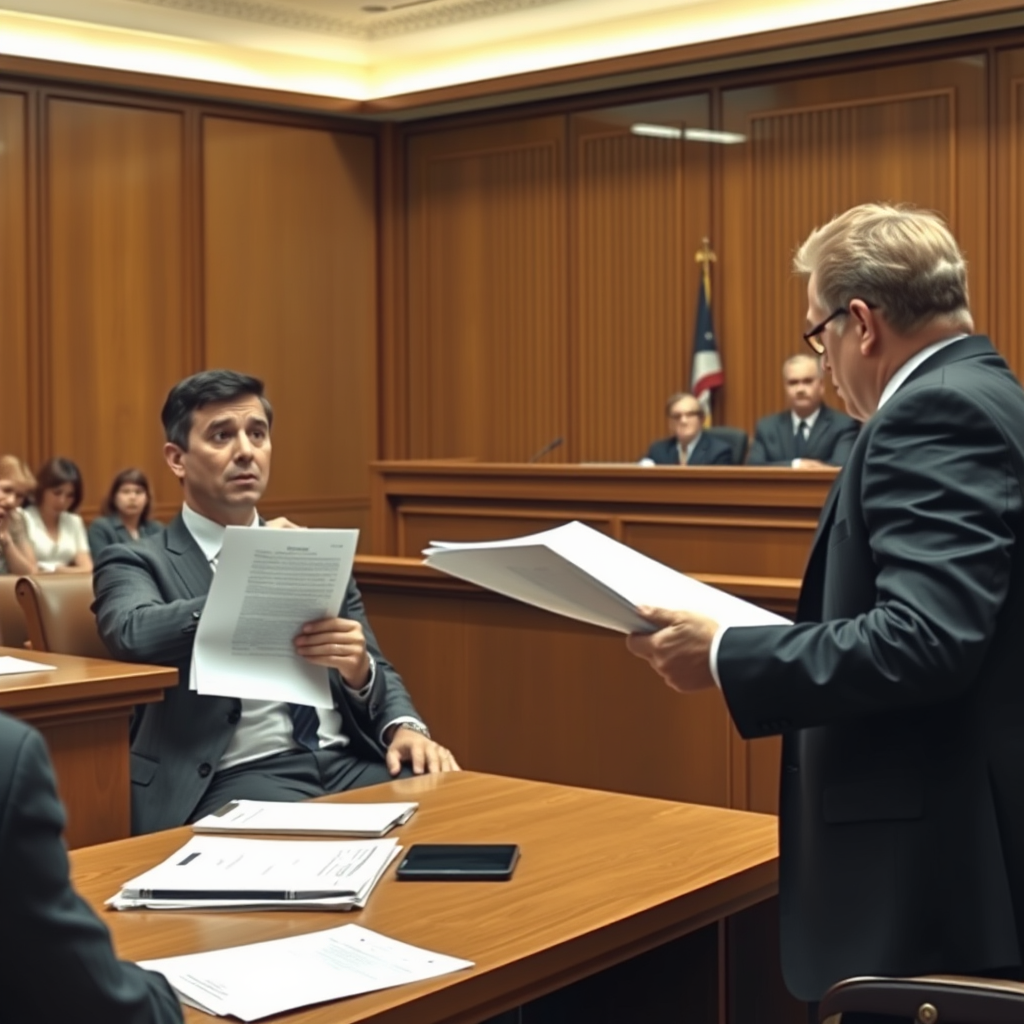
Legal responsibility for something bad that happens, especially having to pay for damage
If the self-driving car crashes, the manufacturer could face liability for the accident.
More examples: The contract clearly states who bears liability if the shipment arrives late. • Product liability cases can drag on for years in court. • Signing that lease could be a real liability for a small business.
Common collocations: face liability, limit liability, bear the liability
Word family: liable (adjective), liabilities (plural noun)
Synonyms: responsibility, legal exposure, culpability
Antonyms: immunity, protection
Related concepts: lawsuit, damages, insurance
Contexts: courts, insurance, corporate law
Usage note: Common in legal and business talk. 'A liability' can also informally mean a person or thing that is a burden, as in 'that old van is a liability'.
stringent

Very strict and demanding, describing rules or standards that must be followed exactly
The lab follows stringent safety procedures before testing any new drug.
More examples: Immigration checks have become far more stringent in recent years. • Only the most stringent quality standards are acceptable in aviation. • The bank faced stringent conditions before it could reopen.
Common collocations: stringent regulations, stringent safety standards, stringent requirements
Word family: stringency (noun), stringently (adverb)
Synonyms: rigorous, strict, exacting
Antonyms: lax, lenient
Related concepts: compliance, quality control, regulation
Contexts: law, manufacturing, finance
Usage note: Almost always describes rules, standards, tests or conditions — not people. Stronger and more formal than 'strict'.
mitigate

To make something bad less severe or less harmful
The company introduced training to mitigate the risk of future errors.
More examples: Wearing a helmet doesn't remove the danger, but it mitigates it considerably. • Cities are planting trees to mitigate the effects of summer heat. • A sincere apology can mitigate the damage to your reputation.
Common collocations: mitigate risk, mitigate the effects, mitigate damage
Word family: mitigation (noun), mitigating (adjective)
Synonyms: reduce, lessen, alleviate
Antonyms: aggravate, worsen
Related concepts: risk management, precaution, damage control
Contexts: business, climate policy, medicine
Usage note: Formal but very common in business and news. You mitigate a risk, effect or impact — you don't usually mitigate a person. Don't confuse with 'militate against'.
accountable

Responsible for your decisions and actions, and required to explain them if asked
Managers should be accountable for the way their teams treat customers.
More examples: Politicians must be accountable to the people who elected them. • If something goes wrong, I'd rather have one person clearly accountable than a committee. • Holding social media platforms accountable is easier said than done.
Common collocations: hold someone accountable, accountable to the public, be held accountable
Word family: accountability (noun), account for (phrasal verb)
Synonyms: answerable, responsible, liable
Antonyms: unaccountable, exempt
Related concepts: transparency, leadership, ethics
Contexts: politics, corporate governance, public services
Usage note: Usually used with 'hold' or 'be held': you hold someone accountable. Followed by 'for' (the thing) or 'to' (the person or body you answer to).
Vocabulary Check
- What does 'oversight' mean in the phrase 'regulatory oversight'?
- A small careless mistake
- Watching and checking an organization to make sure it follows the rules
- A sudden loss of control
- A formal written apology
- Which sentence uses 'liability' correctly?
- The company faced liability after its product injured customers.
- She felt liability when she saw the beautiful sunset.
- He passed the exam with great liability.
- They enjoyed a liability dinner at the new restaurant.
- In which situation would you use 'stringent'?
- Describing a friend who is easy-going and relaxed
- Describing safety rules that are extremely strict and detailed
- Describing a party that went on until morning
- Describing a meal that tasted slightly bland
- What does it mean to 'mitigate' a risk?
- To ignore the risk completely
- To make the risk much worse
- To make the risk less severe or harmful
- To transfer the risk to a friend
- If a manager is 'accountable' for a project, what does that mean?
- She did all the work alone with no help
- She must answer for the project's results and explain her decisions
- She is forbidden from talking about the project
- She only counted the money spent on it
Idioms & Phrasal Verbs
black box
A system that gives results but whose inner workings nobody can see or explain
Most of us use recommendation algorithms as a black box — we never ask how they decide.
Usage note: The picture: an aircraft's flight recorder — you see the outcome, never the process inside.
Usage note: Often slightly critical, suggesting someone is hiding behind complexity.
go live
To officially start operating or become available to real users
The new booking system goes live on Monday, so expect some chaos at first.
Usage note: No object — a system just goes live; you don't 'go live something'.
Usage note: Common in tech and business talk; slightly informal.
the legal fallout
The bad legal consequences that come after a mistake or scandal
The data breach was bad, but the legal fallout dragged on for years.
Usage note: The picture: radioactive dust falling after an explosion — damage that keeps arriving afterwards.
Usage note: 'Fallout' also works alone: 'the fallout from the scandal'.
raise the alarm
To warn people loudly and early that something is going wrong
She raised the alarm about the faulty numbers weeks before anyone listened.
Usage note: The picture: pulling a fire alarm — you do it early, before the fire spreads.
Usage note: Slightly stronger than just 'mention a problem' — it implies urgency.
Language Practice: Talking About Responsibility
Practice expressing ideas about responsibility, rules and risk.
- Assigning and qualifying responsibility
- Emerging: I think ___ should be accountable for ___. — I think the CEO should be accountable for what the AI does.
- Developing: It's not enough to say ___; someone has to be held accountable for ___. — It's not enough to say the algorithm made a mistake; someone has to be held accountable for the hiring decisions.
- Expanding: As long as ___ stays accountable to ___, I'd argue that ___ is justified, even if ___. — As long as the board stays accountable to its shareholders, I'd argue that outsourcing the technical work is justified, even if it slows decisions down.
- Conceding and challenging an idea
- Emerging: I see the point about ___, but ___. — I see the point about innovation, but safety matters more.
- Developing: Granted, ___ may ___; that said, ___. — Granted, stringent rules may slow companies down; that said, the alternative is a scandal waiting to happen.
- Expanding: While I take the point that ___, it seems to me that the real issue isn't ___ so much as ___. — While I take the point that regulation can stifle startups, it seems to me that the real issue isn't the rules so much as who gets to write them.
- Proposing safeguards and weighing trade-offs
- Emerging: To mitigate the risk, companies could ___. — To mitigate the risk, companies could test their AI before launch.
- Developing: If companies want to mitigate the damage, they should ___ so that ___. — If companies want to mitigate the damage, they should admit mistakes quickly so that public trust survives.
- Expanding: The trade-off, as I see it, is between ___ and ___; the sensible compromise would be to ___, provided that ___. — The trade-off, as I see it, is between speed and safety; the sensible compromise would be to fast-track low-risk uses, provided that high-stakes decisions keep human review.
Fill in the Blanks
When the scandal broke, the minister promised far more _____ rules for tech firms, insisting that no company was above _____. Critics replied that fine words were useless unless someone was actually _____ when things went wrong — otherwise the public would keep paying the price while the firms escaped _____. The ministry's first step was modest but real: a new unit whose job was to _____ risks before products reached the market, not after.
Word bank: oversight, liability, stringent, mitigate, accountable
Sentence Unscramble
- without / proper / oversight / even / the / best / technology / can / cause / real / harm
- the / company / faced / liability / after / its / algorithm / rejected / qualified / candidates
- stringent / rules / only / work / if / someone / is / actually / held / accountable
Discussion Questions
In the reading, a hiring algorithm quietly rejected older candidates for months because nobody was checking what it did. The technology worked exactly as designed — the problem was that no human was paying attention. Similar stories are now common in banking, insurance and healthcare around the world.
Have you ever trusted a system or a process that turned out to be quietly going wrong? How did you find out, and what would 'oversight' have looked like in that situation?
When an AI system causes harm — a wrong medical recommendation, a denied loan, a biased hiring decision — it's surprisingly hard to say who should pay. The company blames the software vendor, the vendor blames the data, and the user blames everyone. Meanwhile, the person who was harmed is left with no one to turn to.
If an AI makes a decision that seriously damages someone's life, who should be held accountable — the company that used it, the people who built it, or someone else? Why?
Some countries have introduced stringent rules for AI: systems must be tested, documented and reviewed before launch. Supporters say this prevents disasters. Critics argue that heavy regulation pushes startups to friendlier countries and slows down useful innovation, especially for small companies that can't afford compliance teams.
Would you rather live in a country with very strict AI rules or very loose ones? Where does your own country sit on that spectrum, and are you happy about it?
Every safeguard is a trade-off. Requiring a human to review every AI decision makes systems safer but slower and more expensive. Publishing how an algorithm works builds trust but gives competitors an advantage. There's no option that gets you everything at once.
If you were a CEO, what trade-off would you accept to mitigate the risk of an AI scandal — and what would you refuse to give up, even for safety?
In the reading, the key detail wasn't the technology — it was culture. The disaster happened because nobody felt safe or obliged to say 'wait, this doesn't look right' before launch. Many experts argue that no amount of paperwork can fix an organization where bad news gets buried.
Think of a workplace or group you know well: would people there speak up if something looked wrong? What makes it easy or hard to be the person who raises the alarm?
Knowledge Check
- Which word means 'legal responsibility for harm, often involving payment'?
- Oversight
- Stringent
- Liability
- Mitigation
- True or false: 'mitigate' means to completely eliminate a risk.
- True
- False
- Which phrase correctly completes: 'The committee was set up to provide ___ of the new agency.'?
- stringency
- oversight
- mitigation
- liability
- True or false: 'stringent' usually describes people rather than rules.
- True
- False
- Which sentence uses 'accountable' naturally?
- She was held accountable for the project's failure.
- He felt accountable about the delicious meal.
- They travelled accountable across the country.
- The weather turned accountable last night.
- If a company's problem 'goes live', what happens?
- It gets cancelled before anyone sees it
- It starts operating and real users can use it
- It is tested quietly in a lab
- It becomes a black box
Free to use with your students: Free to teach, screen-share, print and share with your students, with a credit to PlanWise ESL. Please do not sell it or republish it as your own. What you can do with free lessons.