Telling Truth from Noise: Media Literacy, Algorithms and Misinformation
About this lesson: This is a C1 (Advanced) ESL lesson in the General English category. It takes about 60 minutes. It includes 5 vocabulary words, 4 idioms and phrasal verbs, a reading text, comprehension questions, discussion questions and speaking patterns. Suits one-to-one or small-group online classes. Free to open and teach with no login, and it prints as a PDF.
Print just the discussion questions
How this lesson is built
This is a complete conversation lesson built on a scientific pedagogical formula, not a generic worksheet: recall prior topic vocabulary, pre-teach the new words in depth, read in context, practise active recall with flashcards and synonyms/antonyms, build accuracy with exercises, and finish with deep discussion.
- Warm-up: Discussion questions that connect the topic to the student’s own life and recall vocabulary they already know about the subject.
- Reading: A text written for this CEFR level that uses each new word two or three times in context, giving the student something meaningful to react to.
- Key vocabulary: 5 new words, pre-taught before the reading with a definition, pronunciation guide, example sentences and a picture, plus word families, usage notes, recall flashcards and synonyms/antonyms, giving a solid grounding before reading.
- Comprehension: 5 questions that check the new words: retrieval practice, not rereading.
- Idioms and phrasal verbs: Expressions taken from the reading, each with its meaning, an example and a speaking question.
- Sentence frames: 3 speaking patterns, each at three levels of support (emerging, developing, expanding) with model answers—especially helpful scaffolding for beginners and less confident speakers.
- Gap-fill: The new words again, in a shuffled order, so the student recalls them by meaning in context.
- Sentence unscramble: Natural sentences with the new words to put back in order, reinforcing grammar and collocation.
- Discussion: 5 open questions designed to talk deeply about the subject while actively using the lesson’s target vocabulary: the heart of a conversation lesson.
- Quiz: A short retrieval check that brings every new word back once more.
Unlike a generic worksheet, the new words are taught before the reading and met again in the activities, the speaking is supported at three levels and most of the time goes on the student talking. Teachers who use PlanWise ESL also get per-student vocabulary tracking (recycling earlier words into future readings and questions), a private learner dashboard with flashcards and custom lesson creation, and a downloadable study PDF.
Warm-up: Your Feed, Your World
Before we look at today's text, let's talk about how news and information actually reach you — and how much of it you trust.
- How do you usually get your news these days — an app, TV, or just whatever friends send you?
- When you see a shocking headline, what's your first reaction — share it, check it, or scroll past?
- Have you ever believed something online that later turned out to be completely false?
- Do you think social media shows you the world as it really is, or a version of it?
- Who do you think is most responsible for stopping fake news — the platforms, governments, or ordinary users like us?
Reading Text: The Bridge That Didn't Fall
A short magazine-style piece about a viral rumour, why our feeds make us easy targets, and what a careful reader can actually do about it.
Last spring, a video claiming a famous bridge was about to collapse racked up millions of views overnight. Engineers quickly confirmed the bridge was safe, but the damage was done. The clip had been sensationalized with ominous music, and it had just enough technical detail to sound plausible. Nobody who shared it seemed to care that no source had corroborated it.
Part of the problem is that most of us live inside an echo chamber. Algorithms feed us whatever keeps us scrolling, so our feeds become mirrors rather than windows. If everyone you follow shares your worldview, a false story feels true because nobody challenges it. The correction never reaches those who saw the claim.
Then there is the business model. Outrage pays. Outlets and influencers sensationalize stories because anger drives clicks, and clicks drive revenue. A calm headline loses to a lurid one every time. The result: an environment where being plausible matters more than being right, and where it gets harder to discern signal from noise.
So what can an ordinary reader do? Slow down before sharing. Corroborate: check whether a second, independent outlet is reporting the same thing. And learn to discern tone from evidence — a confident voice is not a credible one. These habits cut against everything the feed is designed to reward.
None of this means retreating into cynicism. Media literacy is not about trusting nothing; it is about knowing what deserves our trust — and stepping outside your echo chamber now and then. The winners are not those who tune out every sensationalized headline, but those who read with curious skepticism.
Key Vocabulary
echo chamber

An environment where you only hear opinions that match your own, so your views are never challenged.
If you only follow people who agree with you, you end up in an echo chamber.
More examples: Breaking out of your echo chamber takes deliberate effort — you have to go looking for disagreement. • My uncle's whole group chat is an echo chamber; they just forward the same opinions to each other. • University was the first time my echo chamber cracked and I had to defend my views to people who disagreed.
Common collocations: live in an echo chamber, break out of the echo chamber, the echo chamber effect
Word family: echo chambers (plural), filter bubble (related term)
Synonyms: filter bubble, bubble, insular community
Antonyms: open forum, diverse community, public square
Related concepts: confirmation bias, algorithmic feeds, groupthink
Contexts: social media, political discussion, online communities
Usage note: Almost always slightly critical or self-reflective — nobody proudly calls their own circle an echo chamber. Very common in media commentary and political discussion. Often used with 'live in', 'stuck in', or 'break out of'.
sensationalize

To present something in a way that makes it seem more shocking or exciting than it really is.
The tabloid sensationalized a minor accident into a national disaster.
More examples: Documentary channels sometimes sensationalize science to hold viewers' attention. • Stop sensationalizing it — it was a disagreement, not a feud. • Critics accused the outlet of sensationalizing the crime statistics to frighten readers.
Common collocations: sensationalize a story, a sensationalized headline, accuse the media of sensationalizing
Word family: sensational (adjective), sensationalism (noun), sensationally (adverb)
Synonyms: exaggerate, dramatize, hype up
Antonyms: understate, downplay, report objectively
Related concepts: clickbait, tabloid journalism, outrage media
Contexts: news media, tabloids, viral content
Usage note: Strongly disapproving tone; used when criticizing journalism, clickbait, or dramatic retelling. The object is usually a story, headline, event or report. Passive form ('was sensationalized') is very common.
discern

To notice or recognize something, especially with effort or careful thought.
It was hard to discern the truth beneath all the speculation.
More examples: In the dim light, I could barely discern the shape of the boat. • A good editor can discern a weak argument from a strong one in seconds. • She discerned a note of sarcasm in his otherwise polite reply.
Common collocations: discern the truth, discern tone from evidence, hard to discern
Word family: discernible (adjective), discerning (adjective), discernment (noun)
Synonyms: perceive, make out, detect
Antonyms: overlook, miss, misread
Related concepts: critical thinking, judgement, attention to detail
Contexts: media analysis, reading, everyday observation
Usage note: Slightly formal but very useful; common in quality journalism and thoughtful conversation. Often used with 'can/could' and with 'barely' or 'hard to' when the difference is subtle. Takes a noun object, not usually a that-clause.
corroborate
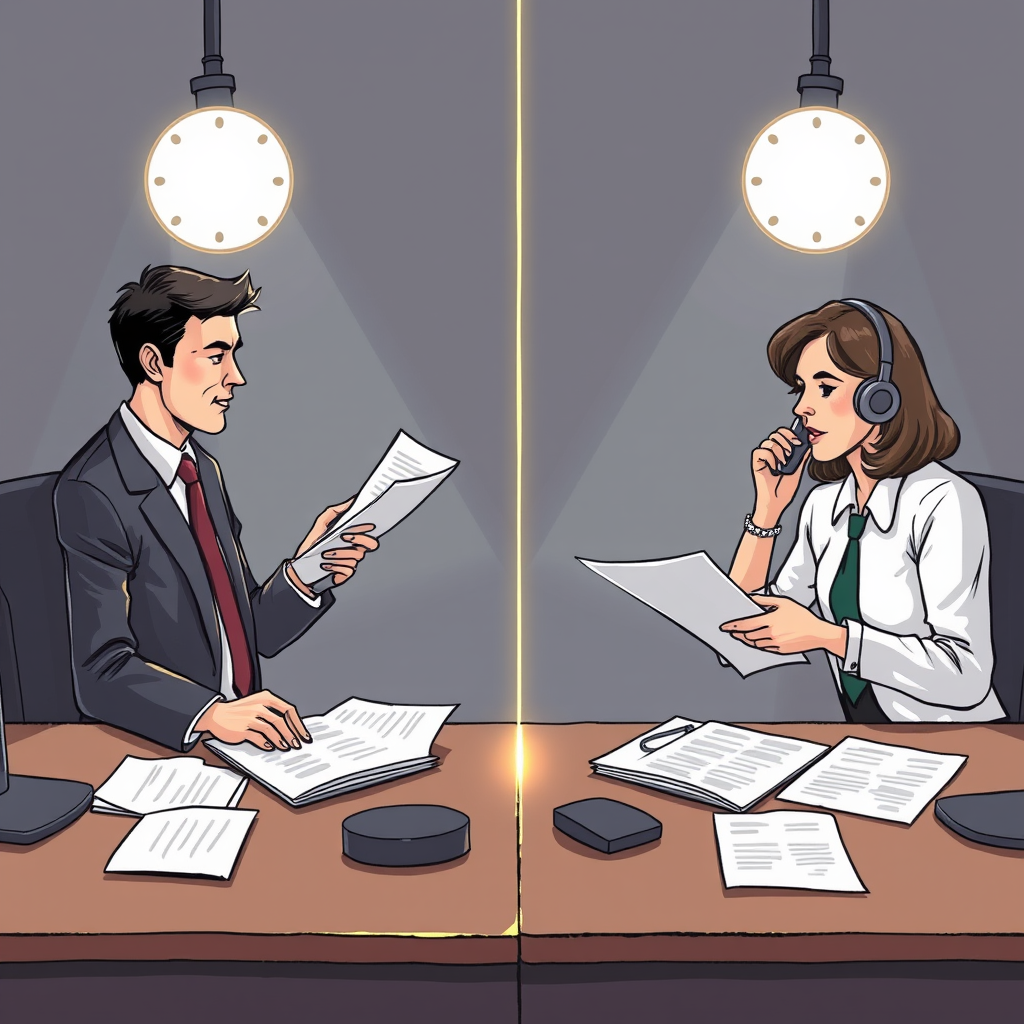
To support a claim with evidence from another independent source.
Two witnesses corroborated her account of the accident.
More examples: The leaked memo corroborated what journalists had suspected for months. • Before publishing, the reporter corroborated the figures with an independent audit. • Nothing in the file corroborated his alibi, which made police suspicious.
Common collocations: corroborate a claim, corroborating evidence, corroborate an account
Word family: corroboration (noun), corroborating (adjective), corroborated (adjective)
Synonyms: confirm, verify, substantiate
Antonyms: contradict, refute, disprove
Related concepts: fact-checking, journalism ethics, evidence
Contexts: journalism, law, research
Usage note: Formal register, but essential for talking about fact-checking and journalism. The key idea is independence: a friend repeating the claim doesn't corroborate it — a separate source does. Objects are usually claim, story, account, evidence or alibi.
plausible

Seeming reasonable or believable, even if it has not been proven.
His excuse sounded plausible, so nobody questioned it.
More examples: The theory was plausible enough to fool half the internet. • Of all the suspects, she has the most plausible motive. • It's plausible that the outage caused the losses, but we need data before blaming it.
Common collocations: a plausible explanation, sound plausible, barely plausible
Word family: plausibility (noun), implausible (adjective), plausibly (adverb)
Synonyms: believable, credible, convincing
Antonyms: implausible, far-fetched, absurd
Related concepts: misinformation, credibility, proof
Contexts: fact-checking, everyday reasoning, mysteries and investigations
Usage note: Crucial shade of meaning: plausible is about appearance, not proof — a plausible lie is still a lie. Often paired with 'sound' or 'seem'. Very handy for the misinformation topic precisely because false stories succeed by being plausible.
Vocabulary Check
- What does 'corroborate' mean?
- To repeat a rumour to more people
- To support a claim with evidence from an independent source
- To reject an idea angrily
- To make a story more dramatic
- What does 'plausible' mean?
- Definitely proven true
- Extremely rare
- Seeming reasonable or believable, even if unproven
- Deliberately false
- What does 'sensationalize' mean?
- To report calmly and accurately
- To celebrate something publicly
- To keep a story secret
- To make a story seem more shocking than it really is
- What does 'discern' mean?
- To notice or recognize something, especially with effort
- To ignore something completely
- To copy someone else's work
- To argue about a small detail
- What is an 'echo chamber'?
- A large empty room with strange acoustics
- A recording studio for podcasts
- An environment where you only hear views that match your own
- A place where people debate opposing ideas
Idioms & Phrasal Verbs
rack up
to collect or reach a large number of something, like views, points or debts
That conspiracy video racked up two million views before anyone checked the facts.
Usage note: The 'up' suggests the number climbing higher and higher. Common with views, points, miles, debts and losses. · Right: rack up views / rack up debts · Avoid: rack up a person
Usage note: You cannot split it: say 'racked up millions', not 'racked millions up of views'.
tune out
to stop listening or paying attention to something
After the third alarmist headline that morning, I just tuned out and closed the app.
Usage note: The picture is turning down the volume on a radio. You can tune out completely, or tune something/someone out. · Right: I tuned out the noise · Avoid: I tuned the noise
Usage note: Often used with 'completely': 'I completely tuned out during the meeting.'
the damage is done
the harm has already happened and cannot be undone
The company apologized hours later, but the damage was done — everyone had already shared the story.
Usage note: The picture is a broken vase: apologizing doesn't glue it back together. Often used with 'but' to show the fix came too late.
Usage note: Usually in the past: 'the damage was done', not 'the damage is doing'.
fall for
to believe something that is not true, often a trick or scam
I can't believe I fell for that fake giveaway — the spelling was terrible.
Usage note: You fall FOR something, not fall something. The 'for' points at the thing that tricked you. · Right: I fell for the scam · Avoid: I fell the scam
Usage note: Slightly self-deprecating: people use it when admitting they were fooled.
Language Practice: Talking About Media and Trust
Practice expressing and qualifying your ideas about media, algorithms and misinformation.
- Qualifying an opinion — saying it's one thing rather than another
- Emerging: It's not just ___, it's also ___. — It's not just lazy readers, it's also clever algorithms.
- Developing: It's not so much ___ as ___. — It's not so much a lack of information as a lack of trust.
- Expanding: I'd say it's less about ___ and more about ___, especially when ___. — I'd say it's less about the technology and more about the incentives, especially when outrage pays better than accuracy.
- Conceding a point, then challenging it
- Emerging: I see the point about ___, but ___. — I see the point about free speech, but lies cause real harm.
- Developing: That's true to a degree, but I still think ___. — That's true to a degree, but I still think governments need some role here.
- Expanding: I take your point about ___, and yet I can't help feeling that ___, because ___. — I take your point about free expression, and yet I can't help feeling that pure self-regulation has failed, because the same scandals keep repeating.
- Speculating about consequences — what would happen if things changed
- Emerging: If ___, then ___. — If the algorithm disappeared, then we'd choose our own news.
- Developing: If ___ happened, people would probably ___. — If chronological feeds came back, people would probably read more diverse views.
- Expanding: Were ___ to disappear tomorrow, I suspect ___, which could well ___. — Were the recommendation algorithm to disappear tomorrow, I suspect engagement would collapse, which could well push platforms to change their business model.
Fill in the Blanks
My cousin believes almost everything he sees online. He lives in a perfect _____, so every wild claim feels _____ to him. Last month he shared a story about an imminent food shortage that no serious outlet could _____. The video had been _____ with dramatic music and scary captions, but he couldn't _____ the difference between real reporting and pure theatre.
Word bank: echo chamber, plausible, corroborate, sensationalized, discern
Sentence Unscramble
- It's / hard / to / discern / the / truth / when / every / headline / is / sensationalized.
- Before / you / share / a / story, / try / to / corroborate / it / with / a / second / source.
- The / algorithm / traps / us / in / an / echo / chamber / of / our / own / opinions.
Discussion Questions
Most of us never chose our information diet consciously — an algorithm chose it for us, one click at a time. Over the years, that feed quietly learns our tastes, our politics, even our moods, and shows us more of the same. Some people say this makes life easier; others say it makes our world smaller without us noticing.
Think about your own feed for a second: when was the last time it showed you an opinion you genuinely disagreed with? Does that worry you, or is a comfortable feed just part of modern life?
Almost everyone has a story like this: a friend forwards a shocking video, you believe it, maybe you even pass it on — and weeks later you find out it was staged, old footage, or completely invented. The embarrassment fades, but the moment sticks with you. Sometimes it changes how careful you are; sometimes it doesn't.
Have you or someone close to you ever fallen for something online that turned out to be false? What convinced you it was real at the time — and what gave it away in the end?
Here's a genuine dilemma. If platforms remove everything false, they need someone to decide what counts as false — and that someone can make mistakes, or abuse the power. But if they remove nothing, lies spread freely and sometimes cause real harm. Every country seems to be drawing this line in a different place.
Where would you draw the line? Should platforms be allowed to delete content they consider misinformation, or does that give a handful of companies too much power over public debate?
Imagine a strange experiment: tomorrow, every recommendation algorithm in the world is switched off. No more 'suggested for you', no more endless tailored feed — just posts in the order they were published, from accounts you chose yourself. Some predict people would get bored and leave; others predict a healthier information life.
What do you think would actually happen? Would we end up better informed, or would we just rebuild our own bubbles by hand — and would you personally last a week?
AI can now generate convincing fake photos, cloned voices and even videos of people saying things they never said. The technology is improving fast, and experts warn that soon the default assumption may shift from 'seeing is believing' to 'seeing is doubting'. Some worry this poisons trust in everything, including real evidence.
If we can no longer trust our own eyes online, how should ordinary people decide what's real? And do you think that doubt will make society smarter — or just more cynical?
Knowledge Check
- Which word means 'to make a story seem more dramatic or shocking than it really is'?
- corroborate
- sensationalize
- discern
- plausible
- True or false: an echo chamber exposes you mainly to opinions that challenge your own.
- True
- False
- If a claim is plausible, it is...
- definitely true
- definitely false
- believable but not proven
- illegal to publish
- True or false: to corroborate a story, you check it against a second, independent source.
- True
- False
- To 'discern tone from evidence' means to...
- tell the difference between them
- ignore both of them
- mix them together
- prefer tone over evidence
- If a fake news story 'racked up millions of views', what happened?
- It was deleted after a few views
- It slowly collected a huge number of views
- It lost views very quickly
- It was watched by only a few experts
Free to use with your students: Free to teach, screen-share, print and share with your students, with a credit to PlanWise ESL. Please do not sell it or republish it as your own. What you can do with free lessons.