The Fine Print: Negotiating Contracts and SLAs
About this lesson: This is a C1 (Advanced) ESL lesson in the General English category. It takes about 60 minutes. It includes 5 vocabulary words, 4 idioms and phrasal verbs, a reading text, comprehension questions, discussion questions and speaking patterns. Suits one-to-one or small-group online classes. Free to open and teach with no login, and it prints as a PDF.
Print just the discussion questions
How this lesson is built
This is a complete conversation lesson built on a scientific pedagogical formula, not a generic worksheet: recall prior topic vocabulary, pre-teach the new words in depth, read in context, practise active recall with flashcards and synonyms/antonyms, build accuracy with exercises, and finish with deep discussion.
- Warm-up: Discussion questions that connect the topic to the student’s own life and recall vocabulary they already know about the subject.
- Reading: A text written for this CEFR level that uses each new word two or three times in context, giving the student something meaningful to react to.
- Key vocabulary: 5 new words, pre-taught before the reading with a definition, pronunciation guide, example sentences and a picture, plus word families, usage notes, recall flashcards and synonyms/antonyms, giving a solid grounding before reading.
- Comprehension: 5 questions that check the new words: retrieval practice, not rereading.
- Idioms and phrasal verbs: Expressions taken from the reading, each with its meaning, an example and a speaking question.
- Sentence frames: 3 speaking patterns, each at three levels of support (emerging, developing, expanding) with model answers—especially helpful scaffolding for beginners and less confident speakers.
- Gap-fill: The new words again, in a shuffled order, so the student recalls them by meaning in context.
- Sentence unscramble: Natural sentences with the new words to put back in order, reinforcing grammar and collocation.
- Discussion: 5 open questions designed to talk deeply about the subject while actively using the lesson’s target vocabulary: the heart of a conversation lesson.
- Quiz: A short retrieval check that brings every new word back once more.
Unlike a generic worksheet, the new words are taught before the reading and met again in the activities, the speaking is supported at three levels and most of the time goes on the student talking. Teachers who use PlanWise ESL also get per-student vocabulary tracking (recycling earlier words into future readings and questions), a private learner dashboard with flashcards and custom lesson creation, and a downloadable study PDF.
Warm-up Activity
Look at the questions and talk about your own experiences with agreements, contracts and promises — formal or informal.
- Have you ever signed a contract you didn't fully read? What happened?
- When you buy something online, do you ever check the terms and conditions, or do you just click 'agree'?
- Have you ever felt that a service you paid for didn't live up to what was promised?
- Do you think contracts are mostly there to protect people, or to trap them?
- If you could change one rule about how companies make promises to customers, what would it be?
Reading Text: The Promise That Wasn't
A short story about a small business owner who discovers what her 'guaranteed' service contract really means.
When Priya signed the contract with a cloud hosting company, she thought the agreement was ironclad. The sales rep had promised '99.9% uptime, guaranteed', and the phrase sat proudly on the first page in bold letters. For a small online shop like hers, that number sounded like a safety net — the difference between sleeping soundly and waking at 3 a.m. to check whether her website was still alive.
Then, one Black Friday, the site went down for six hours. Customers abandoned full shopping carts, her social media filled with complaints, and the day's revenue simply evaporated. When she called to demand compensation, a polite voice explained that the guarantee came with exceptions: scheduled maintenance, 'force majeure events', and something vaguely described as 'network instability beyond our control'. Priya realised, with a sinking feeling, that she had walked straight into a loophole.
Her lawyer was blunt. 'The contract is airtight — for them,' he said. 'You have very limited recourse. Technically, they owe you a service credit worth about forty dollars.' Six hours of chaos, settled for the price of a takeaway dinner. The company, he explained, had watered down the original promise during the drafting stage, burying the exceptions in an appendix no reasonable person would ever read.
Priya's mistake, the lawyer admitted, was common: she had signed without negotiating. She had no leverage. A company spending half a million a year on hosting can demand penalties, shorter exception lists and a real right to walk away. A customer spending five thousand gets a take-it-or-leave-it offer — unless, of course, they ask. Simply raising the question of better terms, he said, works more often than people expect.
So Priya tried. At renewal, she asked for a penalty clause tied to actual losses, and mentioned — casually, but clearly — that a competitor had been courting her for months. The sales team suddenly found room to move. The new contract wasn't perfect, but the exceptions were narrower and the compensation was real. 'The first version was written for them,' she told a friend afterwards. 'This one, at least, was written for both of us.'
Key Vocabulary
ironclad

Impossible to argue with or break; very strong and certain.
She wanted an ironclad guarantee that the repairs would be finished by Friday.
More examples: The evidence against him was ironclad; even his lawyer told him to settle. • You'll need an ironclad excuse if you want to skip the family dinner. • Their ironclad commitment to next-day delivery is what won me over.
Common collocations: an ironclad guarantee, an ironclad contract, ironclad evidence
Word family: iron (noun), clad (adjective)
Synonyms: airtight, watertight, bulletproof
Antonyms: flimsy, shaky, full of holes
Related concepts: guarantees, legal certainty, proof
Contexts: business contracts, court cases, everyday promises
Usage note: Describes promises, contracts, alibis, arguments or evidence that cannot be challenged. Slightly informal but common in business talk and journalism.
loophole

A small gap or weakness in a rule or contract that lets people avoid it.
Companies found a loophole in the tax law and paid almost nothing.
More examples: The discount excluded holidays — a loophole the shop used to refuse my voucher. • Lawyers earn a fortune hunting for loopholes in international agreements. • There's a loophole in the booking policy: cancellations are free after midnight.
Common collocations: exploit a loophole, close a loophole, a loophole in the law
Word family: loop (noun), hole (noun)
Synonyms: gap, escape clause, grey area
Antonyms: airtight provision, watertight rule
Related concepts: fine print, tax avoidance, legal drafting
Contexts: tax law, service contracts, sports rules
Usage note: Usually suggests someone cleverly — sometimes unfairly — escaping an obligation. Often used with 'exploit', 'slip through' or 'close'.
leverage
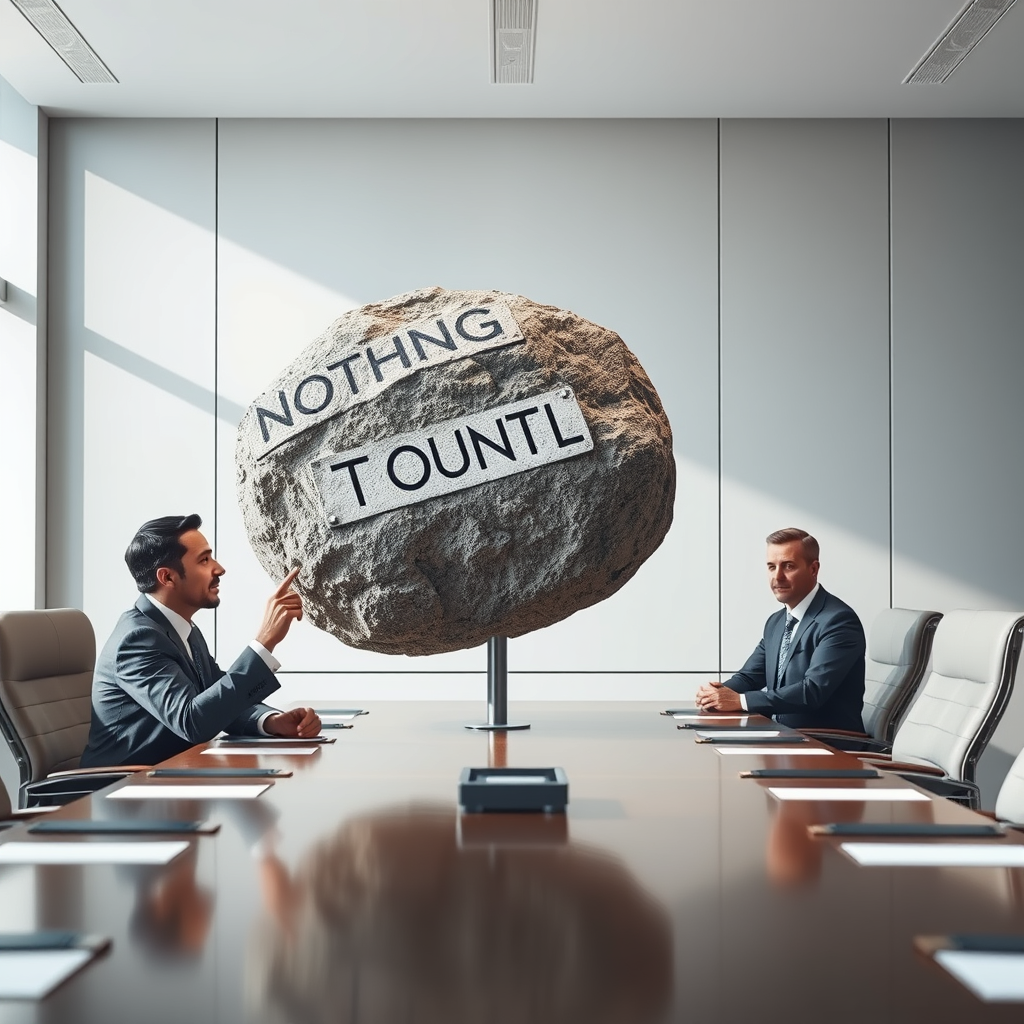
Power or advantage that helps you get what you want in a deal.
Having another job offer gave her real leverage in the salary negotiation.
More examples: The union's leverage came from the timing: the strike was set for the holiday season. • He had no leverage, so he simply accepted the first offer. • Social media gives ordinary customers surprising leverage over big brands.
Common collocations: have leverage, gain leverage, use something as leverage
Word family: leverage (verb), lever (noun)
Synonyms: bargaining power, clout, leverage point
Antonyms: weak position, no bargaining power
Related concepts: negotiation, alternatives, threats
Contexts: salary talks, business deals, diplomacy
Usage note: Uncountable. Central word in negotiation talk. Also used in finance for borrowed money, but the everyday meaning is bargaining power.
recourse
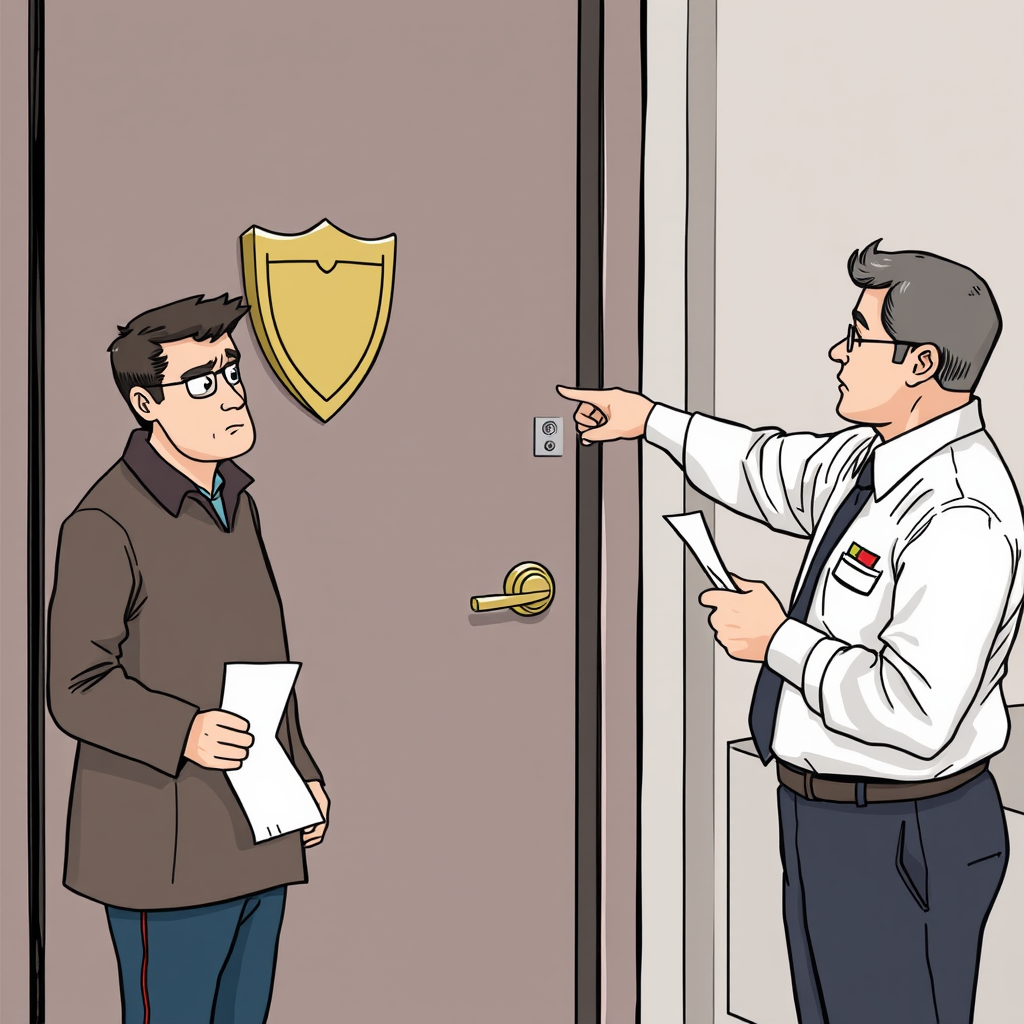
The legal or official right to get help or compensation when something goes wrong.
If the builder disappears, we have no recourse — we paid in cash.
More examples: Customers have little recourse when airlines cancel flights for 'operational reasons'. • Her only recourse was to take the landlord to court. • Without a written receipt, you have no recourse if the seller denies everything.
Common collocations: have recourse to, seek recourse, no legal recourse
Word family: recur (verb), course (noun)
Synonyms: remedy, legal protection, redress
Antonyms: helplessness, no protection
Related concepts: consumer rights, compensation, courts
Contexts: consumer disputes, employment law, contracts
Usage note: Most often seen in the negative: 'little/no recourse'. Formal register — common in contracts, consumer rights and news reports.
water down

To make a plan, promise or rule weaker and less effective.
The safety rules were watered down after the industry complained.
More examples: Critics say the new privacy policy is a watered-down version of the old one. • They watered down the proposal until nobody objected — and nobody cared either. • Don't water down your feedback; tell them exactly what went wrong.
Common collocations: water down a proposal, a watered-down version, water down commitments
Word family: watered-down (adjective), water (noun)
Synonyms: dilute, weaken, soften
Antonyms: strengthen, tighten, shore up
Related concepts: compromise, lobbying, drafting
Contexts: politics, business policy, editorial writing
Usage note: Separable: 'water it down'. Always negative in tone — implies the original strength was better. Used for rules, promises, reports, even coffee.
Vocabulary Check
- What does 'ironclad' mean?
- Full of small exceptions
- Impossible to argue with or break
- Written in old-fashioned language
- Signed by two companies
- In which situation would you use 'loophole'?
- When a rule lets someone technically avoid their obligation
- When two companies merge into one
- When a contract is signed in front of a lawyer
- When a price is reduced for loyal customers
- What does 'leverage' mean in a negotiation?
- The total value of the contract
- The number of lawyers on each side
- Power or an advantage that helps you get what you want
- The time it takes to sign an agreement
- Which sentence uses 'recourse' correctly?
- She had no recourse after paying in cash and losing the receipt.
- The recourse of the meeting was scheduled for Monday.
- He recourse to the office every morning by train.
- We signed the recourse last Friday afternoon.
- What does it mean if a promise was 'watered down'?
- It was made stronger and more detailed
- It was made weaker and less effective
- It was translated into another language
- It was cancelled completely
Idioms & Phrasal Verbs
walk into a trap
To get into a bad situation without noticing it until too late
I walked into a trap when I accepted the flat without checking the heating bill.
Usage note: The reading uses 'walk straight into a loophole' — same picture: strolling carelessly into danger. · Right: walk into a trap · Avoid: walk in a trap
Usage note: Often used with 'blindly': they walked blindly into a trap.
sell out
To abandon your values for money or convenience
Fans accused the band of selling out when they licensed their song for a bank advert.
Usage note: Not separable: we say someone sold out, not 'sold it out', when we mean betraying principles. · Right: They really sold out. · Avoid: They really sold it out.
Usage note: Different meaning from 'sell out of stock' — the shops sold out of milk is about running out.
dig in your heels
To refuse firmly to change your position
The supplier dug in their heels and refused to drop the price any further.
Usage note: Picture a stubborn animal or person digging heels into the ground so they can't be pushed. · Right: dig in your heels · Avoid: dig your heels in the ground and refuse
Usage note: Useful in negotiations: one side makes concessions, the other digs in their heels.
cave in to
To finally give up and accept what the other side wants
After two hours of arguing, the airline caved in to our demand for a full refund.
Usage note: The image is a roof collapsing — your position caves in under pressure. Always 'cave in TO someone or something'. · Right: cave in to pressure · Avoid: cave in on pressure
Usage note: Often used with 'eventually' or 'in the end' — caving in rarely happens fast.
Language Practice: Talking About Deals and Promises
Practice expressing ideas about negotiating, trusting promises and pushing back when terms don't suit you.
- Qualifying an opinion about a deal or promise
- Emerging: It's not so much ___ as ___. — It's not so much the price as the fine print.
- Developing: It's not so much about ___ as it is about ___. — It's not so about the money as it is about trust.
- Expanding: I'd say it's not so much a question of ___ as a question of ___ — especially when ___. — I'd say it's not so much a question of legal protection as a question of trust — especially when the other side writes the rules.
- Conceding a point before disagreeing
- Emerging: I see the point about ___, but ___. — I see the point about flexibility, but it's too vague.
- Developing: Granted, ___ — that said, ___. — Granted, most contracts are never disputed — that said, the ones that are tend to ruin small businesses.
- Expanding: Fair enough, ___; even so, I can't help feeling that ___, because ___. — Fair enough, big clients can negotiate anything they want; even so, I can't help feeling that smaller ones give up too easily, because they assume asking is pointless.
- Speculating about consequences and hypothetical deals
- Emerging: If ___, then ___. — If the penalty were bigger, they'd fix it faster.
- Developing: If ___ happened, companies would probably ___. — If loopholes were banned, companies would probably rewrite contracts in plainer language.
- Expanding: Had ___ , things might well have ___ — and that raises the question of whether ___. — Had Priya mentioned the competitor earlier, things might well have moved faster — and that raises the question of whether silence is itself a negotiating mistake.
Fill in the Blanks
Marco had always believed that a handshake was enough, so when he licensed software for his growing company, he skimmed the contract and signed. The sales pitch had sounded _____ — 'full support, no downtime, guaranteed' — but six months later, when the system crashed during his busiest week, he discovered the exceptions. His only _____ was a support ticket and a refund of twelve euros. A friend who worked in procurement explained the problem: Marco had signed without any _____, because he'd never even contacted a competitor. Worse, the vendor's lawyers had _____ the original service promise during drafting, leaving a _____ wide enough to drive a truck through. This year, Marco came prepared — and the new agreement looked very different.
Word bank: ironclad, loophole, leverage, recourse, water down
Sentence Unscramble
- the / guarantee / looked / ironclad / until / we / found / the / exceptions / buried / in / the / appendix
- without / leverage / you / are / really / just / asking / for / favours
- they / watered / down / the / penalties / until / the / contract / was / barely / worth / the / paper
Discussion Questions
Priya trusted a bold promise on page one and never checked the appendix where the exceptions lived. Most of us do the same with phone plans, software subscriptions, gym memberships and rental agreements. Companies know this, and some design their contracts accordingly.
Do you usually read the terms before you sign or click 'agree'? What's the worst deal you've ever accepted without reading the fine print?
Priya's lawyer said her biggest mistake wasn't the crash — it was signing without negotiating. She assumed the offer was fixed, but simply asking for better terms worked at renewal. Many people never ask, because asking feels awkward or pointless.
Have you ever negotiated something people usually don't negotiate — a bill, a salary, a rental price? What happened, and did asking feel uncomfortable?
The hosting company's promise was technically true but practically empty: 99.9% uptime, minus maintenance, minus 'events beyond our control', minus a few more clauses. Critics call this 'watered-down accountability' — promises that sound strong and dissolve on contact with reality.
Where else do you see watered-down promises in daily life — in advertising, politics, or even personal relationships? Which one annoys you most?
When the site crashed, Priya discovered she had almost no recourse: the compensation was a service credit worth about forty dollars. Consumer protection varies enormously between countries — in some places the law steps in strongly, in others buyers are basically on their own.
How well do you think consumers are protected in your country? When a company breaks a promise, is there a real way to fight back?
Imagine a world where contracts were short, plain and legally binding in every word — no loopholes, no buried exceptions, no watered-down guarantees. Some say business would become more honest. Others say deals would take longer, cost more, and companies would simply stop offering generous promises at all.
If every promise in a contract were strictly enforceable, would companies become more trustworthy — or just more cautious about what they promise? Which world would you rather live in?
Knowledge Check
- A contract with no gaps or weaknesses that someone could exploit is best described as...
- watered down
- ironclad
- recourse
- leverage
- True or false: 'leverage' in a negotiation means the amount of money being discussed.
- True
- False
- Which phrase means 'to make a promise or rule weaker'?
- close a loophole
- water down
- have recourse to
- gain leverage
- If you have 'no recourse' after a company breaks its promise, it means...
- you can demand double compensation
- the contract is ironclad in your favour
- you have no way to get help or compensation
- you must sign a new contract first
- True or false: a 'loophole' is a deliberate exception written clearly on the first page of a contract.
- True
- False
- Your boss wanted to cut your team's budget, but you refused to change your mind at all. Which expression fits?
- You caved in to the budget cut
- You dug in your heels
- You sold out
- You walked into a trap
Free to use with your students: Free to teach, screen-share, print and share with your students, with a credit to PlanWise ESL. Please do not sell it or republish it as your own. What you can do with free lessons.