Leading a Remote Retrospective Without Blame
About this lesson: This is a B2 (Upper Intermediate) ESL lesson in the Business English category. It takes about 60 minutes. It includes 5 vocabulary words, 4 idioms and phrasal verbs, a reading text, comprehension questions, discussion questions and speaking patterns. Suits one-to-one or small-group online classes. Free to open and teach with no login, and it prints as a PDF.
Print just the discussion questions
How this lesson is built
This is a complete conversation lesson built on a scientific pedagogical formula, not a generic worksheet: recall prior topic vocabulary, pre-teach the new words in depth, read in context, practise active recall with flashcards and synonyms/antonyms, build accuracy with exercises, and finish with deep discussion.
- Warm-up: Discussion questions that connect the topic to the student’s own life and recall vocabulary they already know about the subject.
- Reading: A text written for this CEFR level that uses each new word two or three times in context, giving the student something meaningful to react to.
- Key vocabulary: 5 new words, pre-taught before the reading with a definition, pronunciation guide, example sentences and a picture, plus word families, usage notes, recall flashcards and synonyms/antonyms, giving a solid grounding before reading.
- Comprehension: 5 questions that check the new words: retrieval practice, not rereading.
- Idioms and phrasal verbs: Expressions taken from the reading, each with its meaning, an example and a speaking question.
- Sentence frames: 3 speaking patterns, each at three levels of support (emerging, developing, expanding) with model answers—especially helpful scaffolding for beginners and less confident speakers.
- Gap-fill: The new words again, in a shuffled order, so the student recalls them by meaning in context.
- Sentence unscramble: Natural sentences with the new words to put back in order, reinforcing grammar and collocation.
- Discussion: 5 open questions designed to talk deeply about the subject while actively using the lesson’s target vocabulary: the heart of a conversation lesson.
- Quiz: A short retrieval check that brings every new word back once more.
Unlike a generic worksheet, the new words are taught before the reading and met again in the activities, the speaking is supported at three levels and most of the time goes on the student talking. Teachers who use PlanWise ESL also get per-student vocabulary tracking (recycling earlier words into future readings and questions), a private learner dashboard with flashcards and custom lesson creation, and a downloadable study PDF.
Warm-up: Team Meetings Online
Talk about your experiences with online team meetings and giving feedback.
- Have you ever been in a meeting where people started blaming each other? What happened?
- Do you find it easier or harder to speak honestly in online meetings? Why?
- When something goes wrong at work, do people usually look for someone to blame or for a solution?
- What makes a team meeting feel safe for everyone to speak?
- If you led a team meeting tomorrow, what would you want people to feel afterwards?
Reading Text: The Retrospective That Went Wrong — and the One That Worked
A short story about two very different team meetings. Read it, then tell me what you think.
When Priya's software team missed a big deadline, her manager called an emergency video meeting. Within minutes, fingers were pointing. Someone blamed the designers, the designers blamed the developers, and the developers blamed unclear instructions. Nobody felt safe. By the end, the team's morale was lower than ever, and two people quietly started looking for new jobs.
A few months later, Priya changed teams. Her new leader, Marco, ran retrospectives completely differently. He started every meeting with one rule: we talk about the process, not the people. 'Blame gets us nowhere,' he said. 'We want to find out what went wrong in the system, not who to punish.'
It wasn't always easy. There was still friction between departments, and some people preferred to stay silent rather than admit mistakes. But Marco made accountability personal in a healthy way: everyone shared one thing they could have done better, including himself. Slowly, people opened up.
With hindsight, Priya says the difference was simple. In the first team, mistakes were dangerous. In the second, mistakes were information. 'When you stop hunting for a guilty person,' she explains, 'people actually tell you the truth — and then you can fix the real problem.'
Not everyone agrees, of course. Some managers argue that without naming names, nobody feels responsible and the same mistakes repeat. Others say that a blame-free culture can drift into a no-consequences culture. Where is the line? That's the question every remote team has to answer for itself.
Key Vocabulary
blame
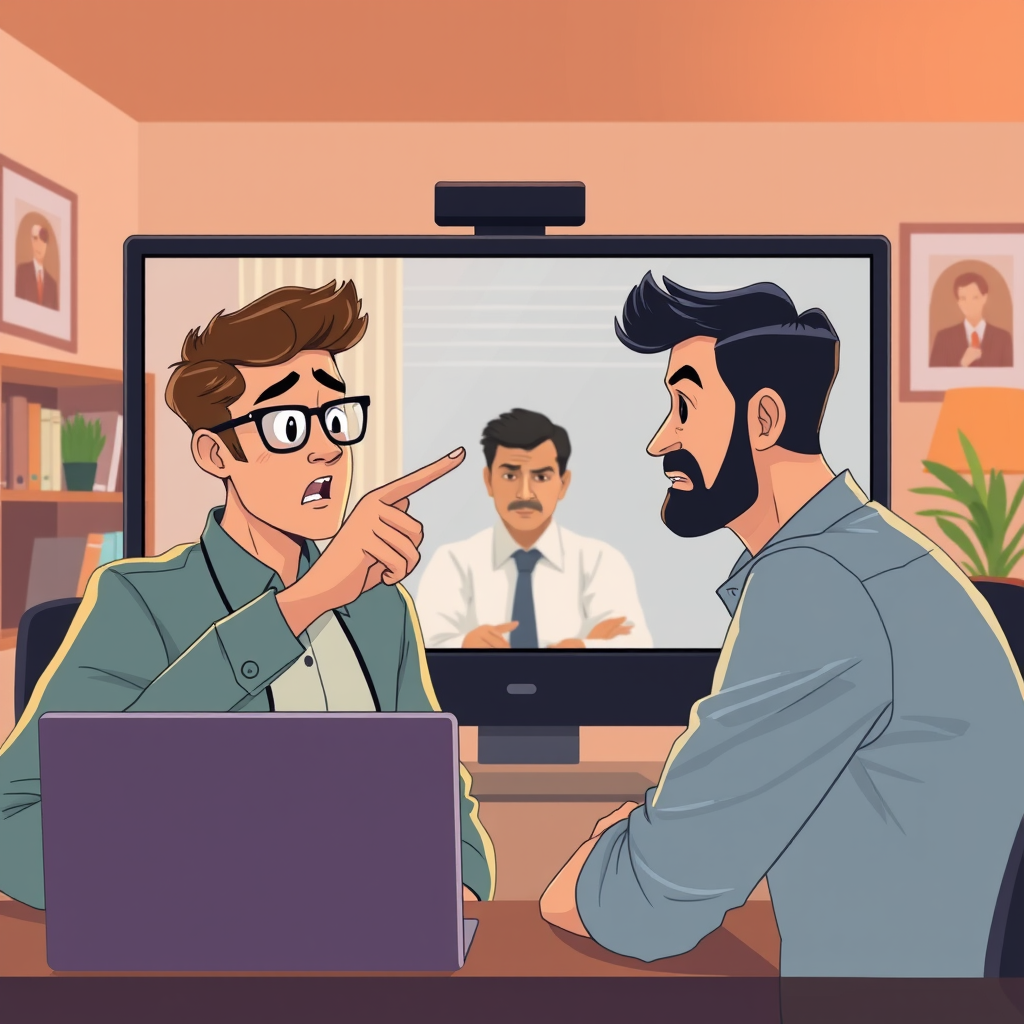
to say someone is responsible for something bad
Don't blame the new guy — the process was confusing for everyone.
More examples: The report blamed poor planning, not the staff. • It's not fair to put the blame on one person. • I blame myself a little — I should have asked for help sooner.
Common collocations: put the blame on, take the blame, shift the blame
Word family: blameless, blameful
Synonyms: accuse, hold responsible, point the finger at
Antonyms: praise, credit
Related concepts: fault, responsibility, punishment
Contexts: workplace conflict, sports, family arguments
Usage note: Common patterns: 'blame someone for something' or 'blame something on someone'. As a noun, often used with 'the': 'take the blame', 'the blame game'.
accountability
being responsible for your actions and their results
Good accountability means everyone owns their part of the project.
More examples: The manager wants more accountability, but no clear roles. • Without accountability, deadlines just slip away. • I like working here — people take accountability seriously.
Common collocations: take accountability, hold someone accountable, a culture of accountability
Word family: accountable, account
Synonyms: responsibility, ownership, answerability
Antonyms: irresponsibility, denial
Related concepts: trust, leadership, teamwork
Contexts: management, politics, personal growth
Usage note: Slightly formal but very common at work. Usually uncountable. The adjective 'accountable' is often followed by 'for'.
friction
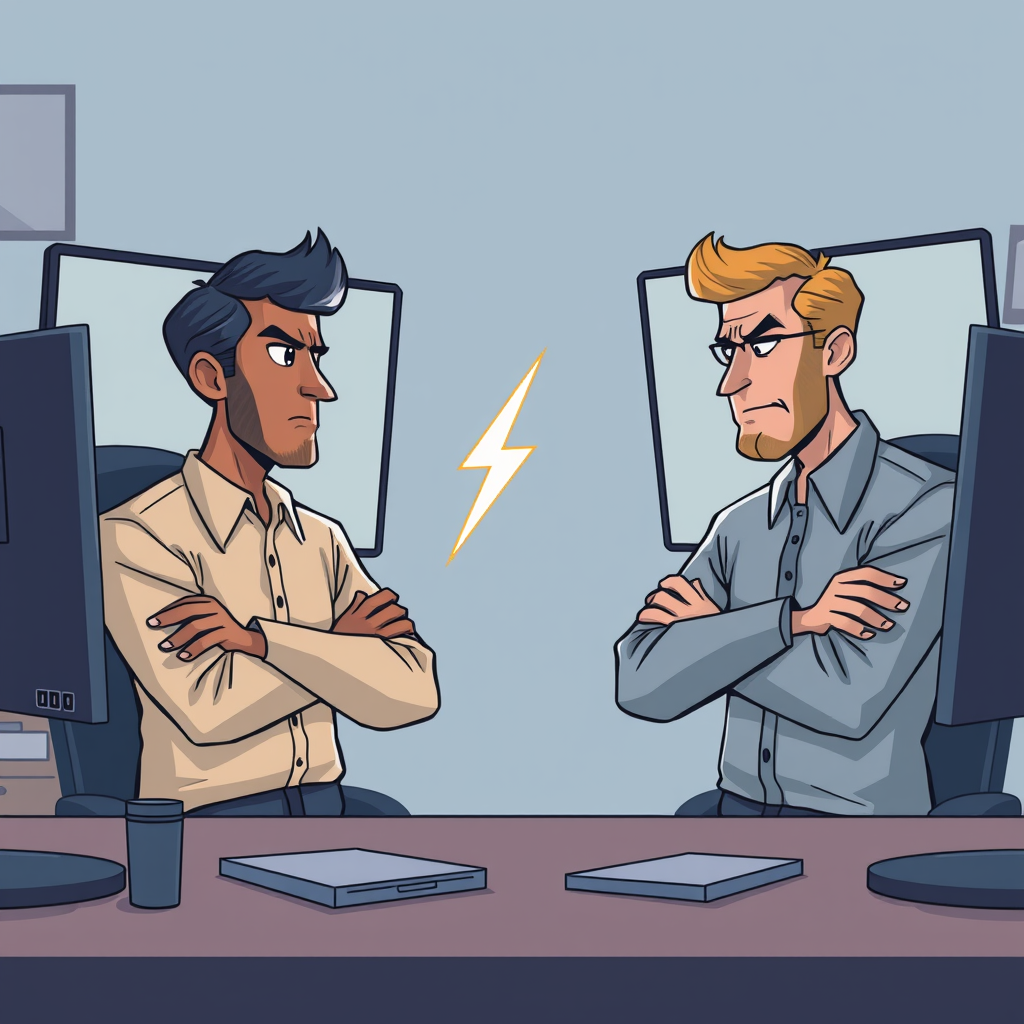
tension or disagreement between people or groups
There's been some friction between sales and support since the reorganisation.
More examples: A little friction is normal on any team. • The new policy caused friction with senior staff. • They smoothed out the friction after a long talk.
Common collocations: cause friction, smooth out friction, friction between teams
Word family: frictionless
Synonyms: tension, conflict, clash
Antonyms: harmony, cooperation
Related concepts: disagreement, teamwork, politics
Contexts: workplace, families, international relations
Usage note: Usually uncountable. Often softened with 'some' or 'a little'. Common pattern: 'friction between X and Y'.
morale

the confidence and happiness of a group
Free lunches are nice, but real morale comes from feeling trusted.
More examples: Morale dropped after three people left the team. • The team-building trip lifted everyone's morale. • Low morale shows in the quality of the work.
Common collocations: boost morale, low morale, damage morale
Word family: moral, morally
Synonyms: spirit, motivation, enthusiasm
Antonyms: demoralisation, discouragement
Related concepts: team spirit, motivation, wellbeing
Contexts: workplace, military, sports teams
Usage note: Almost always used with an adjective: high/low morale, or verbs like boost, lift, damage. Uncountable.
hindsight

understanding a situation only after it has happened
In hindsight, we should have asked for an extra week.
More examples: With hindsight, the warning signs were obvious. • Hindsight is a wonderful thing — but useless in the moment. • Looking back with hindsight, it was the right call.
Common collocations: in hindsight, with hindsight, hindsight is 20/20
Word family: foresight, insight
Synonyms: retrospection, looking back, reflection
Antonyms: foresight, prediction
Related concepts: regret, learning from mistakes, reflection
Contexts: decision-making, history, personal stories
Usage note: Almost always used in the phrases 'in hindsight' or 'with hindsight'. The idiom 'hindsight is 20/20' means everything is clear after the fact.
Vocabulary Check
- What does 'friction' mean?
- Physical exercise
- Tension or disagreement between people
- A type of meeting
- A quick decision
- Which sentence uses 'accountability' correctly?
- She showed great accountability by owning her mistake.
- The accountability was raining all day.
- He accountability the project last week.
- We ate accountability for lunch.
- What does 'morale' mean?
- A moral rule
- The confidence and happiness of a group
- A meeting agenda
- A company rule
- In which situation would you use 'hindsight'?
- Before making a big decision
- While a problem is happening
- After realising what you should have done
- When planning next year
- Which sentence uses 'blame' correctly?
- They blamed the delay on the weather.
- They blamed the weather to delay.
- The blame was very happy today.
- She blamed a coffee this morning.
Idioms & Phrasal Verbs
open up
to start talking honestly about your feelings or thoughts
After a few coffees, he finally opened up about the problems at work.
Usage note: No object needed: 'She opened up', not 'She opened up it'. · Right: She opened up about her mistake · Avoid: She opened up it about her mistake
Usage note: The picture is like opening a door — letting people see inside.
name names
to say publicly exactly who did something
The report criticized the project but refused to name names.
Usage note: The picture is simple: instead of saying 'someone', you give the actual names.
Usage note: Often used with 'refuse to' or 'be afraid to' when people avoid it.
point the finger at
to say someone is guilty or to blame them
Everyone started pointing the finger at the new intern, but it wasn't his fault.
Usage note: The picture is literally pointing a finger at someone — like in the reading, 'fingers were pointing' means everyone was blaming everyone.
Usage note: Common mistake: don't forget 'at' before the person. · Right: point the finger at the manager · Avoid: point the finger the manager
drift into
to slowly move into a situation without deciding to
We drifted into working weekends without ever really agreeing to it.
Usage note: 'Drift' is like a boat moving with no one steering — it happens slowly, without a clear decision.
Usage note: Usually used for situations you didn't plan, often negative ones.
Language Practice: Talking About Team Problems
Practice expressing ideas about team problems, responsibility and learning from mistakes.
- Comparing two views
- Emerging: Some people say ___, but I think ___ because ___. — Some people say blame helps, but I think it hurts because people stop talking.
- Developing: While ___ works for some teams, I'd argue that ___, especially when ___. — While naming names works for some teams, I'd argue that it's risky, especially when people are already stressed.
- Expanding: I can see why people believe ___, but in my experience ___, which suggests that ___. — I can see why people believe blame keeps people careful, but in my experience it just creates fear, which suggests that trust is the better tool.
- Weighing pros and cons
- Emerging: The good thing about ___ is ___. The bad thing is ___. — The good thing about no-blame meetings is honesty. The bad thing is nobody feels responsible.
- Developing: If we ___, it would probably ___, but on the other hand ___. — If we named the person who made the mistake, it would probably create fear, but on the other hand people might be more careful.
- Expanding: The main advantage of ___ is that ___, whereas the risk is that ___, so it really depends on ___. — The main advantage of a blame-free culture is that people tell the truth quickly, whereas the risk is that nobody feels consequences, so it really depends on how mature the team is.
- Imagining situations
- Emerging: If I ___, I would ___. — If I were the leader, I would listen first.
- Developing: If I were the team leader, I would ___ so that ___. — If I were the team leader, I would set a no-blame rule so that people feel safe to speak.
- Expanding: If I were leading that meeting, I would start by ___, because otherwise ___, and then I'd make sure that ___. — If I were leading that meeting, I would start by admitting one of my own mistakes, because otherwise people won't open up, and then I'd make sure every problem gets an owner.
Fill in the Blanks
Last quarter, our team missed an important launch. At first, the manager tried to _____ the newest developer, but that only made things worse. _____, we should have talked about the process instead. There was a lot of _____ between departments, and _____ hit rock bottom. Now we have a new rule: everyone takes _____ for their part, and we focus on fixing systems, not people.
Word bank: blame, hindsight, friction, morale, accountability
Sentence Unscramble
- in / hindsight / we / should / have / asked / for / more / time
- blaming / people / only / damages / morale / and / trust
- good / leaders / turn / friction / into / honest / conversation
Discussion Questions
In the reading, Priya's first team fell apart because everyone blamed everyone else. Her second team had one simple rule: talk about the process, not the people. Many companies are now trying to copy that rule, especially with remote work, where it's harder to read people's faces and feelings.
Do you think a 'no blame' rule really works, or do people just hide their mistakes more cleverly? Why?
Marco made accountability personal: everyone, including the leader, shared one thing they could have done better. Some people find this uncomfortable, others find it freeing. It changes the mood of a meeting completely depending on how it's done.
Could you say 'I could have done that better' in front of your whole team? What would make it easier or harder for you?
The reading mentions friction between departments — for example, designers blaming developers or sales blaming support. This happens in almost every organisation, in every country. Sometimes a little friction even produces better ideas, when people defend their opinions honestly.
Is some friction in a team actually healthy? Where would you draw the line between useful disagreement and harmful conflict?
Priya says that with hindsight, the difference between the two teams was clear: in one, mistakes were dangerous; in the other, mistakes were information. But in the moment, when a deadline is slipping, it's much harder to stay calm and curious.
Tell me about a mistake you made that seems obvious in hindsight. What did you learn from it?
Some managers worry that a blame-free culture drifts into a no-consequences culture, where the same mistakes repeat because nobody feels responsible. Others say low morale from constant blame is far more expensive than a few repeated mistakes.
If you were leading a remote team meeting after a failure, what would you do in the first five minutes — and what would you avoid saying?
Knowledge Check
- Your team's mood and confidence after a hard project is best described as its...
- friction
- morale
- hindsight
- deadline
- True or false: 'In hindsight, we should have prepared better' means you understood this before the event happened.
- True
- False
- Which phrase means accepting fault yourself, rather than moving it to someone else?
- shift the blame
- put the blame on
- take the blame
- blame it on the weather
- True or false: 'accountability' usually has a negative feeling, like 'blame' does.
- True
- False
- There was some ___ between the two departments after the reorganisation.
- morale
- hindsight
- friction
- accountability
- In the sentence 'The report criticized the team but refused to name names', what does 'name names' mean?
- Say exactly who did something
- Learn everyone's names
- Give the team a new name
- Read a list out loud
Free to use with your students: Free to teach, screen-share, print and share with your students, with a credit to PlanWise ESL. Please do not sell it or republish it as your own. What you can do with free lessons.