City Life and the Cost of a Home
About this lesson: This is a B2 (Upper Intermediate) ESL lesson in the General English category. It takes about 60 minutes. It includes 5 vocabulary words, 4 idioms and phrasal verbs, a reading text, comprehension questions, discussion questions and speaking patterns. Suits one-to-one or small-group online classes. Free to open and teach with no login, and it prints as a PDF.
Print just the discussion questions
How this lesson is built
This is a complete conversation lesson built on a scientific pedagogical formula, not a generic worksheet: recall prior topic vocabulary, pre-teach the new words in depth, read in context, practise active recall with flashcards and synonyms/antonyms, build accuracy with exercises, and finish with deep discussion.
- Warm-up: Discussion questions that connect the topic to the student’s own life and recall vocabulary they already know about the subject.
- Reading: A text written for this CEFR level that uses each new word two or three times in context, giving the student something meaningful to react to.
- Key vocabulary: 5 new words, pre-taught before the reading with a definition, pronunciation guide, example sentences and a picture, plus word families, usage notes, recall flashcards and synonyms/antonyms, giving a solid grounding before reading.
- Comprehension: 5 questions that check the new words: retrieval practice, not rereading.
- Idioms and phrasal verbs: Expressions taken from the reading, each with its meaning, an example and a speaking question.
- Sentence frames: 3 speaking patterns, each at three levels of support (emerging, developing, expanding) with model answers—especially helpful scaffolding for beginners and less confident speakers.
- Gap-fill: The new words again, in a shuffled order, so the student recalls them by meaning in context.
- Sentence unscramble: Natural sentences with the new words to put back in order, reinforcing grammar and collocation.
- Discussion: 5 open questions designed to talk deeply about the subject while actively using the lesson’s target vocabulary: the heart of a conversation lesson.
- Quiz: A short retrieval check that brings every new word back once more.
Unlike a generic worksheet, the new words are taught before the reading and met again in the activities, the speaking is supported at three levels and most of the time goes on the student talking. Teachers who use PlanWise ESL also get per-student vocabulary tracking (recycling earlier words into future readings and questions), a private learner dashboard with flashcards and custom lesson creation, and a downloadable study PDF.
Warm-up: Talking About Cities and Homes
Look at the questions below and chat about your own experience of cities and housing. There are no right or wrong answers - just start talking and see where the conversation goes.
- Do you live in a city, a town or the countryside? Do you like it there?
- Is it easy or hard for young people to find a place to live in your country?
- If you could live anywhere, would you choose a big city or a quiet area? Why?
- What do you think makes a city a good place to live?
- Have house prices where you live gone up in recent years? How do people feel about it?
Reading Text: The City That Grew Too Fast
Read this short article about a growing city and the problems it faces. While you read, think about whether any of this sounds familiar from your own city or country.
Twenty years ago, Lintang was a quiet city of two million people. Today, it is home to more than six million. This kind of rapid urbanisation is happening all over the world, and it brings both opportunities and serious problems. New residents arrive every week, looking for work and a better life.
For many newcomers, the first challenge is finding somewhere to live. Rents in the city centre have doubled in five years, and few ordinary workers can find affordable housing close to their jobs. Many young professionals spend more than half their salary on a small flat, while others move far out of town where prices are lower.
That choice comes at a price. Marta, a nurse, commutes two hours each day by bus and train. She leaves home before sunrise and often arrives back exhausted. 'I love my job, but the commute is killing me,' she says. 'Sometimes I feel like I live on the bus.'
As the city pushes outwards, urban sprawl eats up farmland and green space. Villages that were once separate are now joined together by endless rows of new apartment blocks. Critics say this kind of sprawl makes traffic worse and destroys local communities, while developers argue that people need somewhere to live.
The city government is now trying a different approach. It is building thousands of affordable homes on unused land near public transport, and it has introduced new rules to protect tenants from sudden rent increases. Not everyone is convinced it will work, but for people like Marta, any change would be welcome.
Key Vocabulary
urbanisation
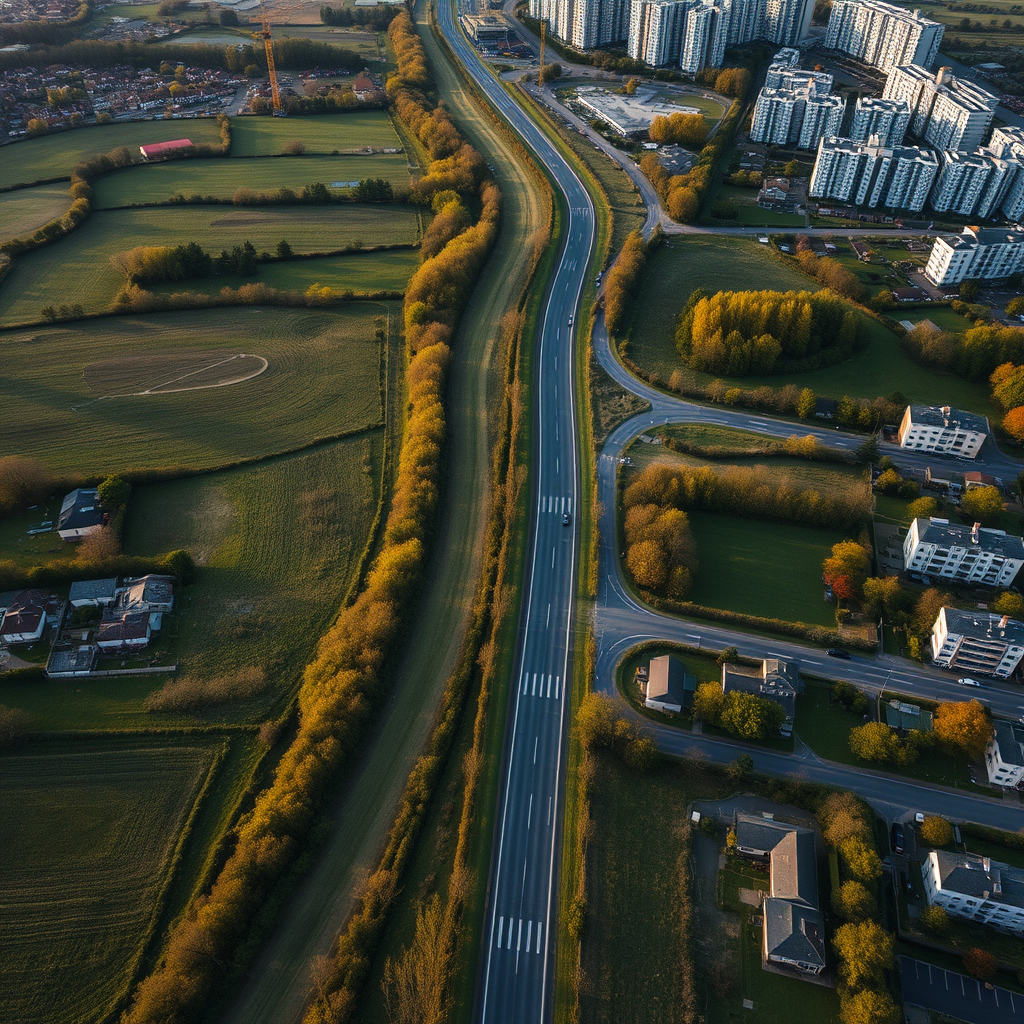
the process of more people moving to and living in cities
Rapid urbanisation has changed the whole region in just one generation.
More examples: Urbanisation creates jobs, but it also puts pressure on housing. • Some countries are trying to slow down urbanisation by supporting small towns. • In your opinion, is urbanisation a good thing for your country?
Common collocations: rapid urbanisation, urbanisation rate, the effects of urbanisation
Word family: urbanise (verb), urban (adjective), urbanised (adjective)
Synonyms: city growth, city expansion, migration to cities
Antonyms: rural life, depopulation
Related concepts: population growth, housing demand, megacities
Contexts: news reports, geography lessons, IELTS Speaking Part 3
Usage note: Use it as an uncountable noun when talking about the general process. It sounds a bit formal, so it fits well in IELTS answers about society and cities.
affordable

cheap enough for ordinary people to pay for
Young workers in the city are desperate for affordable housing.
More examples: The new flats near the station are actually affordable for teachers and nurses. • We need more affordable options for first-time buyers. • Is public transport affordable where you live?
Common collocations: affordable housing, affordable rents, affordable prices
Word family: afford (verb), affordably (adverb)
Synonyms: reasonably priced, within budget, inexpensive
Antonyms: expensive, overpriced, unaffordable
Related concepts: cost of living, rent, salaries
Contexts: housing discussions, shopping, personal finance
Usage note: Very common in news about housing, transport and living costs. Often used before a noun: 'affordable housing'. Do not confuse with 'comfortable'.
commute
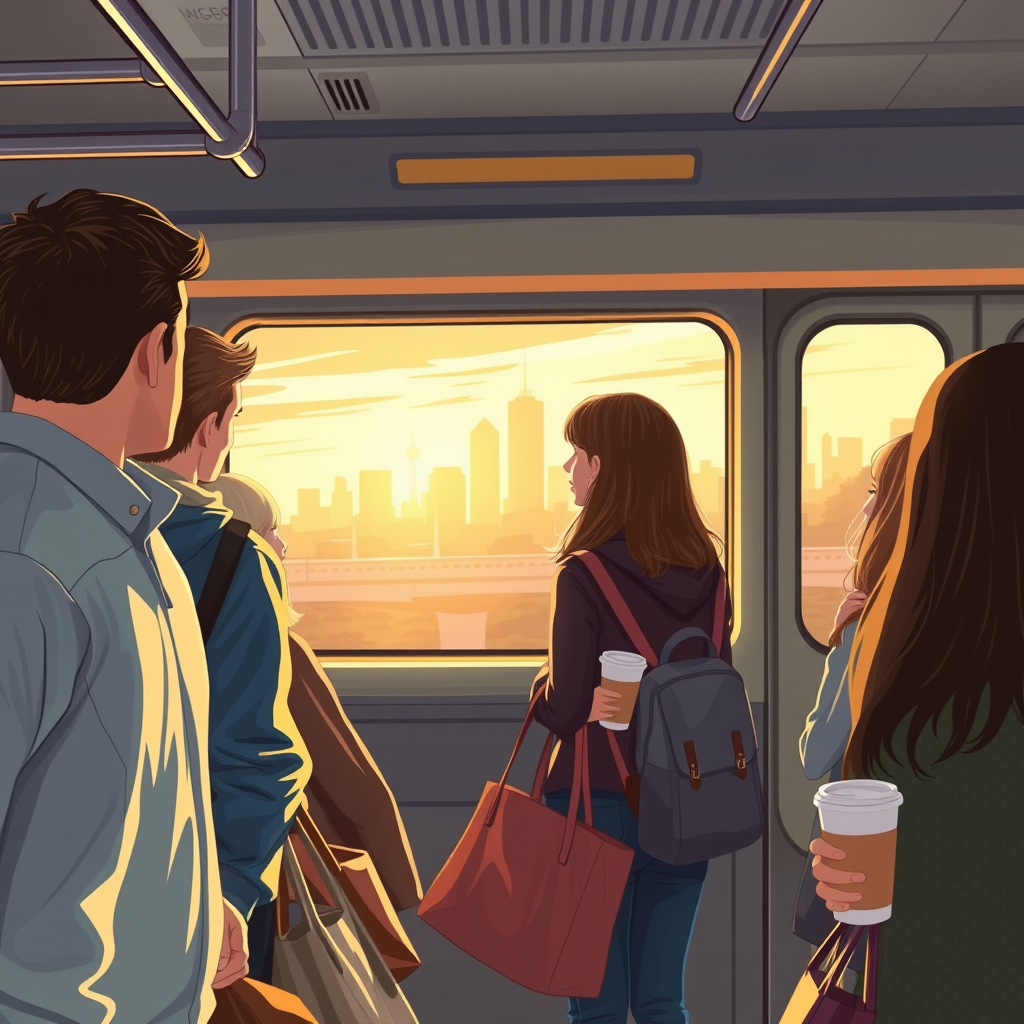
the journey between home and work, usually regular
Her commute takes two hours a day, door to door.
More examples: I used to commute by bike, but now I take the metro. • A long commute can really affect your quality of life. • Working from home means many people no longer commute at all.
Common collocations: a long commute, daily commute, commute to work
Word family: commuter (noun), commuting (noun/gerund)
Synonyms: journey to work, daily trip, travel to work
Antonyms: working from home, staying in
Related concepts: rush hour, public transport, traffic
Contexts: work-life balance talks, transport debates, city planning
Usage note: As a verb, follow with 'to work' or 'by train/bus'. As a noun, use with 'have', 'take' or describe its length. Very useful for talking about daily routines.
sprawl
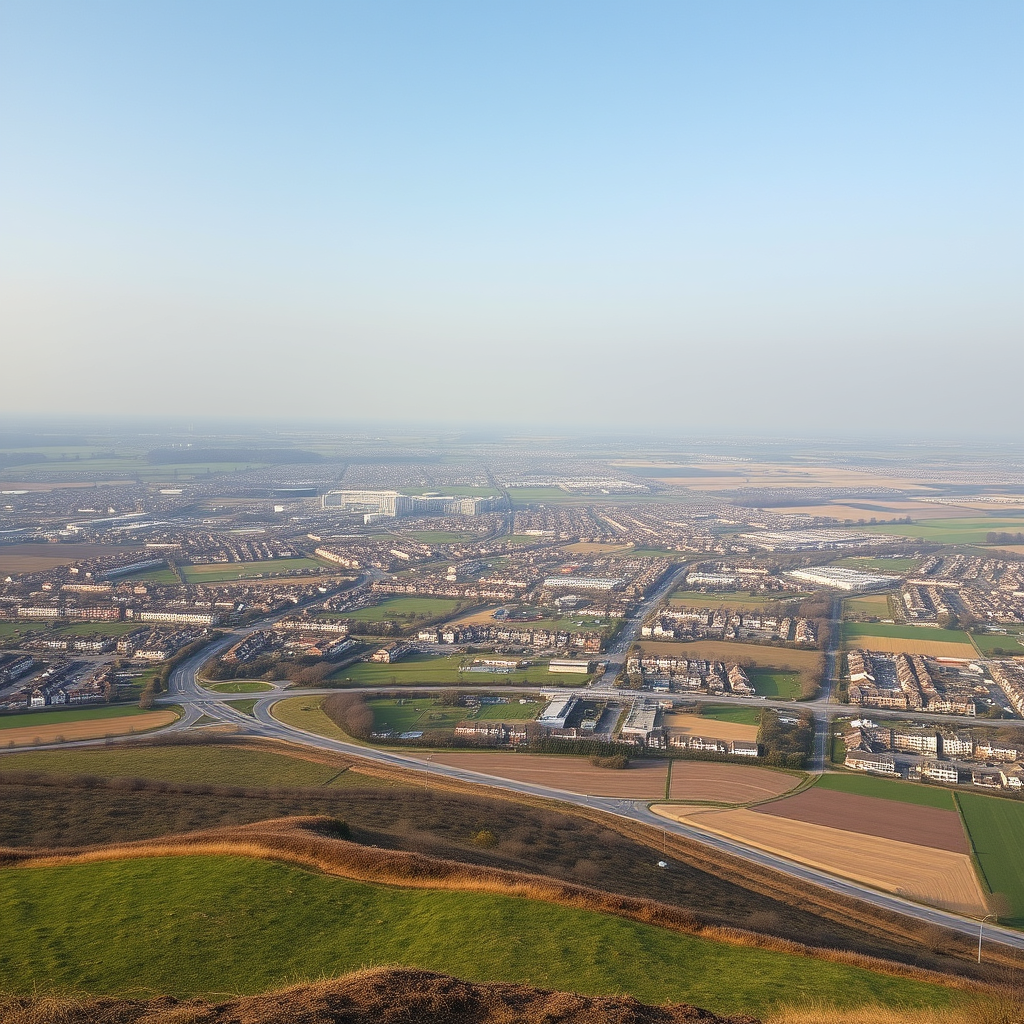
the uncontrolled spread of a city into surrounding areas
Urban sprawl has swallowed several small villages near the capital.
More examples: You can see the sprawl stretching for miles from the plane. • Many people blame sprawl for longer car journeys and more pollution. • The suburbs keep sprawling further into the countryside.
Common collocations: urban sprawl, the city sprawls, endless sprawl
Word family: sprawling (adjective), sprawl (verb)
Synonyms: urban spread, city expansion, outward growth
Antonyms: compact city, dense centre
Related concepts: suburbs, green space, car dependency
Contexts: environmental debates, city planning, news features
Usage note: Often negative - it suggests uncontrolled, messy growth. Common in discussions about the environment and city planning. Use 'urban sprawl' as a fixed phrase.
tenant

a person who pays rent to live in a property
The new law protects tenants from unfair rent increases.
More examples: As a tenant, you usually cannot change much in the flat without permission. • The landlord raised the rent, so the tenants decided to move out. • Students are often tenants in shared flats near the university.
Common collocations: protect tenants, a tenant's rights, tenants and landlords
Word family: tenancy (noun), tenants' (possessive)
Synonyms: renter, lessee, occupant
Antonyms: landlord, owner
Related concepts: rent, rental agreement, housing rights
Contexts: renting flats, legal discussions, housing news
Usage note: The opposite role is 'landlord' or 'landlady'. Use 'tenant' instead of 'renter' in slightly more formal talk, though both are fine.
Vocabulary Check
- What does 'affordable' mean?
- Cheap enough for normal people to pay for
- Very modern and comfortable
- Built by the government only
- Located far from the city centre
- Which sentence uses 'commute' correctly?
- She commutes to work by train every morning.
- She commutes her apartment near the office.
- She commutes a lot of money on rent.
- She commutes in a small company downtown.
- In which situation would you use the word 'tenant'?
- When talking about a person who pays rent to live in a flat
- When talking about a person who owns several buildings
- When talking about a person who builds houses
- When talking about a person who sells apartments
- What does 'urbanisation' mean?
- The process of more people living in cities
- The process of making cities prettier
- The process of building houses in villages
- The process of moving abroad for work
- Which sentence uses 'sprawl' correctly?
- Urban sprawl has covered the farmland around the city.
- The sprawl of the rent went up last year.
- She sprawls her salary every month.
- I live in a sprawl with two bedrooms.
Idioms & Phrasal Verbs
eat up
to use or destroy all of something
Rent eats up most of my salary every month.
Usage note: You can split it: · Right: The new flats ate the old park up. · Avoid: Never split it
Usage note: The picture is easy: something 'eating' your money, time or space until it's gone.
come at a price
something good also has a bad side or a cost
Living near the beach comes at a price — everything costs more there.
Usage note: The 'price' is often not money — it can be time, stress or freedom.
move out
to leave the place where you live
My sister moved out last year and now shares a flat with friends.
Usage note: You can split it: · Right: She moved out of her parents' house. · Avoid: She moved of out
Usage note: 'Move out of' + place, but 'move out' alone works too.
settle down
to make a permanent home and live a calm, stable life
After years of moving for work, he finally settled down in a small town.
Usage note: It can also mean simply becoming calm: 'Settle down, everyone!'
Usage note: Often used about choosing where to live long-term, or starting a family.
Language Practice: Talking About Cities and Housing
Practise expressing ideas about urbanisation and housing affordability using these frames. Start with the easiest version and move up when you feel ready.
- Comparing different views on city growth
- Emerging: Some people say ___, but I think ___. — Some people say cities are too crowded, but I think the energy is worth it.
- Developing: Some people say ___, but I think ___ because ___. — Some people say urbanisation only brings problems, but I think it creates jobs because new businesses need workers.
- Expanding: While some people argue that ___, I believe ___, especially because ___. — While some people argue that urban sprawl ruins the countryside, I believe well-planned growth can work, especially because people need somewhere affordable to live.
- Weighing up pros and cons
- Emerging: The good thing about ___ is ___, but the bad thing is ___. — The good thing about living downtown is short commutes, but the bad thing is high rent.
- Developing: The main advantage of ___ is ___, although on the other hand ___. — The main advantage of living near your office is saving time, although on the other hand rents in the centre are much higher.
- Expanding: On balance, ___ seems better than ___ because ___, even though ___ is a real downside. — On balance, renting seems better than buying at my age because of the freedom to move, even though the lack of security is a real downside.
- Imagining hypothetical situations
- Emerging: If I ___ more money, I would ___. — If I had more money, I would rent a flat closer to work.
- Developing: If I ___, I would ___ because ___. — If I could change one thing about my city, I would improve public transport because traffic is terrible.
- Expanding: If I ___, I would ___ unless ___, in which case I'd probably ___. — If I were the mayor, I would build affordable homes near metro lines unless the land was too expensive, in which case I'd offer developers tax breaks.
Fill in the Blanks
My cousin Lena moved to the capital last year, when she started her first job as a nurse. The city has grown fast in recent years, and all that _____ means there are new neighbourhoods everywhere you look. At first she shared a flat with two other people, because nothing near the hospital was _____ for someone on a starting salary. Now she is a _____ in a small one-bedroom flat, and she pays the rent herself, though her _____ takes almost an hour and a half each way. She often says the city needs better planning - all this _____ is exciting, she admits, but it also makes life exhausting for people like her.
Word bank: urbanisation, affordable, commute, sprawl, tenant
Sentence Unscramble
- The / new / law / protects / tenants / from / sudden / rent / increases.
- Her / long / commute / leaves / her / too / tired / to / cook.
- Urban / sprawl / keeps / spreading / into / the / green / areas / around / the / city.
Discussion Questions
In many countries, young people are leaving smaller towns and moving to big cities for work and study. This drives house prices up in the cities and leaves smaller towns quieter and older. Governments try different things to spread people out more evenly.
Have people you know moved to a big city? Would you do the same, or would you stay in a smaller place? Why?
Marta in the reading spends four hours a day travelling to and from work because she cannot afford to live near her hospital. Millions of workers face the same trade-off: a shorter commute means higher rent, and cheaper rent means longer journeys.
Which would you choose: a cheap flat far away or an expensive one near work? How much would a long commute cost you before it wasn't worth it?
Some cities respond to housing shortages by building affordable apartments near public transport, while others let developers build wherever they like, which often creates urban sprawl. Each approach has supporters and critics, and the results take years to show.
If you were in charge of your city's housing policy, what would you build first, and where? What would be the biggest problem with your plan?
Renters and landlords often see things differently. Tenants want stable rents and the freedom to make a place feel like home, while landlords worry about damage and unpaid rent. In some countries, new laws have changed the balance between the two sides.
Have you ever rented a flat, or do you know people who rent? What makes a good relationship between a tenant and a landlord?
Some people believe that in twenty years, remote work will change everything: if you can work from anywhere, expensive cities might empty out and housing might become more affordable. Others say people will always want to live close to the action, so nothing will really change.
Do you think remote work will make housing more affordable, or will city prices stay high? What would you personally do if you could work from anywhere?
Knowledge Check
- What is 'urban sprawl'?
- The uncontrolled spread of a city into nearby areas
- A tall building in the city centre
- A law that protects renters
- The money people pay for a flat
- A 'tenant' is a person who owns the flat they live in.
- True
- False
- Which word describes housing that ordinary workers can pay for?
- Luxurious
- Affordable
- Sprawling
- Urbanised
- If your 'commute' is two hours a day, it means:
- You work two hours of overtime daily
- Your journey to and from work takes two hours a day
- You pay two hours' wages in rent
- You sleep two hours a day
- 'Rapid urbanisation' means cities are growing quickly as more people move to them.
- True
- False
- If rent 'eats up' most of your salary, what does that mean?
- You spend most of your salary on rent
- You save most of your salary every month
- Your landlord gives you free food
- You eat dinner at work to save money
Free to use with your students: Free to teach, screen-share, print and share with your students, with a credit to PlanWise ESL. Please do not sell it or republish it as your own. What you can do with free lessons.