City Life or Countryside Life?
About this lesson: This is an A2 (Elementary) ESL lesson in the Conversation Practice category. It takes about 60 minutes. It includes 5 vocabulary words, a reading text, comprehension questions, discussion questions and speaking patterns. Suits one-to-one or small-group online classes. Free to open and teach with no login, and it prints as a PDF.
Print just the discussion questions
How this lesson is built
This is a complete conversation lesson built on a scientific pedagogical formula, not a generic worksheet: recall prior topic vocabulary, pre-teach the new words in depth, read in context, practise active recall with flashcards and synonyms/antonyms, build accuracy with exercises, and finish with deep discussion.
- Warm-up: Discussion questions that connect the topic to the student’s own life and recall vocabulary they already know about the subject.
- Reading: A text written for this CEFR level that uses each new word two or three times in context, giving the student something meaningful to react to.
- Key vocabulary: 5 new words, pre-taught before the reading with a definition, pronunciation guide, example sentences and a picture, plus word families, usage notes, recall flashcards and synonyms/antonyms, giving a solid grounding before reading.
- Comprehension: 5 questions that check the new words: retrieval practice, not rereading.
- Sentence frames: 3 speaking patterns, each at three levels of support (emerging, developing, expanding) with model answers—especially helpful scaffolding for beginners and less confident speakers.
- Gap-fill: The new words again, in a shuffled order, so the student recalls them by meaning in context.
- Sentence unscramble: Natural sentences with the new words to put back in order, reinforcing grammar and collocation.
- Discussion: 5 open questions designed to talk deeply about the subject while actively using the lesson’s target vocabulary: the heart of a conversation lesson.
- Quiz: A short retrieval check that brings every new word back once more.
Unlike a generic worksheet, the new words are taught before the reading and met again in the activities, the speaking is supported at three levels and most of the time goes on the student talking. Teachers who use PlanWise ESL also get per-student vocabulary tracking (recycling earlier words into future readings and questions), a private learner dashboard with flashcards and custom lesson creation, and a downloadable study PDF.
Warm-up Activity
Look at two pictures: a busy city and a quiet village. Talk about what you see and where you would like to live.
- Do you live in a city, a town, or a village?
- What do you like about the place where you live?
- Have you ever visited the countryside? What did you do there?
- Is the place where you live quiet or busy?
- If you could move anywhere, where would you go?
Reading Text: Two Different Lives
Read about Maria, who moved from a big city to a small village. What changed in her life?
Maria lived in a big city for ten years. Every morning, her commute took one hour by train. The streets were crowded with people and cars. She often felt tired before work started.
Last year, Maria moved to a small village. Her new home was peaceful and quiet. She could hear birds in the morning, not traffic. She loved the fresh air near the hills.
At first, life in the village felt strange. The shops closed early. There were no big restaurants. But the people were very friendly. Her neighbor Anna brought her cake on the first day.
Now Maria walks to work in ten minutes. Her commute is easy and she is never in a hurry. In the evening, she sits in her garden and enjoys the fresh air. She feels calm and happy.
Maria sometimes visits the city and meets old friends. She likes the city for one day, but she always returns home. For her, the peaceful village is the best place to live.
Key Vocabulary
peaceful

quiet and calm, with no noise or problems
The village is very peaceful at night.
More examples: We had a peaceful holiday by the lake. • I love peaceful mornings with a cup of coffee. • My grandmother's garden is peaceful and beautiful.
Common collocations: a peaceful place, a peaceful evening, peaceful and quiet
Word family: peace, peacefully, peacefulness
Synonyms: quiet, calm, relaxing
Antonyms: noisy, busy
Related concepts: nature, rest, silence
Contexts: villages, holidays, evenings at home
Usage note: Use it for places, times, or feelings that are calm. It is a positive word.
crowded

with too many people in one place
The bus was crowded, so I had to stand.
More examples: The market is crowded on Saturdays. • The beach was crowded with tourists. • I don't like crowded trains.
Common collocations: a crowded bus, a crowded street, crowded with people
Word family: crowd, crowdedly
Synonyms: full, packed, busy
Antonyms: empty, quiet
Related concepts: city, traffic, rush hour
Contexts: trains and buses, markets, city centers
Usage note: Use it for places full of people. Often used with transport and public places.
commute
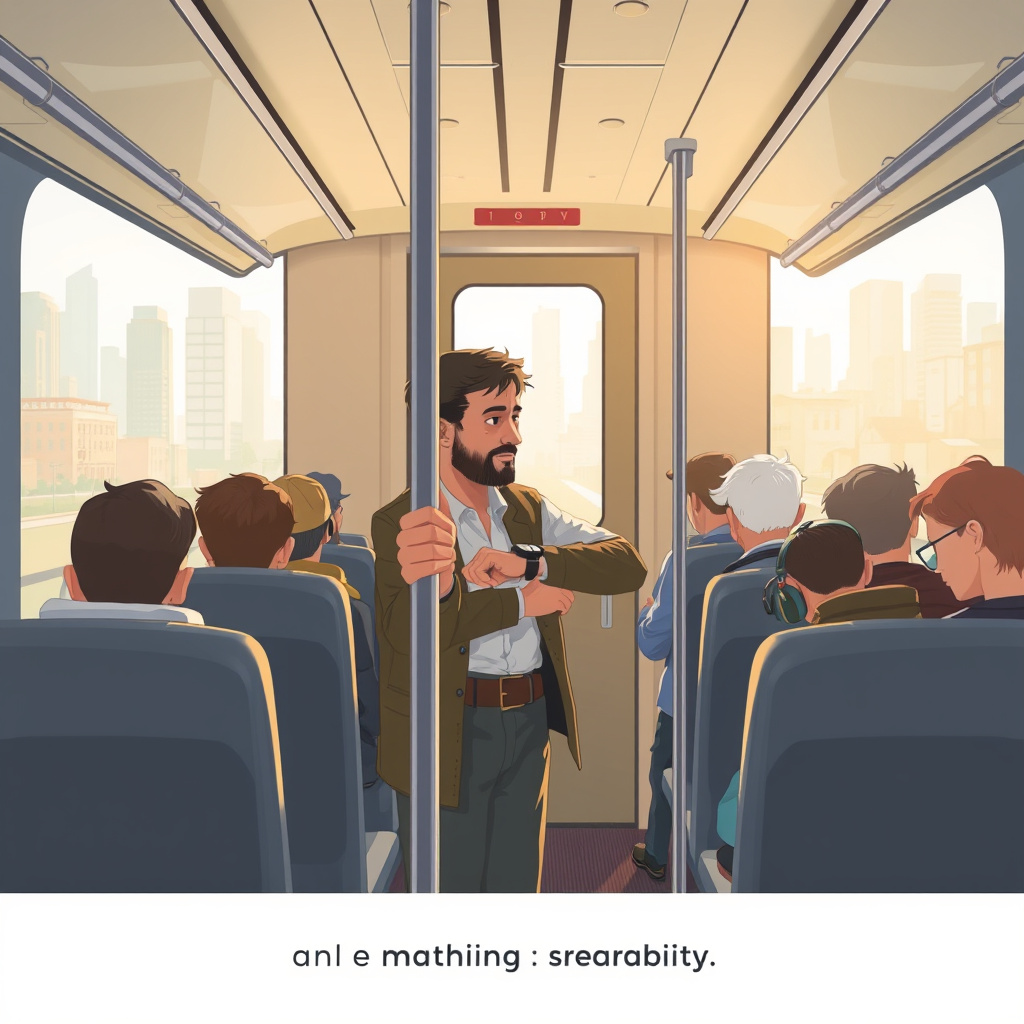
the trip between home and work
My commute is thirty minutes by bus.
More examples: Her commute is long, about one hour. • I read a book during my commute. • A short commute makes life easier.
Common collocations: a long commute, a daily commute, my commute to work
Word family: commuter, commute (verb)
Synonyms: journey, trip, travel
Antonyms: staying home, working from home
Related concepts: work, transport, traffic
Contexts: trains, buses, cars in traffic
Usage note: Use it for the regular trip to work or school. You can say 'My commute is short/long/easy.'
neighbor
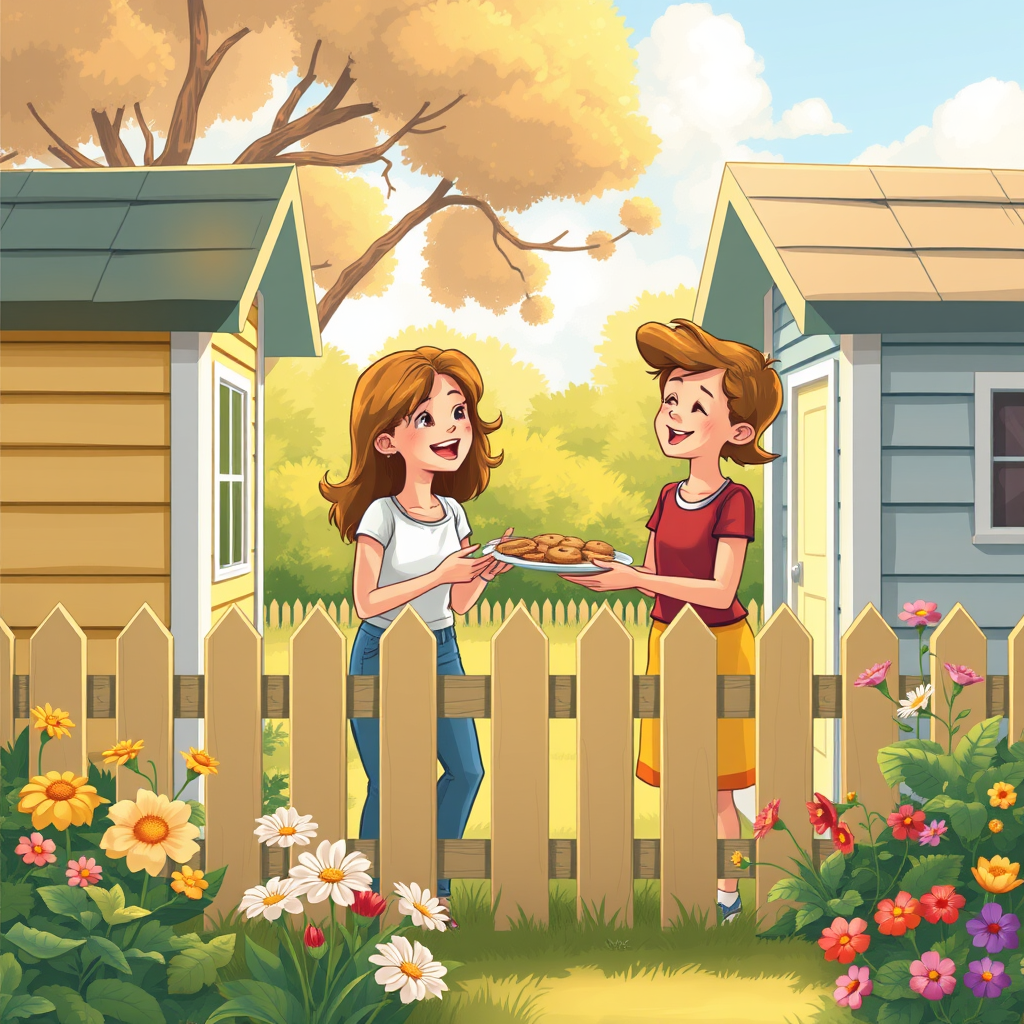
a person who lives next to you
My neighbor helped me carry my bags.
More examples: Our neighbors are very friendly. • I talked with my neighbor over the fence. • A good neighbor is like a friend.
Common collocations: a friendly neighbor, my next-door neighbor, talk to your neighbors
Word family: neighborhood, neighborly
Synonyms: person next door, people nearby
Antonyms: stranger
Related concepts: community, friendship, helping
Contexts: villages, apartment buildings, streets
Usage note: Use it for people living near you. In American English it is 'neighbor', in British English 'neighbour'.
fresh air

clean air outside, away from smoke and traffic
I open the window to get fresh air.
More examples: Let's go outside for some fresh air. • The fresh air in the mountains is wonderful. • A walk in fresh air is good for you.
Common collocations: get some fresh air, breathe fresh air, enjoy the fresh air
Word family: air, fresh, freshly
Synonyms: clean air, outdoor air
Antonyms: polluted air, smog
Related concepts: nature, health, walking outside
Contexts: parks, mountains, the countryside
Usage note: Always use 'fresh air' together as a phrase. Common with the verbs get, breathe, and enjoy.
Vocabulary Check
- What does 'peaceful' mean?
- Full of people
- Quiet and calm
- Very expensive
- Far away
- Which sentence uses 'crowded' correctly?
- The empty beach was crowded.
- The train was crowded with people.
- I crowded my homework yesterday.
- The crowded sky was blue.
- What is a 'commute'?
- A kind of food
- A trip between home and work
- A small village
- A type of job
- In which situation would you use the word 'neighbor'?
- When you talk about a person who lives next to you
- When you talk about your teacher
- When you talk about a famous actor
- When you talk about a place you visit on holiday
- What does 'fresh air' mean?
- Air inside a building
- Cold water
- Clean air outside
- Strong wind
Language Practice: Comparing Places
Practice expressing ideas about city life and countryside life.
- Comparing two places
- Emerging: The city is ___ than the countryside. — The city is busier than the countryside.
- Developing: Life in the ___ is ___ than life in the ___, because ___. — Life in the city is faster than life in the countryside, because people are always busy.
- Expanding: I think the ___ is more ___ than the ___, but the ___ is more ___. — I think the city is more exciting than the countryside, but the countryside is more peaceful.
- Giving an opinion and a reason
- Emerging: I think ___ is ___. — I think the countryside is peaceful.
- Developing: I think ___ is ___ because ___. — I think the countryside is peaceful because there is no traffic.
- Expanding: In my opinion, ___ is ___, but I also think ___. — In my opinion, the city is exciting, but I also think it is too crowded.
- Talking about daily life in a place
- Emerging: In the ___, there is / there are ___. — In the countryside, there are many trees.
- Developing: In the ___, my commute is ___ and I ___. — In the city, my commute is one hour and I take the train.
- Expanding: If I lived in the ___, I would ___ every day and I would ___. — If I lived in the countryside, I would walk every day and I would enjoy the fresh air.
Fill in the Blanks
Leo lives in a small town near the mountains. Every day, his _____ to work is only fifteen minutes by bike. He loves riding past the fields and breathing the _____. In the city where he studied, the buses were always _____, and he often had to stand for one hour. Now his town is quiet and _____, and he sleeps very well at night. Last week, his new _____ invited him for dinner, and they talked until late in the evening. Leo says he will never move back to the city.
Word bank: peaceful, crowded, commute, neighbor, fresh air
Sentence Unscramble
- my / commute / is / short / and / easy
- the / village / is / peaceful / and / quiet
- my / neighbor / gives / me / fresh / vegetables
Discussion Questions
Some people live in big cities with tall buildings and busy streets. Other people live in small villages with trees and animals. Both lives can be good, but they are very different.
Which do you like more, city life or countryside life? Why?
In many big cities, people travel one or two hours to work every day. They sit on trains or in cars in traffic. In villages, many people walk or bike to work in minutes.
How long is your commute, or was it in the past? Do you enjoy it?
In villages, people often know all their neighbors. They talk every day and help each other. In cities, some people never learn the name of the person next door.
Do you know your neighbors? Are they friendly?
Many people say the countryside has fresh air, quiet nights and beautiful nature. But cities have cinemas, restaurants, museums and shops open all day. Every place gives something and takes something.
What do you miss when you leave the city? What do you miss when you leave the countryside?
Imagine you can move tomorrow. You can choose a small apartment in the city center or a house with a garden in a village. Think about your work, your free time and your friends.
If you could move tomorrow, where would you live? Why?
Knowledge Check
- The streets were full of people. We can say the streets were ___.
- peaceful
- crowded
- empty
- fresh
- True or false? Your commute is the trip between your home and your work.
- True
- False
- Which word describes a quiet, calm place with no noise?
- crowded
- busy
- peaceful
- noisy
- Who is a neighbor?
- A person who works with you
- A person who lives near you
- A person in your family
- A person who teaches you
- True or false? 'Fresh air' means dirty air inside a building.
- True
- False
Free to use with your students: Free to teach, screen-share, print and share with your students, with a credit to PlanWise ESL. Please do not sell it or republish it as your own. What you can do with free lessons.