Public Transport vs. Private Cars
About this lesson: This is a B1 (Intermediate) ESL lesson in the General English category. It takes about 60 minutes. It includes 5 vocabulary words, 3 phrasal verbs and expressions, a reading text, comprehension questions, discussion questions and speaking patterns. Suits one-to-one or small-group online classes. Free to open and teach with no login, and it prints as a PDF.
Print just the discussion questions
How this lesson is built
This is a complete conversation lesson built on a scientific pedagogical formula, not a generic worksheet: recall prior topic vocabulary, pre-teach the new words in depth, read in context, practise active recall with flashcards and synonyms/antonyms, build accuracy with exercises, and finish with deep discussion.
- Warm-up: Discussion questions that connect the topic to the student’s own life and recall vocabulary they already know about the subject.
- Reading: A text written for this CEFR level that uses each new word two or three times in context, giving the student something meaningful to react to.
- Key vocabulary: 5 new words, pre-taught before the reading with a definition, pronunciation guide, example sentences and a picture, plus word families, usage notes, recall flashcards and synonyms/antonyms, giving a solid grounding before reading.
- Comprehension: 5 questions that check the new words: retrieval practice, not rereading.
- Idioms and phrasal verbs: Expressions taken from the reading, each with its meaning, an example and a speaking question.
- Sentence frames: 3 speaking patterns, each at three levels of support (emerging, developing, expanding) with model answers—especially helpful scaffolding for beginners and less confident speakers.
- Gap-fill: The new words again, in a shuffled order, so the student recalls them by meaning in context.
- Sentence unscramble: Natural sentences with the new words to put back in order, reinforcing grammar and collocation.
- Discussion: 5 open questions designed to talk deeply about the subject while actively using the lesson’s target vocabulary: the heart of a conversation lesson.
- Quiz: A short retrieval check that brings every new word back once more.
Unlike a generic worksheet, the new words are taught before the reading and met again in the activities, the speaking is supported at three levels and most of the time goes on the student talking. Teachers who use PlanWise ESL also get per-student vocabulary tracking (recycling earlier words into future readings and questions), a private learner dashboard with flashcards and custom lesson creation, and a downloadable study PDF.
Warm-up: On the Move
Look at the picture and talk about how you get around your city every day.
- How do you usually travel around your city or town?
- How long does it take you to get to work or school?
- Do you enjoy that journey, or is it just something you have to do?
- Have you ever been late because of traffic or transport problems?
- If you could change one thing about travel in your city, what would it be?
Reading Text: Two Ways to Get to Work
Read about two friends, Maria and Daniel, who live in the same city but travel to work in very different ways.
Maria and Daniel work in the same office in a big city. Maria takes the bus every day, but Daniel drives his car. They often argue about which way is better, so last month they decided to compare their journeys for one week.
Maria's commute takes about forty minutes. The bus is usually reliable, although sometimes it is late. She pays a fare of about two dollars each day. She likes the journey because she can read a book or listen to music on the way.
Daniel's drive is faster when the roads are clear, but that doesn't happen often. Every morning he gets stuck in a traffic jam near the bridge. He sits in his car, watching the minutes go by, and arrives at work feeling tired and stressed.
However, Daniel says his car is more convenient. He can go anywhere at any time, and he doesn't have to wait in the rain. On the weekend, he takes his family to the countryside, which would be difficult by bus.
After one week, they compared notes. Maria spent less money and felt more relaxed. Daniel saved time on two days, but he paid a lot for petrol and parking. In the end, they agreed: the best way to travel depends on the day, the distance and the weather.
Key Vocabulary
commute
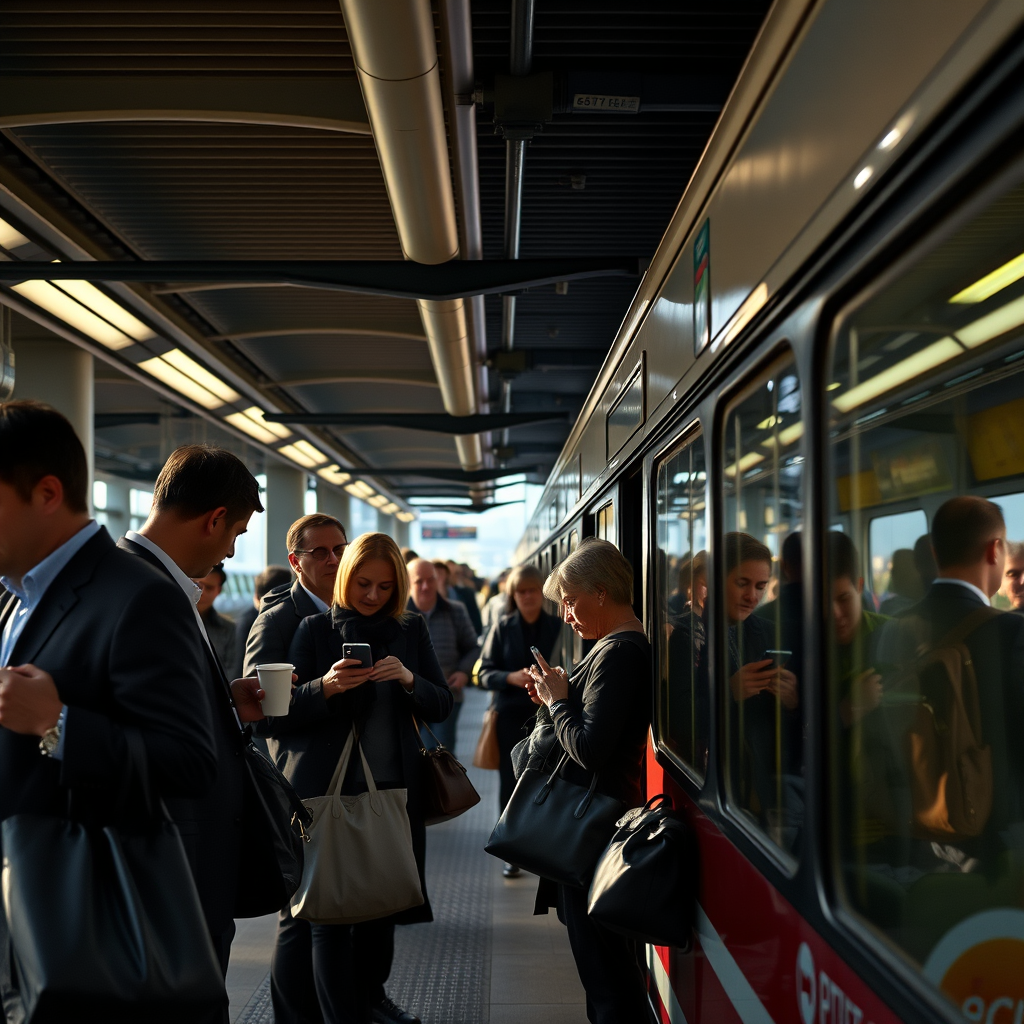
the journey you make regularly between home and work
My commute takes thirty minutes by train.
More examples: She has a long commute, so she listens to podcasts on the train. • I hate commuting during rush hour. • My commute is short because I live near my office.
Common collocations: long commute, daily commute, commute to work
Word family: commute (verb), commuter (noun), commuting (noun)
Synonyms: journey to work, daily trip, ride
Antonyms: staying home, working from home
Related concepts: rush hour, public transport, work-life balance
Contexts: big cities, trains and buses, morning routines
Usage note: Use it for regular journeys to work or school, not for holidays or one-off trips. As a verb: 'I commute by bus.'
traffic jam
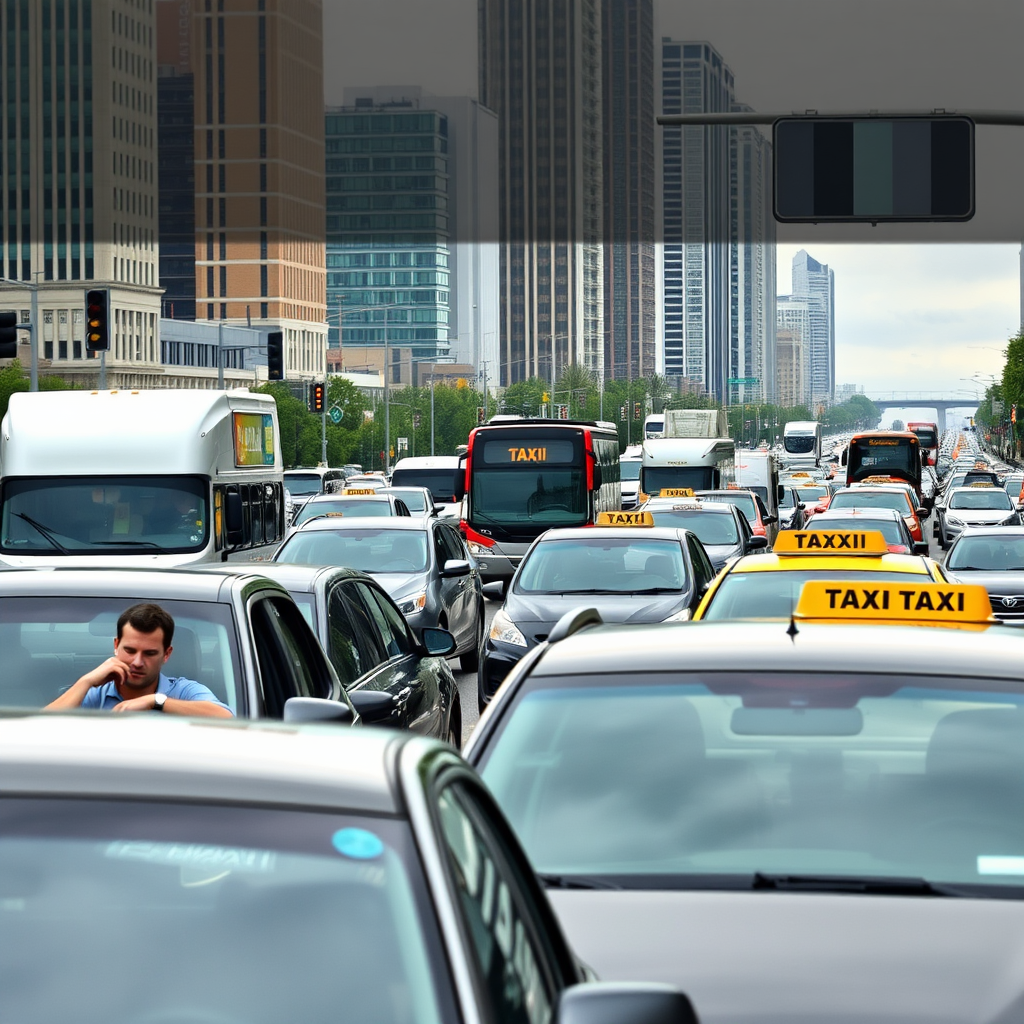
a long line of cars that cannot move or moves very slowly
We were late because we got stuck in a traffic jam.
More examples: There's always a traffic jam in the city centre at five o'clock. • The traffic jam stretched for two kilometres. • I left early to avoid the traffic jam.
Common collocations: get stuck in a traffic jam, heavy traffic, avoid the traffic
Word family: traffic (noun), jam (noun)
Synonyms: congestion, gridlock, hold-up
Antonyms: clear roads, smooth traffic, open road
Related concepts: rush hour, roadworks, city planning
Contexts: city centres, bridges and tunnels, holiday weekends
Usage note: Always use the article: 'a traffic jam' or 'traffic jams'. Common verb: 'be stuck in' or 'get stuck in'.
reliable

always working well; you can trust it to happen or work
The trains here are reliable; they almost never break down.
More examples: I need a reliable alarm clock because I wake up early. • Her car is old but very reliable. • Is the bus service reliable in your town?
Common collocations: reliable service, reliable transport, highly reliable
Word family: rely (verb), reliably (adverb), reliability (noun)
Synonyms: dependable, trustworthy, consistent
Antonyms: unreliable, unpredictable
Related concepts: trust, punctuality, quality
Contexts: public transport, friends and colleagues, technology
Usage note: Use for people, machines and services you can count on. Opposite idea: unreliable.
convenient
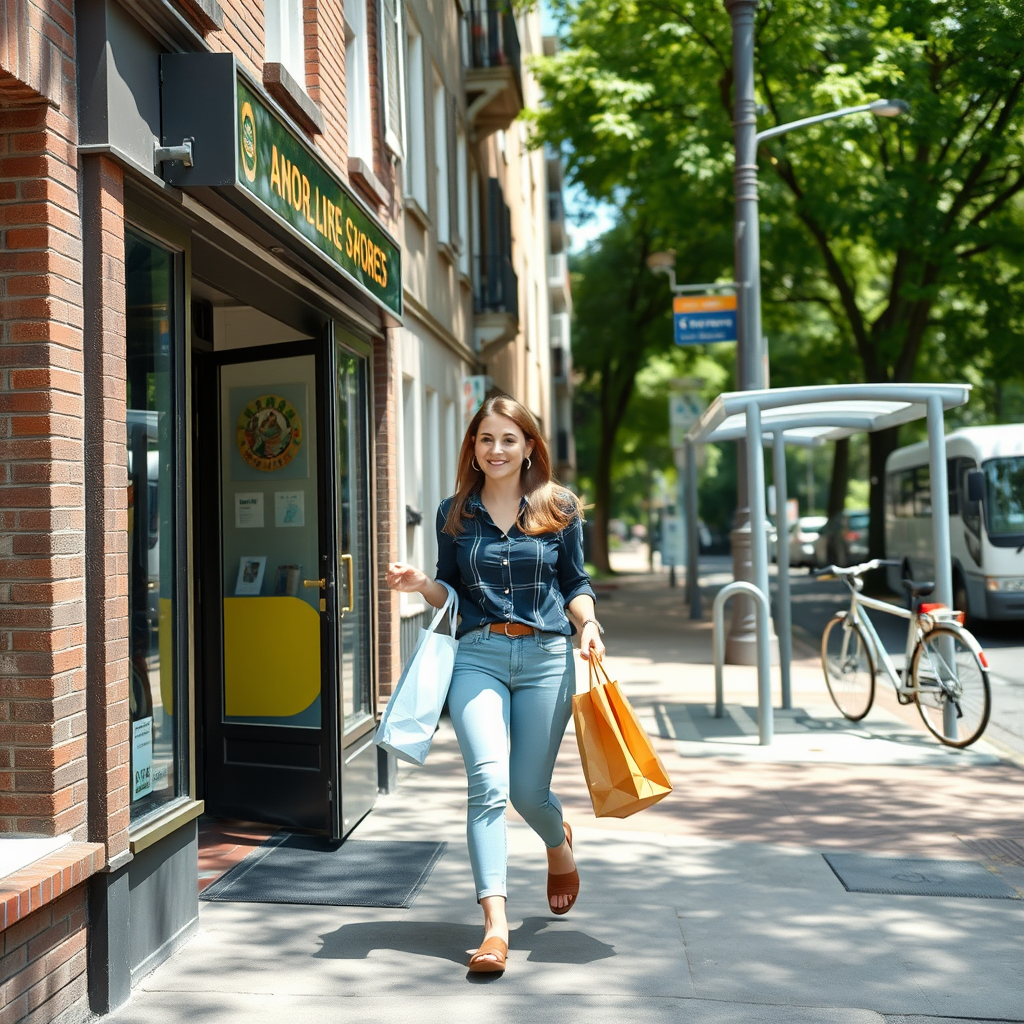
easy and useful for you; it saves you time or effort
Living near the station is very convenient for me.
More examples: Is eight o'clock convenient for you? • A car is convenient for shopping trips. • The shop is open late, which is convenient for workers.
Common collocations: convenient location, convenient time, very convenient for
Word family: convenience (noun), conveniently (adverb)
Synonyms: handy, practical, easy to use
Antonyms: inconvenient, impractical
Related concepts: location, time-saving, comfort
Contexts: housing, shopping, transport choices
Usage note: Often used about places, times and transport. Common pattern: 'convenient for someone'.
fare
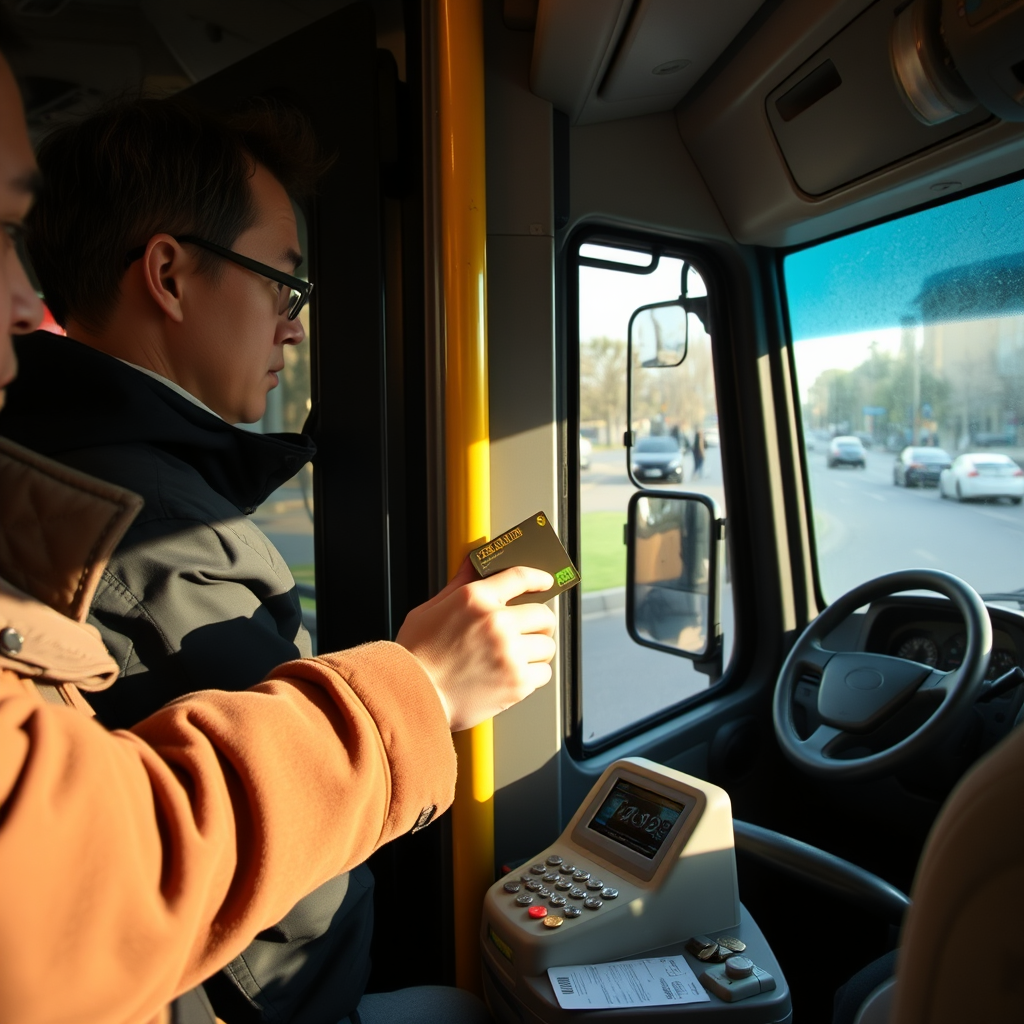
the money you pay to travel on a bus, train or taxi
The bus fare went up again this year.
More examples: A single fare costs two dollars. • Taxi fares are higher at night. • Students pay a cheaper fare.
Common collocations: bus fare, pay the fare, fare went up
Word family: fares (plural noun)
Synonyms: ticket price, charge, cost of travel
Antonyms: free travel, free ride
Related concepts: tickets, public transport, budget
Contexts: buses and trains, taxis, travel cards
Usage note: Use for transport only. Don't confuse with 'fair' (adjective) or 'food' (a different meaning of fare).
Vocabulary Check
- What does 'commute' mean?
- A long holiday trip
- The regular journey between home and work
- A kind of car
- Money you pay for petrol
- Which sentence uses 'reliable' correctly?
- The bus is reliable, so it's often late.
- The bus is reliable; it always comes on time.
- The bus is reliable because it is expensive.
- The bus is reliable when it breaks down.
- In which situation would you say there is a 'traffic jam'?
- The road is empty and you drive fast.
- There are no cars on the road.
- Hundreds of cars are stopped and not moving.
- You are walking on a quiet street.
- What does 'fare' mean?
- The money you pay to travel on a bus or train
- The price of a car
- A type of ticket office
- The speed of a train
- Which situation is 'convenient'?
- The bus stop is one hour's walk from your home.
- The shop is closed every time you go.
- The station is right next to your apartment.
- You must change buses three times to go shopping.
Phrasal Verbs & Expressions
get stuck
you cannot move or leave
I got stuck in the lift for ten minutes yesterday.
Usage note: The small word 'in' tells you where: get stuck in traffic, in a lift, in the snow. · Right: I got stuck in traffic. · Avoid: I got stuck on traffic.
Usage note: Very common in everyday talk about traffic and delays.
compare notes
share what you learned or experienced
After the trip, we compared notes about the best places to eat.
Usage note: The picture: two people each have notes, and they put them together to see the whole story.
Usage note: You usually compare notes with someone about something.
let down
disappoint someone because you did not help
The bus was late again, so it let me down on my first day at work.
Usage note: You can split it: 'let me down', 'let us down'. The small word 'down' adds the feeling of falling or failing.
Usage note: Things can let you down too, not only people: a bus, a phone, the weather.
Language Practice: Talking About Transport
Practice expressing ideas about transport choices and daily travel.
- Giving an opinion with a reason
- Emerging: I think ___ because ___. — I think the bus is good because it's cheap.
- Developing: In my opinion, ___ is better than ___ because ___. — In my opinion, the metro is better than driving because you avoid traffic jams.
- Expanding: I would choose ___ because ___, although I can see that ___ too. — I would choose the train because it's reliable and I can read, although driving is more comfortable.
- Describing cause and effect
- Emerging: When ___, I ___. — When there's a traffic jam, I get stressed.
- Developing: When ___, ___ so ___. — When there's a traffic jam, I arrive late so I leave home earlier now.
- Expanding: When ___, ___ , which means ___. — When the roads are busy, my commute takes twice as long, which means I get home very tired.
- Comparing transport options
- Emerging: The bus is ___ than the car. — The bus is cheaper than the car.
- Developing: Driving is more ___ , but the bus is more ___. — Driving is more convenient, but the bus is more relaxing.
- Expanding: For me, ___ works better on weekdays because ___, but on weekends ___ is more ___. — For me, the metro works better on weekdays because it's reliable, but on weekends a car is more convenient.
Fill in the Blanks
Anna lives in a big city and works in an office downtown. Her daily _____ takes fifty minutes by metro. The metro is very _____, so she almost never arrives late. The _____ is cheap because her company pays half of it. However, her friend Tom drives to work. He says a car is more _____ because he can listen to music and stop anywhere. The problem is that every morning he gets stuck in a _____ jam near the stadium, and sometimes he waits thirty minutes without moving.
Word bank: commute, reliable, fare, convenient, traffic
Sentence Unscramble
- my / commute / takes / about / forty / minutes / by / train
- we / got / stuck / in / a / traffic / jam / this / morning
- the / bus / fare / is / cheaper / than / petrol / and / parking
Discussion Questions
Maria takes the bus and Daniel drives, and each one thinks their way is better. Most people in big cities face the same choice every day. There is no single right answer; it depends on money, time and comfort.
In your daily life, is public transport or a private car the better choice for you? Why?
Traffic jams are a problem in almost every big city in the world. Some cities build more roads, others improve buses and trains, and some make driving more expensive.
What is the biggest traffic problem in your city, and what do you think could fix it?
Some people pay a high fare every day for a train or bus, and others spend a lot on petrol, parking and car repairs. Money is a big part of the transport decision.
How much do you spend on travel in a normal week? Do you think it's worth it?
A reliable bus that comes on time can change someone's whole day. But when transport is late or breaks down, people get stressed and sometimes start driving instead.
Tell me about a time when transport let you down. What happened, and how did you feel?
In many countries, young people in cities are buying fewer cars than their parents did. They use apps, bikes, buses and trains instead. But in smaller towns, a car is often still necessary.
Do you think people in the future will use cars less than today? Why or why not?
Knowledge Check
- Which word means 'the journey you make regularly between home and work'?
- fare
- commute
- traffic jam
- convenience
- A 'reliable' bus is one that often breaks down.
- True
- False
- Which sentence is correct?
- I got stuck in a traffic jam on the bridge.
- I got stuck in a traffic jammed on the bridge.
- I got stuck on a traffic jam the bridge.
- I got stuck traffic jam on the bridge.
- If something is 'convenient', it is...
- expensive but fast
- easy and saves you time or effort
- always late
- very big
- You pay a 'fare' when you travel by bus, train or taxi.
- True
- False
- Your friend says: 'The train let me down again this morning.' What does she mean?
- The train was cheaper than usual
- The train disappointed her, maybe it was late
- She fell down on the train
- She took the train down to the city
Free to use with your students: Free to teach, screen-share, print and share with your students, with a credit to PlanWise ESL. Please do not sell it or republish it as your own. What you can do with free lessons.