Talking Numbers: Presenting Charts and Results in English
About this lesson: This is a B2 (Upper Intermediate) ESL lesson in the General English category. It takes about 60 minutes. It includes 5 vocabulary words, 4 idioms and phrasal verbs, a reading text, comprehension questions, discussion questions and speaking patterns. Suits one-to-one or small-group online classes. Free to open and teach with no login, and it prints as a PDF.
Print just the discussion questions
How this lesson is built
This is a complete conversation lesson built on a scientific pedagogical formula, not a generic worksheet: recall prior topic vocabulary, pre-teach the new words in depth, read in context, practise active recall with flashcards and synonyms/antonyms, build accuracy with exercises, and finish with deep discussion.
- Warm-up: Discussion questions that connect the topic to the student’s own life and recall vocabulary they already know about the subject.
- Reading: A text written for this CEFR level that uses each new word two or three times in context, giving the student something meaningful to react to.
- Key vocabulary: 5 new words, pre-taught before the reading with a definition, pronunciation guide, example sentences and a picture, plus word families, usage notes, recall flashcards and synonyms/antonyms, giving a solid grounding before reading.
- Comprehension: 5 questions that check the new words: retrieval practice, not rereading.
- Idioms and phrasal verbs: Expressions taken from the reading, each with its meaning, an example and a speaking question.
- Sentence frames: 3 speaking patterns, each at three levels of support (emerging, developing, expanding) with model answers—especially helpful scaffolding for beginners and less confident speakers.
- Gap-fill: The new words again, in a shuffled order, so the student recalls them by meaning in context.
- Sentence unscramble: Natural sentences with the new words to put back in order, reinforcing grammar and collocation.
- Discussion: 5 open questions designed to talk deeply about the subject while actively using the lesson’s target vocabulary: the heart of a conversation lesson.
- Quiz: A short retrieval check that brings every new word back once more.
Unlike a generic worksheet, the new words are taught before the reading and met again in the activities, the speaking is supported at three levels and most of the time goes on the student talking. Teachers who use PlanWise ESL also get per-student vocabulary tracking (recycling earlier words into future readings and questions), a private learner dashboard with flashcards and custom lesson creation, and a downloadable study PDF.
Warm-up: Numbers in Your Life
A quick chat about numbers, charts and presentations before the lesson begins.
- When was the last time you had to explain some numbers to someone? What was it about?
- Do you enjoy looking at charts and graphs, or do they bore you?
- Have you ever watched a presentation that was really good? What made it good?
- If you had to present your last month as a chart, what would it show?
- Do you think numbers tell the truth, or can they be used to trick people?
Reading Text: The Meeting That Changed How I Present
A short story about a presentation that went wrong - and what the speaker learned from it.
Two years ago, Marta gave her first big presentation at work. She had spent weeks preparing, and her slides were full of numbers. But ten minutes in, her manager stopped her. 'I can see the figures,' he said, 'but I can't see what they mean.' Marta sat down that evening feeling embarrassed.
Her problem was simple: she had shown the data, but she hadn't told a story. Every slide had a chart, but she never explained the trend behind the numbers. Was sales going up because of the new advert, or was the whole market growing? Her audience was guessing, and guessing is tiring.
A colleague named Daniel gave her some advice. 'Before you present, decide on one key message,' he said. 'Then highlight it. Don't try to show everything - pick the three numbers that matter and make those shine.' Marta realised she had been hiding her best point inside a wall of data.
She also learned to give a breakdown of the big numbers. Instead of saying 'costs rose by 20 percent', she split the figure into parts: travel, software, and salaries. Suddenly her audience could ask useful questions, because they understood where the money was actually going.
At her next quarterly presentation, Marta started with her one key message and finished with a simple forecast for the next three months. Her manager smiled and said, 'Now I can see it.' Marta's lesson is one many of us need: numbers don't speak for themselves. We have to speak for them.
Key Vocabulary
figures

numbers that show information, especially money or results
The sales figures for June were the best we've ever had.
More examples: Let me check the figures before the meeting. • The official figures show unemployment is falling. • I don't trust these figures - they seem too good.
Common collocations: sales figures, the latest figures, figures show that...
Word family: figure (noun - a number or shape), figure out (phrasal verb - understand)
Synonyms: numbers, data, statistics
Antonyms: guesses, estimates
Related concepts: reports, results, accounting
Contexts: business meetings, news reports, budgets
Usage note: Use 'figures' when talking about official or business numbers, especially in reports and presentations. It sounds more professional than just 'numbers'.
trend

the general direction something is changing over time
The trend in online shopping is still going upward.
More examples: There's a clear trend towards working from home. • Fashion trends change every season. • The downward trend in sales started last spring.
Common collocations: an upward/downward trend, follow a trend, a growing trend
Word family: trendy (adjective - fashionable), trending (verb - becoming popular)
Synonyms: pattern, direction, movement
Antonyms: one-off event, exception
Related concepts: graphs, fashion, social change
Contexts: business reports, news, social media
Usage note: Use 'trend' for patterns over time, not single events. Very useful when describing graphs: 'The trend is clearly upward.'
forecast
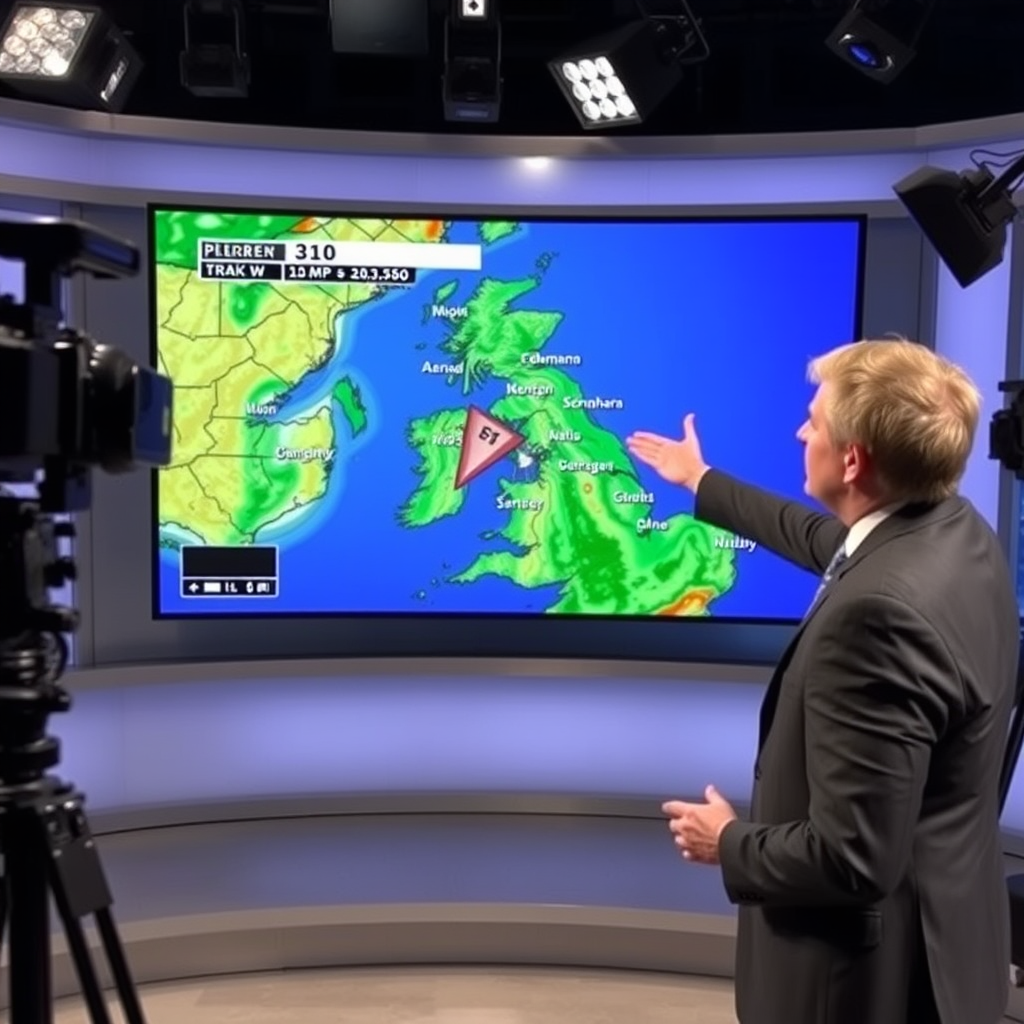
a statement about what will happen in the future, based on information
The forecast for next year is a ten percent growth in sales.
More examples: The weather forecast says it will rain tomorrow. • We need to update our sales forecast. • Experts forecast that prices will keep rising.
Common collocations: weather forecast, sales forecast, forecast growth
Word family: forecast (past tense also 'forecast'), forecaster (noun - a person who predicts)
Synonyms: prediction, projection, outlook
Antonyms: history, past record
Related concepts: weather, planning, economics
Contexts: weather reports, business planning, news
Usage note: Common for weather and business predictions. In presentations, use it when talking about future expectations: 'Our forecast for Q3 is...'
highlight

to give special attention to the most important thing
In my presentation, I want to highlight two main problems.
More examples: The report highlights the need for better training. • The highlight of my year was the trip to Japan. • She used a yellow pen to highlight the key figures.
Common collocations: highlight the importance of, the main highlight, highlight a problem
Word family: highlighter (noun - a bright marking pen), highlight (noun - the best part)
Synonyms: emphasise, stress, point out
Antonyms: downplay, ignore
Related concepts: presentations, reports, memorable moments
Contexts: meetings, studying, sports recaps
Usage note: Very useful in presentations: 'Let me highlight three points.' Also common in everyday talk about the best part of an experience.
breakdown
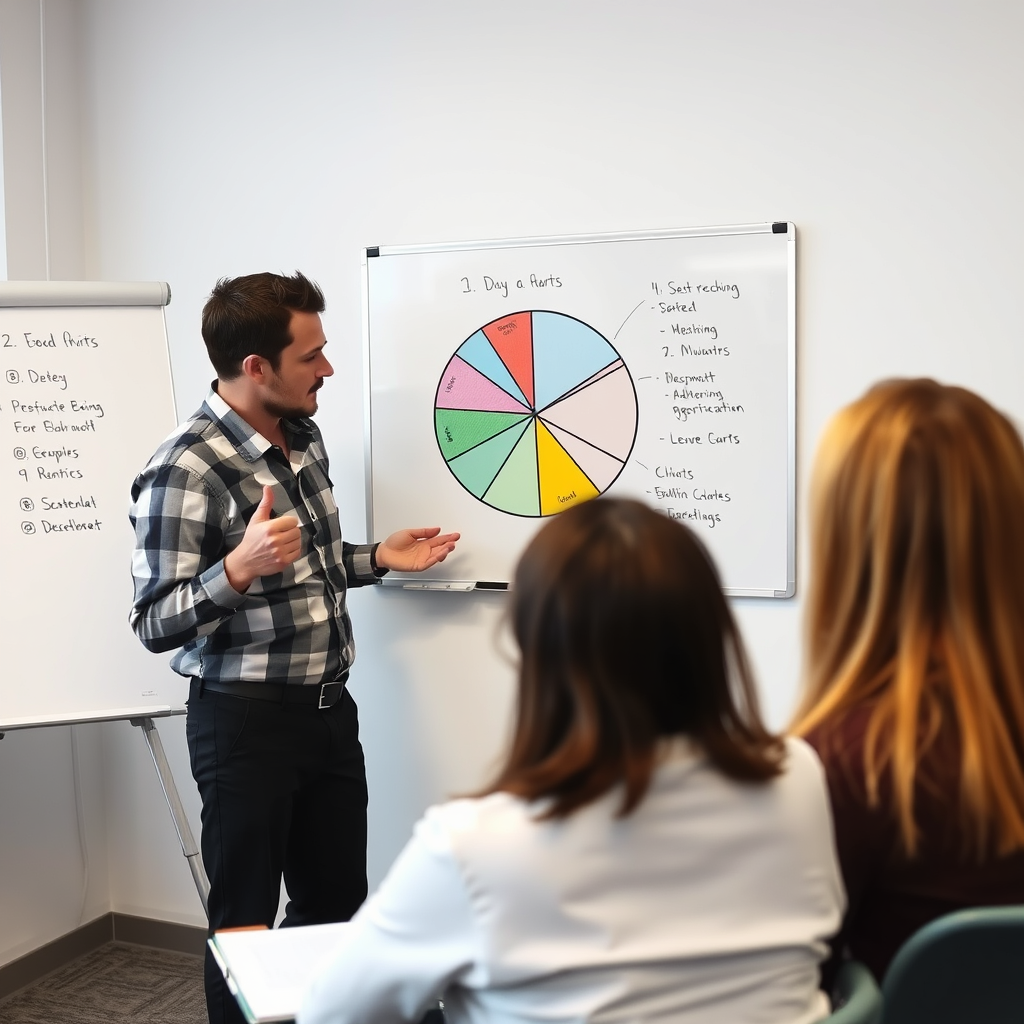
a set of smaller parts that together explain a total amount
Can you give me a breakdown of the costs?
More examples: Here's a breakdown of where our money went. • The breakdown by age group was surprising. • I need a detailed breakdown before I agree to pay.
Common collocations: a breakdown of costs, a detailed breakdown, give/provide a breakdown
Word family: break down (phrasal verb - stop working, or separate into parts), breakdown (noun - also means a car or machine failing)
Synonyms: analysis, split, itemisation
Antonyms: total, summary
Related concepts: budgets, statistics, invoices
Contexts: finance, presentations, shopping bills
Usage note: Use when you want to see the parts inside a total: 'a breakdown of the budget'. Watch out for the other meaning: 'My car had a breakdown.'
Vocabulary Check
- What does 'figures' mean in a business context?
- The shape of a person
- Numbers that show results or money
- Drawings in a book
- The names of departments
- Which sentence uses 'trend' correctly?
- The trend of the meeting was at three o'clock.
- I forgot the trend at home.
- There's a growing trend towards smaller phones.
- She gave me a trend for my birthday.
- In which situation would you use 'forecast'?
- Describing what happened last year
- Talking about what sales might be next year
- Explaining a chart from last month
- Introducing a new colleague
- What does it mean to 'highlight' something in a presentation?
- To make it brighter with a lamp
- To remove it from the slides
- To give special attention to the most important part
- To read it twice as fast
- If someone asks for a 'breakdown of the costs', what do they want?
- The costs divided into smaller parts
- A cheaper price
- A summary with no details
- A prediction of future costs
Idioms & Phrasal Verbs
go up
to increase, to become higher
Coffee prices went up again this month, so I'm making it at home now.
Usage note: The opposite is 'go down'. You can also split it: 'sales went right up'. · Right: Prices went up. · Avoid: Prices went up to.
speak for themselves
something is so clear it needs no explanation
She got promoted in one year - her results speak for themselves.
Usage note: The picture: the thing 'talks' instead of you, because it's so clear. Often used with results, numbers or facts.
split into
to divide something into smaller parts
Let's split the bill into three so everyone pays the same.
Usage note: Always needs 'into' after it: split something INTO parts. You can also split the bill or split the cost with people.
turn out
to happen or end in a particular way, often surprisingly
The party turned out great - almost everyone came after all.
Usage note: Often used with 'it': 'It turned out that he was right.' The 'out' adds the idea of a final result.
Usage note: Don't confuse it with 'turn out the lights' (= switch off).
Language Practice: Presenting and Discussing Data
Practice expressing ideas about presenting numbers, charts and results.
- Describing trends and data
- Emerging: The figures show that ___. — The figures show that sales went up.
- Developing: The figures show ___, which suggests that ___. — The figures show a rise in online orders, which suggests that people prefer shopping from home.
- Expanding: If we look at the trend over the last few months, we can see that ___, probably because ___. — If we look at the trend over the last few months, we can see that demand keeps growing, probably because of the new app.
- Weighing pros and cons of how to present data
- Emerging: Charts are ___ than plain numbers because ___. — Charts are clearer than plain numbers because you can see the pattern.
- Developing: The advantage of ___ is ___, but the disadvantage is ___. — The advantage of a pie chart is that it shows the breakdown clearly, but the disadvantage is that it hides the trend.
- Expanding: While ___ works well for ___, I'd argue that ___ is better when ___, because ___. — While a big table works well for experts, I'd argue that one simple chart is better when the audience is busy, because it keeps attention on the key message.
- Imagining and predicting future situations
- Emerging: If I had to present ___, I would ___. — If I had to present my monthly spending, I would show one simple chart.
- Developing: If I had to present ___ to ___, I would ___ so that ___. — If I had to present our results to the whole company, I would highlight one key number so that everyone remembers it.
- Expanding: If the figures turned out to be much worse than our forecast, I think ___ would ___, and we would probably ___. — If the figures turned out to be much worse than our forecast, I think the manager would be upset, and we would probably need to change our plan quickly.
Fill in the Blanks
Last month, Priya had to present her team's results to the head office. She was nervous because the _____ were not good. First, she showed a _____ of the costs, so everyone could see exactly where the money had gone. Then she explained the main _____: customer numbers had been falling since spring. Her manager asked for a _____ for the next six months, and Priya admitted it was hard to predict. Finally, she used one slide to _____ the one positive result - a big increase in online sales - and ended her presentation with that good news.
Word bank: figures, breakdown, trend, forecast, highlight
Sentence Unscramble
- the / latest / figures / show / a / clear / upward / trend
- can / you / give / me / a / breakdown / of / the / costs
- our / forecast / suggests / that / sales / will / keep / growing
Discussion Questions
Marta's story showed that showing numbers is not the same as explaining them. Some presenters drown their audience in data, while others keep it very simple. There are good arguments on both sides.
Do you prefer presentations with lots of detailed numbers or just a few simple charts? Why?
Imagine you have to present your last month - your spending, your mood, your free time - as a set of charts to a friend. You need to choose what to highlight and what to leave out.
What would be the highlight of your last month, and how would you show it in a chart?
Forecasts are everywhere: weather, the economy, sports results. Sometimes they are right, and sometimes they are completely wrong, but people keep making them.
Have you ever made a forecast about your own life that turned out totally wrong? What happened?
When Marta gave a breakdown of her costs, her audience finally started asking good questions. Breaking big numbers into parts can change how people react.
If you looked at a breakdown of how you spend your time in a normal week, which part would surprise you most?
Some people say numbers never lie, but others say you can make figures say almost anything by choosing what to show. News reports and adverts use charts all the time to support their message.
Do you think charts and figures can be used to trick people? Can you think of an example?
Knowledge Check
- Which word means 'numbers that show results, especially about money'?
- breakdown
- trend
- figures
- highlight
- A 'forecast' is about the past.
- True
- False
- Which sentence uses 'breakdown' correctly?
- My breakdown is broken, so I walked to work.
- Can you give me a breakdown of the costs?
- I breakdown my breakfast every morning.
- The breakdown was very sunny yesterday.
- Which word means 'the general direction something is changing over time'?
- trend
- forecast
- figures
- breakdown
- 'The highlight of my year was the trip to Japan.' Here, 'highlight' means the best or most memorable part.
- True
- False
- If someone says 'Her results speak for themselves', what do they mean?
- Her results are so clear they don't need any explanation
- She talks too much about her results
- Her results are difficult to understand
- She needs someone to explain her results
Free to use with your students: Free to teach, screen-share, print and share with your students, with a credit to PlanWise ESL. Please do not sell it or republish it as your own. What you can do with free lessons.