Life Goals: Dreams and Plans
About this lesson: This is an A2 (Elementary) ESL lesson in the General English category. It takes about 60 minutes. It includes 5 vocabulary words, a reading text, comprehension questions, discussion questions and speaking patterns. Suits one-to-one or small-group online classes. Free to open and teach with no login, and it prints as a PDF.
Print just the discussion questions
How this lesson is built
This is a complete conversation lesson built on a scientific pedagogical formula, not a generic worksheet: recall prior topic vocabulary, pre-teach the new words in depth, read in context, practise active recall with flashcards and synonyms/antonyms, build accuracy with exercises, and finish with deep discussion.
- Warm-up: Discussion questions that connect the topic to the student’s own life and recall vocabulary they already know about the subject.
- Reading: A text written for this CEFR level that uses each new word two or three times in context, giving the student something meaningful to react to.
- Key vocabulary: 5 new words, pre-taught before the reading with a definition, pronunciation guide, example sentences and a picture, plus word families, usage notes, recall flashcards and synonyms/antonyms, giving a solid grounding before reading.
- Comprehension: 5 questions that check the new words: retrieval practice, not rereading.
- Sentence frames: 3 speaking patterns, each at three levels of support (emerging, developing, expanding) with model answers—especially helpful scaffolding for beginners and less confident speakers.
- Gap-fill: The new words again, in a shuffled order, so the student recalls them by meaning in context.
- Sentence unscramble: Natural sentences with the new words to put back in order, reinforcing grammar and collocation.
- Discussion: 5 open questions designed to talk deeply about the subject while actively using the lesson’s target vocabulary: the heart of a conversation lesson.
- Quiz: A short retrieval check that brings every new word back once more.
Unlike a generic worksheet, the new words are taught before the reading and met again in the activities, the speaking is supported at three levels and most of the time goes on the student talking. Teachers who use PlanWise ESL also get per-student vocabulary tracking (recycling earlier words into future readings and questions), a private learner dashboard with flashcards and custom lesson creation, and a downloadable study PDF.
Warm-up Activity
Talk about your dreams and plans for life before we start.
- What do you want to do in the next five years?
- Do you have a big dream in your life?
- Is there something new you want to learn?
- Do you like making plans, or do you prefer to be free?
- What makes a year feel successful for you?
Reading Text: Maya's Three Goals
Read about Maya and her plans for the future. What are her goals? Do you have goals like hers?
Maya is twenty-five years old. She lives in a small city and works in a shop. Last year, she sat down and wrote three goals on a piece of paper. She wanted to change her life.
Her first goal is to learn English well. She studies every evening after work. It is a big challenge because she is often tired. But she wants to achieve it, so she never stops.
Her second goal is to improve her health. She runs in the park three times a week. Last month, it was hard, but now she feels much stronger and happier.
Her third goal is to open a small cafe one day. First, she needs a good plan. She saves money every month and reads books about business.
Maya knows her dreams will take time. Some days are difficult, but she smiles and keeps going. 'A goal is like a light,' she says. 'It shows you the way.'
Key Vocabulary
goal

something you want to do or get
My goal this year is to learn to swim.
More examples: She has a goal to visit ten countries. • His goal is to buy a house. • We set a goal for the team.
Common collocations: set a goal, reach a goal, a long-term goal
Word family: goal
Synonyms: aim, target, dream
Antonyms: wish without action, random idea
Related concepts: dreams, plans, success
Contexts: work, school, sport
Usage note: Use 'goal' for the thing you want, not the action. Say 'set a goal' when you decide it.
achieve

to do something you worked hard for
She achieved her goal and passed the exam.
More examples: He achieved his dream of being a pilot. • We achieved good results together. • You can achieve a lot in one year.
Common collocations: achieve a goal, achieve a dream, achieve success
Word family: achievement, achiever
Synonyms: reach, get, do
Antonyms: fail, give up
Related concepts: success, hard work, winning
Contexts: study, career, sport
Usage note: Use with goals, dreams and success. Past form: 'achieved'.
plan

an idea of what you will do next
My plan is to save money for one year.
More examples: Do you have a plan for the weekend? • Her plan helped her find a job. • We made a plan for the trip.
Common collocations: make a plan, follow a plan, a simple plan
Word family: plan, planner, planning
Synonyms: idea, program, arrangement
Antonyms: surprise, chaos
Related concepts: future, steps, time
Contexts: work, travel, study
Usage note: As a verb: 'I plan to study abroad.' Use 'make a plan' when you create one.
challenge

something difficult that tests you
Learning English is a challenge, but I love it.
More examples: The big challenge was waking up early. • Running a marathon is a real challenge. • She enjoys a good challenge.
Common collocations: face a challenge, a big challenge, take on a challenge
Word family: challenge, challenging
Synonyms: difficulty, test, problem
Antonyms: easy thing, breeze
Related concepts: effort, growth, courage
Contexts: work, sport, learning
Usage note: Use it for something hard but possible. It often sounds positive - a chance to grow.
improve
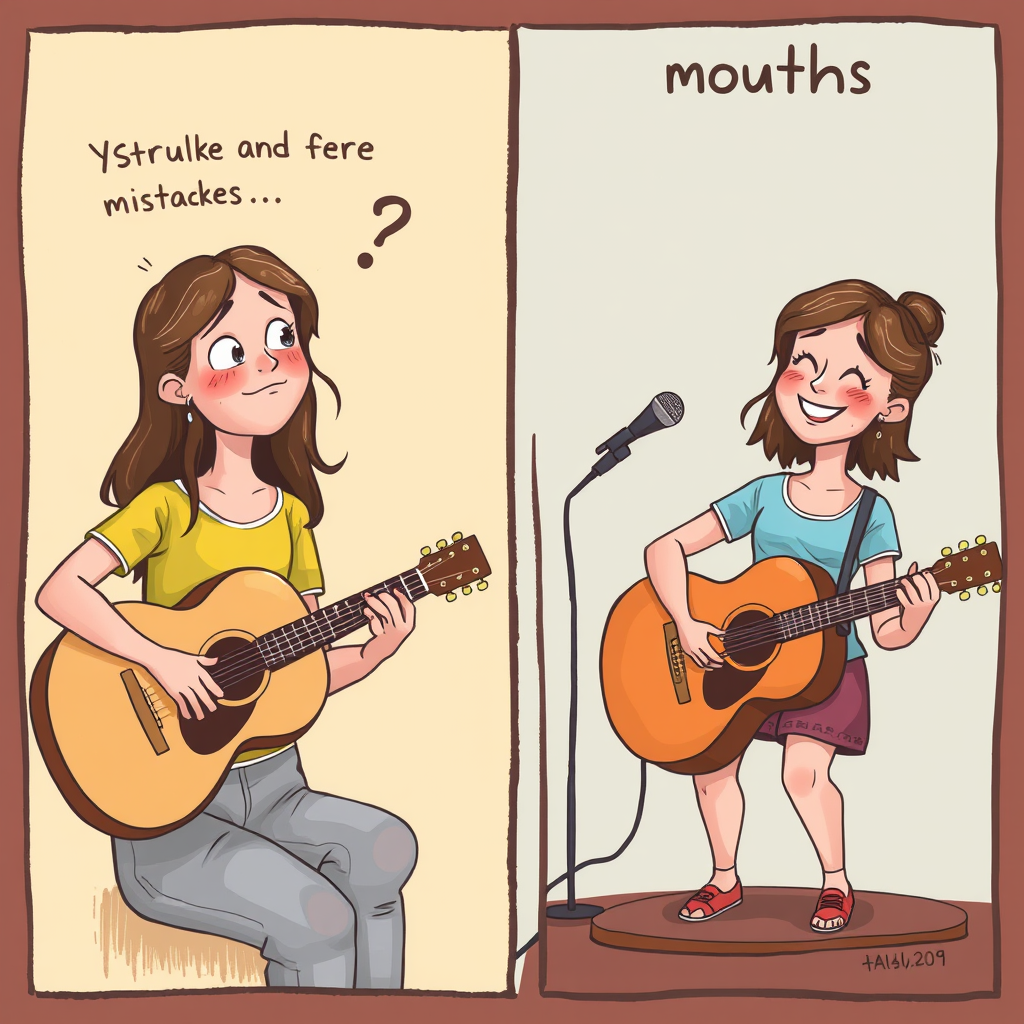
to get better at something
I want to improve my speaking this year.
More examples: Her English improved a lot last year. • Exercise improves your health. • He improved his cooking with practice.
Common collocations: improve your skills, improve quickly, improve little by little
Word family: improvement
Synonyms: get better, progress, develop
Antonyms: get worse, decline
Related concepts: practice, progress, learning
Contexts: study, health, skills
Usage note: You improve something, or it improves by itself. Both are correct.
Vocabulary Check
- What does 'goal' mean?
- Something you want to do or get
- A kind of food
- A place to live
- A type of job
- Which sentence uses 'achieve' correctly?
- I achieved a pizza for dinner.
- She achieved her goal after two years of work.
- He achieved to the cinema last night.
- They achieved rainy weather yesterday.
- In which situation would you use 'plan'?
- When you feel very tired
- When you decide what to do tomorrow
- When you eat dinner
- When you watch a film
- What does 'challenge' mean?
- An easy and boring task
- A free gift
- Something difficult that tests you
- A short holiday
- Which sentence uses 'improve' correctly?
- I want to improve my English speaking.
- She improved a sandwich for lunch.
- He improved his sister yesterday.
- They improved the rain all day.
Language Practice: Talking About Goals
Practice expressing your goals, plans and challenges with these sentence frames.
- Stating a personal goal
- Emerging: My goal is ___. — My goal is a new job.
- Developing: My goal is to ___ because ___. — My goal is to run every morning because I want to be healthy.
- Expanding: One of my goals is to ___ by ___, because ___. — One of my goals is to speak English well by next summer, because I want a better job.
- Describing a challenge and how to face it
- Emerging: ___ is a challenge for me. — Speaking on the phone is a challenge for me.
- Developing: ___ is a challenge, but I ___. — Speaking English is a challenge, but I practice every day.
- Expanding: ___ is a challenge because ___, but I plan to ___. — Speaking English is a challenge because I feel nervous, but I plan to practice with friends every week.
- Comparing plans and saying which is better
- Emerging: I think ___ is better than ___. — I think small goals are better than big goals.
- Developing: I think ___ is ___ than ___, because ___. — I think small goals are better than big goals, because they are easier.
- Expanding: In my opinion, ___ is more ___ than ___, because ___. — In my opinion, learning slowly is more useful than learning fast, because you remember things for a long time.
Fill in the Blanks
Leo is twenty-eight years old. He works in a hotel, but his dream is different. His _____ is to become a cook. First, he made a _____: study cooking at night and work in the day. It is a big _____, because he has little free time. But every week he can see that his cooking is getting better. He wants to _____ fast and open a small restaurant. Last month, he _____ something important: he cooked his first dinner for thirty people.
Word bank: goal, plan, challenge, improve, achieve
Sentence Unscramble
- my / goal / is / to / learn / English
- she / achieved / her / dream / last / year
- a / good / plan / helps / you / improve
Discussion Questions
Maya wrote her goals on paper, and this helped her a lot. Some people write their goals down, and other people just keep them in their head. Both ways can work.
Do you write your goals down, or keep them in your head? Why?
Every goal has a first step. Maya's first step was studying English every evening. Leo's first step was cooking at night. First steps are small, but they are very important.
What is one small step you can take this week for one of your goals?
Maya says some days are difficult, but she keeps going. All goals have hard days. Maybe you feel tired, or you lose interest, or life gets busy.
When a goal feels too hard, what do you do? Do you keep going or take a break?
Maya wants a cafe, Leo wants a restaurant, and other people want to travel, learn a language or change jobs. Dreams can be about work, family, health or fun.
What is your biggest dream for the next ten years? Why is it important to you?
Some people say a big dream is exciting. Other people say small goals are better because you can reach them fast. Maybe both are useful in different ways.
Which do you like more: one big dream, or many small goals? Why?
Knowledge Check
- What do we call something you want to do or get in the future?
- A plan
- A goal
- A challenge
- A habit
- 'She worked hard for two years and finally achieved her dream.' What happened?
- She stopped her dream.
- She forgot her dream.
- She did her dream - she succeeded.
- She changed her dream.
- True or false? 'Improve' means to get worse at something.
- True
- False
- Learning English after a long day at work is a big ___.
- challenge
- holiday
- present
- picture
- Which phrase is correct?
- do a plan
- make a plan
- take a plan
- put a plan
Free to use with your students: Free to teach, screen-share, print and share with your students, with a credit to PlanWise ESL. Please do not sell it or republish it as your own. What you can do with free lessons.